PRACTICAL-RESEA
PRACTICAL RESEARCH 2
Quarter 1- Module 1
Nature of Inquiry and Research
Brief Introduction
Quantitative research, unlike qualitative research, uses numbers to generalize a particular inquiry based from objective scales of measurements of units called variables.
Statistical treatment is utilized to determine how significant the relationships or differences between and among variables. Research findings serve as bases for generalization on certain phenomena.
QUANTITATIVE RESEARCH
* It is highlighted with numerical analysis of data expecting that the results that can be generalized to some bigger population and describe a particular observation having no biases.
* The primary concern of quantitative research is numbers and its relationship with events.
* A type of research which use computational techniques, an objective, and systematic empirical investigation of observable phenomena.
CHARACTERISTICS OF QUANTITATIVE RESEARCH
- It is objective NOT subjective. Precision and accuracy of measurement and analysis is the target of the concepts. Furthermore, Institutions and guesses is not practice or used in developing conclusions or solution to a problem.
2. Research questions are really defied. Familiarity of the topic of the research have to be more focus so that it will be clear to the readers and researcher have to be advance in what he is looking for. Research questions have to be precise and clear for which objective answers are sought. All phases of the study are carefully designed before data are gathered.
3. Research instrument is clearly structured. The instrument of the study is well- organized and plan, and with different dimensions and scales. It is a structured research tools like questionnaires or checklist. It also enable to gather or collect measurable characteristics of the population like age, socio-economic status, number of children, among others.
4. Numerical presentation of data. Data are organized and presented in the form of numbers and statistics. It is also presented in the form of tables, charts, graphs and figures that consolidate large numbers of data to show trends, relationships, differences among variables.
- Large sample sizes. The grater the sample sixes the more reliable data analysis. This is to avoid biases in interpreting the results. It also requires normal population distribution curve. A minimum of 20% of the
population can be used as respondents of a research.
6. Replicated but not duplicate. Reliable quantitative studies can be replicated or repeated but not duplicated to verify or confirm the correctness of the results in another setting. Validity of the findings may eliminating the possibility of spurious conclusions.
7. Data can be used to predict future outcomes or forecast. Through complex mathematical calculations and with the aid of computers and formulas scenarios can be predicting future results.
8. Data can be used to verify existing facts and develop new concepts. A research can validate an existing fact. In some case, research can be used to develop new ideas needed to make life more comfortable.
Strengths of Quantitative Research
Advantages of QR.
1. Since it is objective and provides numerical data, it can't be easily misinterpreted.
2. Statistical techniques was used to facilities sophisticated analyses and allows you to comprehend a huge amount of vital characteristics of data.
3. The data in quantitative research can be analyzed in a quick and easy way. With the use of statistically valid random models, findings can be generalized to the population about which information is necessary.
4. Replicable. This research can be replicated but with different areas of concern and location. Dimensions can be also an additive factor to improve the previous research.
5. By using questionnaire, checklist, tests or standardized instrument the data can be gathered in a quick and easy way.
Weaknesses of Quantitative Research
Disadvantages of QR.
1. It requires a large number of respondents. The larger sample size, the more or better the statistical findings are.
2. It is costly. Due to very large sample, the expenses will be greater in reaching out these people and in reproducing the questionnaires.
3. Elaboration and contextual is not factors that can help the results or to explain variations. In quantitative research there is no need elaborate or have sharing of thoughts for further information. it is a straight forward answer unlike in qualitative.
4. Information with Sensitive issues are difficult to like pre-martial sex, homosexual, domestic violence, among others.
5. If the made questionnaire was not done seriously and correctly the data will be invalid and inaccurate issues.
6. Researcher must be watchful on respondents who are just guessing in answering the research instrument as some of them may not reveal the real response due to ethical issues.
7. Research instruments preparation and validation may take time if no standardized tools are available.
Kinds of Quantitative Research
Descriptive design
* is used to describe a particular phenomenon by observing it as it occurs in nature.
* There is no experimental manipulation, and the researcher does not start with a hypothesis.
* The goal of descriptive research is only to describe the person or object of the study.
An example of descriptive research design is "the determination of the different kinds of physical activities and how often high school students do it during the quarantine period.
The correlational design
* identifies the relationship between variables.
* Data is collected by observation since it does not consider the cause and effect, for example, the relationship between the amount of physical activity done and student academic achievement.
Ex post facto design
* to investigate a possible relationship between previous events and present conditions.
* The term "Ex post facto" which means after the fact, looks at the possible causes of an already occurring phenomenon. Just like the first two, there is no experimental manipulation in this design.
An example of this is "How does the parent's academic achievement affect the children obesity?"
A quasi-experimental design
* to establish the cause-and-effect relationship of variables.
* Although it resembles the experimental design, the quasi-experimental has lesser validity due to the absence of random selection and assignment of subjects. Here, the independent variable is identified but not manipulated.
* The researcher does not modify pre-existing groups of subjects.
* The group exposed to treatment (experimental) is compared to the group unexposed to treatment (control): example, the effects of unemployment on attitude towards following safety protocol in ECQ declared areas.
Experimental design
* like quasi-experimental is used to establish the cause-and-effect relationship of two or more variables.
* This design provides a more conclusive result because it uses random assignment of subjects and experimental manipulations. For example, a comparison of the effects of various blended learning to the reading comprehension of elementary pupils.
Importance of Quantitative
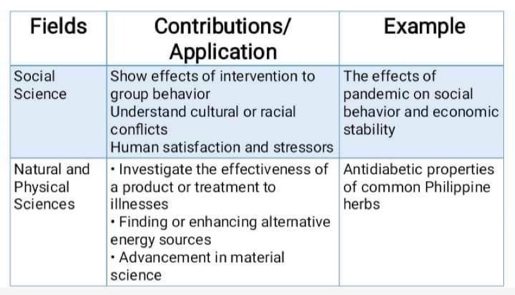
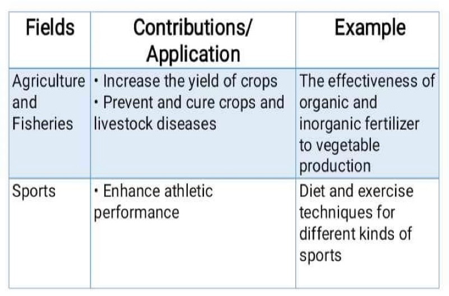
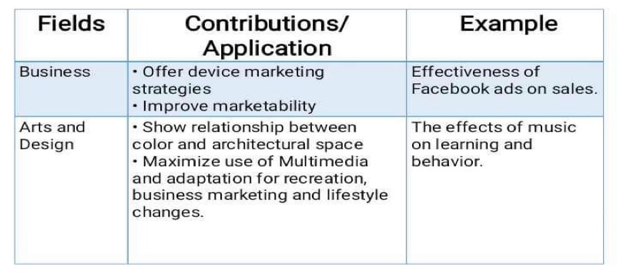
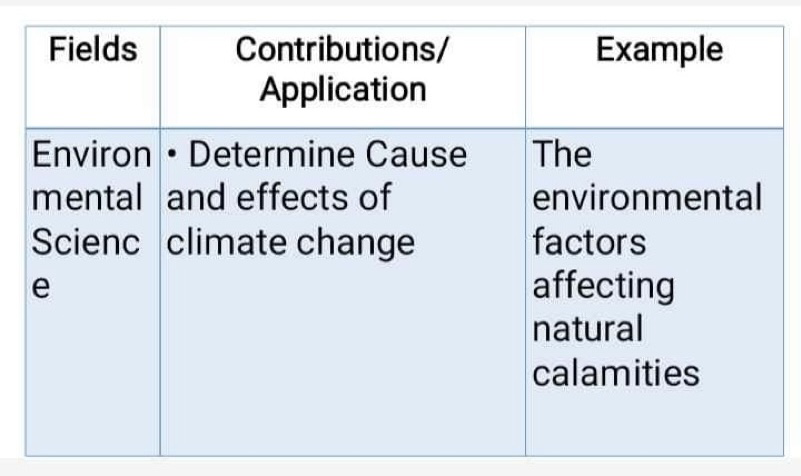
Research Across Fields
• The value of quantitative research to man's quest to discover the unknown and improve underlying conditions is undeniable.
• Throughout history, quantitative research has paved the way to finding meaningful solutions to difficulties. For instance, the development of vaccines to strengthen our immunity against viruses causing highly communicable diseases like polio, influenza, chickenpox, and measles to name a few, underwent thorough experimental trials.
• You bet, scientists and medical experts all over the world today are working their best to fast track the development, testing and release of the vaccine for the Corona Virus Disease of 2019 (Covid-19) as the pandemic has critically affected the world economy, education, as well as physical and emotional well-being of people.
The findings of the quantitative study can influence leaders and law-makers' decisions for crafting and implementing laws for the safety and welfare of the more significant majority. For example, a community with high cases of Covid-19 positive patients is mandated by law to be under Enhanced Community Quarantine where only the most essential businesses can operate. On the other hand, cities with less or zero case will be under General Community Quarantine where some businesses, public and private offices are already allowed to operate. Using quantitative design helps us determine and better understand relationships between variables or phenomenon crucial to reducing the range of uncertainty because the mathematics (more of this in the last module) behind quantitative studies helps us make close estimates of the outcome (dependent variable) from a given condition/s (independent variable). Relationship between demand and supply, age and health, discipline and academic achievement, practice and winning at sports, depression and suicidal rates, algae population and Oxygen demand are just few examples of real-life applications of correlation studies in the past that we still apply today. Most inventions and innovations are products of quantitative studies. Before you can enjoy the uses and features of a smart phone, it took years of research to establish compliance to standards for interoperability, to find the most cost-effective raw materials, and to identify the sleekest and sturdiest design, the fastest data saving and processing power, and most marketable add-ons according to consumer needs. Indeed, mankind will dwell in the darkness of ignorance if not for the people who conducted their research before reading about it from books or manuals.