Physics E. Nuclear and quantum physics
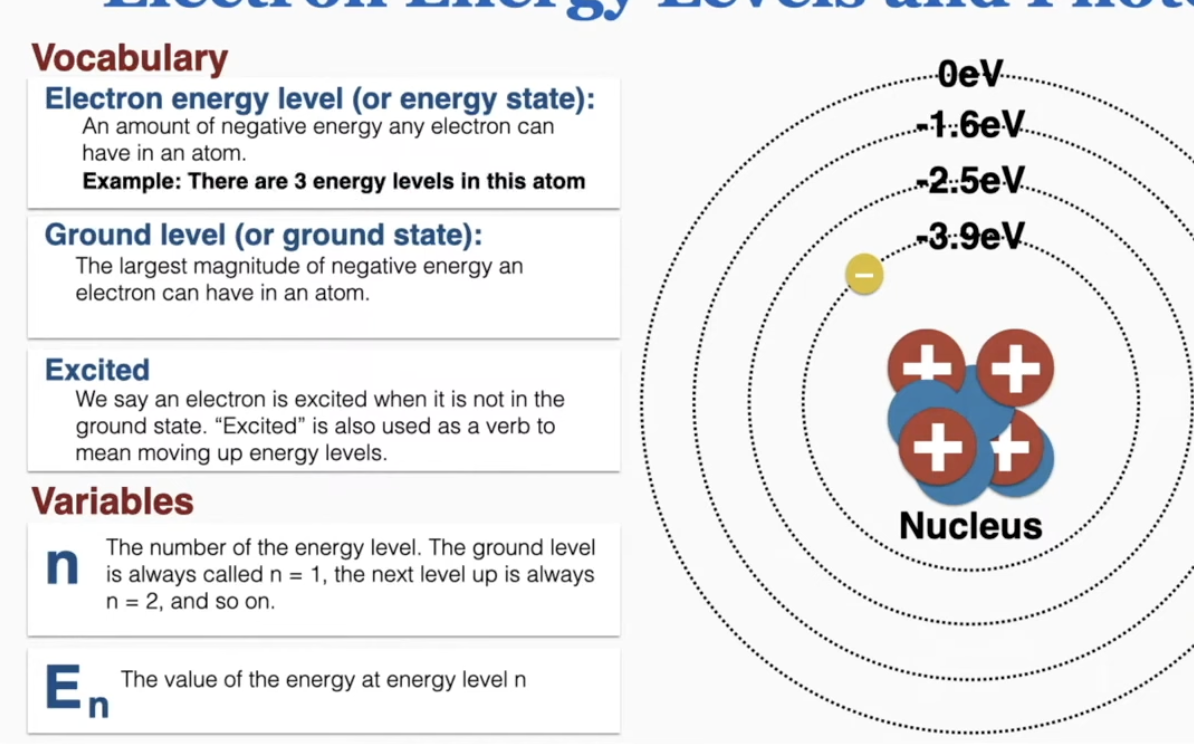
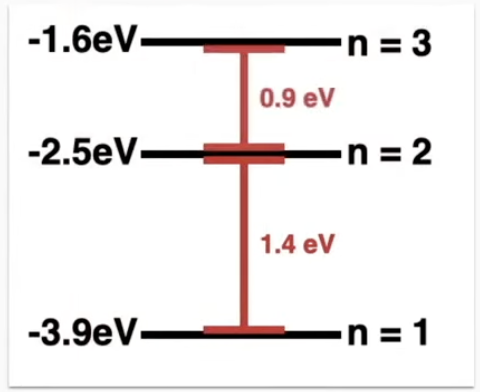
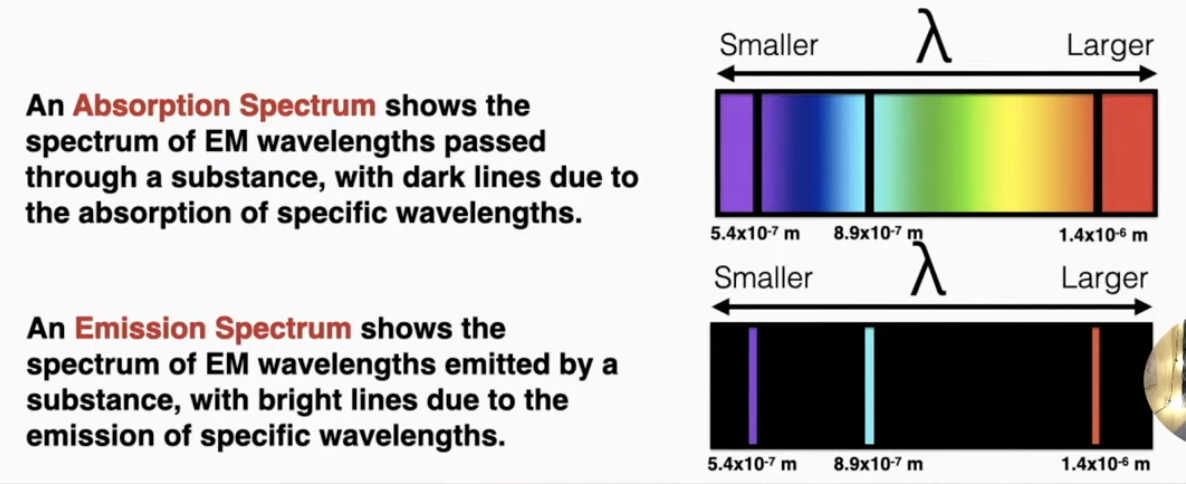
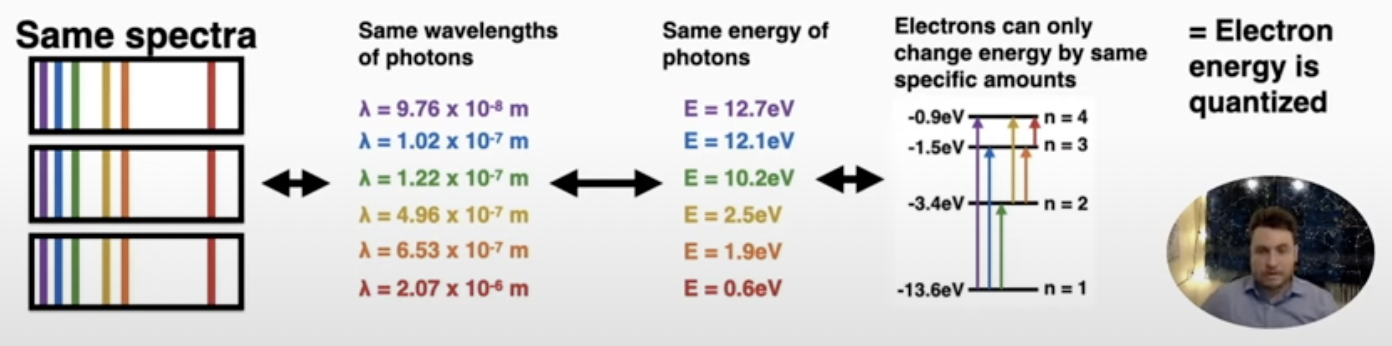
Whenever an electron loses energy, a photon is created with the exact amount of energy lost. Whenever an electron gains energy, a photon with that amount of energy is absorbed (destroyed).
If a photon does not have the exact energy required to get a electron to a different energy level (either too much or too little), it passes through the atom, because the electron cannot exist between energy levels.
the possible energies of emitted photons always equal the possible energies of absorbed photons.
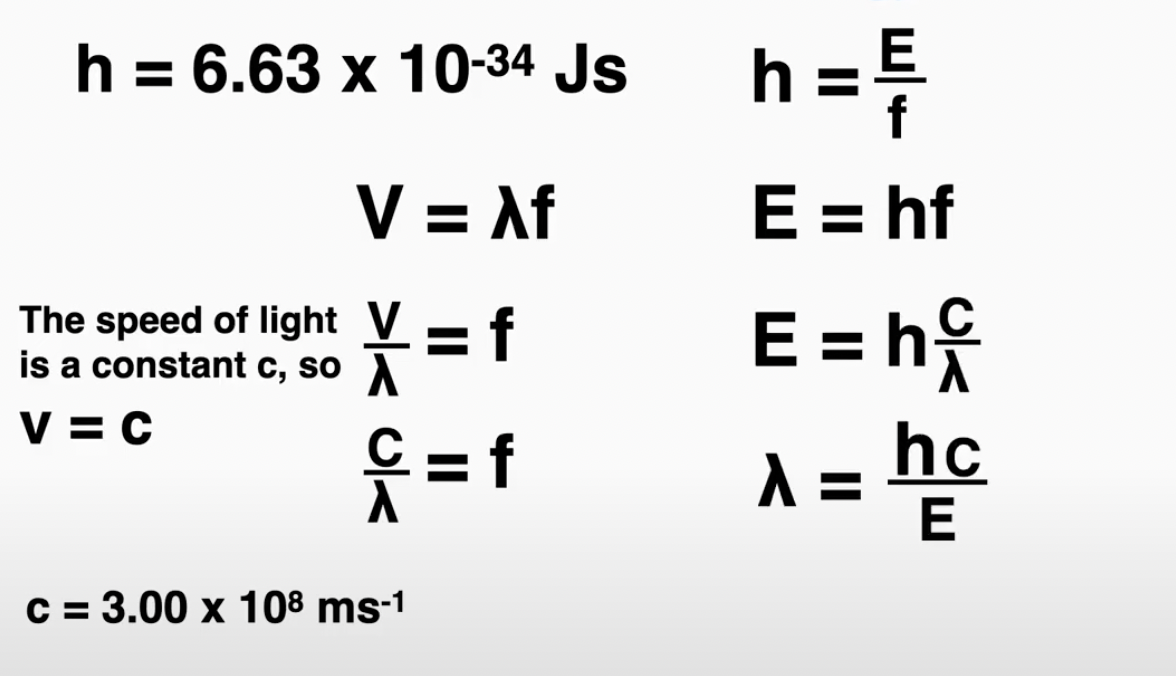
the smaller the wavelength the greater the energy
the smaller the frequency the smaller the energy
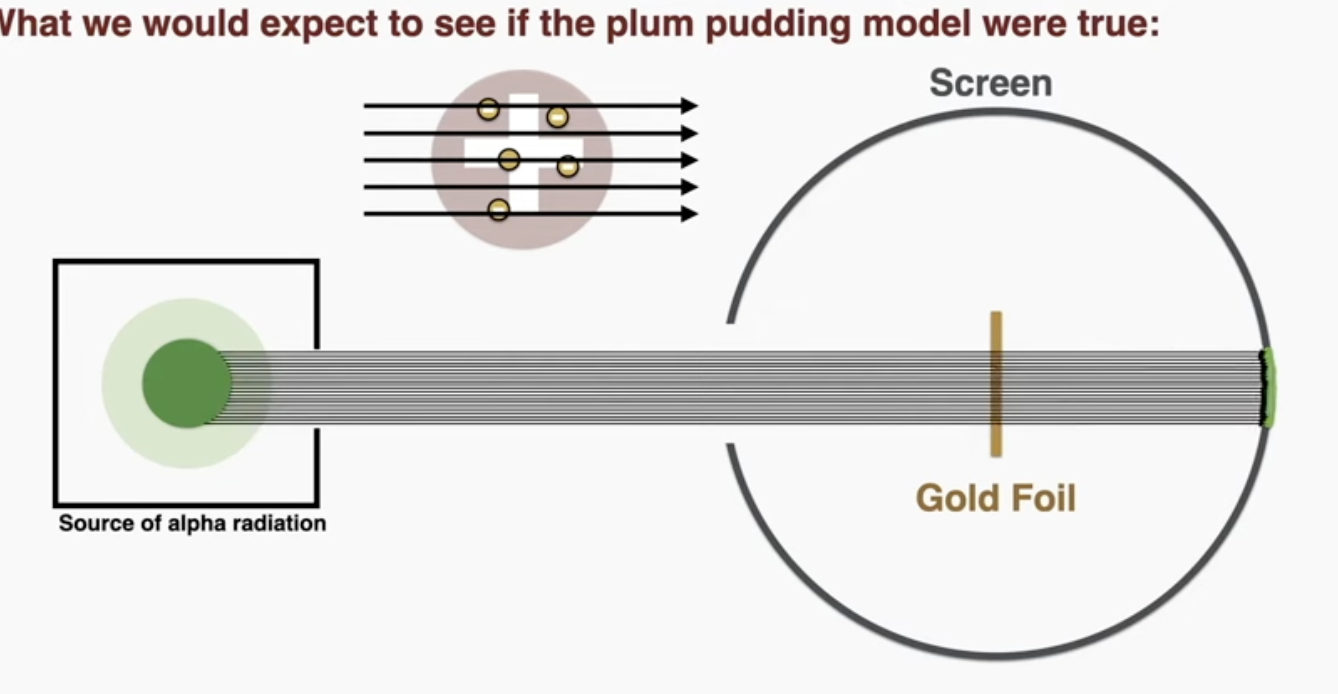
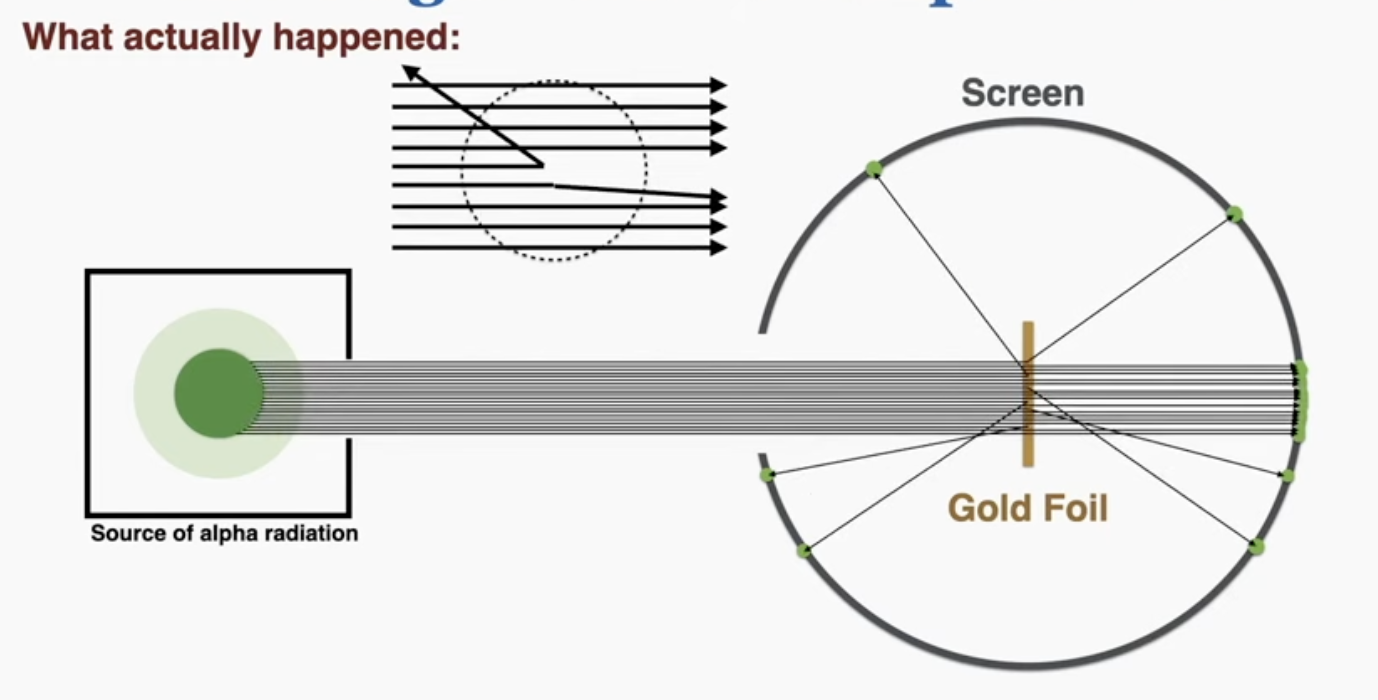
The Geiger-Marsden experiment: used to determine the structure of atoms showing that an atom has a very small dense positively charged nucleus and are otherwise mostly empty space with some electrons. they shot alpha particles at a piece of golden foil and observed the direction that the particles scattered.
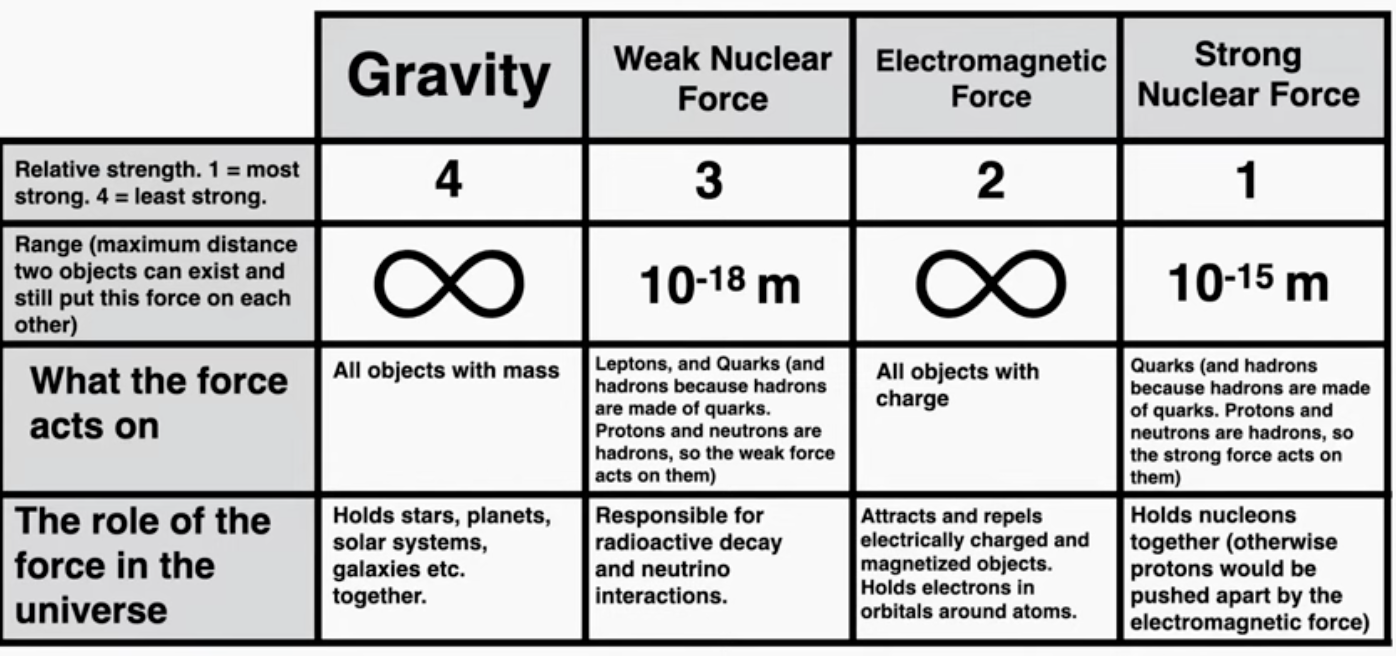
The four fundamental forces:
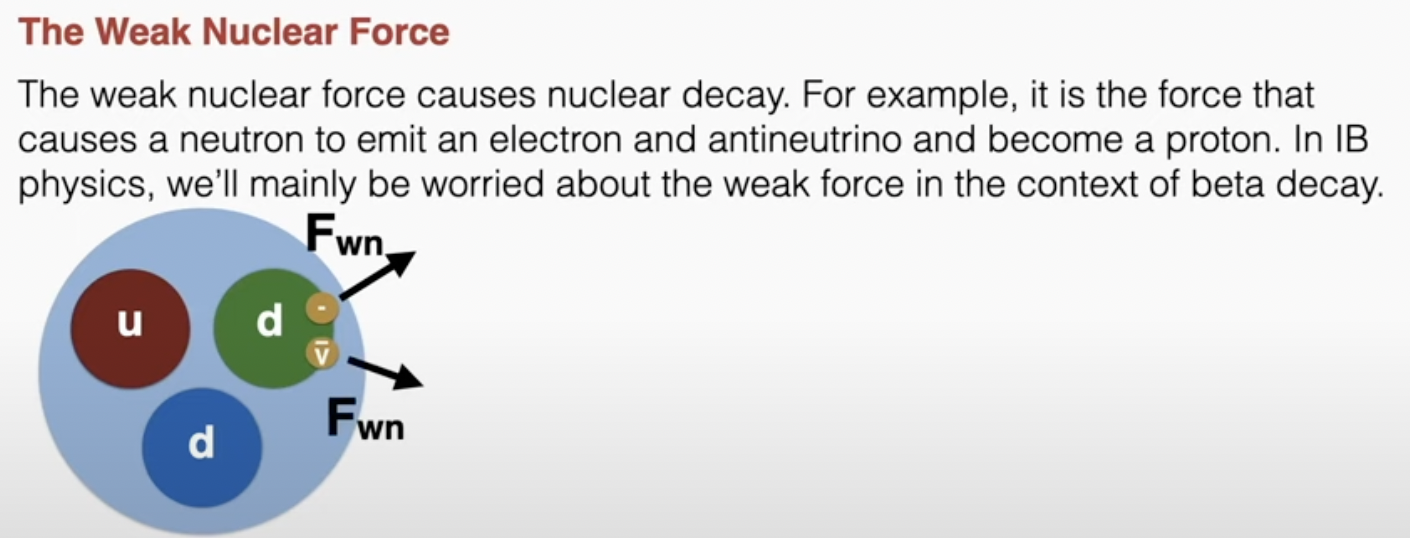
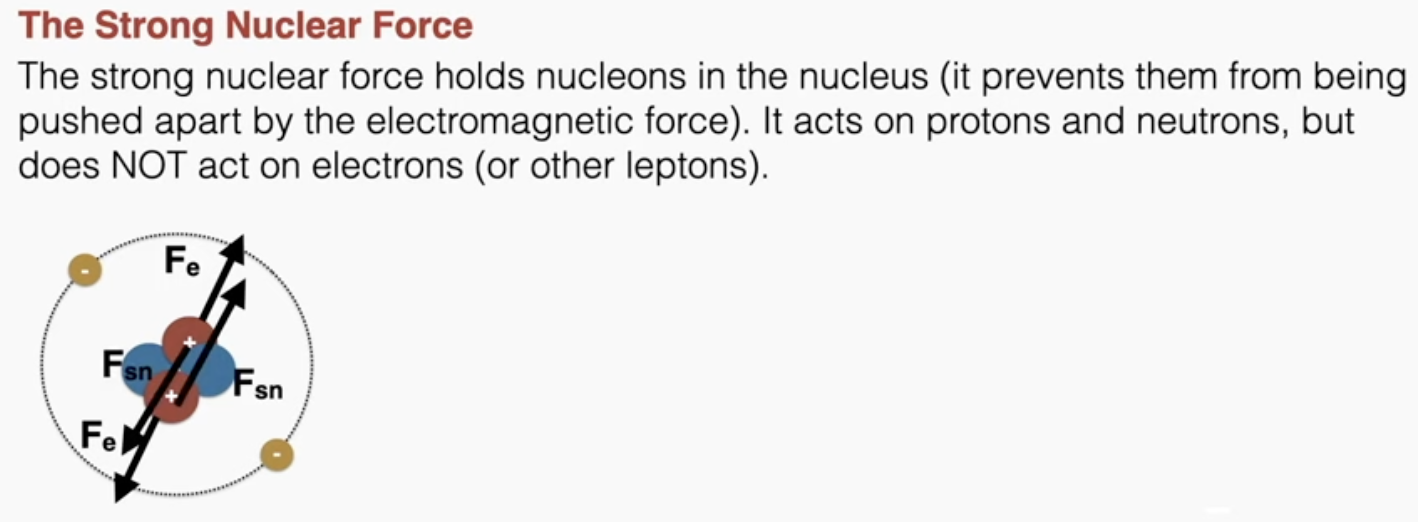
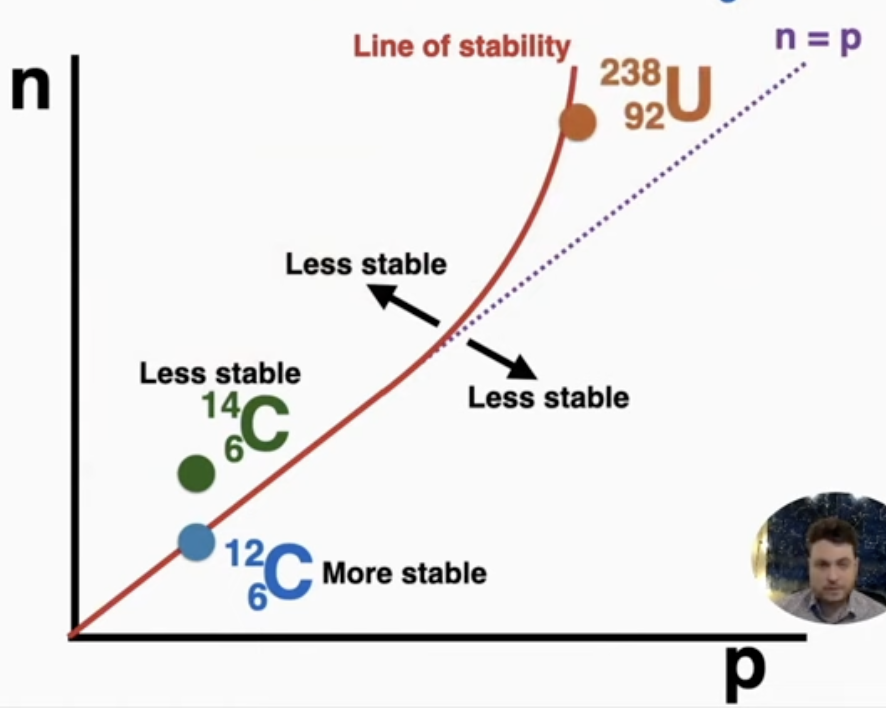
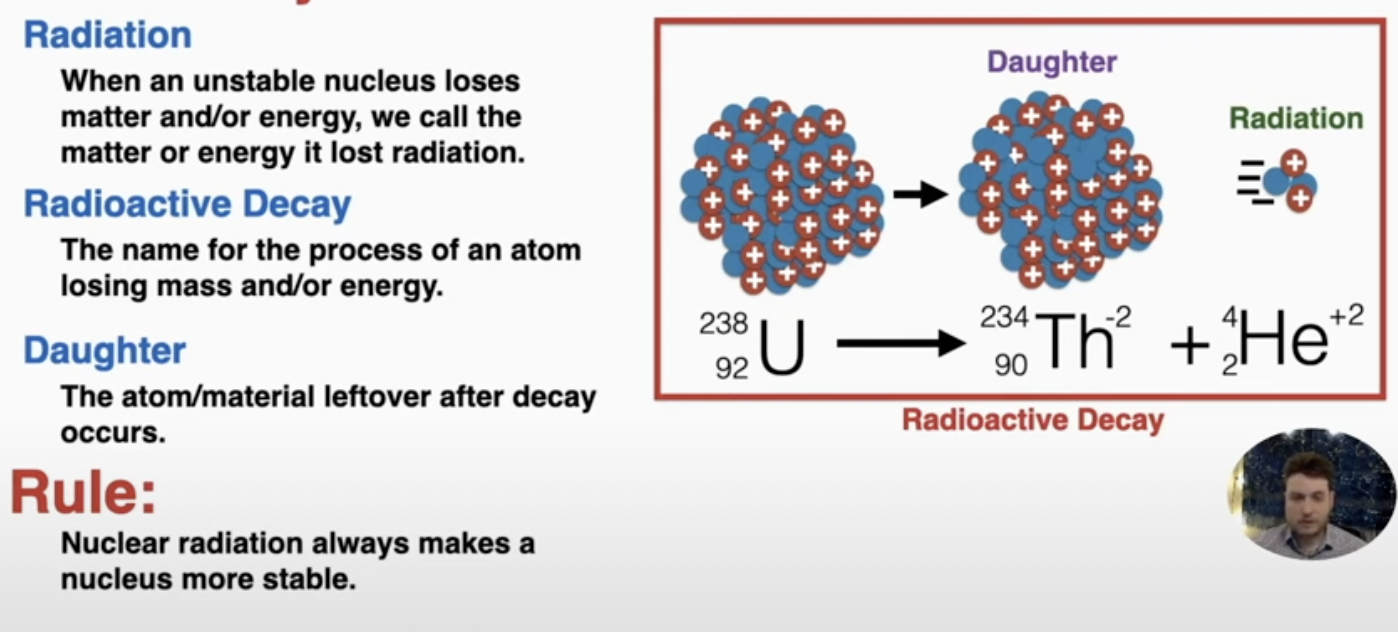
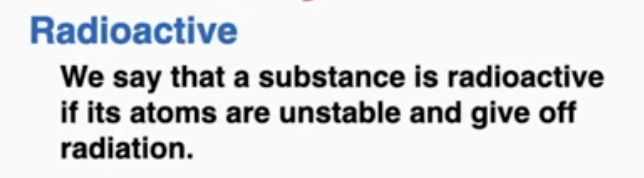
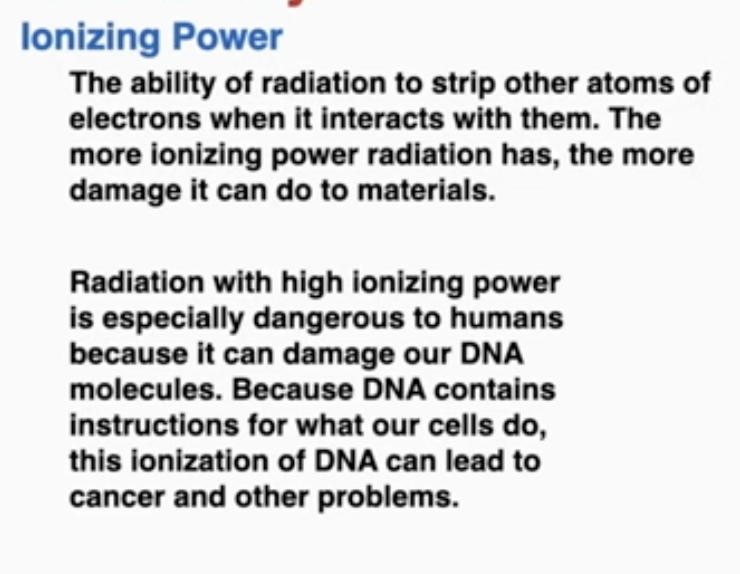
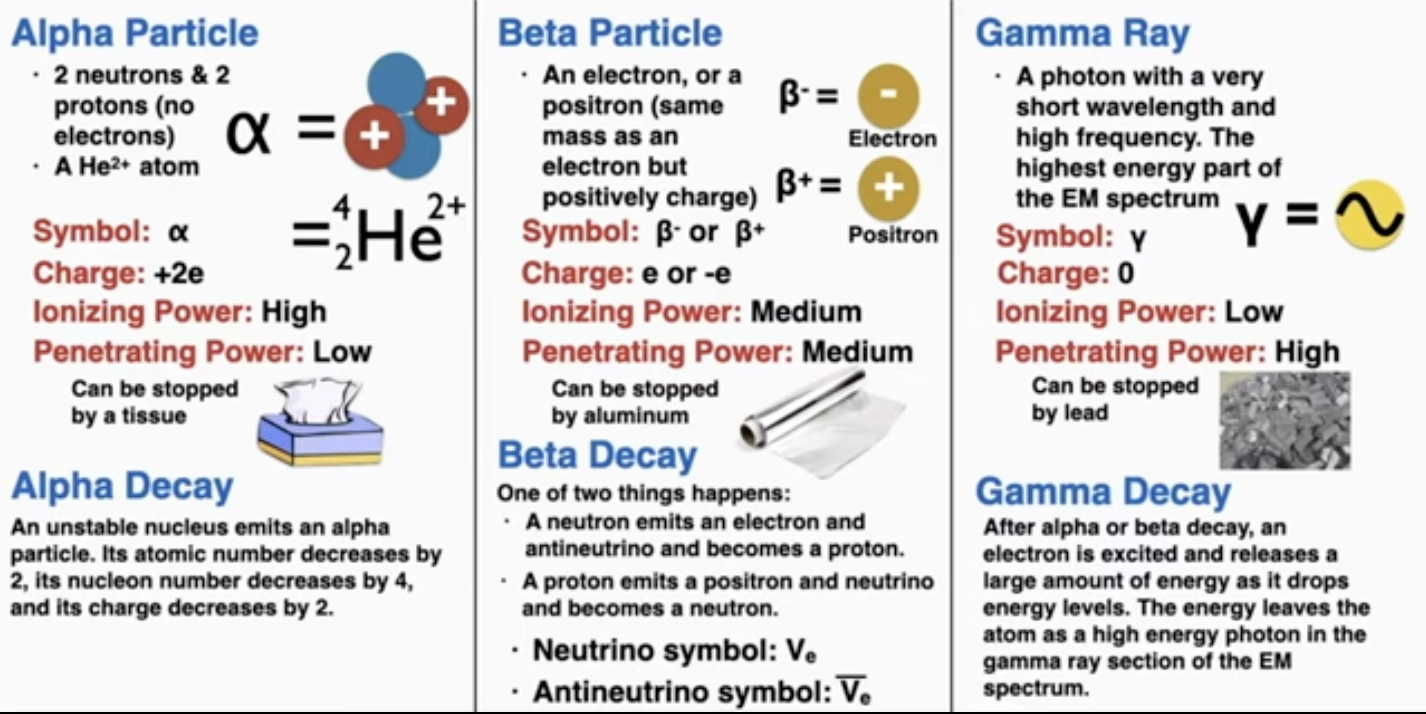
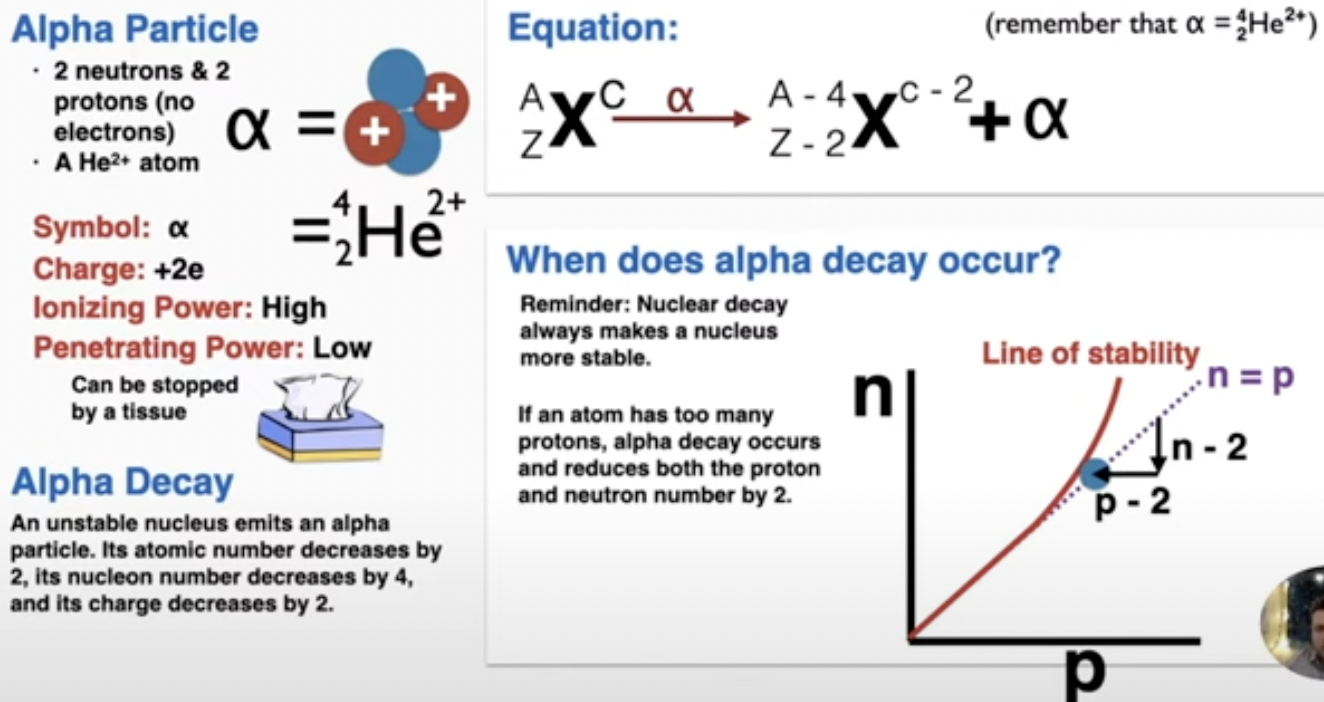
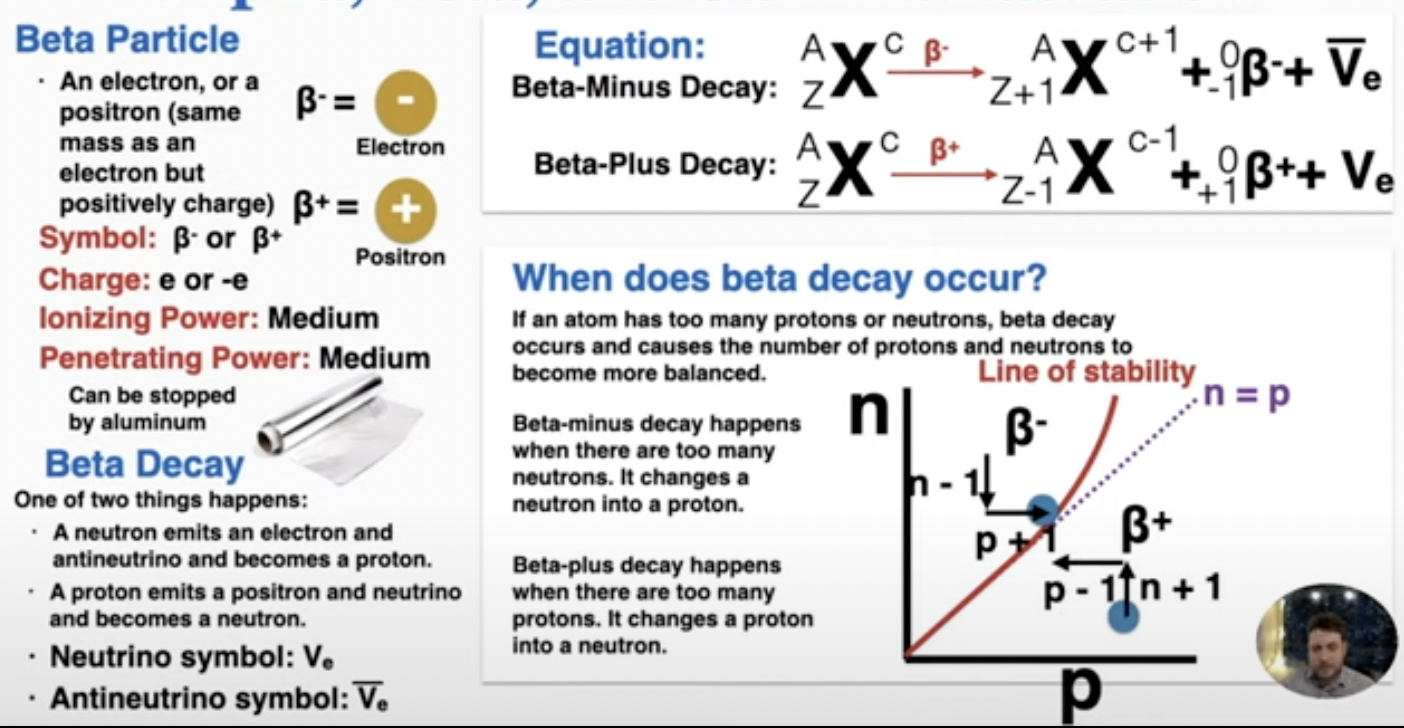
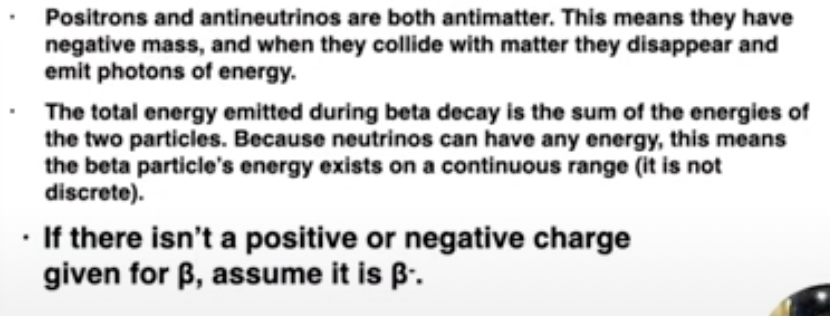
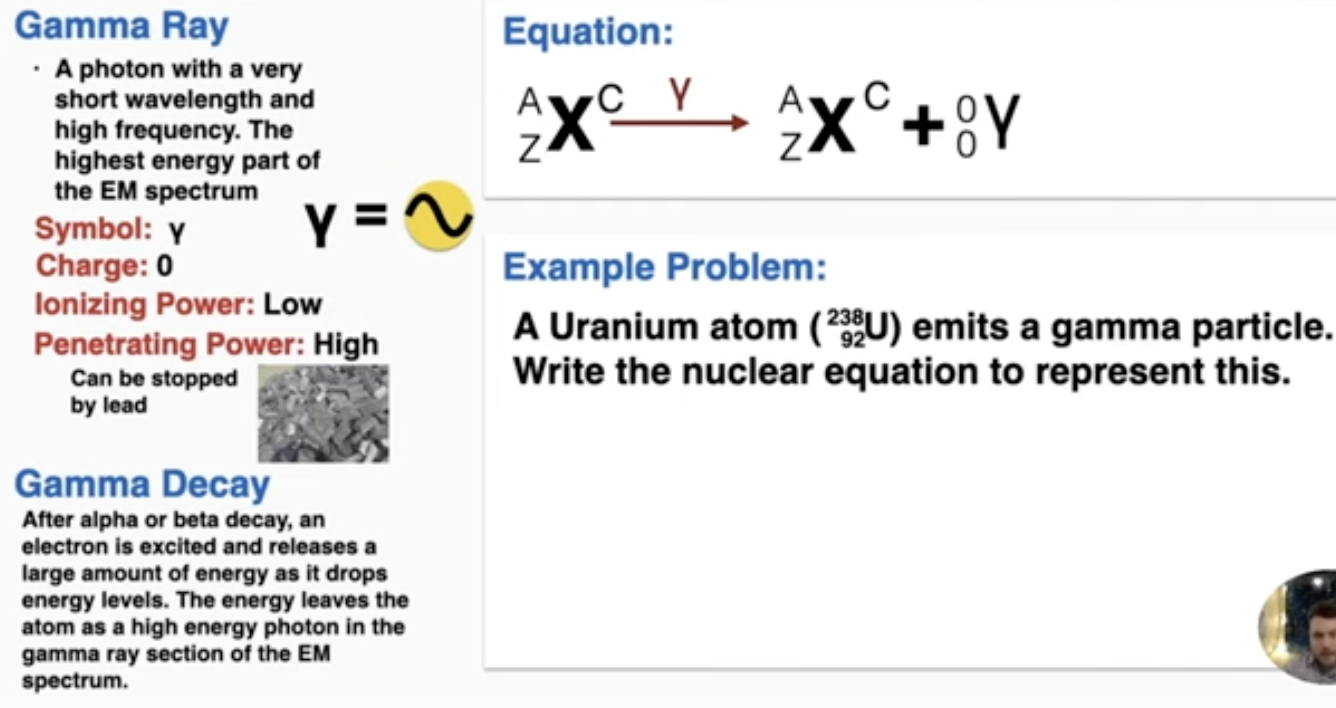
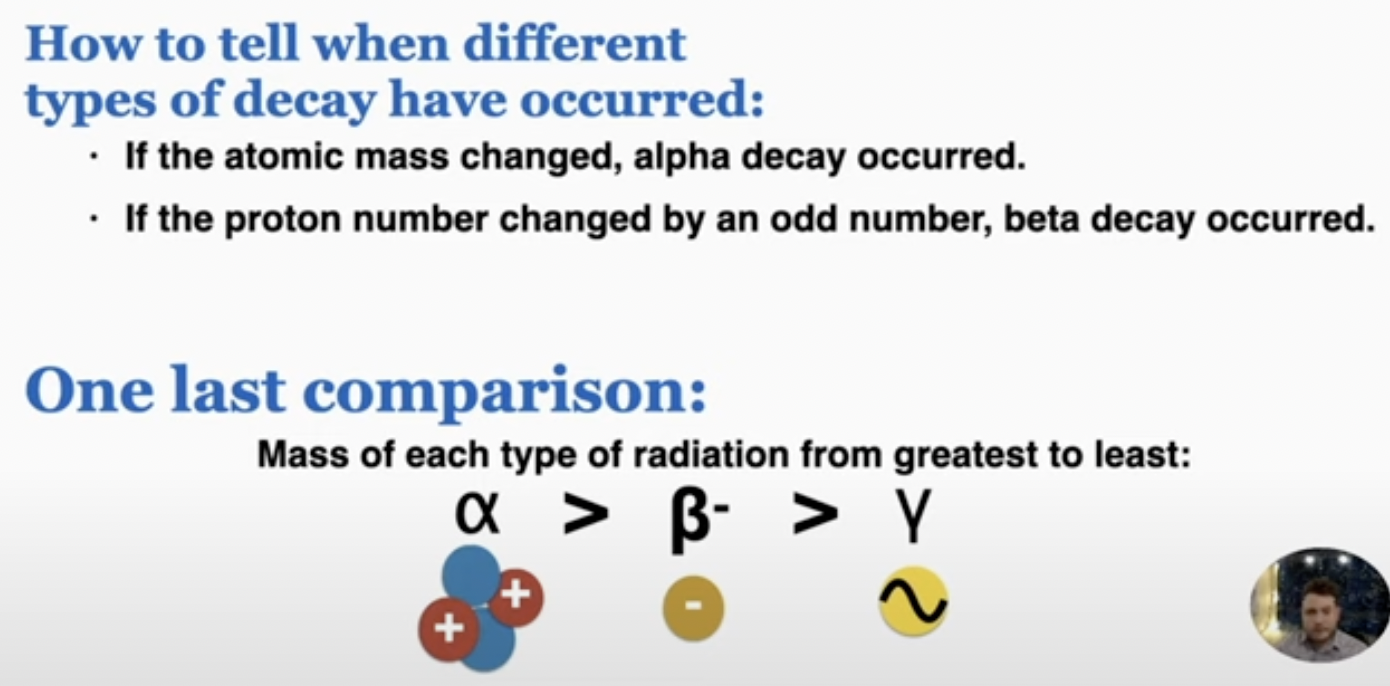
Unstable Nuclei: In unstable nuclei, the strong nuclear force does not create enough binding energy to permanently hold the nucleus together. The nucleus will eventually break apart and lose some mass and/or energy, and become more stable as a result.
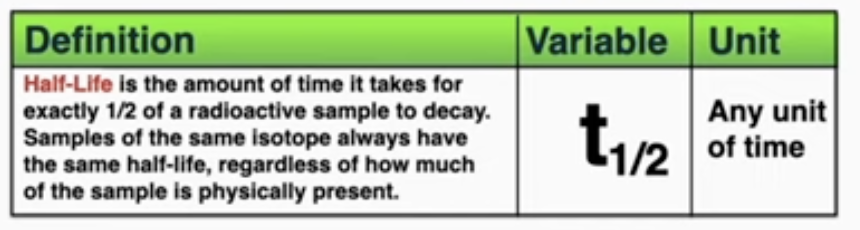
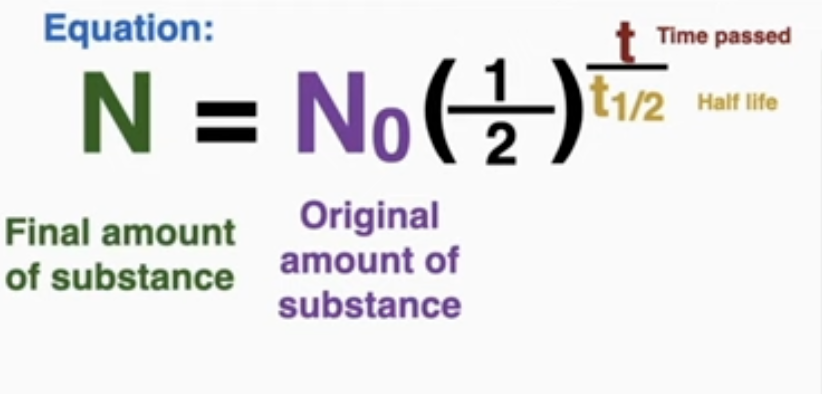
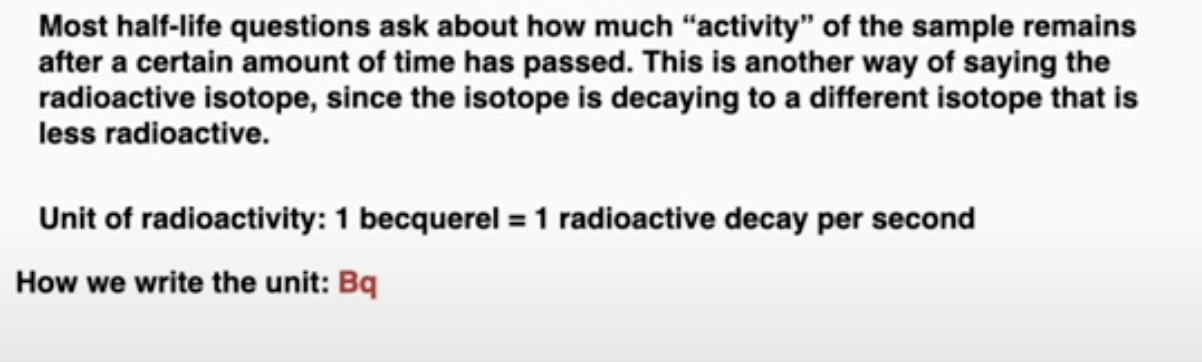
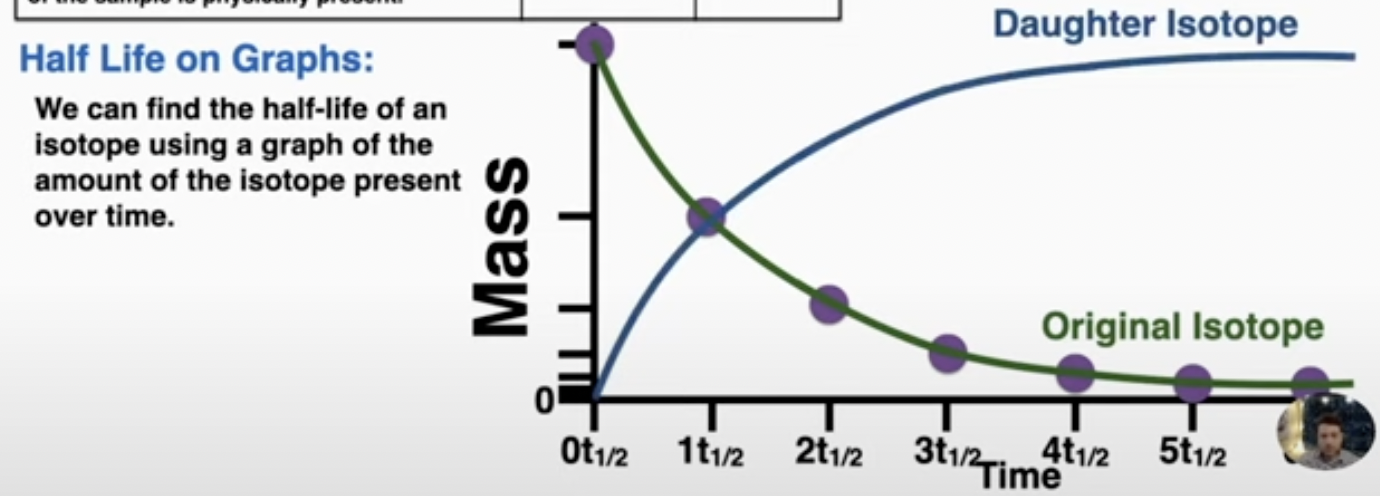
Half-life:
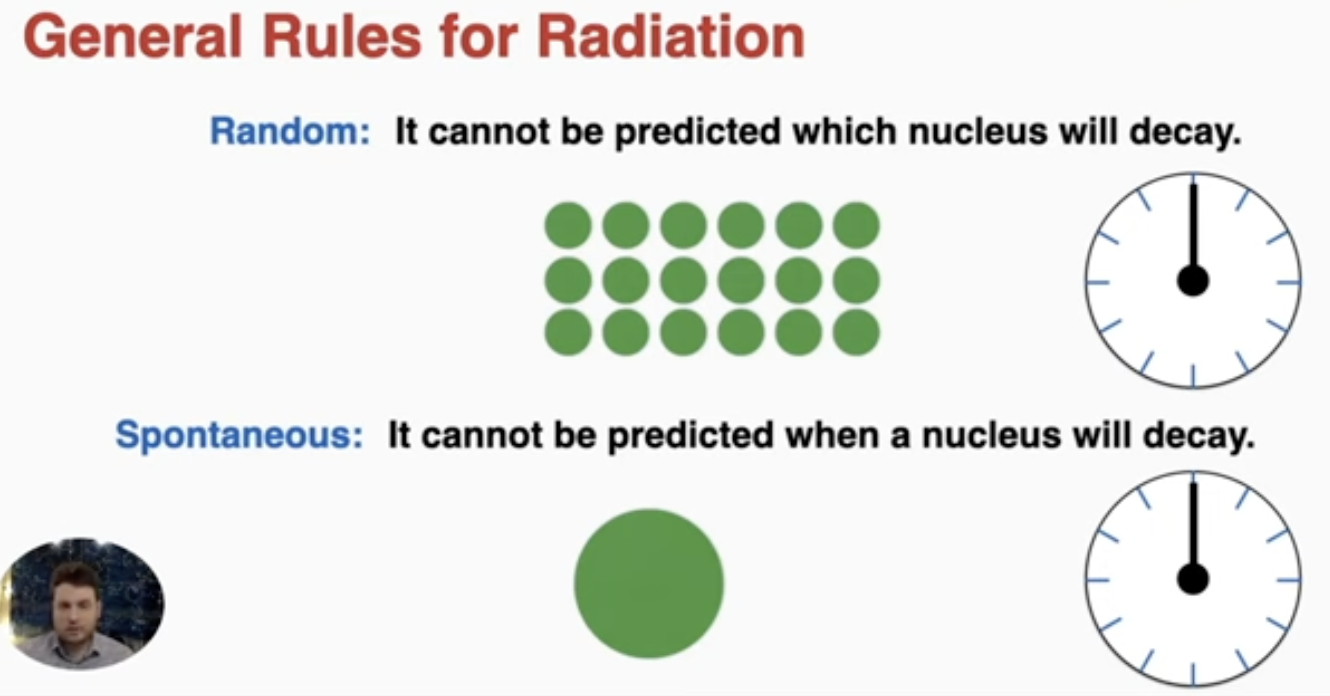
Law of Large Numbers: If you repeat a trial a very large number of times, the fraction of each possible result will be close to the probability of that result for each individual trial.
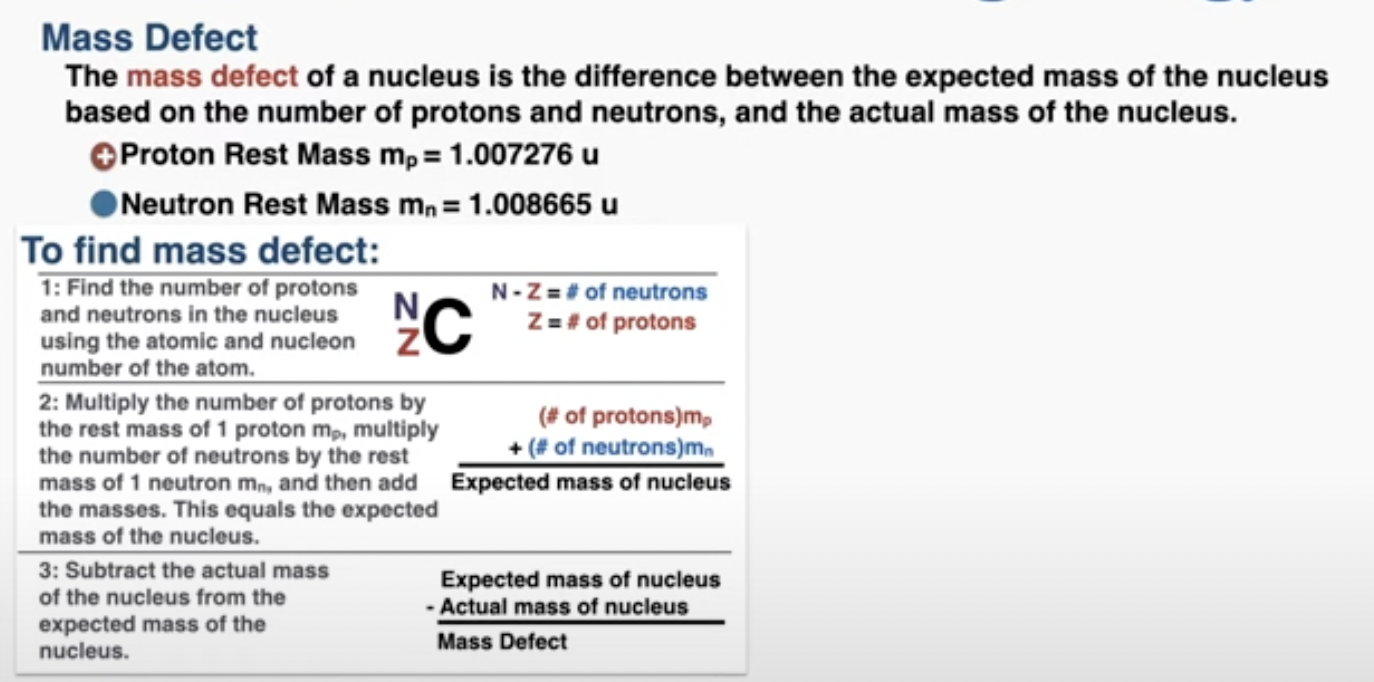
ΔE = Δmc²
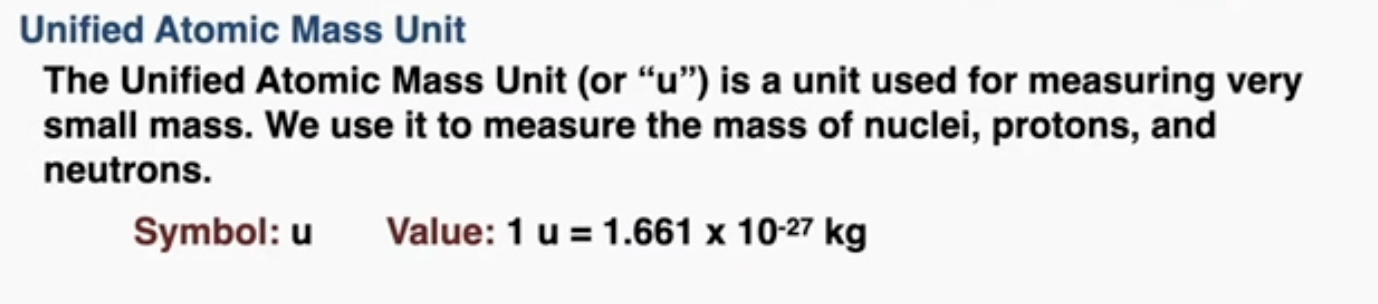
this means that mass can be changed into energy. the amount of energy we can transform mass into is equal to the mass multiplied by the speed of light squared
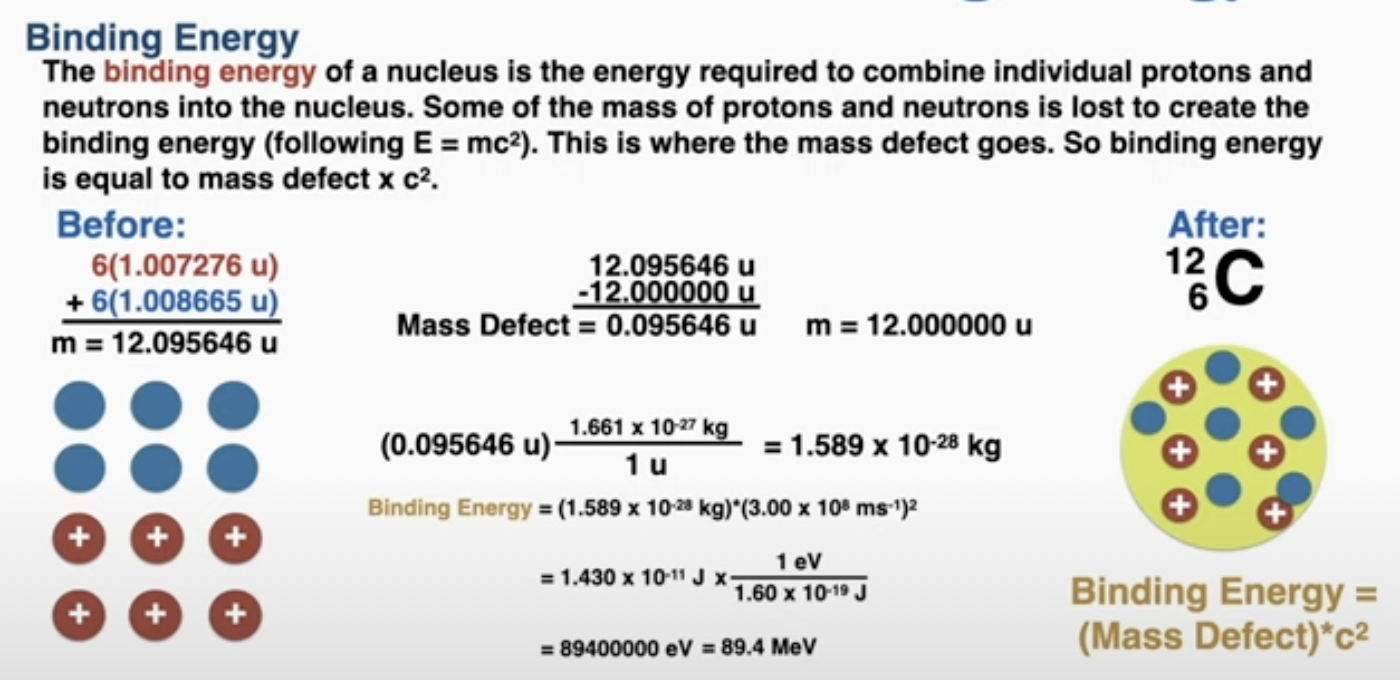
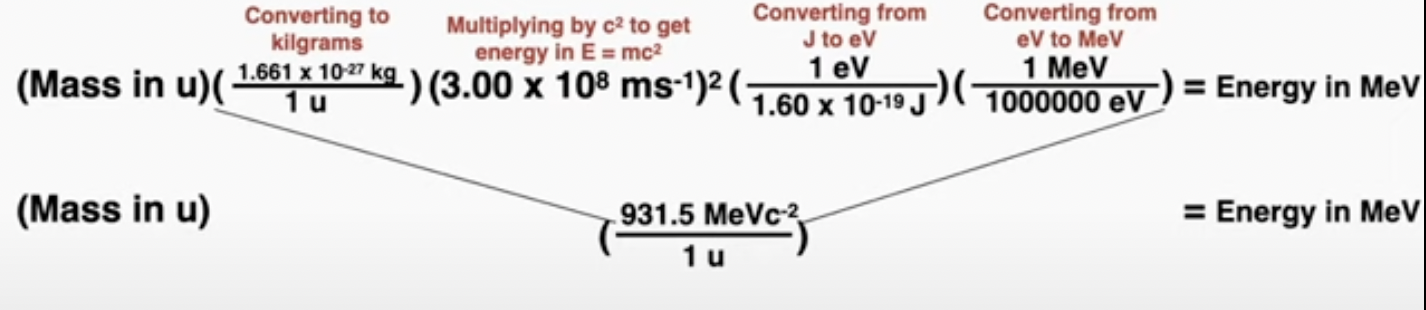
Binding energy is also the energy that needs to be added to nucleons to separate them into individual nucleons. so binding energy is the minimum work to completely separate the nucleons of an atom.
the force involved in holding nucleons together is the strong nuclear force. adding binding energy increases the strong nuclear force holding the nucleons in place
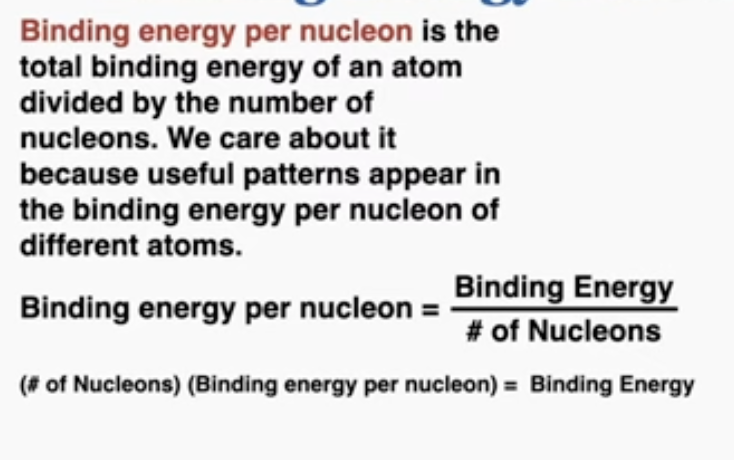
a nucleus is more stable when it has more binding energy per nucleon. this is because more energy is required to remove any single nucleon from the nucleus
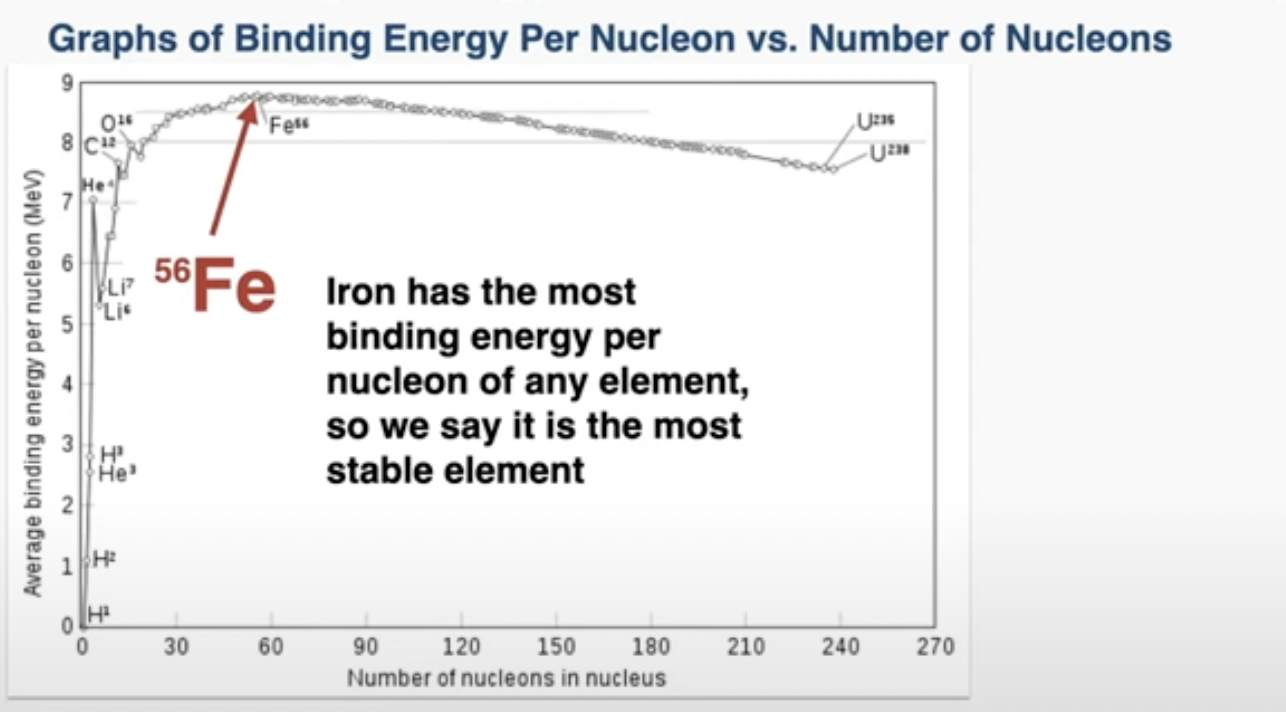
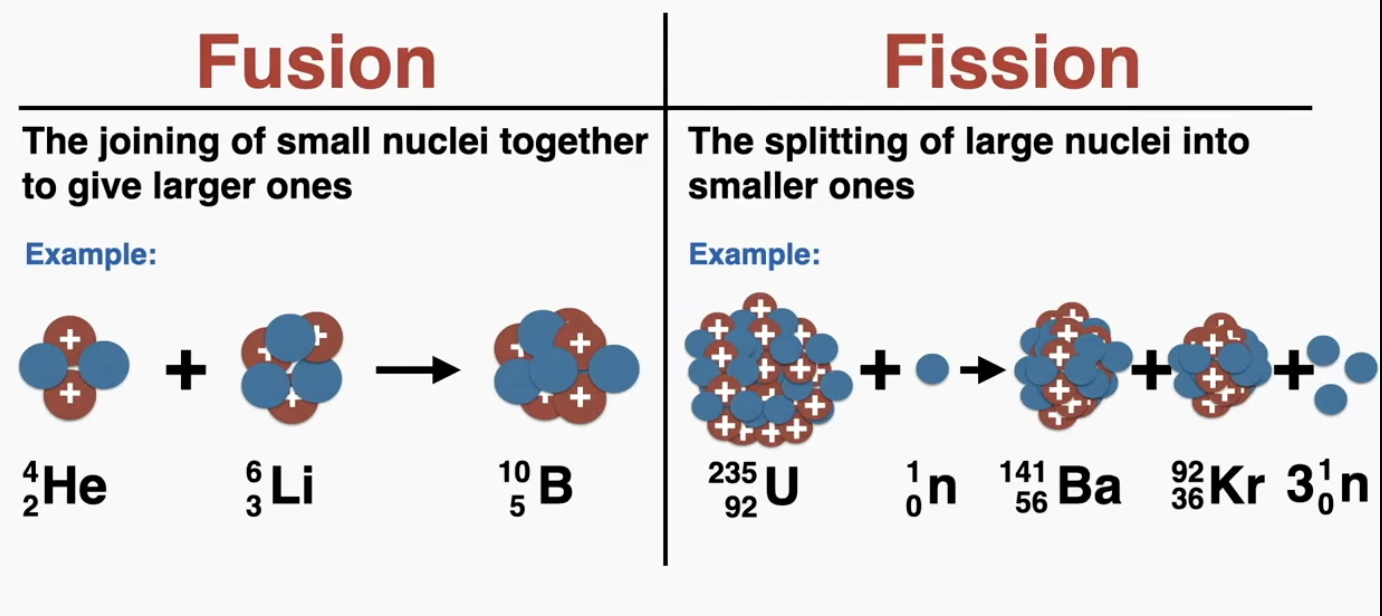
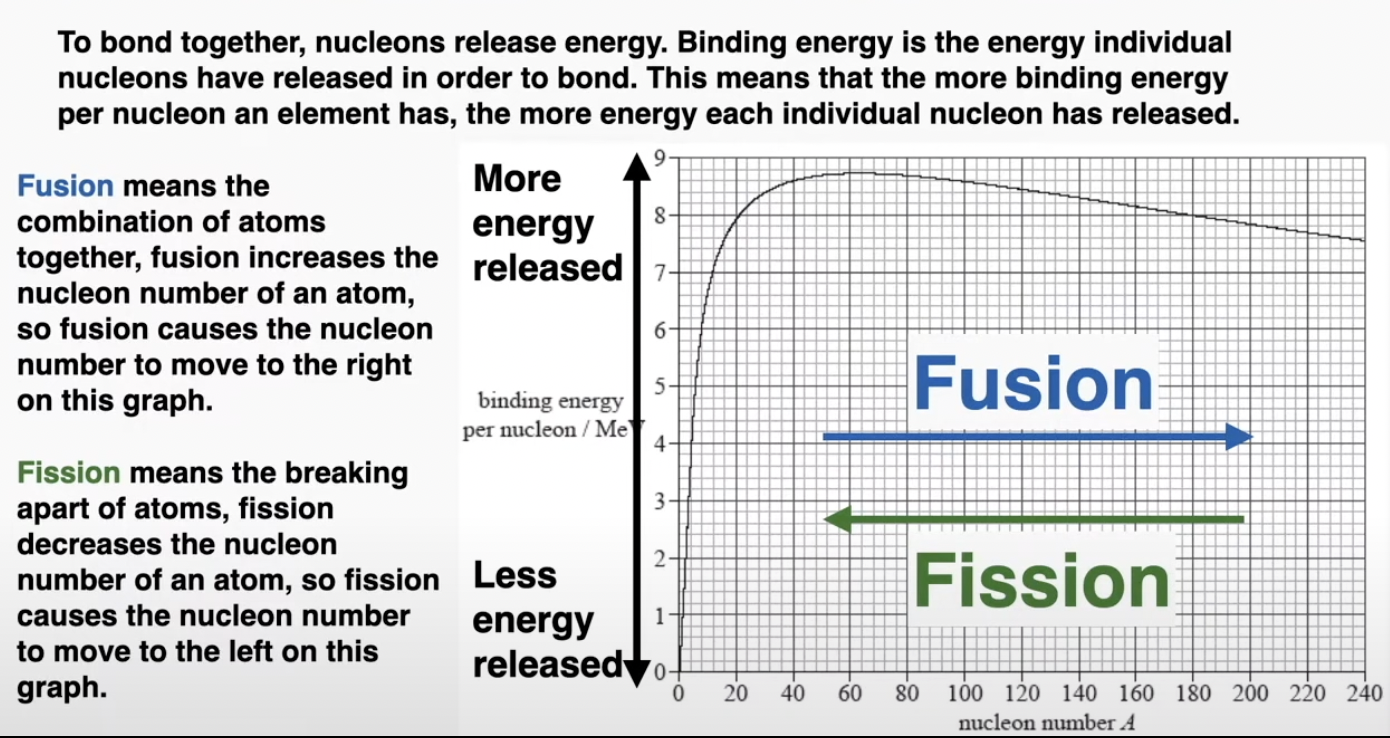
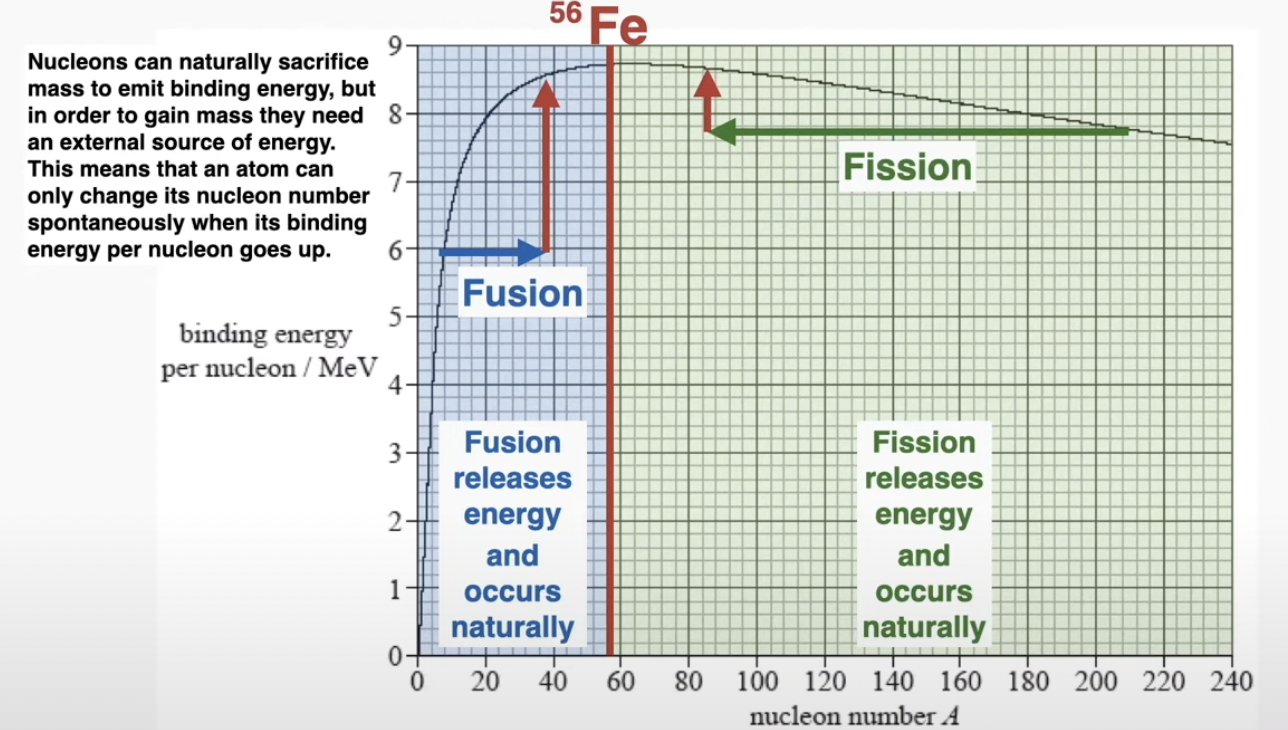
When nuclear fission or fusion causes binding energy to be released, the energy is emitted as kinetic energy in the particles after the reaction. Particles always obey the conservation of momentum after they gain the kinetic energy from the reaction.
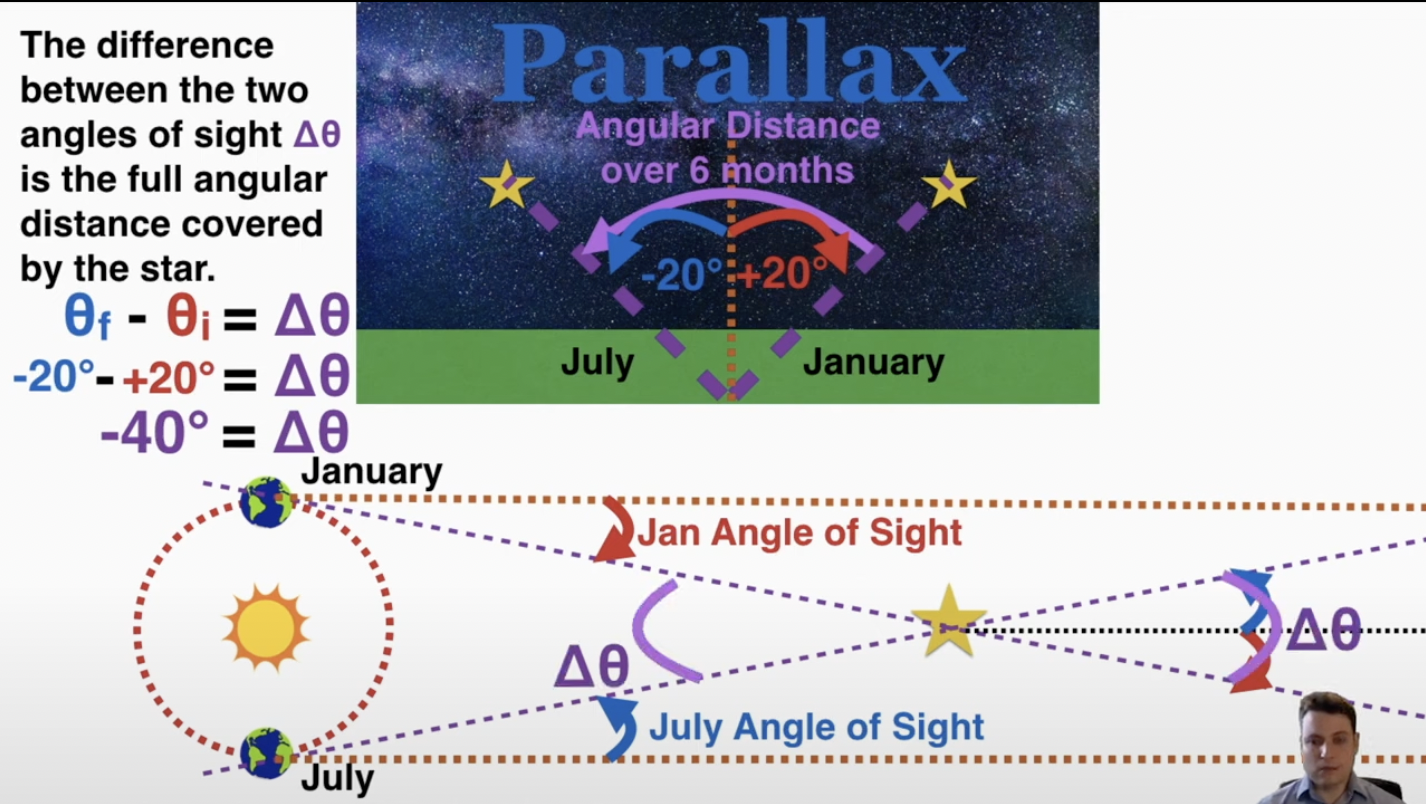
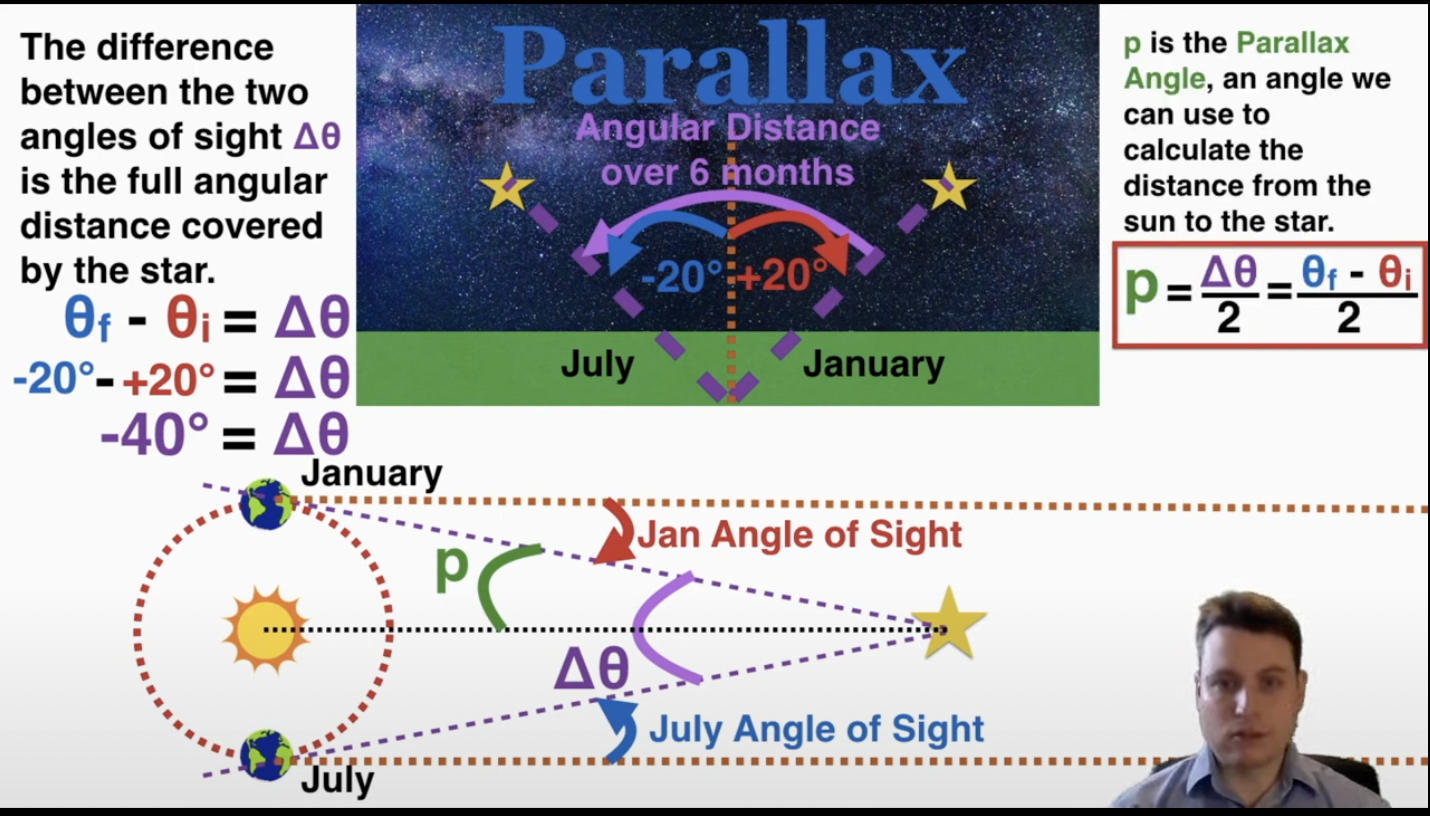
Parallax is the visual effect where the position of an object relative to a background appears to change based on the viewer's position.
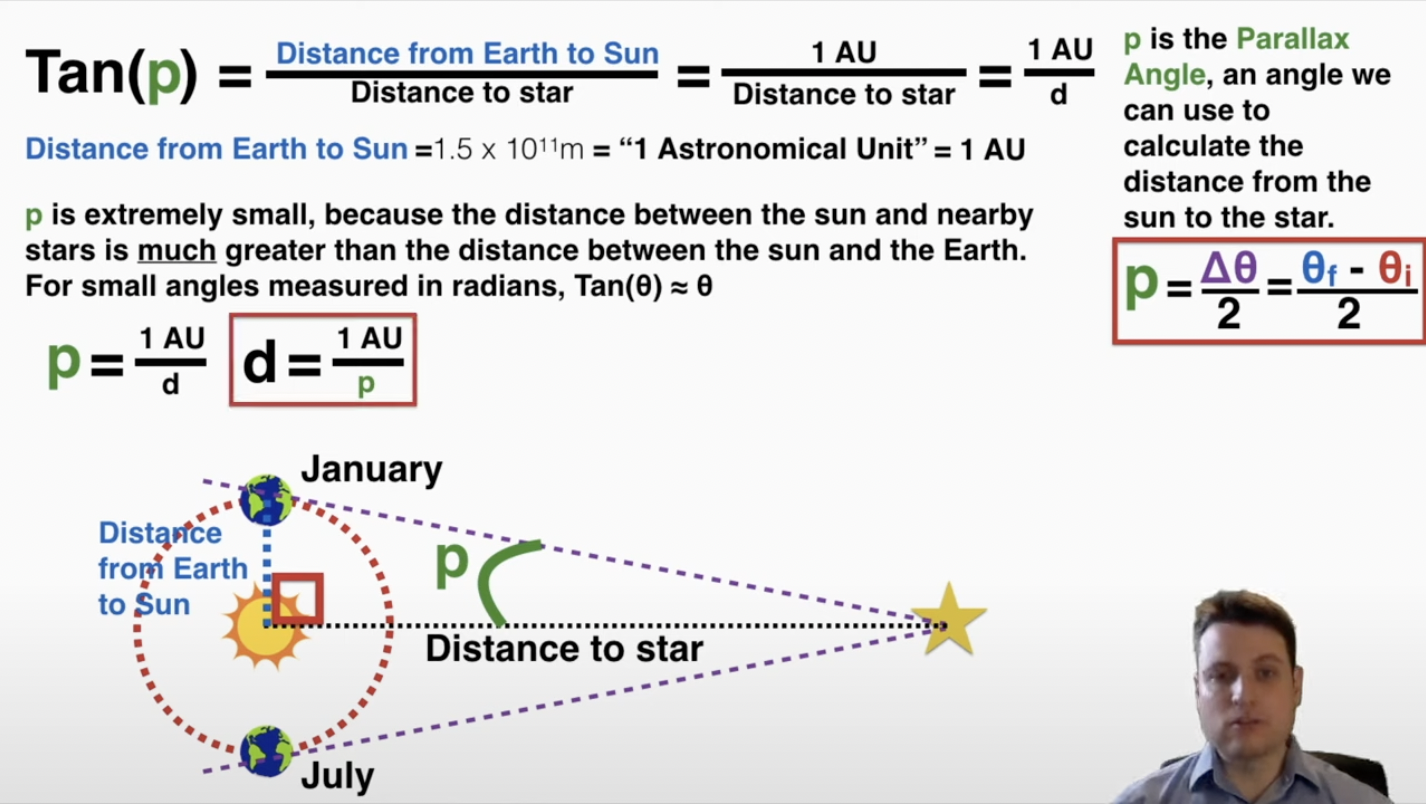
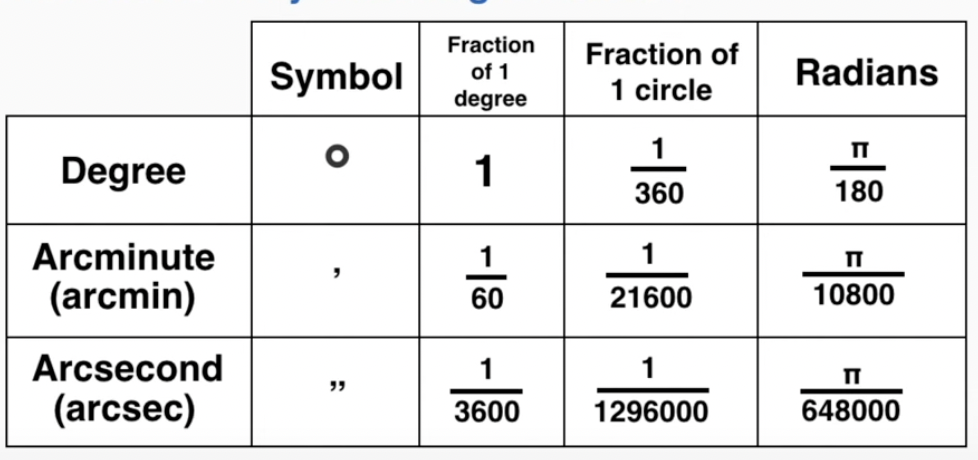
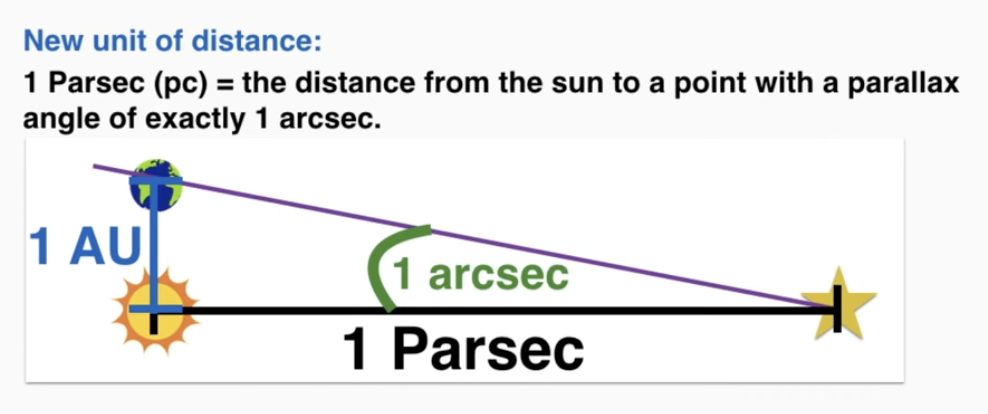
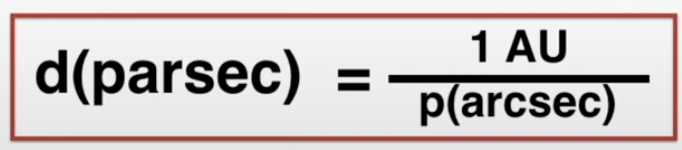
Stellar Parallax is the use of the mathematical patterns in parallax to find the distance to nearby stars. We can measure the difference in the apparent position of a star when Earth is on either extreme end of its orbit around the sun.
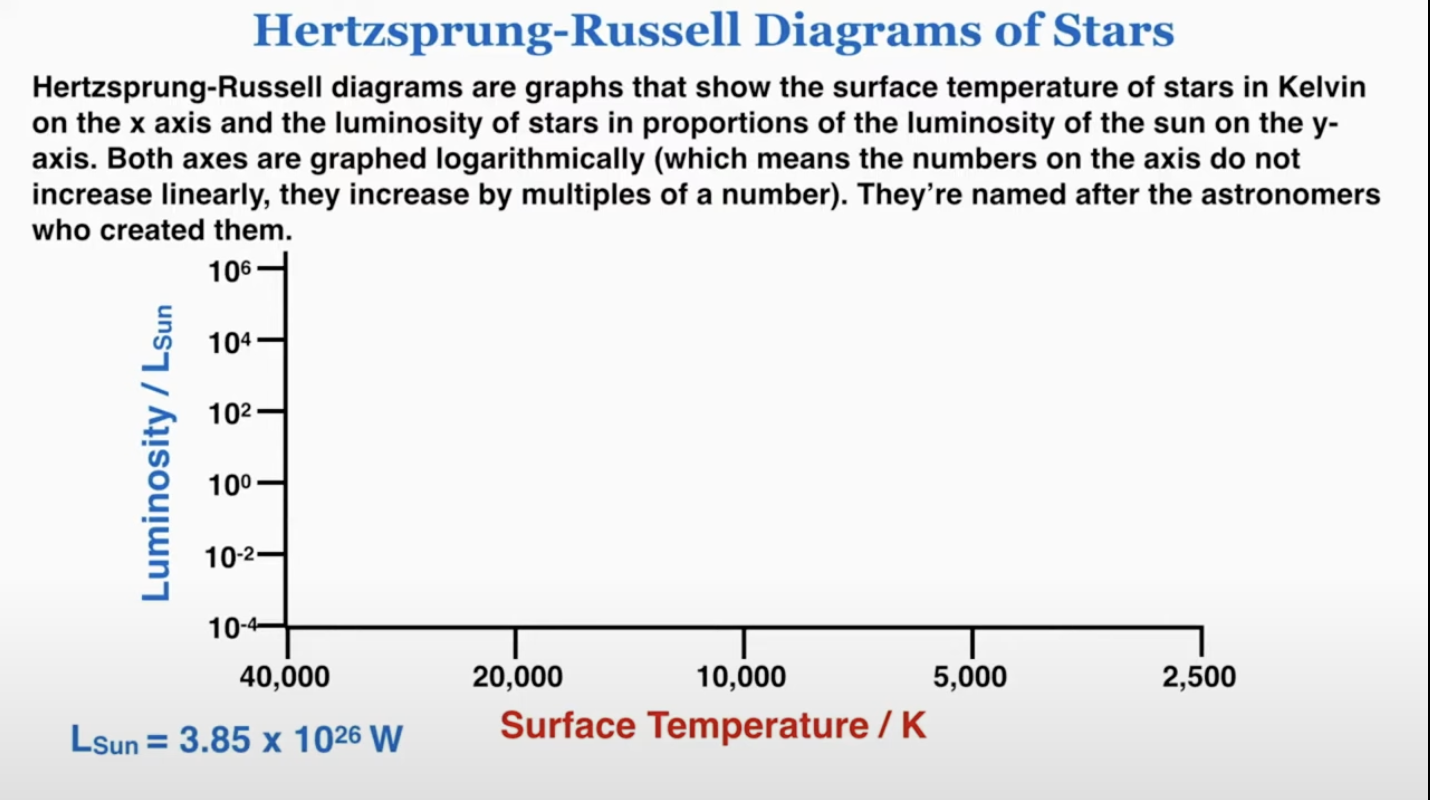
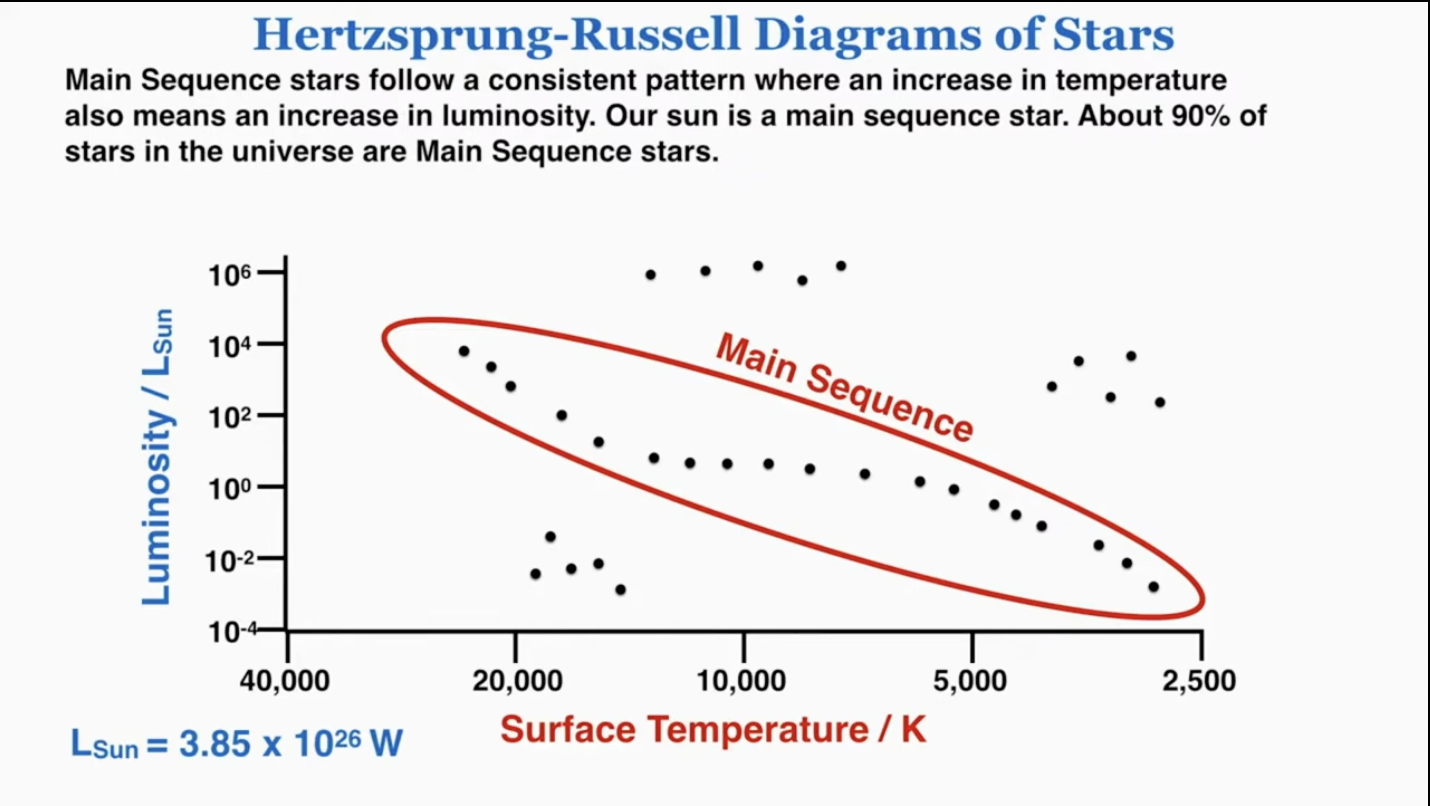
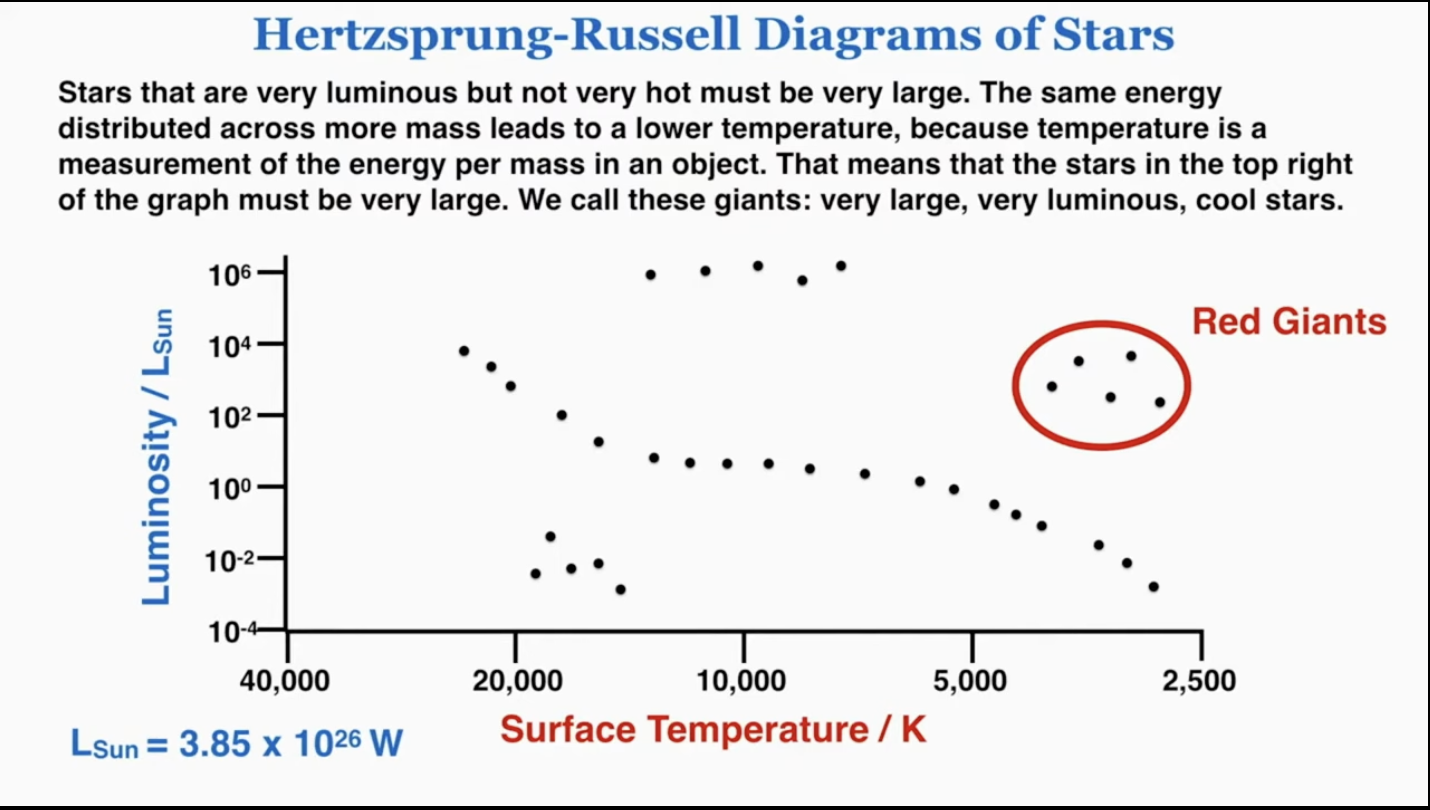
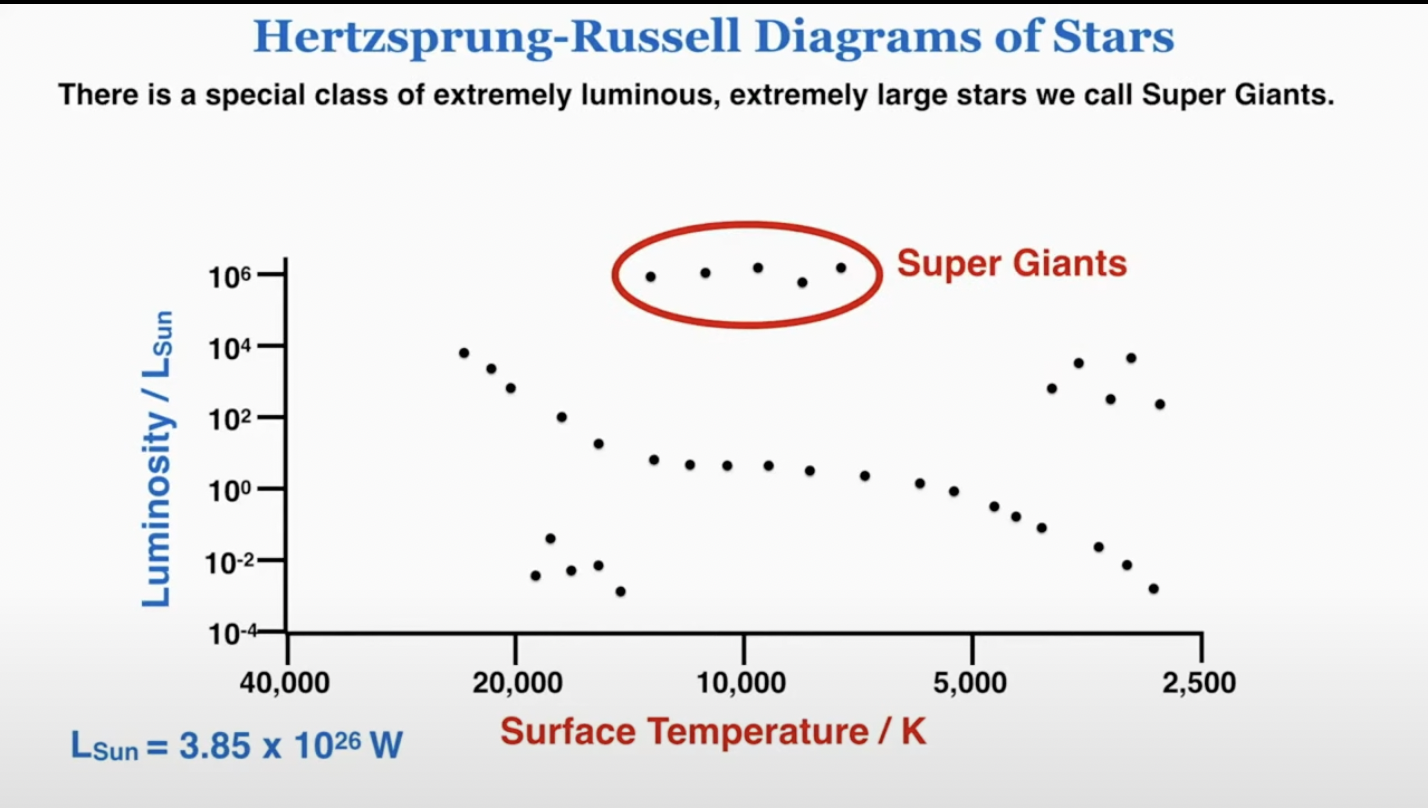
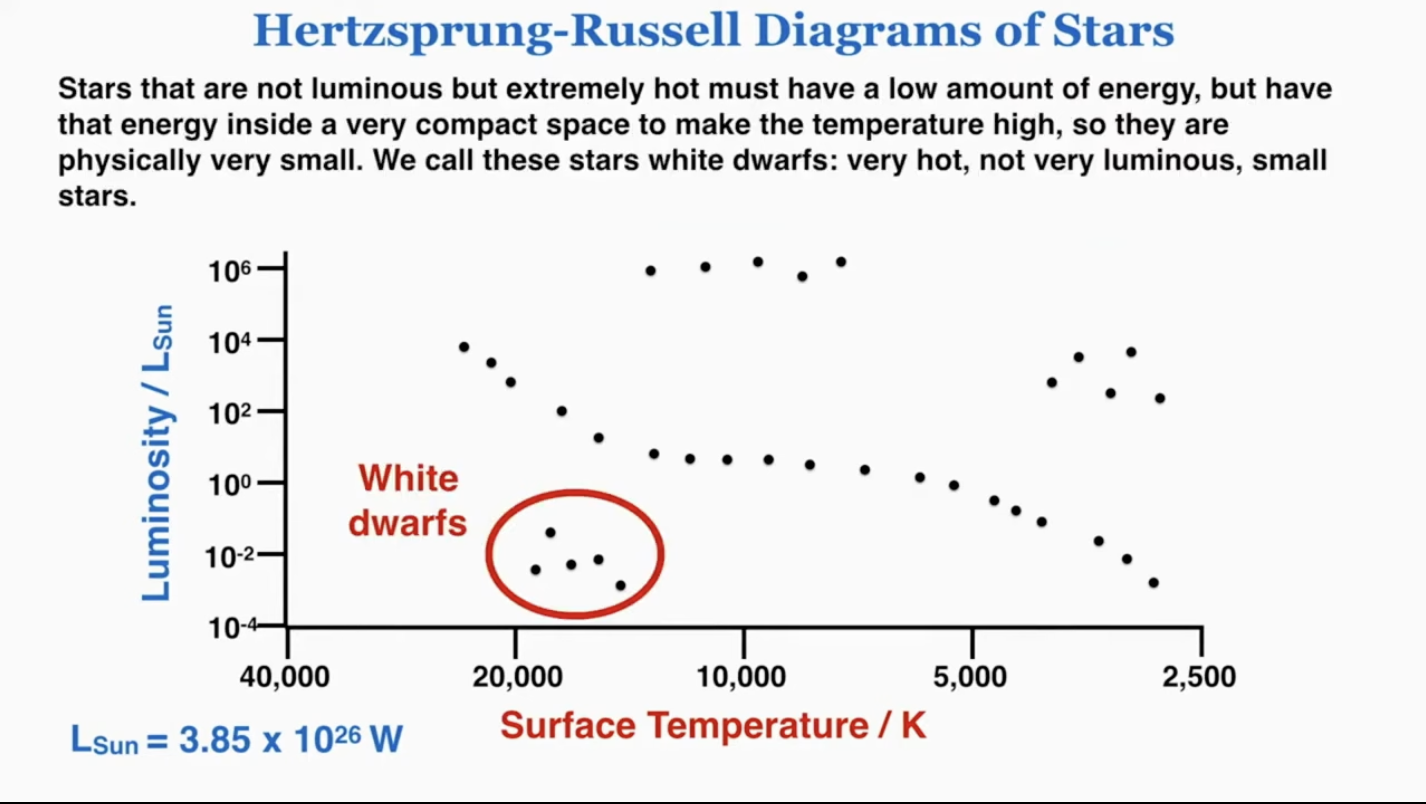
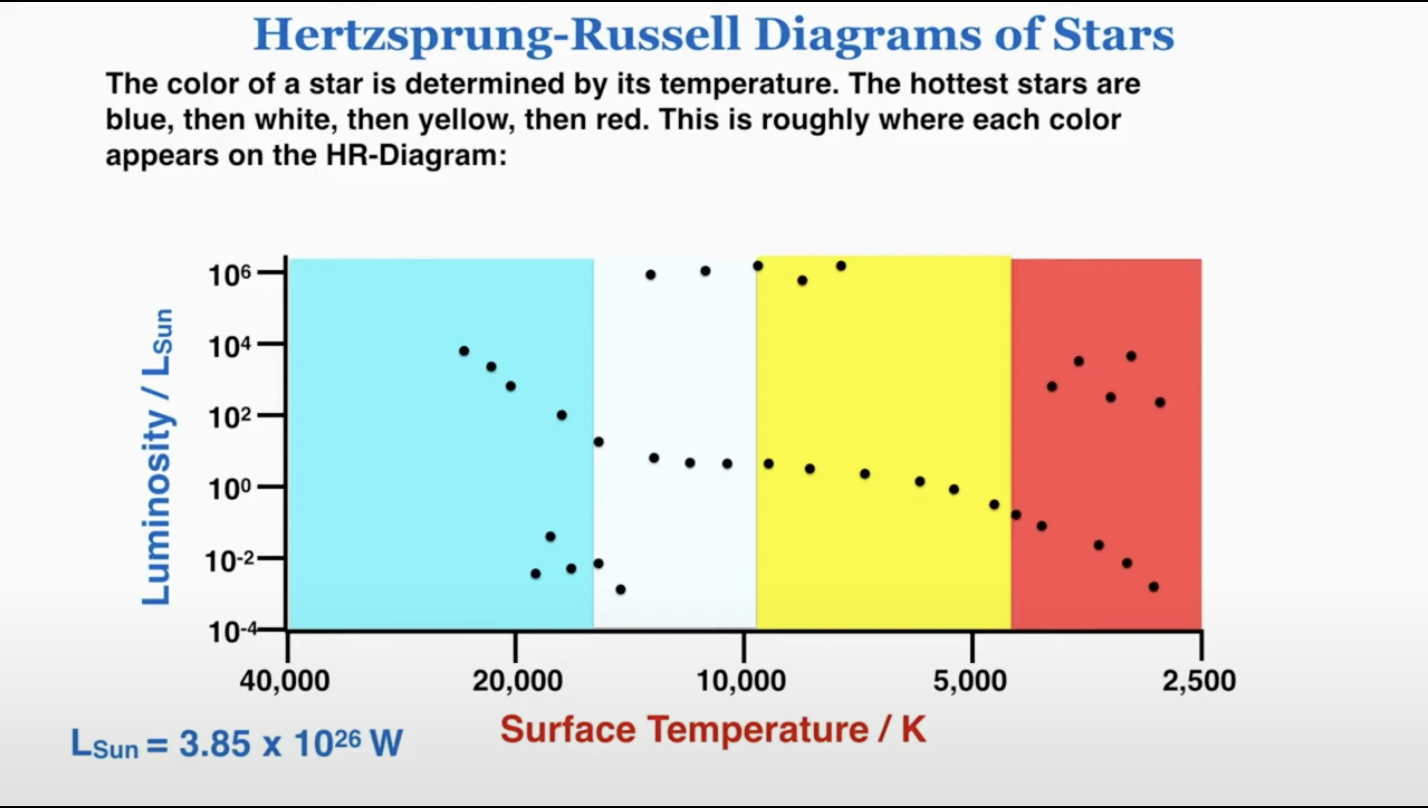
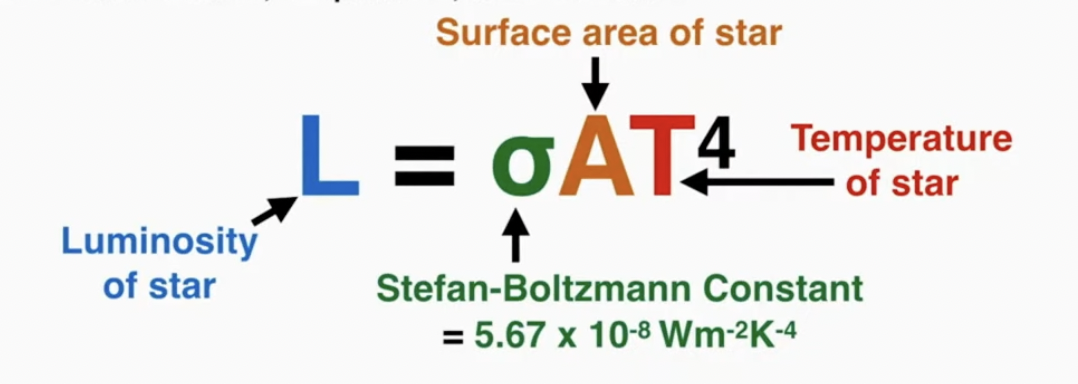
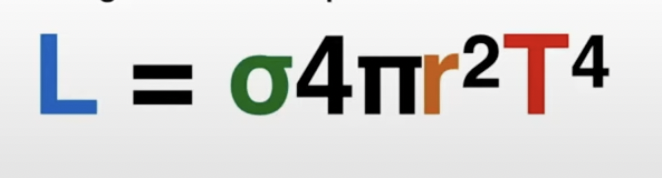
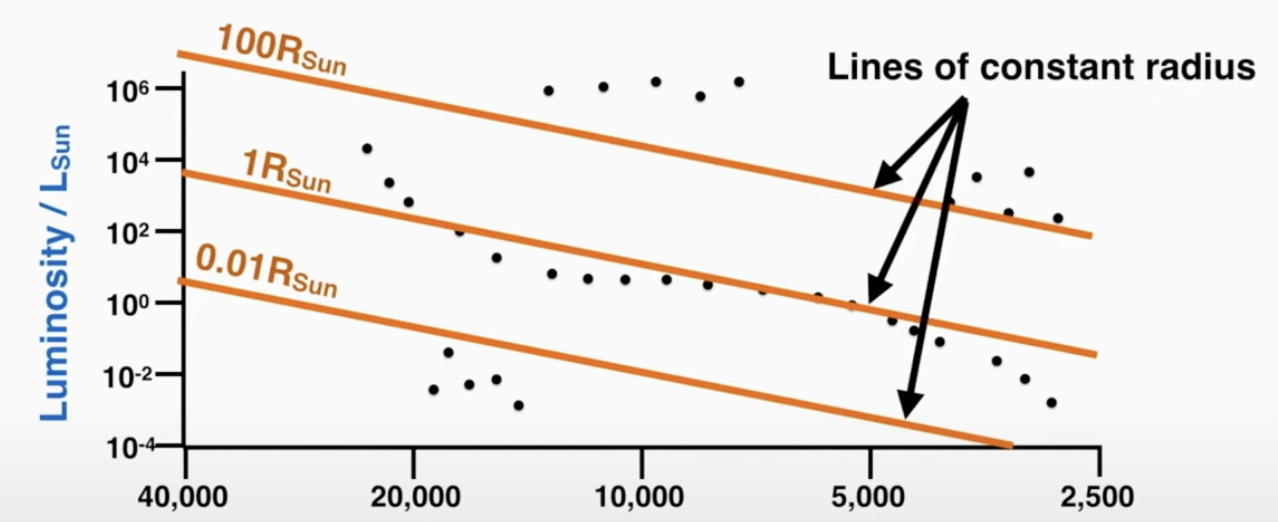
HR-diagrams: