the endocrine system
Endocrine signaling basic principles
- Signalling molecules/mediators known as hormones are secreted from endocrine cells into the bloodstream
- Endocrine cells:
- close proximity to capillary beds
- found in endocrine tissues or glands
- Endocrine glands do not have ducts
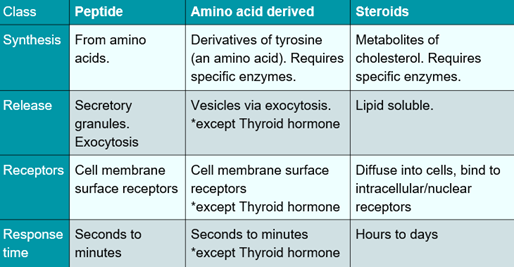
hormones can be a protein, steroid or amino acid derived. hormone types influences its cell membrane permeability- dictating properties such as time of synthesis, release, receptor location
the classic 7 endocrine glands
1. Pituitary - anterior and posterior
2. Thyroid
3. Parathyroids
4. Adrenals (cortex and medulla)
5. Ovaries
6. Testes
7. Endocrine pancreas
endocrine tissues
● Hypothalamus
● Kidneys
● GI tract
● Heart
● Liver
● Adipose tissue
the hypothalamus and pituitary
● Adenohypophysis
- Anterior lobe of pituitary and Develops from an upward projection of the pharynx
- Troph cells stimulated by releasing hormones carried in the hypophyseal portal system from hypothalamic neurons (a portal system is the system of blood vessels consisting of the hepatic portal vein with its tributaries and branches. any system of blood vessels which has a capillary network at each end)
● Neurohypophysis
- Posterior lobe of pituitary and Develops from a downward projection of the brain
- Releases hormones from the large diameter neurons directly into systemic circulation (nuclei in the nervous system are a group of cells that perform the same function)
the thyroid gland
● T3 and T4 - amino acid derived hormones
● Synthesis and release depends upon: Hypothalamic-pituitary hormones or Iodine - an essential trace element
● Transported across cell membranes using facilitated diffusion
● Hormones bind to nuclear receptors - regulate transcription
● Regulates: Metabolism - basal metabolic rate and Development and growth
the parathyroid gland
● Parathyroid hormone (PTH)
○ peptide
● Regulated variables
○ plasma calcium
○ plasma phosphate
● Targets the bone, intestine and kidneys
simple negative feedback loop
Plasma [Ca2+] sensed by Chief cells
● high plasma [Ca2+]
- decrease PTH release
- decrease kidney tubule reabsorption
- decrease bone Ca2+ resorption
- intestinal Ca2+absorption
Results in lowering plasma [Ca2+]
the adrenal gland
Adrenal cortex
● Releases steroid hormones
● Glucocorticoid e.g. cortisol
● Mineralocorticoid e.g aldosterone
Adrenal medulla
● Chromaffin cells (neuronal origin) release adrenaline via exocytosis
● Releases catecholamines - adrenaline, noradrenaline
the adrenal gland
Adrenal cortex
● Releases steroid hormones
● Glucocorticoid e.g. cortisol
● Mineralocorticoid e.g aldosterone
Adrenal medulla
● Chromaffin cells (neuronal origin) release adrenaline via exocytosis
● Releases catecholamines - adrenaline, noradrenaline
the gonads
● ovaries: Cells within the developing follicles of the ovary produce steroid hormones - Oestrogen and Progesterone. Example of a gland that can switch from using negative feedback loops to positive feedback loops
● testes: Leydig cells in the testes produce the steroid hormone testosterone, this Stimulates protein synthesis and can lead to development and growth