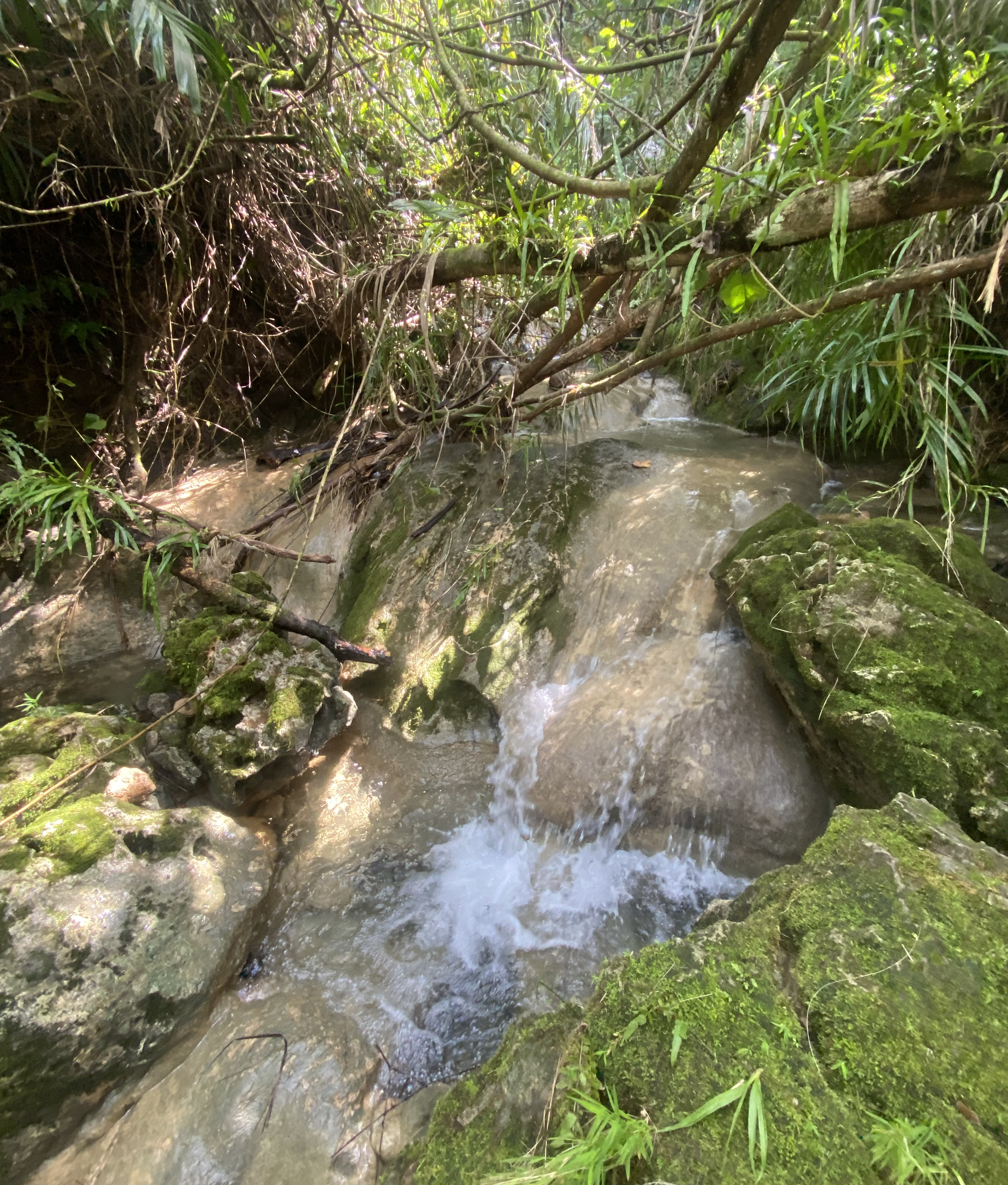
Sella Bay
Sella Bay & Facpi Point – Summary Notes
Background
Historically, the Umatac-Hagåtña road (Spanish era) connected key island centers; Sella (Sidya) was once a Spanish leper settlement.
Site includes historical features (e.g., Taleyfac Spanish Bridge).
Facpi Point is a registered U.S. National Natural Landmark (1935).
Habitat
Savanna: Hilltop grassland.
Ravine Forest: Pandanus, cycads (declining), coconut palms, orchids, ferns, mosses.
Rivers: Support eels and shrimp (ocean-breeding).
Introduced species: Philippine deer and pigs damage native plants but are hunted for food.
Geology
Asmafines River dissolves limestone, flows over volcanic rock (partly underground).
Facpi Formation: Guam’s oldest volcanic rock (basalt, exposed at Facpi Point).
Stromatolites (cyanobacteria-built rock) can be found near Sella Bay overlook.
Environmental Issues
Main problem: Erosion → mud runoff damages coral reefs and leaves land barren.
Causes: Fires, poor construction, off-roading.
Management: Ask how erosion is addressed in south Guam; consider improvements.