Abscission and senescence
Why do plants lose their leaves before the onset of winter?
In winter the soil may be frozen and so limit the availability of water, light is limited and temperature is low, so photosynthesis will be at a low level.
Leaf loss helps prevent water loss and helps to conserve energy as there are fewer tissues to supply.
When leaves senesce
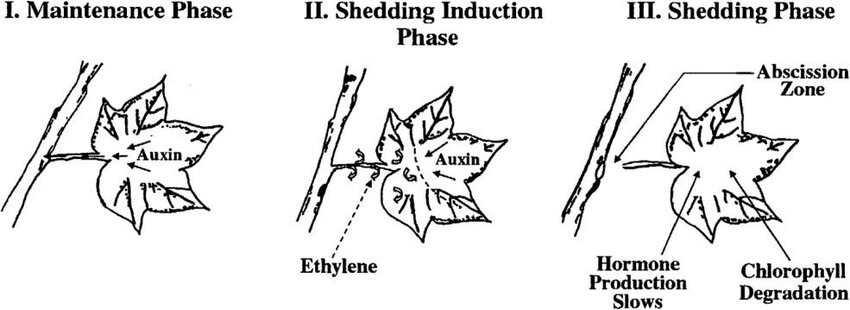
Less auxin is produced at the leaf tip
Cells in abscission zone more sensitive to ethene (more ethene is also produced)
An increase in ethene production results in more cellulase which digests the cells in the abscission zone, separating the petiole from the stem
Abscission (leaf fall)
Auxin stops inhibiting ethene
Ethene causes break down of parenchyma cells in abscission zone of peptide
Shedding leaves
Usually auxin inhibits abscission by acting on cells in the abscission zone…
Leaf senescence and falling light levels causes auxin production to drop in the tip of the leaf
This makes cells in the abscission zone more sensitive to ethene (which also causes fruit ripening)
A drop in auxin production also causes an increase in ethene production
Tis in turn activates genes to increase production of cellulase which digests cellulose
Cellulase digests the walls of the cells, separating the leaf from the stem.
Abscisic Acid (ABA)
Subsequent research has indicated that abscission is the one thing that this substance is NOT responsible for - at least not in natural circumstances
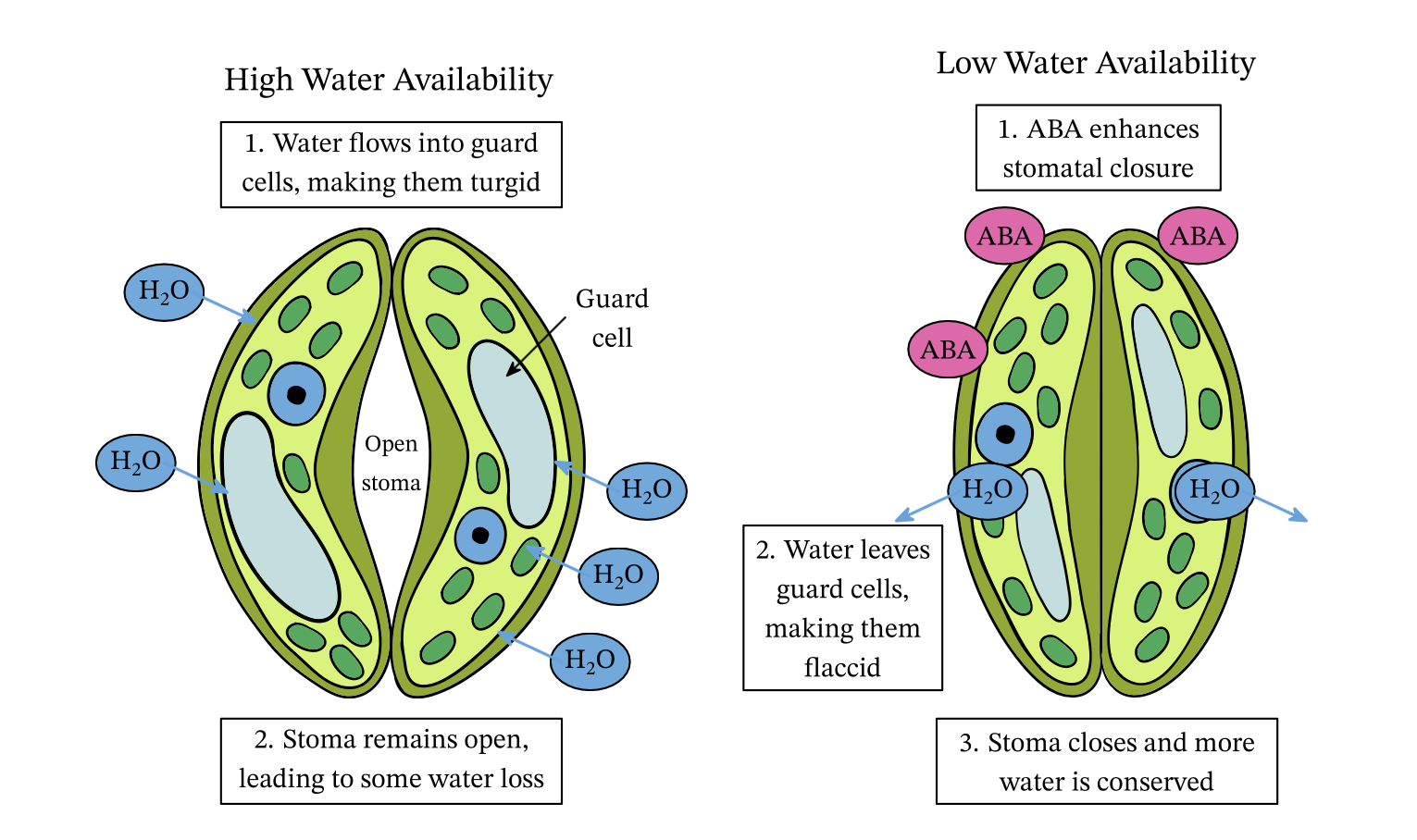
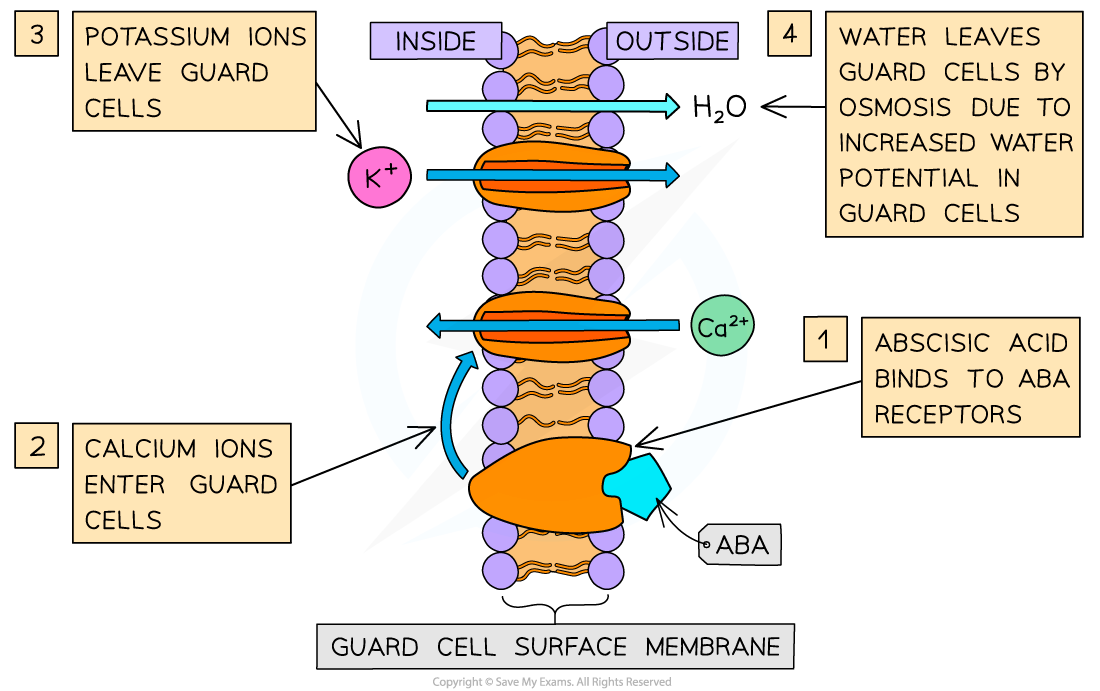
The most established role of abscisic acid is to bring about the closure of stomata in leaves suffering from severe water shortage (water stress)
It works by stimulating the expulsion of potassium ions from guard cells, which cause the stomata to close
Since this has nothing to do this leaf and fruit fall, the name abscisic acid now seems inappropriate.