B4.1 - Adaptations to the environment
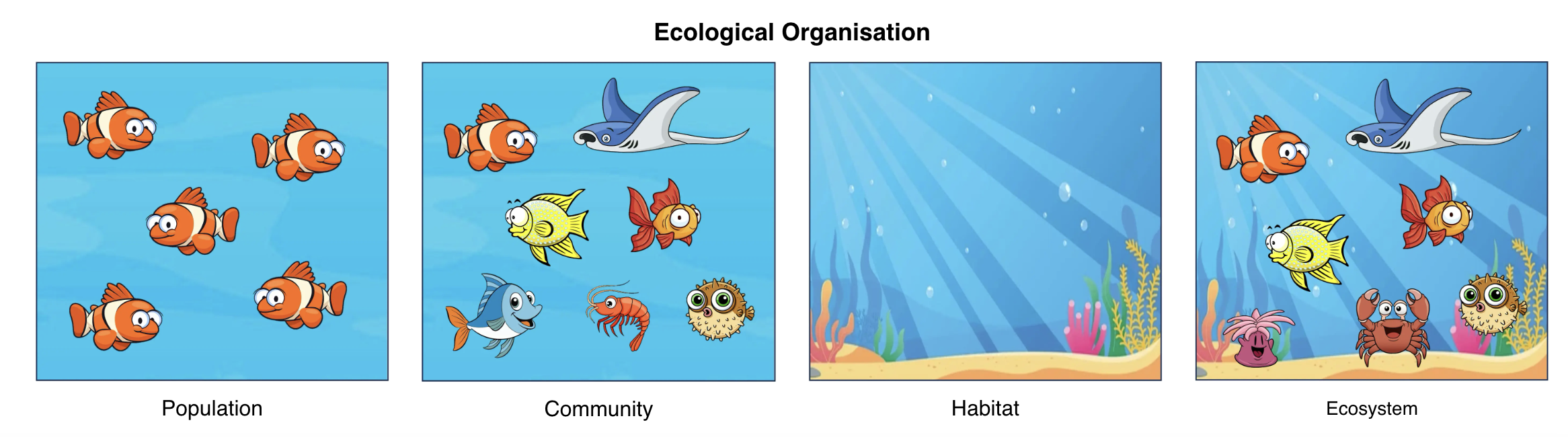
4.1.1 Habitat as the place in which a community, species, population or organism lives
A habitat is the environment in which a community, species, population or organism normally lives
Habitats may differ according to specific environmental conditions and can be described in terms of:
Geographical locations
Type of ecosystem
4.1.2 Adaptations of organisms to the abiotic environment of their habitat
Organisms need to adapt to their biotic and abiotic factors within their habitat
Biotic factors:
Biotic factors are “living” factors which have impact on feeding, predator-prey, symbiotic, mutalistic or other forms of interdependent relationships.
Examples are bacteria, fungi, plants, archaea, animals and protists
Abiotic factors:
Abiotic factors are ”non-living” physical factors. They have an influence on specific adaptations of organism to live in their respective habitat.
Examples are air, salinity, soil, temperature, light, water, minerals, pH and humidity
Adaptations organisms have:
Plants in the alpine areas
White, reflective wooly hair to combat UV radiation and low temperature
Small leaves, stunted growth to stay low to the ground to help rooting and reduce water loss
Thick, fleshy leaves to store water and nutrients
Plants in sand dunes
Thick waxy cuticle to reduce water loss
Leaves that can roll up during drought to create a humid chamber and reduce exposure to wind (reducing transpiration)
Underground stems to provide stability and can extend deep into the ground to obtain water
Accumulation of carbohydrates in root and leaf cells to store sugars and helps absorb water
Plants in swamps
Pneumatophores are vertical roots which grow into the air and absorb oxygen
Cable roots provide stability and often grow close to the ground to absorb oxygen
Stilt roots growing in a downward arch from the stem to anchor the trees into the ground and increase stability
Buoyant (seeds in water) seeds can be carried away by ocean currents and allow dispersal to fertile soil
Salt glands in leaves to remove excess salt due to increased salt water uptake
4.1.3 Abiotic variables affecting species distribution
Plant distributions are affected by temperature, water availability, light intensity, soil pH, soil salinity and the availability of mineral nutrients.
Plants have specific adaptations to the abiotic factor in their habitat.
A limiting factor is a component of an ecosystem which limits the distribution or numbers of a population.
Abiotic variables are non-living environmental conditions that can function as limiting factors to influence species distribution:
Light intensity affects the rate of photosynthesis by plants and other photosynthetic organisms
Temperature influences the rate of enzyme-catalysed reactions within the cells of living things
Soil pH and mineral content impacts the ability of a plant to grow and reproduce
Wind speeds and humidity can influence water loss in plants and dessication in soft-bodied animals
Carbon dioxide and oxygen concentrations determine the rate of photosynthesis and aerobic cell respiration
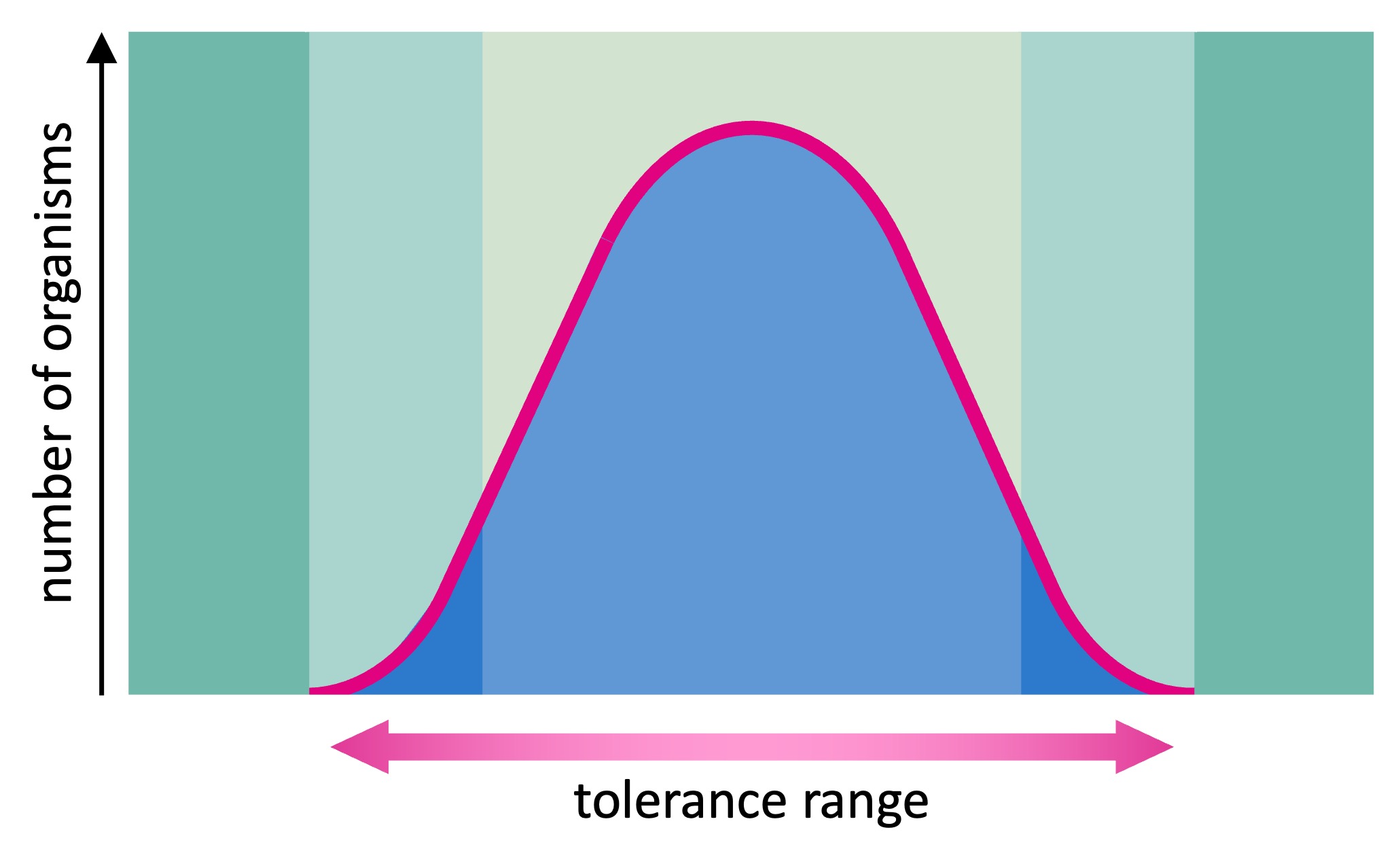
According to the law of tolerance, populations have optimal survival conditions within critical minimal and maximal thresholds
As a population is exposed to the extremes of a particular limiting factor, the rates of survival begin to drop
The distribution of a species in response to a limiting factor can be represented as a bell-shaped curve with 3 distinct regions:
Optimal zone – Central portion of curve which has conditions that favour maximal reproductive success and survivability
Zones of stress – Regions flanking the optimal zone, where organisms can survive but with reduced reproductive success
Zones of intolerance – Outermost regions in which organisms cannot survive (represents extremes of the limiting factor)
4.1.4 Range of tolerance of a limiting factor
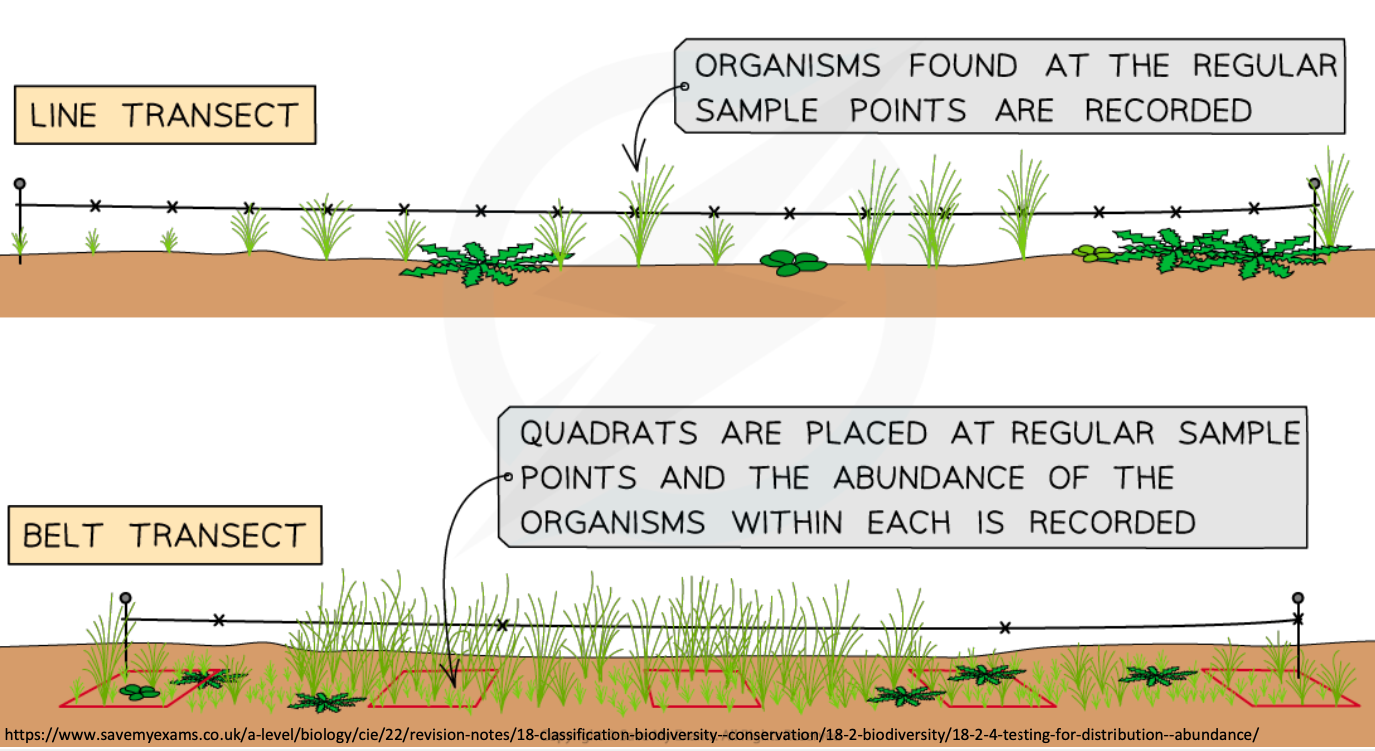
To investigate the range of tolerance of an abiotic factor such as pH, temperature or light intensity, a transect can be used. There are different types of sampling data with transects. The two most important ones are line transects and belt transects.
4.1.5 Conditions required for coral reef formation
Coral reefs are biodiverse marine ecosystems which are only able to develop where conditions are suitable for hard corals.
The corals are animals, which share a mutualistic relationship with tiny algael cells called zooxanthellae, form the rocky structure of the reef.
Zooxanthellae perform photosynthesis, so light is required.
Conditions required for coral reef formation:
Low depth so that light can penetrate and photosynthesis can be carried out
Clarity for light penetration
Salinity to avoid osmotic problems
Warm temperature is the optimal temperature for coral and zooxanthellae
pH above 7.8 to allow deposition of CaCO2 in the coral skeleton
4.1.6 Abiotic factors as the determinants of terrestrial biome distribution
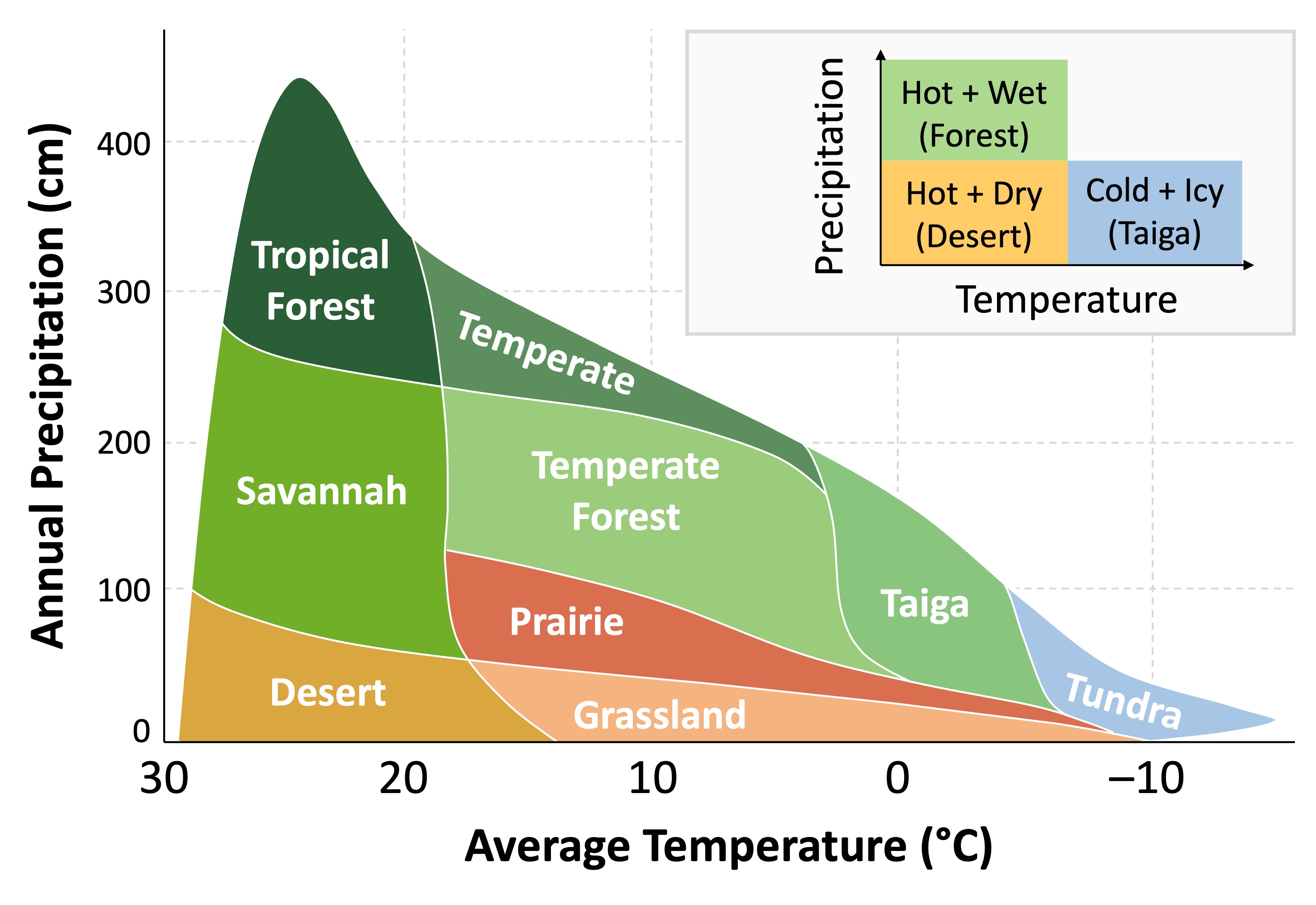
A biome is a biogeographical unit consisting of a biological community, that has formed in response to the physical environment in which they are found, and a shared regional climate.
Earth temperature and annual rainfall are the two main abiotic factors which determine the distribution of terrestrial biomes.
The species composition of organism living in the biomes will vary depending on geographical location, but the adaptations are likely to be similar.
4.1.7 Biomes as groups of ecosystems with similar communities due to similar abiotic conditions and convergent evolution
There are a number of different biomes that are recognised according to their specific characteristics
These include deserts, grasslands, tropical and temperate forests, taiga (boreal forests) and tundra
Deserts
High temperature
Minimal variation
Very low precipitation
Plant communities include: little vegetation, often with spines for leaves adapted for water conservation
Grasslands
High/medium temperature
Dry and cold seasons
Medium/high precipitation
Plant communities include: grass species, little significant tree growth because of lack of water
Tropical forests
High temperature
Minimal seasonal variation
High precipitation
Plant communities include: very high plant biodiversity
Temperate forests
Medium temperature
Warm summers, cold winters, spring and autumn
Medium/high precipitation
Plant communities include: deciduous broad leafed trees which loose leaves in colder seasons
Taiga (boreal forests)
Low temperature
Short summers, long cold winters
Medium/high precipitation
Plant communities include: evergreen forests dominated by conifer trees
Tundra
Very low temperature
Short summers, very cold winters
Medium/low precipitation
Plant communities include: no trees because of lack of water and short growing season, soil is frozen for most of the year so little growth
Plants growing in the tundra all share similar adaptations to the abiotic environment, no matter where in the world they grow. They typically are close to the ground, small in height, slow growing and have hair to trap heat. They germinate, flower, and set seeds within a very short growing season. Their waxy leaves help to preserve water and the shallow root system helps to avoid the permafrost.
4.1.8 Adaptations to life in hot deserts and tropical rainforest
Adaptations to life in hot deserts
Cacti
Spines, for easier access to sunlight and to prevent excess water evaporation
Roots, to absorb rainwater quickly
Stomata which only open at night (to reduce water lose)
Stems to store water
Waxy cuticle to reduce transpiration
Fennex fox
Their ears, radiate body heat and help keep the foxes cool
Hair, to insulate them during cold nights and protects them from the hot sun by reflecting light
Hair on their paws to walk on hot sand
Adaptations to life in tropical rainforests
Spider monkey
Strong and long limbs, to swing through trees and to collect food
Tail, used for balance and to hang from trees
Philodendron
Absorb water and nutrients from air and rain
Their roots anchor to tree trunks, branches or rocks