Gymnosperms and Angiosperms
Gymnosperms and Angiosperms
Continue the trend of reduction in the size of the gametophyte
The male gametophyte is pollen which has non-motile sperm inside, eliminating the need for water
Sperm travels by air or mutualistic relationships so it lives in drier habitats.
Advantages of seeds
Protect and nourish the embryo
Can remain dormant for a long time
Dispersal through wind, water, and animals
Sporopollenin - found away from water, farther inland. It’s sperm travel by wind/animal pollinators
Plant Embryo - Sporophyte, Seeds - Multicellular
Requirements of seed formation
Development of an ovule from the sporophyte
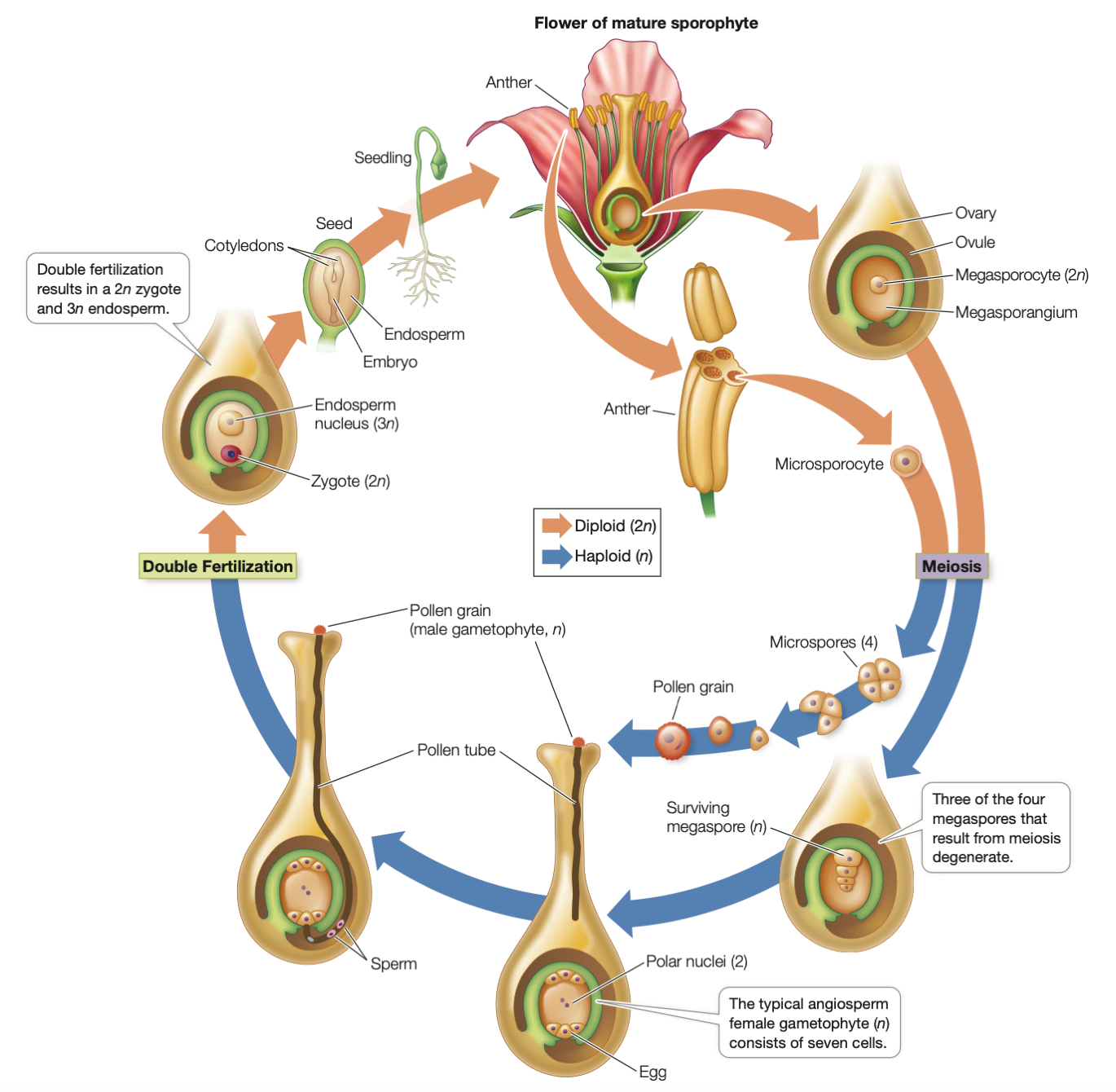
Meiosis produces megaspores which form the female gametophyte
The egg develops and is fertilized in the gametophyte
Embryo produced by zygote
Testa produced by the integument of the gametophyte nourishes the zygote
Gymnosperms have naked or exposed seeds
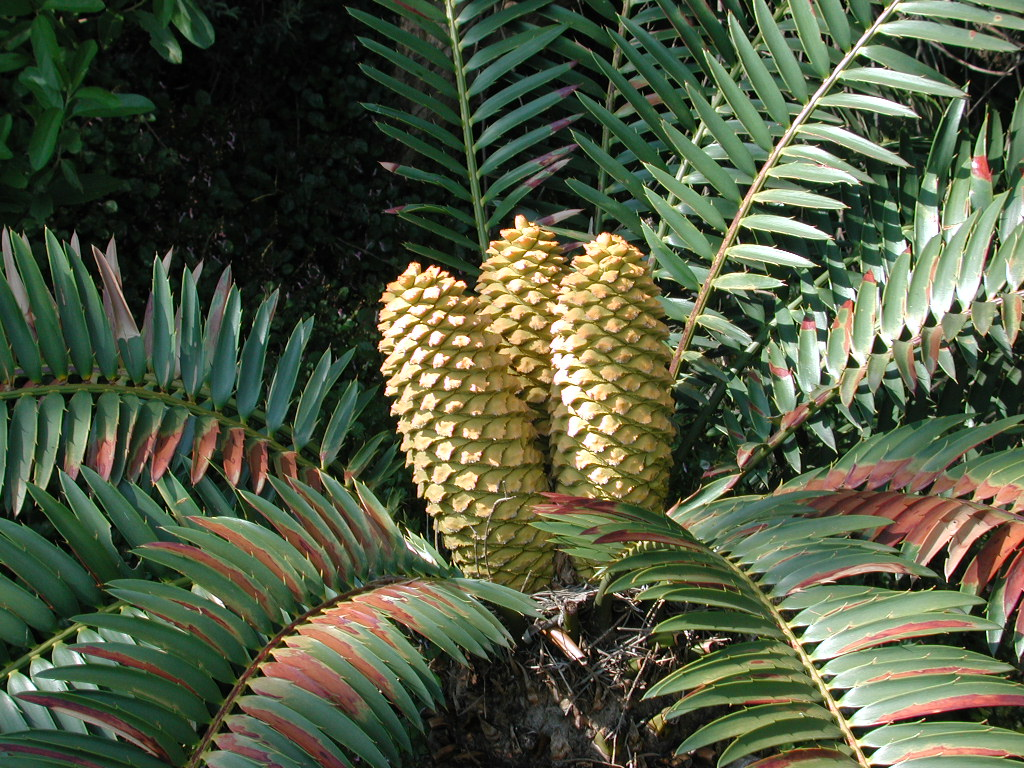
Cycads: Class Cycadospida
Similar in appearance to palm trees
Seed cones
Flagellated sperm
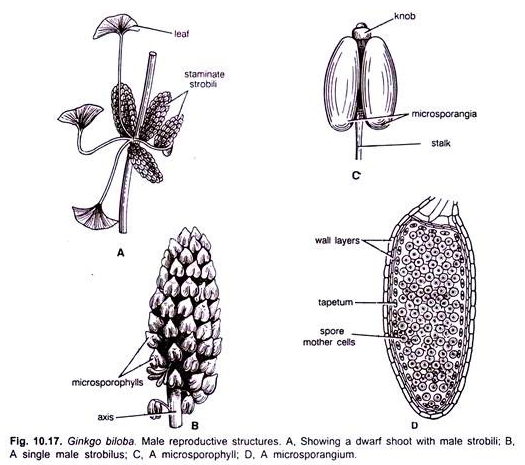
Dioecious
Gnetophytes: Class Gnetopsida
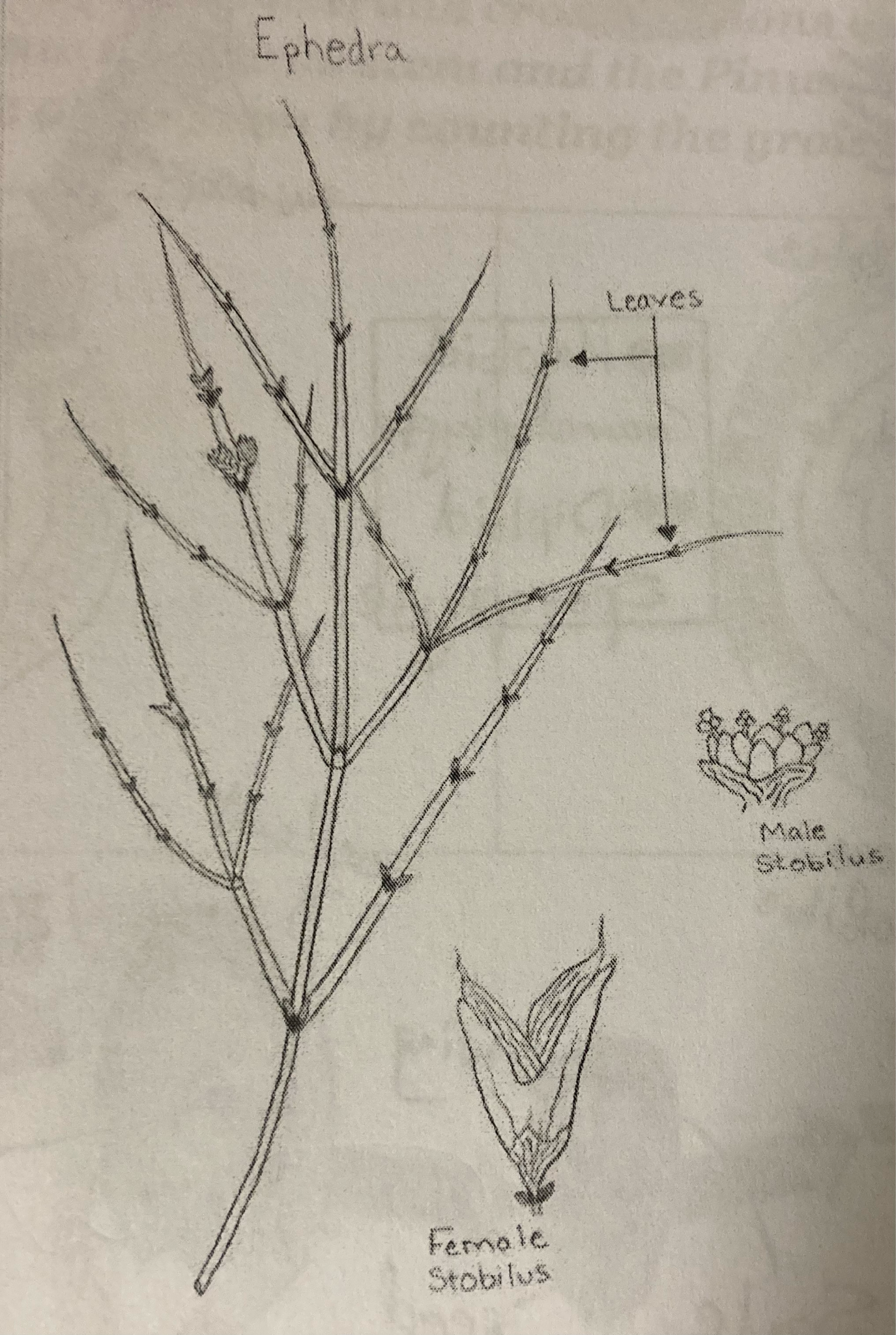
Xylem has vessel elements
Can be trees, shrubs, or vines
Seed cones
Dioecious
Non-flagellated sperm
Welwitschia leaves can grow 13 feet long.
Ex - Ephedra and Welwitschia
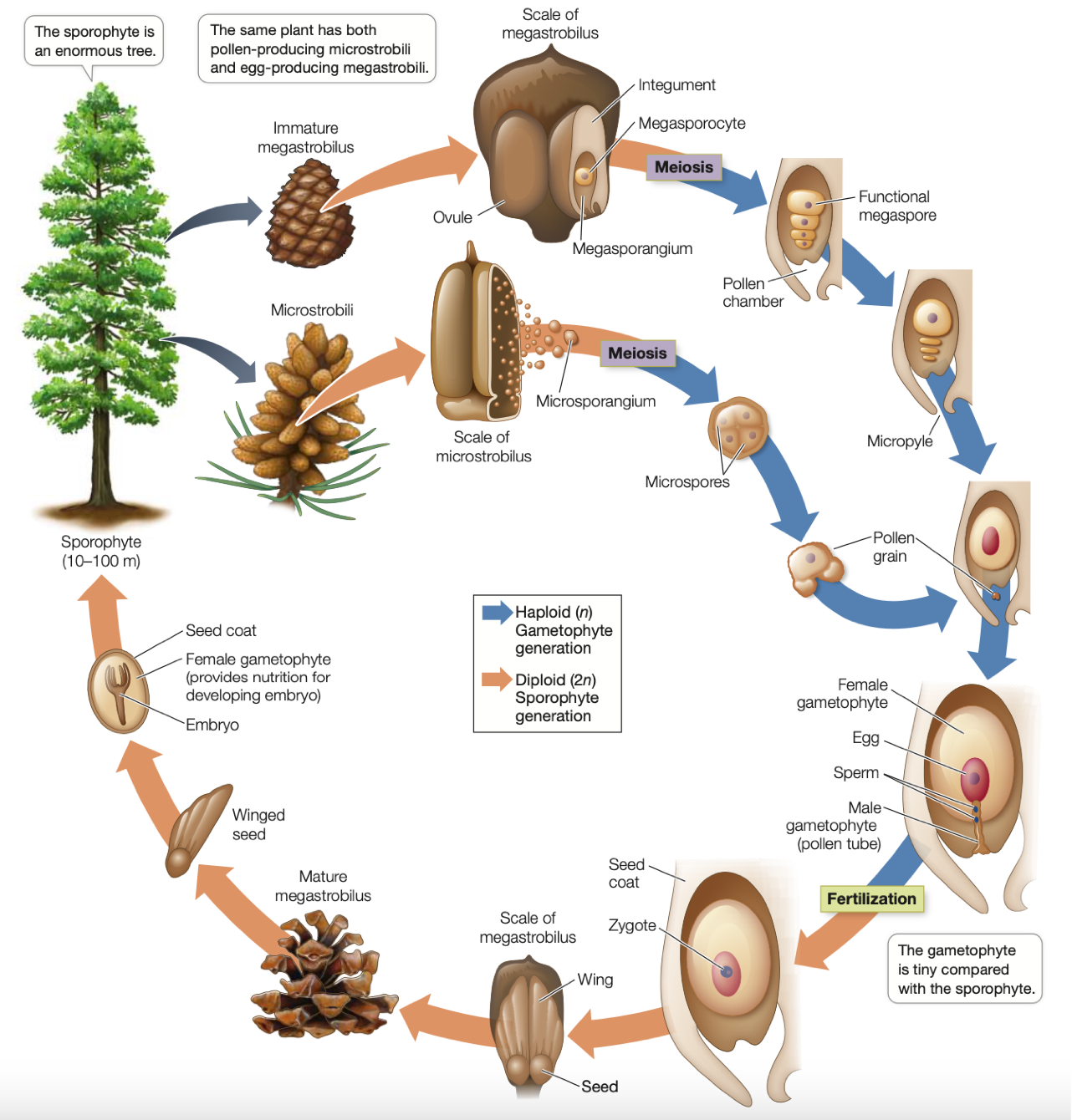
Conifers: Class Pinopsida
Can be shrubs or trees, Needle-like or scaley leaves
Found in cold and dry environments, Seed cones, Monoecious
Lack of vessel elements in their xylem
Undergo secondary growth
Adaptive to fire -> Helps reproduce
Female cones are larger than male cones, Female cones at the top and male cones on lower branches -> helps prevent self-fertilization -> sperm won’t fall on female cones.
Angiosperms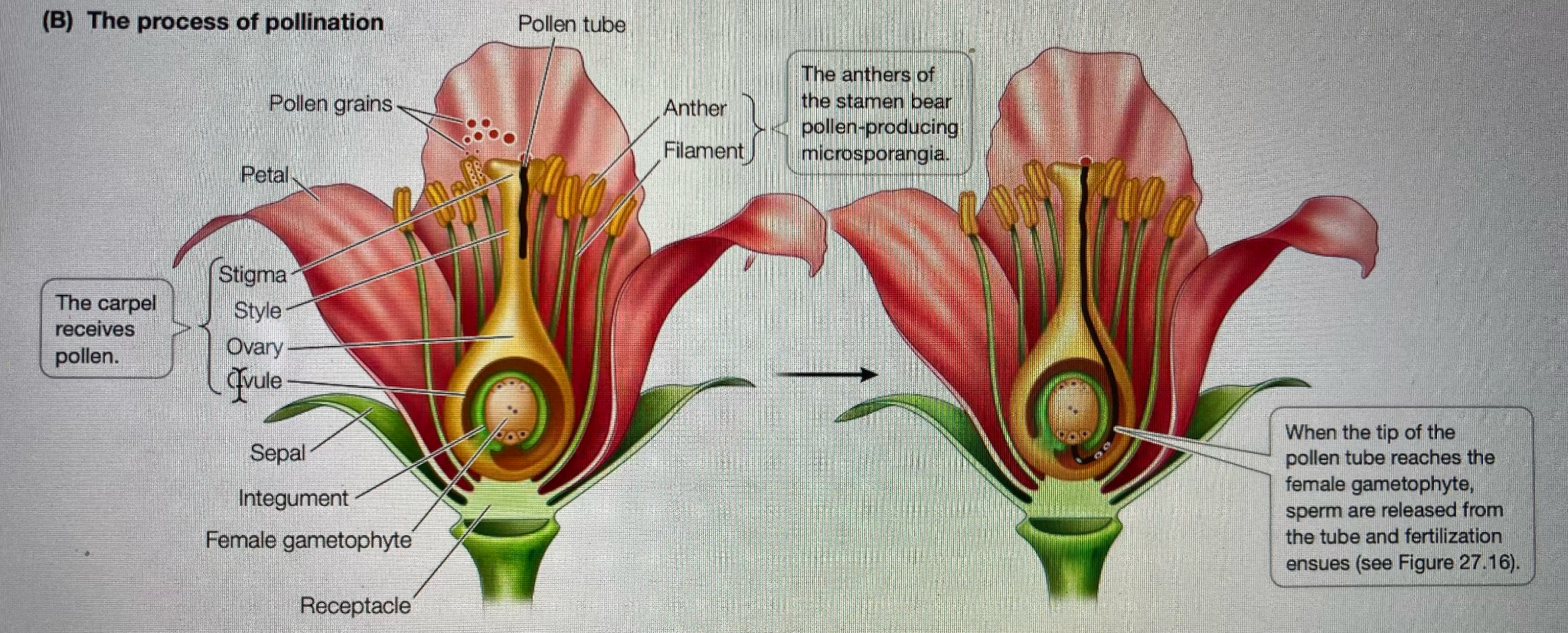
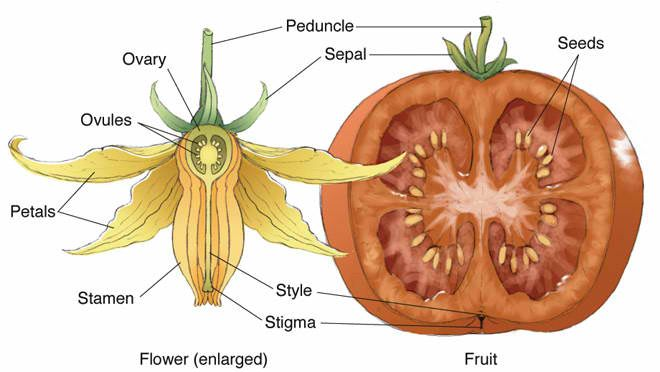
Flowers grouped together → Inflorescence
A
B
Plants that produce both male and female sex organs (flowers) on the same plant → monoecious, aka Perfect flower
Imperfect flower - Male and female flowers on different plants → dioecious
Monocots usually have parallel veins, complexly arranged vascular bundles, a fibrous root system, and floral parts arranged in multiples of three.
Dicots usually have netlike veins, vascular bundles arranged in rings, a taproot system, and floral parts in multiples of four or five.
Double Fertilization - Two pollen create pollen tubes at the top of the stigma and enter to ovary, one pollen combines with an egg to create a zygote and then an embryo, and the other pollen combines with two polar nuclei to create a triploid endosperm nutritive coating which is used as food for the embryo.
Primary function of fruits in angiosperms → Seed dispersal