Baroque Italy/Spain
Rome
Florence
Protestant reformation of the north influence art of Spain
Spanish Inquisition:
more active in France (more protestant activity in France than Spain becuase it is further north)
art can serve as propaganda for the church thorugh emotional message portrayed
→ eventually used by kings/monarchs
Characteristics of baroque art
diagonals
exagerated chaioscuro (lighitng contrast)
lots of action and drama
emotional and psychological activity drawn from viewer
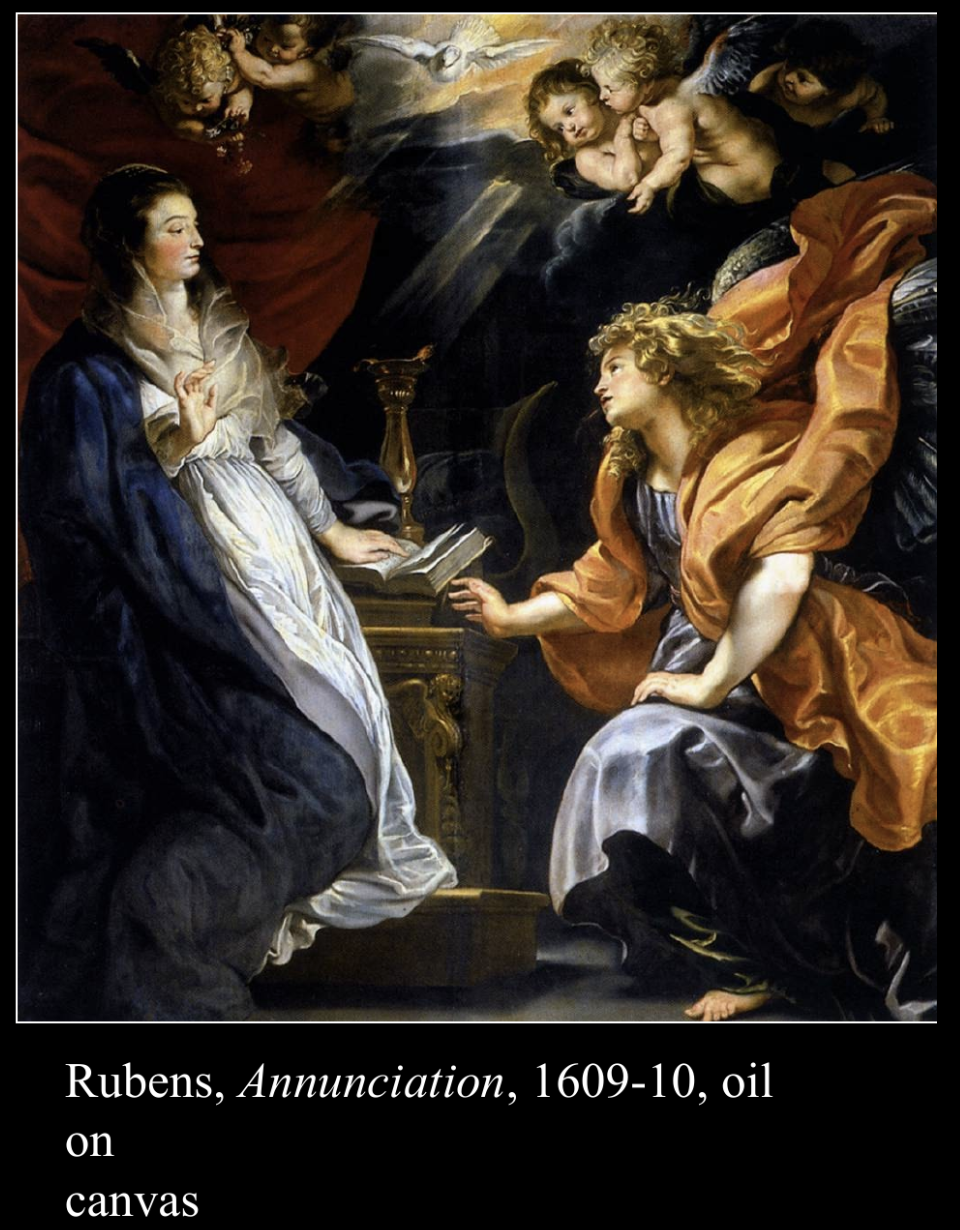
art education becomes codifeid
art academies begin appeariing (Florencine Academy)
artists are looked upon as professionals
Italy
breaks from renaissance
response to protestant reformation (protestants avoided art in their religious sites), counter reformation emerges as catholic art
Bernini;
counter reforamtion
engagning viewers emotionally, spiritually, dramatic and theatric style
very religious hiimself
infuses rome with boroque style
heavily commissioned because father was pope’s favorite artist
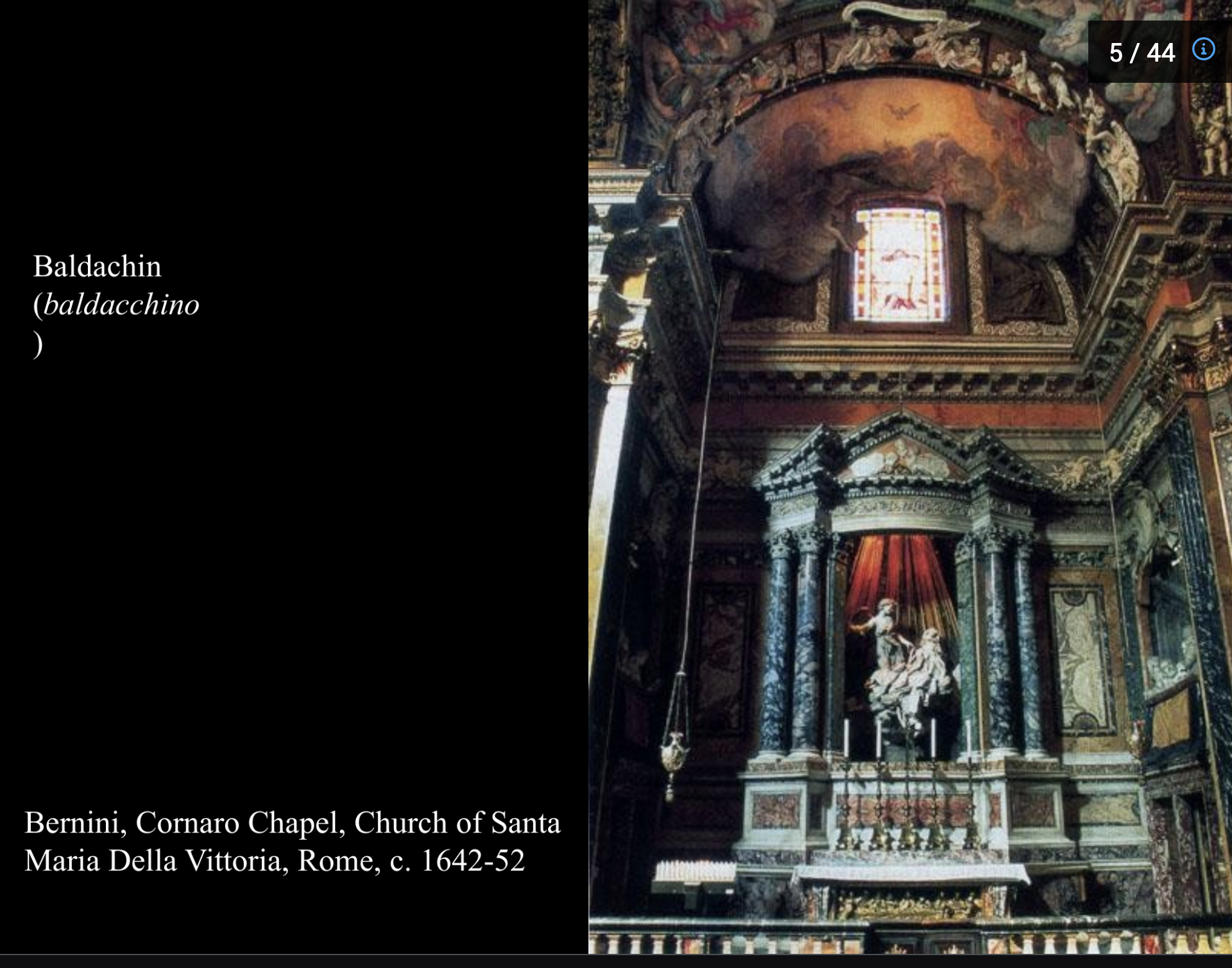
funerary chapel
baldican/baldacino: canopy cover over sculpture
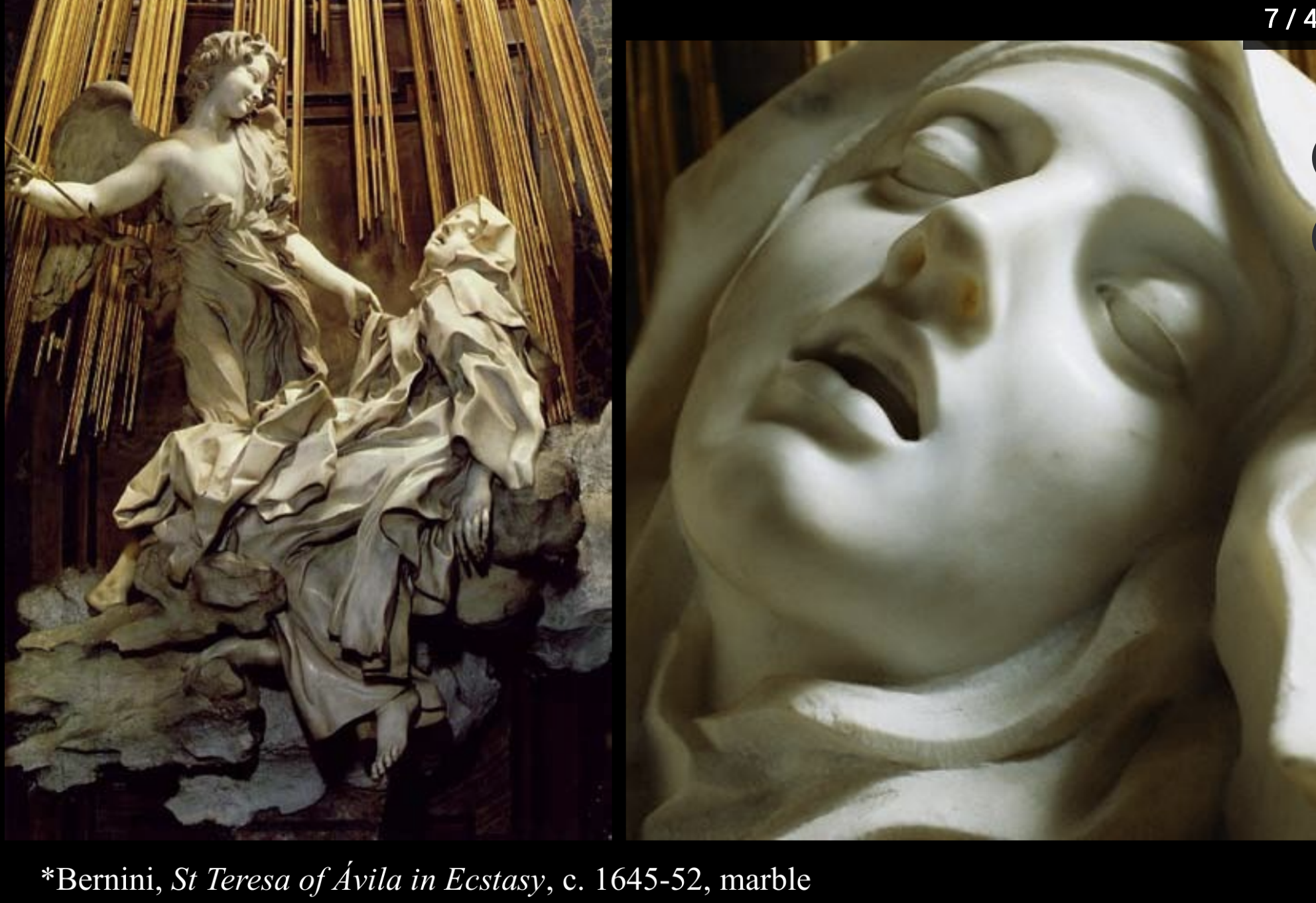
Teresa Avila: spanish mystic
establishes a lot of convents despite being in a male dominated setting, wrote a lot
religious ecstasy
provokes emotional response
erotic
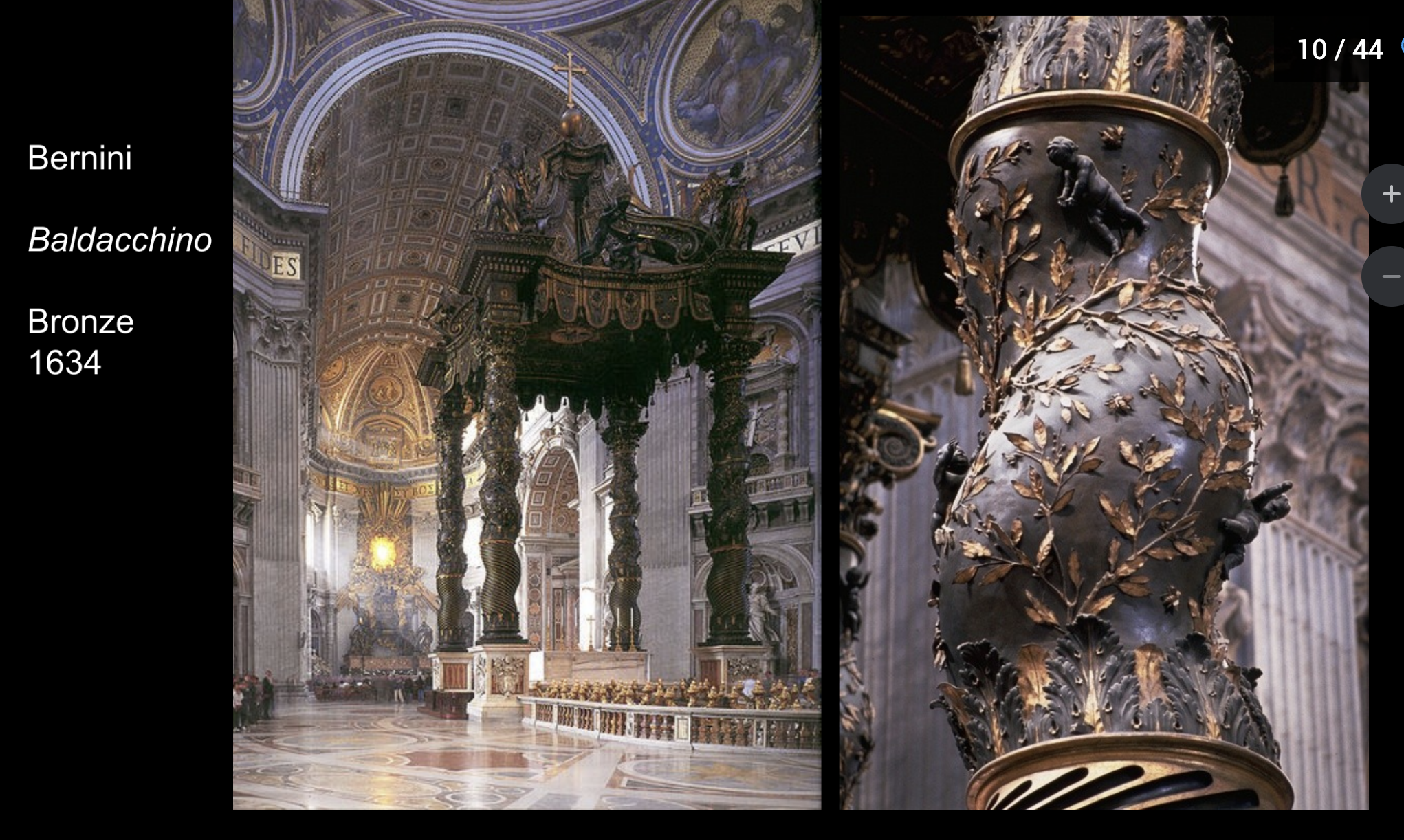
baldacchino: bronze canopy
houses bones of St. Peter (the first pope)
solomonic columns: twisting columns
93 tons of bronze
symbolism:
prestige
noted child bearing
bees on it symbolized family Pope Barberini
dropped lizards into wax to be cast into bronze
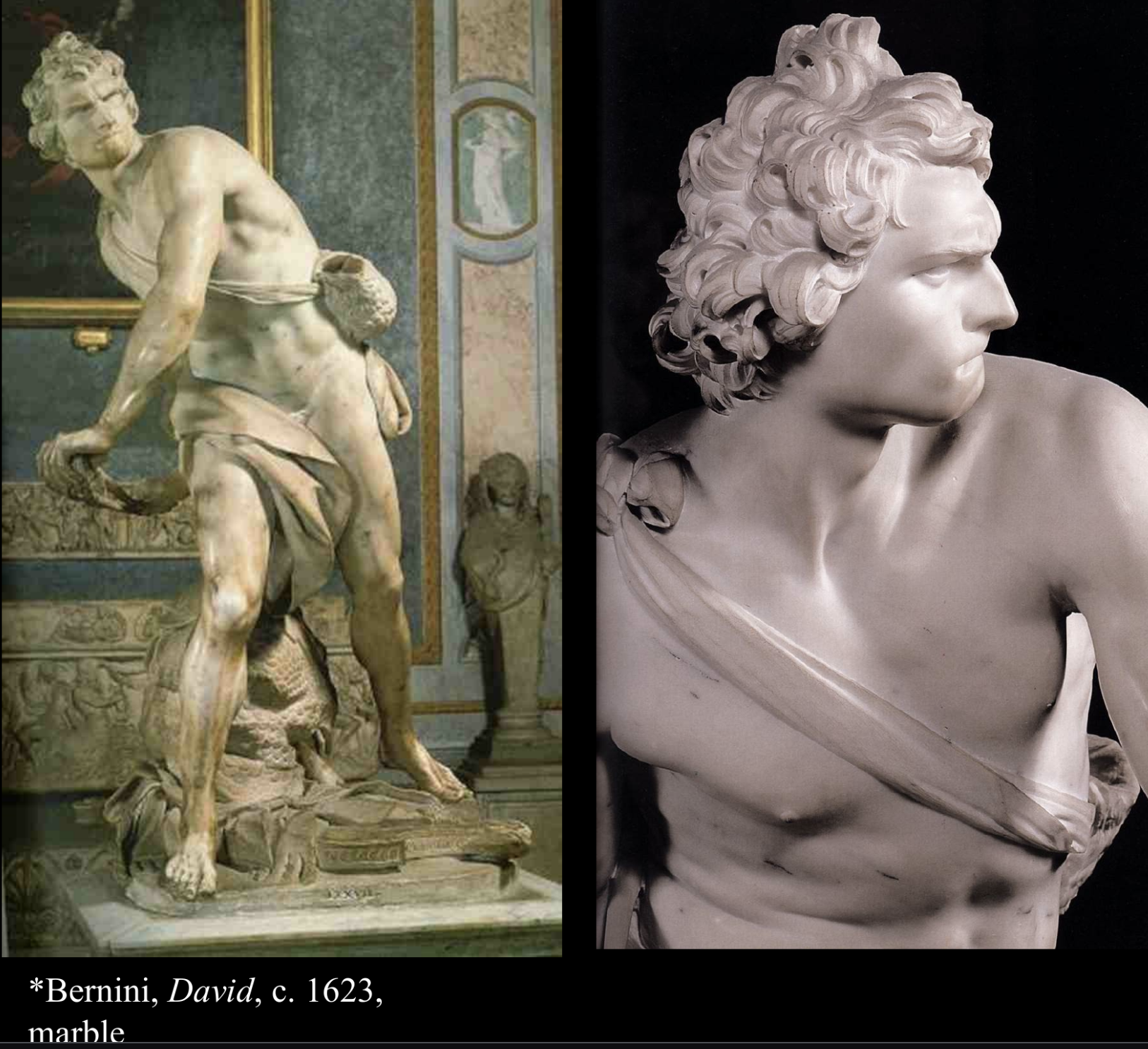
boroque ideal:
very emotional
looks older than what most davids are depicted as