2 blood coagulaltion
Platelets (thrombocytes)
Disk shaped cells 1X3 microns in size
Lack nuclei but contain mitochondria, other cytoplasmic organelles and dense bodies
Erythrocyte: platelet ratio: 20:1 Platelets are descendants of Megakaryocytes
Platelet factor IV and -thromboglobulin are substances normally present within intact platelets.
Beta thromboglobulin Pro-platelet basic protein
A protein stored in alpha granules of platelets and released in large amounts after platelet activation
It is a chemokine
Platelet granules
Dense granules contain:
ADP, ATP, Ca2+, and serotonin
-Granules contain:
Platelet factor IV, -thromboglobulin, PDGF, thrombospondin, fibrinogen and von Willebrand factor
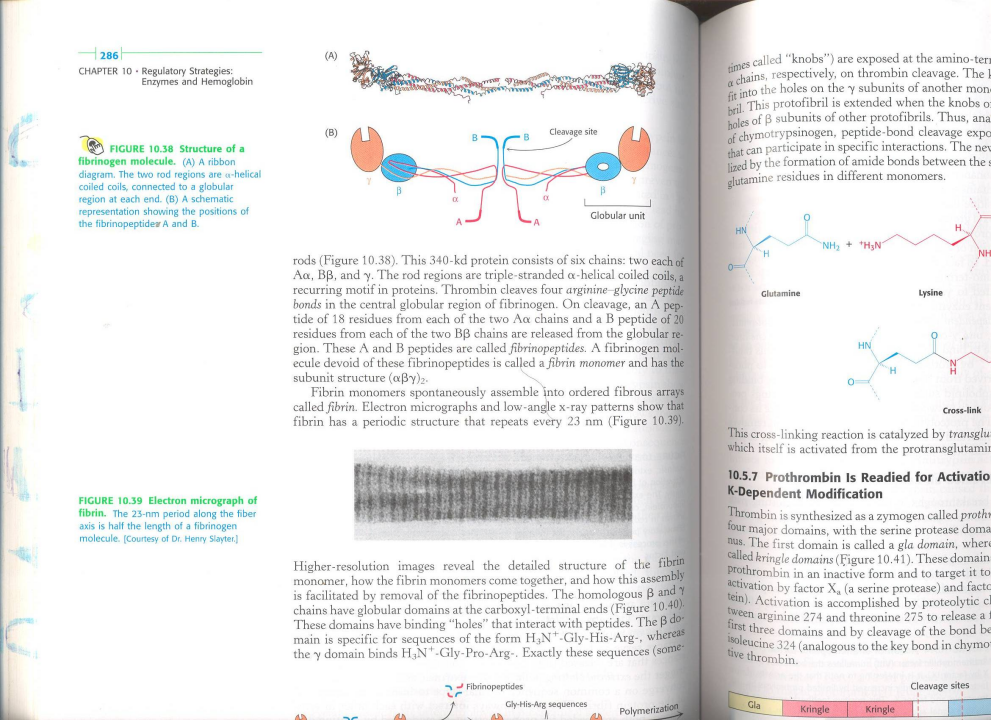
Fibrinogen (Factor 1)
Length 460 Å
Mass: 340 kdal
Consists of six polypeptide chains: 2(A, B, )
Thrombin cleaves 4 Arg-Gly peptide bonds in fibrinogen
Fibrinopeptides…..1
2 A peptides (18 aa residues each) and 2 B peptides (20 aa residues each)
Fibrin monomer: ()2 representing 97% of the amino acid residues of fibrinogen
Fibrinopeptides….2
Have large net negative charges
Aspartate and glutamate residues in abundance
Fibrinopeptides…..3
In addition tyrosine-O-sulphate which is negatively charged is found in fibrinopeptide B
These surface negative charges repel each other and keep fibrinogen molecules apart
in vivo activators of the intrinsic pathway
Collagen and other sub-endothelial vessel wall constituents
Gram-negative bacterial endotoxins
Cell-wall products from gram-positive organisms
Some fatty acids
Antigen-antibody complexes
In vitro activators of the intrinsic pathway
Activators
Glass
Kaolin
Some acids
Non-activators
Silicon
Some plastic surfaces