Melody
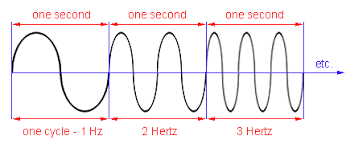
1 Cycle or Hz
Notes on the staff show:
graphic notation
pitch
duration
tablature
Pitch: The position of a note on the staff determines its pitch. Each line and space on the staff represents a different pitch. The vertical placement of a note (whether it's on a line or in a space and which line or space it occupies) indicates the specific pitch of that note. For example, notes placed higher on the staff represent higher pitches, while notes placed lower represent lower pitches.
Duration: The duration of a note is represented by the shape of the note head, as well as additional symbols like stems, flags, or beams. The shape of the note head (e.g., whole note, half note, quarter note, etc.) indicates the duration or length of time the note is held. The presence of stems, flags, or beams attached to the note heads further modifies their duration and rhythmic value.
Graphic Notation: Graphic notation is a form of musical notation that uses visual symbols or graphics to represent music, often beyond the scope of traditional music notation. It can include non-standard symbols, shapes, diagrams, or images to convey musical ideas or instructions that might not be easily notated using standard notation. Graphic notation allows composers to explore and communicate musical ideas that might involve extended techniques, unconventional sounds, or expressive gestures.
Tablature: Unlike traditional staff notation that represents pitch and duration using notes and symbols, tablature (tabs) is a form of notation primarily used for fretted string instruments like guitar, bass, or ukulele. It shows where to place fingers on specific strings and frets to produce particular pitches. Tablature uses lines representing strings and numbers indicating which frets to press on those strings, enabling players to replicate specific musical passages without necessarily reading traditional sheet music.
Higher and lower pitches defined how?
wave frequency
wave intensity
octave (8ve)
Wave Frequency: Pitch is directly related to the frequency of sound waves. Higher pitch sounds are produced by waves with higher frequencies, meaning they vibrate at a faster rate per second. For instance, a high-pitched whistle produces sound waves with a higher frequency than a low-pitched drum.
Wave Intensity: While pitch is mainly determined by frequency, the intensity or amplitude of sound waves also influences our perception of pitch. However, intensity primarily relates to volume or loudness rather than pitch. Higher amplitude doesn't necessarily mean a higher pitch, but it can affect how we perceive the strength or loudness of a sound.
Octave (8ve): In music theory, an octave refers to a specific interval between two pitches where the frequency of one pitch is double (or halved) the frequency of the other. For example, if a note has a frequency of 440 Hz (A4), the next higher octave (A5) will have a frequency of 880 Hz. Moving up or down by an octave results in a doubling or halving of the frequency, but the perceived pitch remains the same, although it may sound higher or lower.