Adverse Effects & Considerations 😵
Chapter 50: Adverse Effects, Interactions, and Contraindications
To ensure safe medication administration and prevent errors, nurses must know the therapeutic effect, potential adverse effects, interactions, contraindications, and precautions for each medication they administer.
Every medication has the potential to cause adverse effects. These are undesired, inadvertent, and harmful effects of the medication. Adverse effects can range from mild to severe, and some can be life-threatening.
Medications are chemicals that affect the body. With concurrent use of medications, there is a potential for an interaction. Medications can also interact with foods and dietary supplements.
Contraindications and precautions for specific medications are conditions (diseases, age, pregnancy, lactation) that make it risky or completely unsafe for clients to take them.
Anticipation of adverse effects, interactions, contraindications, and precautions is an important component of client education. Both the nurse and the client should know the major adverse effects a medication can cause. Early identification of adverse effects allows for timely intervention to minimize harm.
Adverse Effects
Central Nervous System Effects
From either central nervous system (CNS) stimulation (excitement) or CNS depression
Nursing Actions: Implement seizure precautions for CNS stimulation. QS
Client Education: If CNS depression is likely, do not drive, operate heavy machinery, or participate in other activities that require alertness.
Extrapyramidal Symptoms
Irregular body movements: tremors, rigidity, restlessness, acute dystonia (spastic movements of the back, neck, tongue, face), drooling, agitation, shuffling gait
Can take a few hours or months to develop
Nursing Actions
These symptoms are more common with medications affecting the CNS (those that treat mental health disorders).
Keep clients safe when movements and balance are uncontrollable.
Anticholinergic Effects
Result from muscarinic receptor blockade and affect the eyes, smooth muscle tone, exocrine glands, and heart.
Nursing Actions
Have clients sip fluids to relieve dry mouth.
Tell clients to wear sunglasses outdoors to reduce photophobia.
Suggest that clients urinate before taking the medication to lessen urinary retention.
To reduce the risk of constipation, instruct clients to increase dietary fiber and fluids and to increase exercise.
Remind clients to avoid activities that could lead to overheating, because there is a decreased ability to produce sweat to cool the body.
A nurse is teaching a client who has a new prescription for oxybutynin about managing the medication’s anticholinergic effects. Which of the following instructions should the nurse include?
(Select all that apply.)
A
Take sips of water frequently.
B
Wear sunglasses when outdoors in sunlight.
C
Use a soft toothbrush when brushing teeth.
D
Take the medication with an antacid.
E
Urinate prior to taking the medication.
A nurse is teaching a newly licensed nurse about adverse effects of medications. Sort the adverse effects into extrapyramidal or anticholinergic reactions.
Tremors
Constipation
Drooling
Shuffling gait
Dry mouth
Photophobia
Extrapyramidal
Anticholinergic
Cardiovascular Effects
Involve blood vessels and the heart.
Antihypertensives can cause orthostatic hypotension, beta blockers and calcium channel blockers can cause bradycardia and hypotension.
Nursing Actions: To relieve and reduce the risk for postural hypotension (lightheadedness, dizziness), instruct clients to sit or lie down and to get up and change positions slowly. Check blood pressure and/or heart rate prior to administration.
Gastrointestinal Effects
From local irritation of the gastrointestinal (GI) tract, stimulation of the vomiting center, or stimulation or slowing of bowel motility
Nursing Actions
Many medications (NSAIDs) cause GI distress.
Tell clients to try taking the medication with food, unless contraindicated, and to notify the provider about consistent GI effects.
Encourage clients to increase fluid and fiber intake to reduce constipation.
Hematologic Effects
Relatively common and potentially life-threatening
Nursing Actions
Bone marrow depression can result from anticancer medications and hemorrhagic disorders from anticoagulants and thrombolytics.
Instruct clients taking an anticoagulant to report bruising, discolored urine or stool, petechiae, and bleeding gums to the provider immediately.
Hepatotoxicity
Because metabolism of most medications takes place in the liver, the liver is particularly vulnerable to medication-induced injury. Damage to liver cells can impair medication metabolism and cause accumulation in the body or alter results of liver function tests with no obvious manifestations of liver dysfunction.
Nursing Actions
When combining two or more medications that are hepatotoxic, the risk for liver damage increases.
Liver function tests are essential when a client starts taking a hepatotoxic medication and periodically thereafter.
Monitor client for abdominal pain, jaundice, dark urine, and fatigue.
Nephrotoxicity
Primarily the result of antimicrobial agents and NSAIDs.
Impaired kidney function can interfere with medication excretion, leading to accumulation and adverse effects.
Nursing Actions
Aminoglycosides can cause kidney damage.
Monitor blood creatinine and BUN levels of clients taking nephrotoxic medications.
Toxicity
Severe and potentially life-threatening effects from excessive dosing, but can also occur at therapeutic dose levels.
Nursing Actions
An excess of acetaminophen can result in hepatotoxicity, which can lead to liver damage.
The antidote acetylcysteine minimizes liver damage due to acetaminophen toxicity.
There is a greater risk of toxicity and liver damage with chronic alcohol use.
Liver damage from disease states can delay or prevent medication metabolism.
Hypersensitivity/Allergies
An overactive immune response to the presence of a foreign protein or allergen
Four types: rapid hypersensitivity reactions, cytotoxic reactions, immune complex reactions, delayed hypersensitivity reactions
Rapid Hypersensitivity
Rapid or immediate hypersensitivity (atopic allergy) occurs following inhalation, ingestion, injection, or direct contact with an allergen. It includes allergies to substances (iodine, latex, venom, nuts, and medications).
Rapid hypersensitivity results in acute inflammation, histamine release, and vasoactive amines release (basophils, eosinophils, and mast cells).
Rapid hypersensitivity reactions can include superficial responses (hay fever, rhinosinusitis), and allergic asthma, anaphylaxis, and angioedema.
Allergic asthma is the production of an asthma response following exposure to an allergen.
Angioedema causes swelling of the deep tissues—usually of the lips, face, and neck—but can affect other parts of the body (the gastrointestinal system). Onset can be within the first 24 hr following dosing or can develop after long-term exposure. NSAIDs and ACE inhibitors are the most common medication that can cause angioedema.
Anaphylaxis is a rapid systemic reaction following an allergic response to an allergen. Common sources are medications, dyes, foods, and insect bites and stings.
Initial manifestations of anaphylaxis include GI cramping and apprehension, with generalized itching and hives following, progressing to angioedema and intensely large, itchy hives.
Respiratory manifestations following inflammation and mucous production include lung crackles, wheezing, decreased breath sounds, a feeling of a lump in the throat, hoarseness, and stridor. The client can develop respiratory failure and death.
Cardiovascular manifestations include weak, thready pulse, tachycardia, and hypotension.
Allergic asthma can have a similar progression following exposure to an allergen and can become life-threatening.
Nursing Actions
Before administering any medications, obtain a complete medication and allergy history.
Administer diphenhydramine to treat mild rashes and hives, and to decrease angioedema and urticaria.
Monitor closely if a client is receiving a medication known to be highly allergenic.
Provide rapid intervention including epinephrine administration for severe allergic reaction. Notify the Rapid Response team if anaphylaxis is suspected.
Remove or prevent further exposure to the allergen.
Treat anaphylaxis with epinephrine, bronchodilators, and antihistamines. Provide respiratory support and notify the provider.
Monitor ABGs and administer inhaled beta-adrenergic agonists (albuterol). The client can require intubation or a tracheostomy for severe manifestations.
Monitor hemodynamic status. The client usually experiences extensive vasodilation and capillary leak (tachycardia, weak pulse).
Monitor the client frequently, as manifestations can recur as treatment wears off.
Client Education
Wear a medical alert bracelet or other device to make others aware of the allergy.
Keep injectable epinephrine available for use at all times. Ensure you and someone close to you understand how to use it properly.
A nurse is preparing to administer diazepam to a client. Prior to administering the medication, which of the following actions is the nurse’s priority?
A
B
C
D
Immunosuppression
A decreased or absent immune response
Nursing Actions
Glucocorticoids depress the immune response and increase the risk for infection.
Monitor for manifestations of infection (fever, sore throat).
A nurse is teaching clients about their medications. Match the following medication category to the corresponding nursing instructions.
Immunosuppresant
Antihypertensive
Anticoagulant
Anticholinergic
Change positions slowly
Monitor for bruising
Monitor for an infection
Wear sunglasses when outside
Medication-Medication Interactions
Increased Therapeutic Effects
Nursing Actions: Taking some medications together can increase their therapeutic effect. For example, clients who have asthma inhale albuterol, a beta2 adrenergic agonist, 5 min prior to inhaling fluticasone, a glucocorticoid, to increase the absorption of fluticasone.
Increased Adverse Effects
Nursing Actions: Taking two medications that have the same adverse effects together increases the risk of or worsens these adverse effects. Diazepam and hydrocodone with acetaminophen both have CNS depressant effects. The risk increases when clients take both concurrently.
Decreased Therapeutic Effects
Nursing Actions: One medication can increase the metabolism of another medication and therefore decrease the blood level and effectiveness of that medication. Phenytoin increases hepatic medication-metabolizing enzymes that affect warfarin and thereby decreases the blood level and the therapeutic effect of warfarin.
Decreased Adverse Effects
Nursing Actions: One medication can counteract the adverse effects of another medication. Ondansetron, an antiemetic, counteracts the adverse effects of nausea and vomiting that result from chemotherapy.
Increased Blood Levels, Leading to Toxicity
Nursing Actions: One medication can decrease the metabolism of a second medication and therefore increase the serum level of the second medication and lead to toxicity. Fluconazole, an antifungal, inhibits hepatic medication-metabolizing enzymes that affect aripiprazole, an antipsychotic, and thereby increases blood levels of aripiprazole.
A nurse is caring for a client who is taking cimetidine and imipramine. Knowing that cimetidine decreases the metabolism of imipramine, what are the potential effects of this combination? (Submit your response to compare it to an expert response.)
Medication-Food Interactions
Food can alter medication absorption and can contain substances that react with some medications.
Tyramine
Consuming foods that contain tyramine (avocados, figs, aged cheese, yeast extracts, beer, smoked meats) while taking monoamine oxidase inhibitors (MAOIs) can lead to hypertensive crisis.
Client Education: If taking an MAOI, avoid foods high in tyramine.

Vitamin K
Vitamin K can decrease the therapeutic effects of warfarin and put clients at risk for developing blood clots.
Client Education: If taking warfarin, maintain an intake of dietary vitamin K to avoid sudden fluctuations that could affect the action of warfarin.
Dairy
Tetracycline can interact with a chelating agent (milk) to form an insoluble, unabsorbable compound.
Client Education: Take tetracycline at least 1 hr before or 2 hr after consuming any dairy products. Follow provider instructions for other medications that should not be taken with dairy.
Grapefruit
Grapefruit juice seems to act by inhibiting presystemic medication metabolism in the small bowel, thus increasing the absorption of some oral medications (nifedipine) a calcium channel blocker. This combination can result in increased effects or intensified adverse reactions.
Client Education: Do not drink grapefruit juice or consume grapefruit if taking a medication that is affected by grapefruit juice.
Caffeine
Theophylline, a methylxanthine used for asthma control, and caffeine can result in excessive CNS excitation.
Client Education: Avoid consuming beverages containing caffeine if taking theophylline, or for other medications as instructed by the provider.
Antacids, Vitamin C
Taking aluminum-containing antacids with citrus beverages can result in excessive absorption of aluminum.
Client Education: taking vitamin C supplements or drinking citrus juices at the same time as medications that contain aluminum.
Contraindications and Precautions
Take extra precautions for clients who are at greater risk for developing an adverse reaction to a medication. For example, morphine depresses respiratory function, so clients who have asthma and respiratory dysfunction require precautions with the use of morphine.

Contraindications for specific medications relate to clients’ physical status, health, and allergy history. For example, an allergy to any medication is a contraindication for taking that medication. Pregnancy or health conditions (kidney disease) are also contraindications for many medications.
Pregnancy Risk Categories
The U.S. Food and Drug Administration (FDA) has assigned categories to medications according to the risks they pose to a fetus. Although this classification system is still in widespread use, a new labeling system is required for medications that have received FDA approval since mid-2015. New labeling requirements include outlining the risks in three sections: pregnancy, lactation, and females and males of reproductive potential. Medications approved prior to mid-2015 will be updated accordingly and should be in compliance by 2020. The following are the previous pregnancy risk categories.
Category A: There is no evidence of risk to a fetus from taking the medication during pregnancy, according to adequate and well-controlled studies. Ferrous sulfate, an iron supplement, is a Category A medication.
Category B: There is no evidence of risk to an animal fetus according to studies, but there are no adequate and well-controlled studies of pregnant women. Or, there is evidence of risk to an animal fetus, but controlled studies of pregnant women show no evidence of risk to the fetus. Esomeprazole, an antiulcer medication, is in Category B.
Category C: Studies have demonstrated adverse effects on animal fetuses, but there are no adequate and well-controlled studies of pregnant women. Or, there have not been any studies of animals or pregnant women. Glipizide, an antidiabetic medication, is in Category C.
Category D: Studies have demonstrated adverse effects on human fetuses according to data from investigational or marketing experience, but potential benefits from the use of the medication during pregnancy might warrant its use. Sorafenib, an antineoplastic medication, is in Category D.
Category X: Studies have demonstrated adverse effects on animal and human fetuses, according to studies and data from investigational or marketing experience. Pregnancy is a contraindication for the use of the medication because the risks outweigh the potential benefits. Estradiol, an estrogen replacement, is a Category X medication.
Over-the-counter medication interactions
Interactions | |||
|---|---|---|---|
Ingredients in OTC medications can interact with other OTC or prescription medications. Inactive ingredients (dyes, alcohol, and preservatives) can cause adverse reactions. The potential for toxicity exists with the use of several preparations (including prescription medications) that have similar ingredients. | Nursing Interventions Obtain a complete medication history. Include any prescription medications, OTC medications, recreational drugs, and herbal and other dietary supplements. Instruct clients to follow the manufacturer’s recommendations for dosage and to avoid taking multiple OTC products with the same ingredients. | Interactions of some prescription and OTC medications can interfere with therapeutic effects. | Nursing Interventions Advise clients to use caution and to check with their provider before using any OTC preparations (antacids, laxatives, decongestants, and cough syrups). For example, antacids can interfere with the absorption of cimetidine and other medications. Tell clients to take antacids 1 hr or more apart from other medications, following the timing recommendation for the specific medications |
Active Learning Scenario
A nurse is reviewing medication-food interactions in an in-service presentation. List foods and medications that can interact. Use the ATI Active Learning Template: Basic Concept to complete this item.
Related Content: Include the client education with each of the medication-food interactions.
Click to download this file.
Active Learning Scenario Key
Click to reveal example responses.
Chapter 51: Individual Considerations of Medication Administration
Various factors can affect how clients respond to medications. Nurses need to identify these factors to provide individualized nursing care when administering medications.
Factors Affecting Medication Dosages and Responses
Body weight: Because body tissues absorb medications, individuals with a greater body mass require larger doses compared to those who have a lower body mass. Because the percentage of body fat an individual has can alter the distribution of a medication, dosages based on body surface area (BSA) is a precise method of regulating an individual’s response to a medication.
Age: Liver and kidney function are immature in young children and are often decreased in older adults. This can cause heightened sensitivities to medications and thus necessitate proportionately smaller medication doses. G
Sex: Males and females can have varied responses to medications, including an increased therapeutic response in some cases, or increased risk of harm in others.
Genetics: Genetic factors (missing enzymes) can alter the metabolism of certain medications, thus enhancing or reducing a medication’s action. The usual effect is either fewer benefits from the medication or greater medication toxicity.
Biorhythmic cycles: Responses to some medications vary with the biologic rhythms of the body. For example, hypnotic medications work better when clients take them at their usual sleep time than at other times.
Tolerance: Reduced responsiveness to a medication clients take over time (morphine) is pharmacodynamic tolerance. Other medications (barbiturates) cause metabolic tolerance as metabolism of the medication increases over time and the effectiveness of the medication declines. Cross-tolerance can occur with other chemically similar medications.
Accumulation: Medication concentration in the body increases due to the inability to metabolize or excrete a medication rapidly enough, resulting in a toxic medication effect. For older adults, decreased kidney and liver function are the major causes of medication accumulation leading to toxicity. G
Psychological factors: Emotional state and expectations can influence the effects of a medication. The placebo effect describes positive medication effects that psychological factors, not biochemical properties of the medication, influence.
Diet: Inadequate nutrition (starvation) can affect the protein-binding response of medications. Starvation results in a decrease in the level of plasma albumin, which decreases the protein-binding response of certain medications. This causes an increase in level of medication and increases the risk for medication toxicity.
A nurse is caring for a client who takes several medications. The client states, “I fast for several days each week to control my weight.” The nurse should instruct the client that fasting increases the risk for medication toxicity due to what physiological factor?
Submit your response to compare it to an expert response.
Medical Problems
Inadequate gastric acid inhibits the absorption of medications that require an acid medium to dissolve.
Diarrhea causes oral medications to pass through the gastrointestinal tract too quickly for adequate absorption.
Vascular insufficiency prevents the distribution of a medication to affected tissue.
Liver disease or failure impairs medication metabolism, which can cause toxicity.
Kidney disease or failure prevents or delays medication excretion, which can cause toxicity.
Prolonged gastric emptying time delays the absorption of medications in the intestines.
Pharmacology and Children
Although most medications adults take are also used for children, the dosages are different. Providers base pediatric dosages on body weight or body surface area (BSA).
Newborns and infants (2 days to 1 year old) have immature liver and kidney function, alkaline gastric juices, and an immature blood-brain barrier, making them especially sensitive to medications that affect the CNS. Providers base some medication dosages on age due to a greater risk for decreased skeletal bone growth, acute cardiopulmonary failure, and hepatic toxicity.
Be particularly alert when administering medications to children due to the increased risk for medication errors. QS
Check that dosages are accurate for weight or BSA.
Have a second nurse verify calculations if uncertain.
Initial pediatric dosages are an approximation. Dosages are adjusted based on clinical response.
Be aware that most medications do not undergo testing on children.
Some adult medication forms and concentrations require dilution, calculation, preparation, and administration of very small doses for children.
Limited sites exist for IV medication administration.
Give written and verbal instructions to parents to promote adherence to medication regimens.
Additional Pharmacokinetic Factors Specific to Children
Decreased gastric acid production and slower gastric emptying time
Decreased first-pass medication absorption due to immaturity of the liver
Increased absorption of topical medications (greater blood flow to the skin and thinner skin)
High body water content (dilutes water-soluble medications)
Decreased protein-binding sites in the blood (until age 1 year), which can result in an increase in the blood level of protein-binding medications
Pharmacology and Older Adults (65+ Years)
Physiologic Changes with Aging that Affect Pharmocokinetics
Increased gastric pH (alkaline)
Decreased gastrointestinal motility and gastric emptying time, resulting in a slower rate of absorption
Decreased blood flow through the cardiovascular system, liver, kidneys
Decreased kidney function and glomerular filtration rate
Decreased protein-binding sites, resulting in lower blood albumin levels
Decreased body water, increased body fat, decreased lean body mass
Physiologic Changes in the Older Adult Client
Consult the labeled illustration and the accordion below to gather additional information regarding physiologic changes in the older adult client.
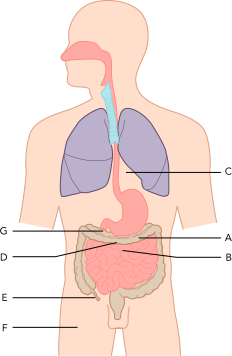
A
B
C
D
E
F
G
Other Factors Affecting Medication Therapy
Impaired memory or altered mental state
Multiple or severe illnesses
Changes in vision and hearing
Decreased mobility and dexterity
Poor adherence
Inadequate supervision of long-term therapy
Limited financial resources
Polypharmacy: The practice of taking several medications simultaneously (prescription, over-the-counter [OTC], herbal, and recreational) with diminished bodily functions and some medical problems can contribute to the potential for medication toxicity.
Nursing Interventions
Decreasing the Risk of Adverse Medication Effects
Obtain a complete medication history and include any prescription medications, OTC medications, recreational drugs, and herbal supplements.
Make sure medication therapy starts at the lowest possible dose.
Assess and monitor for therapeutic and adverse effects.
Monitor plasma medication levels to provide a basis for dosage adjustment.
Assess and monitor for medication-medication and medication-food interactions.
Document findings.
Notify the provider of adverse effects.
Promoting Adherence
Give clear and concise instructions, verbally and in writing.
Ensure that the dosage form is appropriate. Administer liquid forms to clients who have difficulty swallowing. QPPC
Provide clearly marked containers that are easy to open.
Assist the client with setting up a daily calendar and using pill containers.
Discuss the availability of and access to local resources for obtaining and paying for medications.
Suggest that the client obtain assistance from a friend, neighbor, or relative.
A nurse is teaching a class about physiological factors that can alter how a medication can affect infants and older adults. Sort the following physiological factors into either infants or older adults.
High body water content
High percentage of body fat
Increased blood flow to skin
Decreased total body water
Infants
Older adults
A nurse is teaching an older adult client about medication self-administration. Which of the following instructions should the nurse include?
Select all that apply.
A
Adjust doses to daily weight.
B
Place pills in daily pill holders.
C
Set up a daily calendar with medication reminders.
D
Ask a relative to assist as needed.
E
Request child-resistant caps on medication containers.
Pharmacology: Pregnancy, Lactation, and Reproductive Potential
The U.S. Food and Drug Administration (FDA) has previously classified medications in five categories that range from remote risk to proven risk of fetal harm. The agency now requires labeling that details three risk sections: pregnancy, lactation, and females and males of reproductive potential.
Pregnancy
Most medications are potentially harmful to the fetus. Prescribers must weigh the benefits of maternal medication administration against possible fetal risk.
Medications taken during pregnancy include nutritional supplements (iron, vitamins, minerals) and medications the provider prescribes to treat nausea, vomiting, gastric acidity, and mild discomforts.
Providers manage chronic medical disorders (diabetes mellitus and hypertension) in conjunction with careful maternal-fetal monitoring.
Pregnancy is a contraindication for live-virus vaccines (measles, mumps, rubella, varicella, yellow fever).
A nurse is teaching a client who is in the first trimester of pregnancy about medications. What instructions should the nurse include in the teaching?
Submit your response to compare it to an expert response.
Lactation
Most medications taken during lactation enter breast milk. Clients who are lactating should avoid medications that have an extended half-life, are sustained-release, or are harmful to infants.
For medications that are safe, administer them immediately after breastfeeding to minimize the medication’s concentration in the next feeding. Use the lowest effective dosage for the shortest possible time. QS
A nurse is teaching a client who is lactating about taking medications. Which of the following instructions should the nurse include?
A
Drink 8 oz of milk with each dose of medication.
B
Use sustained-release medications.
C
Take medications right after breastfeeding.
D
Pump breast milk and freeze it prior to feeding.
Reproductive Potential
Some medications include special considerations for clients of reproductive potential to reduce the risk of fetal harm and to preserve reproductive ability, if desired.
Other medications can affect hormone levels that affect reproduction and lead to infertility. This can be a desired or undesired effect for the client.
Specific interventions can include pregnancy testing before and during medication therapy, and beginning or altering contraceptive use.
Ensure the client understands the effect of prescribed medications on reproductive potential, and understands any specific actions to take during medication use.
Active Learning Scenario
A nurse is preparing to administer medications to an older adult client who has impaired kidney function. Use the ATI Active Learning Template: Basic Concept to complete this item.
Underlying Principles
Discuss medication considerations with impaired kidney function.
Identify at least four physiologic changes with aging that affect pharmacokinetics.
Nursing Interventions: Identify at least three interventions for reducing the risk for adverse effects.
Click to download this file.
Activate Learning Scenario Key
Click to reveal example responses.