Biosynthesis of Cholesterol
Biosynthesis of Cholesterol (AHMISLC)
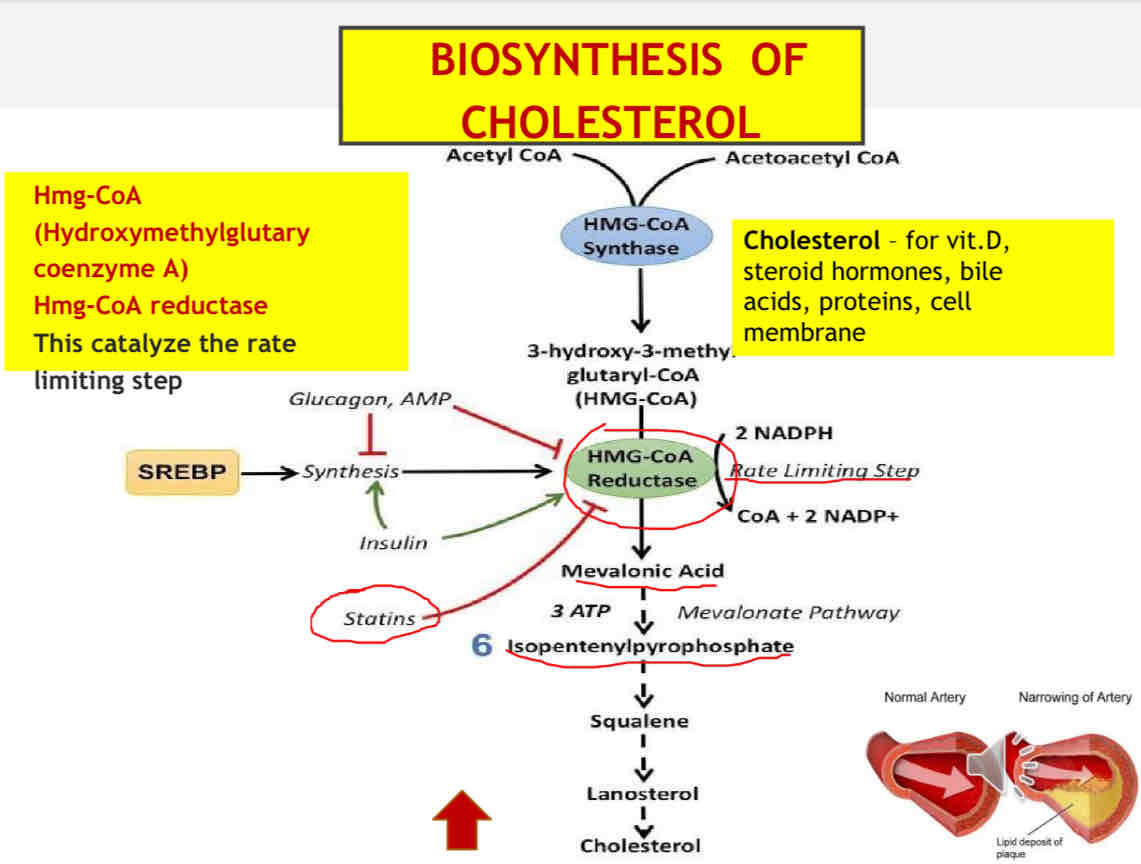
Acetyl CoA
The precursor or origin of cholesterol is Acetyl CoA (acetyl coenzyme A), which plays a vital role in various metabolic pathways.
Acetyl CoA is also a precursor of acetylcholine, a neurotransmitter essential for muscle function and other nervous system activities.
When acetyl CoA binds with choline, it produces acetylcholine, illustrating the interconnectedness of lipid and neurotransmitter metabolism.
HMG-CoA
If Acetyl CoA is catalyzed by HMG-CoA synthase, it transforms into HMG-CoA (3-hydroxy-3methylglutaryl coenzyme A), marking a crucial step in cholesterol biosynthesis.
HMG-CoA is considered an immediate precursor to cholesterol, as it is synthesized directly from acetyl CoA prior to cholesterol production.
Mevalonic Acid
Next, HMG-CoA is converted to mevalonic acid through the action of HMG-CoA reductase, a critical enzyme in this pathway.
HMG-CoA reductase is regarded as the rate-limiting step in the biosynthesis of cholesterol; it represents the slowest and most regulated step of the entire synthesis process in the body.
Statins, such as simvastatin, atorvastatin, and rosuvastatin, are drugs that inhibit HMG-CoA reductase, serving as an effective treatment for dyslipidemia by reducing cholesterol levels.
Mevalonic Pathway
After the conversion to mevalonic acid, the molecule proceeds through the mevalonic pathway, where it is further processed into isopentenylpyrophosphate.
This compound, isopentenylpyrophosphate, is then transformed into squalene, which plays a pivotal role in the synthesis of cholesterol by serving as a precursor for various sterols.
Following the formation of squalene, it undergoes a series of cyclization and structural changes to become lanosterol, a key intermediary in cholesterol biosynthesis.
Finally, the series of transformations culminates in the production of cholesterol, which is essential for maintaining cell membrane integrity, serving as a precursor for steroid hormones, and playing a role in fat digestion in the form of bile acids.