Overview of Triglycerides
Triglycerides
Triglycerides are the chemical form in which most fat exists in foods as well as in the body.
They play an important role in storing energy and maintaining metabolic functions.
Formation:
Triglycerides develop when there is an excess of calories that are not burned immediately.
Instead of using these calories for energy, the body transforms them into triglycerides, which are then stored in fat cells (adipose tissue) for later use.
This is a natural process that helps to ensure the body has energy reserves during times of fasting or increased energy expenditure.
Source:
Triglycerides primarily come from the foods that you eat.
When you consume a meal, especially those high in carbohydrates and fats, your body converts any unused calories into triglycerides.
For instance, if you consume more calories than your body needs and do not engage in physical activity to burn them off, those excess calories turn into triglycerides and accumulate in fat cells.
Energy Provision:
These stored triglycerides can later be released back into the bloodstream to provide energy for various bodily functions, including physical activity, cellular processes, and maintaining body temperature.
This cycle of storage and use is crucial for energy balance and overall health.
Chylomicrons:
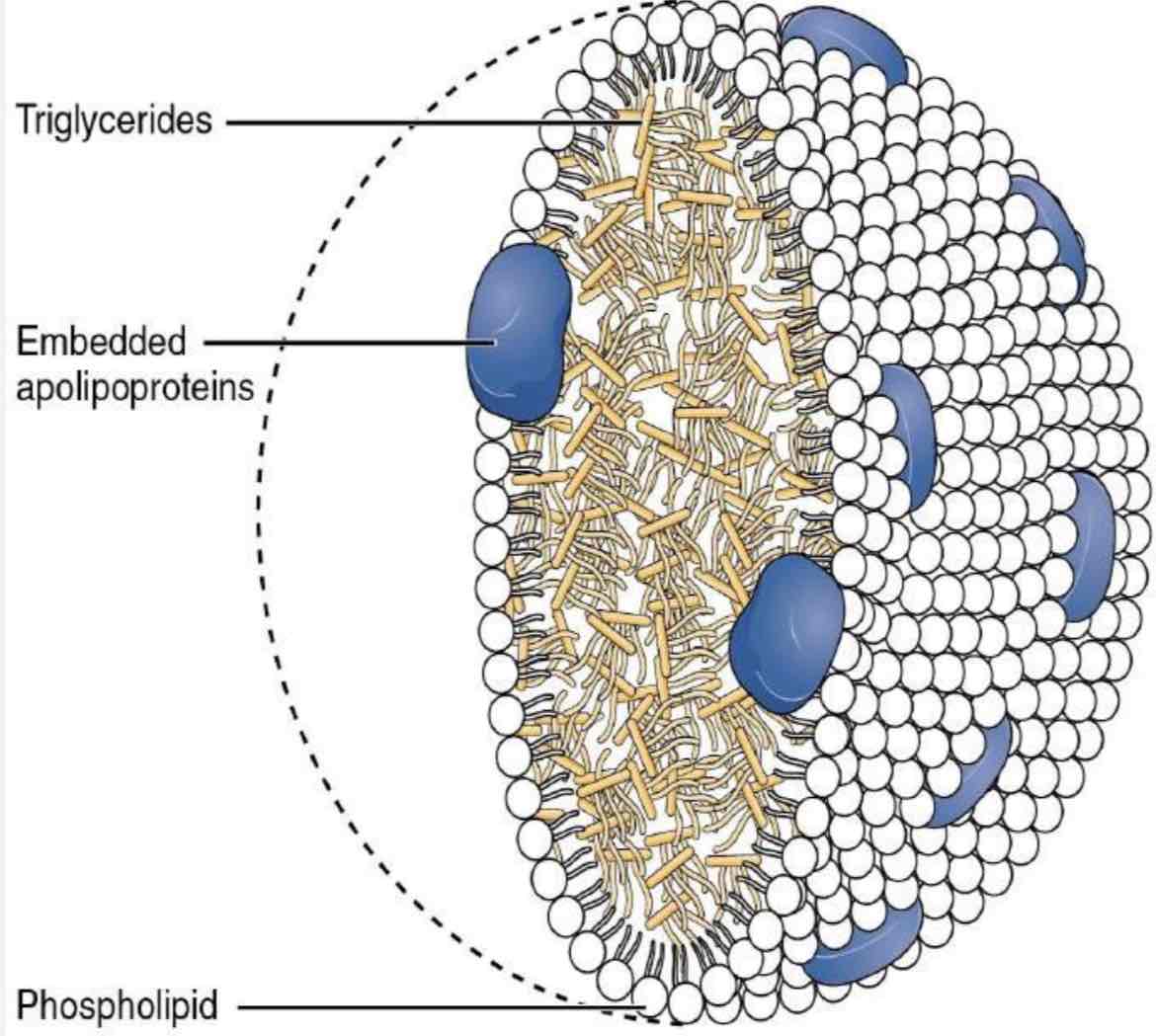
Chylomicrons are a type of lipoprotein formed in the intestine.
They carry triglycerides from dietary sources through the lymphatic system into the bloodstream.
This process is vital for the absorption of dietary fats and allows for their transport to various tissues in the body for energy usage or storage.