Comparing Plant and Animal Cells
Observations
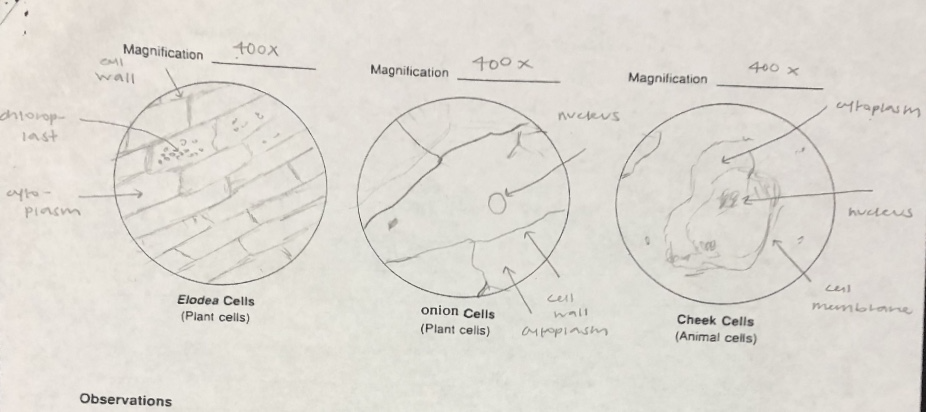
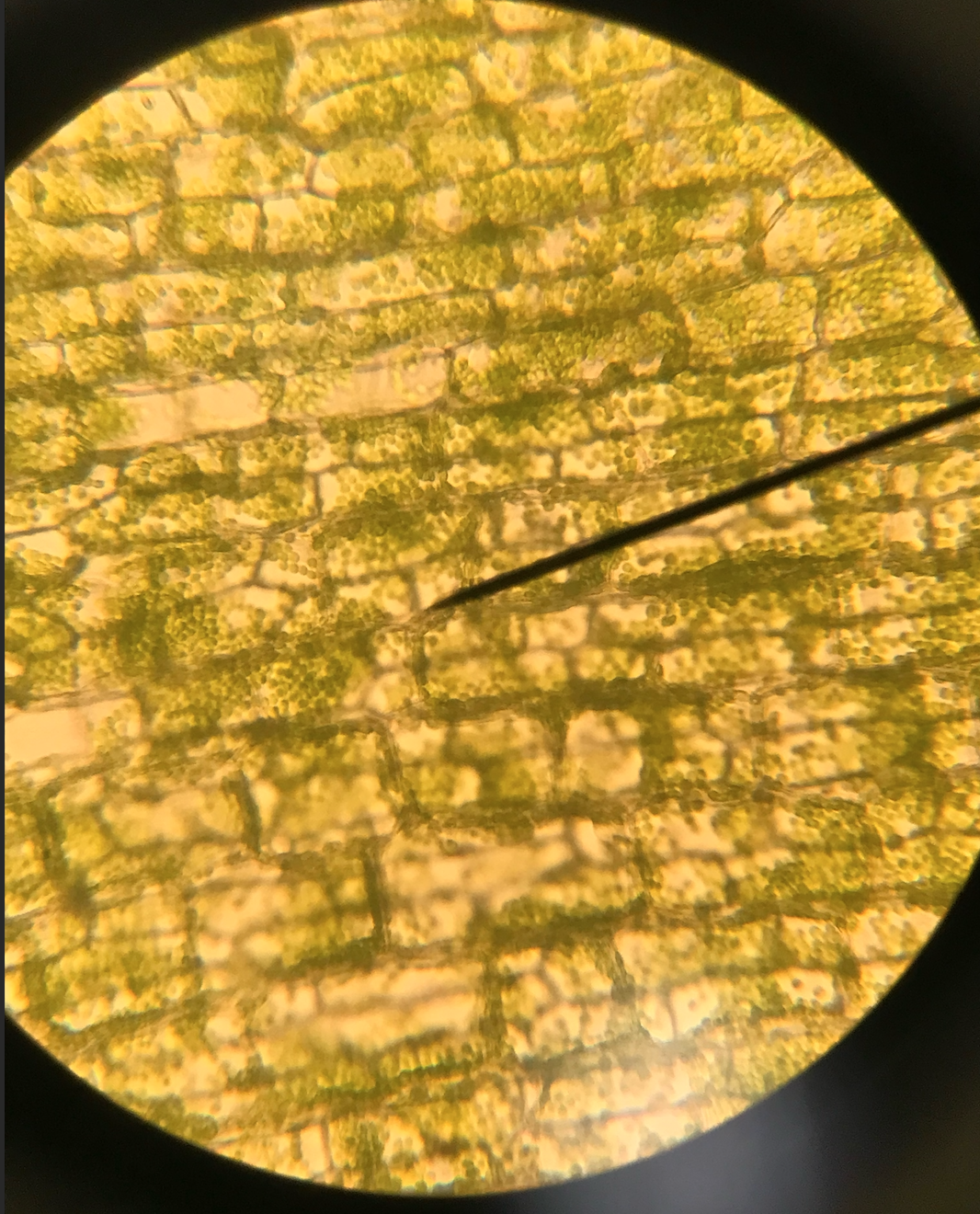
- What is the shape of an Elodea cell?
Rectangle
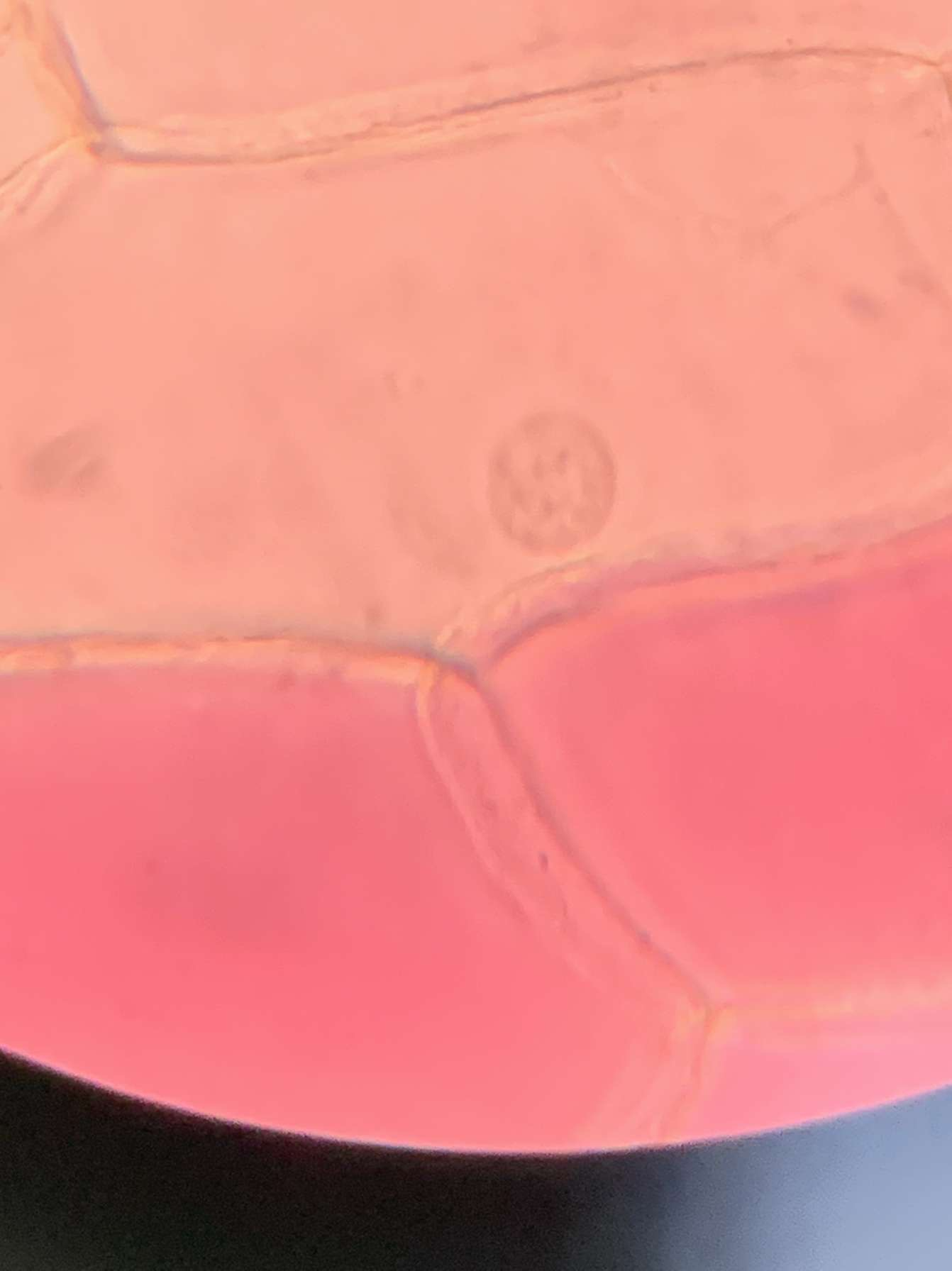
- What is the general location of the nucleus in an onion cell?
At the edge of the cell
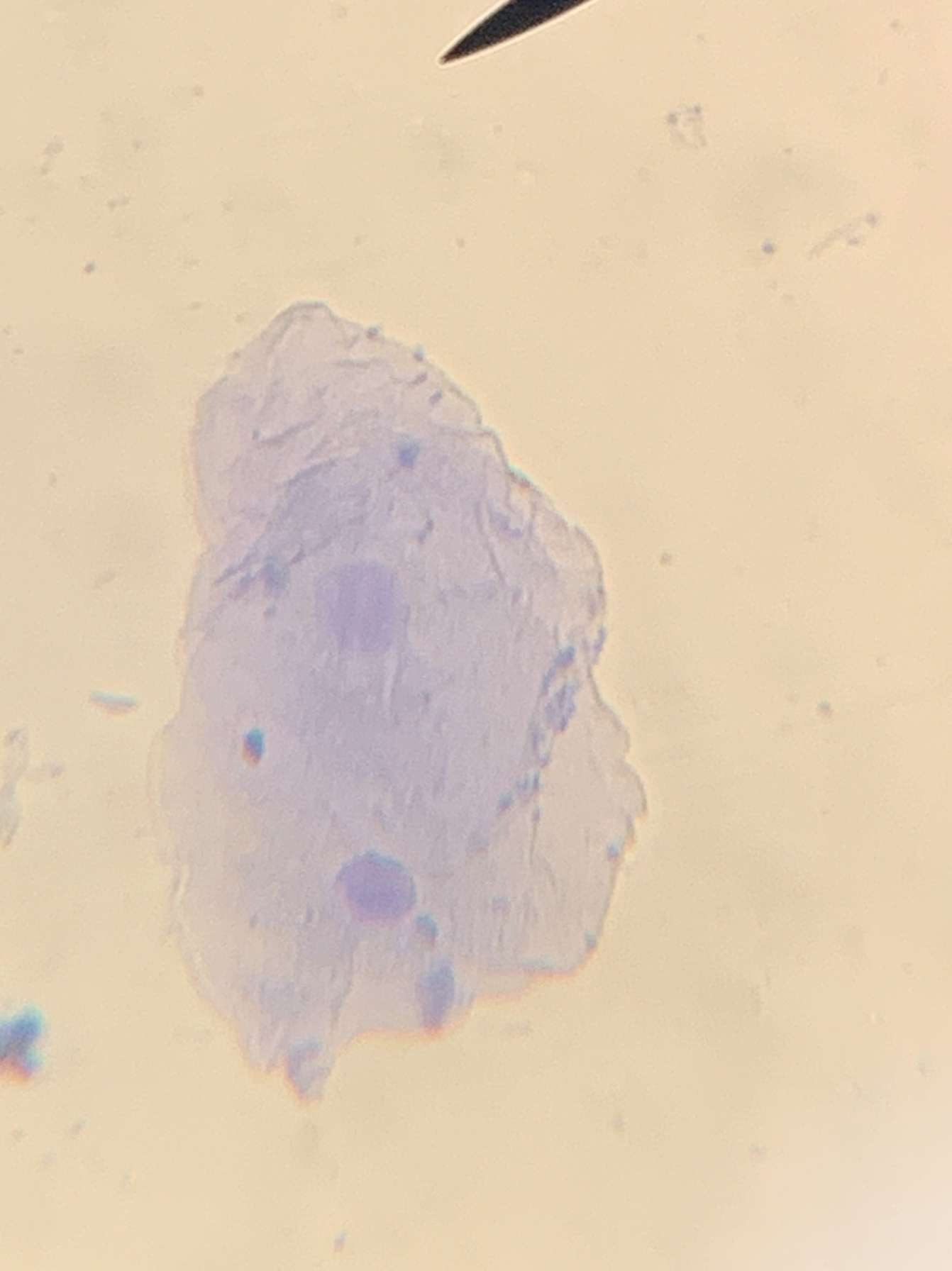
- What is the shape of the cheek cell?
Oval shaped
- What is the general location of the nucleus in a cheek cell?
Closer to the center of the cell
Critical Thinking and Applications
- What is an advantage of using a wet-mount preparation instead of a dry-mount preparation in the study of living cells?
It allows us to observe the cell for longer (presents it from drying out)
- Explain why you could not use an oak leaf in this investigation.
An oak leaf is too thick of a specimen, it would block the light from the microscope.
- Why is it possible to easily collect cells by gently scraping the inside of your cheek?
Cheek cells are easy to collect because a tiny drop of saliva contains millions of cells.
- In general, the surface of a tree has a harder “feel” than does the surface of a dog. What cell characteristics of each organism can be used to explain this difference?
A plant cell contains a cell wall, giving it support and structure. This, combined with how closely the cells are packed together, gives plant cells their rigid characteristics (compared to animal cells).
- If you were given a slide containing living cells of an unknown organism, how would you identify the cell as either plant or animal?
By looking at how the cells are structured and the organelles within the cells. For example, plant cells are rectangular and are closely packed together, but animal cells are round and have centrioles.
- Why are stains such as methylene blue used when observing cells under the microscope?
Because without staining the cells, they would not be viable under the microscope