Multiplying Matrices
What is a matrix?
A matrix is an array of numbers or quantities arranged systematically using columns and rows to display data.
Words to know
Know “order” and “dimension” to multiply matrices properly. These phrases mean the same thing about matrices. This refers to the matrix's size, represented by the Number of Rows x Number of Columns.
Real World Applications
Matrices are a universal way to display data and can be used to analyze data from a variety of applications including:
Computer graphics: Alter geometry within digital environments, including rotating the view around different axes.
Statistics: To organize and group data sets.
Engineering: Analyze patterns and solve problems including those with linear equations.
Machine learning: Used to store and process data/information.
Operations on matrices
You can perform standard operations on matrices including:
Addition: Only possible if both matrices have the same dimensions
Subtraction: Only possible if both matrices have the same dimensions
Scalar multiplication
Multiplication: Only possible when the number of columns in the first matrix matches the number of rows in the second matrix.
How to multiply matrices
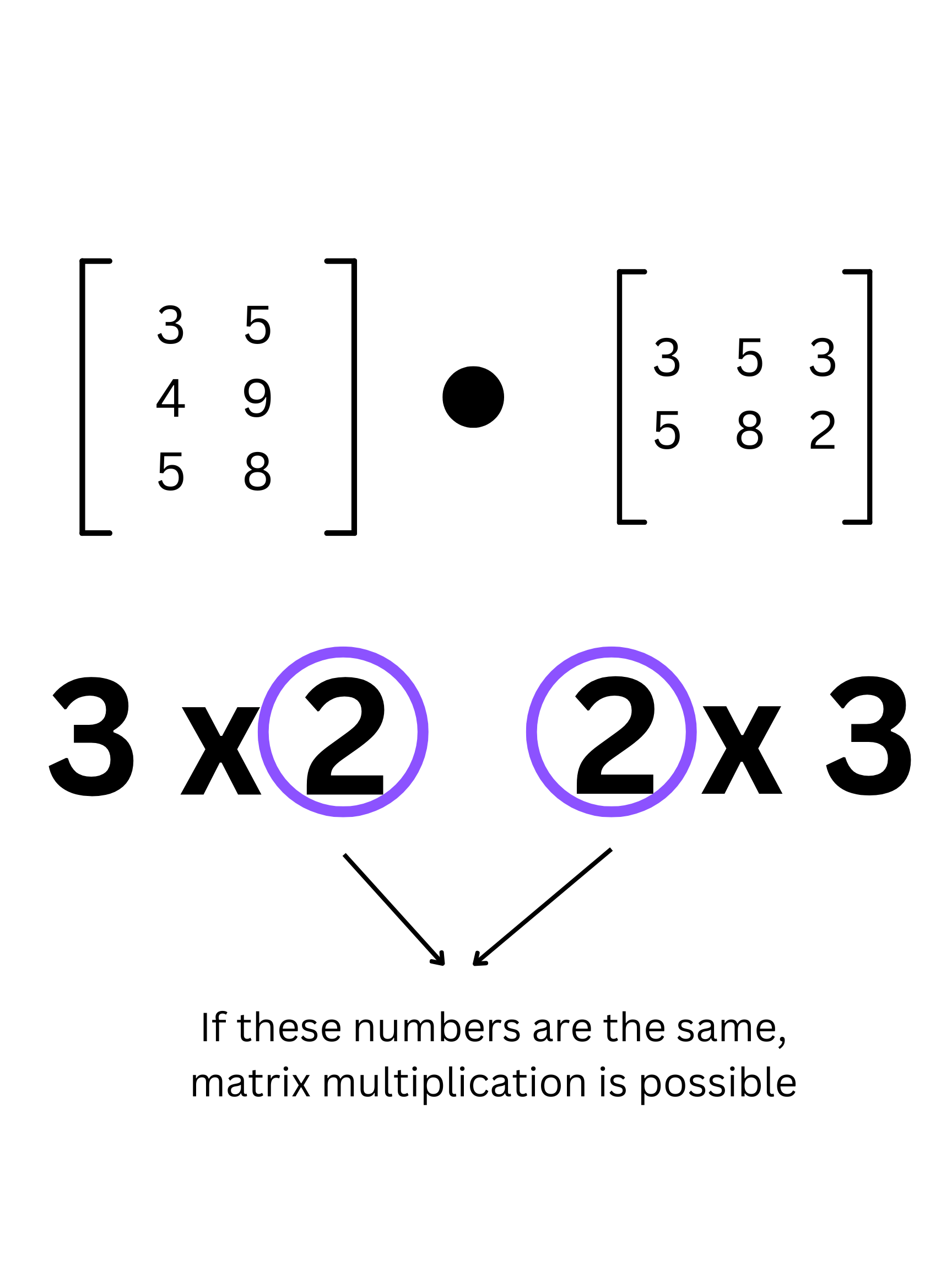
Identify if matrix multiplication is possible. Write out the dimensions of both matrices (number of rows x number of columns) side-by-side. If the number of columns in the first matrix equals the number of rows in the second matrix, you can multiply them.
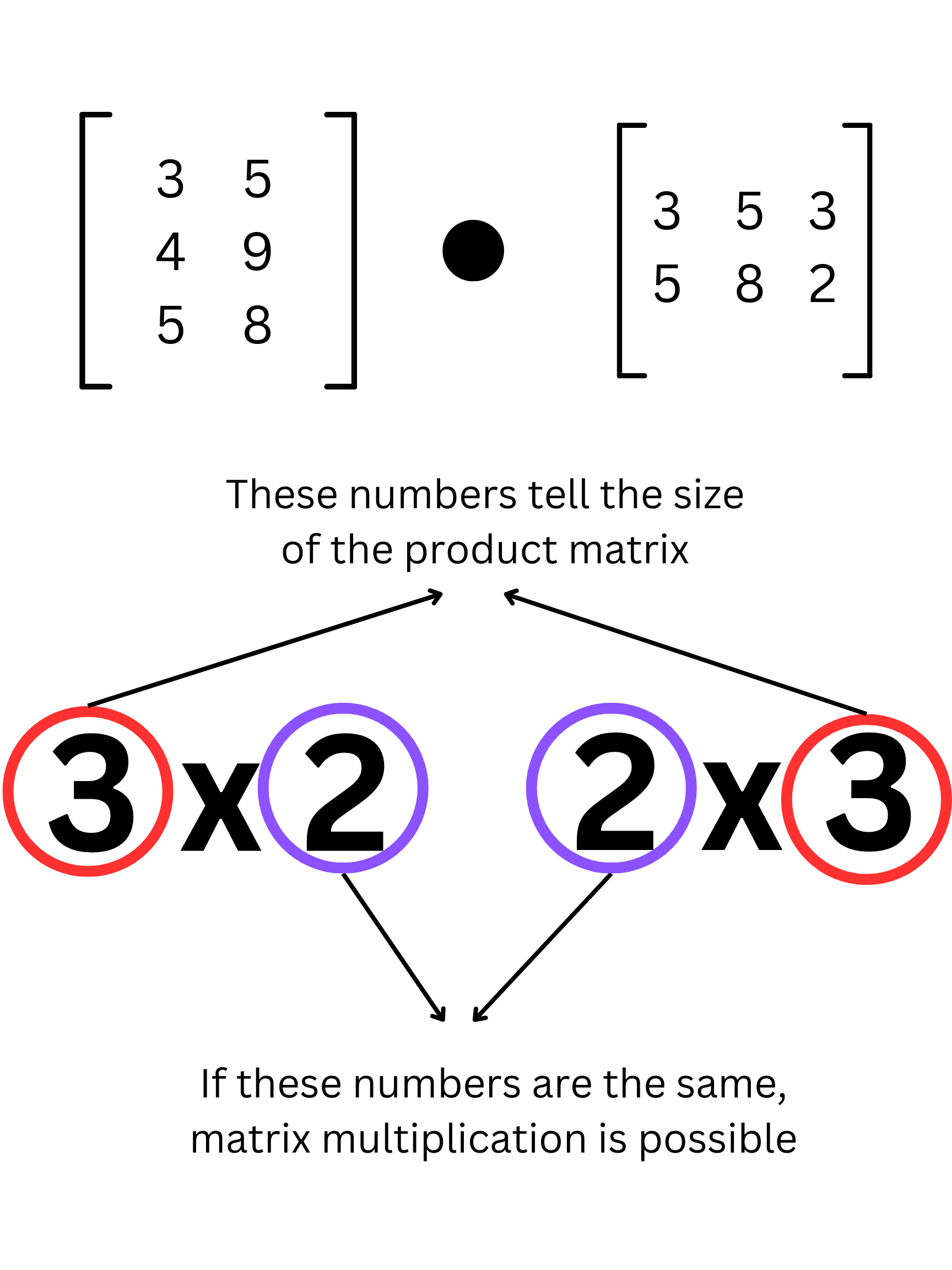
Identify the dimension of the product matrix. The number of rows in the product matrix will equal the number of rows in the first matrix, while the number of columns will equal the number of columns in the second matrix.
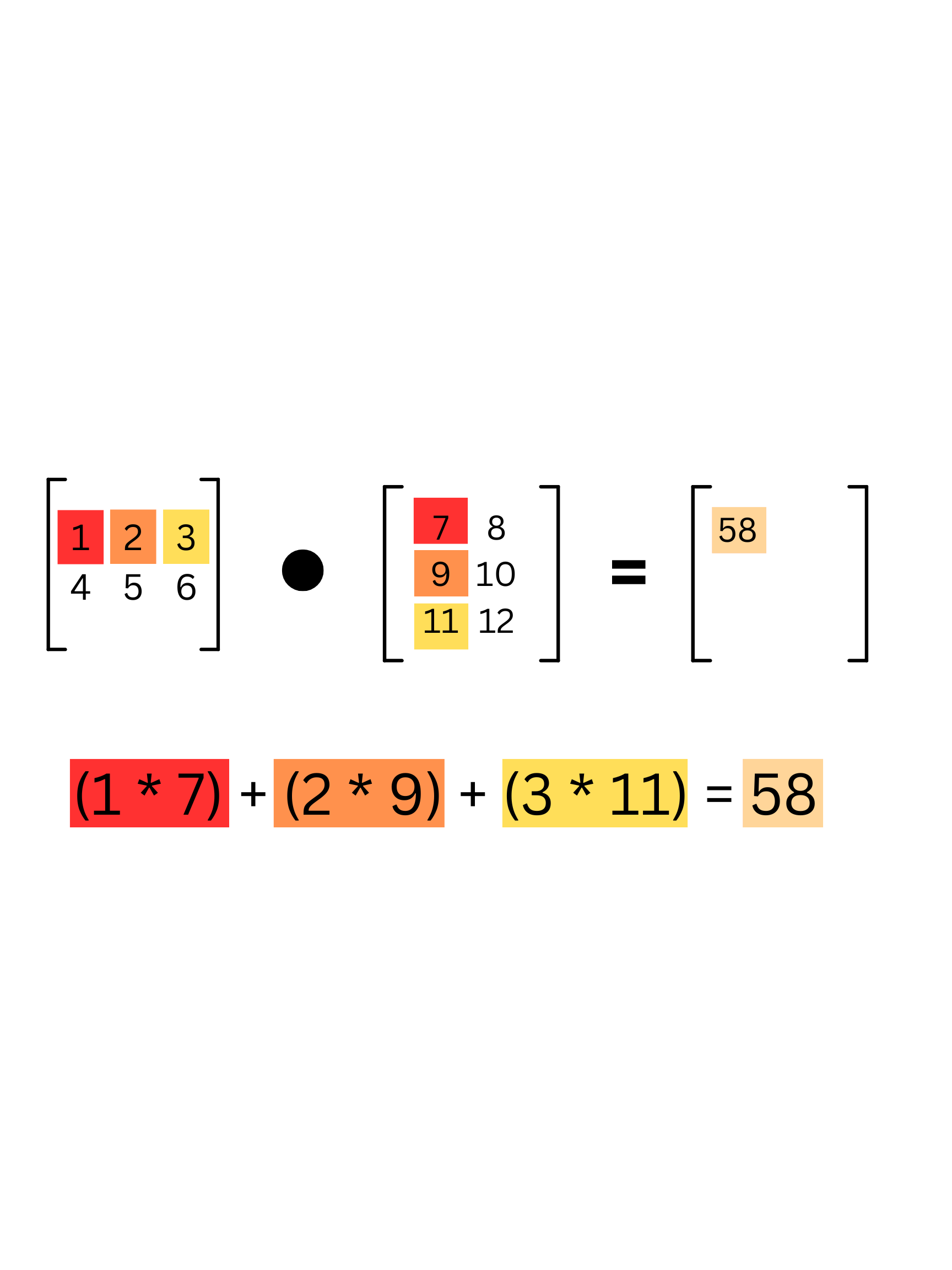
Perform the multiplication. Take the first row in the first matrix and multiply each value with the corresponding value in the first column of the second matrix. Add up the values and repeat.