MGMT
Please start all new units under this line
Unit 14
Introduction to International Business Law
Overseas expansion is the last frontier for growth for many companies.
Laws are only as strong as their ability to be enforced.
Sources of International Law: U.S.
Foreign Commerce Clause
Congress regulates commerce between U.S. and other countries
Treaty Clause: The president can negotiate and sign treaties with other nations which must be ratified by the senate.
Bilateral treaties: Treaty between two countries
Multilateral treaties: Treaty between more than two countries
Problems with International Law:
Regulation between nations
Very few laws that are enforceable pertaining to internationally conducted businesses.
Thus, ethics becomes even more important.
International Treaty Organizations
UN, EU, ASEAN, OPEC, WTO, IMF, etc.
The United Nations (U.N.):
General Assembly: Main legislative Body
Security Council: 15 Members (5 Permanent members [ China, France, Russian Federation, the U.K, and the United States). If there is a security issue any one of the five permanent members may veto a decision.
Economic & Social Council: Promotes the development of economic social and environmental issues.
International Court of Justice: Judicial Branch
UN Successes:
Eradicated Smallpox from humanity starting in 1967 to 1980
In 1948 the UN passed civil rights legislation 15 years before the US did.
In 1946 they created the UN’s Children’s Fund (UNICEF) which was strengthened by the adoption of the 1959 declaration of the Right of the Child. This has saved the lives of tens of millions of children throughout its efforts to provide safeguards for children world wide. INICEF won the Nobel peace prize in 1965
The UN’s Educational, Scientific, and Cultural organization (UNESCO) maintains a list of world heritage sites that raise awareness for the need to protect places of cultural and geographical significance. Even convincing the Egyptian government to change construction plans for a highway right next to the pyramids of Egypt
Daily Show- World Buddies
Satire speaking on the failures of the United Nations. Many representatives (Kenya, Spain, Palestine, India) all think the UN is failing. The speakers were shaming other states and blaming them for the ineffectiveness of the UN. The Security council is criticized for having veto rights over all others. They basically only have the power to encourage.
International Treaty Organizations Part 2: EU & Others
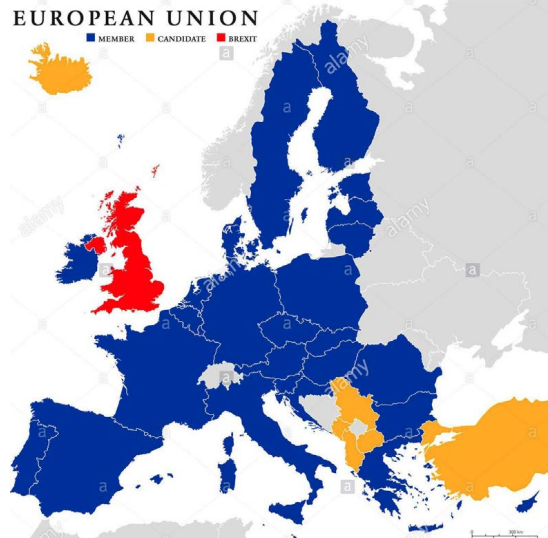
EU: Selective membership. With authority to make laws binding upon all members. This is why Great Britain wants to BREXIT.
Core goals of the EU: Promote security, Free trade, Ease of movement for citizens, and the adoption of a common currency (Euro).
Brexit, The EU unraveled: Why is Brexit so complicated? No more free movement of people and even trade. Countries who exit would have to go through customs for trade.
Association of Southeast Asian Nations (ASEAN): 10 asian states but NOT china, India, Japan, or S. Korea. They have free trade agreements with ASEAN though.
Organization of Petroleum Exporting Countries (OPEC): Cartel of oil producing countries. Not as powerful as it once was.
World Trade Organization (WTO): Promotes global trade by implementing trade rules and lowering barriers to trade.
World Bank: UN agency that provides grants and low-interest loans to developing nations
International Monetary Fund (IMF): Ensures the stability of the international monetary system.
International Transactions
Options for doing business internationally:
Branch Office: Common. A branch of the home office that is in another country.
Foreign Subsidiary: Also Common: Starting a new corporation owned by the parent organization in a new country. Liabilities of the foreign subsidiary often cannot be traced back to the home office.
Joint Venture: U.S. based companies enter into joint ventures with companies in other countries.
Options for Exporting Goods to Other Countries:
Direct Export: Selling directly to foreign purchasers
Indirect Exporting: Using a foreign agent to sell to customers abroad
Distributor: A foreign company that purchases goods AND markets & sells them abroad.
Import options: Unless goods come in under a free trade agreement (ex: NAFTA North American Free Trade Agreement [U.S. , Canada, and Mexico]) must be wary of QUOTAS AND TARRIFFS.
International Financial Transactions:
Currency Issues
U.S $ is dominant globally
Be mindful of exchange rates
International banks often convert currency for customers
Letters of Credit
A bank guarantees payment so a U.S bank cannot rip off an international company because if they did rip them off it would be so much more difficult to sue them internationally.
Foreign Corrupt
Foreign Corrupt Practices Act of 1977: Prohibits payments/gifts to government officials (whether direct or indirect) with the intent to corrupt for the purpose of obtaining or retaining business, or directing business. The most important law from the U.S. for international businesses.
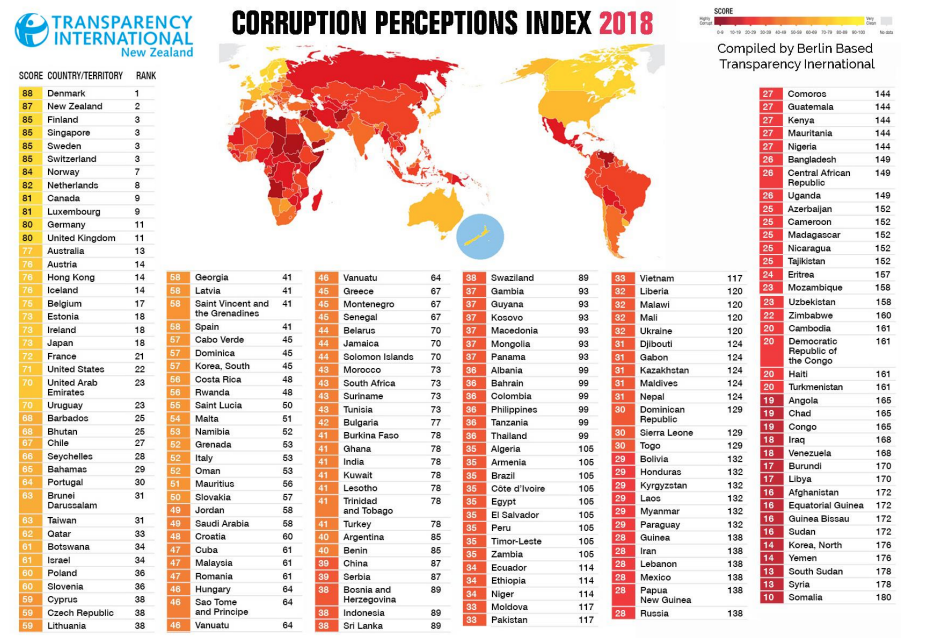
Types of Actions/benefits of bribery covered by the FCPA:
Winning a contract
Influencing procurement process
Circumventing import restrictions
Circumventing Import Restrictions
Etc.
You cant give: Cash, Country club memberships, excessive travel, political donations, payment of official’s bills, sports cars, furs, etc.
You CAN give: Small gift of expressions of gratitudes, Small gifts to local charities (if that is usual for you), small wedding gift to an official, swag, Dinner/drinks, Travel to the US for training with a ball game thrown in for fun.
FCPA penalties:
$250,000 fine per violation (individual) and five years in prison
$2,000,000 fine per violation (Corporate) or 2x the benefit received by paying the bribe.
Whistleblowers can receive between 10-30% of the amount of the fine collected.
Since 2011: 3.305 Whistleblowers from 119 countries outside the U.S.
In one case more than $30 Million was paid to non-U.S. citizans who reported bribes overseas.
FCPA exception: The “grease” payment exception: You CAN bribe a government official if its ONLY for the purpose of getting them to do their actual job responsibilities which they would not do or would do slowly without payment.
Ethics and International Business
Story about doing business in Saudi Arabia: Sitting next to a woman who was going to finalize a deal, this guy was traveling to also oversee a business deal. The Saudi Arabian Company was so offended that they sent a woman to negotiate the deal, that they trashed the whole thing and left her stranded at the airport.
 Multinational Corporation Criticisms:
MNCs exploit workers, natural resources
MNCs compete unfairly
MNCs are a cause of impoverishment and unrest.
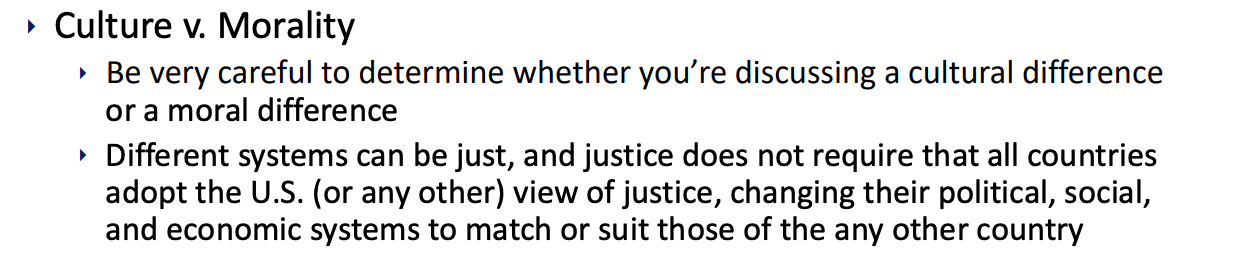
The risk for MNCs abroad is that there are fewer background institutions keeping them honest.
Ethical Guidelines for MNCs:
Do no intentional direct harm
Any activity must benefit the host country
Respect the rights of workers, consumers, etc. in host country
Promote the development of background institutions
Respect the laws, culture, and local values of the host country (assuming they are not immoral)
Bhopal Example: Union Carbide in India, understaffed and underfunded a pesticide plant. December 1984 there was an overnight gas leak with no competent supervisor on duty. This was the world’s worst industrial disaster. >500,000 people exposed to toxic gas. >10,000 deaths. Union Carbide initially took responsibility, but then fought it.
Unit 13
Creating Better Organizations
When scandal hits, who is to blame? : Individuals make choices for themselves and for their organizations. Organizations provide opportunities and incentives to make bad choices.
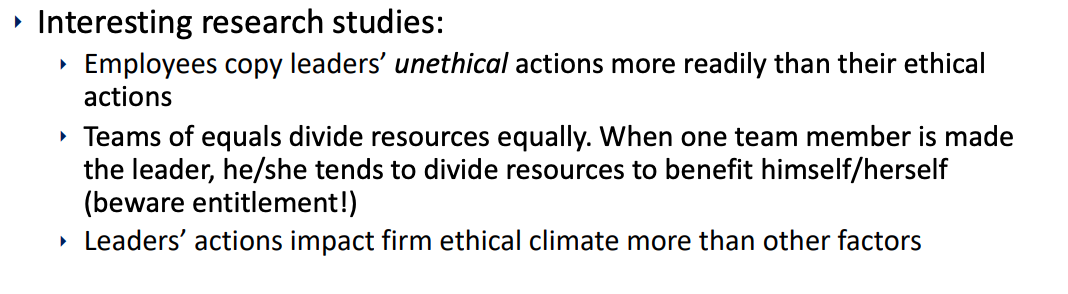
Studies show: Personal examples of firm leaders are the #1 driver of ethical culture.
We encourage ethical choices by:
Leadership by example
Culture
Incentives
Tangibility
Educating/Nudging/Enforcing
leadership by example
example: Dennis Kozlowski & Tyco: Engaged in ambitious and risky deals, Treated his company as a personal piggy bank. Took unauthorized bonuses of $81 million. BAD EXAMPLE.
 How to lead by example:
The rules apply to you
With great power comes great responsibility
You’re not better, or more deserving, than anyone else, communication is vital
Cultivating ethical culture and norms
Your firm has culture, no matter what you do.
Key tips: Communicate, lead by example, consider a code of ethics/ statement of values, etc. Implement employment practices consistent with the culture you want.
 Incentive Design
We all respond to incentives, leaders must think very carefully about the incentives they create for their employees.
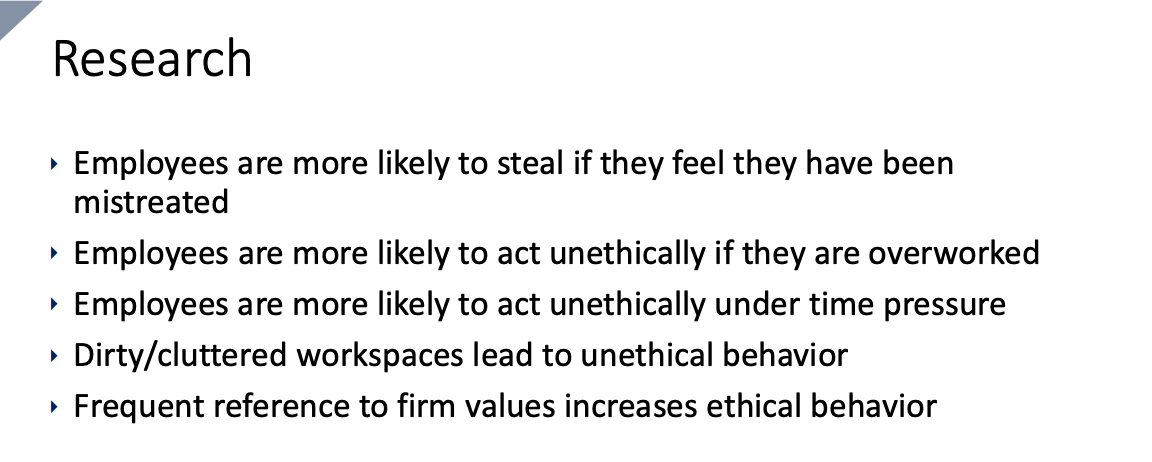
We can easily incentivize employees to act unethically without even realizing it! Example:Sales people may provide unnecessary discounts towards the end of a month when they are given monthly sales targets.
Goals:Unethical behavior is encouraged by: Unrealistic goals (Wells Fargo), punishment for failure to meet goals (Wells Fargo again), Extravagant rewards for achieving goals (Enron bonuses).
Designing good incentives:
Lower the stakes
Reduce time pressure
Define the behavior you want to encourage
Consider behavior you don’t want to encourage
Tangible v. Abstract Outcomes
We are more strongly influenced by tangible events than by abstract events.
Example: 3,000 killed in 9/11/01 v. 228,000 killed in 2004 Tsunami
Increasing Tangibility:
Leaders must make corporate bureaucracies feel smaller
A leader’s role is to put a face on the decisions made within an organization
Leaders must connect each employees work to the ultimate consequences
Nudging, Educating, & Enforcing
Nudging: any aspect of decision making that alters people’s behavior in a predictable way without forbidding any options or significantly changing the economic incentives.
Educating: Sometimes people need to be educated in order to behave properly.
Enforcing:Strong enforcement mechanisms can encourage the behavior you want. Might also result in resentment and employees feeling untrusted.
The best strategies combine incentives, nudging, education, and enforcement to encourage ethical behavior.
 Sadhu Revisited
Leadership by example
High stakes
Time pressure
Tangible
Implicit bias
Unit 12
Intro to Corporate Governance:
Corporate Governance: A term we use to reference the way decisions are made in a corporation. Who has the authority to do what and how are decisions made? We say “corporate” governance but the concepts are important for all forms of businesses.
In the eyes of the law: a corporation is a legal person, but they need an individual to make a decision to act because the corporation itself cannot act on its own.
Corporations are important but there are ALSO: LLCs, Partnerships, Sole Proprietorships, Benefit Corporations, & Not-For-Profit Corporations.
Stephen Colbert SUPER-PAC: Fake corporation run by Steven Colbert for political satire. SUPER-PAC stands for the fact that corporations are people and they do nothing. Colbert ridicules the fact they they are considered people.
Corporation Formation
Key characteristics of corporations:
Limited liability of owners (shareholders)
Free transferability of shared
Centralized management
Perpetual existence (must be killed by ownership)
Ways We Classify Corporations:
Publicly held: Anyone with enough $ can buy V. Privately Held: Buying rights are exclusive and private, only certain people can buy. Example: DELL has gone private to public to private to public.
Public: Corporation owned by the government v. Private: Any corporation owned by a non-government organization.
For-Profit: Able to distribute profits to their owners v. Not-For-Profit: Unable to distribute profits to their owners
Domestic: Corporations established using the laws of some state operating in that state. v. Foreign: Corporations established using the laws of a different state than the one they are operating in v. Alien: Corporations established in another country (not the U.S.).
How to form a corporation:
Choose a State
Choose a Name
File Articles of Incorporation
Hold some meetings & appoint directors & officers
Then shareholders appoint directors and then directors appoint officers.
Shareholders
Shareholder’s Role in a corporation: The owners of a company.
General shareholder responsibilities:
Shareholders must meet at least annually
They may also call special meetings
They must send notice and agenda to all shareholders
Shareholder Voting:
Usually one vote per share
May grant proxy to someone else
Straight Voting (one vote per share) v. Cumulative voting (One vote per share per seat on the board of directors Example if their are four board of director seats, instead of only being able to cast one vote per seat, they can cast all of their votes (1 vote: 1 share) on one seat)
Voting agreements
Shareholder Liability:
Liability is limited to the amount of their investment (Ex: Purchase Price of Stock)
Piercing the corporate veil: when someone uses corporate finances as their personal checkbook. Failure to observe corporate formalities. Corporation is formed with insufficient capital.
Shareholder Rights:
Contractual rights via shareholders’ agreements: (Buy/sell (Can’t sell to an outside party)& first refusal (If you want to sell your stock to somebody else, but you must present the buyer’s offer to fellow shareholders before they sell to an outside party).
Preemptive rights, If granted by the corporation: Allow you to buy more stock in the corporation if the corporation issues more stock the the corporation. Helps avoid dilution.
Right to sue
Direct: The shareholder has personally been damaged by the D&O’s. Money won is paid to the individual.
Derivative: The company has been damaged by the D&O’s actions. Money won is payed to the company treasury.
D&O= Directors and Officers
Shareholders want direct liability, but lawyers like them both!
The Berkshire Shareholder Meeting: Thousands of people outside in 2015 at the Berkshire Hathaway 50th anniversary shareholder meeting and even camping out in line. It’s a right of passage and you get to shop, listen to Warren Buffet.
Directors
Directors’ Role: Setting the strategy and appoint officers.
Inside Directors: Someone who works in the company
Outside Directors: Someone who works outside of the company but has a seat on the board.
Director Liability:
generally protected by the business judgment rule ( Reasonable and informed decisions are protected)
Liable for breaching duties or misleading shareholders
Director liability example: Enron directors ended up paying $1.5M out of pocket to settle claims that they grossly mismanaged Enron before they went banrupt.
Director Duties:
The duty of loyalty: The director cannot act in a way that harms the company
The duty of care: The director must make reasonable, good-faith decisions to benefit the company
The duty of Obedience: Directors are appointed by shareholder votes so they must be compliant with shareholders and the bylaws of the corporation.
Director Rights:
Compensation: Directors are not employees but they deserve to be paid for their time.
Indemnification: The company agrees to pay for the director’s defense if the director is sued or fined.
Inspections: The directors have the right to look at the company’s books & records
Participation: The directors are allowed to be involved in the process & participate in the direction of the corporation.
Officers
What are the roles of the corporate officers? (CEO, CFO, etc.): Officers are employees and the “boots on the ground”. Officers are the face of the corporations because they make daily decisions.
Officers in closely-held corporation: Officer is almost always on the board and can be a shareholder as well.
VERSUS
Officers in a publicly held corporation: The officer is a true employee, they are there at the will of the BOD.
Officer Duties & Liabilities:
Protected by the business Judgment rule
Liable for breaching duties or misleading shareholders
The duty of loyalty: The director cannot act in a way that harms the company
The duty of care: The director must make reasonable, good-faith decisions to benefit the company
The duty of Obedience: Directors are appointed by shareholder votes so they must be compliant with shareholders and the bylaws of the corporation. OFFICERS ALSO HAVE THE DUTY TO OBEY THE BOARD OF DIRECTORS.
Rights of Officers: Not many statutory rights, their rights are governed by their employment agreement usually.
Ethics in Corporate Governance:
What is the purpose of a corporation?: Make money? Provide goods/services? Employ people? Solve Problems?
Governance & decision making is impacted by understanding of purpose.
Example: Dodge V. Ford- Michigan Supreme Court, 1919. Henry ford versus the Dodge Brothers. Ford made a statement that he would be paying factory workers much more. The dodge brothers were shareholders and objected, they stated that money was the property of the shareholders. Michigan Supreme Court sides with the shareholders, and stated the management must run the company for the benefit of the shareholders.
Shareholder Primacy: Every choice made in a corporation has to benefit the shareholders.
Benefit Corporations: A NEW type of corporation that states their purpose of not only making money, but ALSO providing some sort of social benefit in their formative documents. What happens when competing stakeholders (employees, customers, the government, etc.) come into conflict?
Unit 11
How to Make Better Choices
It is possible to become better at ethical decision making.
Example: Lance Armstrong, why didn’t anyone around him speak up? How could his community let it get so far? (Moral muteness, status quo bias, conflicts of interest, etc.)
Moral Muteness
Moral Muteness: Failing to voice moral sentiments or communicating in ways that obscure our moral beliefs.
Short term v. Long term
Winning is s short-term mindset, Speaking up is a long-term mindset. “yes men/women/peeps” do not rise to the top. Independent thinkers with persuasive arguments for the health of an organization rise to the top.
Overcoming moral muteness: Practice talking about issues. In the mirror, with people outside your organization, eventually with colleagues and finally with supervisors.
Status Quo Bias
Status Quo Bias: Being hesitant to accept change because “things are fine the way they are”. When we stick with pre-made decisions and don’t stay mindful of change, we can harm ourselves.
Overcoming status quo bias: Don’t be afraid of change, rely on facts, data, cost-benefit analysis, etc. and not on psychological inertia.
Moral Imagination
Example: Cyanide Laced Tylenol deaths in 1982, JnJ had the opportunity to deny responsibility since the product was tampered with after they were put on shelves. JnJ then developed tamper-resistant packaging and tamper resistant “Caplets”
Moral Imagination: Our ability to think outside the box and envision ways to be both ethical and successful. It is about developing our problem-solving skills.
Developing Moral Imagination Steps:
Reject the idea that ethics and success are mutually exclusive
Embrace ethical problem solving as part of your role as a professional
Brainstorm and work with others
Have the courage to implement your ideas
Mindsets to Avert Problems:
Avoid Temptation
Beware Entitlement
Face Embarrassment
Temper Ambition
Conquer Irresponsibility
Don’t Fool Yourself
Check Conflicts of Interest
Think about the Sadhu:
Moral Muteness, Status quo Bias, Moral imagination, Mindset problems (entitlement, ambition).
Unit 10
Antitrust
What Is Antitrust?: Antitrust is a group of laws established to regulate business practices in order to ensure that fair competition occurs in an open-market economy for the benefit of consumers. Antitrust exist as regulations on the conduct of business and are a part of competition law in the United States. It benefits consumers and maximizes competition.
Important Antitrust Laws:
Sherman Act (1890)
Clayton Act (1914)
The Trustbuster:
Teddy Roosevelt (1901-1909), dubbed “The Trustbuster”. He alone decided which trusts were good and which ones were bad. This is not a good model.
Unilateral Restraints
Unilateral Restraint of Trade: One company acting alone to harm the competition. Examples: Monopolies, price discrimination, tying arrangements.
Monopolies:
Innocent & natural monopolies are OKAY!
Three criteria for an illegal monopoly:
Monopoly Power
A defined market
A willful act of monopolization
De Beers Example: Diamonds are expensive & marketed as a rarity but they are actually very common. One company monopolized the diamond market for most of the 20th century: De Beers- based in South Africa. In 1902 De Beers controlled 90% of the world’s production of diamonds. They stockpiled and controlled the supply. De Beers would price out sellers that refused to sell their supply but selling diamonds for cheap, making it impossible for competitors to make a profit. During WWII they were heavily criticized for refusing to use the stockpile to aid allied war efforts. They eventually received official antitrust charges in 1945, 1957, 1974, and 1994. The DOJ’s charge caused De Beers to leave the country, but they still sold to suppliers that were willing to travel outside of the country. By the turn of the 21st century markets were changing and their supply started to dwindle. Additionally, the “blood diamond” publicity took a significant toll. They pled guilty to the Antitrust charges and their market share fell to about 33%.
Price Discrimination
Price Discrimination: Different prices charged to similarly situated buyers of goods.
Similarly Situated: Refers to one class of persons being alike in all relevant ways to another class for purposes of a particular decision or issue.
Defenses to price discrimination claims:
Meeting the competition
Cost justification
Changed conditions
Tying Arrangement:
A tying arrangement is an agreement in which the seller conditions the sale of one product (the "tying" product) on the buyer's agreement to purchase a separate product (the "tied" product) from the seller. These are prohibited unless reasonably required.
Multilateral Restraints of Trade
Horizontal Restraints of Trade: Two or more companies in the same industry, on the same level of distribution working together. When competitors get together to harm competition.
 Four main Categories of horizontal restraints of trade:
Price Fixing: When 2+ competitors set their prices together and collaborate with that. Example: Apple wanted to compete with Kindle e-reading products, They told all publishing companies they had to price fix to sell on iBooks. Apple took their own case to trial and LOST BAD.
Division Of Markets: When 2+ companies team up and split up territory to reduce/harm competition. These can be divided geographically, by product, and by customer segment.
Bid Rigging: Companies engaged with a bidding process, example: City of tucson building a road, they could rig their bids so 2+ more competitors to just take turns with projects.
Group Boycotts: When competitors in the same industry collude to boycott a supplier.
Vertical Restraints of Trade: Two or more companies that function in the same vertical chain of distribution work together to harm competition or restrain trade.
Resale Price Maintenance: A manufacturer sells a product to a vendor and tries to tell the vendor what to sell the product at price-wise.
Think TJMAXX’s suggested retail pricing.
Exclusive dealing agreements: When a manufacturer gives a fair price to a vendor in exchange for the vendor agreeing to never go to the competitor.
Example: Intel and AMD in the 90s.
Territory Distribution: When a supplier or manufacturer tells a party down the chain of distribution that they can only sell in one territory. This is illegal without a reasonable cause.
Example: What movies can a theater show?
Example: Franchisors cannot open the same franchise within a certain distance of another one.
Mergers & Antitrust
Types of Mergers:
Horizontal: The worst according to the Gov’t. think about four main cell companies moving to only three
Vertical: Think about a manufacturing company merging with one of their retailers. This doesn’t directly minimize competition but it does create complications with competition.
Market Extension: Usually not problematic for the gov’t. When a company merges with a company that gives them access to a new market through a new product/technology/etc.
Conglomerate: When two completely different companies merge. Virtually no competitive effect on either market.
Defenses to Gov’t attempts to block mergers:
Small company Doctrine: If two small companies in the same marketplace want to merge so they could compete with the big dogs, the government will usually allow this.
Going out of Business: If a company is going out of business, merging with one of its competitors is better than it disappearing into dust Thanos style.
Antitrust Enforcement & Exemption
Antitrust enforcement
Government Enforcement: Civil penalties (fines, injunctions, forced break-ups of companies). Criminal penalties.
Private Enforcement: Money Damages, Injunctions
Antitrust Exemptions
Statutory exemptions: U.S Supreme Court passes a law that exempts a group from antitrust laws. Example: Labor Unions.
Implies exemptions: Courts have stated reasonable exemption based on former congress rulings. Example: Major League Baseball
State Action Exemptions: When companies are exempt from antitrust laws if the state tells them they have to engage in anticompetitive actions.
Unit 9
The Power of Authority
Studies show that we have an innate desire to please authority figures, sometimes even when we have nothing to gain.
Authority can mean a person or an organization system
The Milgram Experiment: The most famous (non-debunked) experiment about the power of authority. Test subject was told to ask questions and electronically shock another “test subject” (actor). The test subject felt uneasy about hurting someone but continues when authority told them they needed to.

Obedience to Authority
Think about how the findings of the Milgram experiment could apply to a business setting.
Our desire to please authority figures combines the concepts of ethical fading and framing.
Research studies:
Is a CFO more likely to commit an accounting fraud when if benefits himself or his CEO (boss)? Answer: When if benefits the boss
Will nurses follow a doctor’s orders to give an obviously harmful dose of a drug? When polled: most said no. When tested unknowingly: Almost all of them administered the drug.
Example: From the Young Professional’s Survival Guide. Student on a summer internship, asked by a superior to pose as a customer and get insider information on the competitor. Almost barred from ever working in the industry again.
Can we reduce the influence of authority?: Many professional codes of conduct make subordinates liable for their behavior, even if directed by a superior. Have a reserve and be prepared to leave your position. Think carefully about the type of organization you wish to join at the outset.
Challenger Example:
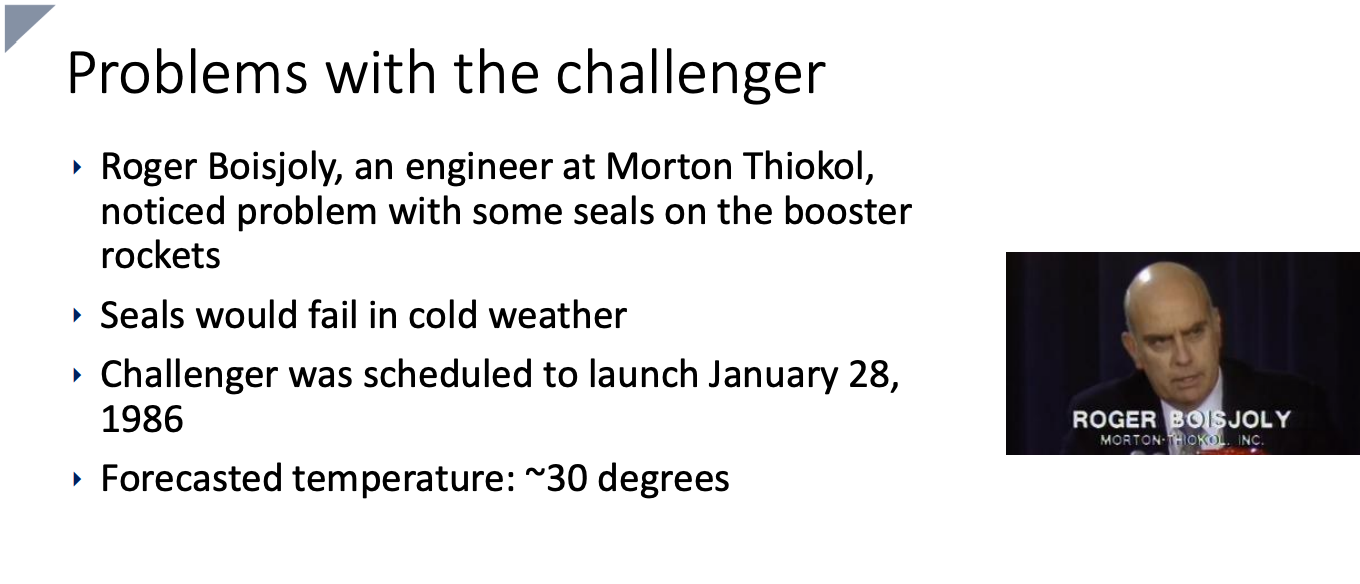 Boisjoly claims “ I fought like Hell to stop that launch. i’m so torn up inside I can hardly talk about it, even now.”
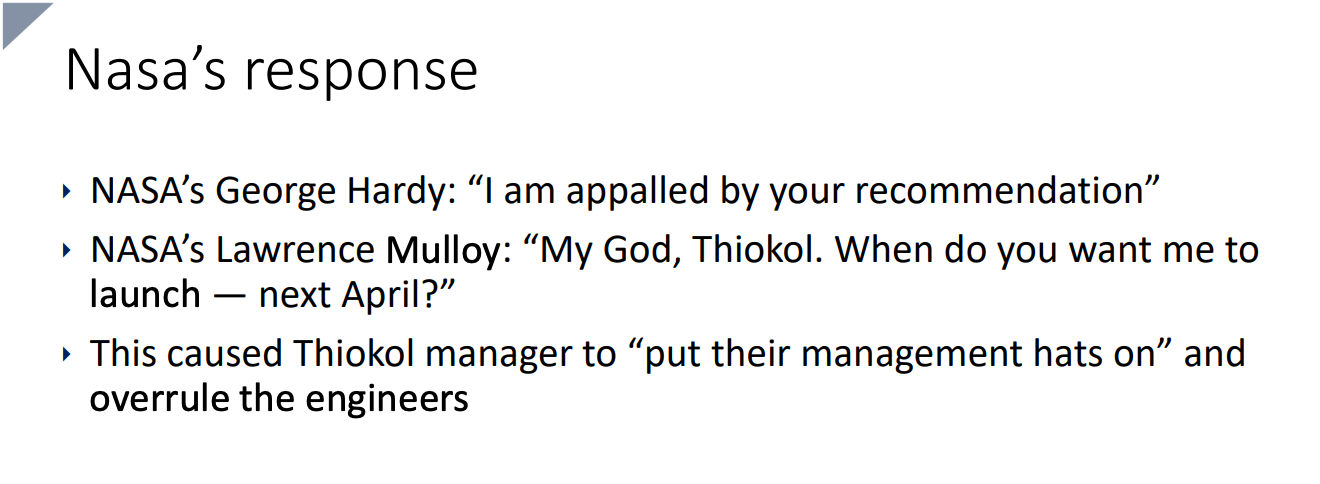 The challenger exploded 73 seconds into launch, after the seals failed. Seven astronauts were killed.
Role Morality
When we have different moral standards for the different roles we play in society this is called Role Morality. Usually this happens when we are acting on behalf of someone else (like a boss).
Research Study
One study quoted an officer saying: “What is right in the corporation is not what is right in a man’s home or in his church. What is right in the corporation is what the guy above you wants from you. That’s what morality is in the corporation”. THATS FUCKED UP!!!!!!
Family businesses are more likely to act in a socially responsible way than bigger companies. The family name is on the door and officers want to act in a way that represents that well. People working in bigger corps have an easier time separating themselves from their role in the company.
To fight role morality: Own your actions and do not compartmentalize your life.
Pressure From the System
Scenario: Your assigned mentor at work tells you to add $5 to every taxi/Uber expense you report to “make up for all the little things we can’t be compensated for”. Your orientation made it very clear that you must report expenses accurately. Expense report fraud is one of the primary reasons young professionals get fired.
Example: Would Wells Fargo prefer that a customer have one checking account? or a checking acct, mortgage acct, a credit card acct, and a savings acct. Intense pressure for bankers to “cross-sell” to customers. Quota of 8.5 products every single day, this incentivized employees to open accts for customers that never authorized it.
navigating an unethical system:
Work to succeed ethically within the system
Go along with the unethical system
Find a new system
Unit 7
Mergers & Acquisitions
Merger: When two companies combine to form one company. (acquisition is the term for when a bigger company buys a smaller one, Merger is when two “equal” companies combine). Mergers happen when companies want the technology, skills, etc.
The two main exit strategies for startup companies: IPO (initial public offering to become publicly traded), or selling to a big company.
Acquiring company: The company buying a target company, they remain after the merger.
Target Company: The company being acquired, becomes a part of the acquiring company.
Proxy: A shareholder in a corporation gives their right to vote to somebody else.
Proxy Contest: When there are multiple factions in a company competing for different votes. They try to solicit the proxy of others.
Proxy solicitation: highly regulated. Proxy statements must be filed with the SEC 10 Days before being sent to shareholders. The SEC requires accuracy in proxy statements. Shareholders can sue for damages from misleading proxy statements. The SEC has civil & criminal penalties as well.
When some shareholders don’t approve, they are dissenting shareholders. They have statutory rights to prevent oppression, they need to be paid fair market value with an appraisal paid for by the company, regardless of merger purchase price.
Merger: one company survives, very common.
Consolidation: both companies merge into a new company, super uncommon even among equals.
Agreed Upon Combinations
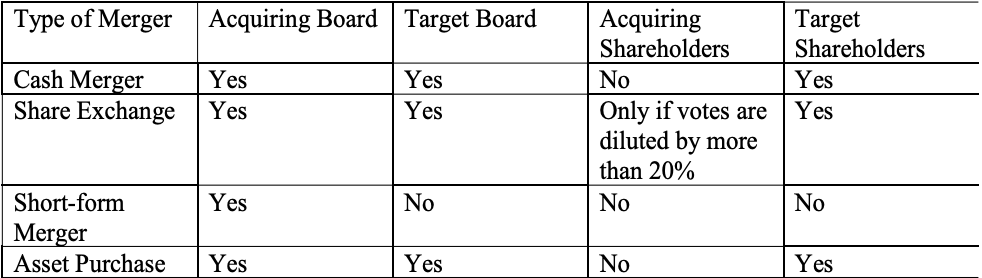
Stock Purchases: One company acquires all the stock of another. These need to be approved by both boards and the shareholders of the target company. Acquirer shareholder approval is only needed if there is >20% dilution for their stocks.
Cash Merger (or just “merger”): Money for stock
Share Exchange: Stock for stock
Short-Form Mergers: When the acquirer already owns 90%+ of the target stock. No shareholder or target board approval is necessary.
Asset Purchase: When the acquirer buys target assets, but not stock. This type of purchase helps the acquirer avoid liabilities. Non-assignability clauses limits the use of asset purchases. Approval is required by both boards, and the target shareholders.
Contested Mergers
Contested Mergers: These happen when the target board disapproves of a merger. The Acquirer goes directly to target shareholders without the approval of the target company. AKA tender offers or hostile takeover attempts.
Williams Act of 1968: Set out tender offer rules
Must treat all shareholders equally (same price, pro rata purchase)
Offers held open for 20 days (+ 10 more days when an offer is changed)
There are no dissenter’s rights for shareholders who don’t sell
Pro Rata: Proportionate
Methods to fight a tender offer:
Negotiation
Lawsuits
Self-tender or reverse tender: Buying the acquiring company instead
Selling a ‘crown jewel’: Selling a valuable resource or technology with the ability to still be able to use it exclusively without owning it
White knight: Another acquiring company that the target company chooses
Poison pill: Often written to contracts used by the company that states that shareholders must approve or everyone’s contracts are terminated.
Greenmail: Trying to pay off the acquiring company to get them to leave the target company alone.
Issuing more stock
State Antitakeover Statutes: Some states have laws making it more difficult to conduct a tender offer of a company headquartered or organized in the state. Example: it might require the acquirer to buy a supermajority.
Example: Delaware’s antitakeover statute makes it almost impossible to conduct a hostile takeover of a DE corporation.
Tender Offer Example
Other People’s Money: 1991 movie about a hostile takeover. Larry the liquidator buys up companies and liquidates them. Lots of people lose their jobs and communities lose an industry.
Unit 6
Conformity Bias
Can a sweatshirt make you cheat?: UofA study where students taking an ungraded but paid test were much more likely to cheat after watching someone wearing a UofA sweatshirt cheat than if the example cheater was wearing an Arizona State university sweatshirt.
Conformity Bias: Most of the time, we take our cues on proper behavior from the actions of others. Example: frat hazing, marching band, etc.
Groupthink: Where people in groups make more extreme decisions than any individual member would. Example: Enron, Nazi Germany, etc.
Asch Experiment video: a test subject is put into a group full of actors who answer a question about matching line length incorrectly. Eventually the test subject agrees with the others even though they were answering incorrectly.
Implications of the Asch Experiment: Could apply to the spread of ideas, ethical, and moral decision making. Elevator example: Making a test subject face the back of the elevator like the group, or making them feel inclined to dance with a group.
Social Comparison Theory
Social Comparison Theory: We all compare ourselves to those around us, we can compare up or down and it changes the way we view our own attributes and achievements.
Studies show social comparison causes
Negative feelings
dissatisfaction & depression
Guilt
Judgmental thoughts
superiority/ inferiority issues
Destructive behavior: Lying, binging, cheating
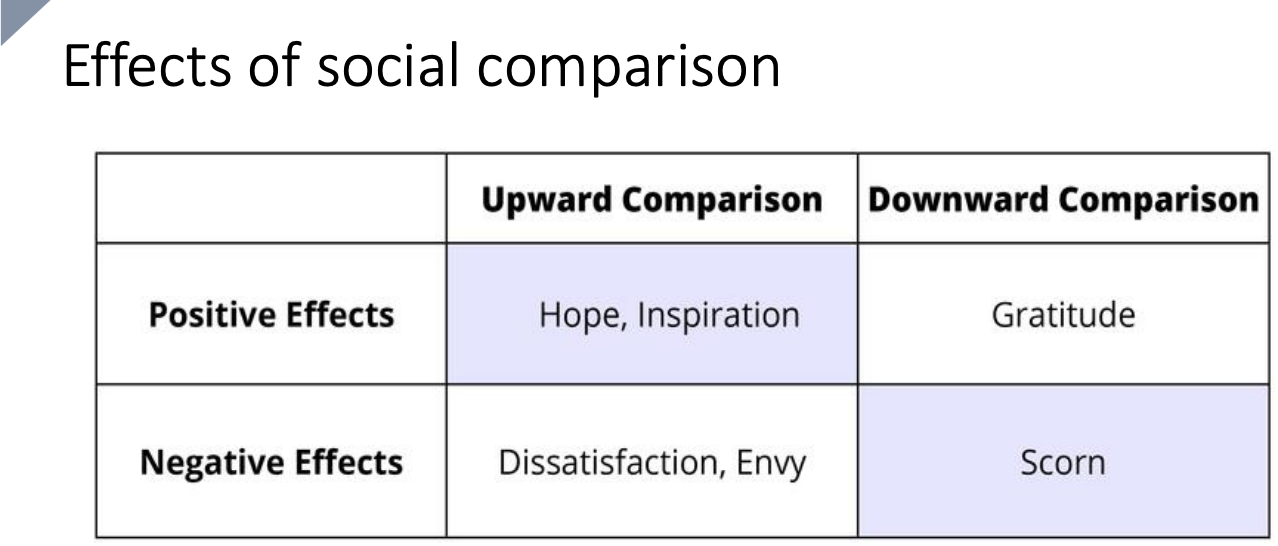
To avoid negative social comparison: Do not assume what you see is all there is, become content with your current standing.
The Bystander Effect
The classic example: The murder of Kitty Genovese. She was yelling and screaming for help after being attacked and stabbed. People saw her out their windows and did not call anyone or try to help. The attacker came back and killed and rap*d her.
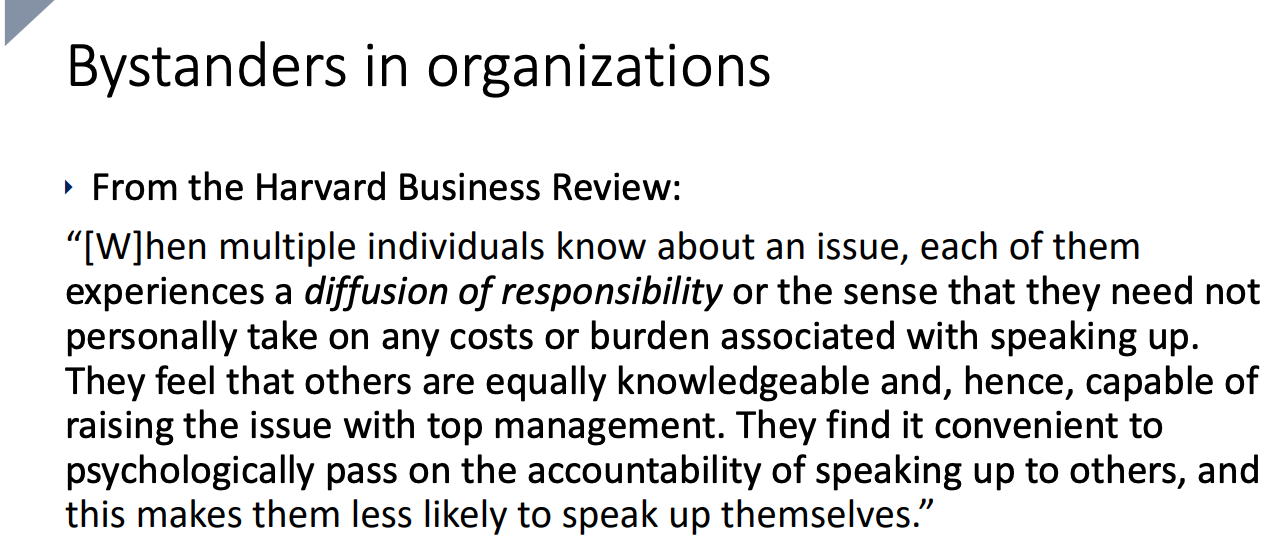
The bystander effect: When the presence of others discourages an individual from intervening. The more bystanders, the smaller the chance that anyone will help.
The Power Of One
In the Asch Experiments, if just one other person went against the group, the test subject did as well.
Example: When Kennedy decided to use the CIA to sponsor an invasion of cuba in 1961 (Bay of Pigs, was a disaster). Many of his advisors had severe issues with this but they each thought they were alone in their concerns.
How can you be the one to speak up?
Prepare ahead of time
Be aware of ethical dimensions
Live within your means and have an emergency fund
Have your most meaningful relationships outside of work
Unit 5
Environmental Protection
Environmental Protection is important to study because it impacts virtually all industries. Additionally, sustainability initiatives in businesses are often based on environmental standards. Finally, supporting & following regulations almost always benefits industries.
Consumer protection laws are important to study because any business that sells products or services to consumers is affected. Additionally, any business that purchases consumer products or services is affected.
EPA: The Environmental Protection Agency. Created by Congress in the 1970’s, it oversees all federal environmental laws. It also makes, investigates, and enforces administrative regulations.
NEPA: National Environmental Policy Act. Requires filing of environmental impact statements with the EPA for almost all government actions. After the notice and a hearing, the EPA decides whether project benefits outweigh environmental harm.
State Laws: States can pass more restrictive environmental legislation than the EPA, but they cannot pass looser rules. Often, the EPA delegates enforcement to state agencies.
Clean Air Act of 1963: Gives the EPA broad authority to regulate air pollution.
Massachusetts V. EPA: Originally claimed it didn’t have the authority to regulate greenhouse gases. Several states sued and s. ct. said EPA does have that authority and must do so.
Sources of Air Pollution:
Stationary Source: Examples are power plants, factories, etc. States must regulate these and make plans to reduce emissions.
Mobile Source: Examples are cars, planes, etc. The EPA sets emission standards and requires pollution control devices to be installed.
Penalties for Air Pollution Violations
Injections: The government forces you to stop
Fines: $25,000/day for exceeding emission standards or the amount of benefit received by the polluter.
Criminal Prosecution for willful violations: up to $1,000,000 for companies or fines and up to 2 years in prison for individuals.
Example: Volkswagen and Diesel Emissions, VW has installed equipment that detects when emissions are being tested and makes the vehicle temporarily reduce their emissions, without the testing device the cars would emit up to 40 times more than the allowed amount. After confessing to cheating VW was sued by pretty much everyone. They recalled 11 million vehicles and bought back 500,000 cars. In the U.S. VW pled guilty and paid over $4 billion in criminal fines and civil penalties. Further, VW execs were charged criminally.
Clean Water Act: AKA the Federal Water Pollution Control Act of 1948. This requires states to regulate bodies of water within their borders. This act classifies bodies of water based on quality (drinking, recreation, industrial, etc).
Safe Drinking Water Act: Set in 1974. It sets minimum quality standards for municipal water providers. It prohibits actions that pollute a drinking water source.
Sources of water pollution:
Point Sources: Examples are power plants, sewage treatment, etc. Discharge without a permit is prohibited and these need detailed records and monitorization of activity.
Thermal Sources: This is uncontaminated, non-toxic, hot water. This is prohibited without a permit, and while it is not dangerous to humans it is harmful to ecosystems.
Penalties for Water Pollution Violations:
Injunctions: Government making the violator stop
Fines: up to $25,000 per day
Order to clean up the polluted body of water
Criminal prosecution for willful violations: Up to $1,000,000 fine or 15 years in prison.
Toxic Substances Control Act of 1976: The EPA has identified hundreds of compounds as toxic. The EPA regulates use depending on the degree of risk.
RCRA: Resource conservation and Recovery Act of 1976. The EPA develops regulations applicable to all facilities that handle hazardous waste in any capacity.
CERCLA: Comprehensive Environmental Response, Compensation, and Liability Act of 1980. AKA the Superfund Act. This act created a superfund (from business taxes) to clean up land when the polluter fails to do so. Anyone connected to a spill can be held liable.
Consumer Protection
FTC: Federal Trade Commission. Works to protect consumers by preventing anticompetitive, deceptive, and unfair business practices.
False & deceptive advertising: (It’s okay to state opinions, “mere puffery” is okay).
Two Types:
Unsubstantiated claims
Misleading a reasonable consumer
Examples of deceptive advertising: Lumosity made fake claims that their games improve performance at work and school, and prevent the risk of dementia and Alzheimer’s. Sketchers made false claims that Shape-up shoes would help with muscle toning.
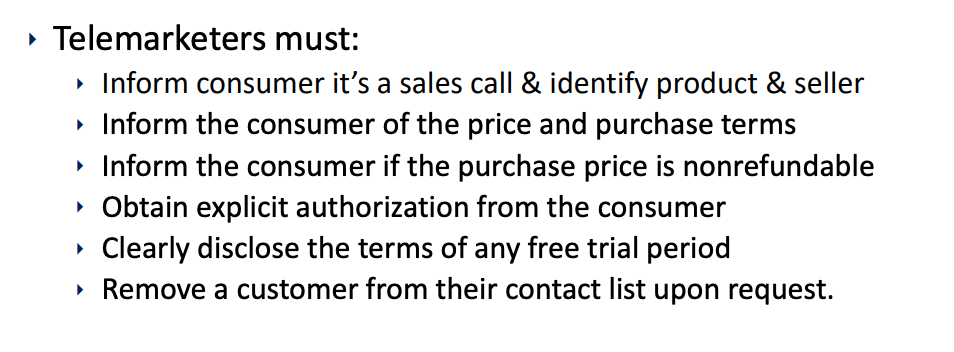
The FTC regulates sales. With mail, telephone, & online sales the FTC ensures sellers must provide accurate shipping time estimates. With door-to-door sales, the FTC requires a 3-day cooling-off period. the FTC requires Accute odometers in cars, itemization of funeral services, & many other issues.
CAN-SPAM act of 2003: Controlling the Assault of Non-solicited Pornography and Marketing Act. Requires the ability to unsubscribe, accurate headers, a physical address listed for the seller, and a clear labeling of adult content.
CFPB: Consumer Financial Protection Beaureu of 2010. Part of the Dodd-Frank Wall Street Reform and the CPA. it regulates banks, credit unions, and any firms involved in consumer finance. Spearheaded by Elizabeth Warren.
TILA: Truth-In-Lending Act required lenders to disclose the cash price of goods & services being purchased. the interest rate & fees on the loan, the total amount paid over the life of the loan. the amount and due date of each installment payment. there are penalties for late payments or for the prepayment of principal.
FDCPA: Fair Debt Collection Practices Act. This act protects contacting a debtor between 9 pm and 8 am. Prohibits contacting a debtor after written notice to cease contact. Harassing debtors, making false statements, and threatening any action outside of the debt collectors’ legal rights.
FCRA: Fair Credit Reporting Act limits credit reporting agencies’ use of consumer information.
FACT: Fair and Accurate Credit Transaction Act gives the consumer the right to receive their credit report annually.
Fair Credit Billing Act: Gives consumers a process for disputing credit card charges
Fair Credit and Charge Card Disclosure Act: Requires disclosure of credit card interest rates, fees, minimum finance charges, payment due dates, and grace periods.
CARD: Credit Card Accountability Responsibility and Disclosure Act of 2009: This act places regulations on credit card issuers such as requiring card agreements to be in plain English and to be posted publicly online, it also restricts the issuance of a card to consumers under 21 years of age.
ECOA: Prohibits discrimination in the provision of credit on the basis or race, sex, religion, color, national origin, marital status, age, and participation in welfare programs. Note: credit history, income, assets, etc. can be used to make credit decisions.
FDA: The Food and Drug Administration, regulates anything that goes on or in your body.
Food safety:
No sale of adulterated food (harmful ingredients, rancid, etc.)
No false/misleading food labels
Labels must contain the name & location of the manufacturer, ingredients, & nutritional content. Restaurants with over 19 locations m just publish their nutritional information.
Drugs & medicinal devices: Elaborate, multi-stage testing for the drug trial process. Drug advertising and disclosures are regulated.
Cosmetics & beauty products: They must disclose ingredients & any harmful substances. Prohibits misleading/ unsubstantiated claims on labels. Mislabels or adulterated products are prohibited.
Unit 4
Misperceptions of Ourselves
We all think we are better than we are, and we all think others are worse than they are. This is called the Fundamental Attribution Error.
Moral Equilibrium
Moral Equilibrium: The tally in our heads of good deeds and bad deeds we have done. For example- if you have a really hard workout at the gym, you may feel like you deserve extra dessert that night.
Moral compensation: When we do good to compensate for unethical behavior.
Moral licensing: Permitting ourselves to be bad because we’ve built up a reserve of good deeds.
Moral Licensing study example: Researchers found that people who purchase “greener” products were:
Less likely to share $ with a stranger
More likely to cheat in a task where they can earn $
More likely to steal $ when they thought they wouldn’t get caught.
Cognitive Dissonance
In 1954 a cult leader predicted the world would end. when it obviously didn’t, their followers were even more into her than before.
Cognitive dissonance: Our minds can entertain two contradictory concepts at the same time. Our brains will make us resolve the conflict one way or another.
When we resolve cognitive dissonance unethically we rationalize behavior we previously believed to be wrong as no longer being wrong.
Case study: the Central Park Five 5 black & Latino teenagers were arrested and convicted for the rape and murder of a woman in central park. 13 years later someone else confessed. They were exonerated and despite this many law officials and politicians (like Trump) refused to believe they were innocent.
Factors that Promote Cognitive Dissonance:
irrevocable commitment
Foreseeable Consequences
Responsibility for consequences
Effort
Suggestions for reducing cognitive dissonance:
Never ignore guilt in your gut
Learn the ways our mind tricks us into having incorrect views of ourselves
Know the types of rationalizations we use to excuse our behavior.
Overconfidence Bias
We tend to believe we are more ethical than our actions would suggest.
Fun fact: 61% of doctors think drug company freebies influence other doctors, and only 16% say they influence themselves.
Example: Richard Scrushy stole money from his company, and screwed over stockholders
To avoid Overconfidence bias: try to practice humility, and don’t surround yourself with “yes-men/women”
Note: Impostor syndrome is the flip side of this, and is also damaging but mostly to the person experiencing it.
*Conflicts of Interest
Conflicts of interest: When we have incentives that conflict with our professional responsibilities. We always think we are immune to conflicts of interest.
COI Reduction Methods:
Increased transparency
Increased accountability
Implement policies to mitigate conflicts (Ex: multiple signers on corporate checks)
Rationalizations
Rationalizing: convincing ourselves that our actions are justified.
Rationalize = Rational Lies
Ways we rationalize:
Calling it by a different name
Everybody else does it
If I don’t, someone else will
That’s how it’s always been
We’ll wait until the lawyers tell us its wrong
It doesn’t hurt anyone
The system is unfair
It’s a “gray area”
I was just following orders or directions
We don’t all share the same ethics
Controlling Rationalizations:
Get a second, unbiased opinion
What would grandma think?
Do you want this published in the news?
Sadhu Application
-McCoy’s moral equilibrium: could saving the sadhu have been out of the question because of other good deeds (clothing the sadhu)
-Conflicts of interest: McCoy wanted to reach his destination, saving the sadhu would have stopped that from being realized. But his human interest would have been saving the sadhu.
-Rationalizations: McCoy moved on because he thought
Unit 3
Intellectual Property
Intellectual property: Creations of the mind that can be legally owned and protected. IP drives Innovation
Four Main types of Intellectual property:
Trade Secrets: any confidential proprietary business information.
Legal protection: “Misappropriation of trade secrets”- If someone steals or leaks a trade secret that is criminally wrong. Doing this is called a ‘Tort”
Economic Espionage Act of 1996 makes this criminally wrong
Example: U.S. V. Williams In 2016 Coca-Cola employee Julia Williams made an offer to Pepsi telling them she would sell classified information about products, packaging, and marketing.
Patents: the exclusive right to use, sell, or license and invention for a period of time.
 Three Types of Patent:
Utility patent (20 Years): The way something functions
Design Patent (15 Years): The way something looks,
Plant Patent (20 Years): New types of plant
Requirements to obtain a patent: Novel, Useful, Nonobvious
Patent registration happens through the U.S> Patent & Trademark Office (USPTO)
2011 America Invents Act: Patents used to go to the first person to Invent, because of this act, the new rule is that the patent goes to the first person to file it.
Provisional Patent: A very simplified application, that gives you a year to file a full patent application and protects you from someone else patenting your invention.
Trademarks: AKA “Mark” Any unique name or branding that a company uses to distinguish itself and its products from those of its competitors.
To register for a trademark: Applications are viewed by the USPTO. It must be unique to your industry and similar industries. It must be used within 6 months or it is lost. Once granted, the trademark is protected nationwide (except if it is being used by somebody in another area, then they can continue to operate in that area only).
Keys to strong trademarks: Distinctiveness, & secondary meaning
Risk of a dominant trademark: Becoming Generic/ Non-distinctive
Example: Velcro’s patent expired 40 years and now everyone who makes hook & loop calls it Velcro. Because of this, they are at risk of losing their trademark.
Copyrights: The right to protect a recorded expression of a creative idea.
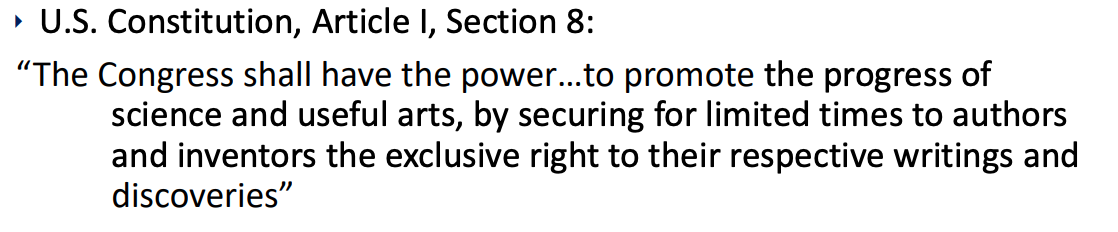 What can be copyrighted?: Almost any recorded creative work.
Copyright registration: U.S. Copyright office is just one giant filing cabinet, there is no application, and filing is not necessary but a good idea.
Copyright period:
Originally: as short as 14 years.Currently: It is the authors life + 70 years for individual copyrights
or
95 years from date of first publication, or 120 years from the date of creation for business copyrights.
There is a theory that Disney and Mickey Mouse is behind the increase in copyright period. So Mickey couldn’t be ripped off.
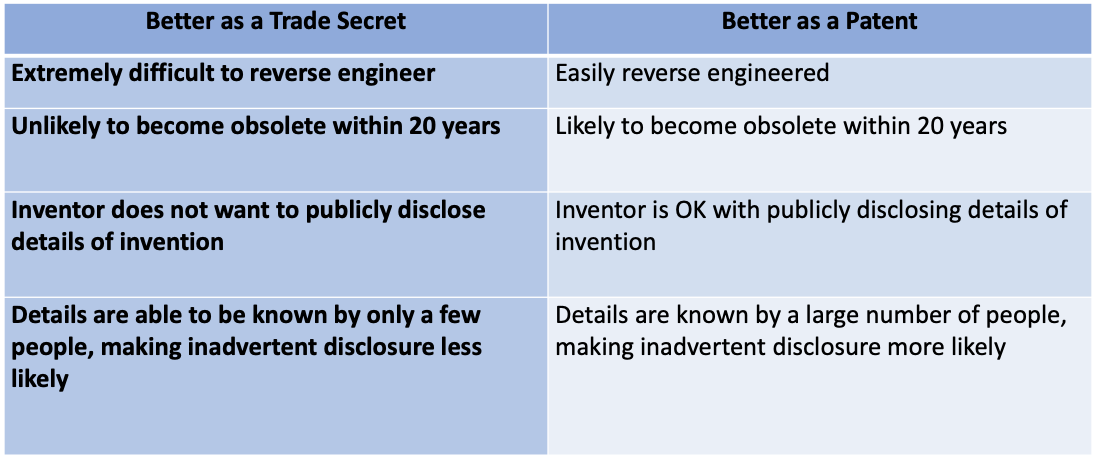
Infringement
Patent Infringement: Called a “Tort”.
Possible Consequences: Forced royalty payments, Injunction, Destruction of infringing items, Other damages
Trademark Infringement:
Direct Infringement | Dilution |
|---|---|
Unauthorized use, causes confusion among consumers. | Doesn’t necessarily confuse customers. Ex: Ben & Jerry’s (Icecream), Ben & Cherry’s (Porn) |
Remedies doe infringement: Disgorge profits (need to receive all revenue the others made), damages, Injunction, and destruction of infringing items.
Copyright infringement: Disgorge profits (need to receive all revenue the others made), damages, Injunction, and destruction of infringing items. Statutory damages (only if registered).
Fair use Doctrine: Making the use of copyrighted material without permission is OK if used for
It’s used for parody/satire
A short portion is used in a news report
A short portion is used by a student or teacher for educational purposes
It’s used for critique/review It’s used in judicial/legislative proceedings.
The Ethics of Intellectual Property
Patenting life: Since new plants can be patented, in the future can new DNA sequences be patented?
Patent Troll: Someone who owns patents for the sole purpose of suing or threatening to sue people who violate them. Even if the violation is specious. The USPTO is not good at making sure patents are novel & non-obvious.
Example: Lodsys, LLC. Claimed in-app purchases infringed on its patent, and they sued and threatened dozens of developers.
Drug Pricing: A patents grants the inventor a monopoly, but do they owe anything to society? Is there a duty to provide life-saving drugs at reasonable prices?
Example: 2009 EpiPen price: $103.50 2016 EpiPen price: $608.61
Unit 2
Bounded Ethicality
Economists used to say people were “rational actors”, but Herbert Simon discovered & proved that we only process certain information when making decisions, with variable accuracy and limited knowledge. this is known as “Bounded Rationality”. In this sense, we are also boundedly ethical.
Case Study: Studies show the flu vaccine has only a slight effect on the number of senior citizens’ flu deaths each year. AMA's code of ethics promotes the right to self-decision, and the AMA strongly supports flu shots for everyone. and instructs each medical provider to tell each patient to get a flu shot. Should a doctor disclose her doubts about its efficacy?
The “Door” Study- 1998
Conducted by Daniel Simons and Daniel Levin
An experimenter was instructed to ask a stranger for directions while conversing with two people carrying a door pass in between the experimenter & the stranger, and the experimenter was replaced with another person. 50% of the people approached in this study didn’t notice when the person they were talking to was switched.
This experiment concluded that change blindness can occur outside of lab settings.
The Selective Attention Test - 1999
Conducted by D. Simons & N. Chabris
Instructions: Count how many times the players wearing white pass the basketball
There are 15 passes, but a man in a gorilla suit passes through the video in the middle, going unnoticed by many.
The Monkey Business Illusion- 2010 ish
Instructions: Count how many times the players wearing white pass the basketball
People were 50% likely to not notice the gorilla. But people who did know about the gorilla before time did not notice the curtain change color, or one of the black-shirted team players leave.
Moral Awareness
How to act ethically: 1. Moral Awareness 2. Moral Decision Making 3. Moral Intent 4. Moral Action
Ethical Fading: Being so focused on one aspect of a situation that the moral dimensions fade from view. This is a reason for a lack of moral awareness.
Moral Myopia: This keeps ethical issues from coming into focus, they are blocked by some form of rationalization.
How to be aware:
Listen to your gut
Engage trusted friends, advisers, mentors, etc.
Practice ethical attentiveness`
The McGurk Effect: Bizzare Audio Illusion
Audio interpretation is correlated with an image. The illusion shows a man saying “Ba” over and over again, then the illusion changes the image to the same man saying “FA” without the audio changing. The audio appears to sound different even though only the image is changing.
Framing
Ex: Studies show people think a burger marketed as 75% fat-free would taste different than a burger sold as 25% fat.
Application: When you are primed to think about profit, you make different decisions than when you’re primed to think about ethics.
Example: Challenger Launch- Morthon Thiokol engineers opposed the challenger launch because of safety grounds, the GM told them to put on their “management Hats” and they changed their mind. The challenger exploded during the launch.
To use framing for good: Stop asking “Will this make money” and instead ask “How will this look as a headline on CNN”
Robert Prentice Quote: Describes how employees act based on their frame of reference: loyalty to the company. If they were thinking about the bigger picture they may have acted differently.
Office Space: Stealing company money by rounding down and keeping the change. Framing it as an accounting choice to make things easier but really it’s just stealing.
Self-Serving Bias
We tend to see things in a light that is most favorable to our own self-interests. It affects how we remember and interpret information.
Example: Scientists reviewing articles tend to conclude that those supporting their own beliefs are of higher quality than those that oppose their existing beliefs.
To mitigate self-serving bias: engage trusted advisers, mentors, etc. Try to seek objective sources of facts and evidence.
Loss Aversion: We HATE losing what we already have much more than we LOVE getting new things. This extreme desire to hold on to what we have can lead to unethical behavior.
Loss Aversion Example: You are more likely to cheat to avoid failing a class than to move from a B to an A.
To mitigate loss aversion: Ask yourself whether you would take the same course of action to gain the same amount of benefit as you would to avoid possible loss.
Incrementalism
Working your way towards unethical behavior
Example: Lance Armstrong didn’t go from an honest competitor to operating a huge doping scheme overnight. He worked his way up to it.
“The first dishonest act is the most important one to prevent” - Dan Arielly
Example: Slight resume passing can turn into lying about major accomplishments and losing jobs. Like George O’Leary who had to resign as Notre Dame’s football coach after 5 days.
Fact: Your professionals have a strong sense of right and wrong, BUT they think it’s okay to cut corners early in their careers to get ahead. Once they are successful they are more likely to adhere to their moral principles.
Application: The Parable of the Sadhu
Ethical fading- Was McCoy too focused on his own goal?
Moral Myopia- What rationalizations may have come into play?
Framing- What was McCoy’s frame of reference on his journey?
Self-serving bias- Seeing facts in a light favorable to our own interests.
Loss aversion- McCoy had already come so far, the loss of going back would have been hard to bear for McCoy.
Dan Ariely Ted Talk on Our Buggy Moral Code
Predictable Irrationality:
After receiving severe burns, Dan wanted to see if the nurses, who ripped off the bandaids on his body when they were changed, caused an hour of intense pain. He conducted pain experiments and they discovered it would be less painful to slowly rip the band-aids. Additionally, they would have been more pleasant if they started in the most painful area, and gave him slow improvement as the process continued.
People in the study were unpredictably influenced in ways that they didn’t consciously interpret. For example: the distance of incentives
Unit 1
This class focuses on moral and legal awareness.
Class issues raised: Legal rights & responsibilities, obedience to authority, moral & legal awareness, Overconfidence bias, conformity bias, social comparison, Incrementalism.
The Parable of the Sadhu:
Bowen McCoy & his friend Steven were traveling to Nepal, they needed to cross an 18,000 ft mountain pass with a New Zealanders hiking team, a Swiss couple, and a Japanese hiking club. They came across a Sadhu (Yogi) naked and half dead in the snow, one by one, each group all stopped and tried to help him, but could not effectively/ surely save him and achieve their goals at the same time.