week 2 Pathophysiology CVA
Cerebrovascular accident (CVA)
MB lecture - week 2
Incidence → every 2 seconds
Prevalence:
33 million
2/3 physically affected
Third most disabling condition
CVA definition → cerebrovascular accident = brain, spinal cord or retinal cell death attributed to ischemia
blood flow to a part of the brain is blocked or when a blood vessel bursts, leading to brain cell damage → this interruption can be due to:
-”infraction” clot (ischemic stroke) or bleeding in the brain (hemorrhagic stroke).
TIA → transient ischaemic attack → a transient episode of neurological dysfunction caused by focal brain, spinal cord and retinal ischemia
temporary interruption of blood flow to the brain → It has similar symptoms to a stroke but does not cause lasting brain damage.
symptoms are brief, usually lasting from a few minutes to an hour, and resolve within 24 hours. Blood flow is restored before significant brain damage occurs.
TIAs are typically caused by a clot temporarily blocking blood flow to the brain.
Risk factors (Atherosclerosis)

smoking
diabetes
hypertension (high blood pressure)
Hyperlipidaemia → (medical condition characterized by abnormally high levels of lipids (fats) in the blood, such as cholesterol and triglycerides)
family history of cardiovascular disease under the age of 60
overweight and lack of exercise
Risk factors infarct with cardiac cause
atrial fibrillation → (heart condition characterized by an irregular and often rapid heart rhythm (arrhythmia) that occurs when the upper chambers of the heart (the atria) beat out of sync with the lower chambers (the ventricles).
recent myocardial infraction
heart valve defects/endocarditis
cardiac myxoma
Risk factors cerebral haemorrhage
Hypertension
Use of anticoagulants
Coagulation disorders
Cerebral amyloid angiopathy → condition in which amyloid protein deposits accumulate in the walls of the blood vessels in the brain. This buildup weakens the blood vessels, increasing the risk of bleeding (hemorrhage) in the brain
Vascular malformation
Bleeding in a tumor or metastasis → process by which cancer cells spread from the original (primary) site to other parts of the body.
Vasculitis → inflammation of the blood vessels, including arteries, veins, and capillaries.
Cerebral venous sinus thrombosis → type of stroke caused by a blood clot forming in the venous sinuses of the brain
Use of cocaine
Reversible cerebral vaso constrinction syndrome (RCVS) → condition characterized by temporary narrowing (constriction) of the blood vessels in the brain
Causes CVA
Atherosclerosis
Aneurysm: local dilationof an artery or ventricle due to damage to the lamina elastica interna, whichcan rupture and bleed
Cerebral infraction
Injury partly due to reduced supply of oxygen and glucose, partly due to subsequent biochemical reactions which damage the neurons
explanation of the process
→ Membrane potential cannot maintained because ion transport ceases
→ calcium flows into the cell
→ further damage → Lack of oxygen triggers anaerobic glycolysis
→ PH decreases → cerebral oedema → reduction in cerebral blood flow Cell death leads to release of excitatory neurotransmitters (glutamate), free radicals, fatty acids and eicosanoids →further injury
Hypoxia
definition →condition in which there is a deficiency of oxygen reaching the tissues and organs of the body
Infarct core → area where the hypoxia exceeds a critical level, this area will remain irreversible damaged
Penumbra = area around the infarct core, where there has been a relative hypoxic region, for this area the chance of survival is greater with a rapid recanalization of the occluded vessel or by blood supply from the collateral circulatory system
in TIA → the whole area is penumbra
Circle of Willis
Cortical vascular territories
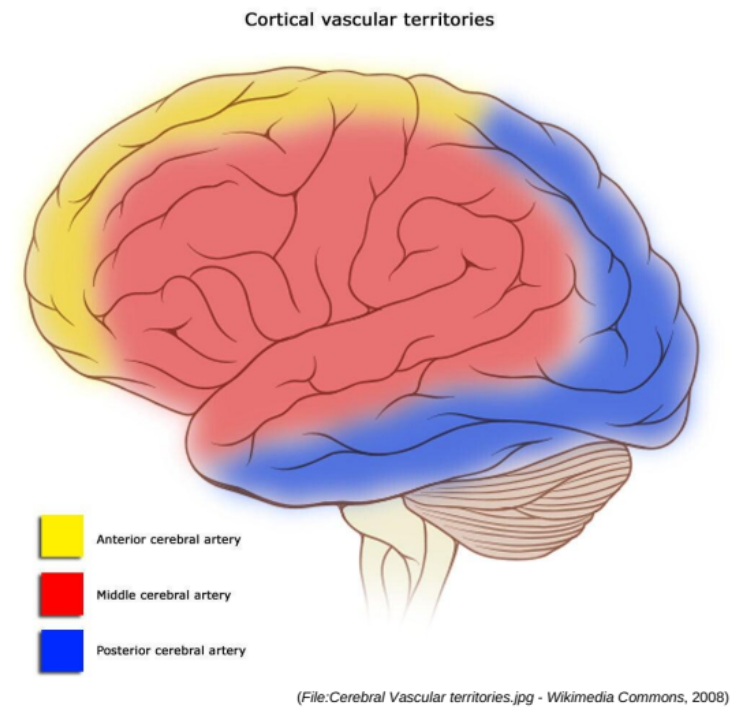
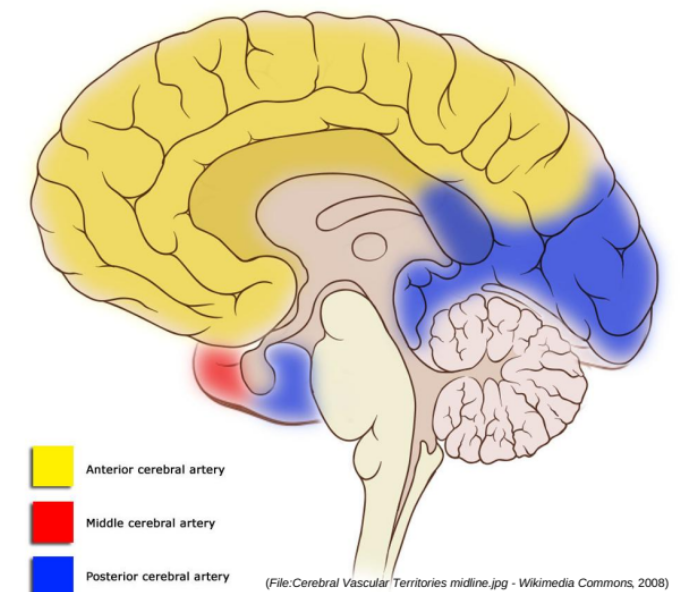
What happens when a certain artery of the circle of wills is compromised
Occlusion arteri cerebri media → hemiparesis (partial weakness or reduced strength on one side of the body) arm more than leg
Occlusion arteria cerebri anterior → Paresis contralateral leg, Clumsiness contralateral arm, Cognitive problems
Occlusion arteria cerebri posterior → Hemianopia, Memory and behaviour impaired, posterior limbic system and thalamus, (in)complete loss of visual field, Cortical blindness
Infarct in arteria basilaris → Brainstem, Occipital lobes, Cerebellum
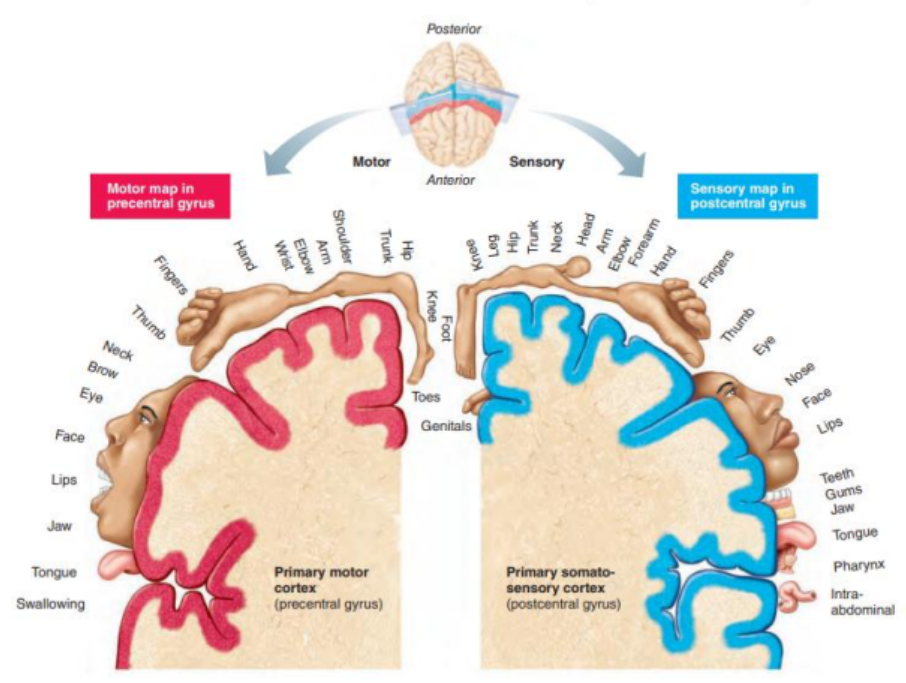
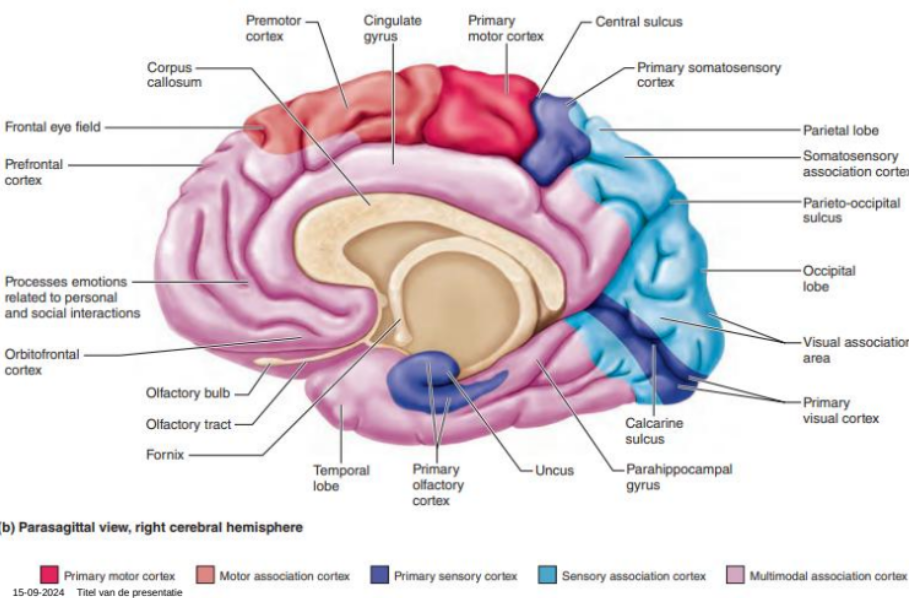
Primary, secondary and tertiary cortex
Primary: input (Is anything happening?)
Secondary: analyzed (what is happening?)
Tertiary: in context (What does it mean?)
Medical treatment infract
trombolysis → medicine
Trombectomy → surgery
Medical treatment haemorrhage
Coil
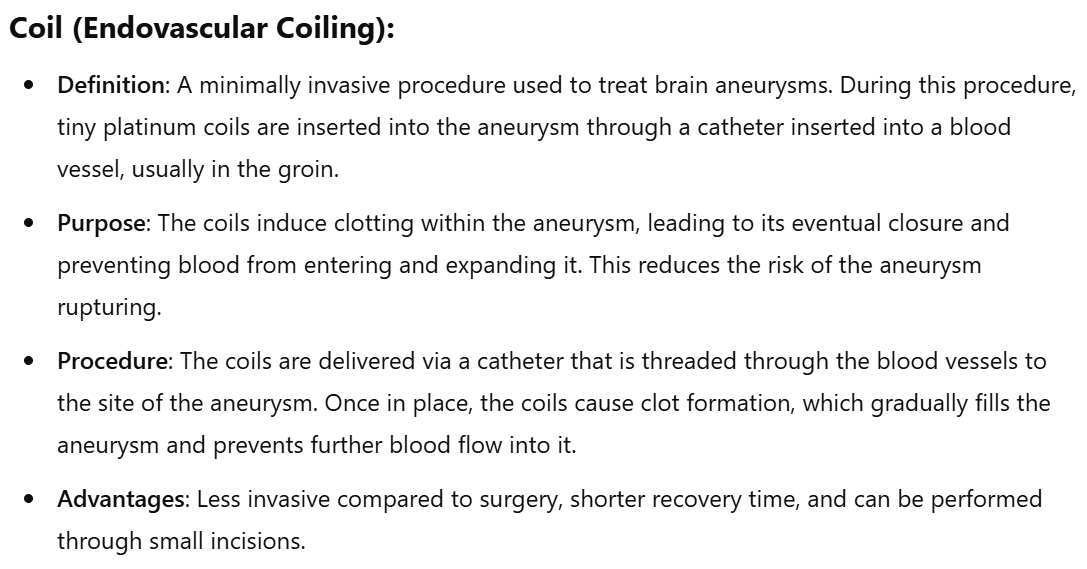
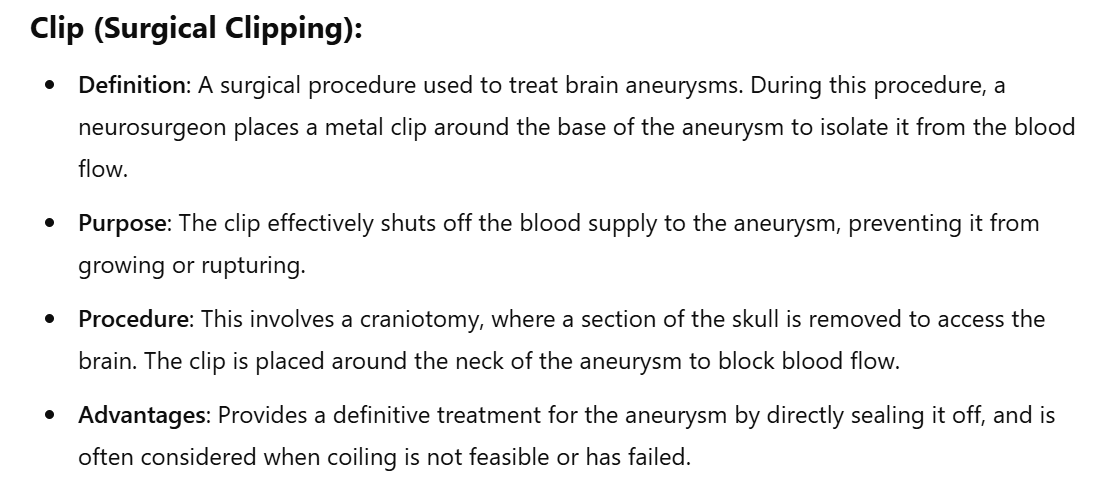
Clip