Ch3: The Science of Astronomy
Eclipses (Ch2)
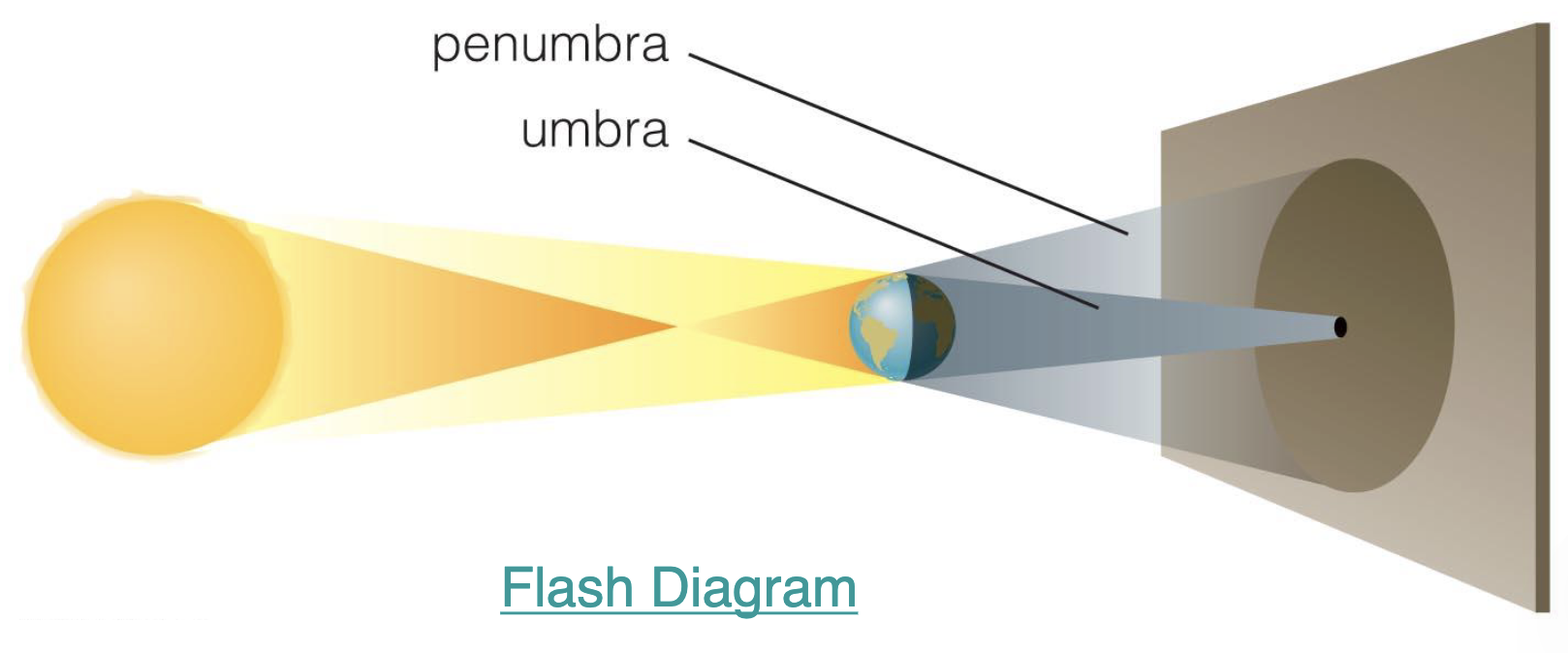
The Earth and Moon cast shadows.
When either passes through the other’s shadow, we have an eclipse
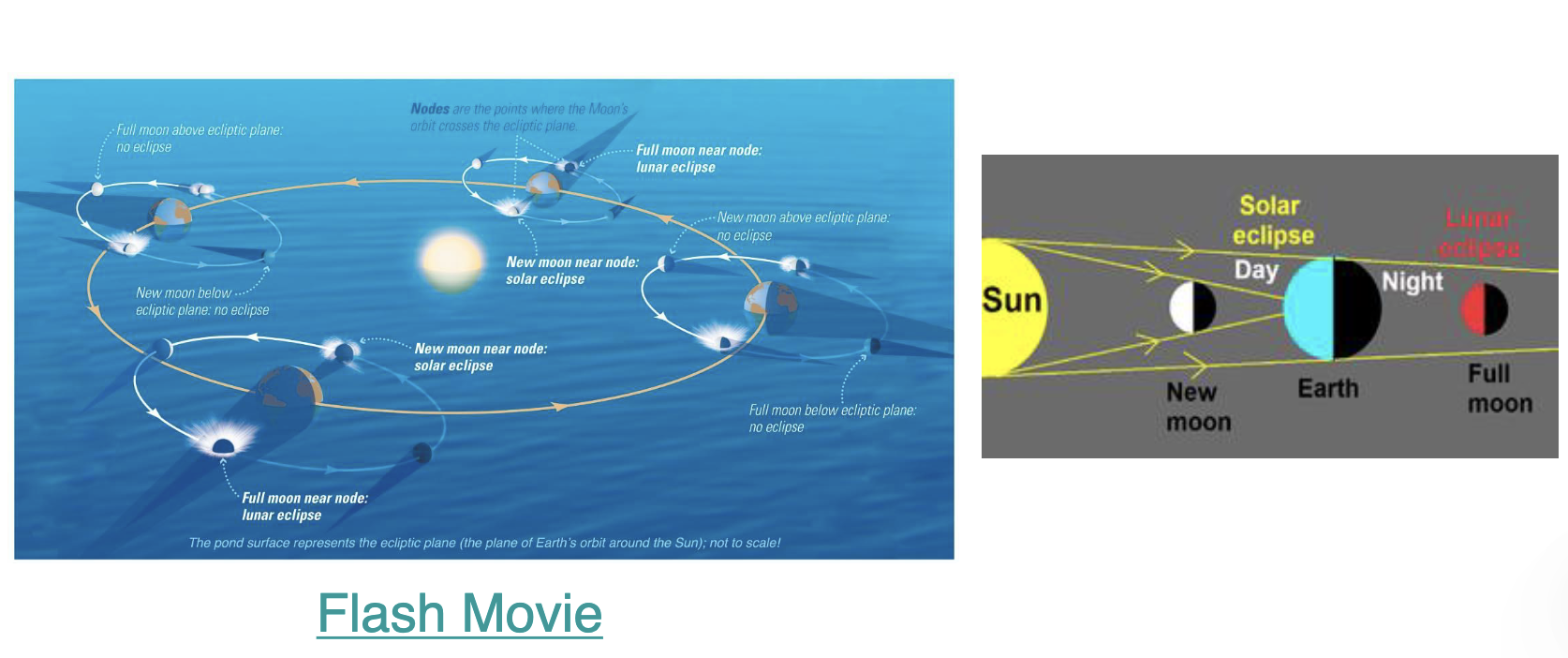
Why don’t we have an eclipse at every new and full moon?
The Moon’s orbit is tilted 5 degrees to ecliptic plane.
So we have about two eclipse seasons each year, with a luner eclipse at full moon and solar eclipse at new moon.
Acquire Measurements
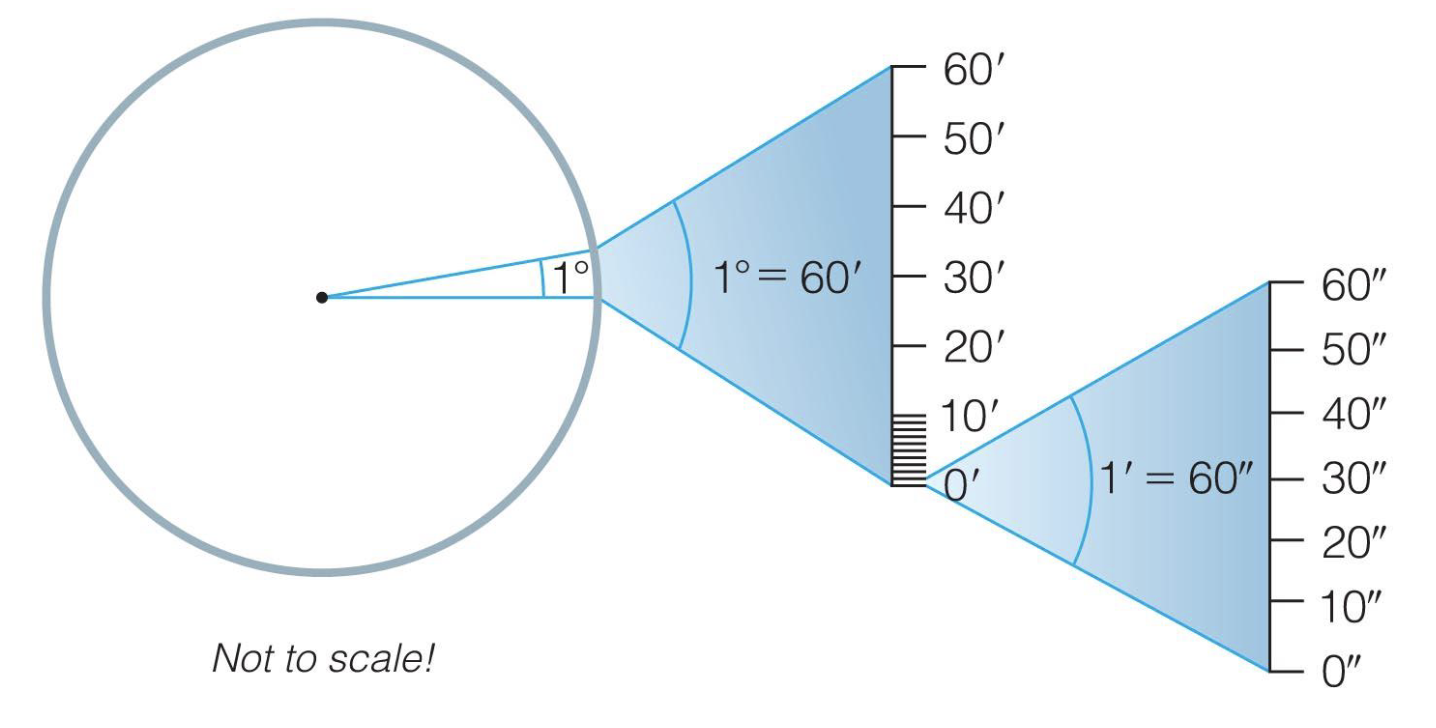
Full circle = 360 degrees
1 degree = 60’ (arcminutes)
1’ = 60” (arcseconds)
Thought Question
The angular size of your finger at arm’s length is about 1 degree. How many arcseconds is this?
→ 60 × 60 = 3600 arcseconds
Chapter3: The Science of Astronomy
In what ways do all humans use scientific thinking?
Scientific thinking is based on everyday ideas of observation and trial-and-error experiments.
How is modern science rooted in ancient astronomy?
Many of our current systems had their roots in the achievements of ancient astronomy.
Daily timekeeping
Tracking the seasons
Calendar
Monitoring lunar cycles
Monitoring planets and stars
Predicting eclipses
And more…
Why does modern science trace its roots to the Greeks?
Greek geocentric model (c. 400 B.C.)
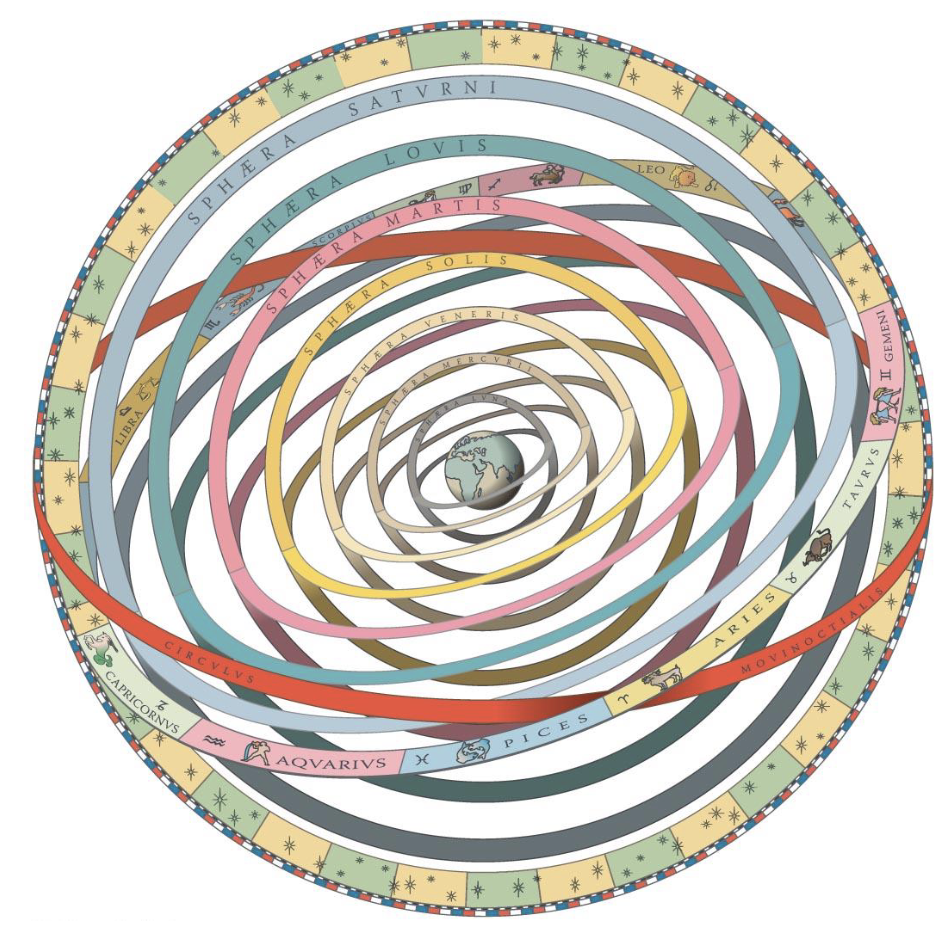
Greeks were the first people known to make models of nature
They tried to explain patterns in nature without resorting to myth or the supernatural.
But this made it difficult to explain apparent retrograde motion of planets….
But sometimes they go westward relative to the stars for a few weeks: apparent retrograde motion.
Why was planetary motion so hard to explain?
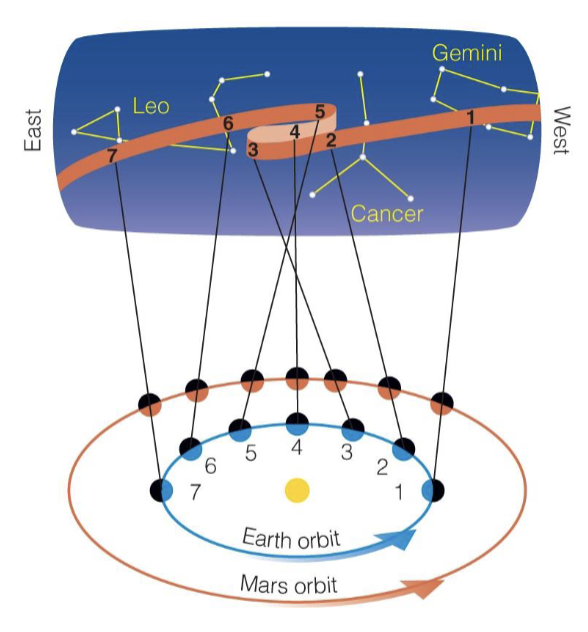
Review: Over a period of 10 weeks, Mars appears to stop, back up, then go forward again.
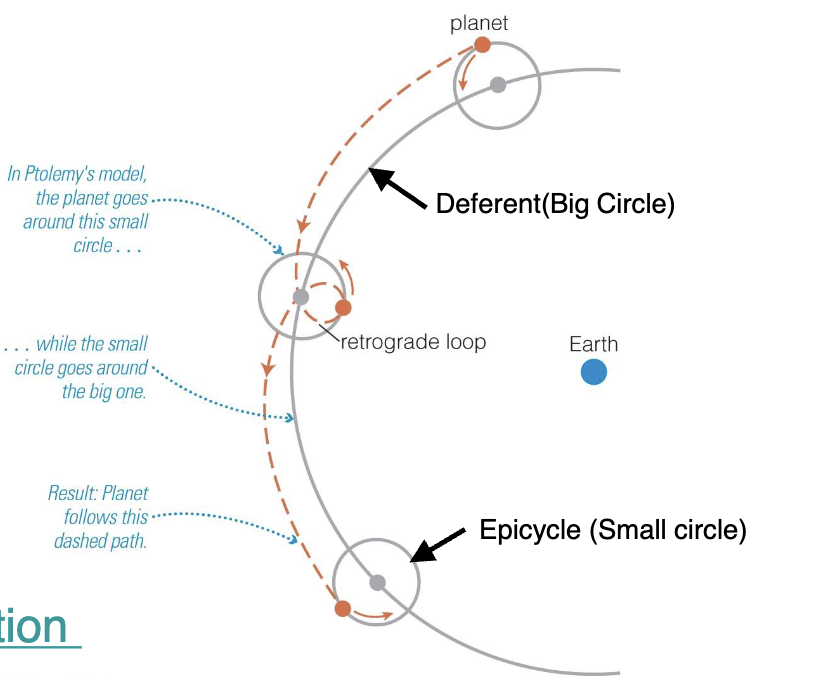
Ptolemy (A.D. 100 - 170)’s model ~The Ptolemaic Model~
Geo-centered Model
Combination of Big & Small circles
How did Copernicus, Tycho, and Kepler challenge the Earth-centered model?
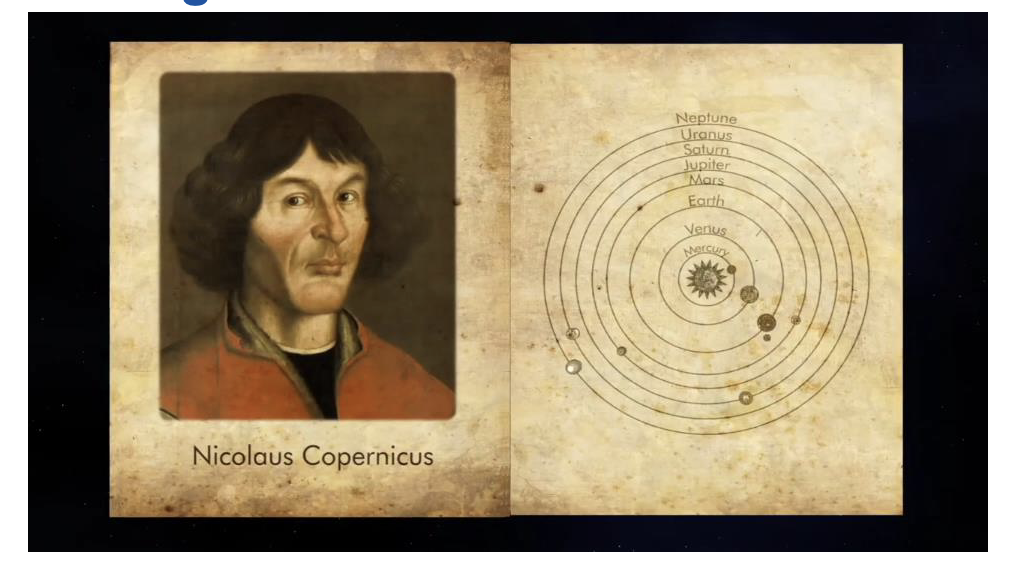
Copernicus (1473-1543)→ “Copernican REVOLUTION” (1543)
Sun-Centered model: Sun at the center + Circular planetary orbits
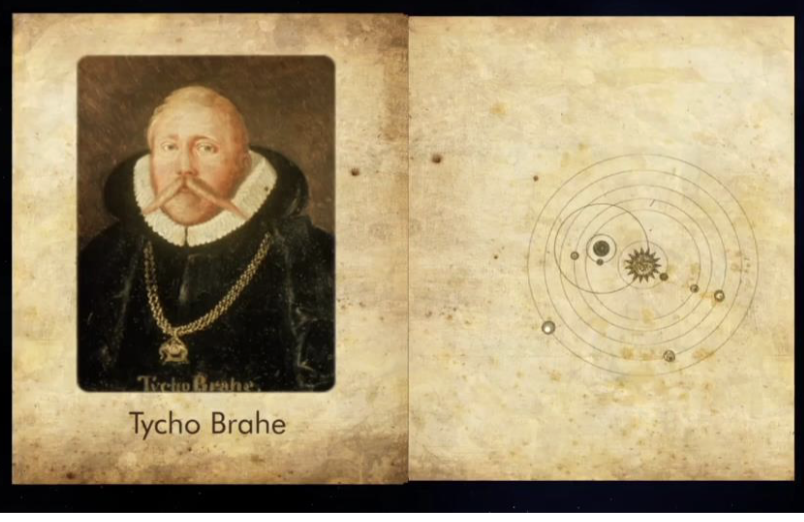
Tycho Brahe (1546-1601)’s model
Made the most accurate naked eye measurements of planetary positions
Geo-centered model + Planets orbiting around Sun
Kepler (1571-1630)’s model (1619)
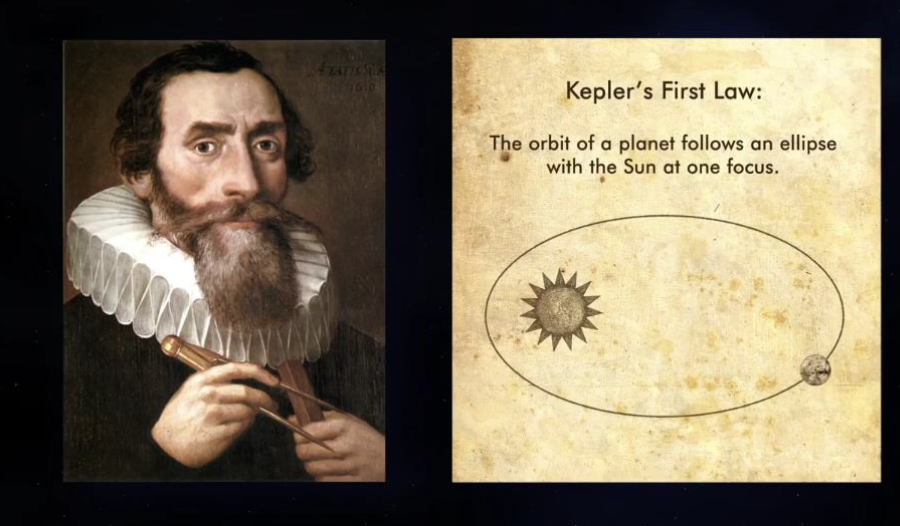
“If I had believed that we could ignore these eight minutes [of arc], I would have patched up my hypothesis accordingly. But, since it was not permissible to ignore, those eight minutes pointed the road to a complete reformation in astronomy.”
What is an eclipse? (Don’t be confused with ECLIPSE!)
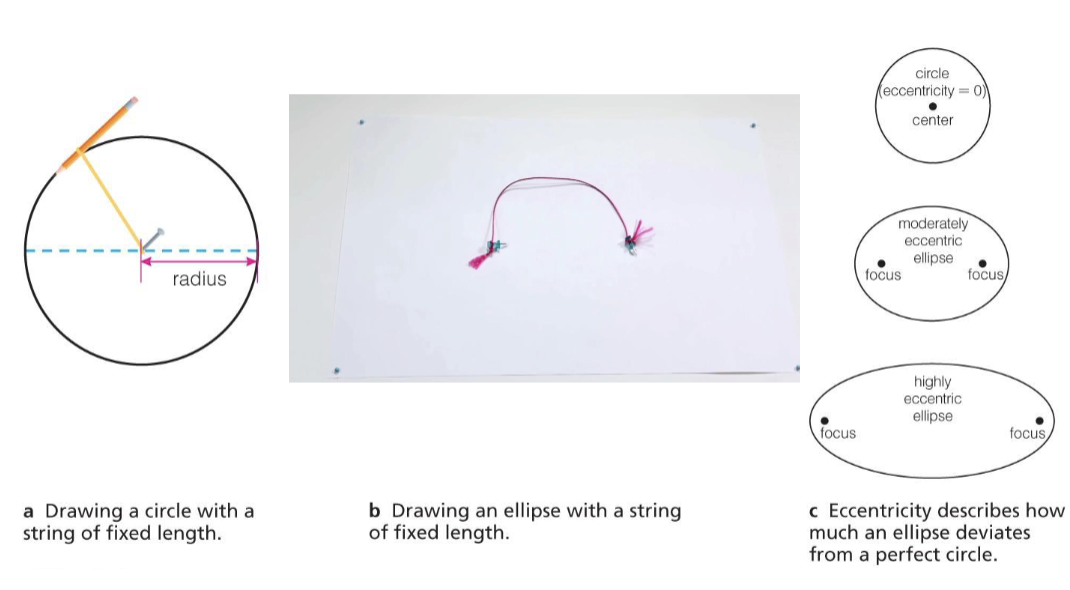
An eclipse looks like an elongated circle
What are Kepler’s three laws of planetary motion?
Kepler’s First Law: The orbit of each planet around the Sun is an eclipse with the Sun at one focus
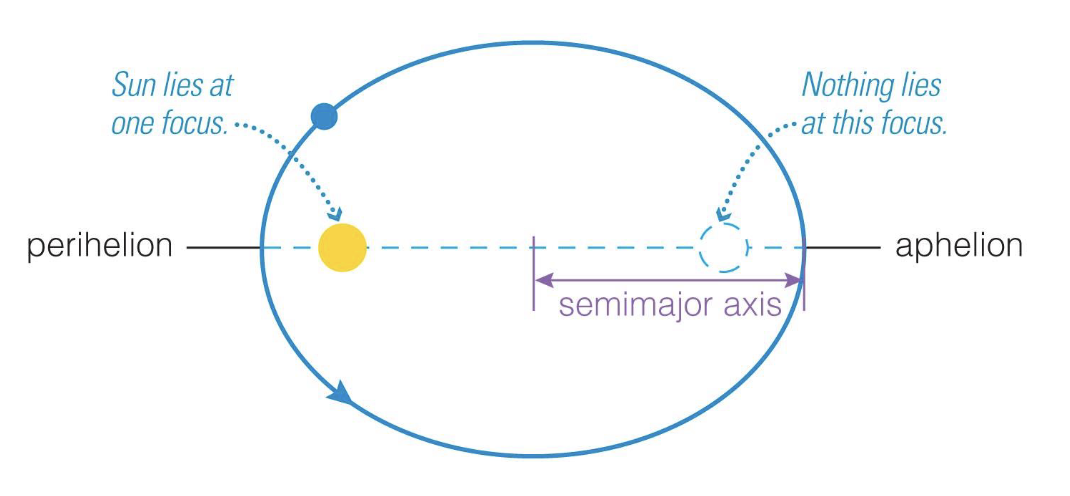
This means that a planet travels faster when it nearer to the Sun and slower when it is farther from the Sun.
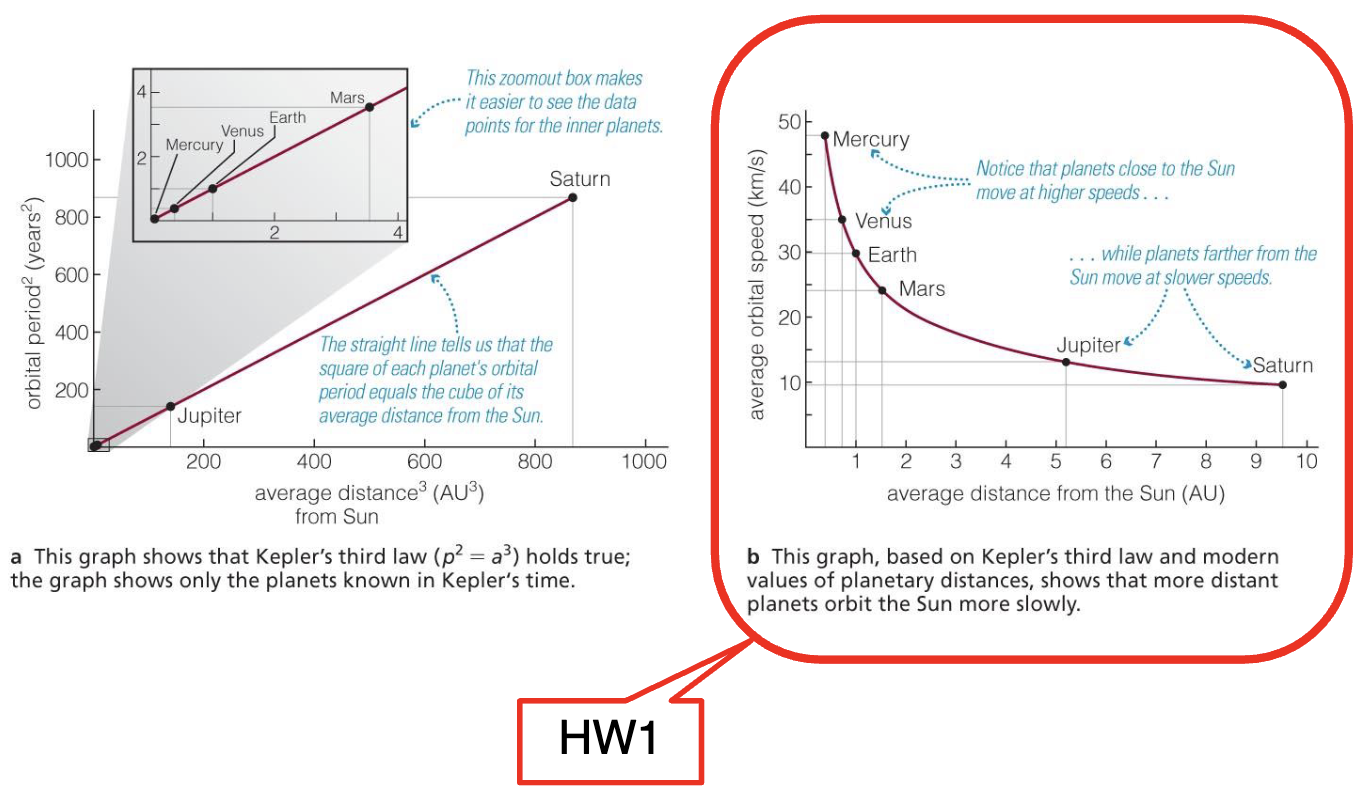
Kepler’s Third Law
More distant planets orbit the Sun at slower average speeds, obeying the relationship

p = orbital period in years
a = average distance from Sun in AU
Kepler’s Third Law
Graphical version of Kepler’s Third Law
How did Galileo solidify the Copernican revolution?
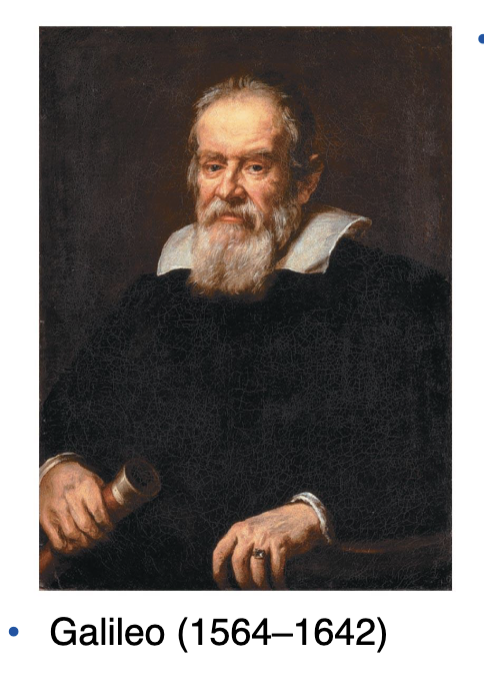
Galileo overcame major objections to the Copernican view. Three key objections rooted in Aristotelian view were:
Earth could not be moving because objects in air would be left behind
Non-circular orbits are not “perfect” as heavens should be,
If Earth were really orbiting Sun, we’d detect stellar parallax.
What have we learned?
How did Copernicus, Tycho, and Kepler challenge the Earth-centered idea?
Copernicus created a sun-centered model; Tycho provided the data needed to improve this model; Kepler found a model that fit Tycho’s data.
What are Kepler’s three laws of planetary motion?
The orbit of each planet is an eclipse with the Sun at one focus.
As a planet moves around its orbit it sweeps out equal areas in equal times.
More distant planets orbit the Sun at slower average speeds: p²=a³
What was Galileo’s role in solidifying the Copernican revolution?
His experiments and observations overcame the remaining objections to the Sun-centered solar system model.
So, is Geocentric Model really wrong?
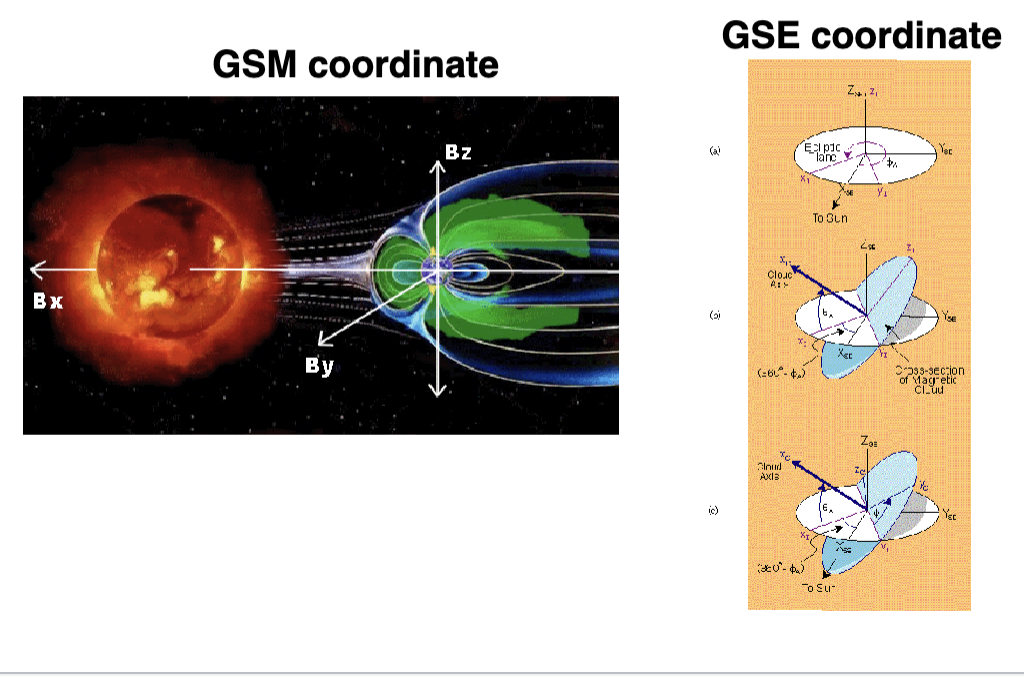
Still in USE in Magnetospheric Physics