language
INTRODUCTION
language is regular :: language follows rules of grammar and syntax
language is arbitrary :: words dont have a reason why represent the meaning
language is productive :: there are limitless ways to use language
sapir-whorf hypothesis :: language affects how we precieve the world;
THE STRUCTURE OF LANGUAGE
morphemes :: the smallest unit of sounds that contain information; can be combined to create words
phonemes :: the smallest unit of sounds in a word
syntax :: the rules that govern how words in a sentence are put together
semantics :: the meaning of each word
DEVELOPMENT AND THE SEGMENATION PROBLEM
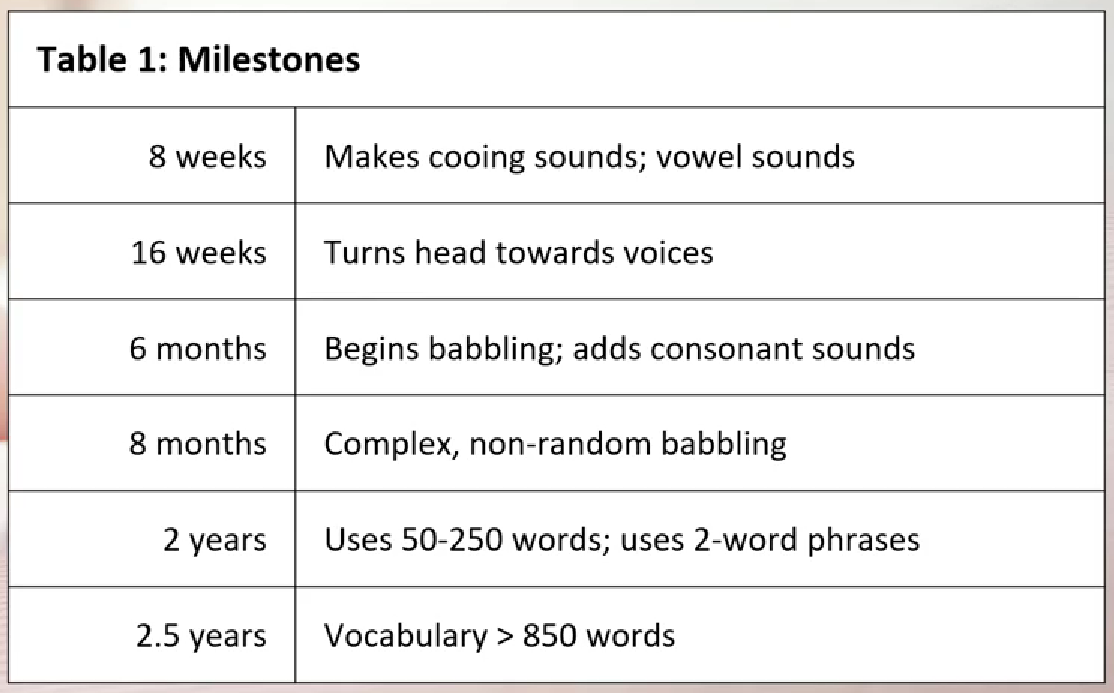
babbling :: sounds using combo of vowels and consonants; combinations slowily become real words
language explosion :: 1.5 to 6 years old
difficulty :: when a person is not familiar with a language they are likely to have _______ segmating between the words
positive :: early speech segmentation skills showed a strong ______ correlation with expressive vocabulary later in life
CHAPTER 6: LANGUAGE
pragmatics :: the udnerstanding + use of appropriate communication
overextension :: errors that involve using a fairly specific word for a broader set of related items
underexterion :: where a general term is used for only a very particular instance of an item
overrgularizations :: syntactic errors that involve using a grammatical rule too broadly
holophrastic phase :: when a child uses a single word to indicate the meaning of an entire sentence
transparent orthographies :: consistent letter-tosound-correspondence, so that a given letter will always make the same sound