Properties of Fresh Meat: Shelf Life
Shelf Life vs. Retail Case Life
Shelf Life: the amount of time a meat product is acceptable for human consumption
begins at slaughter and extends through all phases of production, transportation, display, and consumer storage
determined by:
microbial contamination
microbial activity
proteolytic degradation (tenderness)
met-myoglobin reducing activity (oxidation)
If retail cuts are discolored at the “sell by” date or earlier:
marked down price
OR the package is discarded
~2.55% of beef is discarded leading to a loss of $3.74 billion loss due to discoloration, annually (2022-2023)
Retail Case Life: refers to the duration that meat can be displayed in a retail setting before it must be sold or discarded, which can be shorter than the overall shelf life due to factors like temperature, humidity, and product handling.
consumers consider bright pink to bright red to be desirable lean color
deviation from this created a degree of unacceptability
quality is determined by consumers through appearance, so surface discoloration may be considered unwholesome
Retail meat packages are given a “sell by” or “pull by” date, which is indicative of the anticipated case life
1 d = tenderloin, ground beef
2 d = chuck, shoulder and round cuts
more surface area, changes color at a faster rate
locomotive cuts
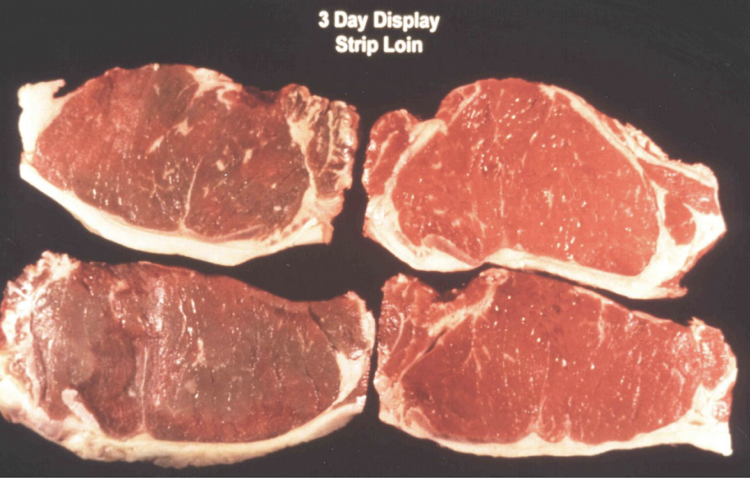
3 d = loin and rib cuts
change color as a slower rate, both lipid and color
New packaging technologies greatly extend the retail case life of meat beyond the times reported above
Deterioration of Quality During Retail Display
Muscle Pigment Oxidation
impacts flavor dramatically
Quality deterioration occurs because of lipid oxidation and muscle pigment oxidation
Muscle pigment oxidation negatively affects meat color
Some muscles discolor less rapidly than others because of:
increased (or conserved) metmyoglobin reducing activity (MRA), resulting from
Increased MRA and reducing equivalents allow the iron in myoglobin to remain in the reduced (Fe ++) state longer
(scavengers + mitochondria)
Scavengers will reduce the number of times it will go through the color change
antioxidant
Lipid and Muscle Oxidation
Lipid and muscle pigment are closely related; delaying one, slows down both
Lipid Oxidation
primarily affected by PUFA content of tissue
membrane-bound phospholipids
Poly Unsaturated Fatty Acids
the more it has the more likely it is going to go through lipid oxidation , which can lead to off-flavors, rancidity, and a shorter usable shelf life.
Unsaturated fatty acids undergo auto-oxidation by a free radical mechanism
abstraction of a labile hydrogen from the unsaturated lipid to form a lipid radical, followed by the addition of an oxygen molecule to form a lipid peroxyl radical
lipid peroxy radical undergo reactions, which form oxidation products
these oxidation products aversely affect meat color and texture
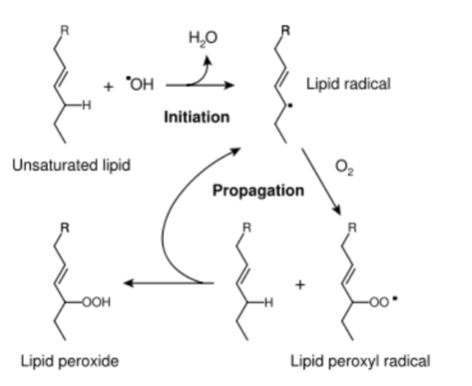
Lipid Oxidation
Five:
the breakdown of lipid hydroperoxides produces aldehydes, ketones and carboxylic acids
these compounds negatively affect meat odor and flavor
The retail case life (and ultimately the shelf life) of fresh meat
Antioxidants
Consumers prefer natural antioxidants
Antioxidants can extend shelf life of products
antioxidants are mainly classified into two types:
Synthetic antioxidants
common synthetic antioxidants are BHA, BHT, TBHQ, ascorbic acid and gallic acid esters
Natural antioxidants
includes antioxidants vitamins (Vitamin E and C) and phytochemical antioxidants
Phenolic compounds are the primary antioxidants present in herbs and spices
Mechanism of Antioxidant Action
antioxidants can be divided into three groups by their mechanism:
primary antioxidants which function as free radical terminators (scavengers)
useful in step 2 and step 3
Secondary antioxidants, which are important preventative antioxidants that function by stopping chain initiation
stops chain initiation
functions between step 1 and step 2
Tertiary antioxidants, which repair damaged biomolecules
Managing Oxidation
temperature
cold temperatures slow the oxidation reaction but cannot stop it — not even frozen temperatures
Anaerobic packaging
vacuum, modified atmosphere
Dark Storage
meat products are often stored and distributed in the absence of light to avoid photo-oxidation
Photo-oxidation: caused by the action of light
the oxidation of unsaturated fats is accelerated by expose to light
Enhanced Meat Product Systems
Enhanced Meat
the addition of non-meat ingredients to whole muscle meat products to improve palatability, case life, and retail yield
also referred to as deep marination
solutions are injected into the meat product at low levels (~8-12% average)
Solution ingredients and their function:
water: yield juiciness and substrate
salt: flavor
alkaline phosphate: WHC
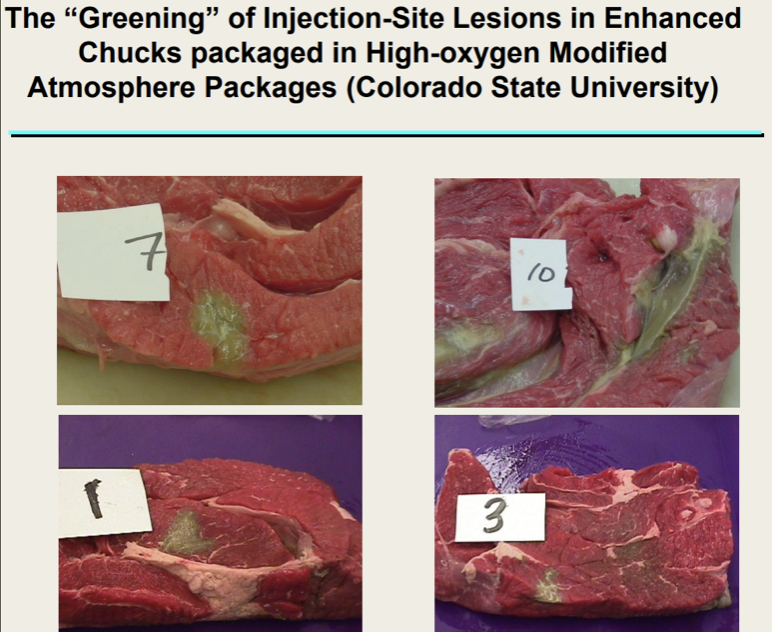
Older vaccine injection sites can cause green discoloration in meat; contained inorganic metals
would oxidize when exposed to the high levels of oxygen in the package
the injection site legions went away when producers were directed to use modern vaccines