Genki Lesson 2. Shopping
This lesson focuses on common shopping items, simple location words, using “this”/”that”, and asking about prices.
Useful Information
As of the moment I’m typing this, 1 American dollar is equal to 156 yen. I always struggled with understanding how expensive something is in yen compared to American dollars, and if it’s a fair price or not, and while this isn’t precise, it helps me have a general idea of how expensive an item is when:
Every 100¥ is a dollar.
Again, it’s not precise, but if a candy bar is being sold for 1000¥ (so about $10.00—move the decimal over 2 places) I know fairly quickly I’m being ripped off and don’t have to whip out my phone to convert currency. (It would be $6.42, btw).
Grammar
これ・それ・あれ・どれ [kore, sore, are, dore]
These words are equivalent to this & that; you’re talking about an ITEM (there are slightly different words used for people) you haven’t named or don’t know the name of. Which one you use, though, depends on one thing: distance in regards to yourself and who you’re talking to.
これ [kore] = “this”
それ [sore] = “that”
あれ [are] = “that over there”
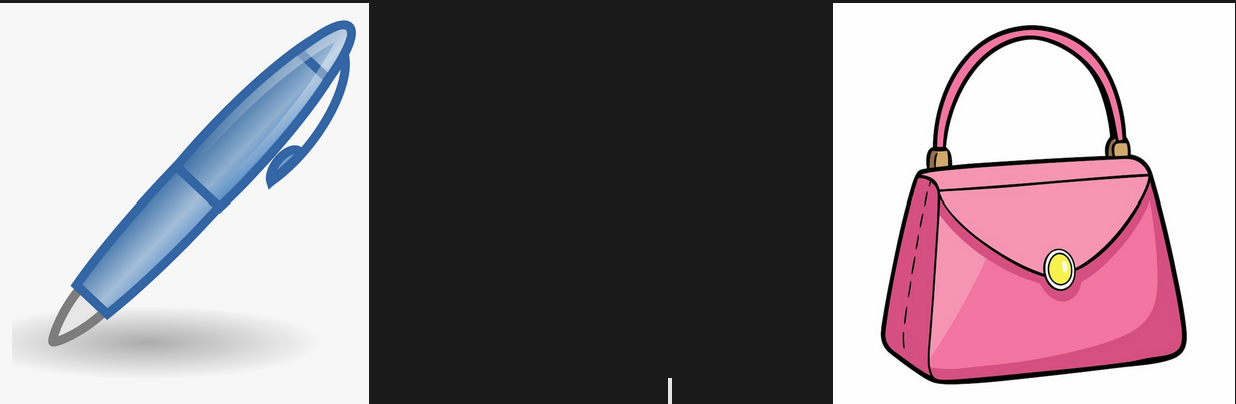
I like to use a triangle to figure out which one to use.
MYSELF
PERSON 1 PERSON 2
If the item is closest to Myself, then I/you use これ [kore].
If the item is closest to Person 1 (distant from Myself), then you use それ [sore].
If the item is closest to Person 2 (distant from Myself AND Person 1), then you use あれ [are].
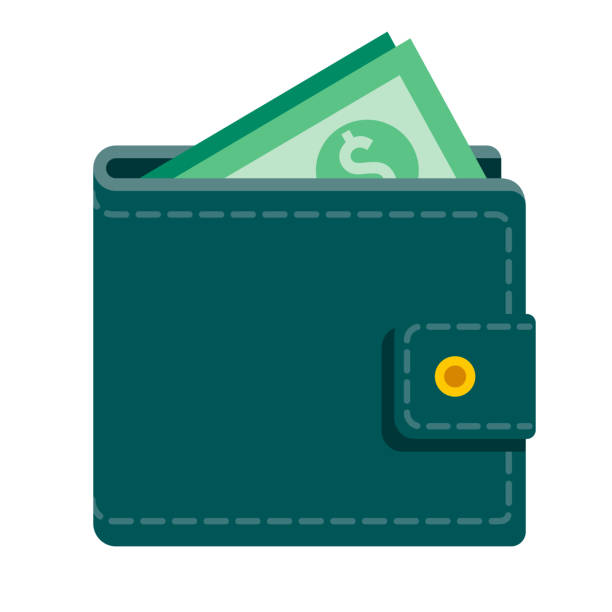
This is a wallet. これはさいふです。
[kore wa saifu desu]
That is a pen. それはペンです。
[sore wa pen desu]
That over there is a bag. あれはかばんです。
[sore wa kaban desu']
WHICH (one) is a pencil? どれはえんぴつですか。
[dore wa enpitsu desu ka]
どれ [dore] is the question word ‘which’.
この・その・あの・どの [kono, sono, ano, dono]
The same distance pattern as これ・それ・あれ follows this grammar point as well.
The difference is specificity.
これ・それ・あれ is used for generalized things (this/that/that thing over there).
この・その・あの goes before a Noun and specifies an item.
このNOUN = “this NOUN”
そのNOUN = “that NOUN”
あのNOUN = “that NOUN over there”
どのNOUN = “which NOUN”
This is a wallet. これはさいふです。
[kore wa saifu desu
This wallet is cute. このさいふはかわいいです。
[kono saifu wa kawaii desu]
This pattern applies to どの as well.
ここ・そこ・あそこ・どこ [koko, soko, asoko, doko]
The same distance pattern as これ・それ・あれ follows this grammar point as well, but the こ ending is about location.
ここ [koko] = “here”
そこ [soko] = “there”
あそこ [asoko] = “over there”
どこ [doko] = “where”
I am here. わたしはここです。
[watashi wa koko desu]
You’re there. あなたはそこです。
[anata wa soko desu]
Yuki-san is over there. ゆきさんはあそこです。
[yuki-san wa asoko desu]
だれの
The question word “who” is dare and the word for “whose” you just add the の particle.
Whose pencil is that? あれはだれのえんぴつですか。
[are wa dare no enpitsu desu ka]
Noun も [mo]
も is a particle that is used as “too” or “also”.
John-san is cute. Allen-san is also cute ジョンさんはかわいいです。
アレンさんもかわいいです。
jonsan wa kawaii desu.
Aren mo kawaii desu.
Noun じゃないです
To make a sentence negative replace です [desu] with じゃないです [janaidesu].
Yamada-san is a student. やまださんはがくせいです。
[yamadasan wa gakusei desu]
Yamada-san is not a student. やまださんはがくせいじゃないです。
[yamadasan wa gakusei janaidesu]
~ね・~よ [~ne, ~yo]
Sentence end-ers give additional context to a sentence.
ね is used when you’re asking for confirmation about what you said.
Think of it as the same as when you add “…, right?” at the end of a sentence.
This wallet is cute, right?. このさいふはかわいいですね。
[kono saifu wa kawaii desu ne]
よ is used when you’re telling someone something you’re certain about.
“I’m telling you, …” is a good English equivalent.
I’m telling you, Yuki-san is here! ゆきさんはここですよ。
[yuki-san wa koko desu yo]
Culture Notes
The official currency is the yen, though when speaking Japanese it is pronounced en.
All bills and coins are different sizes, descending in length/size (higher bills are longer than shorter bills).
Credit card usage is widespread throughout Japan nowadays, it’s not uncommon for small shops and restaurants to only take cash, even in major cities. So people are more likely to carry cash on them, but ATMs can be found almost everywhere.
Pre-paid cards are available for use for things like public transportation and shopping, and personal checks are not used in Japan.
Higher Numbers
100 ひゃく hyaku
200 にひゃく ni hyaku
300 さんびゃく san byaku
400 よんひゃく yon hyaku
500 ごひゃく go hyaku
600 ろっぴゃく ro ppyaku
700 ななひゃく nana hyaku
800 はっぴゃく ha ppyaku
900 きゅうひゃく kyuu hyaku
1,000 せん sen
2,000 にせん ni sen
3,000 さんぜん san zen
4,000 よんせん yon sen
5,000 ごせん go sen
6,000 ろくせん roku sen
7,000 ななせん nana sen
8,000 はっせん ha ssen
9,000 きゅうせん kyuu sen
10,000 いちまん ichi man
20,000 にまん ni man
30,000 さんまん san man
40,000 よんまん yon man
50,000 ごまん go man
60,000 ろくまん roku man
70,000 ななまん nana man
80,000 はちまん hachi man
90,000 きゅうまん kyuu man
100,000 じゅうまん juu man
1,000,000 ひゃくまん hyaku man
Useful Expressions: In the Classroom— Additional Vocabulary
Black board こくばん kokuban
Lights でんき denki
Door ドア doa
Curtain カーテン kaaten
Window まど mado
Book ほん hon
Eraser けしゴム keshigomu
Desk つくえ tsukue
Pen ペン pen
Pencil えんぴつ enpitsu
Dictionary じしょ jisho
Bag かばん kaban
Chair いす isu
Do you understand? わかりましたか。 wakarimashitaka
I understand/understood. わかりました。 wakarimashita
I don’t understand/I don’t know. わかりません。 wakarimasen
Please say it slowly. ゆっくりいってください。 yukkuri itte kudasai
Please say it again. もういちどいってください mou ichi do itte
kudasai
Please wait. ちょっとまってください chotto matte kudasai
Please listen./Please ask. きいてください kiite kudasai
Please look at page 10. じゅっぺージをみてください。ju ppeeji o mite
kudasai