Ch. 7 Prejudice
7.1 The Foundations of Prejudice
Learning Objectives
7.1.1: Describe the causes and consequences of in-group bias.
7.1.2: Summarize the four steps to flexible ethnocentrism.
7.1.3: Discuss the psychological contributors and consequences of stereotyping.
7.1.4: Analyze the advantages and disadvantages of group formation.
Overview of Prejudice
Prejudice stems from various biological and social factors.
Research focuses on individual, group, and societal levels to mitigate prejudice’s negative impacts on health and well-being.
Discussion divides into two parts:
Foundations of Prejudice: Inevitable contributing factors.
Social Factors: Social structures resting on these foundations.
Analogy: Prejudice is like a camera on a tripod (three foundational supports) with varying social implications as perspectives shift based on lenses used.
7.1.1 The First Leg: Group Formation
In-group Bias
Humans naturally form groups, a behavior rooted in survival instincts.
Group memberships enhance identity, leading to a protective bias regarding one's group.
This self-enhancement parallels biases observed in personal identity, setting the stage for prejudice.
Social Identity Theory
Definition: Our self-concept involving connections to various social groups.
Group affiliations enhance self-esteem via favoring one's own group (in-group bias).
Example: Henri Tajfel’s 1971 Study (overestimators and underestimators) demonstrated how group identity influences resource allocation favorably towards one's group despite arbitrary classification.
Participants were biased towards their group, assigning more points to in-group members, showcasing a pattern of in-group bias.
Neurological Basis of In-group Bias:
Studies show that empathy towards in-group members varies neurologically and is associated with oxytocin levels.
Out-group bias: This reflects negative predispositions towards those outside one’s group, influencing social norms and perceptions of behaviors in other cultures.
Identity Fusion
Identity Fusion: An extreme form of social identity where individual identity merges with group identity, promoting protective behaviors for the group.
Example: Psychologist Bill Swan explored how extreme behaviors (e.g., terrorism) relate to fused identities.
Reducing In-group Bias
More complex social identities can counteract in-group bias.
Advocacy for multiculturalism fosters appreciation of diversity and reduces bias.
7.1.2 The Second Leg: Ethnocentrism
Understanding Ethnocentrism
Definition: Judging other cultures through one's own cultural lens.
Outcomes:
Inflexible Ethnocentrism: Leads to bias and judgments against different cultures.
Flexible Ethnocentrism: Involves a non-judgmental approach, fostering better intercultural relations.
Steps to Achieve Flexible Ethnocentrism
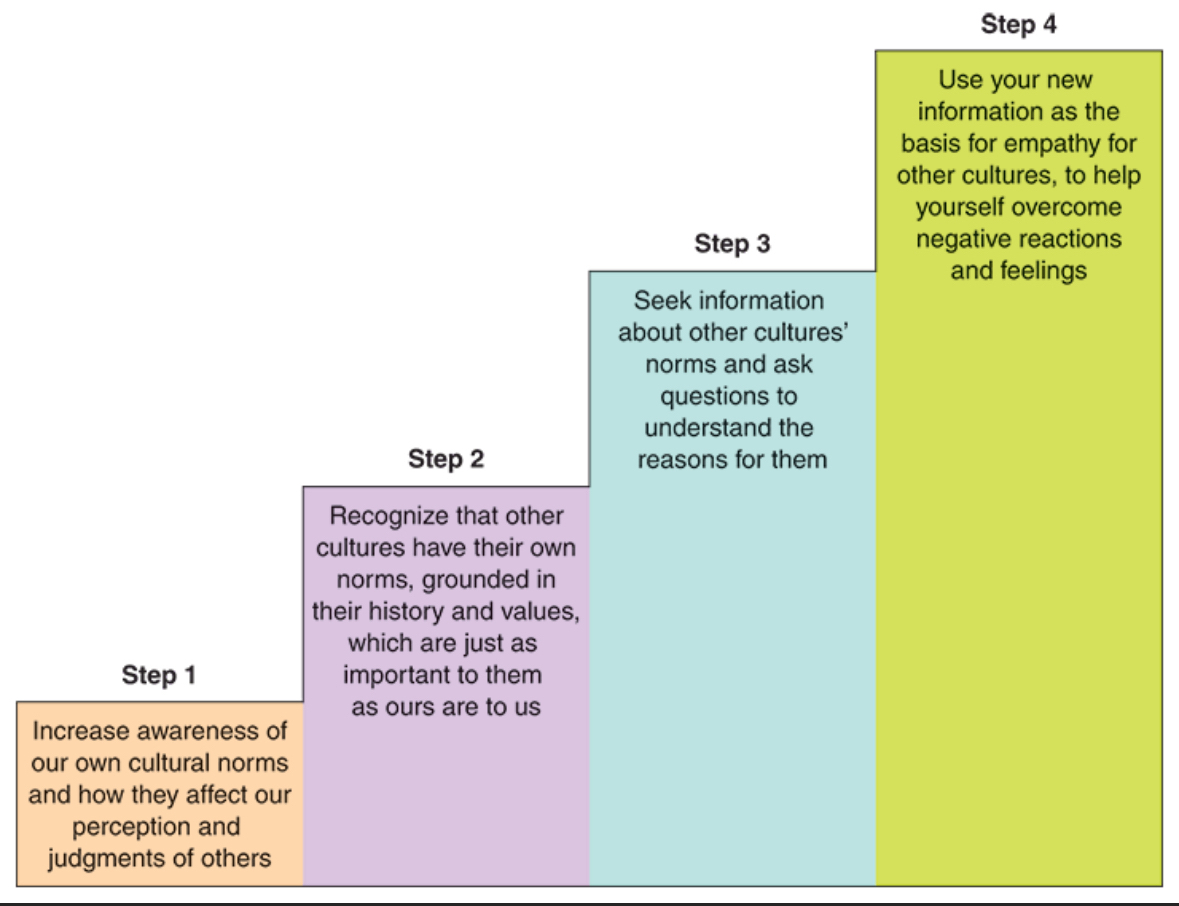
Cultural Awareness: Recognize one’s own cultural rules and biases.
Understand Other Cultures: Acknowledge that other cultures operate under their own valid norms.
Cultural Education: Learning about the beliefs and behaviors of other cultures contextualizes understanding and reduces bias.
Mindfulness: Apply new knowledge to build empathy and understanding for other cultures, avoiding initial stereotype-based rejections.
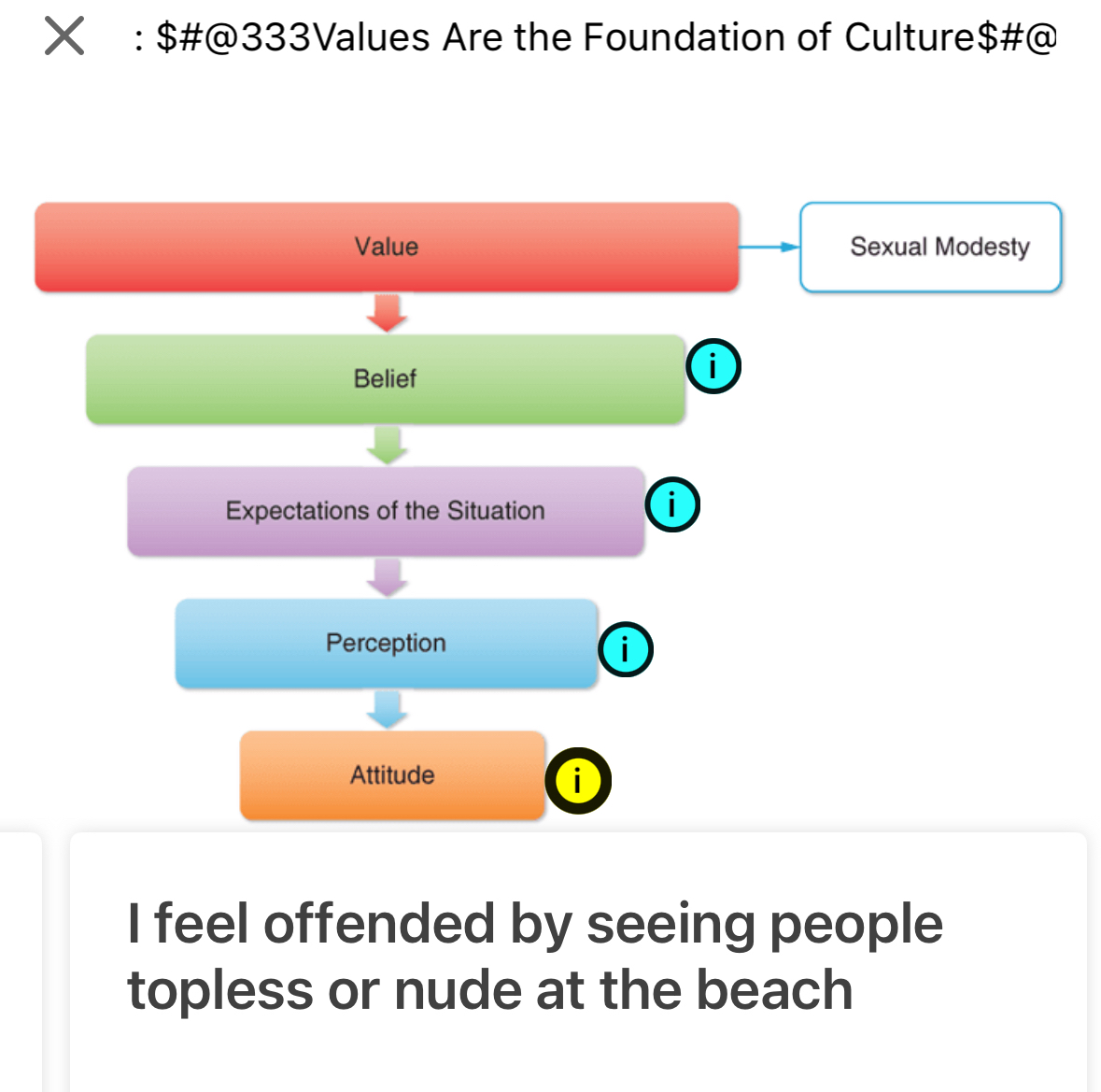
7.1.3 The Third Leg: Stereotypes
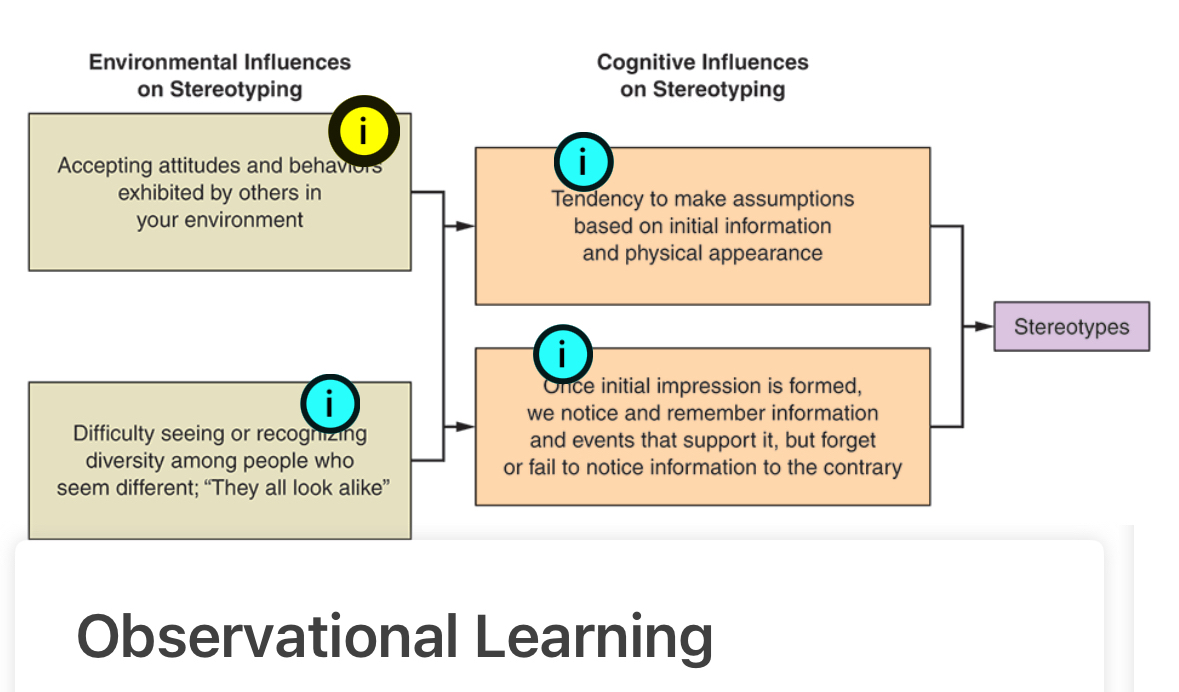
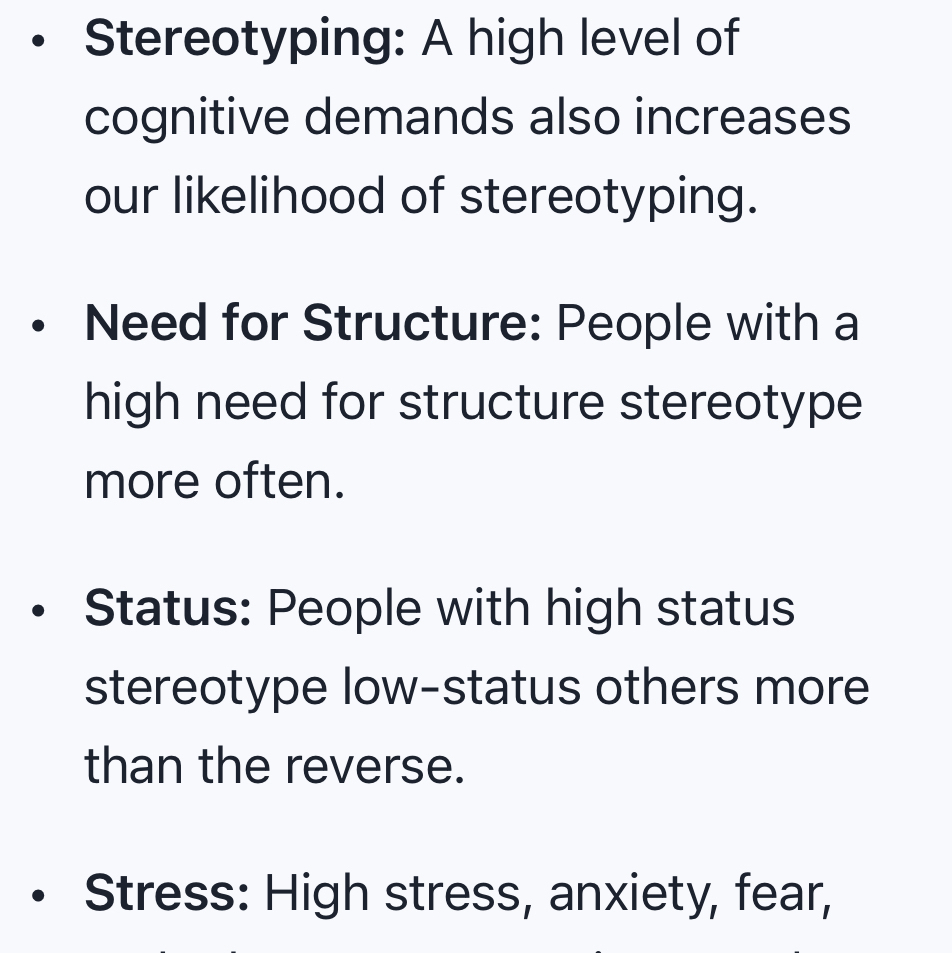
Psychological Contributors to Stereotyping
Definition: Generalizations about a group, which may be positive or negative.
Cognitive Efficiency: Stereotypes act as cognitive shortcuts amid overwhelming information, often leading to inaccuracies.
Stereotype Mechanisms
Outgroup Homogeneity Effect: The tendency to see outgroup members as more similar than in-group members.
Confirmation Bias: The inclination to remember instances that support stereotypes while dismissing counter-evidence.
Observational Learning: Stereotypes may be learned behavior from social surroundings.
Consequences of Stereotyping
Self-Fulfilling Prophecies: Stereotypes can influence individuals’ behaviors and reinforce biased expectations.
Stereotype Threat: Anxiety stemming from being at risk of confirming a stereotype, which can hinder performance.
Example: Claude Steele’s study on academic performance differences among Black and White students based on stereotype activation.
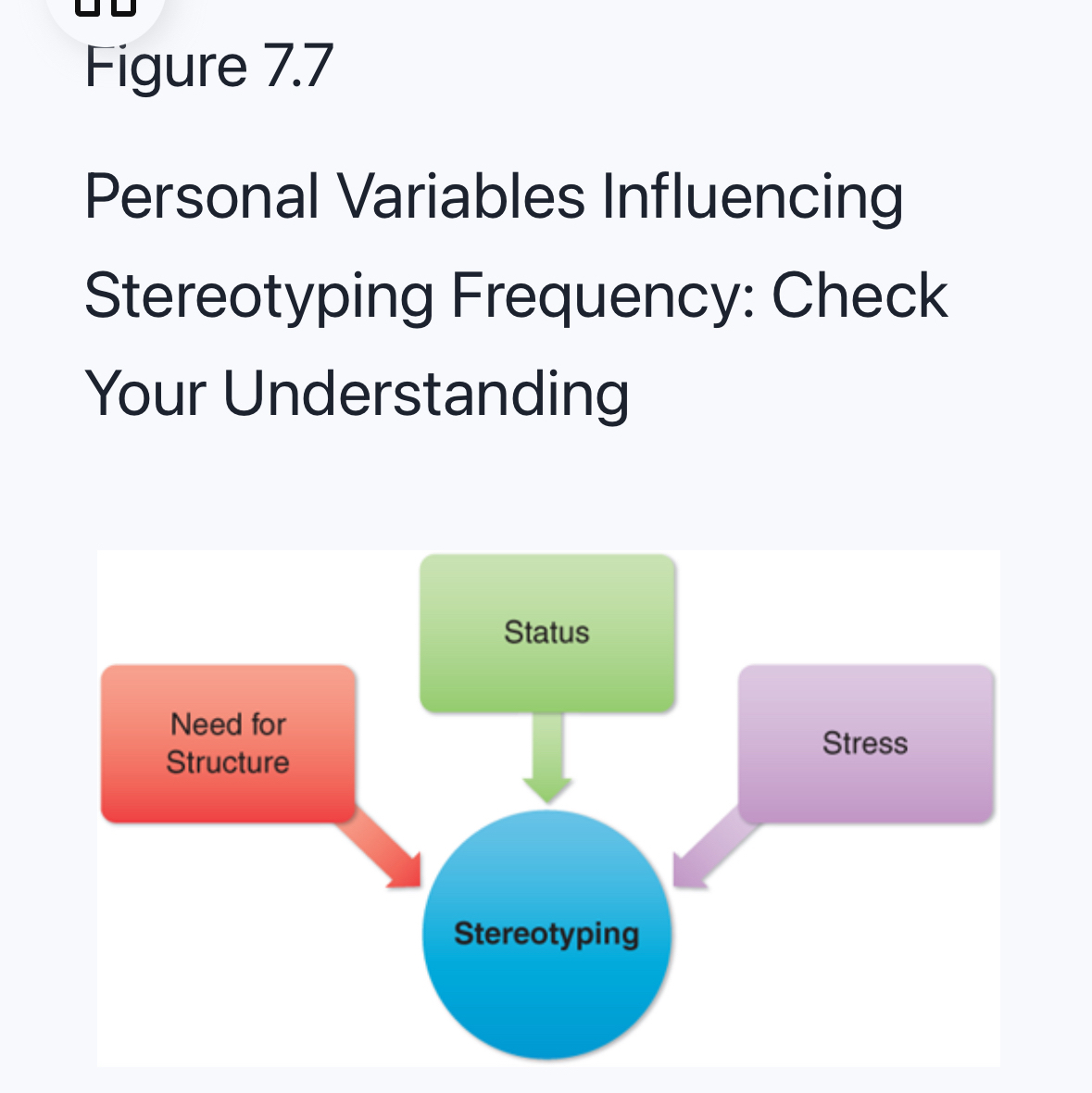
7.1.4 Analyzing Group Formation Implications
Advantages of Group Formation
Facilitates survival through cooperative behavior and resource pooling (adaptive advantage).
Promotes well-being by fostering social support and sense of belonging.
Disadvantages of Group Formation
Can foster in-group bias, leading to prejudice against out-groups, causing division and conflict.
Ethnocentrism may stifle understanding and acceptance of diverse cultural practices.
Stereotypes can form barriers, solidifying social inequities and discrimination.
7.2 Prejudice and Discrimination
Learning Objectives
7.2.1: Determine trends in prejudice.
7.2.2: Summarize the causes of prejudice.
7.2.3: Determine the impact of prejudice and discrimination on relations.
7.2.4: Summarize strategies to combat personal prejudice.
Conceptualizing Prejudice
Definition: A prejudgment, typically negative, toward a particular group of people without full consideration of individuals within that group.
Discrimination: Unequal treatment based on prejudice; behavior that reflects prejudicial attitudes.
7.2.1 Trends in Prejudice
Universality: Exists across cultures, evolving with society.
Examples include historical biases against various ethnicities and genders.
Modern prejudice often manifests subtly, often referred to as "going underground."
Current Examples and Statistics
Gender biases in education and workplace settings, documented by unequal evaluations and pay discrepancies.
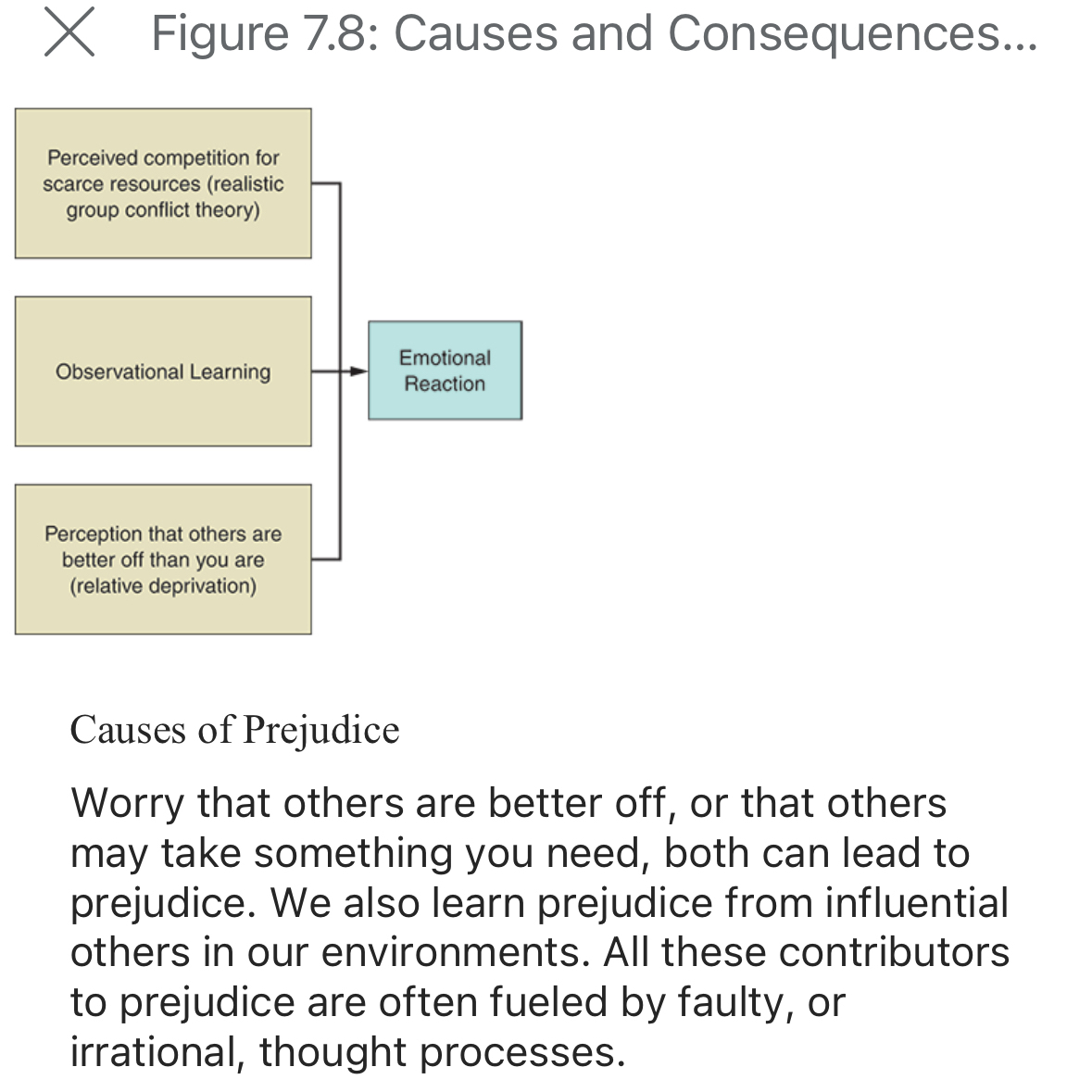
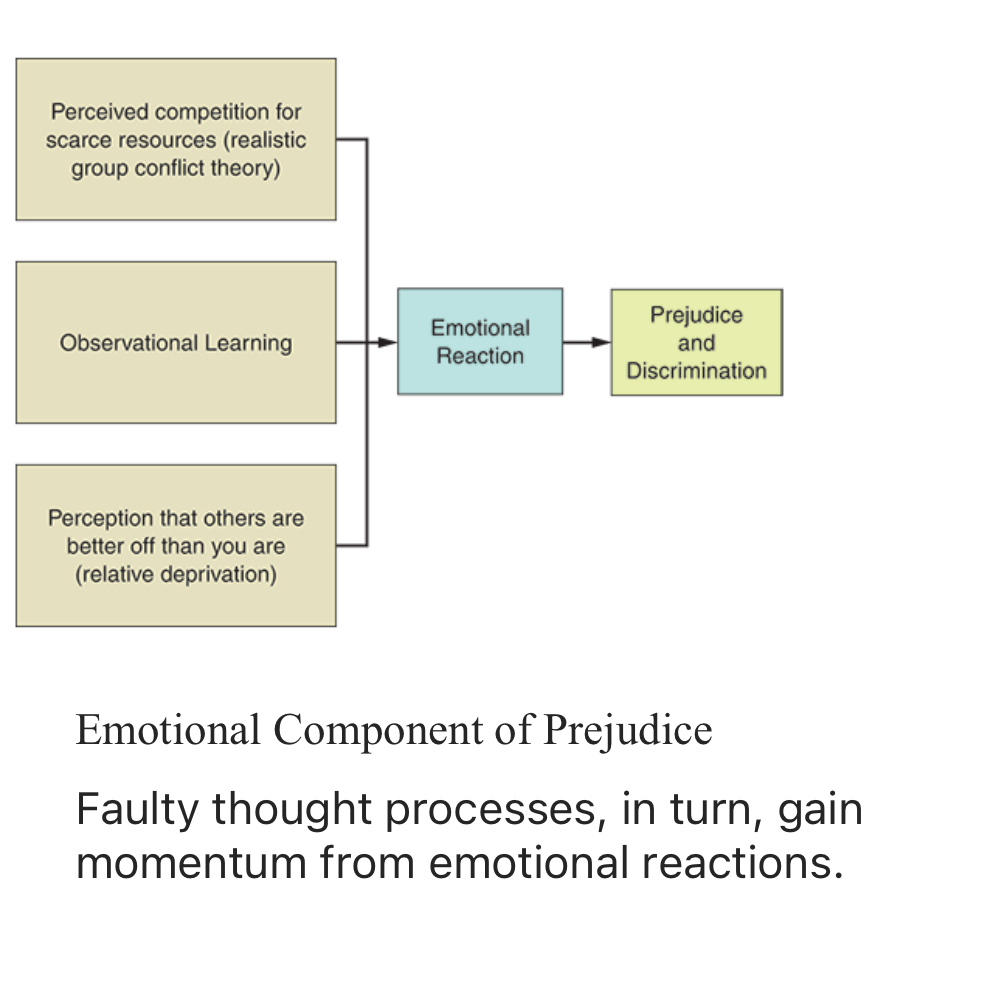
7.2.2 Causes of Prejudice
Key Psychological Theories
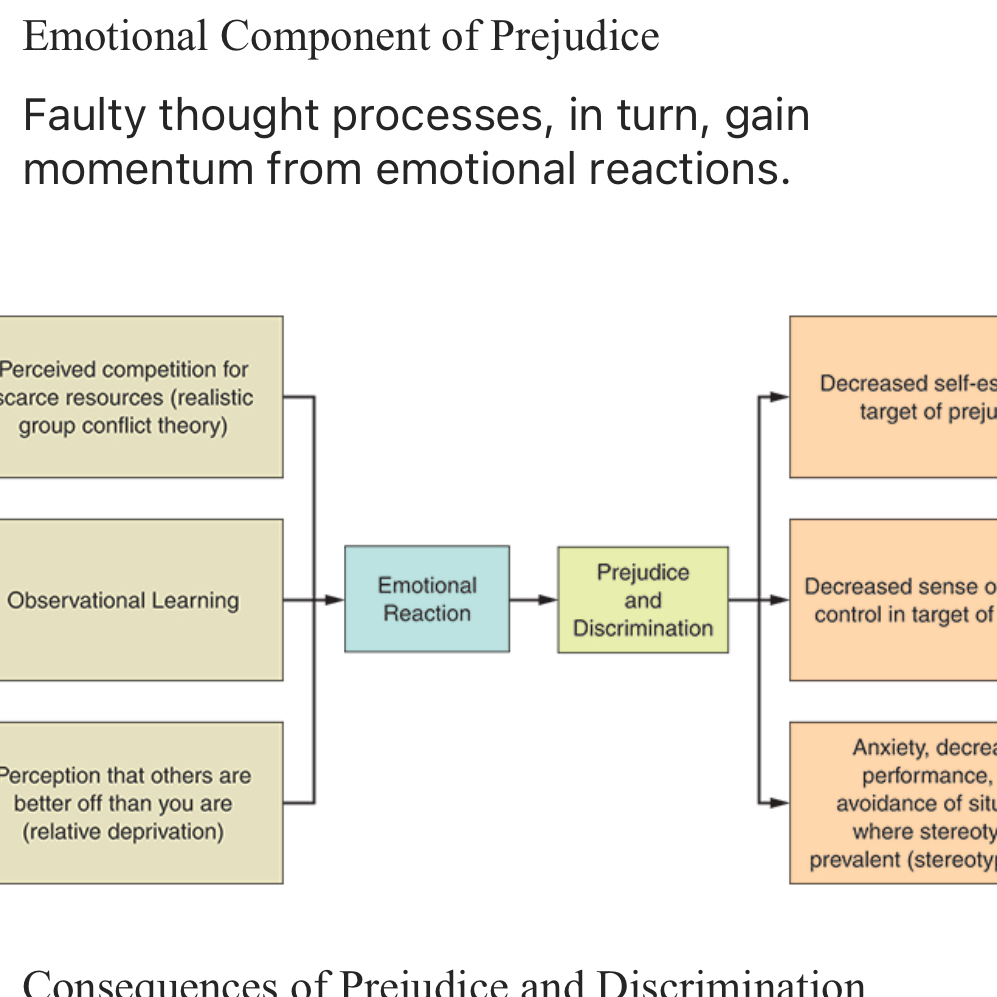
Realistic Group Conflict Theory: Prejudice emerges from competition over scarce resources.
Social Learning Theory: Prejudice learned from social interactions and media influences.
Relative Deprivation: Feelings of inferiority when comparing one's group to better-off groups leading to scapegoating and prejudice.
7.2.3 Effects of Prejudice
Relationship to Self-Esteem and Health
Negative impacts on individuals targeted by prejudice, affecting psychological health, self-esteem, and physical health outcomes.
Example: Chronic stress leads to health issues such as diabetes and heart disease in marginalized communities.
Stereotype Threats and Their Implications
Sustained negative stereotypes trigger performance anxiety, which can create barriers to success in various fields.
7.2.4 Overcoming Prejudice
Effective Strategies
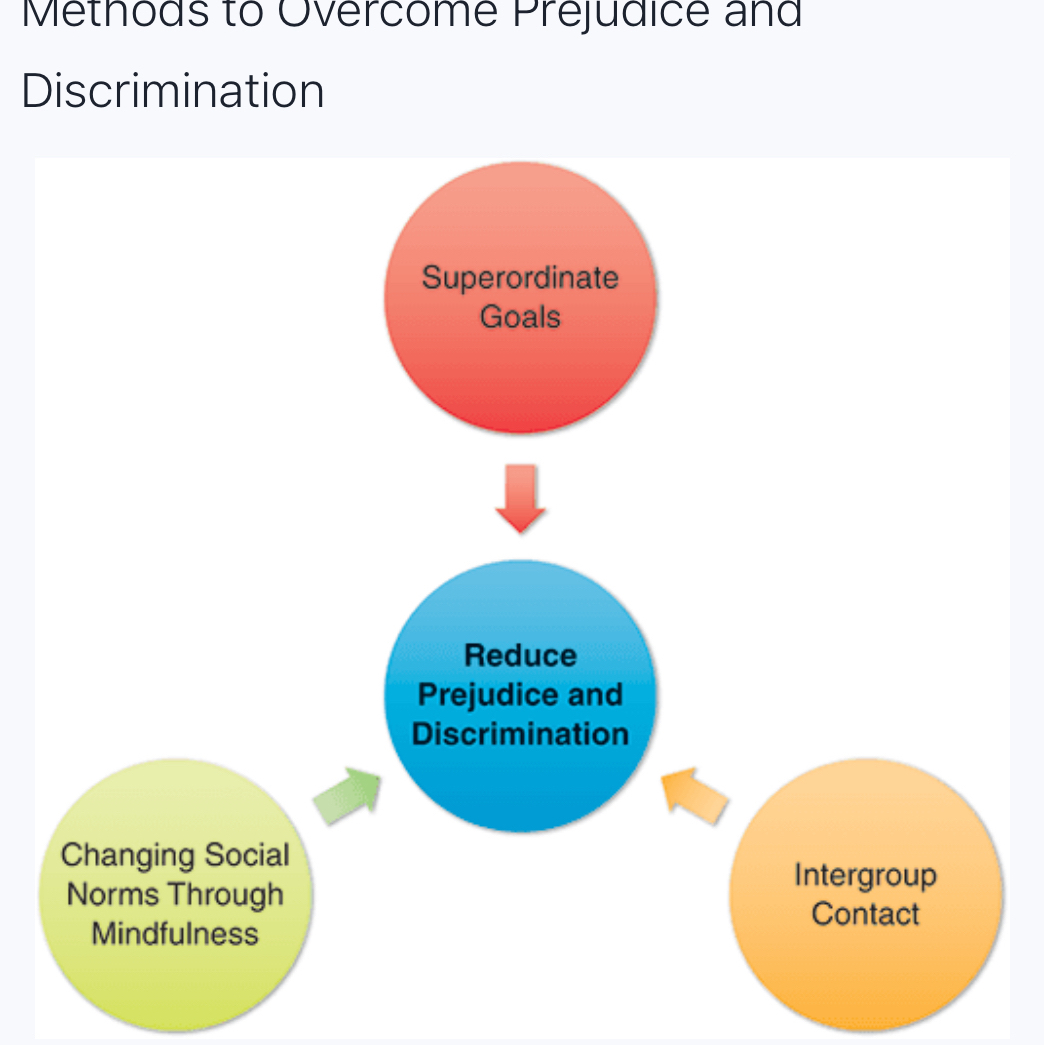
Superordinate Goals: Collaboration on shared objectives that require intergroup cooperation, evidenced in the Robbers Cave Experiment.
Jigsaw Classroom Model: Students work in diverse groups relying on each other to learn, promoting cooperation and reducing bias.
Intergroup Contact: Exposure to diverse groups in equal status settings promotes understanding and decreases prejudice.
Mindfulness Practices: Enable individuals to confront their biases consciously, promoting greater awareness and reducing negative stereotypes.
Summary
Understanding the complexities of prejudice—its foundations, causes, and various effects—provides insight into methods for reducing prejudice.
Emphasizing social identity, ethnocentrism, and stereotyping helps unravel the roots of prejudice and informs strategies for overcoming bias in diverse settings.