BIOL 3120 LEC 12
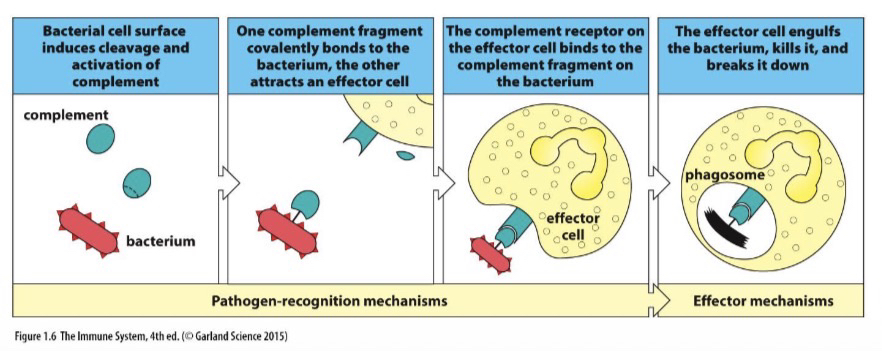
1) What are the two primary phases of the Innate Immune System and what happens in each?
1. Recognition Phase: Detecting and binding to the germ (e.g., the Complement System).
2. Effector Phase: The action phase, like Phagocytosis (eating and destroying germs inside cell "bags" called phagosomes).
2) Which sensors are used during the Recognition phase to spot an infection?
Pattern Recognition Receptors. These are the "sensors" that detect germs.
Examples include TLRs (Toll-like), RLRs (RIG-I-like), NLRs (NOD-like), CDS (Cytosolic DNA sensors), and CLRs (C-type Lectin). Soluble inflammatory mediators: Such as Complement proteins[proteins that float in the blood]. Cytokine receptors: Sensors that detect Cytokines [chemical SOS signals sent between cells].
3) What is "Trained Immunity" and how does it work?
It is the "memory" of the innate system. It involves long-lasting functional reprogramming of innate cells. This happens due to Epigenetic rewiring [changing how genes are turned on or off without changing the DNA itself] and Metabolic rewiring [changing how the cell creates energy] following an injury or infection.
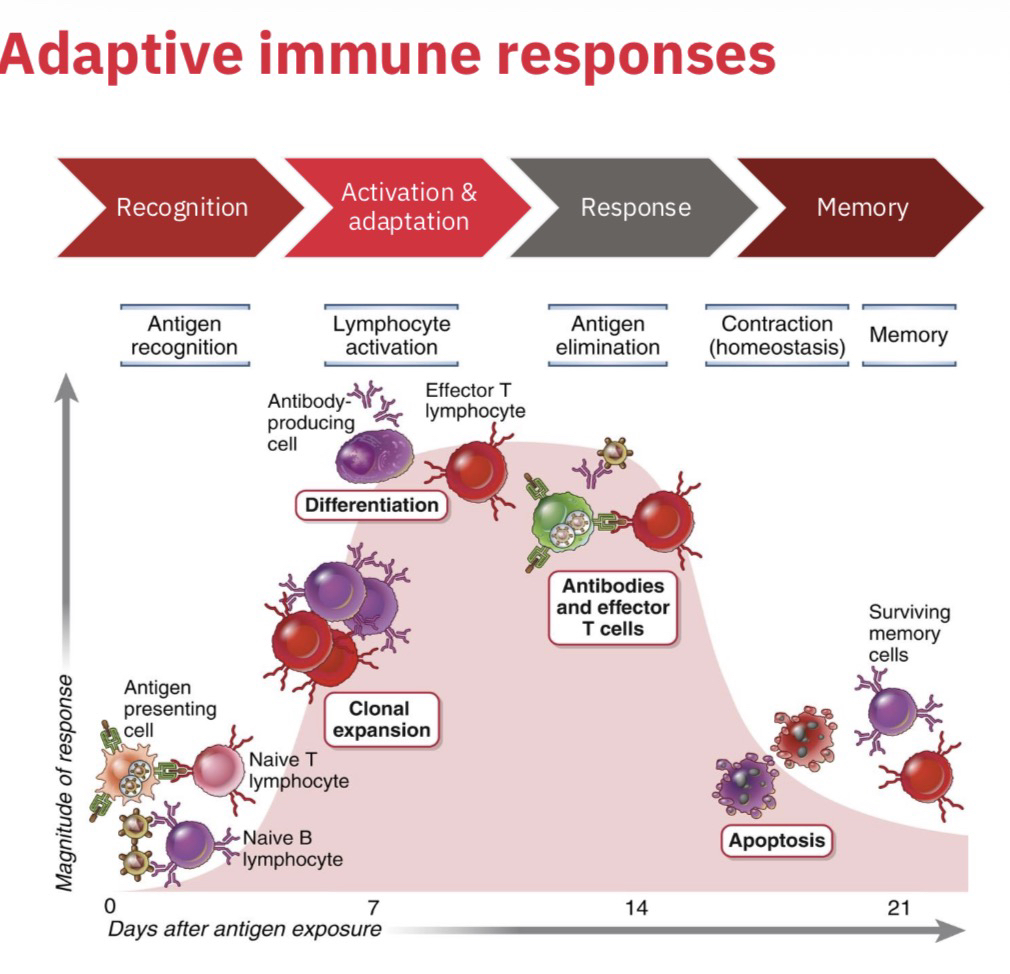
4) What is the step-by-step progression of an Adaptive Immune response?
Capture of Antigen: Catching the Antigen [the specific "ID tag" or piece of the germ].
Activation: Waking up specific Lymphocytes [specialized B and T cells].
Elimination: The Effector Phase where the germ is actually destroyed.
Contraction: The response declines as lymphocytes die by Apoptosis [programmed cell suicide] to restore Homeostasis [the body's natural state of balance].
Memory: Creation of Antigen-specific memory cells that stay in the body for years.
5) What is the defining trait of adaptive immunity that makes vaccines effective?
Specific Memory. Because the adaptive system "remembers" the exact shape of a pathogen, it can react much faster the next time it sees it. This is exactly what vaccines take advantage of to protect you.
6) Why is Clonal Expansion [the rapid copying/multiplying of a cell] necessary for the immune response?
Because even though millions of Lymphocytes [B and T cells] circulate in the blood, only a very tiny number are designed to recognize one specific germ. To fight a real infection, that tiny number must "expand" into a massive army of identical clones to be effective.
7) Compare the start time and duration of the Innate vs. Adaptive immune responses.
Innate Response: Starts in minutes and lasts for days.
Adaptive Response: Starts in hours to days (for activation) but takes days to weeks to fully form effector cells and antibodies
8) What are the specific steps and timings for T-cell and B-cell activation?
T-cells: Interaction with Dendritic cells [cells that show antigens to T-cells] starts in hours and lasts days.
B-cells: Activation starts in hours; the formation of Germinal Centers [specialized areas where B-cells evolve] and antibody production takes days to weeks.
9) How long does Immunological Memory last?
Once established (which takes days to weeks), memory cells and antibodies can provide protection for years or even be lifelong.
10) What are the four possible outcomes of an infection based on the host's immune response?
Full Recovery: Microbe is eradicated [completely destroyed] by the host.
Asymptomatic Infection: Microbe is rapidly eradicated before symptoms appear.
Recurrent Illness: Microbe is only partially controlled.
Persistent Disease or Death: Microbe is not controlled by the immune response.
11) What is the "Commensal Microbiome" and what is its ratio to human cells?
It is a collection of Symbiotic [mutually beneficial] microorganisms (Archaea, bacteria, fungi) that colonize barrier tissues like skin and the gut. The ratio is roughly 1:1 (~30 trillion human cells to ~30 trillion microbial cells).
12) What are the three ways a host deals with an infection?
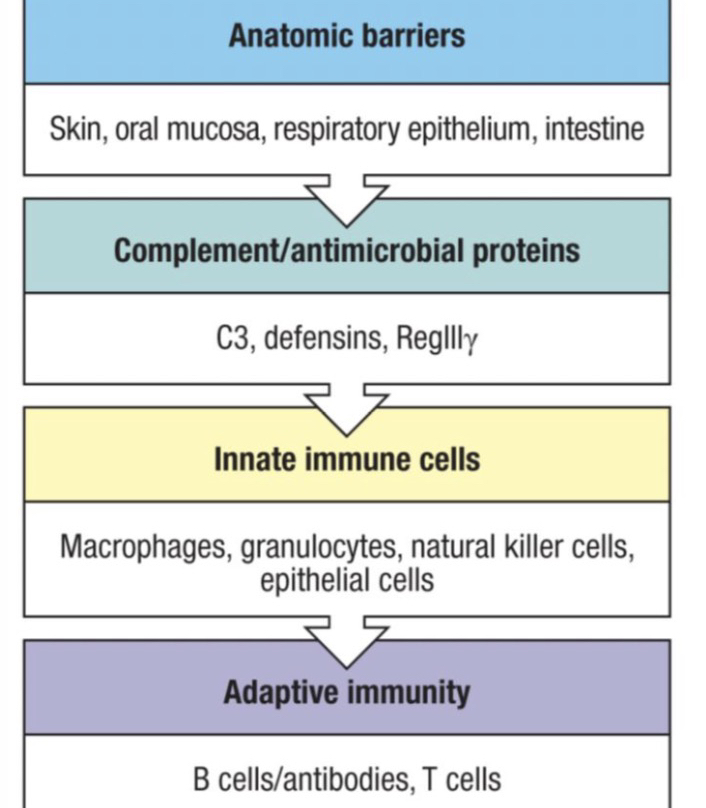
Avoidance: Using anatomical barriers (skin/epithelium) to keep germs out.
Resistance/Defense: Using molecular and cellular responses to fight germs.
Tolerance: Enhancing the tissue's ability to resist damage caused by the microbe or the immune response itself.
13) What are the three main clinical characteristics of Inflammation?
Heat, Pain, and Swelling (Edema).
14) What are the three main functional steps of the Inflammatory Response?
Recruitment: Bringing additional cells (monocytes/neutrophils) from the blood to the infection site.
Clotting: Inducing local blood clots to prevent the spread of the infection.
Resolution: Promoting the repair of the damaged tissue.
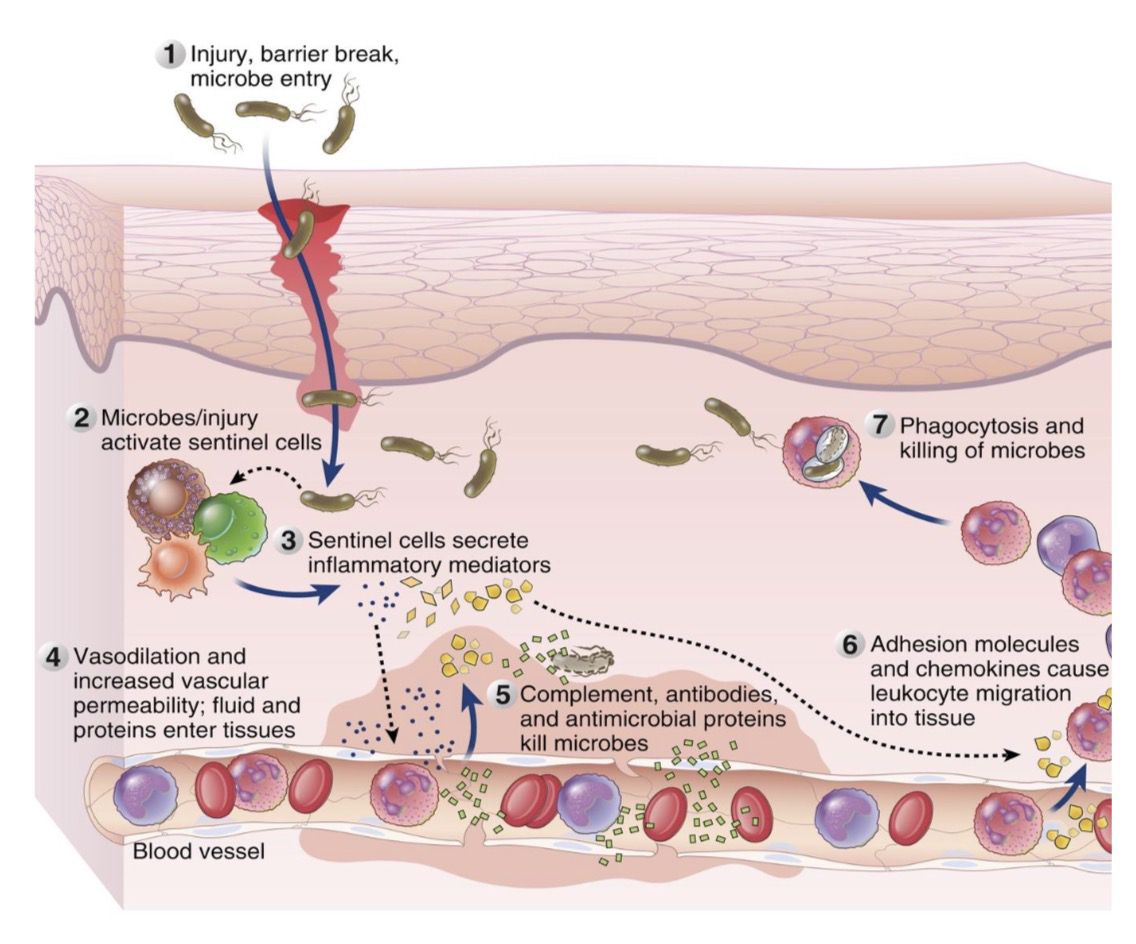
15) Explain the three vascular [blood vessel] changes that occur during inflammation.
Vasodilation: Increase in vessel diameter to increase blood flow (causes Heat and Redness).
Increased Permeability: Vessels become "leaky" so fluids/proteins escape (causes Edema/Swelling and Pain).
Endothelial Activation: Vessels express Adhesion Molecules[sticky proteins] so white blood cells can attach and crawl out.
16) Describe the step-by-step process of Extravasation [how white blood cells leave the blood vessel].
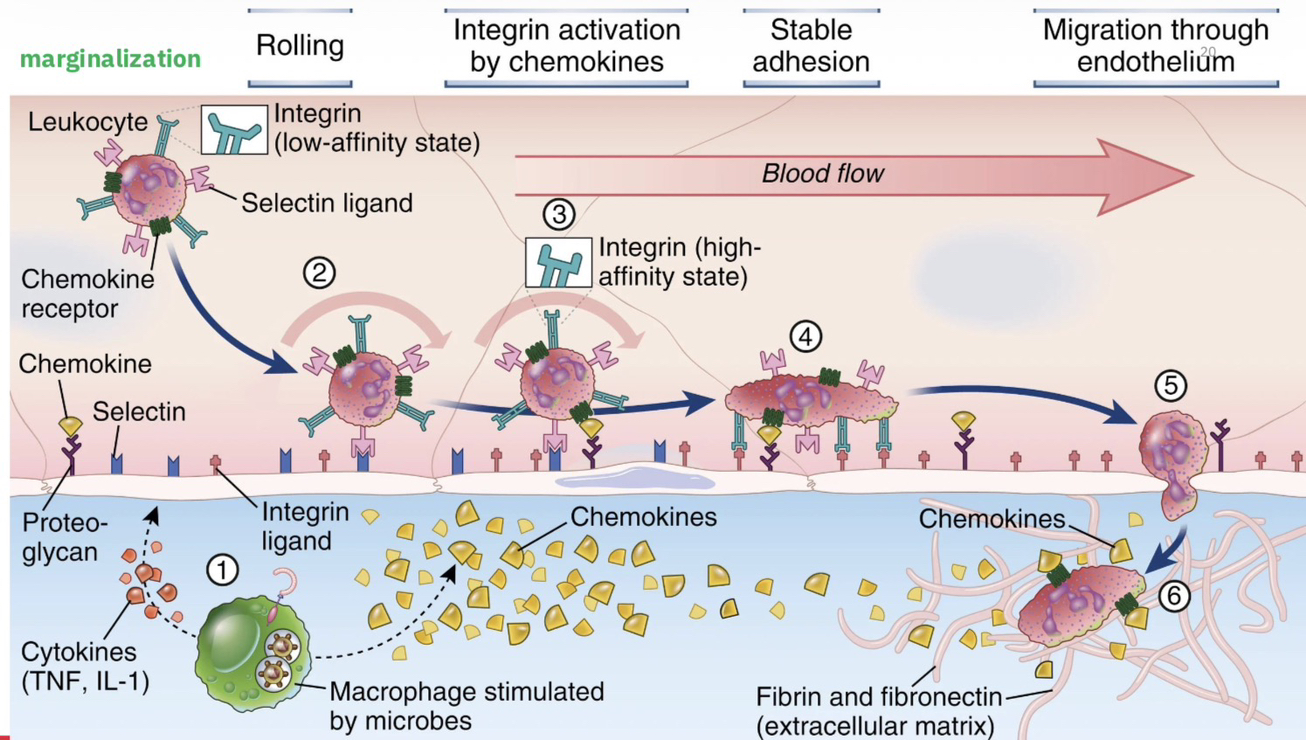
Marginalization: Leukocytes move toward the edges of the blood vessel wall instead of staying in the center.
Rolling: Selectins [receptors on the vessel wall] bind to Selectin ligands [carbohydrates on the leukocyte], causing the cell to slow down and "roll."
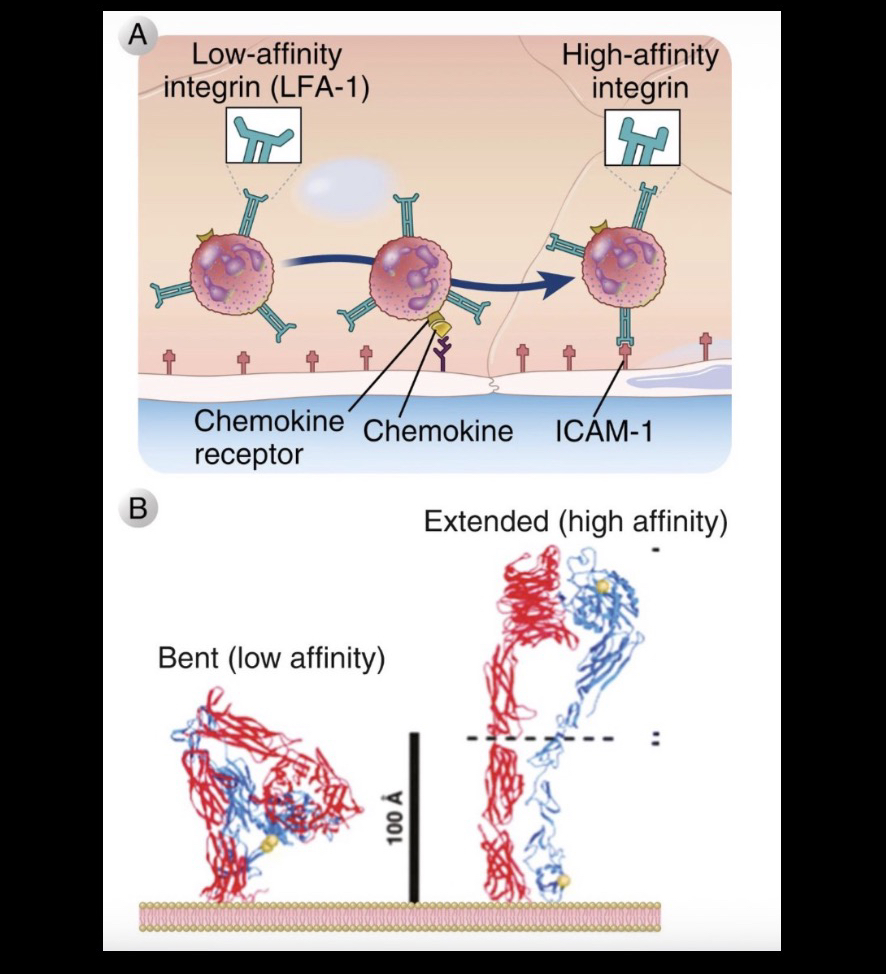
Integrin Activation: Chemokines [chemical signals] bind to receptors on the leukocyte, triggering a change in Integrinsfrom a Low-affinity [weak/bent] to a High-affinity[strong/extended] state.
Stable Adhesion: High-affinity integrins bind firmly to Integrin ligands (like ICAM-1) on the vessel wall.
Migration: The leukocyte crawls through the gaps in the endothelium [vessel lining] into the tissue.
17) What are Sentinel Cells and what do they release to start inflammation?
Sentinel Cells (Macrophages, Dendritic cells, Mast cells) sit in the tissue. When they detect PAMPs [germ patterns] or DAMPs[damage patterns], they secrete:
Cytokines (like TNF-α and IL-1).
Chemokines (like Histamine).
Lipid Mediators (like Prostaglandins).
18) What is the primary role of Selectins and what are the two main types?
They initiate the interaction by binding to carbohydrates.
P-selectin: Found on activated endothelium and platelets.
E-selectin: Found on activated endothelium.
Target: They both look for Sialyl-Lewis X [a specific sugar molecule] on leukocytes.
19) What are Integrins and which ones are most important for strong adhesion?
Integrins provide strong adhesion to the vessel wall and the ECM [Extracellular Matrix/tissue scaffolding].
LFA-1 (or Mac-1): Found on most leukocytes; they bind to ICAM-1.
VLA-4: Found on monocytes and T-cells; it binds to VCAM-1.
20) What is the Immunoglobulin Superfamily in the context of cell adhesion?
These are the Ligands [the "landing pads"] located on the blood vessel wall that Integrins grab onto.
ICAM-1 & ICAM-2: Bind to LFA-1.
VCAM-1: Binds to VLA-4.
PECAM (CD31): Found at the junctions between endothelial cells; helps cells squeeze through the wall.
21) How does the body limit the Innate Immune Response to prevent tissue damage?
Through inhibitory mechanisms like:
IL-10: An anti-inflammatory cytokine that stops excessive macrophage activity.
IL-1RA: A "decoy" molecule that blocks the IL-1 receptor so the pro-inflammatory IL-1 cannot signal.
SOCS: Proteins that "shut off" the JAK-STAT signaling pathway.
SHP1: A molecule that negatively regulates (turns down) TLR signaling.
22) What is the role of Alternatively Activated Macrophages in tissue repair?
Once inflammation ends, these cells switch from "fighters" to "fixers" by:
Clearing Apoptotic cells [dead cell debris] via phagocytosis.
Promoting Angiogenesis [growth of new blood vessels].
Secreting TGF-β to stimulate Collagen synthesis [building scar tissue/structural support].
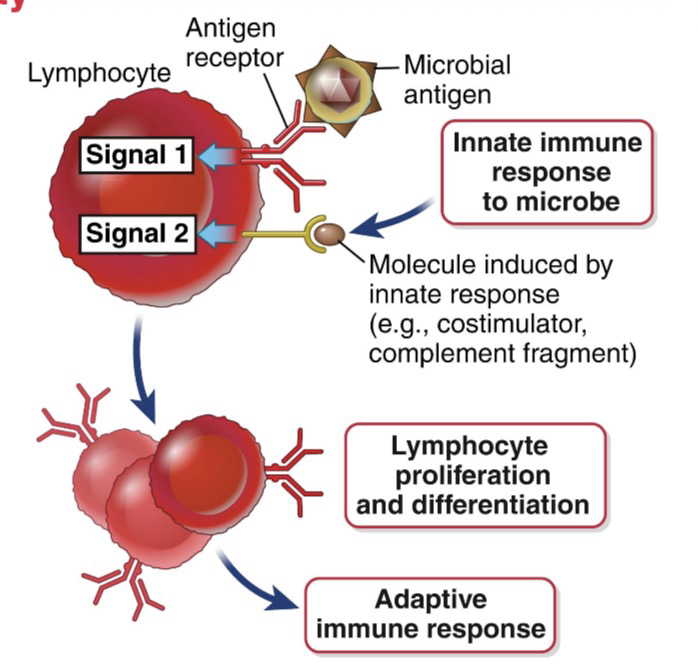
23) What is the "Two-Signal Requirement" for starting an Adaptive Immune response?
Signal 1: Recognition of the specific Antigen [the germ's ID tag]. This ensures the response is specific.
Signal 2: Co-stimulators [extra "danger" signals] triggered by the Innate response. This ensures the body only attacks when there is a dangerous infection, not just random debris.
24) What is the first step in the Adaptive Immune System upon infection?
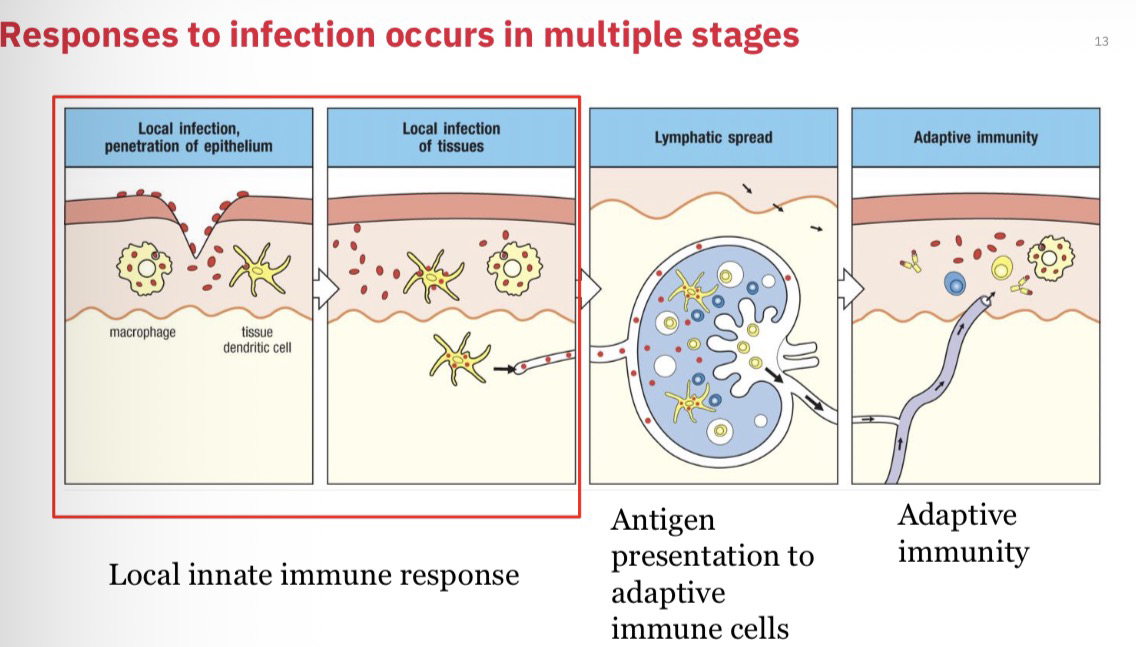
The Capture and Presentation of the Antigen. Innate cells (like Dendritic cells) must grab the germ and "show" it to the T-cells in the lymph nodes to start the specialized response.