Cell Membrane
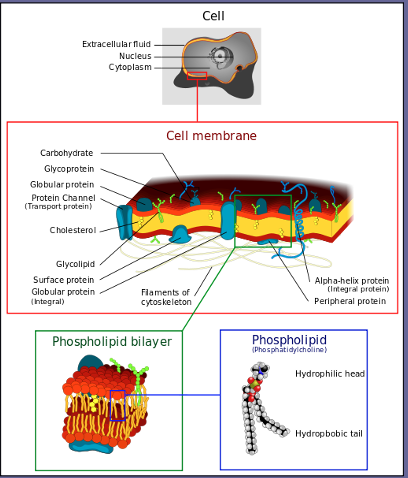
Role of cell membrane
Maintains homeostatis
Allows some things to pass through and others not to (selectively permeable)
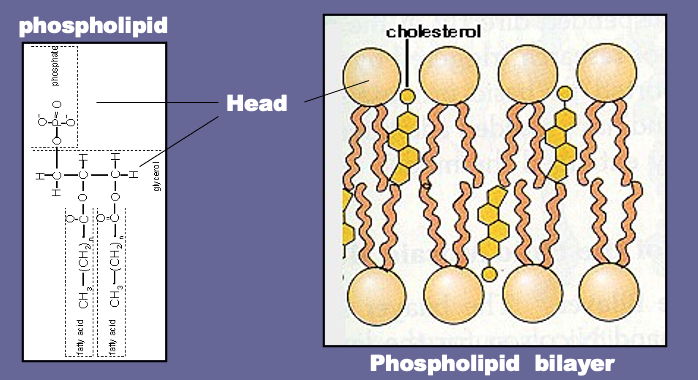
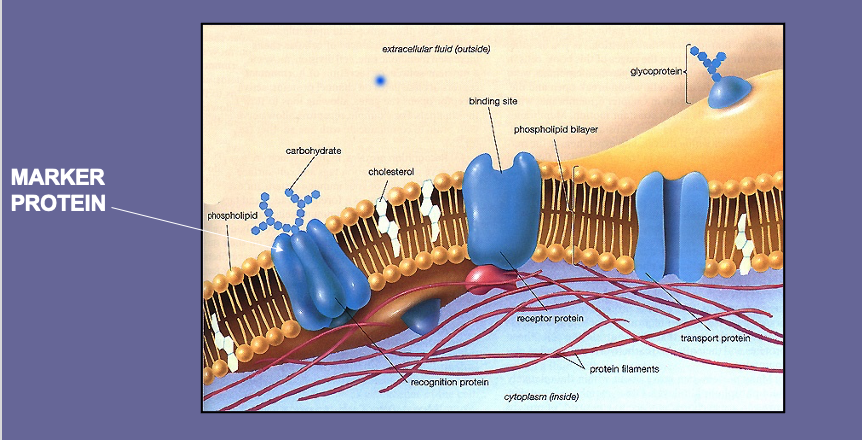
The cell membrane is a bilipid layer with two sheets of phospholipids:
- Phosphate Group (Head):
a. polar and water soluble
b. attracts water by hydrogen bonds (hydrophilic)
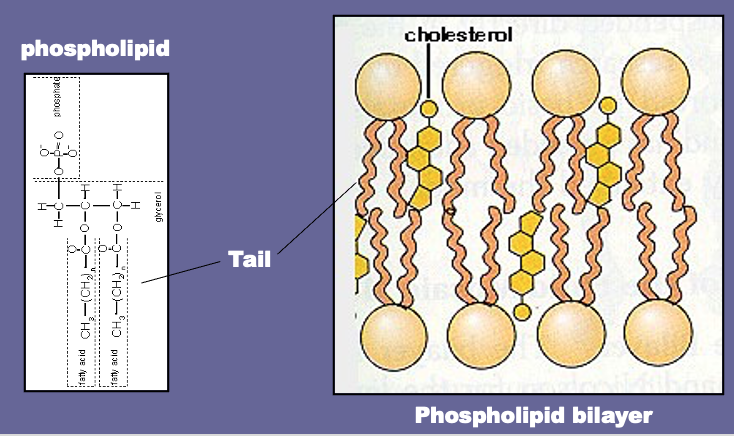
- Fatty Acids (Tails):
a. nonpolar and insoluble
b. repels polar molecules, sugars, proteins, ions, cell wastes,…(hydrophobic)
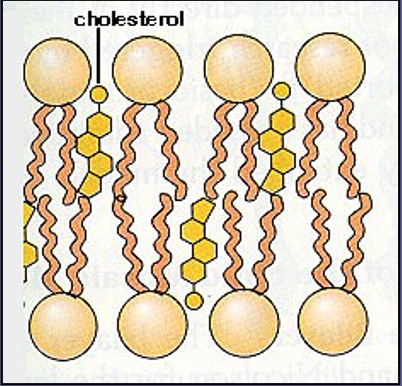
Eukaryotes have cholesterol: gives rigidity and strength, and separates the fatty acid tails
Proteins are also in the Membrane:
- Peripheral- on surface
- Integral- through the membrane
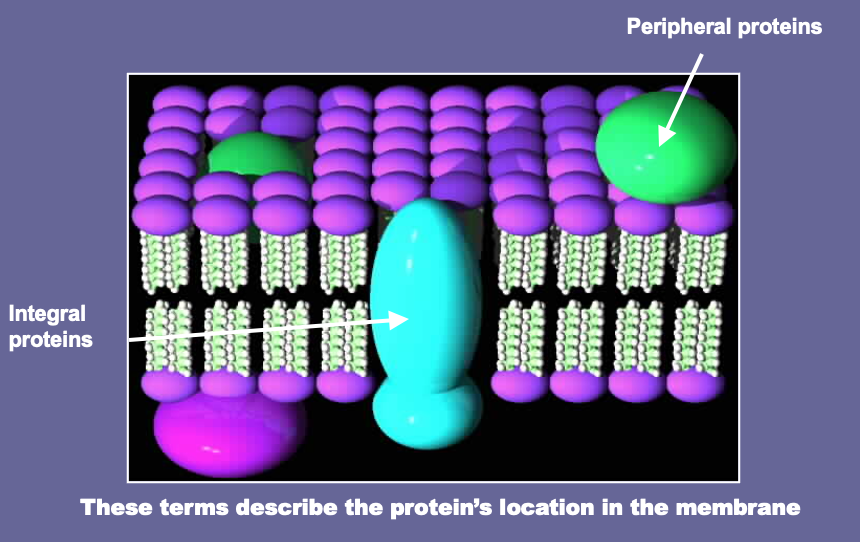
Functions of Cell Intergeral Proteins:
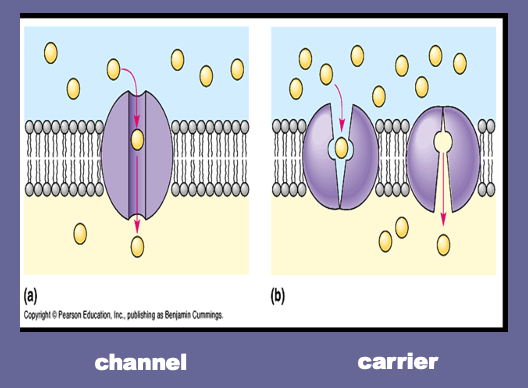
A. Transport Proteins: (channel and carrier) gates through the membrane that only fit specific particles
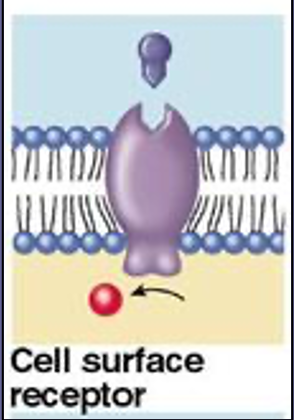
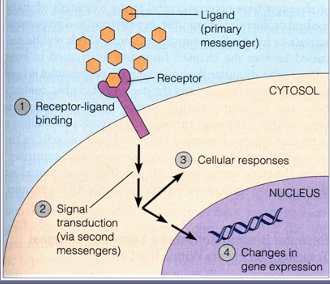
B. Receptor Proteins: Transmit information through the membrane
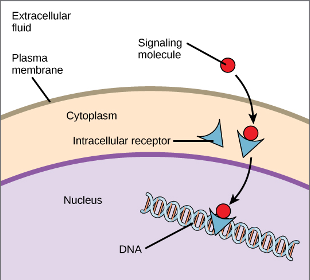
Receptor: fits specific signal molecules, triggering a response.
- Intracellular receptor: messenger molecule crosses membrane and binds to receptor inside cell to then enter nucleus and impact DNA (ex-steroids hormones)
- Membrane receptor: molecule binds on cell surface receptor which sends message into cell causing chain of events inside cell (ex – neurotransmitters)
C. Cell Surface Markers
identify cell to other cells by carbohydrate attached
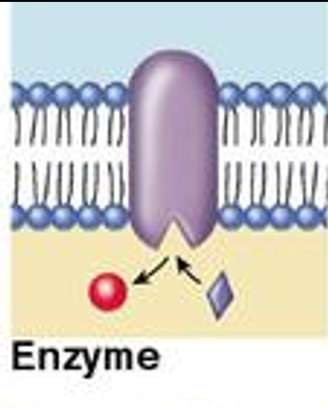
D. Enzymes
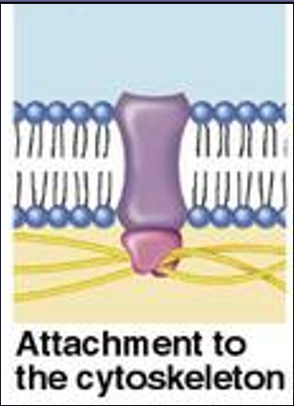
E. Attach to cytoskeleton
Carbohydrates in Cell Membrane
Glycoproteins: Attached to proteins
Glycolipids: Attached to lipids (specifically phospholipids)
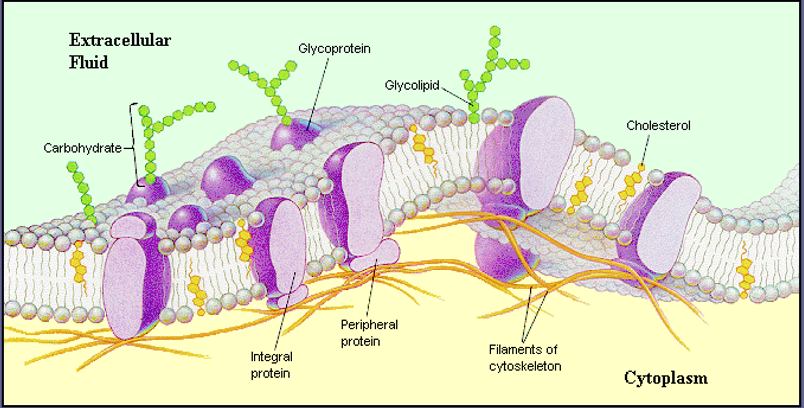
Fluid Mosaic Model- Current model of cell membrane
Fluid: Molecules can move sideways in the membrane
Mosaic: Cell membrane is composed of different types of molecules