Students - Unit 1 Biochemistry Notes Presentation 24-25 - Google Slides
Page 1: Biochemistry Overview
Introduction to Biochemistry
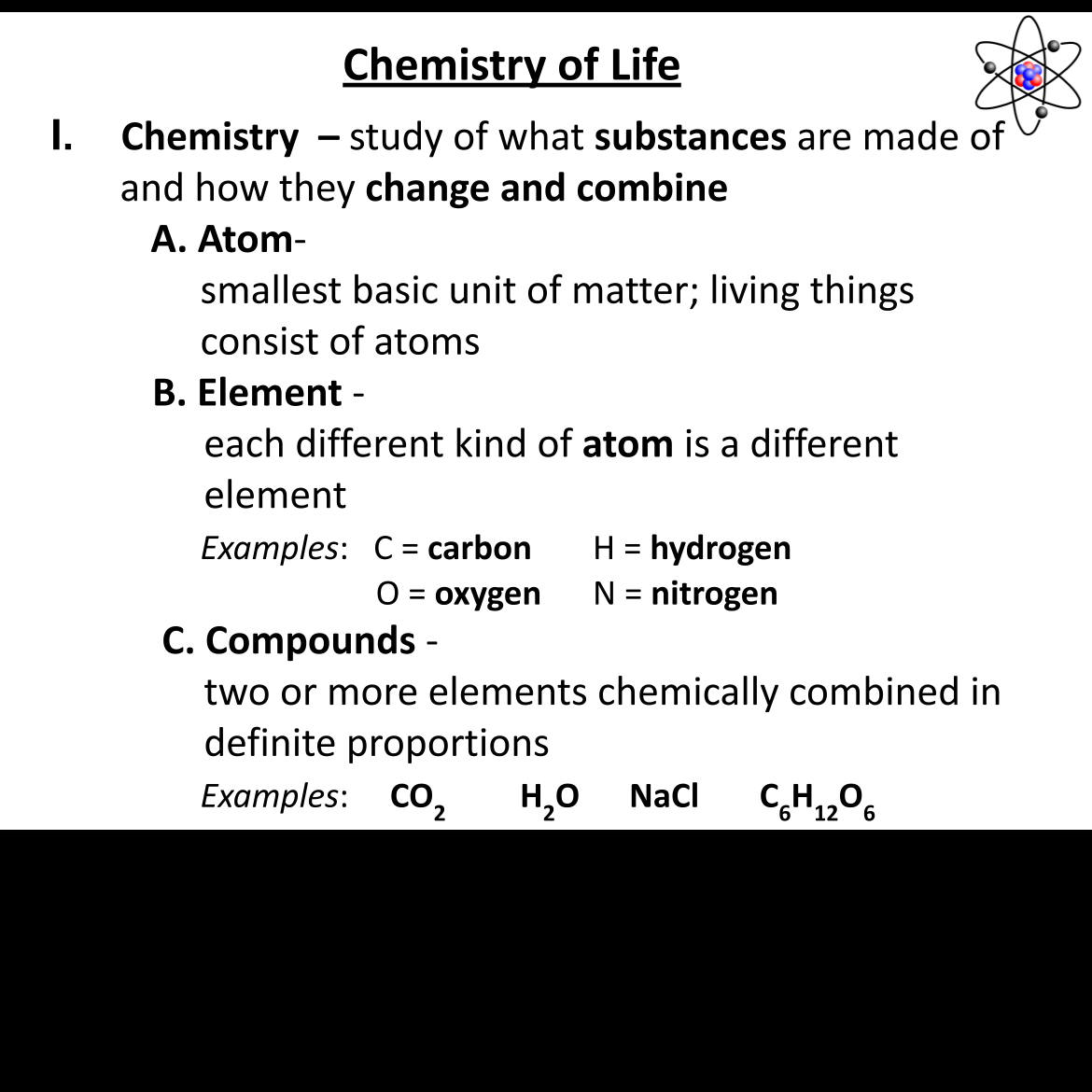
Biochemistry: The study of chemical processes within and relating to living organisms.
Definition of Macromolecules
Macromolecules (Biomolecules): Large, complex molecules that are essential for life.
Consist mainly of carbon, along with other elements such as hydrogen, oxygen, nitrogen, phosphorus, and sulfur.
Types of Macromolecules
Major classes of macromolecules include:
Carbohydrates: Sugars and starches that provide energy and structural support.
Proteins: Comprised of amino acids; they perform a wide range of functions including catalyzing reactions (enzymes), transporting molecules, and providing structural support.
Lipids: Fats and oils; essential for storing energy and forming cell membranes.
Nucleic Acids: DNA and RNA; vital for storing and transmitting genetic information.
Importance of Carbon-Based Molecules
Carbon: The backbone of macromolecules due to its ability to form four covalent bonds, allowing complex and varied structures essential for life.