HSC biology - Mod 5 Heredity
Reproduction
Reproduction: biological process where offspring are produced from their parents. Parents make a copy of themselves to ensure species continuity.
diploid: two sets of chromosomes. full number of chromosomes
- only in somatic cells.
haploid: one set of chromosomes. half number of chromosomes.
- only in gametes
asexual reproduction: reproduction of organism with only one parent organism.
- organisms are genetically identical to each other and parent organism
sexual reproduction: offspring are produced using two parent organisms
- organisms have a mix of genes from each parent
- higher genetic diversity
- fertilised cell is a zygote
- parents produce haploid cells called gametes
- genome: The complete set of DNA (genetic material) in an organism.
reproductive success: ability to produce fertile offspring (individual)
biological fitness: average contribution to the gene pool (gene)
Mechanisms of reproduction that ensure the continuity of a species, by analysing sexual and asexual methods of reproduction in a variety of organisms
External Fertilisation: Meeting of gametes outside the female body.
Usually occurs in aquatic environments to prevent gametes from drying out
millions of gametes needed
organisms must mature rapidly
high chance of predation
greater spread of gametes means greater genetic diversity which means higher chance of surviving hostile environments.
Advantages of external fertilisation:
Higher genetic diversity since gametes are more widespread + less competition
more offspring are produced
little energy required to find a mate
Disadvantages of external fertilisation:
organisms more susceptible to predation
gametes less likely to meet
many gametes go unfertilised
offspring not protected by parents
Internal Fertilisation: Meeting of gametes inside the female body
Higher chance of gametes meeting
Less gametes + organisms needed
Higher chance of survival to maturity
Advantages of Internal fertilisation
Higher chance of gametes meeting
embryo protected from predators
organism more likely to survive
Disadvantages of Internal Fertilisation
Higher energy required to find a mate
less offspring produced
more energy to raise and care for young
Asexual Reproduction in Bacteria
Bacteria are unicellular, prokaryotic organisms that reproduce asexually through binary fission
cell elongates by building more cell wall
Genome and plasmid copies itself
new cell wall formed
cleavage forms and cell divides into 2 daughter cells
Bacteria need a way to transfer DNA to ensure genetic diversity and increase chance of survival against adverse environments. There are three ways:
Conjugation: Direct transfer of DNA from one cell to another.
- Done through a transposon (a chromosomal segment that can undergo transposition in the absence of a complementary sequence in the host DNA). Two cells join through a chromosomal segment which acts as a temporary junction and the DNA transpositions into the recipient cell.
Transformation: When naked DNA is taken up from the environment by bacterial cells
- Ruptured Lysis of cells has DNA that’ll float around and enter the recipient cell
Transduction: the use of a bacteriophage to transfer DNA between cells.
- a Bacteriophage (A virus which parasitises a bacterium by infecting it and reproducing inside of it)
- bacteriophage enters cell, takes the DNA and is then released. ut goes to the recipient cell and dumps the DNA.
Asexual Reproduciton in Protists
Protists are eukaryotic organisms that are neither animals nor fungi nor plants. They can be unicellular and some exist as colonies. Each protest can be autotrophic or heterotrophic. They can reproduce BOTH asexually and sexually. They can reproduce through:
binary fission: occurs really rapidly through mitosis
multiple fission: multiple daughter cells
budding: side branch buds off from parent organism. It matures and then buds off again.
results from the outgrowth of a part of the body.
since offspring are genetically identical, they are already suited to their surroundings
common in hydras
in coral the buds wont always bud off rather multiply as a new colony
Sexual Reproduction In Protists
Sexual production in protists only typically occurs when they are under environmental stress. Having sexual reproduction means greater genetic diversity, more chance for advantageous mutations + adaptations = increased chance of species continuity and selection resistance.
Syngamy (aka fertilisation): the complete and permanent fusion of two haploid gametes to give rise to a new diploid organism.
Conjugation: Temporary union of two individuals to exchange haploid pronuclear to form a zygote nucleus. each individual then produces daughter cells by binary fission.
Asexual Reproduction in Fungi
Fungi include species like mould, mildew, mushrooms, yeasts. Some are unicellular some are multicellular. They can reproduce both asexually and sexually. Above the ground is the fruiting body, below the ground in mycelium. Hyphae are the basic structural unit of fungi.
fragmentation
budding
Sexual reproduction in Fungi
Fungi produce spores sexually in response to adverse environmental conditions. It can be homothallic or heterothallic.
Homothallic: self-fertile. The ability to produce a spore to produce a sexually reproducing colony
heterothallic: requires haploid ‘α’ and ‘a’ cells to fuse in order to produce new individuals.
Hyphae: Tiny threads of cytoplasm surrounded by a plasma membrane and covered by a cell wall of chitin.
Mycelium: fibrous structure maximising contact with water, digests food. Feeding structure.
Spores: unicellular reproductive cells that are produced by fungi. asexual spores - produced by one parent only (through mitosis) and are genetically identical to the parent.
Spores are produced sexually in the tips of specialised hyphae in the fruiting body. Heterothallic spores need both an α cell and a cell to fuse to form new individuals.
They are released from the parent from a special reproductive sac called a sporangium
Homothallic spores do not need to fuse with another cell to form an individual.
Spores allow fungi to expand their distribution to colonise new environments.
Sexual Reproduction in Plants
Sexual reproduction in plants requires the use of flowers (angiosperms) or seed cones (gymnosperms).
angiosperms: plants that bear flowers and fruits. Involves the transfer of pollen (♂) to an ovule (♀).
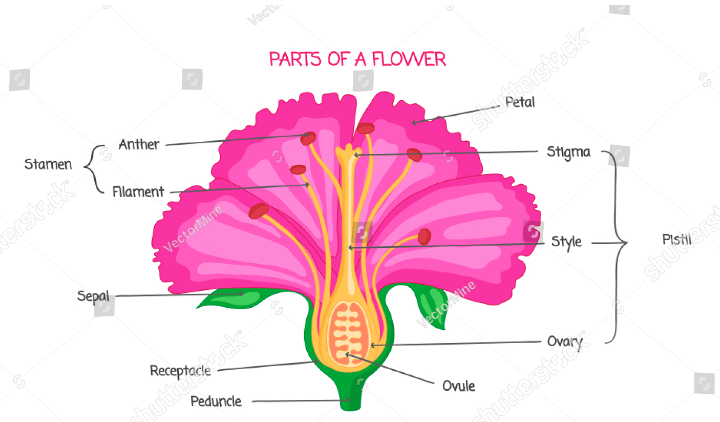
Each flower produces both male and female gametes. This means that each flower has both male and female components. The male components are the stamen consisting of the filament and anther. The female component is the pistil consisting of the stigma, style and ovary. Fertilisation occurs inside the plant to prevent drying out. This is an adaptation of terrestrial plants.
Mechanisms of seed dispersal: wind, water, fruits, animals
Advantages: creates genetic diversity increasing chances of offspring surviving against environmental changes. They are the most successful plant group.
Gymnosperms: non-flowering, seed-bearing plants that are not enclosed within fruits and reproduce sexually. Example: pine trees
Gymnosperms do not require water for REPRODUCTION. The wind blows pollen grains. Each seed comprises an embryo packaged within the seed and nutritive tissue surrounded by a protective coat.
One plant carries BOTH male and female components.
Asexual Reproduction in Plants (Vegetative Propagation)
There are multiple forms of asexual reproduction in plants including runners, bulbs, rhizomes and tubers. Each daughter plant organism is an exact genetic copy of the parent plant.
Bulbs: An underground storage organ (swollen portions of underground stem) that consists of a short stem surrounded by fleshy leaves. New shoots of the plant develop from the bulb. Example: onion
Runners (stolons): horizontal stems that grow ABOVE the ground growing new plants with roots. side branches of a plant grow close to the ground and develop new, genetically identical plantlets on them. Example: strawberry
Cuttings: when shoots are cut from a plant and planted in moist soil and a new plant grows. example: bamboo
Rhizomes: root-like stems that grow horizontally UNDER the ground, forming new shoots at the nodes. example: ginger
Advantages of vegetative propagation: No pollinators needed for dispersal and fertilisation. Time and resource efficient.
Disadvantages of Vegetative propagation: lack of genetic diversity makes organisms susceptible to environmental changes.
Mosses: both
Mosses can reproduce both asexually and sexually. For sexual reproduction, moss requires a moist medium for fertilisation. Mosses reproduce close together to create a spongy unit that contains water for the sperm to reach the egg.
Asexual reproduction: fragmentation.
Reproduction in Animals
Some animals reproduce sexually whilst others asexually. There are disadvantages and advantages to each method of reproduction.
Sexual reproduction involves the meeting of two gametes from two different parent organisms to produce a genetically unique diploid organism. External fertilisation and internal fertilisation are the two methods.
Asexual reproduction in animals involves a single parent organism producing genetically identical offspring.
Budding: Bud grows off the side of parent. Bud comes off the parent organism and grows into new parent organism.
Regeneration and fragmentation: Similar concept to budding however the existing parent organism breaks into different pieces giving rise to new organisms.
Parthenogenesis: Development of female gamete without the fertilisation of male gamete.
Advantages of asexual reproduction:
Energy efficient
Only requires one parent (no courtship required)
Disadvantages of asexual reproduction:
No introduction of genetic diversity
makes organisms susceptible to environmental changes
inhibits adaptations + mutations
Advantages of sexual reproduction
Increases genetic variation
Less prone to environmental changes
facilitates adaptation
Disadvantages of sexual reproduction
Uses lots of energy
courtship is required: time and resource expensive
requires two parents
Mammal Reproduction
- analyse the features of fertilisation, implantation and hormonal control of pregnancy and birth in mammals
Fusion of two gametes in the process of fertilisation to form a zygote. The offspring receives a mixed pool o the parents’ genes.
Mechanisms to increase survival
Internal fertilisation: Gametes meet inside the female body to ensure protection from environment + predation
implantation: Fertilised egg is implanting into the uterine wall to increase chance of survival
pregnancy: allows embryo to develop in protected environment, receive nutrients and complete gestation period.
Types of Mammals
Placental Mammals: (internally fertilised) Embryoes are provided with nourishment and protection by the uterus from the placenta and umbilical cord. After birth, babies are nourished with milk and grow a covering of fur. ex: humans, dogs, cats
Marsupial Mammals: (internally fertilised) underdeveloped joeys are born and kept in an external pouch that provides them with nourishment through milk, also protected in pouch. ex: kangaroos, wombats, koalas.
Monotreme Mammals: (internally fertilised) organisms are laid in eggs. They are nourished through the leathery egg. They are born a puggle. After hatching they are nourished through milk. ex: platypus, echidna
Development of Gametes
Gametogenesis: production of the female and male gametes. Haploid gametes are produced by meiosis in the germline tissue within the testes or ovaries.
Sperm (spermatozoa):
Sperm are formed through spermatogenesis in the testicle. They are the male gamete and the smallest human cell. The fastest swimmers find the egg in the fallopian tubes within an hour. Spermatogenesis is stimulated by testosterone (androgen hormone). Attracted by chemotaxis and thermotaxis.
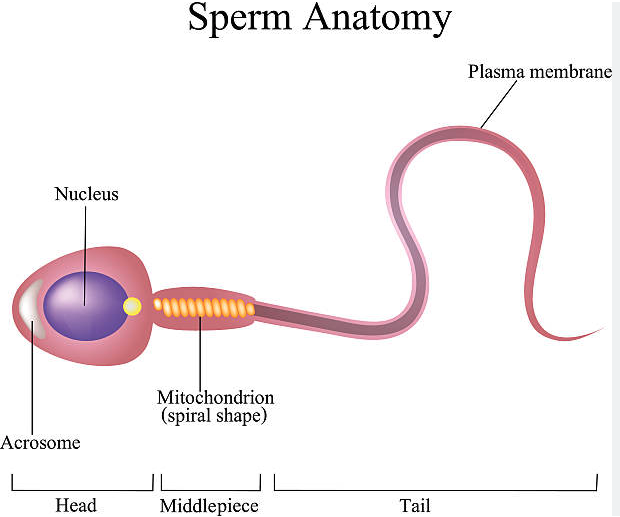
Sperm are propelled using their flagellum. The “head” of a sperm has a layer called the acrosome which consists of ENZYMES which penetrate the OUTER LAYER AND MEMBRANE of an egg cell.
Spermatogenesis
sperm are produced inside sperm tubules in the testes where they are stored until maturation.
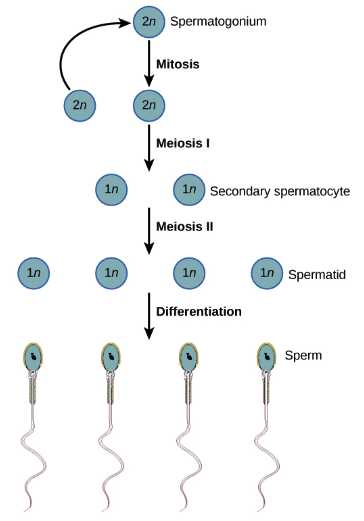
Sperm requires two meiotic divisions to occur to form four haploid daughter cells (spermatids) then through differentiation become functional sperm cells.
Ovum
The female gamete is the ovum (oocyte), the cell produced in the ovaries from germline cells. They are formed in the process called oogenesis. Egg production beings before birth. During each menstrual cycle, several hundred eggs start to develop and mature but only one typically dominates to reach full maturity. Once this egg fully develops it is pushed into the fallopian tube to await fertilisation. Ova can be fertilised once released from the ovaries in ovulation. This is part of the ovarian cycle.
Fertilisation
The fusion of an ovum and sperm cell. The result is a diploid single-cell that develops into the baby. This happens as the cell undergoes mitosis to develop all its cells.
The organism then becomes a morula - early stage of the cell division with no differentiated cells. After it becomes a blastocyst when cell differentiation has occurred and an inner cell mass is prominent that’ll form the embryo. the outer layer (called trophoblast) will form the placenta.
Implantation: The attachment of the blastocyst into the uterine wall.
Pregnancy: The carrying of the developing embryo within the female body.
Embryo: The organism from fertilisation to 8 weeks of pregnancy.
morula: solid ball of cell mass. cells are not differentiated. day 3-7
blastocyst: next stage after morula. has 3 parts: inner cell mass (later embryo), trophoblast (exterior cells, later placenta), fluid filled cavity called blastocoele.
fetus: eighth week onwards
placenta: facilitates the exchange of materials and nutrients from the mother to the embryo. secretes hormones that maintain pregnancy once the corpus luteum degenerates.
rheotaxis: moving with a water current
Process of fertilisation:
Sperm swim through vagina, vaginal contractions assist. Sperm is attracted via rheotaxis movement. The fallopian tubes secrete fluid down the female reproductive tract and sperm swim upstream (positive rheotaxis).
progesterone and alkaline pH cause sperm to mature, where they become hypermobile
Sperm makes contact with the egg and physically burrows through the corona radiata (leftover follicle cells release enzymes to assist penetration)
Sperm acrosome attaches to the receptor of zona pellucida, fusing with the cell membrane
the acrosome of the sperm will release enzymes to break down the outer layer and membrane of the ovum. breaks down the zona pellucida.
Plasma membranes of sperm and egg fuse (only allow one sperm).
Sperm nucleus enters egg. egg releases enzymes that destroy the gylcoproteins in the zona pellucida and causes electrical changes to prevent others from entering.
ovum immediately undergoes its second meiotic division
zygote travels down the oviduct, beginning to divide via mitosis
process of implantation
day 1: egg + sperm meet
day 2 zygote is formed
day 3-4 morula: cell division has started but cells are not differentiated.
day 4-7 blastocyst: blastocyst has an inner cell mass that later becomes the embryo and a trophoblast that later becomes the placenta.
day 7: uterine epithelium thickens and implantation begins. the blastocyst has a release of digestive enzymes that break down into the uterine epithelium, hormones released that trigger implantation.
day 9: blastocyst is completely under the uterine epithelium. now it receives oxygen and nutrients from the endometrial tissue fluid.
day 25: embryo development
Hormonal Control
All stages of sexual reproduction are synchronised by a combination of hormones that coordinate the reproductive cycle to ensure greater reproductive success. All hormonal control is to ensure offspring have the highest chance of reaching a point in maturation to reproduce themselves.
regulated by hormones
cycle must be self-perpetuation to ensure species continuity.
hormones: chemical substances that act as messengers in the body
- coordinate aspects of functioning including actions and behaviours in the body including metabolism and reproduction.
sex hormones: chemical substances that act as messengers for the body to synchronise processes such as growth, repair or metabolism. sex hormones are hormones produced in tissue in the ovary or tested directly responsible for the growth or action of gonads. In relation to the development and functioning of sex organs.
Reproductive systems are already developed at growth however only function once triggered by hormones during puberty. The reproductive cycle commences.
pituitary gland: gland attached to the base of the brain that secretes hormones that stimulate or inhibit other endocrine glands, regulating the metabolism, growth and reproduction. MOTHER GLAND
endocrine gland: gland controlling the hormonal release for metabolism, energy level, reproduction, growth and development, and response to injury, stress, and mood.
Synchronisation of hormones and actions ensure fertility.
- Increase in successful reproduction and biological fitness.
human chorionic gonodatropin: promotes the maintenance of the corpus luteum. continues to produce both progesterone and estrogen for a few months.
progesterone: pregnancy hormone. thickens the uterine lining. inhibits menstrual cycle. (fsh and lh)
estrogen: controls development and functioning of the female reproductive system. female sex hormone controlling the ovarian cycle, menstrual cycle, pregnancy, and lactation, inhibits FSH and LH production from the pituitary gland.
- onset of oestrus just before ovulation in seasonal breeders.
- responsible for ovary function therefore fertility.
follicle stimulating hormone: responsible for the maturation of follicles in the ovaries of females.
luteinising hormone: stimulates final maturation of follicles and the development of the corpus luteum.
prolactin: acts on breast tissue to prepare for and stimulate lactation.
corpus luteum: a temporary collection of cells that forms on your ovary each menstrual cycle if you're still getting a menstrual period
ALL INTERACTION OF THE PITUITARY GLAND WITH THE OVARIES AND TESTES IS SYNCHRONISED BY FEEDBACK LOOPS.
THE BALANCE IN THE LEVELS OF SEX HORMONES IN THE BODY AT ANY POINT IN TIME DETERMINES HTE FERTILITY OF A FEMALE.
Seasonal Breeding
Some animals are seasonal breeders: hormones limit animals to only be able to reproduce at some times of the year.
- female fertility is reduced to a time period of only once or twice a year.
- higher order primates and some mammals are continuous breeders.
—>female fertility occurs in a cycle that repeats throughout the year
Seasonal breeders have the advantage of having offspring born when the weather is warm and food is plentiful. Theres less time required for mating and gestation meaning less time to be vulnerable to predators.
Ovarian Cycle: the monthly cycle of egg development (follicular phase), ovulation and the luteal phase which is REGULATED BY HORMONES.
All females are born with all the ova they will ever produce in their life. They are all premature.
The primary oocyte begins meiosis I but is paused until puberty, when a girl begins her menstrual cycle.
The secondary oocyte is released from the ovary (ovulation) and enters into the oviduct or fallopian tube. IF the ovary is fertilised, chemical changes will trigger the completion of meiosis II, and once complete the mature egg forms an ovum before fusing its nucleus with the sperm nucleus to form a zygote.
Ova become surrounded by a single layer of ells that envelop them and begin to divide resulting in the formation of primary follicles in the ovary.
Hormones secreted during puberty over about 40 years trigger the MATURATION of ova each month until menopause is reached
The follicular Phase
Follicle cells secrete fluid that pushes the egg to one side of the follicle.
- the enlarged dominant follicle moves to the surface of the ovary and creates a bulge. its now mature and a graafian follicle.cells lining the follicle secrete oestradiol which triggers the production of LH, resulting in ovulation.
graafian follicle bursts and releases the egg
the tunnel shape of the fallopian tubes have cilia that beat, drawing the egg inside the tube. the egg with some cells still attached moves toward the uterus.
- if sperm present fertilisation may occur
- only viable for 12-24 hours
The luteinising Phase
begins after ovulation when the burst follicle in the ovary enlarges and changes colour, building up a yellow protein called LUTEIN. Spike in LH leads to the release of the ova
the large mass of vacuolated cells is now called the corpus luteum.
The corpus luteum secretes progesterone, acting on the uterus, preparing it for pregnancy.
Menstrual Cycle
begins with menses for ~4 days (shedding of uterine lining + ovulated egg)
- the first day of menses marks the beginning of the follicular phase + last day marks end of ovulationafter this, a new endometrium lining forms in the uterus over 5-12 days. aka pre-ovulation phase. ovulation will occur about 5-13 days after menses starts
corpus luteum secretes progesterone and oestrogen into bloodstream.
progesterone prepares uterus endometrium for implantation of ovum and for pregnancy.
endometrium becomes highly vascularised about 8/9 days after ovulation. secretes a water mucus here,
if a fertilised ovum implants, pregnancy begins and the uterine wall is maintained by progesterone and estrogen. Progesterone and estrogen are produced by the corpus luteum at first and later by the placenta.
placenta forms, attaching the developing embryo to the uterine wall, secretes progesterone, estrogen and human chorionic gonadotropin to maintain pregnancy. CORPOS LUTEUM MADE REDUNANT.
Hormonal Control of the Male Reproductive Cycle
Spermatogenesis is controlled by hormones. (male androgen hormone testosterone). This involves the interaction of the three glands
hypothalamus in the brain
pituitary gland at the base of the brain
leydig cells in the testes
LH stimulates the production of testosterone
FSH stimulates the productions of a protein by slertoli cells in the testes to maintain testosterone at a high enough level suitable for spermatogenesis.
inhibin reduces levels of FSH.
Birth hormonal cycle
The process of childbirth occurs via positive feedback under hormonal control. Positive feedback involves a response that reinforces the change - it functions to amplify the change.
hCG peaks at the beginning as its responsible for the development of the embryo and maintenance of the corpus luteum. However we know that once the placenta is developed we no longer need the corpus luteum.
oestrogen inhibits fsh so no more ova are matured and released.
after 9 months the baby stretches the wall of the uterus, stimulating a release in oestrogen, stimulating a release in oxytocin. estrogen induces oxytocin receptors on the uterus.
- this prepares the smooth wall of the uterus for childbirth as it becomes more sensitive to the hormone oxytocin.oestrogen inhibits progesterone, the hormone that prevented uterine contractions during pregnancy.
oxytocin stimulates the uterine contractions, initiating the birthing process and inhibits progesterone.
the fetus responds to the contractions by releasing prostaglandins to trigger further contractions.
Gene Manipulation
evaluate the impact of scientific knowledge on the manipulation of plant and animal reproduction in agriculture
Selective breeding has been used to produce animals or plants with favourable/attractive/useful characteristics for thousands of years. This manipulation of reproduction has expanded as scientific knowledge and technology has developed.
Selective breeding methods such as artificial pollination, artificial insemination, genetically modified organisms, cloning, transgenesis, hybridisation and recomibant DNA have allowed agricultural practices to become much more efficient and cost-effective —> produces higher quality or higher quantity.
What are the downsides?
Animal welfare could be compromised, loss of genetic diversity means organisms are more susceptible to environmental changes/challenges, inhibits adaptation, genetically modified animals will outcompete natural wild organisms. loss of biodiverstiy
Types of Selective breeding:
Artificial insemination (sexual): taking a sperm sample from a male animal and inserting it into the vagina of a female animal without sexual intercourse.
- important in modern day animal husbandry
- typically used for large mammals
- used to produce organisms with favourable characteristics e.g. disease resistant cattle.
- frozen semen samples can be stored and transported all over the world
- inseminates large numbers of females
- transportation of semen is much easier than of a whole animal
- consistent sperm donors reduce genetic diversity
- cannot guarantee favourable trait is passed on
example: merino sheep
artificial insemination/breeding in the merino sheep industry commenced in the 1950s with the first semen stored in the 60s. Bred for better quality + quantity of wool.
Selective breeding vs artificial insemination: breeding is just letting them have intercourse (intentional mating), AI is doing it yourself.
Artificial pollination (sexual): taking pollen granules (♂) from the anther on the stamen of a flower with a paintbrush and brushing it on the stigma (♀) on the style of another flower. pollen from a selected plant with desirable traits is artificially transferred to the female stigma of another plant.
- can create many plants with favourable offspring characteristics
- can increase genetic diversity by choice.
- can quicken pollination process
- inexpensive
- overuse may lead to crops being susceptible to disease since plants are too similar
- cant guarantee favourable trait is passed on
- could lead to loss in genetic diversity
example: vanilla orchids were naturally only pollinated by 1 type of Mexican bee. with artificial pollination, vanilla orchids can now be grown all over the world
Cloning (asexual): selective breeding of organisms via asexual means.
example: taking a cutting of a basil plant and growing it into a new plant.
- tissue culture allows for the mass cloning of plants
- its not widespread because of costs, technology and time
- cloned plants have the same requirements and grow in similar ways and produce similar yields.
- guaranteed to express the favourable trait.
- loss of genetic diversity means disease susceptibility
- expensive with limited advantages over reproductive means
- bioethics of cloning humans
- health and life of cloned animals is questionable
Gene technology (GMOs)
Can produce genetically modified organisms and is an example of biotechnology. Can be used for the treatment of diseases and in agriculture for food production.
Methods of insertion of genes: microinjection using a fine needle, inserting DNA into plant cells on gold or tungsten particles a biolistic gene gun.
example in animals: sheep have a blood-clotting gene trangenetically inserted into them. The milk they produce can be drunk by humans to treat haemophilia (condition where blood doens’t clot normally).
gm salmon: modified to grow four to six times faster than normal: great for farming. added growth hormone gene from chinook salmon and antifreeze gene from eel-like ocean pout allowing it to produce this hormone all year round.
Food crops like soy and corn have been genetically modified for pest and herbicide resistance.
example in plant: Bt cotton is a genetically modified plant organism. Bacillus thuringiensis is a bacteria that produces a protein that is toxic to some pest insects. The gene is isolated in the bacillus thurnigiensis bacteria and inserted into the cotton plant. now the cotton plant is resistant to some of the pest insects without the use of insecticide. this means the surrounding areas and soil and wildlife isn’t affected by pesticides. reduces costs and increases yield
Golden rice: gmo rice that produces beta-carotene (precursor to vitamin A). Vitamin A deficiency is a health problem for millions all over the world. golden rice has a gene from a bacterium that produces beta-carotene. This gene is inserted into the rice plant. the beta carotene is a pre-cursor to vitamin a. This means that golden rice can help treat vitamin a deficiency in lesser developed countries.
scandinavian strawberries: its too cold. strawberry has been modified to contain DNA extracted from an arctic fish that can resist the cold weather. now the strawberry can grow better in the cold than traditional strawberry.
Transgenesis
recombinant DNA (rDNA): molecules formed by laboratory methods to bring together genetic material from different sources. this is possible because all organisms are composed of the same chemical structures (cytosine, guanine, adenine, thymine).
Transgene: a gene that is moved from one species to another.
Transgenesis is the process by which one gene is removed from one species and inserted into the genome of another species. The protein is then shown in the phenotype of the second species.
Whilst this method produces new genetic diversity, the organism is then cloned, thus reducing diversity.
- guaranteed to produce desired trait
- increased nutritional value + yield
- reduced use of harmful chemicals
- offspring genetically identical means disease susceptibility.
- escape of GMO into wild: genetic diversity + competition
- trade issues with non gmo countries
- long term on human health???
things to consider:
- used to benefit society (food) and the environment (pest and disease management)
- Biodiversity can decrease - genetic variation is decreased; can lead to declines of ‘wild’ species.
- If GMO’s escape into nature - added competition, changing the natural process of evolution.
- Is it ethical to mix genetic material of humans with that of other organisms? (bioethics)
- creation of more drought-tolerant/resistant to pests/higher yield crops; are cost-effective
- People in developing countries- have NO access to beneficial GM products (poverty gap)
- Patenting and legal ‘ownership’ of certain genes or species – Big Pharma companies (Pfizer)
- Foods with higher nutritional value, better nutrition to people in developing countries
- Decrease in fertilizer use, pesticide use = better outcome for environment (soils)
Cell Replication
How important is it for genetic material to be replicated exactly?
All cells come from pre-existing cells through cell division. When unicellular organisms divide into two cells this is binary fission.
Mitosis: a cell replicates into two genetically identical daughter cells, same genetics as the parent cell.
why: growth, cell replacement, mending damaged tissue, ensuring genetic material is equally distributed.
meiosis: a cell replicates into 4 genetically unique haploid daughter cells. occurs in reproductive organs
chromosome: DNA (coiled up in a double helix) in long thing thread-like structures.
- somatic has 46 (2n) gametes (n) 23\
genes come in different forms called alleles. A genomes genetics instruction code for everything. In cell division (mitosis) the genetic code (DNA) is passed onto each new daughter cell and is an exact copy (without error) so the individual can function in a controlled and coordinated way and production of proteins .
The Cell Cycle
Gap phase 1: Cell elongates to prepare for DNA replication. Part of interphase
Synthesise phase: DNA replicates for the new daughter cells .
gap phase 2 : enzymes proofread for errors. cytoplasm materials prepare for division
mitosis - division of the nucleus followed by division f cytoplasm
cytokinesis - division of cytoplasm
DNA composition
DNA is made up of nucleotides including: a 5 carbon sugar base, 1 phosphate, 1 nitrogen base. DNA strands wrap around histone proteins into telomeres into chromosomes.
DNA is in a double-helical structure, with the sugar phosphate backbones on the outside an dhte nitrogen base pairs on the inside. Antiparallel. They run alongside each other but pointing in other directions. The 5’ end of one strand aligns with the 3’ end of the other strand.
Genome: all the genetic information inside a cell
Chromosome: tightly bound DNA strands around histone proteins into telomeres into chromosomes. dense genetic information. When X shaped its experienced interphase —> The original chromosome has been replicated to have a sister chromatid.
gene: coding instruction for creating proteins
base pairs: smallest bits of information in genetics. nitrogen bases
allele: variations in gene. all alleles originated from mutations. e.g. brown eye vs blue.
gene loci: position where a gene is found on a chromosome
DNA Replication
DNA is unzipped as helicase enzyme breaks the hydrogen bonds between the nucleic acids. This forms a form in the DNA strand and provides us with 2 template strands. This is the semi-conservative model because it conservese the previous strand of DNA.
the 3’ to 5’ strand is the leading strand. Replication builds in the direction of the replication fork. the 5’ to 3’ strand is the lagging strand and Is made in the direction away from the fork.
Leading strand:
primase makes a primer strand of rna to mark where replication needs to occur
polymerase starts adding free-floating bases in the 5’ to 3’ direction (towards the replication fork)
exonuclease enzyme breaks down the rna primer and polymerase replaces it with free-floating nucleotides
this replication is continuous and doens’t stop/
laggin strange:
primase makes a primer strand of rna to mark where replication needs to start. this occurs in short bursts.
DNA polymerase adds in nucleic bases in between the rna primers connecting them also in the 3’ to 5’ direction away from the replication fork. these are okazaki fragments.
exonuclease enzyme removes the RNA primer and its replaced by free-floating bases
dna ligase seals up the two strands
this process is discontinuous as the fragments are disjointed
okazaki fragment: the segments of DNA made of free-floating nucleotides in between the RNA primers in the lagging strand. The lagging strand has the bases placed towards the replication fork but the fragments are away from the fork.
each:
dna ligase seals up the sequence into 2 strands.
both strands are closed with telomeres which act as protective caps for the end of the chromosomes to prevent deterioration.
proofreading by polymerase to fix mispaired bases
Mitosis
For growth, repair, development. Interphase happens first but isn’t an official stage of mitosis. The DNA is replicated. Each cell has 2 centrioles where spindle fibers attach to
Prophase - since the nucleus DNA isn’t condensed, it condenses into X shaped structures.
- each chromosome is composed of 2 sister chromatids containing identical genetic information.
- nucleus membrane dissolves.
- spindle fibers begin to form
- centrioles separatemetaphase - x shaped chromosomes line up across the middle of the cell. the spindle fibers attach to the each of the sister chromatids.
anaphase - sister chromatids are pulled apart resulting in each chromatid going to opposite poles. separated into individual chromosomes
telophase - nuclear membrane reforms, single cell pinches in the middle. cytokinesis moves cytoplasm and reforms cellulose walls in plant cells. spindle fibers go
Meiosis
Process of producing haploid gamete cells in reproductive organs. Produces 4 genetically unique daughter cells. Has 2 divisions. Meiosis is important as it allows genetic diversity. Genetic diversity is important for the continuation of a species as it gives organisms a higher chance of resisting environmental challenges.
Parents only pass on half a full set of chromosomes to avoid doubling up in genetics. The original cell starts with 46 chromosomes (46 chromatids, counted by centromeres). During interphase, this DNA is replicated to leave us with still 46 chromosomes but 92 chromatids. Then after the first division, each cell is haploid with 23 chromosomes (46 chromatids) and after division 2 still 23 chromosomes but 23 chromatids.
Chromosomes cross over to ensure genetic diversity. This occurs during prophase
BEfore meisos: Interphase occurs: replication of DNA genome. The cell contains chromosomes from both mother and father. the 46 chromosomes replicate to make 92 chromatids. The chromosomes are in homologous pairs.
Prophase I - DNA condenses into the chromosomes. Nuclear envelope DISINTEGRATES. Homologous chromosomes form pairs and join in a process called SYNAPSIS forming. tetrad. Homologous chromosome pairs cross over and swap alleles. Spindles are starting to form from the centrioles in the centrosomes
Metaphase I - Homologous chromosome pairs line up along the middle of the cell. The centrosomes that contain centrioles are at opposite poles of the cells.
Anaphase I - Spindle fibers are attached to the centromeres of the homologous chromosome pairs from the centrioles in the centrosomes and pull apart the pairs of chromosomes.
Telophase I - Nuclear membrane comes back and spindle fibers are broken. Cytoplasm moves thus making 2 daughter cells.
Prophase II - Nuclear envelop disintegrates. Spindles start to form. Different to P1 because no homologous pairs
Metaphase II - Chromosomes line up along the equator of the cell.
Anaphase II - ChromaTIDS are pulled away by the spindle fibers and the chromosome is separated. Sister chromatids are pulled away from each other.
Telophase II - Nuclei reform. Cytokinesis splits the cytoplasm.
Why is polypeptide synthesis important?
construct appropriate representations to model and compare the forms in which DNA exists in eukaryotes and prokaryotes
● model the process of polypeptide synthesis, including:
– transcription and translation
– assessing the importance of mRNA and tRNA in transcription and translation
– analysing the function and importance of polypeptide synthesis
– assessing how genes and environment affect phenotypic expression
● investigate the structure and function of proteins in living things
Structure of proteins
Humans require 9 essential amino acids from their diet while also requiring 11 non-essential amino acids that the body can synthesise itself.
Primary structure
The specific linear sequence of amino acids that makes up a peptide chain. The amino acids have peptide bonds.
Secondary Structure
Alpha helix: the backbone coils around an imaginary axis.
Beta sheet: The backbone nearly fully extended.
Tertiary Structure
The overall folding of the entire polypeptide chain into a specific 3d shape. The shape is determined by ionic bonds and disulphide between the side chains.
Quaternary Structure
For when a protein is made up of two or more polypeptide chains. Describes the way two polypeptide subunits are arranged together to form the overall structure.

Protein Function
Proteins are essential to all biological processes. The structure of the protein is always essential to the function of the protein.
Transport proteins: proteins responsible for the active or passive movement of matter across cell membranes. e.g. Red blood cell has hemoglobin which has a high oxygen-binding affinity.
Structural Proteins: proteins found in body tissues that require tensile strength/structure provided by long and fibrous proteins.
Enzymes: proteins that speed up biological processes by lowering the activation energy needed. hold the substrate in a way that makes the reaction more likely to occur. e.g. catalase in the stomach breaks down hydrogen peroxide. Enzyme active sites are super specific to the substrate they act on. Structure linked to function.
Protein hormones: globular proteins that bind to the outside of a cell wall and are chemical messengers that make reactions occur on the inside of the cell. e.g. insulin in the pancreas. insulin travels through to blood stimulating muscles and fat to take up glucose as glycogen to ensure blood sugar levels are homeostatic. glycogen can be converted to energy.
Main takeaways
The function of a protein is highly dependent on its structure thats determined by its amino acid sequence.
The role of DNA is to code for specific proteins
All organisms produce proteins.
Proteins are needed for all biological processes
These proteins have specific functions that are directly linked to their structure
without proteins life wouldnt occur and would cease to exist. Enzymes: life’s metabolism would be far too slow.
How can the genetic similarities and differences within and between species be compared?
conduct practical investigations to predict variations in the genotype of offspring by modelling meiosis, including the crossing over of homologous chromosomes, fertilisation and mutations
Genetic similartiies may be determined at the phenotype, genotype, allele or molecular level. Scientists use genetic frequencies to understand variations in a species and predict their potential for survival. Their future resilience can be understood.
Geneticists gather quanititative data and measure gene and allele frequencies then use mathematical models to predict how external factors will influence these frequencies.
genotype: set of genes in DNA responsible for a phenotypic trait.
phenotype: the physical expression of a trait, as a protein or observable characteristic.
population genetics: study of how the gene pool of a population changes over time leading to evolution. Combines mendel’s laws of inheritance and Darwin’s theory of natural selection to observe how changes in alleles in a population’s genetics can arise and lead to microevolution.
gene pool: sum of all the genes and their alleles in a population.
genetic diversity: total of all the genetic characteristics of a species.
genetic variability: how genes and alleles differ from individuals
gene expression: the process by which information from genes is used in the synthesis of a protein. This means expression can be influenced by the environment.
- womb
- diet
- environment
- climate
Identical twins offer a unique opportunity to observe the effects of diet, womb, environment and climate as they are born with the same genotype. Any observable differences are a result of the environment.
The phenotype of an organism is the way genes play a role in the synthesis of proteins, affecting how they affect an individual’s function and their physical appearance. The phenotype is determined by the genotype but is also influenced by the environment such as height and weight.
Allele frequencies: how common an allele is in a population. number of alleles divided by total population. Genotype + phenotype frequencies can also be determined to predict how populations evolve.
Case study: Effects of temperature on sex. European pond turtle
During a thermosensitive period of egg incubation, the gonadal tissue is responsible to temperature. The temperature of the egg determines the sex of the hatchling. When eggs are below 25ºC, the hatchling is always male, when above 30ºC always male.
Case Study: Effect of Soil pH on hydrangea colour
This experiment observed a change in colour depending on the soil pH. pH effects the availability of ions in the soil that are responsible for the colour change
Genetic Variation: naturally occurring differences in genetic material amongst organisms of the same species. ensures adaptability and survival against natural selection pressures. Allows evolution through natural selection.
Genetic variation occurs through meiosis as the process of producing specialised gametes with a unique set of genetic material allows change and new combinations of genes.
independent assortment of homologous chromosomes
crossing over during m1
random segregation of sister chromatids in m2
mutations: changes that occur in DNA sequences either due to mistakes in replication or environmental factors. Can be inherited by parents and can occur during gamete formation.
punnett squares: model to prediction genotypes or phenotypes in zygotes
crossing over: exchange of genetic material at random, between non-sister chromatids at points called a chiasma producing a wide variety of re-combinant alleles.
chiasma: point at which crossing over occurs.
prior to crossing over, each locus on each sister chromatid has the same allele. Because they swap with non-sister chromatids, the alleles are different than before.
If the genes on a chromosome are further apart, they are more likely to have crossing over occur and more chiasmata.
Single nucleotide polymorphism (SNPs): a substitution of a singular DNA base in a sequence. They arise from mutations however unlike regular mutations they are not necessarily located in genes, and they do not always affect the way proteins function.
Most commonly found in the DNA between genes (introns).
To be considered a SNP it must occur in more than 1% of the population
SNPs occur in 1 in 300 nucleotide sequences, so 10 million out of 3 billion sequences.
SNPs may be unique or occur in many people. They can act as biological markers for scientists to locate diseases
Most SNPs have no effect on health or development of proteins but can help identify one’s response to environmental susceptibility or risk of developing disease or inheritance of family disease.
SNP testing for diseases can be carried out easily and quickly.
polymorphism: individuals with different phenotypes. genetic differences
monogenic disease: mutation in a single gene in all cells of the body.
Genome wide assosciation studies:
SNPs act as chromosomal tags so these specific regions of DNA can be scanned for variations associated with disease.
Random Fertilisation
Unique combinations of sperm and eggs gives rise to a large variety of genes so it’ll have different allele combinations than the parents.
Crossing over: the exchange of alleles between homologous chromosomes to make new genetic combinations within chromosomes, resulting in a mixture of parents’ characteristics in offsprings.
homologous chromosomes meet at a chiasmata where alleles are exchanged and new genetic combinations are formed.
Mutations
A gene mutation is a permanent alteration in the DNA sequence that makes up a gene. They can occur in the germline cells and the resulting fertilised egg receives the mutation int he DNA, the offspring will have the mutation in each of their cells.
If a genetic mutation happens in the gamete then it is a gametic mutation that affects every single cell in the organism’s body. It is inherited. If the mutation occurs in the somatic cells (somatic mutation) then it only affects some of the cells.
What is the significance of variation?
In any population there is an excess of individuals produced that compete for resources and survival.
There are variations of characteristics in every population.
Those with favourable characteristics are better adapted to the environment and will outcompete and out survive the others.
They will reproduce and pass on these characteristics.
mutation: a permanent change in the specific nucleotide DNA sequence.
can be beneficial, harmful or neutral.
gametic mutation: mutation in the gamete that is passed on and inherited by the offspring.
somatic mutation: mutation in the somatic cells and not passed on.
Types of mutations
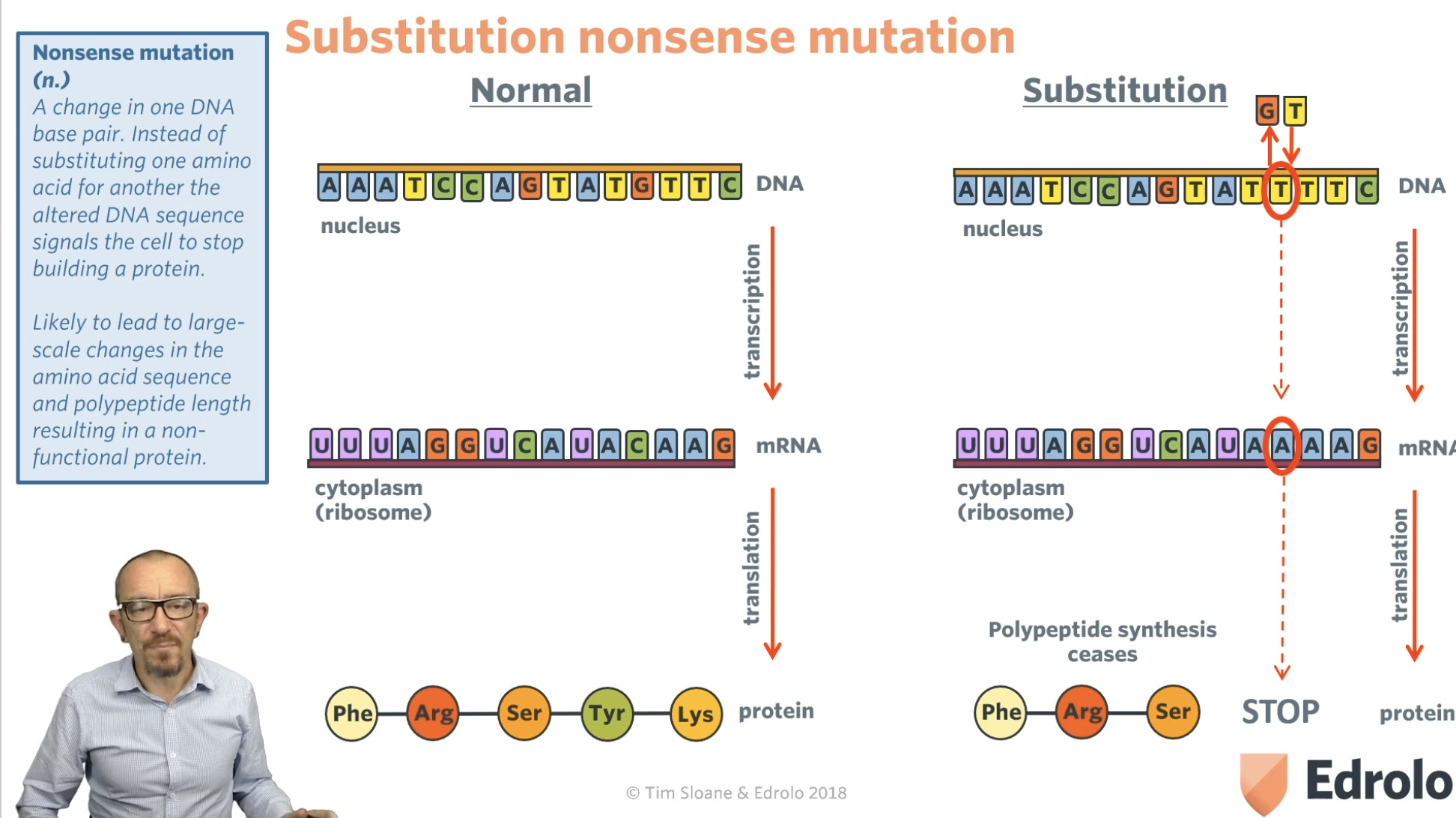
Frameshift mutations: the addition or loss of DNA bases. This changes the reading frame of the DNA strand. The frameshift shifts the grouping of these bases which changes the code for amino acids. the resulting preotin is usually non-functional.
insertion: changes the number of DNA bases by ADDING another base. protein may not function properly
deletion: REMOVING a base. could be one or a few or a whole gene. alters the function of the protein.
substitution: one nucleotide is replaced by another
nonsense mutation: a substitution in the DNA sequence that codes for the termination in production of the protein. if it occurs early in the amino acid sequence it can have fatal effects.
missense mutation: a substitution in the DNA sequence that swaps out of one the amino acids. has phenotypic effects
silent mutations: a substitution in the DNA nucleotide sequence that results in the same amino acid being coded for.
Chromosome mutations: a change in the number of the chromosomes in a cell.
trisomy: the addition of an extra chromosome in a body cell. THREE COPIES OF CHROMOSOME. e.g. down syndrome cells have 47 chromosomes.
monosomy: there is only one copy of the chromosome instead of the normal two copies. e.g. turner syndrome has 1 copy of the x chromosome.
Mendel’s Model of Inheritance
alllele: alternative form of a gene
Since genes come in different versions or alleles, there are genes that override and are dominant while others are recessive and are not expressed in the phenotype. During meiosis, each gamete receives one version of a gene allele. When an organism has two of the same allele it is considered homozygous (purebreeding). When an organism has both a dominant and recessive allele it is considered heterozygous (hybrid breeding). In hybrid organisms, the expressed trait is always the dominant allele, the masked one is recessive.
Alleles are passed on from parents according to set ratios:
3:1 Dominant to recessive for monohybrids
9:3:3:1 ratio for dihybrids, which represents the phenotypic ratios of offspring resulting from a cross between two heterozygous individuals for two traits. This understanding of inheritance patterns is crucial for predicting the likelihood of traits appearing in future generations.
autosomal recessive inheritance: a version of each characteristic or trait in an individual is inherited from both parents and is therefore controlled by a pair of inherited factors (called alleles).
Mendel’s First Law of Segregation:
During meiosis, the alleles segregate so that each gamete carries only one allele for each trait, ensuring that offspring receive one allele from each parent. I think this means that homologous chromosomes separate. Yes, it does!
during anaphase I, the homologous chromosomes are pulled apart followed by telekinesis where they are in different gamete cells.

Mendel’s Second Law of Independent Assortment
when individuals with two or more pairs of unrelated, contrasting characteristics are crossed, the different pairs of factors separate out independently of each other. this assures that the genes are located on different chromosomes.
sister chromatids are pulled apart during anaphase II resulting in new genetic combinations.

New Combinations of genotypes
A variety of alleles may interact with one another in different ways to specify phenotype.
Mendel says inheritance is not a blending of characteristics.
Mendel says inheritance is controlled by a pair of factors; one allele from each parent.
these factors segregate during independent assortment. characters are either recessive or dominant.
Mendel says ratios of types of offspring are able to be predicted using mathematical calculations.
pure breeding plant: homozygous
monohybrid cross: plants are crossed where either dominant or recessive traits can be displayed.
in the First generation, all offspring display the dominant trait. they are all dominant if parents are TT x tt
in the second generation, its a ratio of 3:1 dominant to recessive expressed.
incomplete dominance: when two phenotypes cross breed and the resulting organism is a blend of the two.
- only occurs in polygenic inhertiance such as eye colour
- ignores Mendelian ratio of 3:1
- neither dominant or recessive.
codominance: both alleles are simultaneously expressed side by side in the heterozygous offspring
- ignores Mendelian ratio of 3:1
- neither dominant or recessive.
Sex Linkage
sex linkage: refers to the genes located on the sex chromosomes (pair 23)
X and Y chromosomes determine the biological sex of a human. X chromosomes hold information for making 800 proteins while Y holds for about 70. X are much larger chromosomes.
When a gene is present on the X chromosome but not the Y chromosome it is said to be X-linked.
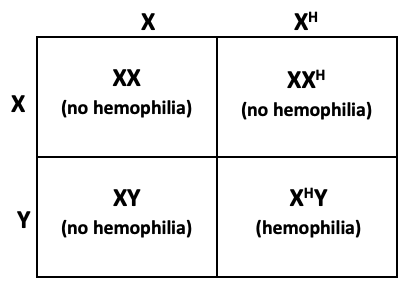
Males have different genotype possibilities to females since they only have 1 copy of the X chromosome. This means for X-linked conditions, men are more likely to inherit these conditions as they inherit 1 x chromosome from the mum and the y chromosome from the dad.
Women who are heterozygous for disease alleles are carriers and dont display symptoms.
sons of these women have a 50% chance of inheriting the disease.
daughters of these women have a 50% chance of being carriers unless the father also has it.
examples:
x linked recessive: hemophilia, colour blindness.
x linked dominant: rett syndrome which causes severe mental disabilities in females and near fatal for man.
Pedigrees: visual charts used to analyse the pattern of inheritance throughout a family, showing the presence or absence of traits. Used to determine genotypes, phenotypes and perdict how traits will be passed on.
possible to determine whether a condition is autosomal or sex linked (and dominant or recessive).
Inheritance Patterns in a Population
Inquiry question: Can population genetic patterns be predicted with any accuracy?
Students:
investigate the use of technologies to determine inheritance patterns in a population using
DNA sequencing and profiling
investigate the use of data analysis from a large-scale collaborative project to identify trends, patterns and relationships, for example:
the use of population genetics data in conservation management
population genetics studies used to determine the inheritance of a disease or disorder
population genetics relating to human evolution
Using large-scale data to study population genetics and evolution
anthropological genetics: a branch of science that combines components of population genetics such as DNA Analysis with historical, archaeological and linguistic evidence to determine pathways of human evolution
explains human diversity
Mutations, gene flow, natural selection and genetic drift are responsible for the patterns of diversity in human populations. The number and frequency of alleles measure diversity.
Human Migration Theories
Multiregional Hypothesis (MRE): relies on fossil evidence and suggests all humans can be traced back to when Homo erectus first left Africa 2 million years ago. There was a gene flow between neighbouring populations and once they dispersed they evolved into modern humans.
Replacement Hypothesis: Archaic homosapiens left africa long ago but a second migration occurred around 100000 years ago where the modern homos conquered the archaic ones by outcompeting and interbred with them.
If MRE were correct, then all humans would have archaic alleles in them. This is not the case, all the variation in mtDNA occurs within Africa and everyone else just has a subset of total human mtDNA diversity.
The first humans to migrate were not alone but were joined by two other species: neanderthal and denisovan.
conservation genetics: an understanding of how genes are inherited in a population. to avoid extinction of a species and maintain biodiversity.
Understanding DNA analysis has been critical to determining lineage, understanding microevolution, natural selection and mutations. It allows scientists to understand which parts of the human genome are essential to the adaptation and survival of the environment. Disadvantageous alleles can be detected and are essential to conservation strategies.
PCR (Polymerase Chain Reaction)
polymerase chain reaction: a common lab technique used to make many copies of a target region of DNA for analysis.
DNA amplified (recreated) by PCR may be sent for sequencing, visualised by gel electrophoresis or cloned into a plasmid for experiments.
Polymerase used is Taq polymerase, isolated from a heat tolerant bacterium
primers (short single stranded DNA about 20 nucleotides long) are used
Steps of PCR
Denaturation: at 96ºC: to separate the DNA and provide single stranded DNA templates.
Annealing: at 55-66ºC: cooling the reaction so the primers can bind to their complementary sequence on the single strand.
Extension/Elongation: at 72ºC: Raising the temperature so the taq polymerase extends the primers and synthesises new strands of DNA.
takes 2-4 hours depending. repeats 25-35 times
DNA Sequencing and profiling
DNA sequencing and PCR testing are common ways to determine inheritance patterns in a population. PCR can be used by forensic scientists to match DNA at the scene of a crime or to understand the function of a gene.
DNA sequencing: a method used to determine the precise order of the four nucleotide bases that make up DNA in a sample.
used in molecular biology to study genomes.
identify changes is genes and non-coding DNA
associations with diseases and phenotypes
drug targets.
DNA Sequencing is used in evolutionary biology to study how different organisms are related and how they’ve evolved. It’s one of the main tools in virology to study viral genomes. Scientists can use sequencing to determine a patient’s risk of genetic disease.
DNA profiling: a lab technique used to determine the probable identity of a person based on the nucleotide sequences of specific regions of DNA specific to indivisuals. a sample’s DNA is analysed and represented in a distinct series of bands.
used for criminal investigations and paternity testing
matching one DNA fingerprint with another
DNA Fingerprinting: uses short DNA sequences that are highly variable called Short Tandem Repeats (STRs). within the non-coding region of the genome.
The human genome project was started in 1990-2003 thats goal was to determine the sequence of all 3 billion human nucleotides.
The Sanger Method
Isolate the DNA from the subject
Amplification by PCR. Especially the STRs. Add the polymerase then Primer that gets it going.
Count the repeats
Run the mixture through a gel electrophoresis machine that separates the DNA fragments by size.
Look for a match. STRs must match at all 13 regions.
Gel Electrophoresis
gel electrophoresis: a technique used to separate DNA or RNA fragments by size and nucleic charge.
gels for separation are made out of a polysaccharide called agarose.
at one end the gel has wells where the DNA samples are placed.
an electrical field is applied. one end of the gel has a positive charge and the other a negative charge.
DNA and RNA are negatively charged so they are pulled to the positively charged end of the gel.
smaller parts travel faster and longer distances. larger fragments are slow
under UV light the DNA fragments will glow where the experimenter can see the DNA present at different locations along the length of the gel.
Allele frequency
allele frequency: fraction of allele copies for a particular gene in a population
number of alleles/total population = allele frequency