Cicero
106-43BCE
Statesman, lawyer, scholar, philosopher, orator, writer, academic
Father an equestrian
Age 15 – served under Pompey and Sulla in Social Wars
Educated well (Greek, Roman History, poetry, philosophy, Greek rhetoric)
Cicero very talented = attention
Left Rome to study in Greece (or avoid Sulla during Sulla’s purge?? – Plutarch)
Cicero returned to Rome as a lawyer
Early operations in law courts
76BCE – Cicero 30 – elected quaestor
Early Career
Quaestor in Sicily
Returned to Rome & high profile lawyer
Quickly moved through political roles (quaestor, aedile, praetor, president of a Court, senator, then consul (63BCE)
Known as a strong defender of the courts
Thwarted a conspiracy led by Catilina to overthrow the Roman Republic
Cataline Conspiracy – attempt by Catilina to overthrow – he had failed to be consul twice and attempted to organize foreign forces to help him use violence to secure consulship – Cicero stopped this
Pater Patriae honour given for suppressing conspiracy (argument re. penalty noteworthy)
Beginning of rifts – did he gloat?
Exile
Cicero had been invited to join the first triumvirate
Rejected due to impact he thought it would have on the republic
Strong republican virtues – did not like unconstitutional limits on consuls, anything that threatened the republic, non-elected officials in roles of power
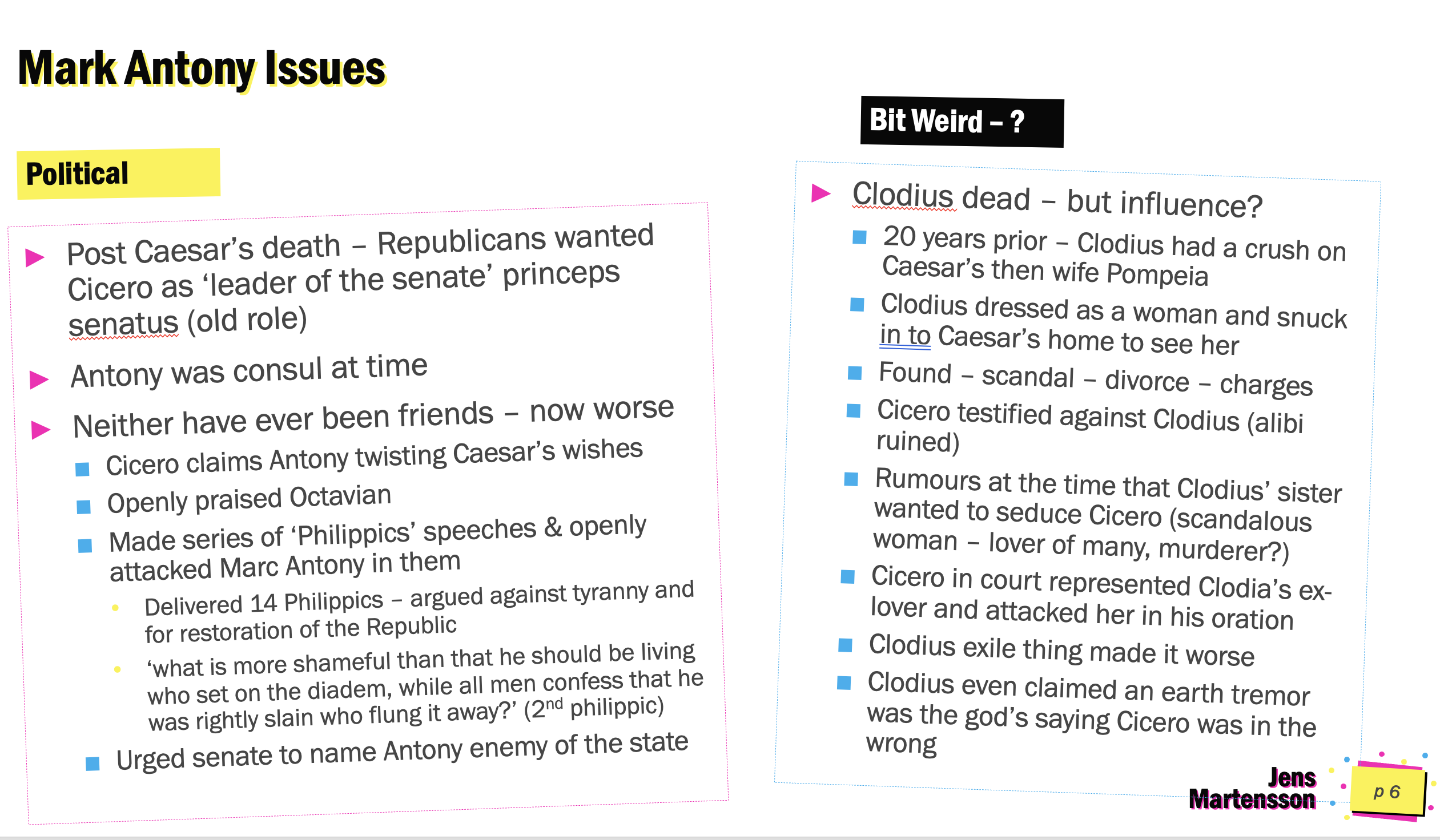
Clodius passed law – illegal to give shelter or food to anyone who executed a Roman citizen without trial (aimed at Cicero – Cataline consp)
Likely done with Triumvirate – worried Cicero would intervene/abolish all Caesar had done whilst he was Consul
Cicero ‘in mourning’ – abused
Finally took himself into exile
Whilst gone – Clodius took Cicero’s house/built temple
Struggled with depression
Exile revoked by Senate – all agreed except Clodius
Post Exile
Returned to cheering crowd
Re-entered politics & tried to change Caesar’s laws
Tried to work with Caesar to re-establish working relationship – encourages triumvirate
Conf Luca – alliance was too strong – Cicero changes his mind and no longer likes triumvirate
Cicero then overly positive in praise of Caesar in public – in senate – in letters
Ensured Caesar wasn’t stripped of Gaul
Begins to withdraw from politics – focus on writing & law (although maybe used by triumv?)-
‘the best defender of anybody’
Flees Rome during Caesar’s march on Rome & goes to republicans in Macedonia
Cicero falls out with the Pompeians & returns to Rome
Not part of Ides of March – assassins believed he was sympathetic
Cicero becomes a popular leader during following instability