MKT305 Chapter 13 Promotion - Introduction to Integrated Marketing Communication
Learning Objectives
Understand why a marketing manager sets specific objectives to guide the advertising effort.
Understand how to choose the “best” medium.
Understand how to plan the “best” message – that is, the copy thrust.
Promotion and Marketing Strategy Planning
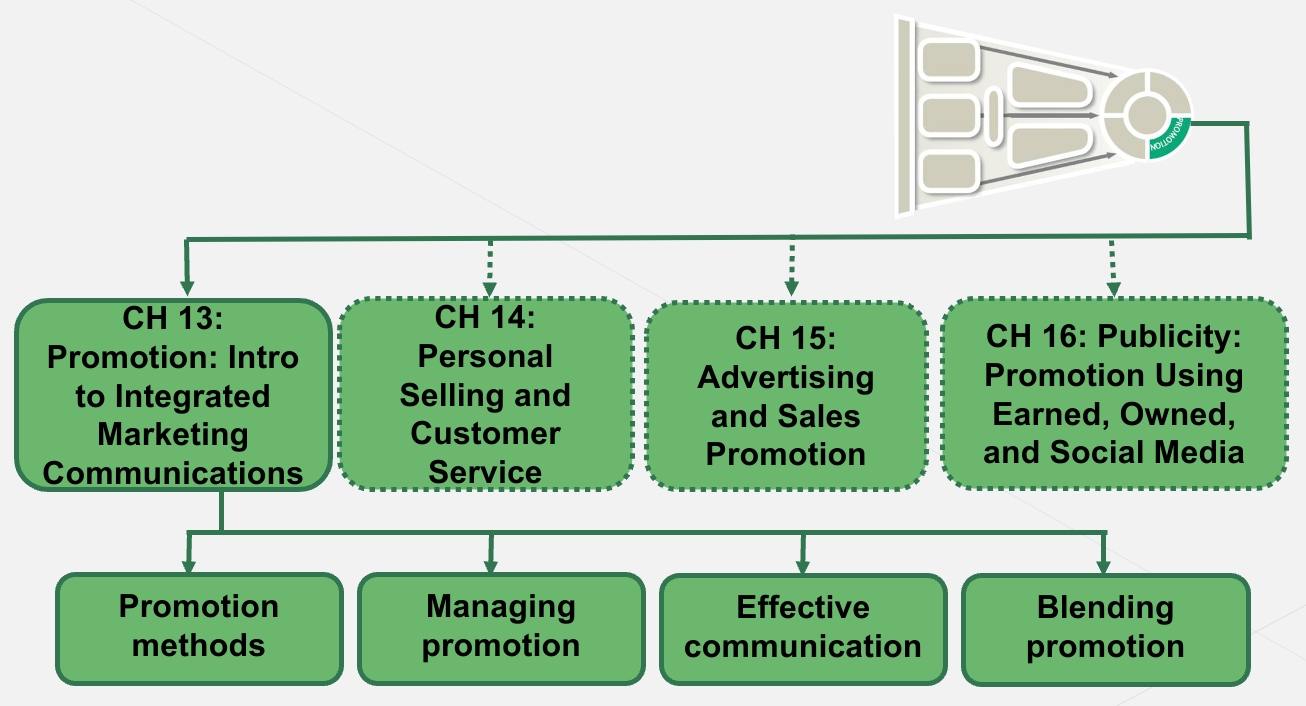
Integrated Marketing Communications is discussed within the context of overall marketing strategy.
Chapter 14 focuses on Personal Selling and Customer Service.
Chapter 13 introduces Promotion and Integrated Marketing Communications, covering promotion methods, managing promotion, effective communication, and blending promotion.
Chapter 15 covers Advertising and Sales Promotion.
Chapter 16 discusses Publicity: Promotion Using Earned, Owned, and Social Media.
Several Promotion Methods
Personal Selling: A salesperson in a store → Tailor the message for individuals → Start asking questions and learn what are the needs
Mass Selling: Thu same message used for a lot of people (Includes advertising and publicity )
Advertising: Paying same one to communicate for us in the media → Clear
Publicity: Find mass selling opportunities we don't have to pay for (an unpaid influencer talking about the product )→ Someone independent, objective
Sales Promotion: Anything that does not fit in the other tools - Incentives to boost sales.
Someone Must Plan, Integrate, and Manage the Promotion Blend
Integrated Marketing Communication
Sales Manager:
Advertising Managers: Might be an independent agency
Sales Promotion Managers: Gifts, coupons ...
Marketing Managers: Plan and Integrate
Sales Promotion Managers, Advertising Managers, and Sales Managers are all involved.
Marketing Managers oversee the entire marketing strategy.
Integrated Marketing Communications ensures all promotional activities are coordinated.
Promotion Objectives
Objectives include Persuading, Informing, and Reminding. Tend to change over time
Informing: That we have a product, and tell them about the product - Pioneering Demand
Persuading: Buy our products, not the competitors
Reminding: Continue to tell customers and potential customers about it
The overall objective is to Affect Behavior. Accomplish certain objectives
Relation of Promotion Objectives, Adoption Process, AIDA Model, and Organizational Buying Model
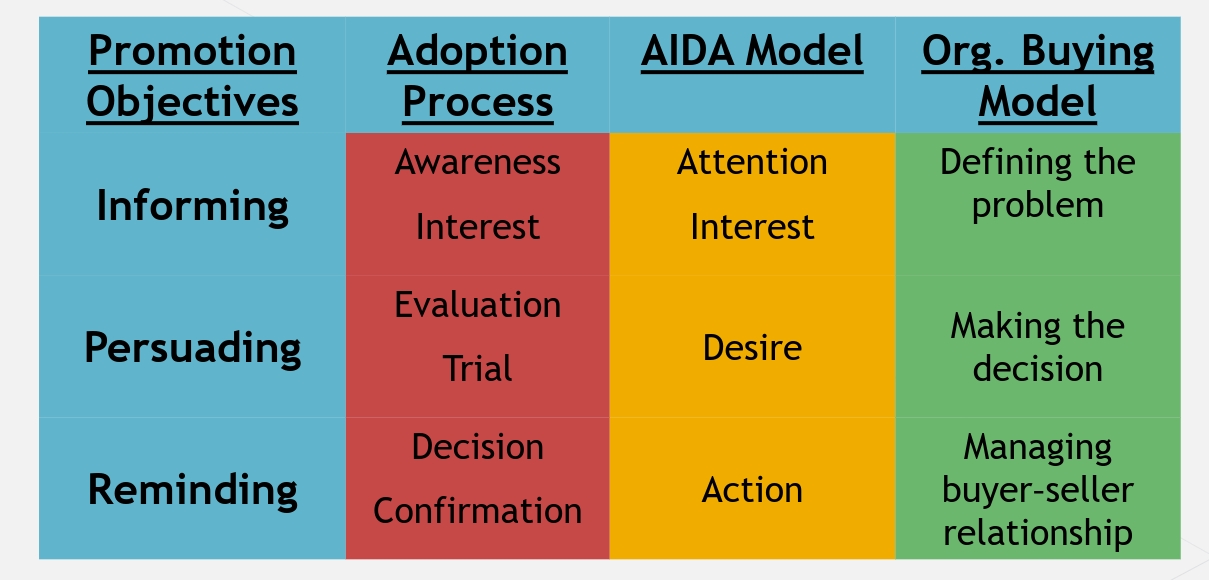
Promotion Objectives are linked to various stages of the adoption process, AIDA model, and organizational buying model.
Informing: Creates Awareness and Interest, corresponding to Attention and Interest in the AIDA model, and Defining the problem in the organizational buying model.
Persuading: Leads to Evaluation and Trial, aligning with Desire in the AIDA model, and Making the decision in the organizational buying model.
Reminding: Reinforces Decision and encourages Confirmation, resulting in Action in the AIDA model and Managing buyer–seller relationship in the organizational buying model.
The Traditional Communication Process
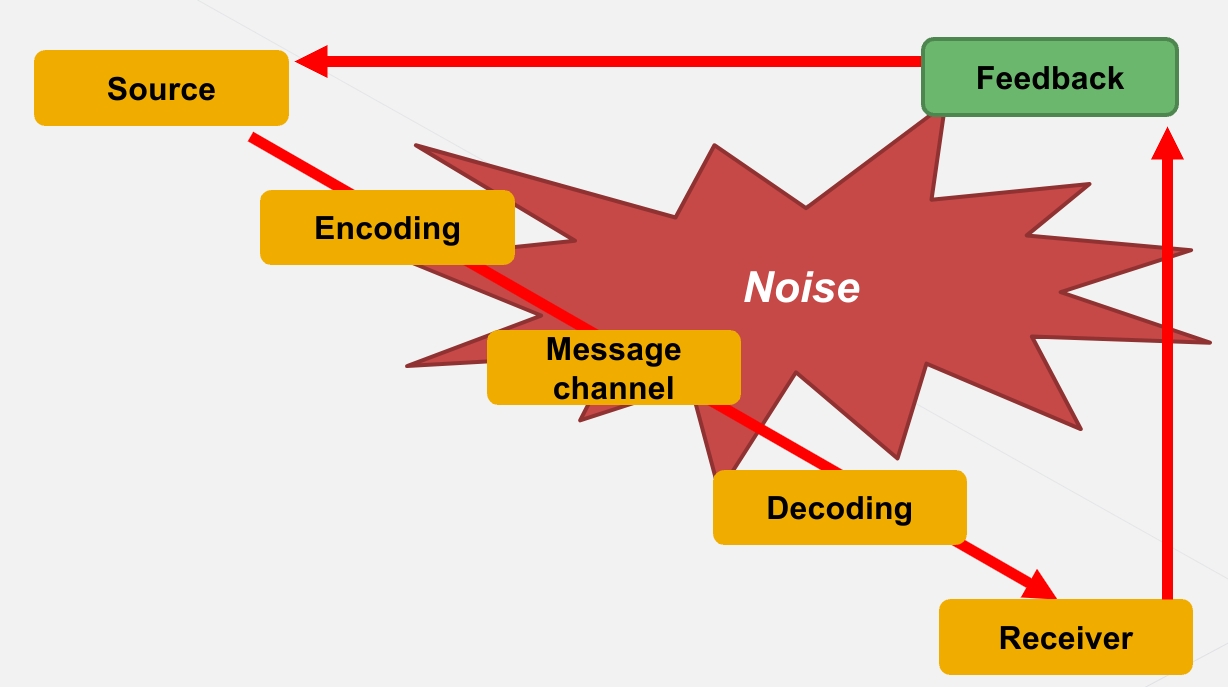
Source: The sender of the message.
Encoding: Translating the message into a form the receiver can understand.
Message channel: The medium used to transmit the message.
Decoding: The receiver interpreting the message.
Receiver: The recipient of the message.
Feedback: The receiver's response to the message.
Noise: Interference that can disrupt the communication process.
Ethical Issues in Promotion
Exaggerated claims: Overstating the benefits or features of a product.
Invading consumer privacy: Collecting and using consumer data without consent.
Source credibility: Ensuring the source of the message is trustworthy. (Lebrons advertising a food product)
Promotion frequently dances on ethical boundaries.
Customers Pushing in the Channel
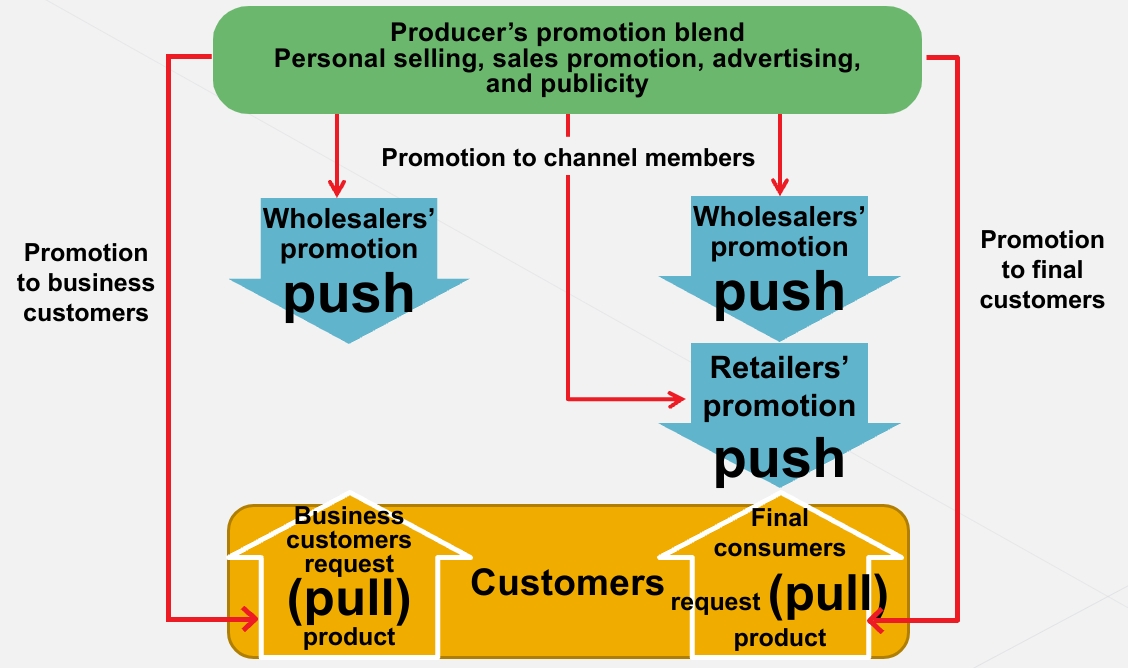
Pull Strategy: Focuses promotion at final consumers to create demand.
Final consumers request (pull) product.
Business customers request (pull) product.
Push Strategy: Focuses promotion at intermediaries to encourage them to stock and sell the product.
Producer’s promotion blend includes personal selling, sales promotion, advertising, and publicity.
Wholesalers’ promotion push.
Retailers’ promotion push.
Promotion to business customers and channel members.
The Adoption Curve (a.k.a. Diffusion of Innovations)
Innovators (3–5%): First to adopt new products.
Early adopters (10–15%): Opinion leaders who adopt early but carefully.
Early majority (34%): Adopt a new product just before the average person.
Late majority (34%): Skeptical consumers who adopt new products when they are the norm.
Laggards or nonadopters (5–16%): Last to adopt or never adopt new products.
The curve illustrates how the percent adoption increases over time.
Setting a Promotion Budget
Percentage of Sales: Budget is based on a percentage of past or projected sales.
Objective & Task Method: Budget is determined by setting objectives and figuring out the cost of the tasks needed to achieve them.
Available Funds: Budget is set based on what the company can afford.