Exploration & The Columbian Exchange
Portuguese Exploration
Portuguese sailors sailed down the coast of Africa and returned to Portugal w/ the development of the caravel ship and the sailing compass
Portuguese ships started exploring more and more of West Africa after 1434
Traded with local communities and set up plantations that exploited Muslim and Slavic slave labor
Made Portugal a lot of $$$
African Slavery
Slavery in Africa long predated the coming of Europeans
Coming of Portuguese + other Europeans to West Africa expedited the buying and selling of slaves within Africa
First African salves were shipped to islands in the Caribbean ~1502
An Alternative Route
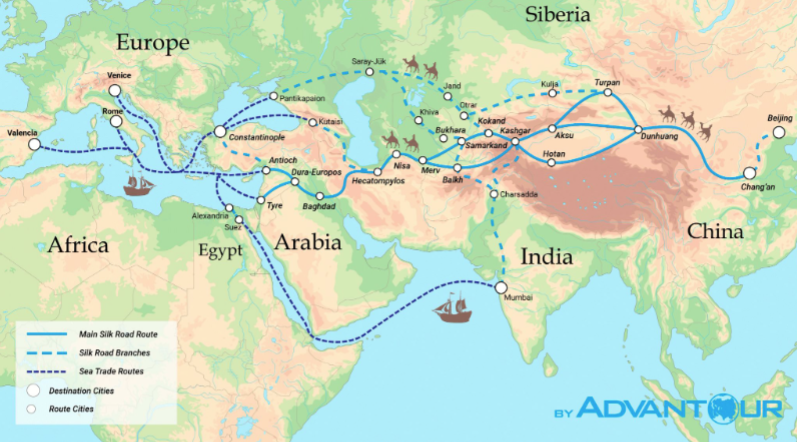
European merchants traveled through Constantinople to reach Asian markets before 1453
Was expensive and time consuming
Merchants from Christian countries were barred from the city when the Ottoman Turks took over
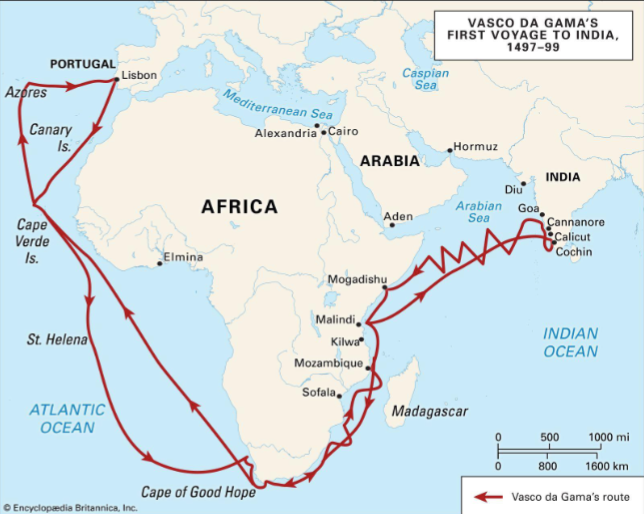
Vasco da Gama became the first European to go around the horn of Africa instead ~1498
Christopher Columbus
Columbus hypothesized that if you sailed far enough West across the Atlantic, you would eventually hit Asia
Convinced Ferdinand and Isabella of Spain to fund this venture
Both wanted to make Spain more powerful, and if Columbus was successful, Spain would have easy access to goods in other countries
God, Gold, & Glory
The three major motives for European exploration and colonization
Religious motivations can be traced back all the way back to the Crusades
The series of religious wars between the 11th and 15th centuries during which European Christians sought to claim Jerusalem as an exclusively Christian space
Europeans also searched for optimal trade routes to lucrative Asian markets
Hoped to gain global recognition for their country
The Reconquista
800 years of violence and expulsion of Muslims from the Iberian Peninsula (Spain/Portugal) after the failed crusades
Competition between Christians and Muslims for predominance continued
Catholics looked to colonization partly as a means as continuing religious conquests
Religious devotion motivated rulers to convert Native Americans
Trade & Mining
The Crusades increased trade between the East and West
Demand for silk, spices, and porcelain created new markets for merchants along the Silk Road
Transport was expensive and slow because Muslim middleman collected taxes as the goods were exchanged
Sailors wanted to find a trade route that cut out middlemen
A Thirst for Glory
Mercantilism —> an economic theory that rejected free trade and promoted government regulation of the economy for the purpose of enhancing state power
Defined the economic policy of European colonizing countries
Argues that only a limited amount of wealth existed in the world
A Major “Discovery”
Columbus and his company made landfall in the Bahamas on October 12, 1492
Sailed on and “discovered” the island of Hispaniola soon afterward
Left 38 men on the island and brought 10 natives back to Spain to convert
Columbus returned the next year w/ 1,000 men to explore the area, beginning European colonization of the New World
Died believing he found the West Indies
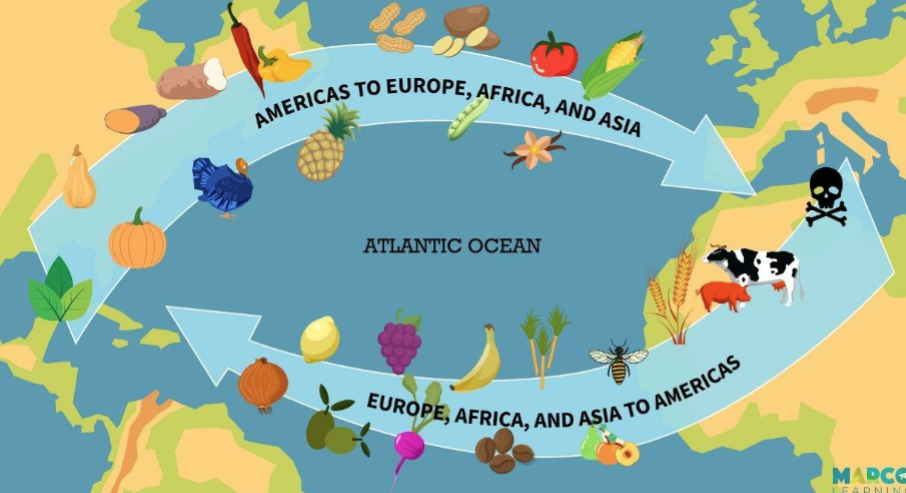
The Columbian Exchange
Explorations of Amerigo Vespucci along the coast of South America between 1499-1502 made it clear this was a continent entirely unknown to Europeans
Where the name “America” comes from
More land was covered —> more opportunities saw by the explorers
Colombian Exchange: transatlantic flow of goods/people
Included diseases that lead to a huge decrease in the Native American population