6.1.1 (a) - types of gene mutations
spec points
types of gene mutations and their possible effects on protein production and function To include substitution, insertion or deletion of one or more nucleotides AND the possible effects of these gene mutations (i.e. beneficial, neutral or harmful).
protein synthesis key events
transcription in the nucleus
DNA in region of gene unzips (H bonds broken)
Free ribonucleotides complementary base pair with exposed bases on the template strand.
RNA polymerase catalyses formation of sugar-phosphate backbone.
mRNA copy of the coding strand produced separates from the DNA and leaves nucleus via nuclear pore.
translation on the ribosomes
mRNA binds to grove on ribosome.
RNA is read in triplets (codons)
2 codons fit into ribosome at one time.
tRNA with complementary anticodon binds to 1st codon on mRNA and brings a specific amino acid with it.
2nd tRNA with a 2nd amino acid binds at 2nd codon.
Peptide bond forms
Ribosome moves along by 1 codon, 1st tRNA is released and 3rd tRNA brings 3rd amino acid and binds to 3rd codon.
Process repeats until stop codon.
Primary structure of polypeptide created.
mutations
Mutation is a random process and genes tend to mutate at their own rate.
New mutations can create new alleles for a gene.New mutation must occur in gamete-forming cells to be inherited.
Gametes formed from cells w/ mutations fuse during sexual reproduction, all cells of that new organism will have a copy of that mutant allele.
Mutations in somatic cells NOT passed on but can contribute to ageing and cancer development.
ultraviolet exposure causes mutations, meaning skin ages faster
example: maize
Maize grains = naturally purple (dominant allele).
Yellow is a recessive mutant allele. Dominant allele mutates into recessive allele at rate of 1: 1X10⁵ every generation (1 in 100,000)
If purple is dominant and only mutates every 100,000 grains, why is all the sweetcorn we eat yellow?
bred them to be homozygous recessive. selective breeding only the yellow sweetcorn
increasing the mutation rate
Mutagens increase the rate:
e.g. X-rays/UV/gamma radiation, physically damage DNA so has to be repaired + can lead to mistakes.
Chemicals (nitrous acid, 5 bromouracil) → changes of 1 DNA base for another.
e.g. Cytosine (C) converted to Uracil (U) so bonds to adenine (A) instead of guanine (G).
Carcinogens (Benzene, tar chemicals)
types of mutations
chromosome mutations | DNA/gene mutations |
|
|
gene mutations
DNA/Gene mutations: change to sequence of nucleotide bases in DNA strand as result of deletion, insertion or substitution of base/bases. can result in:
Silent, Missense, Nonsense + frame shift mutations
silent mutation: doesn’t affect amino acids despite change to nucleotide base sequence in gene
missense mutation: change to single amino acid within primary structure of protein. due to change in one codon within the nucleotide base sequence
nonsense mutation: production of stop codon so produces shortened (truncated polypeptide)
frame shift mutation: insertion/deletion of nucleotides within gene changes (all) codons downstream of the mutation + therefore the primary structure of the polypeptide produces
change to primary structure polypeptide (protein) produced by that gene - may affect folding of protein + so its function.
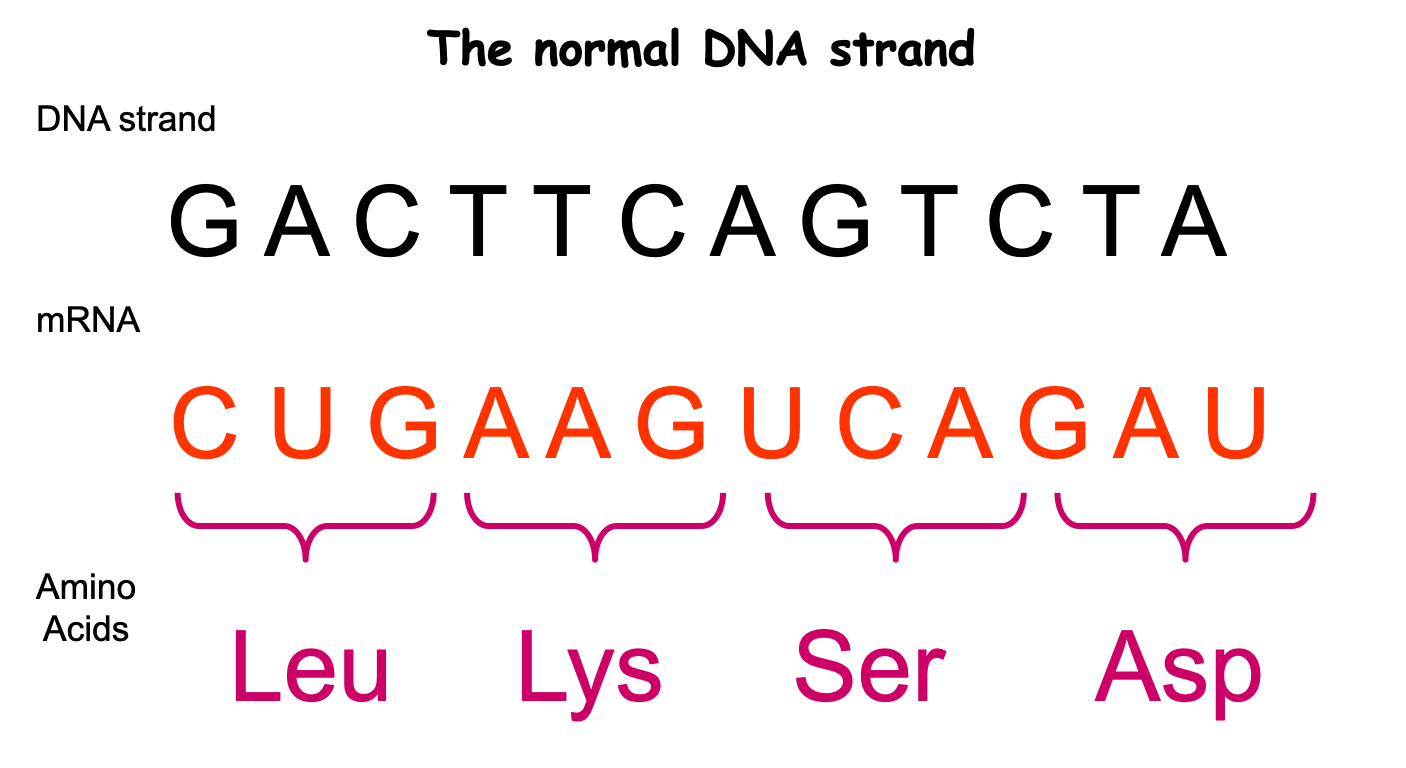
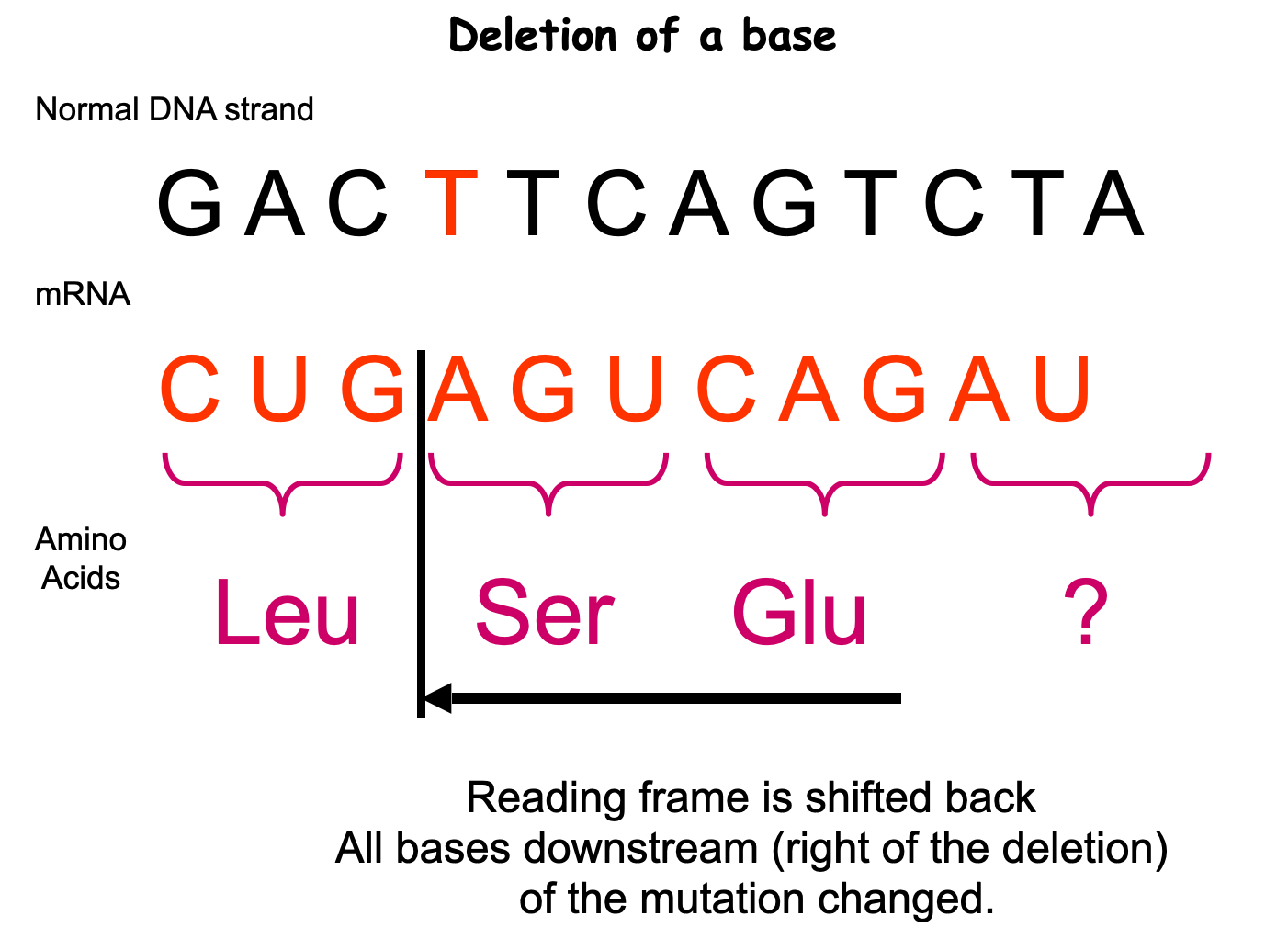
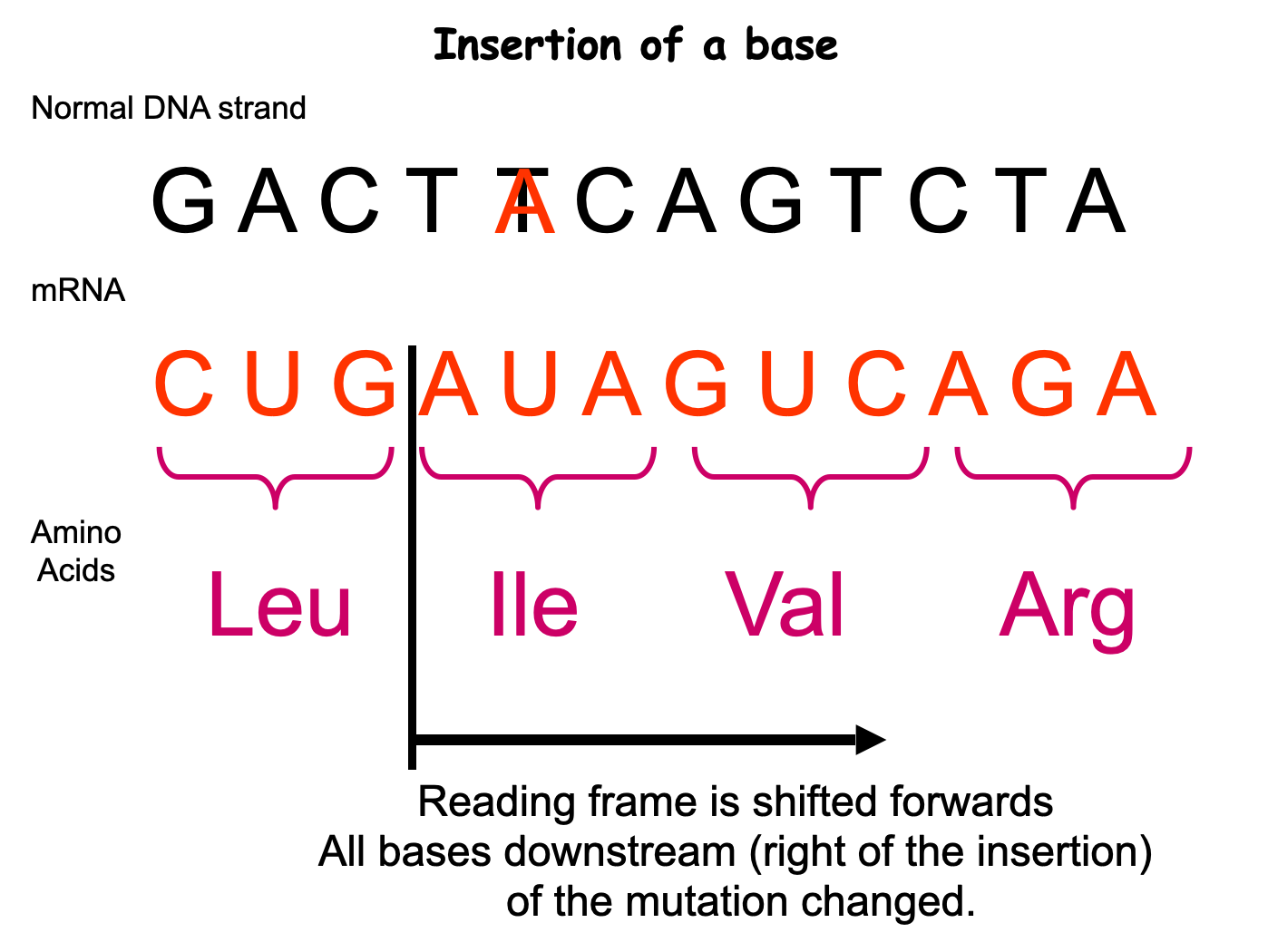
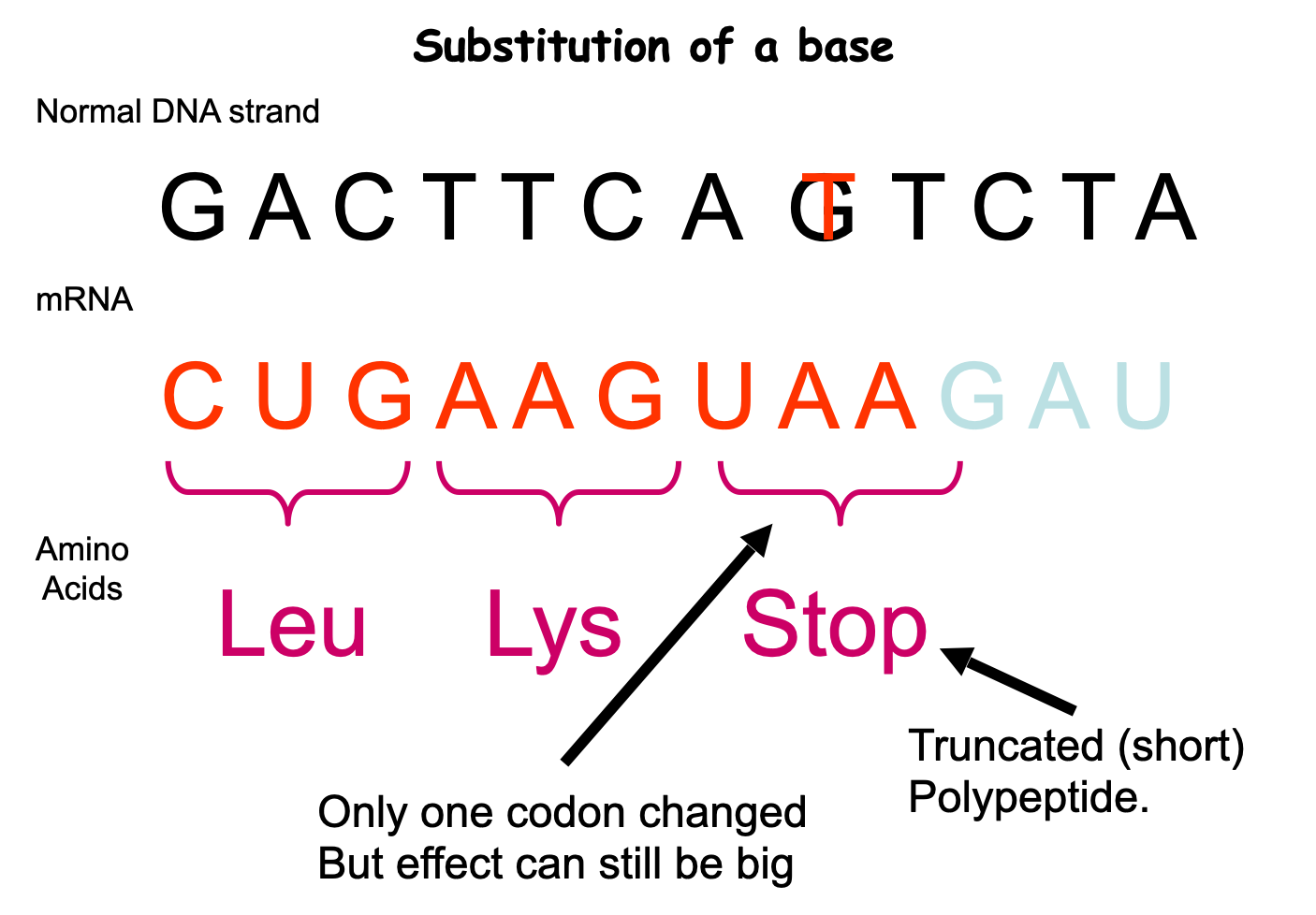
substitution mutation example
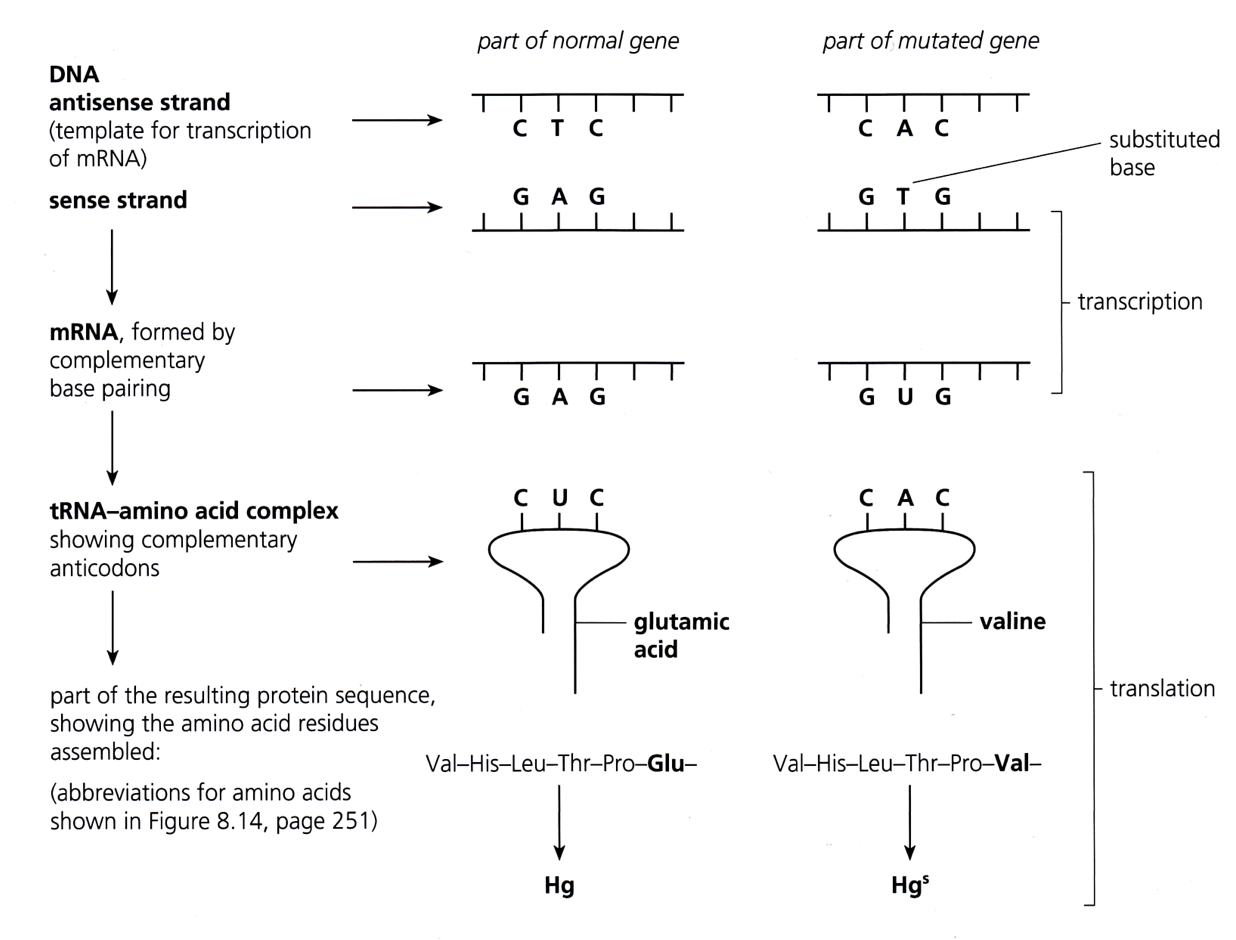
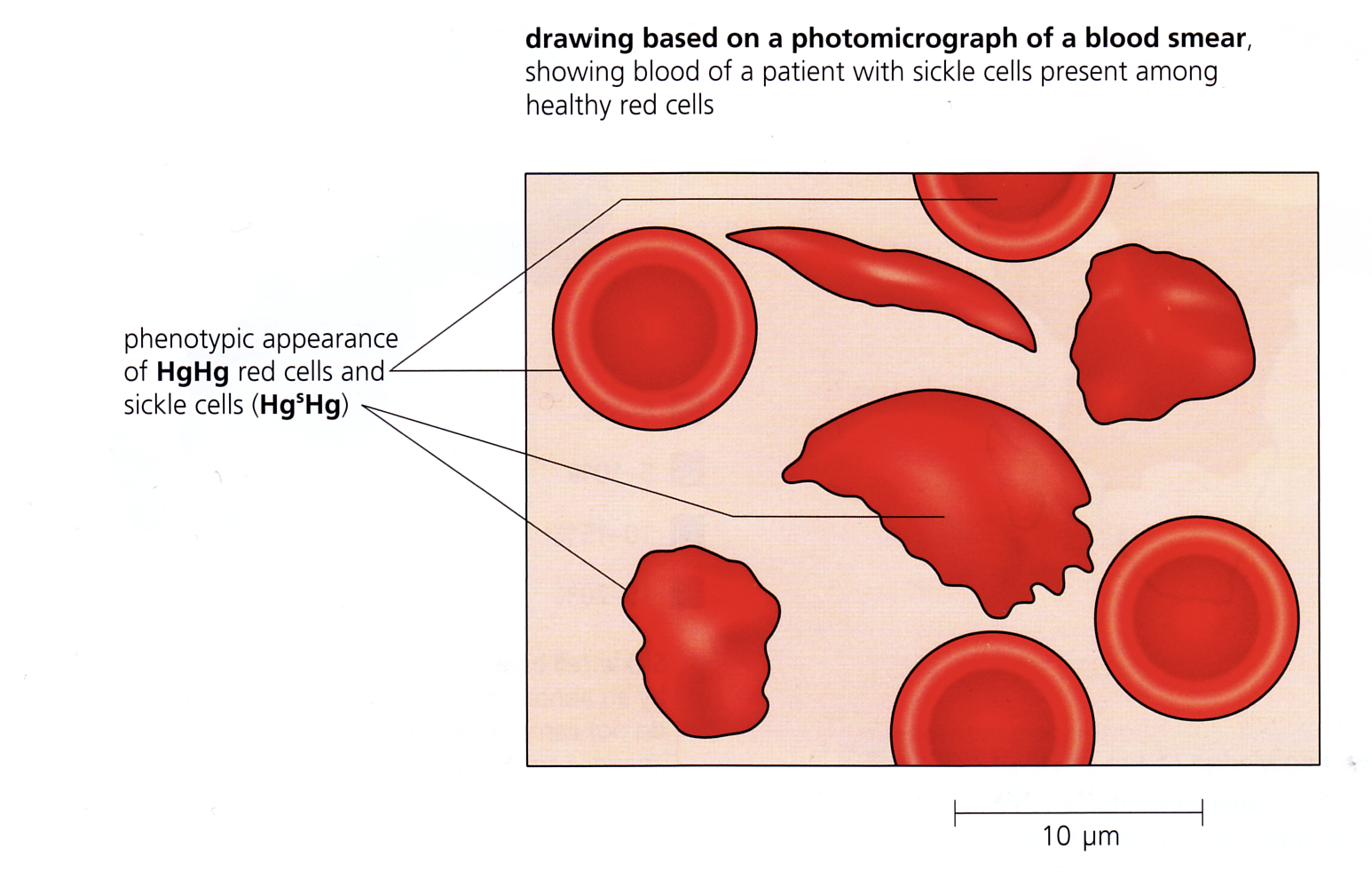
causes sickle-cell disease,
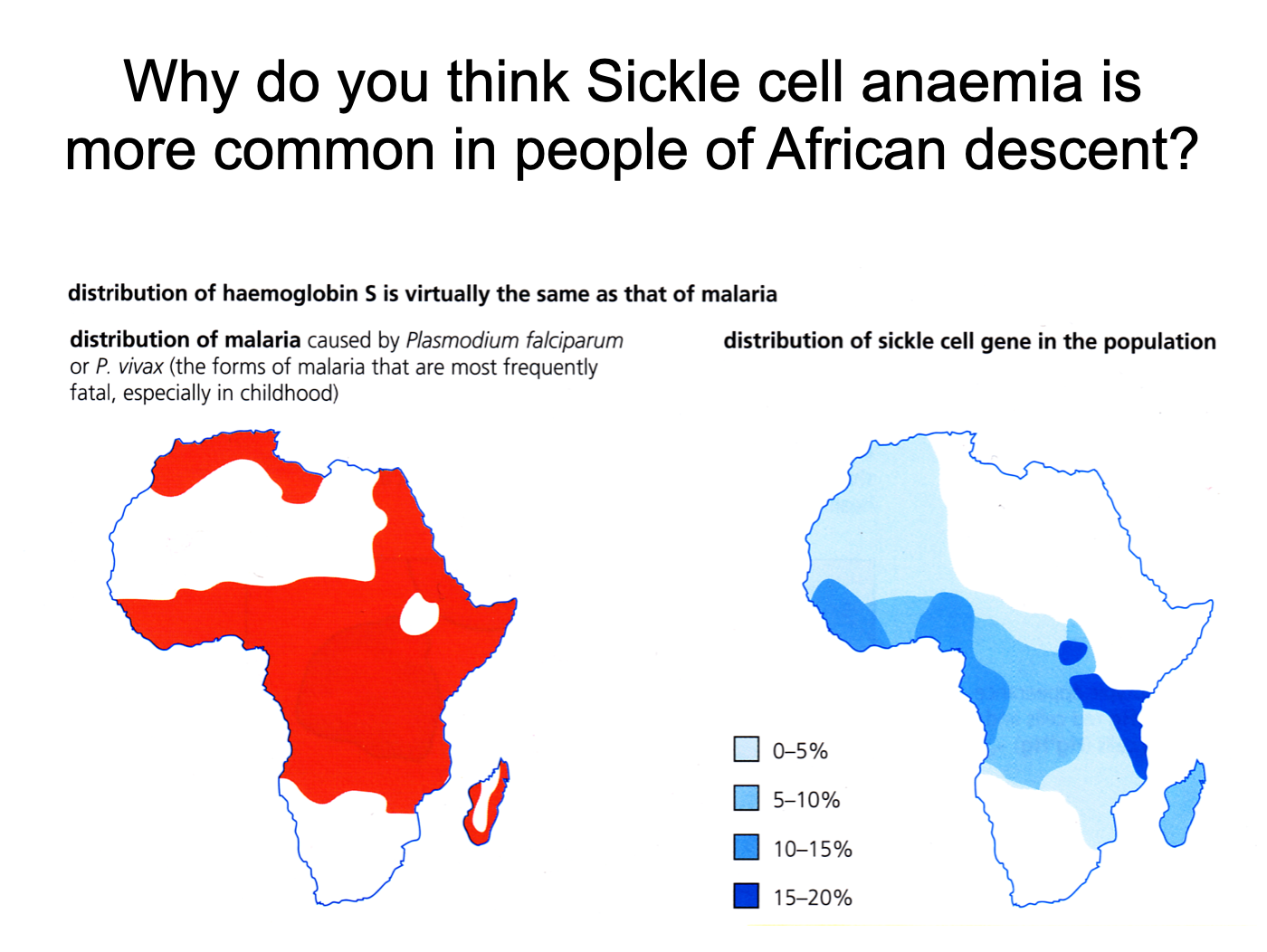
plenary: the effect of genotype and the environment on phenotype
Most rabbits show pigmentation in their fur; but some, called Himalayan; are mostly white with some black.
Siamese cats are also like this.
The gene that is mutated is called tyrosinase and is involved in the formation of melanin.
Can you suggest why this mutation leads to the results below:
Baby rabbits are pure white whilst they remain in the burrow
Adult rabbits will develop colour on their extremities after they leave the burrow