2.2 Prokaryotes
Pro= Before
Kernal= Nucleus
Prokaryotes- before Nucleus
Single-celled organism that lacks a nucleus and membrane-bound organelles
Oldest structurally simplest, and most abundant forms of life
abundant for over a billion years before eukaryotes
90-99% unknown and undescribed
Less than 1% cause disease
Fall into 2 domain
Bacteria (also known as Eubacteria)
Archea (formally called Archaebacteria)
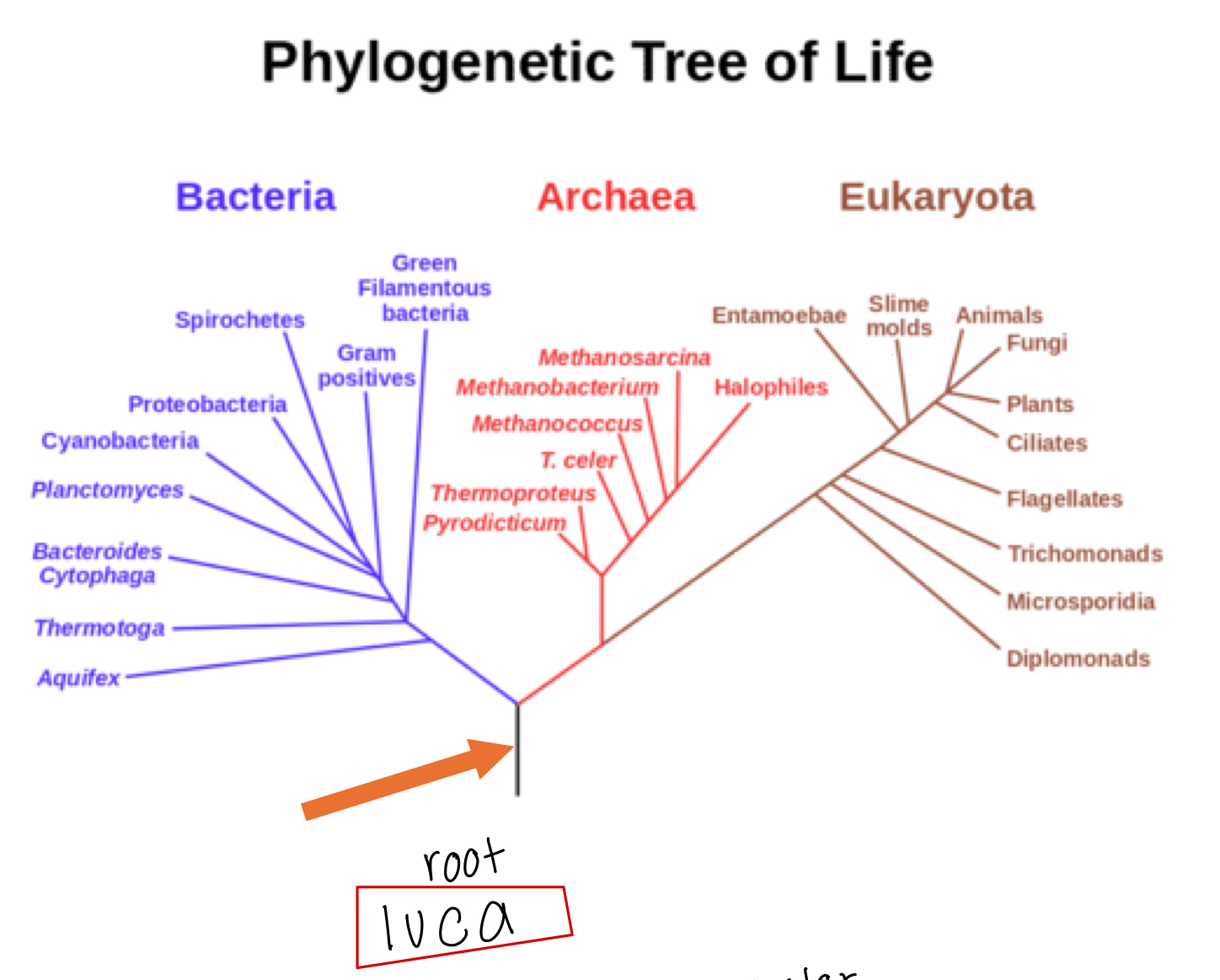
LUCA - Last Universal Common Ancestor
Made of cells
Used DNA/RNA to code genetic information
Bacteria-like
Prokaryotic Evolution
Hash condiction of early Earth
Protective environments
Extremophiles (could survive in extreme settings)
First life forms on Earth
Microbial mat fossils date to 3.5 byo
Energy from chemicals at hydrothermal vents
Prokaryotes are NOT a monophyletic group
Archean are more closely related to us than to bacteria
Prokayoti is a characteristic or trait, not a taxa
Extremophiles (make flash cards)
Acidophiles: pH 3 or below
Alkaliphiles: pH 9 or higher
Thermophiles: Tempature 60-80 ºC (140-176 ºF)
Hyperthermophiles: Tempature 80-122 ºC (176-250 ºF)
Psychrophiles: Tempature -15-10 ºC (5-50 ºF) or lower
Halophiles: Salt concentration of at least 0.2M
Osmoplies: High sugar concentration
Hypolith: Low Humidity/ water
Characteristics of All Cells (Eukaryotic & Prokaryotic)
Plasma membrane
Cytoplasm
DNA Genome
Ribosomes
Prokaryotic Characteristics
All
Unicellular, but can form communities
Single cicrular, doule-stranded DNA chromosome (No nuclous- no membrane)
Nuclieoid: Region (no envelope) of the cell that contains genome
Cell wall & plasma membrane
Ribosomes
Some
Capsule (third external layer)
Flagellum (tail they use to move around)
Pili (Used to adhere to things)
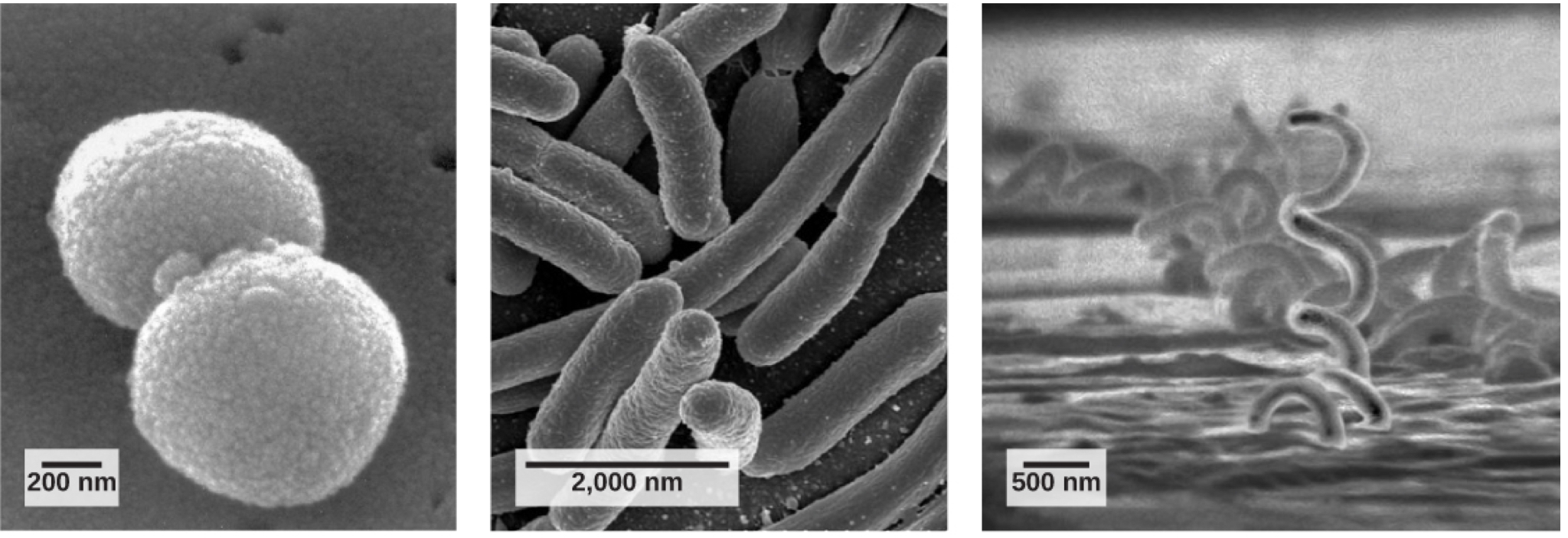
Shapes
Cocci- circular
Bacili - rod-shape
Spirlli - spiral shape
Reproduction
Asexually only, by binary fission, do not undergo mitosis
Chromosomes are replicated
Cell pinches inward
Two clone cells are created
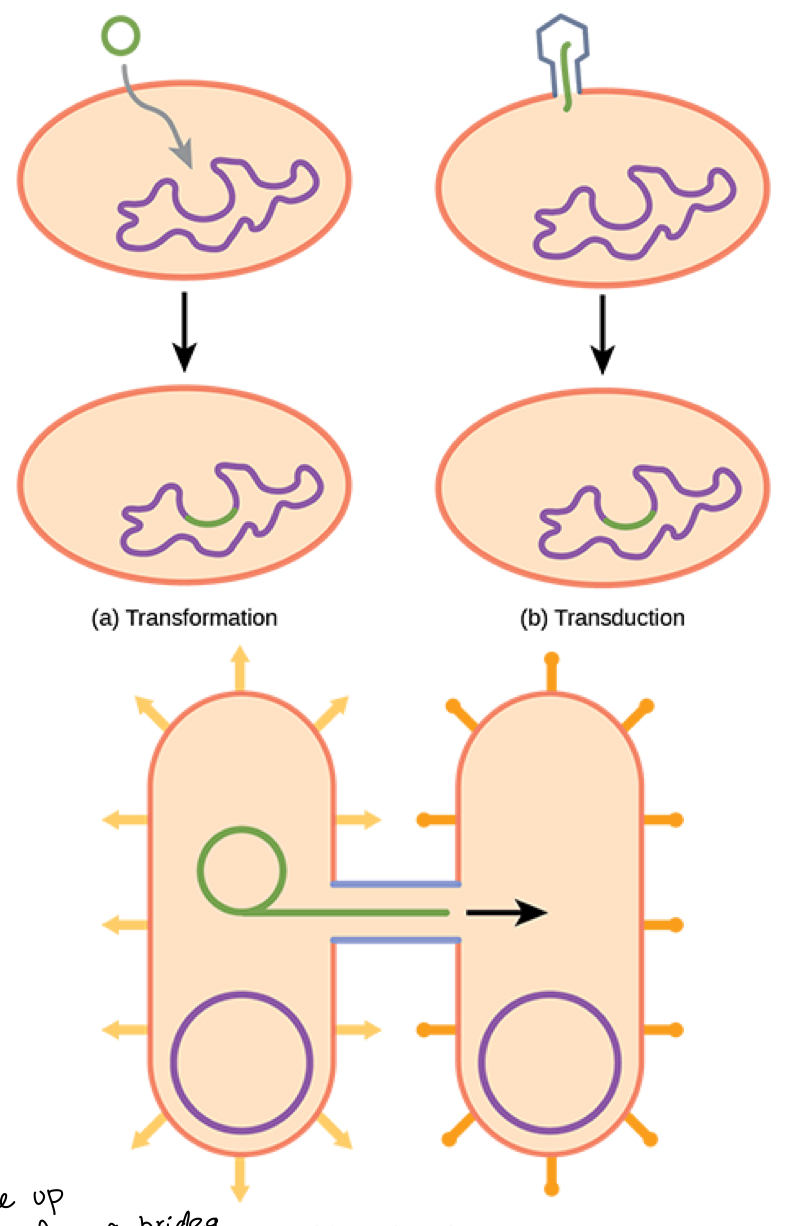
Vertical gene transfer: Parent to offspring
Horizontal gene transfer: transfer of genetic material from an organism to another organism, not its offspring
can occur between different species
Responsible for most genetic variation rather than mutation
Can cause large-scale changes in bacterial genome
If transferred genes do not provide a selective advantage they are always lost by deletion
Prokaryotic Genetics
A. Transformation: The cell takes up prokaryotic DNA directly from the environment. The DNA may remain separate as plasmid DNA or be incorporated into the host genome.
B. Transduction: a bacteriophage injects DNA into the cell that contains a small fragment of DNA from a different prokaryote
C. Conjugation: DNA is transferred from one cell to another via a pilus that connects the two cells (most common form)
Prokaryotic Energy Classifications
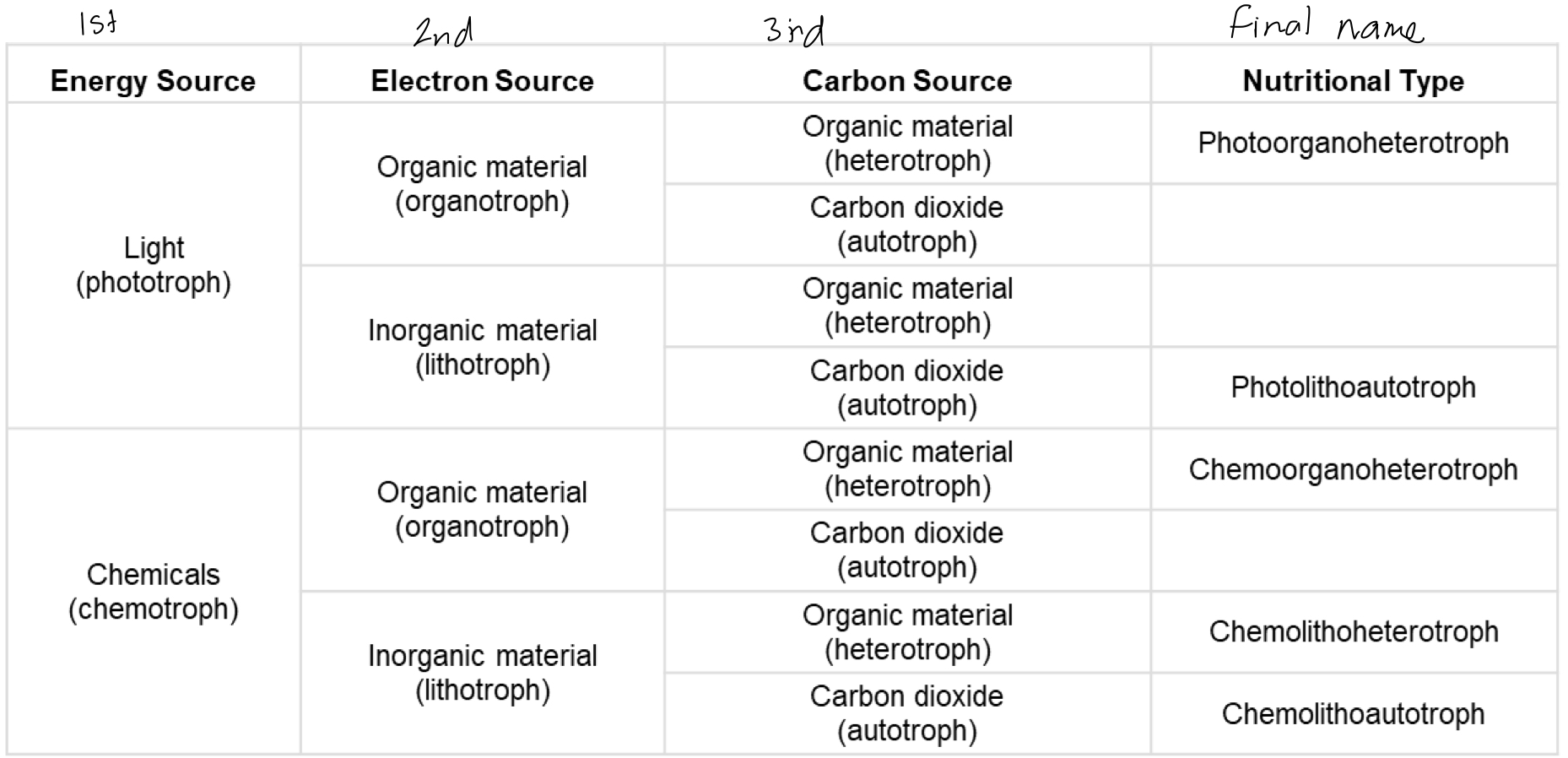
Energy source used to generate ATP
Phototrophs: Sunlight
Photoorganotrophs (organic)
Photolithotrophs (inorganic)
Chemotrophs: Chemical compound
Chemoorgoniotroph (organic)
Chemolithotroph (inorganic)
Carbon source
Autotrophs: Inorganic compounds such as CO2
Heterotrophs: organic compounds
Prokaryotic Energy Classifications
Oxygen Requirements
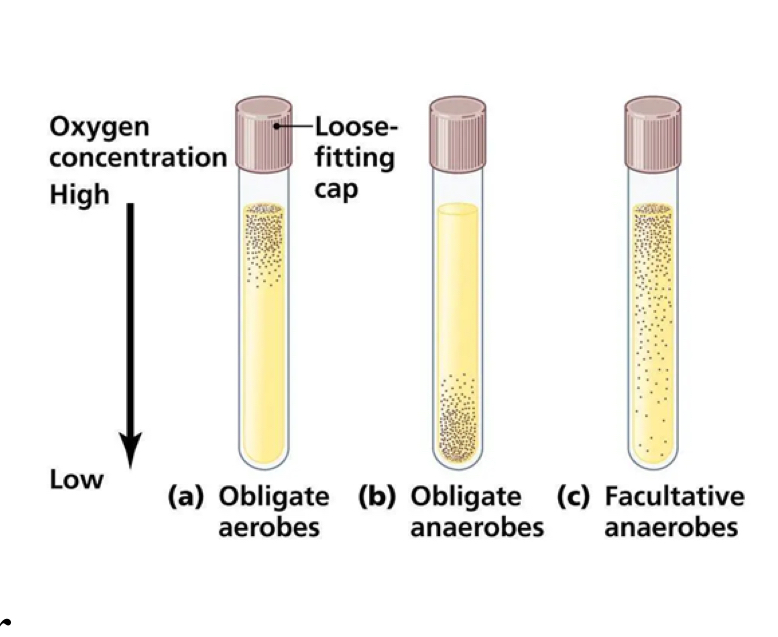
Obligate aerobes: require oxygen for ATP Production via cellular respiration
Obligate anaerobes: Oxygen is toxic; use fermentation or anaerobes respiration with inorganic molecules like SO4, NO3
Gut bacteria
Facultative anaerobes: Can produce ATP with or without (fermentation) Oxygen
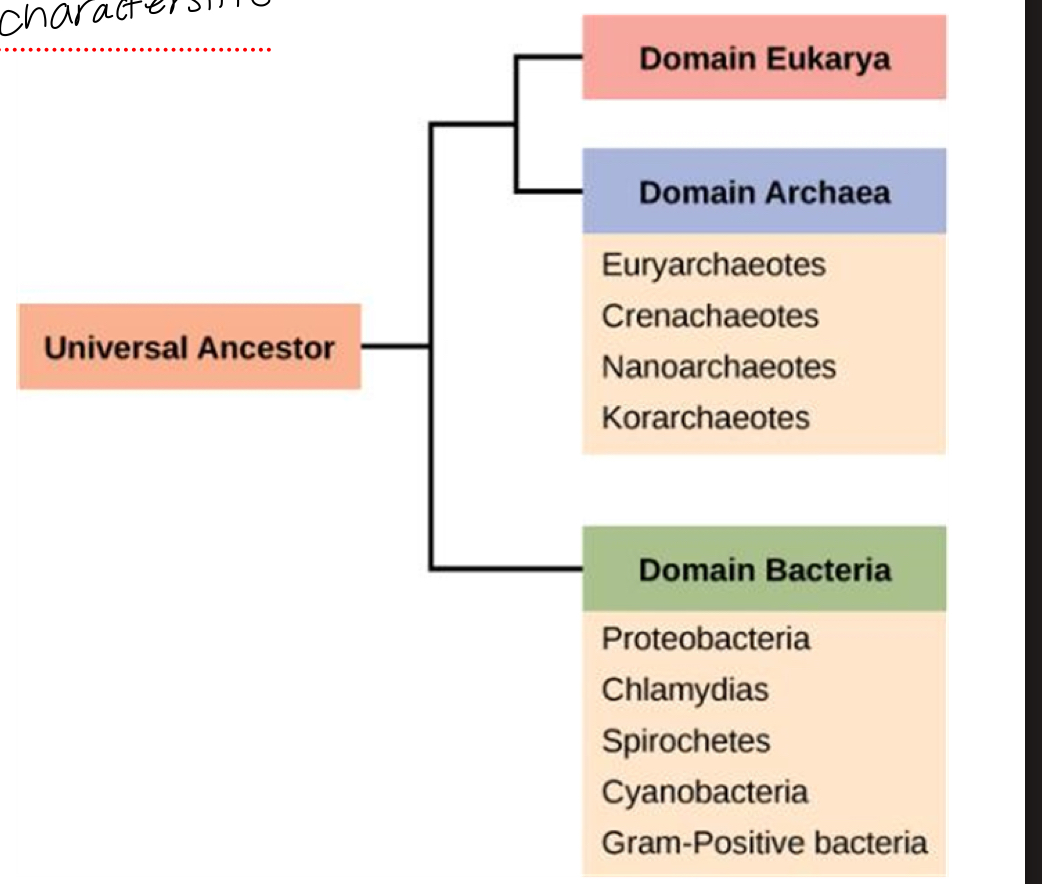
Archaea & Bacteria
Prokaryotes is not a taxonomic term (Is a trait or characteristic)
Bacteria and Archaea are both prokaryotes but different enough to be placed in separate domains
An ancestor of modern Archaea is believed to have given rise to Eukarya, the third domain of life
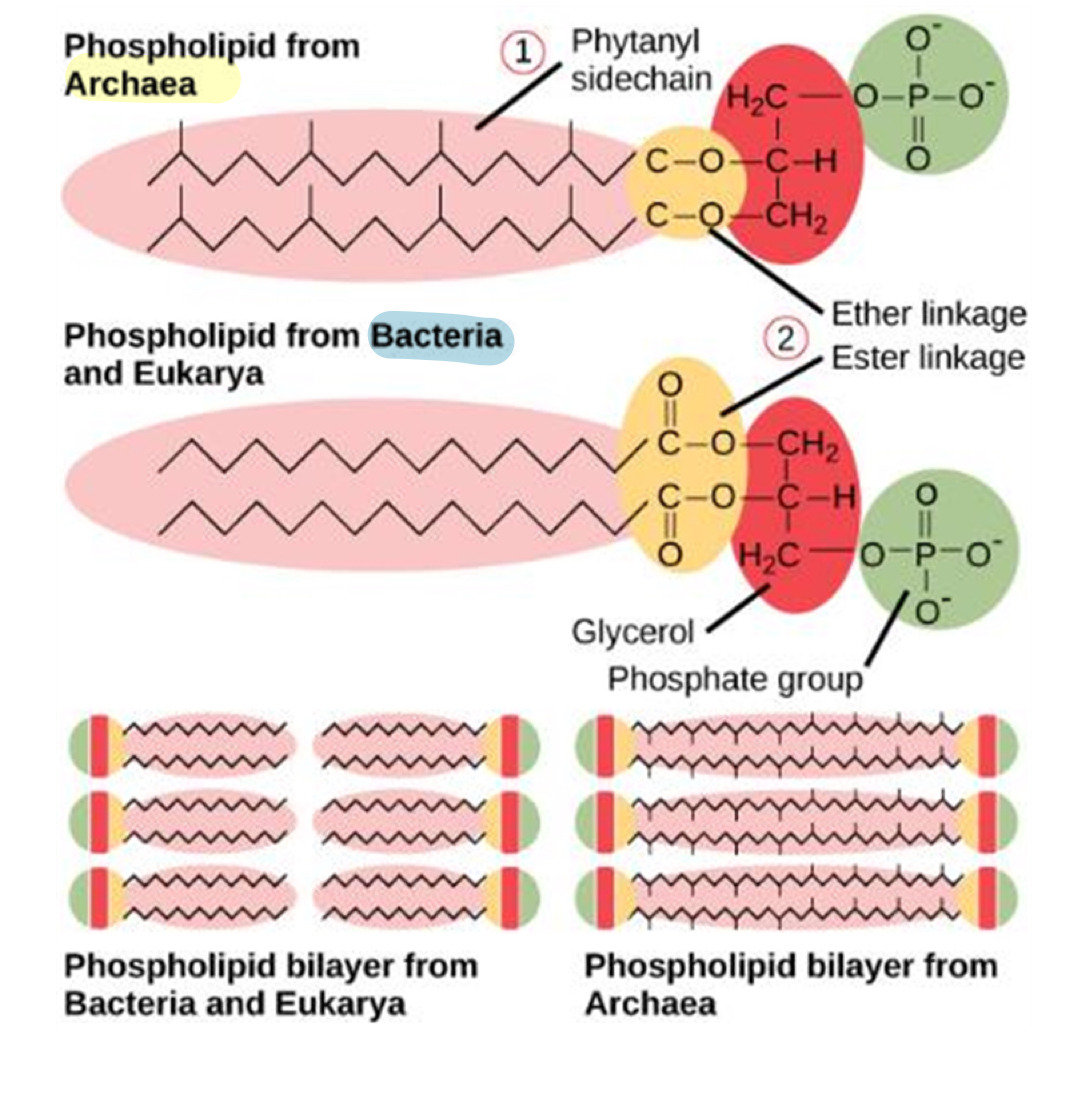
Plasma Membrane
Archea: Branched with ether bonds
Bacteria: Unbranded with ester bonds
Cell Wall
Archaea: Composed of polysaccharides (Long chains of sugar)
Bacteria: Composed of peptidoglycan
Gene expression
Archaea: Transcription and translation are more similar to those of eukaryotes; enzymes are also similar
Pathogenetic
Archaea: none are pathogenic to humans (infect humans)
Bacteria: Are infectious
Classification of Bacteria
Gram-positive and Gram-negative
Both groups have cell walls composed of peptidoglycan
Gram-positive bacteria: The wall is thick
Gram-negative bacteria: The wall is thin
Domain Bacteria
Proteobactiera: Gram-negative: eukaryotic mitochondria are though to be derived from this group
Chlamydias: obligate intracellular parasites of animal cells; cell walls lack peptidoglycan
Spirochetes: spiral-shapec cells; mostly anaerobic
Cynobacteria: photosyntheic: eukaryotic chloroplasts are thought to be derived from this grou
Gram-positive bacteria: thick cell wall
Domain Archaea
Euryarchaeota: methangens & halobacteria
Crenachaeota: carbon fixation & sulfur-dependent/ thermophilic, hyperthermophilic extermophiles
Nanoarchaeota: 1 spieces that is obligate symbiont with other speices of archea: found in hydrothermal vents in yellowstone NP & deep-sea vents
Korarchaeota: primitive; found in only one hot spring in yellowstone NP
Roles of Prokaryotes in Ecosystem
Present and abundant in every ecosystem in the world
Carbon cycle
Producers: Photosynthetic bacteria
Consumers: use organic compounds from producers and release CO2 to the atmosphere
Decomposers: make organic molecules from dead organisms available
Nitrogen cycle (completely dependent on bacteria)
Nitrogen in the atmosphere (N2) is not usable by plants
Nitrogen fixation: N2 is NH3 (ammonia)
Ammonification: released during decomposition
Nitrification: ammonia converted to nitrate
(Plants can’t use nitrogen directly from the air, bacteria pull it from the air and put it into the soil as nitrate for plants to use)
Human Bacterial Diseases
In the early 20th century, infectious diseases killed 20% of children before the age of five
Sanitation and antibiotics higher survival rates
In recent years, however, many bacterial have disappeared and reappeared
Examples of Human Impact by Bacterial Diseases
Dental caries (tooth decay)
Plaque consists of bacterial biofilms
Streptococcus subrings ferments sugar to lactic acid
Tooth enamel degenerates
Peptic ulcer
Helicobacter pylori is the main cause
Treated with antibiotics
Tuberculosis
Mycobacterium tuberculosis
The problem for thousands of years
Afflicts the respiratory system
Easily transferred from person to person through the air
Multidrug-resistant (MDR) strains are becoming more common
Black Death
The great plague of London killed an estimated 200,000 people or about 20% of the city’s population.
The causative agent, the bacterium Yersinia pestis, is a gram-negative, rod-shaped bacterium from the class gamma proteobacteria
The disease is transmitted through the bite of an infected flea
Pathways of Infection
Natural reservoir: the population of organisms that harbor a pathogen and transmits it to the target population.
Reservoir species typically do not experience symptoms of the diseases
Bats, rats, cows, etc.
Vector species: an organism that transmits a pathogen to another organism
Mosquitos, ticks, fleas, etc.
Eradication of diseases
Smallpox (1980): Vaccination and no natural reservoir
Rinderpest (2010): vaccination
Antibiotics and Superbugs
Antibiotics: Chemicals produced by microbes or synthetically that prevent the growth of other organisms
Ex: penicillin is produced by fungi to stop the growth of bacteria
Antibiotic resistance is caused by overuse and misuse of antibiotics
Livestock: 70% of antibiotics produced are fed to animals
Viral infection
MRSA
Methicillin-resistant Staphylococcus aureus
Resist to many antibiotics
Common in healthcare facilities
Mean Age = 68
Tight population
Mean Age = 23
Is not always pathogenic, but can cause diseases such as food poisoning and skin and respiratory infection
Beneficial Prokaryotes
Only a small percentage are pathogenic
Bacteria are vital to the environment
Decomposers release a dead organism’s atoms into the environment
Food production: Bread, wine, cheese
Fixation
Photosynthesis fixes carbon into sugar
Ancient cyanobacteria added oxygen to the air
Biology nitrogen fixation
Cyanobacteria in aquatic environments
Symbiotic nitrogen fixation: sustainable agriculture
Microbial bioremediation
Cleaning up oil after the Valdez spill in Alaska, workers hosed oil from beaches and used a floating boom to corral the oil, which was finally skimmed from the water's surface. Some species of bacteria can solubilize and degrade the oil.
One of the most catastrophic consequences of oil spills is the damage of fauna
Human Microbiome
Food digestion
Protection from pathogens
produce vitamins
Gut microbes can influence our mood, energy level, weight control
Allergies & autoimmune diseases
Example: Clostridium difficile
Part of normal gut biome
Suppressed by other microbes
Antibiotics disrupt normal levels
C. Diff become infectious
Your microbial fauna
Equal number of human and bacterial cells in your body
Mouth: 100-200 species
Skin: up to 1000 species
Gut: Up to 1000 species
Lungs: 128 species