T1: COMMUNICATION PRINCIPLES AND ETHICS
PROCESSES AND PRINCIPLES OF EFFECTIVE COMMUNICATION
==Verbal Communication:== includes the use of language. sounds, and tone of voice.
==Non-verbal Communication:== includes body language and facial expressions.
==Written Communication:== such as through journals, emails, blogs, and text messages.
==Visual Communication:== involves signs, symbols, pictures, graphics, and emojis.
EFFECTIVE COMMUNICATION
is dependent on how rich those ideas are and how much of those ideas are retained in the process. In order to be an effective communicator, a number of skills have to be utilized. Which skill one chooses greatly varies and is dictated by the situation, the content or the actual information a person needs or wants to convey, and the intended recipient of that information.
AUDIENCE ANALYSIS
Another aspect that needs consideration in analyzing the audience is identifying and trying to overcome possible communication barriers. These are not confined to physical noise (cars passing by, someone pounding on the table etc.) and physiological issues (an upset stomach), but could also include cultural difference, varying levels of expectations and experiences, and difference in perspectives and communcaition styles.
PRINCIPLES OF EFFECTIVE COMMUNICATION
Effective communication requires a certain level of connection between and among people, allowing a series of exchanges of thoughts and emotions, eventually leading to mutual understanding in order for that to happen, the following principles must be observed.
==Clarity -== This pertains to both t The message should be clear by using appropriate language and communication channels, but equally important is that the reason for
==Conciseness -== The , especially in most modern contexts in the business and academic field where time is of the essence. It should be devoid of trivial detals that would hinder communication.
==Completeness -== Despite its conciseness, the message should still be complete and accurate. Whenever necessary,
==Organization -== Effective communication is usually planned in order to ensure the of ideas and transition from one point to another. There are instances, however, when communication is impromptu, but this should not be an excuse of an organized presentation of ideas.
==Empathy -== The In case of face-to-face communication, the speaker must always be conscious of the reaction of the listener and adjust his/her communication strategy accordingly.
==Flexibility -== Different people have dfferent communication styles, and consequently, different expectations. Effective communicators know how to
COMMUNICATION AND GLOBALIZATION
The notion of the world being global village has been a hot topic ever since the idea was brought up, especially in the light of the rapid advances in technology and digitization. Globalization has been regarded as the key to the worldwide integration of humanity, where there is an increased economic, political and cultural integration and interdependence of diverse cultures. In Southeast Asia, for example, the ASEAN integration has been a buzzword among social communities, opening a wide array of discussion for future collaborations.
For our part, we Filipinos have increased our awareness and acceptance of the notion that we belong to a diverse, global community. This is not confined to communication with people from other countries, but is inclusive of communication within our societies, even with the minorities and the indigenous peoples. It is therefore imperative that we learn to communicate effectively with people regardless of age, gender, race, ability, religion, sexual orientation, income, marital status, or ethnicity.
Communication in the modern world must be anchored on the concepts of diversity, since effective communication and the ability to understand cultural differences are skills that have become requisites not only for a meaningful social life but also for a successful professional career.
Even professionals from the countries that are traditionally known for sticking to their native tongue (e.g. Japan, Korea, Vietnam) have started to learn English, as the internationally-recognized lingua franca, with the concept that learning English does not make them less Japanses, Koreans, or Viets
In addition, digital technology has erased territorial boundaries among countries and among people with varying cultures. The notion of being a ‘stranger’ has been revolutionized as the people whom we used to treat strangers are now our co-workers, classmates or friends - albeit some only in social media.
Hence, there is a need to develop graduates and professionals who are multiculturalists - those who are engaged with and respectful of people with different cultures. These are not necessarily people from other countries all the time, since a country may have varying sub-cultures among its general society. In the Philippines, for example, there is no argument that people from Southern Tagalog have a different culture from the Bicolanos, and those from Zamboanga have dfferent norms and beliefs from the Ilocanos.
The greater the number of statements that are honestly true to you, the more prepared you are to welcome the opportunity of communicating and interacting with people from different cultures. This is a very important aspect in one’s personal life or professional careers, since avoiding intercultural communication is virtually inevitable in any organization.
This is especially in business organizations, when products can go global and the manner by which any product is communicated to the global market can make or break the brand. Here are a few examples of business miscommunication in a global setting:
- In the past, Gerber dealt with issues in some cultures where women have low literacy rates such as Africa and the Middle East. The women in these cultures generally use pictures to tell what food they are buying. When Gerber started selling their product in these countries, the women saw the picture of the baby and believed that there was a baby or part of one baby in the jar.
- Irish Mist is brown whiskey produced in Dublin, Ireland. In Germany, however, “Mist” literally translates to “crap”.
- Joni (read as “Yoni”) is a brand of skin product. However, Yoni means ‘uterus’ pr ‘vagina’ in Sanskrit, and is an Indian representation of female genitalia, especially pertaining to the Hindi goddess Shakli.
Undoubtedly, globalization has affected the way people and companies communicate with each other. In some cases, cultural differences have acctuanted cultural insensitivity, which is most felt in the business world. Since everyone is a consumer of particular business products, it is important to know the issues, etiquette, protocol, communication styles and negotiation approaches of people from different cultures using the business experience as example. Here are some instances when lack of cultural or linguistic sensitivity in global communication severely affected companies or products.
- McDonald’s spent thousands on a new TV ad to target the Chinese consumers. This featured a Chinese man kneeling before a McDonald’s vendor and begging him to accept his expired discount coupon. The ad caused uproar over the fact that begging is considered a shameful act in Chinese culture.
- Similarly, McDonald’s also unintentionally offended thousands of Muslims when it printed an excerpt from the Koran on its throwawat (take-out) hamburger bags. Muslims saw this as sacrilegious.
- Some staff at the African port of Stevadores saw the supposedly internationally-recognized symbol for “fragile” (r.e. broken wine glass). Since in their culture, they treat the pictures printed on packages to be representation of what’s inside, they thought it was a box of broken glasses and threw all the boxes into the sea.
- The film “Hollywood Buddha” caused outrage and protest on the streets of Sri Lanka, Malaysia and Myanmar (Burma) when the designer of the film’s poster decided to show the lead actor sitting on the Buddha’s head, which is an act of clear degradation against something holy.
- Coors (beer) once had its slogan “turn it loose.” translated to Spanish, but it became to mean “Suffer from diarrhea”
All of these examples are predominantly business-related, where companies failed to regard cultural differences in packaging and communicating their product to the global market. However, the cost of cultural insensitivity in global communication can be felt in everyday communication, as cultural misunderstandings often lead to misinterpration and unnecessary tension between people.
HERE ARE SOME EXAMPLES DEMONSTRATING THIS IN A GLOBAL SETTING:
Showing the sole of a shoe (by crossing one’s legs and pointing one’s shoe to the speaker, for example) means nothing to observers in most Western and Asian countries. In Muslim cultures (such as Saudi Arabia), however, the gesture is perceived as insulting. Similarly, crossing one’s legs while seated is customary for Westerners, but this is a social faux pas in Korea
Blinking rapidly while another person is talking is normal for most people, expecially during tense situations. For Taiwanese, thais is considered impolite.
The Japanese view the business card as an extension of their body, while Americans view it simply as a business formality. Hence, when Japanese hand over their business cards with two hands and with great care, they get insulted when the person receiving just put it away with haste.
ETHICS IN COMMUNICATION
Effective communication is ethical communication. Communication is ethical only when it is genuine, open, cooperative, and sensitive to one’s cultural and social beliefs and practices. If there is an intent to conceal the truth, or bring damage to any organization, group or individual person, communication is considered unethical. Even in situations where there is no intent to harm, but damage to a certain group is inevitable because of the message or the channel used to relay the message, it is still considered unethical.
LOCAL AND GLOBAL COMMUNICATION IN MULTICULTURAL SETTINGS
COMMUNICATION STYLES MATRIX
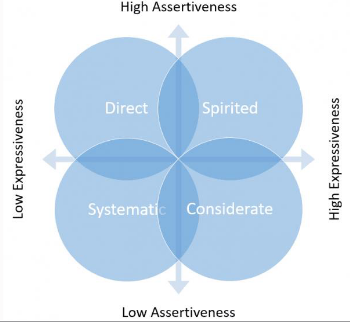
^^High Assertiveness, Low Expressiveness - Direct style^^
- Clear speakers
- Confident demeanor
- Good decision makers
- Efficient
^^High Assertiveness, High Expressiveness - Spirited style^^
- Good story teller
- Visually and vocally energetic
- Generates enthusiasm in others
- Creative thinker
^^Low Assertiveness, High Expressiveness - Considerate style^^
- Relationship builder
- Attentive listener
- Approachable and reliable
- Team player
^^Low Assertiveness, Low Expressiveness - Systematic style^^
- Very precise communicator
- Good listener - seeks information
- Calm and collected under pressure
- Well organized
LANGUAGE VARIETIES
also called as “lects”, these refer to the different variants of a language that can be sufficiently delimited from one another in terms of social, historical, or geo-spatial factors, thus forming language clusters.
In addition, language varieties may also be a grouped in the following classifications:
it refers to a new language that develops into situations where speakers of different langauges need to communicate but do not share a common language.
Examples are Chavacano in the Philippines and Bislama, a language spoken in Vanuatu.
it is a pidgin that becomes the first language of the children, or the mother tongue of a certain community.
Examples are the Gullah and the Patwa, is a creole in Jamaica.
It is not a language that is not distinct from a national language, but rather a variety of a language spoken in a particular area of a country.
Examples are Cebuano, Waray, Ilocano, and Hiligaynon in the Philippines.
This is a variety used as a marker of identity, usually alongside a standard variety, by the members of a particular minority ethnic group.
Examples are the Sinama of the Badjaos in the Philippines and the London-Jamaican variety in Britain.
These are spoken mainly as second languages in former colonies with multilingual populations.
A classic example is Singlish (or Singaporean English)
A language register is characterized by the way a speaker uses a language differently in different social circumstances. These are determined by such factors as social atmosphere, purpose of communication, audience, and the general context of the discourse.
These registers are used in professional, academic, or legal settings where communication is expected to be respectful, uninterrupted, and restrained to specific rules. Slang is never used and contractions are rare.
Examples are registers used in research paper, government documents, business letters, and in business presentations.
These registers are used when communicating with friends, close acquaintances, colleagues, and family members. These are used in birthday parties or family gatherings.
Intimate language registers are reserved for special occasions, usually between only two people and often in private.
Examples are an inside joke between two high school friends or sweet nothings whispered to your “special someone”.
It refers to historic language that is intended to remain unchanged.
Examples are the registers used in the Philippine Constitution and the Holy Bible.
It is used in conversation when people are speaking with someone who has specialized knowledge or is offering advice. Tone is often respectful, such as the use of honorifics or courtesy titles, but may be more casual if the relationship between or among the communicators is friendly.
Examples are registers used in local television broadcast or in a conversation with a doctor during medical examinations.
IMPROVING ONE’S ABILITY IN COMMUNICATING IN A MULTICULTURAL SETTING
Everything should start with a personal desire and strong conviction to relate more effectively with persons having different cultural backgrounds. This will not only create positive personal relationships, but also open more opportunities for professional growth. Limiting one’s reliance on preconceived notions and established stereotypes is also a major leap towards effective intercultural communication.
Refrain from forming expectations based solely on your culture.
Knowing and accepting the validity of cultural differences are key in communicating with people \n having diverse communication styles. Being an effective communicator requires allowing yourself to be immersed in the multicultural society and embracing diversity.
Remove personal biases or any stereotype that may impede understanding.
You do not want to be at the receiving end of a biased judgement, right? You don’t want people avoiding you just because of how they see other members of your group or culture. Determine how much your family, friends, and colleagues have ‘dictated’ how you view or feel about other people or other groups, and identify which among these pre-judgements are stereotypes that can damage relationships.