(NOT FINISHED 7.6, 7.8?) Unit 7: Atmospheric Pollution
(7.1) Introduction to Air Pollution
air pollution: pollution that’s in the atmosphere that’s harmful to humans + animals
primary pollutant: emitted directly into the atmosphere
carbon monoxide + dioxide, sulfur dioxide, nitrogen oxides. nitrous oxide, ammonia, hydrocarbons (includes VOCs), particulate matter (PM)
EX: (natural) pollen, volcanic ash, VOC from plants, (human/anthropogenic) fossil fuels
secondary pollutant: primary pollutants + atmospheric gases, water vapor, sunlight
EX: tropospheric (ground-level) ozone (O3), acid rain
National Ambient Air Quality S tandards (NAAQS) has 6 criteria pollutants (SPLONC) that are seen as super harmful
sulfur dioxide (SO2), particulate matter (PM), lead (Pb), ozone (O3), nitrogen dioxide (NO2), carbon monoxide (CO)
lead causes anemia, behavioral disorders, lowered IQ, reading/learning disabilities, nerve damage (for children) and hypertension, cardiovascular disease (for adults)
burning of coal releases impurities into the atmosphere
impurities include sulfur ( → sulfur dioxide), toxic metals (lead, mercury, nickel, arsenic), soot (aka particulate matter)
fuels come from source plant matter which has: carbon, hydrogen, nitrogen, oxygen, sulfur
biogeochemical cycles
when burned → pollutants (causes negative impacts on humans and environment)
primary pollutants + atmospheric things = secondary pollutants
introductory EFFECTS of fossil fuel pollution
irritates eyes, nose, throat
inhale → lung conditions/damage
damages plant tissue during photosynthesis/respiration
(7.2) Photochemical Smog
volatile organic hydrocarbons (VOCs): compounds that can vaporize at room temperature
EX: gasoline (human), trees, plant oil (natural)
(CAUSE) PHOTOCHEMICAL SMOG: primary pollutants (nitrogen oxides, VOCs) + sunlight → ozone, PANs, aldehydes (VOC), nitric acid (aka photochemical smog)
source: urban areas with lots of cars
produced early in the day and stays around in the day
higher in the summer and sunny warm climates
EFFECTS
photochemical smog
irritates eyes, nose, throat
worsen heart/lung consitions, can cause lung cancer
ozone
worsen bronchitis, emphysema
trigger asthma + permanent damage to lung tissue
enters plants → burn tissue → leaf damage + less survival for plants
SOLUTIONS
catalytic converters in cars: converts NO → O2 + N2
produces CO2 and H2O
enforce emission testings/standards for vehicles
reducing VOCs
pump gas at night (with no sunlight)
don’t spill fuel, tighten gas cap closely
improve fuel efficiency
reduce use of internal combustion
make fewer trips (bike, walk, use public transportation)
reduce health impacts
wear mask
minimize outdoor activities during hot days/seasons
(7.3) Thermal Inversion
temperature or thermal inversion: a warmer layer sits on top of the cooler surface of air in the troposphere
normal conditions: altitude increases → temperature decreases
traps cooler/denser air → air doesn’t rise → pollutants (particulate matter, photochemical smog) don’t disperse
factors that influence TI
geography (valleys, nearby mountain ranges, coastal/prevailing winds)
traps cool air in more frequently
pollution (high industrialism, vehicles, large cities)
EX: los angeles, mexico city
(7.4) Atmospheric CO2 and Particulates
natural sources of CO2
carbon cycle: respiration, ocean outgassing (diffusion), decomposing biomass
geological processes (volcanoes)
ecosystem disturbances (wildfires)
not necessary a pollutant since it naturally maintains global temperatures
EXCESS CO2 is a pollutant since it’s too much (from fossil fuels)
particulate matter: solid/liquid particles that are small enough to be inhaled
size unit = micron (1 micron = 0.001 millimeter)
PM must be less than 10 microns to be inhalable
2.5 - 10 microns = upper respiratory concern
under 2.5 = low respiratory concern
natural sources of particulate matter
pollen, spores, bacteria, dust + dust mites, airborne soil, seasalt
geological processes (sulfates, volcanic dust)
ecosystem disturbances (ash/soot from wildfires)
(7.5) Indoor Air Pollutants
can come from materials made in buildings
VOCs from furniture
lead from old lead paint
asbestos in old edifices
natural sources:
mold
can infect respiratory passageways
found in homes, schools, buildings with poor ventilation
water leaks + lots of humidity creates undected mold
dust
contain particulates
radon (natural occuring gas resulting from decaying uranium)
rocks/soils contain uranium
uranium decays into radon 222 → gas escapes into atmosphere → seeps into homes/buildings built on soils or through cracks
can dissolve in groundwater → go into water cources
can cause lung cancer
solutions:
sealing up cracks
using radon detectors that are readily available
human-made sources
asbestos (tiny shards of glass)
can cause lung cancer when inhaled
combustion (smoke)
releases carbon monoxide
can cause carbon monoxide poisoning
it’s an asphyxiant (can suffocate you)
impairs ability of red blood cells to carry oxygen throughout body → dizziness, nausea, suffocation
can come from candles burning, fireplaces, cookstoves, unvented space/kerosene heaters, cigarette smoke, smoke from nearby wildfires
NOT FINISHED (7.6) Reduction of Air Pollutants
(7.7) Acid Rain
regular rain PH = 5.6, acid rain PH = 4.3
chemical sources for acid rain
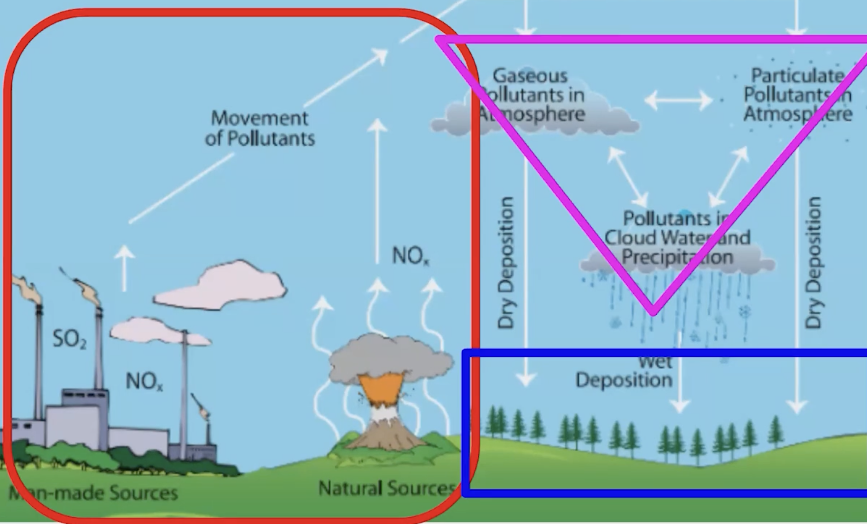
NO2 from cars + water → nitrous/nitric acid
coal burning plants releases nitrogen oxides, sulfur dioxides → reacts with water → sulfurous/sulfuric acid
natural sources (volcanoes, geysers) can emit nitrogen oxides
acid rain formation
nitric/sulfuric acid is in the form of dry deposits or rain/snow
human sourced pollutants + pollutants already in atmosphere → water cycle → comes down through wet deposition
MR. SMEEDS (7.8) Noise Pollution
noise pollution: noise loud enough to cause headaches, hearing loss, physiological stress
EX: construction, transportation, manufacturing plants, domestic activity (neighbor’s music, lawn mowing, home projects)
aquatic noise pollution come from ship engines, military sonar, seismic air blasts looking for oil + gas
effects (on wildlife)
can disrupt animal communication, migration
EX: caterpillar heats beat faster when exposed to highway noise
EX: whales lose essential communication method
can prevent predators hearing prey (vice versa too) → decreases chances of survival
(aquatic) seismic surveying ships hits ocean floor → sound is echoed and is really loud