monoclonal antibodies
How are monoclonal antibodies produced?
Monoclonal antibodies are produced from a single clone of cells. The antibodies are specific to one binding site of one protein antigen and so are able to target a specific chemical or specific cells in the body.
They are produced by stimulating mouse lymphocytes to make a particular antibody. The lymphocytes are combined with a particular kind of tumour cel to make a cell called a hybridoma cell. The hybridoma cells can both divide and make the antibody. Single hybridoma cells are cloned to produce many indentical cels that all produce the same antibody, a large amount of the antibody can be collected and purified.
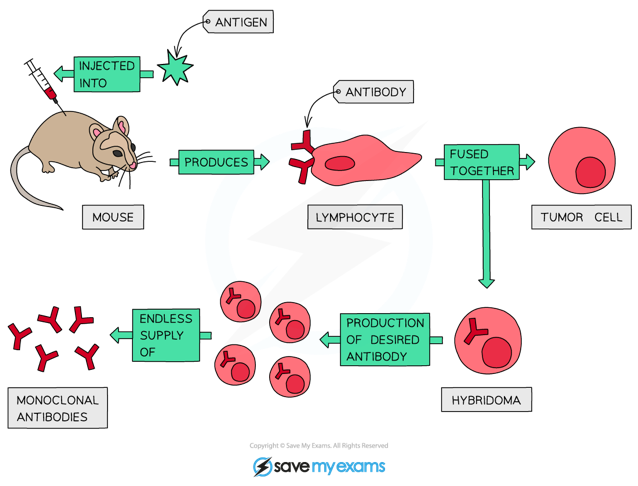
Tumour cell: cell divides but does not make antibodies
Lymphocyte: makes specific antibodies but cannot divide
Hybridoma cell: cell divides and makes antibodies
USES OF MONOCLONAL ANTIBODIES
Once the monoclonal antibodies have been collected from a hybridoma cell there are many uses for them, for example:
pregnancy tests
In labs to measure levels of hormones and other chemical in blood
In research to identify specific molecules in a cell or tissue by binding them with a fluorescent dye
To treat some diseases
Problems with monoclonal antibodies
However, monoclonal antibodies create more side effects than expected. They are not widely used as everyone hoped when they were first developed.