SHIKIMATE PATHWAY AND MEVALONATE PATHWAY HANDOUT
Chemistry Elective 2: Chemistry of Natural Products
Introduction
Metabolic pathways are intricate series of chemical reactions occurring within cells, during which one molecule transitions into another facilitated by enzymes.
Importance: Metabolic pathways are crucial as they empower organisms to synthesize vital biological compounds necessary for growth, survival, and maintaining cellular function.
In simplified terms, metabolic processes can be represented as:
Starting molecule → several enzyme reactions → final product
Two Important Biosynthesis Pathways
The presentation covers two significant biosynthesis pathways:
SHIKIMATE PATHWAY or SHIKIMIC ACID PATHWAY
MEVALONATE (MVA) PATHWAY
SHIKIMATE PATHWAY
The shikimate pathway is an essential 7-step metabolic route found in plants, bacteria, fungi, and archaea.
It converts phosphoenolpyruvate (PEP) and erythrose-4-phosphate (E4P) into chorismate, the precursor for aromatic amino acids such as phenylalanine, tyrosine, and tryptophan.
Secondary Metabolites: This pathway is foundational for producing aromatic compounds. Notably, it is absent in animals, making it a prime target for herbicides like glyphosate, which inhibit EPSP synthase.
What is Shikimate Pathway? A crucial metabolic pathway absent in animals, hence targeted for agricultural applications.
Essential Pathway Intermediate: Shikimate (Shikimic acid)

7 SEQUENTIAL ENZYMATIC PROCESS IN THE SHIKIMATE PATHWAY
Formation of 3-deoxy-D-arabino-heptulosonic-7-phosphate (DAHP)
DAHP: A 7-carbon ulosonic acid crucial for aromatic amino acid biosynthesis.
Enzyme: DAHP synthase
Formation of 3-Dehydroquinate (DHQ)
DHQ: The first carbocyclic intermediate, formed from DAHP by Dehydroquinate synthase (DHQS). Involves a NAD+-dependent reaction with a five-step mechanism (oxidation, elimination, reduction, ring-opening, aldol condensation).
Enzyme: Dehydroquinate synthase (DHQS)
Formation of 3-Dehydroshikimate (DHS)
DHS formation follows dehydration of DHQ through Dehydroquinate dehydratase. Intermediate compound in the shikimate pathway, leading toward Chorismate and aromatic amino acids.
Enzyme: Dehydroquinate dehydratase
Formation of Shikimate
This step involves the reduction of DHS, catalyzed by Shikimate dehydrogenase (SDH) using NADPH. The resultant Shikimate undergoes phosphorylation by Shikimate kinase to form Shikimate-3-phosphate (S3P).
Importance: Key intermediate for producing essential aromatic amino acids like phenylalanine, tyrosine, and tryptophan.
Enzyme: Shikimate dehydrogenase
Formation of Shikimate-3-phosphate (S3P)
The enzymatic reaction forming S3P is pivotal as it engages with EPSP synthase to produce 5-enolpyruvylshikimate-3-phosphate (EPSP). Glyphosate inhibits this reaction, disrupting aromatic amino acid synthesis.
Enzyme: Shikimate kinase
Formation of 5-enolpyruvylshikimate-3-phosphate (EPSP)
Key: EPSP is the direct precursor to Chorismate, essential for aromatic amino acid synthesis.
Enzyme: EPSP synthase
Formation of Chorismate

The terminal product of the shikimate pathway, Chorismate emerges from EPSP via Chorismate synthase.
Chorismate acts as a metabolic branch point in synthesizing critical aromatic amino acids.
Enzyme: Chorismate synthase
Biological Applications of the SHIKIMATE PATHWAY
Biosynthesis of Aromatic Amino Acids
Produces essential amino acids (Phe, Tyr, Trp) crucial for protein synthesis in certain organisms like bacteria and plants.
Production of Secondary Metabolites
Derived from chorismate, these compounds include alkaloids and flavonoids, vital for various plant functions, encompassing defense, pigmentation, and signaling.
Target for Herbicides and Antibiotics
Glyphosate inhibits EPSP synthase, making the shikimate pathway a target for herbicide development, as humans lack this pathway.
Industrial Biotechnology Applications
Microbes optimized with the shikimate pathway can produce compounds like vitamins and pharmaceutical precursors at a commercial scale.
Production of Aromatic Aromas and Flavors
The pathway can produce natural flavors and fragrances, such as vanillin, through plant or microbial fermentation.
MEVALONATE (MVA) PATHWAY
The Mevalonate Pathway is critical for synthesizing isoprenoids, occurring in eukaryotes, archaea, and some bacteria. It catalyzes the transformation of Acetyl-CoA into Isopentenyl pyrophosphate (IPP), which builds many essential biological molecules, including cholesterol and steroid hormones.
Enzymatic Reactions in Mevalonate Pathway
Condensation of Acetyl-CoA
Condensation of two acetyl-CoA molecules forms acetoacetyl-CoA, catalyzed by Thiolase (acetyl-CoA acetyltransferase).
Formation of HMG-CoA
Acetoacetyl-CoA further condenses with acetyl-CoA to form HMG-CoA, released by CoA-SH, through HMG-CoA synthase.
Reduction of HMG-CoA to Mevalonate
This is the rate-limiting step, catalyzed by HMG-CoA reductase, utilizing 2 NADPH, marking a critical point for statin drug action.
Phosphorylation of Mevalonate
Mevalonate undergoes multiple phosphorylation steps, producing 5-phosphomevalonate and further isomers, consuming ATP in each step.
Multiple steps include the addition of phosphate at different positions.
Decarboxylation
Mevalonate-5-pyrophosphate decarboxylates and phosphorylates to produce isopentenyl pyrophosphate (IPP), a key precursor for isoprenoid biosynthesis.
Isomerization
IPP converts to dimethylallyl pyrophosphate (DMAPP) via isomerization, both being essential building blocks for isoprenoid synthesis.
Regulation of the Mevalonate Pathway
The pathway relies on several regulatory mechanisms primarily centered on HMG-CoA reductase:
Feedback inhibition based on cholesterol levels.
Hormonal control by insulin and glucagon to regulate metabolism according to energy state.
Modifications via phosphorylation and dephosphorylation adjusting enzymatic activity per cellular context.
Key Intermediate: Mevalonic Acid
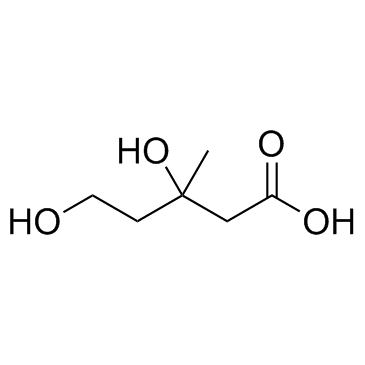
Central to isoprenoid precursor production, marked by the rate-limiting nature of its conversion from HMG-CoA.
Comparison Table: Shikimate vs. Mevalonate Pathway
Feature | Shikimate Pathway | Mevalonate Pathway |
|---|---|---|
Primary Purpose | Synthesis of aromatic amino acids (Phe, Tyr, Trp). | Synthesis of terpenoids, steroids, and isoprenoids. |
Starting Materials | PEP and Erythrose 4-phosphate. | Acetyl-CoA (3 molecules). |
Key Intermediates | Shikimic acid, Chorismate. | Mevalonic acid, Isopentenyl pyrophosphate (IPP). |
Major Products | Phenylalanine, Tyrosine, Tryptophan, Phenylpropanoids. | Squalene, cholesterol, dolichol, carotenoids (secondary products). |
Cellular Location | Plastids (in plants). | Cytosol (in plants). |
Enzymatic Targets | EPSP synthase (glyphosate target). | HMG-CoA reductase (HMGR). |
Occurrence | Plants, bacteria, fungi, algae. | Plants, animals, fungi, archaea. |