Trans fungal (copy)
FUNGAL
Tomato (EARLY BLIGHT)
CAUSING AGENT: caused by the fungus Alternaria Solani.
SCIENTIFIC NAME: Alternaria Solani
DESCRIPTION: Early Blight primarily affects the leaves and fruit of tomato plants. Symptoms include dark, concentric rings with target-like spots on leaves, leading to leaf yellowing, drying, and premature defoliation. On fruits, it causes sunken, leathery lesions with dark concentric rings.
HISTORY: Early Blight was first described in the late 19th century. It was initially discovered and documented by plant pathologists and scientists who observed characteristic symptoms on tomato plants. Early Blight has been a significant concern for tomato growers ever since.
ECONOMIC IMPORTANCE: Early Blight can lead to significant crop yield losses and reduce the quality of harvested tomatoes. This disease can have a substantial economic impact on tomato growers, particularly in areas with high humidity and warm temperatures.
MANAGEMENT OF EARLY BLIGHT
CULTURAL PRACTICES: Crop rotation, planting resistant tomato varieties, and maintaining good spacing between plants to promote air circulation can help reduce the risk of infection.
FUNGICIDES: Fungicides can be used as a preventive or curative measure. Commonly used chemical products include copper-based fungicides, chlorothalonil, and mancozeb.
CHEMICAL PRODUCTS
COPPER-BASED FUNGICIDES: These are often used as a preventive measure.
CHLOROTHALONIL: A broad-spectrum fungicide effective against Early Blight.
MANCOZEB: Another fungicide used to manage Early Blight.
RECOMMENDATIONS
Monitor your tomato plants regularly for symptoms of Early Blight.
Practice good sanitation in the garden, such as removing and disposing of infected leaves and fruit.
Choose tomato varieties with resistance to Early Blight if available.
Apply fungicides as recommended on the product label and follow safety guidelines.
It is important to note that while chemical control methods can be effective, integrated pest management (IPM) practices, combining cultural, biological, and chemical strategies, are often the most sustainable and effective approach to managing Early Blight and other plant diseases.
Rice (Rice Blast)
CAUSING AGENT: The fungus that causes rice blast is called Magnaporthe oryzae. It originated from a species of complex grass infecting pathogens called magnaporthe grisea. It is an ascomycete because it produces sexual spores (ascospores) in structures called asci, and is classified in the newly erected family Magnaporthaceae.
SCIENTIFIC NAME: Magnaporthe oryzae
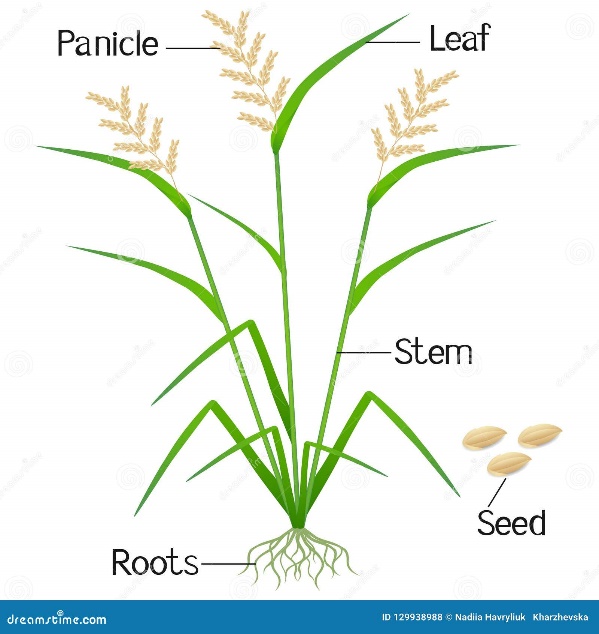 DESCRIPTION: Rice blast, caused by a fungus, that causes lesions (injuries) to form on leaves, stems, peduncles, panicles, seeds, and even roots on all the developmental stages of the plant. So great is the potential threat for crop failure from this disease that it has been ranked among the most important plant diseases of them all. It is most commonly found in the rice producing regions of Asia and south-east Asia.
 HISTORY: The disease was first reported as “rice fever” in China by Soong Ying-shin in 1637, and later, it was reported from Japan by Imochi-byo during 1704. It is presently found in approximately 85 countries in the world. Blast is highly destructive in lowland rice in temperate and subtropical Asia, and upland rice in tropical Asia, Latin America and Africa.
Although blast is capable of causing very severe losses of up to 100%, little information exists on the extent and intensity of actual losses in farmers’ fields. Losses of 5-10%, 8% and 14% were recorded in India (1960-1961), Korea (mid-1970s), and in China (1980-1981), respectively. In the Philippines, yield losses ranging from 50-85% have been reported
Symptoms: Leaf Symptoms- Lesions that occur on the leaf are usually diamond-shaped with a gray or white center and brown or reddish brown border and are 0.39 to 0.58 inch (1.0–1.5 cm) long and 0.12 - 0.2 inch (0.3-0.5 cm) wide. Newly formed lesions may have a white or grey-green center and a darker green border. Their shape, color, and size can vary depending on varietal resistance, age of the plant, and lesion age. Leaf blast may sometimes cause the complete death of young plants up to the tillering stage. Leaf blast usually increases early in the season then declines late in the season as leaves become less susceptible.
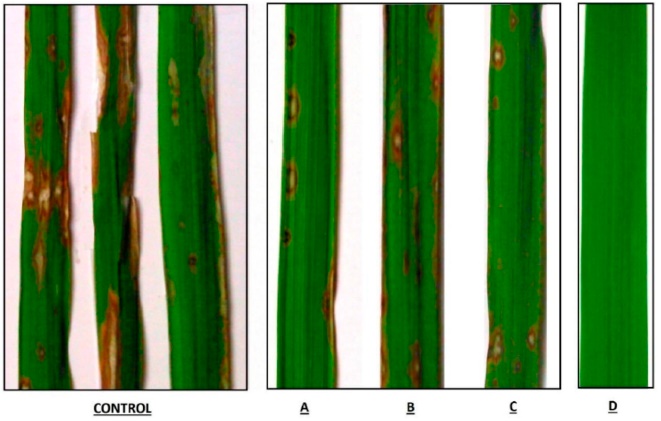
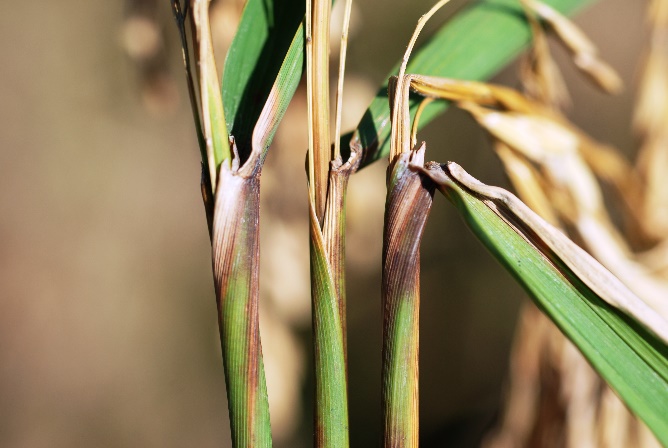 Symptoms: leaf collar symptoms Infection at the junction of the leaf blade and sheath results in the typical brown "collar rot" symptom. A severe collar infection may cause the leaf to die completely.
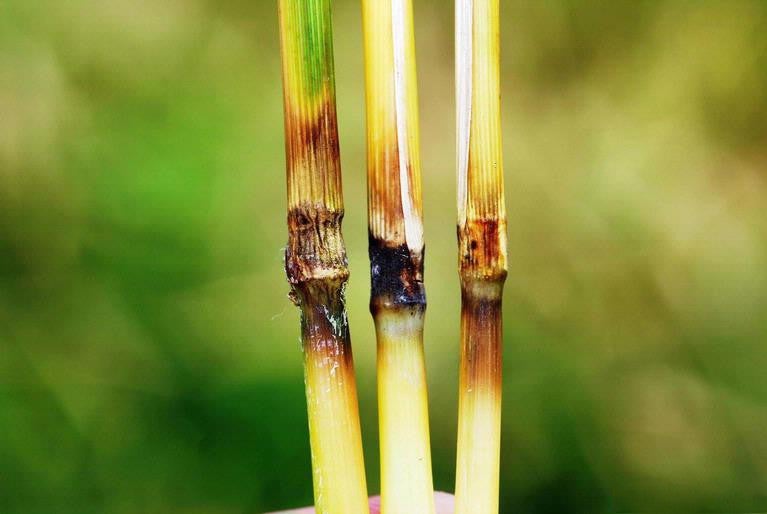
 Symptoms: Node Symptoms Stem nodes may be attacked as the plant approaches maturity, causing the complete death of the stem above the infection. Diseased nodes are brown or black.
Symptoms: Panicle and Grain Symptoms - Infections just below the panicle, usually at the neck node, cause a "neck rot" or "rotten neck blast" symptom that can be very injurious to the crop. If neck rot occurs early, the entire panicle may die prematurely, leaving it white and completely blank. Later infections may cause incomplete grain filling and poor milling quality. Other parts of the panicle including panicle branches and glumes may also be infected. Panicle lesions are usually brown, but may also be black.
Economic Importance: The disease is caused by the ascomycete fungus Magnaporthe oryzae (anamorph Pyricularia oryzae), which poses a significant threat to food security, damaging as much as 30% of the global rice harvest, with yield losses of 11.9 kg ha−1 in South and Southeast Asia. In the Philippines, rice yield losses range from 50% to 85%. These losses increase the global rice price and reduce consumer welfare and food security. Rice is the staple crop for more than half the world’s population so any reduction in rice blast would have substantial beneficial effects on consumer livelihoods.
Different approaches have been developed to increase productivity and overcome the challenges of rice blast disease. Developing resistant rice crop varieties has had only partial success because of the ability of rice blast fungus to evolve to new races and the dependence of the resistant cultivar on a favorable environment
Management of Rice Blast:
Chemical Procedure: Use of Fungicide Fungicides are pesticides that prevent, kill, mitigate or inhibit the growth of fungi on plants. Fungicides are especially needed if blast symptoms have been observed in the field and the variety is very susceptible. Tebuconazole, tricyclazole, hexaconazole and difenconazole are example of fungicide that have shown highest efficiency in controlling the rice blast.
Recommendation data To avoid, lessen or to manage the harm or rice blast, we can use an integrated approach such as rotating crops, plant resistant varieties, planting in warm soil and use of fungicides when necessary.
Foliar fungicides: Scout rice fields for blast and sheath blight symptoms from internode elongation to 90% heading. If symptoms are found, prepare to use a foliar fungicide. Timing of foliar fungicide application to rice is essential for best disease control.
Crop rotation: Rotating crops will help manage several rice diseases.
Resistant varieties: Varieties immune to all or most rice diseases do not exist. However, newer varieties often have improved levels of resistance. Growers should choose varieties based on MU yield trials in their area and resistance to locally important diseases.
Planting in warm soil: Seedling rice diseases are accentuated when the soil around the seed and seedling is cool and wet. Seed and seedling death can result in severely reduced stands and consequent reduced yields. Growers should avoid planting in cool soil and when the weather forecast indicates that cool conditions may develop within several days of planting. Seed should be treated with a fungicide prior to planting.
String Beans (ANTHRACNOSE)
CAUSING AGENT: The most characteristic symptom of the disease is the black-red sunken cankers or spots that develop on infected pods. As these spots become older, the edges develop a black ring with a red outer border and may show a pink ooze in the center, which contains the spores of the fungus.
A characteristic symptom of the disease occurs on the underside of infected leaves: veins turn brick-red to purple and eventually black.SCIENTIFIC NAME: Colletotrichum lindemuthianum
Scientific classification
Domain: Eukaryota Order: Glomerellales
Kingdom: Fungi Family: Glomerellaceae
Division: Ascomycota Genus: Colletotrichum
Class: Sordariomycetes Species: C. lindemuthianum
DESCRIPTION: The condition can result in significant crop damage for beans grown in temperate and subtropical regions. Doesn’t originate from a single organism with a scientific name. It’s a broad term utilized to encompass a group of fungal diseases that impact various plants. The scientific names of the fungi responsible for anthracnose may differ based on the specific plant they infect
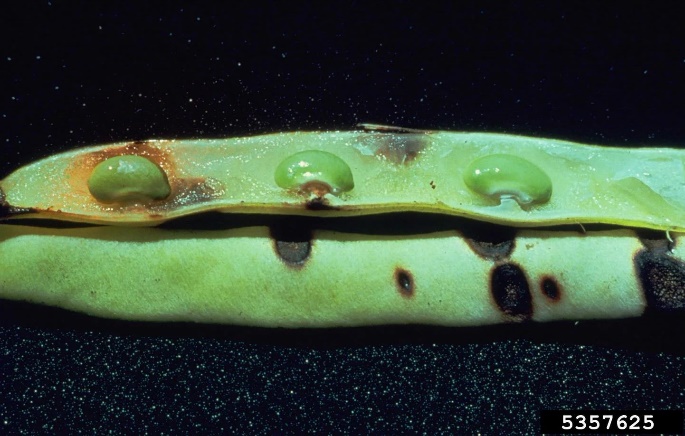
HISTORY: The anthracnose of common bean was first identified in 1875 in the fruit and vegetable garden of the Agricultural Institute of Popplesdorf, Germany by Lindemuth. By 1878, Saccardo and Magnus had made many observations on the cause of the anthracnose disease, recording their results in Michelia I:129.
ECONOMIC IMPORTANCE: Yield losses can approach 40% and up to 80% lodging has been observed in fields with severe levels of anthracnose. This poses a huge problem for local growers. If defoliation, branch dieback, or cankering continues for several years, the plant will become weak and vulnerable to other problems, such as insects and diseases.
MANAGEMENT OF ANTHRACNOSE
Fungicides can be sprayed on foliage at flowering initiation, late flowering, and pod fill to achieve satisfactory bean anthracnose disease control
Do not pack lightly diseased pods as anthracnose can develop during transport
Do not perform field activities when dew is present on the plants as free water facilitates spore movement
Use crop rotations of 2 to 3 years because the fungus is primarily a pathogen of common bean
OKRA (FUSARIUM WILT)
CAUSING AGENT: Otherwise known as Fusarium oxysporum, often favors high temperatures like 75° to 86°F. The pathogen most often enters through root wounds caused by cultivation or by nematode feeding. Fusarium wilt can be seed borne,. The fungus can be introduced on infected transplants or spread on equipment contaminated with infested soil.
Fusarium often targets vegetables like tomato, eggplant, pepper, and okra.
SCIENTIFIC NAME: Fusarium oxysporum f. sp. Vasinfectum
DESCRIPTION: This disease is caused by fungi that persist in the soil for a very long time. Symptoms appear as yellowing and stunting of the plant, followed by collapse and death of the whole plant. There are no effective controls for Fusarium wilt in okra. Once the disease appears, growers should find new land for cultivation.
HISTORY: Fusarium wilt first appeared in bananas. Bancroft discovered this disease in 1874. The pathogen destroyed the well-established ‘Gros Michel’ cultivar banana industry that was grown in monoculture plantations in the Americas, Africa and in the Far East during the 1900s. after receiving the initial report and description from Australia. Following reports of disease epidemics throughout tropical America, including Costa Rica and Panama in 1890, the disease became known as Panama disease.
ECONOMIC IMPORTANCE: Knowing about the disease can help you determine your course of action when dealing with it
Knowing about it can also help you find the correct information. It can help you with determining trustworthy sources about it.
Knowing about the disease can help you prevent its spread in the future
Knowing about the disease is much more efficient that trying to guess what it is. This can help shield you from misinformation.
Recomended Ways to deal with the disease
There are no effective traditional controls for fusarium wilt for any plant. Once the disease appears, Growers are advised to find new land for cultivation and avoid moving infested soil from one area into the new area as this could result in another outbreak.
Products and Chemicals to counter fusarium
Prothioconazole is a commercially available fungicide with proven efficacy. Azoxystrobin, prothioconazole and thiophanate-methyl led to the highest values for reduction of Fusarium wilt and did not cause phytotoxicity in watermelons.
Another is Mycostop it is a biological fungicide that will safely protect crops against wilt caused by Fusarium another is Applying beneficial bacteria including Bacillus subtilis, Bacillus pumilus, Streptomyces griseoviridis or Gliocladium as a foliar spray, soil drench or pretreatment for seeds for fusarium prevention.
Eggplant (Leaf Spot)
CAUSING AGENT: This kind of fungal can survive in for at least one year in plant debris or in the soil. This disease begins when a fungal spores dispersed to a susceptible plants by a rain, irrigation water, wind, or even on the agriculture equipment or by people.
 SCIENTIFIC NAME: Cercospora Melongenae
DESCRIPTION: Cersospora Melongenae is a member of the fungal genus Cersospora, which is a diverse group of plant pathogens responsible various leafspot diseases on different plant species. This pathogen exclusively affects eggplants (Solanum Melongena) and is not known to infect other plants species. The pathogen spreads through spore (conidia) produced on infected eggplant leaves. Also it can spread through rainwater, wind, or physical contact with infected plant material can facilitate the dispersal of these spores to nearby healthy eggplants, leading to new infection.
Scientific classification
Domain: Eukaryota Order: Capnodiales
Kingdom: Fungi Family: Mycosphaerellaceae
Division: Ascomycota Genus: Cercospora
Class: Dothideomycetes Species: C. melongenae
HISTORY: Cersospora melongenae was discovered in scientific literature in the early 20’s century. The genus Cersospora comprises a large group of fungal pathogens that cause leaf spot diseases on various plant species. The pathogen is found in various parts of the world, wherever eggplants are cultivated, and such places with warm and humid climates.
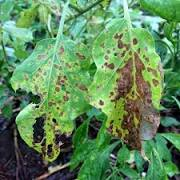
Disease Symptoms: The leaf spots are characterized by chlorotic lesions, angular to irregular in shape, later turn grayish-brown with profuse sporulation at the center of the spot.
Severely infected leaves drop off prematurely, resulting in reduced fruit yield.
Can also affect the stems and fruit.
ECONOMIC IMPORTANCE: This disease does not have direct economic benefit or importance but are considered as pest and a threat to eggplant cultivation, this pathogen can reduced the yield of eggplant production, the quality of eggplant, market access and the increased of production cost.
Management of Solanum Melongena
Chemical Products
Fungicides:
Fungicides can be used to manage fungal diseases if preventive measures are not sufficient. Always follow label instructions and local regulations when using chemicals.
Copper-based fungicides: Effective against a wide range of fungal diseases but should be used with caution to prevent copper buildup in the soil.
Sulfur-based fungicides: Effective against powdery mildew and some other fungal diseases.
Fungicides with active ingredients like chlorothalonil, mancozeb, or captan: These are broad-spectrum fungicides that can be effective against various fungal pathogens.
Recommendation:
Early Detection - Regularly inspect your eggplants for signs of fungal diseases, such as yellowing leaves, spots, or powdery growth, and act promptly.
Prevention and Cultural Practices:
Crop Rotation: Avoid planting eggplants in the same area for consecutive years to reduce the build-up of fungal pathogens in the soil.
Proper Spacing: Plant eggplants with adequate spacing to ensure good air circulation, which helps reduce humidity and fungal growth.
Watering: Water the plants at the base to prevent foliage from staying wet, as wet leaves promote fungal growth.
Mulching: Apply organic mulch to the soil surface to prevent soil-borne pathogens from splashing onto the leaves.
Pruning: Regularly prune lower leaves and remove affected plant parts to improve airflow and reduce disease spread.
Corn Fungal Disease (Anthracnose)
CAUSING AGENT: caused by fungi (usually Colletotrichum or Gloeosporium) that infects growing shoots and leaves. Sunken patches or lesions in leaves, stems, fruits, or flowers are common symptoms, as well as cankers on twigs and branches. The disease induces tissue wilting, withering, and death, and its severity varies depending on the species affected.
The leaf blight phase is most common early in the season, when temperatures are moderate and conditions are wet. However, it can also occur late in the season on leaves in the upper canopy. The fungus can infect roots from the soil, or rain and wind can disperse fungal spores from plant residues to corn stalks.
SCIENTIFIC NAME: Colletotrichum Graminicola
DESCRIPTION: A group of fungal diseases that cause dark lesions on leaves and can lead to cankers and sores on stems and twigs in more severe cases. It affects plants, including trees, shrubs, and crops. It can cause a leaf to blight, top dieback, and stalk rot
Symptoms
Leaf Blight Phase: This non-economic disease is identified by necrotic lesions on leaves that may have setae and are oval to spindle-shaped. It usually occurs in fields where corn was planted the previous year and can appear early or late in the season but not usually mid-season.
Top Dieback: Anthracnose stalk rot can be a significant concern in certain fields, resulting in premature death of the upper portion of the plant while the lower plant remains green. This condition, referred to as "top dieback," can manifest as quickly as one to three weeks after tasseling.
Stalk Rot Phase: Stalk rot disease typically occurs just before plant maturity, causing the entire plant to die. The black discoloration develops on the stalk surface and internal tissue becomes discolored and soft, starting at the nodes.
HISTORY:
1875: The anthracnose of common bean was identified in 1875 at the Agricultural Institute of Poppelsdorf in Germany by Lindemuth Anthracnose.
1970: It was not considered as an economically significant disease of maize until the early 1970s
1980s - 1990s: Anthracnose caused severe epidemics that wiped out the sweet corn crop in the 1980s and 1990s, resulting in a significant decrease in grain yield and a loss of over USD 1 billion, up to 40% in the corn belt.
Note: Globally anthracnose become one the top 10 most devastating diseases of maize in 79 countries
ECONOMIC IMPORTANCE: First Phases of Anthracnose is rarely a concern (Crop Science, 2023) But as the disease progresses, it can be deadly. According to (University of Delaware, n.d) Anthracnose disease is an worldwide importance as it can yield losses 40 to 80% of the crops, depending on the severe levels of anthracnose.
MANAGEMENT OF ANTHRACNOSE
Prior to harvesting
Test the crops in different areas of your fields using these tests:
The push test— Push the top portion of the plant 6 to 8 inches (15 to 20 cm) from the vertical to 45° and note whether or not the plant lodged.
The pinch test or squeeze test— Remove lower leaves and pinch or squeeze the stalks above the brace roots. Record the number of rolled stalks.
Next Season
Grow resistant variants of Corn. Identify if the corn is resistant to the leaf blight phase or the stalk rot phase of Anthracnose, or both phases.
Crop rotation (grow crops at seasons where the fungus is active. Seasons that have a lot of rain and make the area humid.)
Manage well the Corn’s stress levels as to avoid stalk cannibalization.
Tillage, isolate and then burn or bury infected corn parts.
Check if the soil can handle the corn crop and check especially if the soil has a deficiency of Potassium and Nitrogen. As if these elements are lacking, it can become one of the reasons why corn would get stalk rot.