Polygons and Angles
| Triangles | Type | Formulas and/ Or Measures |
|---|---|---|
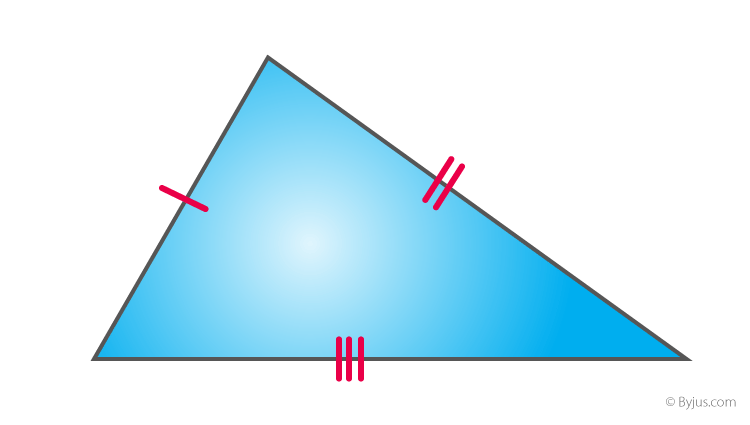 | Interior Angles: add up to 180 degrees | X +50+100=180 |
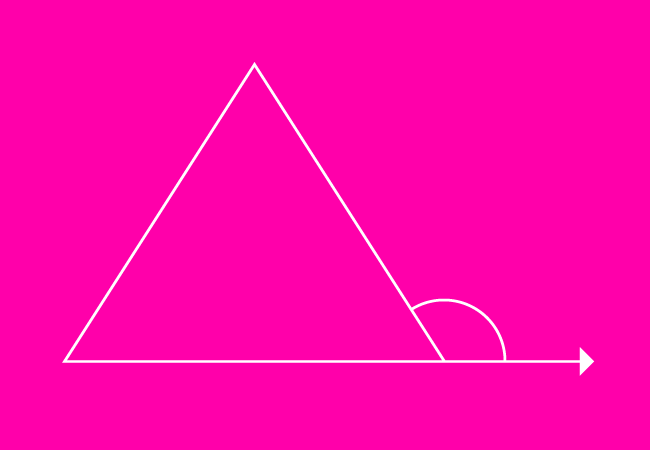 | Exterior Angles :of a Tri. = to the sum of the two interior angles that are not adjacent to that exterior angle. | y= angle 1 and angle 2 |
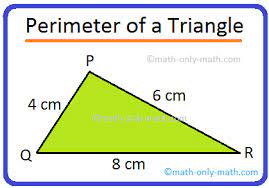 | Perimeter :of any Polygon = add all sides | 6+8+4=18cm |
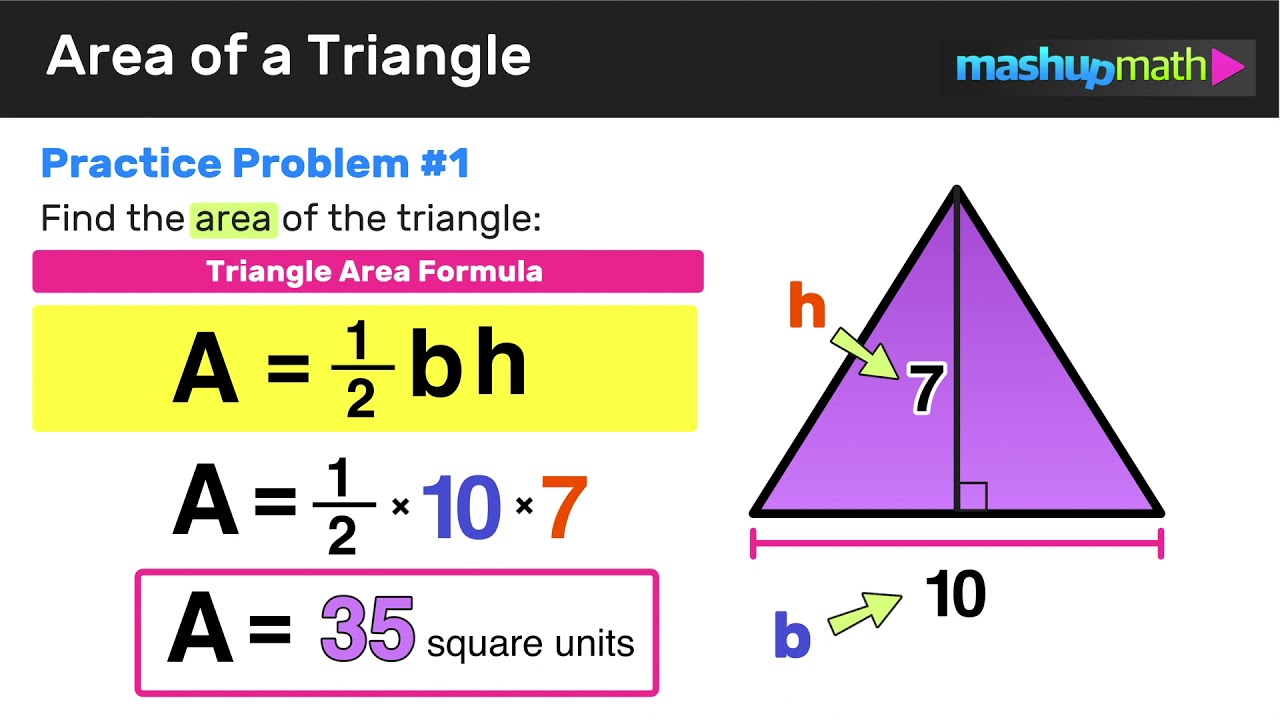 | The height is the perpendicular: distance between the sides that’s chosen as the base and the opposite vertex. | Area of triangle=1/2 (base) (height) |
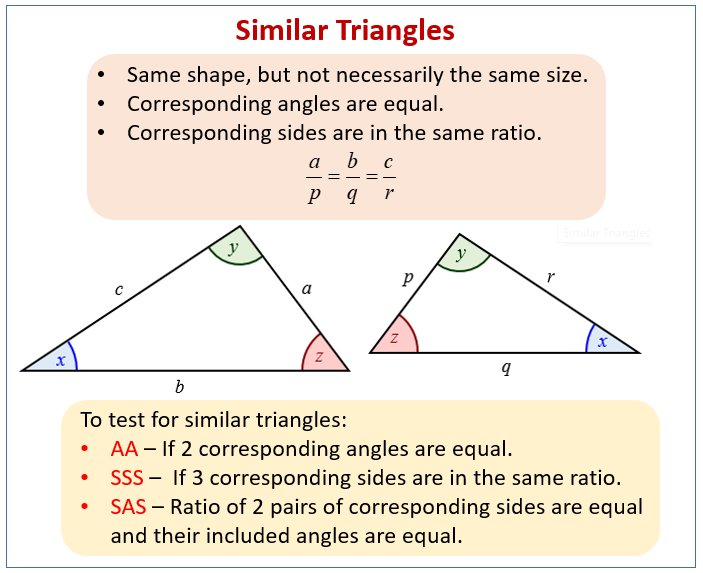 | Similar Triangles :have the same shape, although different shapes.Corresponding angles are =Corresponding sides are proportional | a/p=b/q=c/rimage displays angle equivalents |
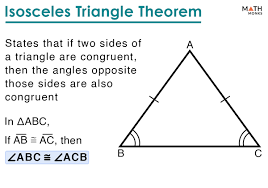 | Isosceles :has 2 equal sides Angles opposite from the equal sides, are called base angles. | AB=AC Then, <ABC=<ACB |
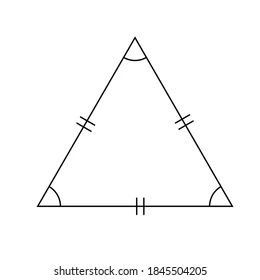 | Equilateral triangles: has 3 equal sides All three angles are = | All angles in a equilateral triangle measure 60 degrees, regardless of length of sides. |
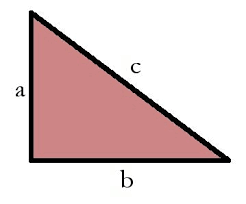 | Every right Triangle has exactly 2 acute triangles Legs- are sides opposite to the acute angle Hypotenuse- side opposite to right angle | Pythagorean Theorem=a^2 + b^2=c^2 |
| Quadrilaterals | Quad- Type | Measurements and/ or Formulas |
|---|---|---|
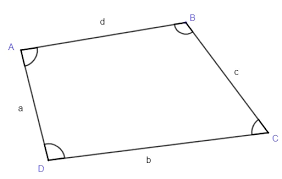 | Add all sides for perimeter | a+b+c+d=perimeter |
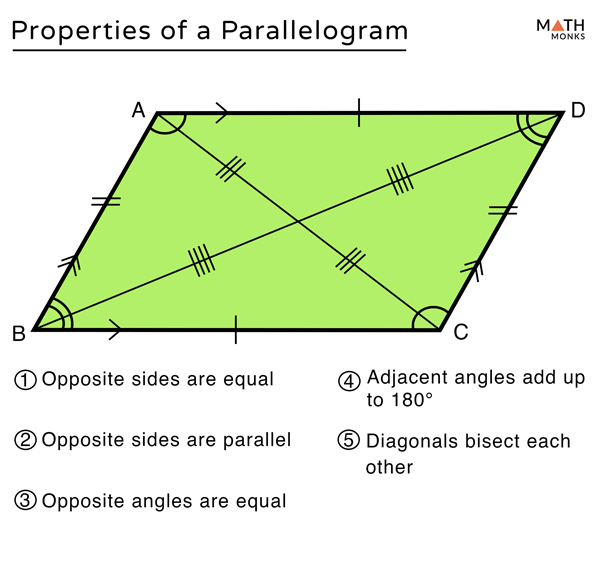 | Two sets of parallel sides Opposite sides are =Opposite angles are =Adjacent angles add up tp 180 | Area= (base)(height) |
| Rectangle: | A parallelogram w/ 4 right anglesOpposite sides are = | Area= (length) (width)Perimeter= 2(l+w) |
| Rhombus: | Has 4 =sidesOpposite sides are parallel to one another | Perimeter=4s |
| Square: | 4 =sides | Area= (side)^2P=4s |
Trapezoid : 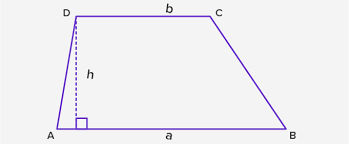 | a quadrilateral with 1 pair of parallel sides.Bases- 2 parallel sides of a trapezoid | The formula of the area=1/2 (sum of the lengths of the base)(height)Example: 1/2 (a+b)(h)=area |
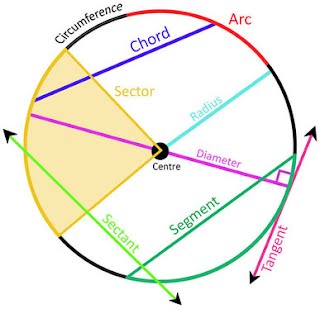
- Circumference:= 2(pier)=(pie*d)
- Area of a circle:= Pie*r^2
Solid Geometry
- Volume of a rectangular solid box (3D):= lwh
- Surface area of box:= 2lw+2wh+2lh
- Volume of a cylinder (3D):= pie*r^2h
- To find the surface area of any 3 dimensional figure:add the areas of each side of the figure.
Accordingly, finding the surface area of a cylinder involves adding the area of both of the circular ends to the area of the curved side. Note that, if the sides of a cylinder were “unrolled”, they’d form a rectangle.
- Formula for surface area of a cylinder is SA:= 2(pie*r^2)+2(pie)rh