9/11 Drug Solubility and Formulation continued
… you skipped class… don’t do it again
for slide 26 to slide 6 for next part
Free energy transfer from non polar solvent to water is proportional to hydrophobic surface area
negative enthalpy (system is LOSING heat) —> exothermic
positive enthalpy (system is GAINING heat) —> endothermic
negative entropy (system is becoming more ordered)
positive entropy (system is becoming more disordered)
protein folding is exothermic (more favorable) bc water shit outside really does not like touching hydrophobic stuff and will freeze which requires even more energy
protein folder creates more entropy (more disorder)
doesn’t make sense bc wouldn’t it be more ordered?
no bc water molecules that were touchy earlier are unfrozen and can create more disorder
ΔG = ΔH – TΔS
ΔG negative is spontaneous
melting is endothermic (positive H)
therefore entropy outweighs for it to be spontaneous
Dissolution:
solvents dissolve solutes by overcoming solute-solute and solvent-solvent interactions
they both expand and intertwine kinda
Steps of Dissolution:
need to separate intermolecular forces of solutes
need to separate imf of solvents AND have big enough void space for a solute
solute moves into void space
if spontaneous, negative work
What affects Solubility?
polarity (if same polarity, they dissolve)
branched vs. straight
molecular weight
structural similarity
has to do with how solute and solvents interact
crystal structure
if it’s packed (uniform and regular), it’s less soluble
irregularity means more soluble bc some stuff is hanging off
What makes it more soluble in water? (high solubility)
high polarity (hydrophilic)
more branches
low molecular weight
inc structural similarity of solute and solvent
pH: weak acids and weak bases dissolve into —> ionized + unionized forms
solubility is the sum of those two forms
S = Si + S0
Si is ionized
S0 is unionized
when more ionized —> greater solubility
How to enhance solubility: Cosolvent
if hydrophobic + nonionizable —> insensitive to pH
adding cosolvent —> lower delectric constant
how much it can store energy (reduces it’s capacity)
be careful that the cosolvent isn’t toxic lol
have hydrophillic and hydrophobic parts so it gets in between to lessen imf so that the solute can dissolve
usually tinier than the solvent, basically if the solvent can not dissolve the solute, the cosolvent will be added which breaks up the solute-solute interactions and so it’s technically dissolved in the solvent (technically dissolved by the cosolvent)
Another way to enhance solubility: Surfactant
surfactants reduce surface tension bc they create micelles since they have hydrophilic heads outward and hydrophobic tails inward
nonpolar drug goes into the core, basically the micelle acts as an outer core that allows it to vibe inside the water and disperse
Yet ANOTHER way to enhance solubility: Nanosizing
dissolution rate is dependent on surface area of the medium it is in contant w/
dec drug size = inc SA to volume ratio + inc dissolution rate
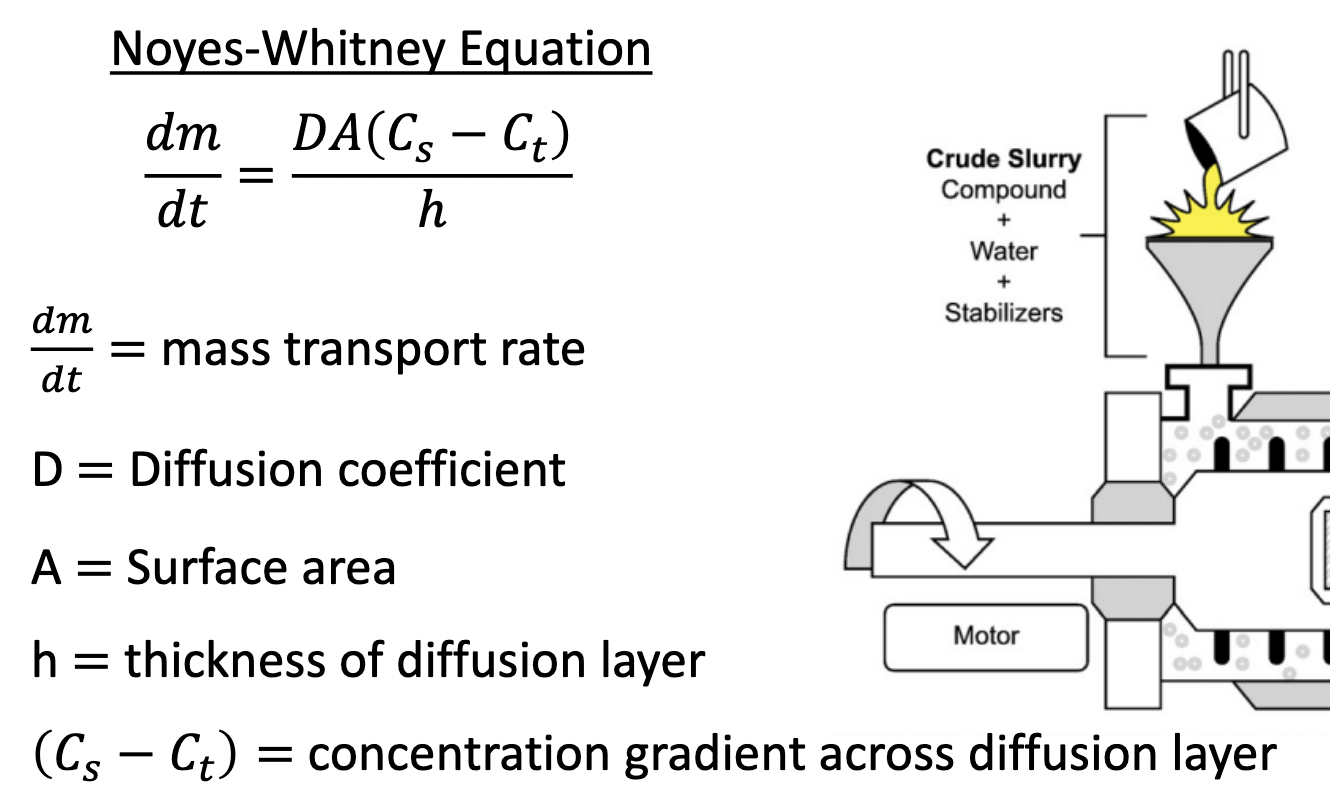
need 38-40 + to slide 6 on next one owo good work
Polymorph (various crystalline forms)
pretty important work in looking into optimal ways to form the structure (salt, cosolvent, cocrystal)
different ways they dissolve or how well
Drug Stability:
temperature, heat, light, exposure, time can affect stability
amorphous drug dispersion (shit to add to the drug to make it soluble) fail over time which leads to more crystalline states (can’t dissolve in your blood) therefore drug is useless
new thing I learned:
the head facing outward is hydrophilic