International trade
imports:
products produced abroad that are consumed domestically
- money flows to a foreign country
exports:
products produced in home economy and consumed abroad
- money flows into domestic country
why start global trading?
- access to resources you do not currently have
- ability to profit from excess resource
- access to knowledge you cannot gain domestically
- access to equipment you cannot produce
- ability to specialise in what you are best at and obtain everything else from someone who is better at these goods
reasons for (global) trade:
- USP
- quality
- brand loyalty / image
- lower costs (economies of scale/cheap raw materials)
- customer service
- distribution capacity
conditions that prompt trade:
- gain expertise
- access to better resources
- cheaper raw materials
- outsourcing workers
- wider market
- global recognition
- relaxed regulations
push vs pull factors
- push - reasons why firms want to leave domestic market (go abroad)
- saturated markets
- rising competition levels
- national minimum wage rises → squeezes profit margins
- pull - reasons why firms want to enter a market
- growth rates in other countries
- economies of scale
- offshoring + outsourcing
trade liberalisation
making trade easier + free → removing barriers + promoting co-operation between countries
- main forces behind trade liberalisation:
- trading blocs
- containerisation + communication
- FDI
- WTO
→ encourages free trade through supporting multilateral trade
→ ensuring countries follow world trade rules:
- dispute resolutions
- monitoring
specialisation:
the process by which individuals, businesses + economies concentrate on creating + selling those goods + services that they produce most efficiently + cost effectively
advantages:
- increased efficiently
- increased competitive advantages
- lower prices
- increased brand loyalty
disadvantages:
- trends may change
- forced into a niche market
- may become over reliant
→ if 1 part of the good can be imported then it creates a production lag
FDI:
where a company sets up a new business abroad/takes over/merges with another business overseas
- inward FDI - investment coming into a country
- outward FDI - investment going out of a country
reasons for FDI:
- gain expertise from other companies
- expand market share
- government support
- enter new markets
- cope with high levels of competition
- increase profit
- develop global brand
- close to fast growing markets
- close to manufacturing sites
- close to skilled labour
- transportation links
reasons why FDI can fail:
- competition
- not understanding the market
- getting the locations wrong
- not knowing the local culture
protectionism:
how countries restrict trade:
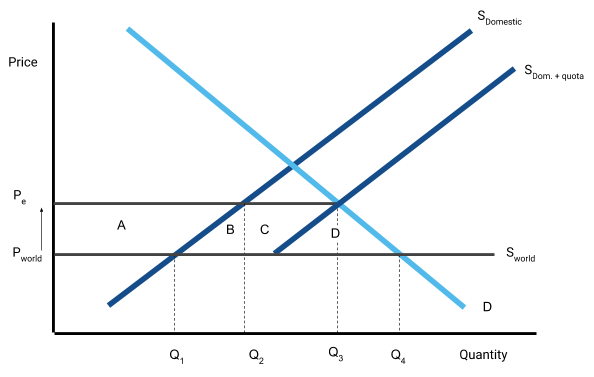
- ==quota== - a limited quantity of a particular products which can be produced/imported/exported
- embargo - prohibiting trade with a target country (usually due to diplomatic issues)
- subsidies - protectionist measure as they support domestic producers who otherwise might not be able to compete with foreign imports
- non-tariff barriers (biggest issue for the UK)
- usually, rules + regulations
- some are justifiable, others seem clearly designed specially to limit imports
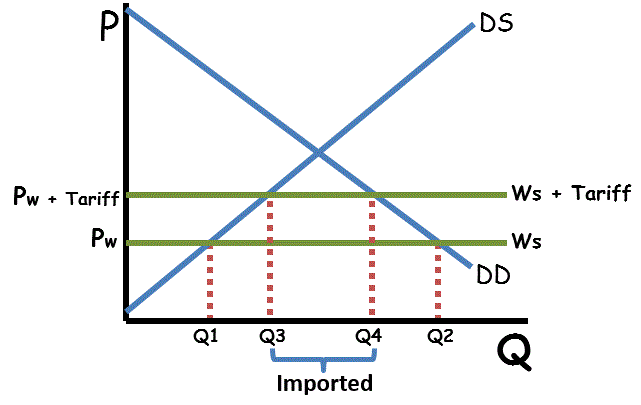
- ==tariff== - a tax on a particular class of imports/exports
trade deficit - imports more than exports
Non-tariff barriers:
- legislation
- some are justifiable, but others are clearly designed to limit trade (imports) → protect domestic products, and reduce competition for local companies so that they are not pushed out by MNCs
- subsidies
- a sum of money granted by the state or a public body to help an industry or business keep the price of a commodity or service low
- helps domestic businesses to compete with foreign firms that have entered the market in hopes of monopoly