Segmentation, Targeting, and Positioning
Segmentation, Targeting, and Positioning
The marketing concepts is all about meeting buyeers needs but reaserch shows that people have different kinds of needs. Marketing indi person diff is expenny and inefficient is not practical, except for very expenny, one-of-a-kind purcahses. This lecture is about how marketers have found a way to market segmentation to be responive to needs while still being resources-efficient.
Segmentation: Dividing markets into distinct groups based on characteristics. That allow us to meet the needs of the selected groups more efficiently and effectively.
Targeting: Choosing specific segments to focus marketing efforts.
Positioning: Making your product attractive to the chosen target market by creating a unique image or perception.
Relevant to the marketing mix assignment.
Market Segmentation
Market segmentation meets diverse needs effectively. If the division of groups dont work, either you haven’t split them correctly ior they dont need to be divided
Homogeneity within segments - everyone withing a segment should be similar
Heterogeneity between segments - everyone within a segment should be different form people in other segments
Market Segment
Consumers with similar wants/needs.
Respond similarly to marketing action.
Example: Cruise segments and pricing, with different segments responding differently to offers like 'buy one, get one free.' Rich people wouldn’t care but normal people would take the offer. Put your efforts and money into the right markets.
Ways to Segment the Market
Geographic: Location-based segmentation.
Demographic: Segmentation based on who people are (age, gender, etc.).
Psychographic: Values/lifestyles.
Behavioral: Consumer behavior.
Geographic Segmentation
Dividing markets by location. (mountain range = 4WD, city = small, farming etc.)
Car preferences vary by region.
Demographic Segmentation
Dividing markets by characteristics like age, gender and income.
Example: Gender reveal parties.
Easy to identify but not always effective.
Psychographic Segmentation
Demographics combined with psychological variables.
Different lifestyles have different preferences. (wine and jazz festivals vs beer and octoberfest)
Behavioral Segmentation
Usage Rate: Segmenting based on how much the product is used/how much you buy.
Loyalty Programs: Rewarding customers.
frequent flyers
80/20 Rule in Marketing
80% of demand from 20% of customers (heavy/reoccuring users)
Focus on retaining loyal customers.
78% of loto consumers only make up 18% of the total population
Targeting loyal customers keeps them in the business and stops from going to competitiors
Occasion
Occasion: When the product is used.
McDonald's targets different groups at different times of day.
Benefits: What customers seek.
Benefit Segmentation
Uses the most important benefits as percieved by the consumer to put the sonusmer into segments
Benefits : advantages sought by buyer
Attributes : features of the product that provide the benefits
Targeting
Targeting: Selecting specific segments to market to.
Older ppl, young couples, lifestyles
EXAMPLE:
Diet Coke = changing your apprance to be smallers
Coke light = keeping the same figure, asian countries people didn’t like the diet one as it implyed that you wanted to change.
Coke Zero = Manly drink as dieting and light is seen as a feminie drink.
Targeting Approaches
Unndifferentiation targeting(mass marketing)
Marketing to all consumers the same way, not targeting to specific people
Concentrated target (niche marketing)
Marketing to only one segment
EX, CVS 80% women customers →Shorter wait times for presciptions, wider and better lit shopping isles, more beauty isles
EX radio Rhema → christain radio channel.
Mutli segment targeting
Multiple segments, multiple products
Marketing diff prod to the diff selected segs in diff ways:
Key Considerations for Choosing a Target Market
Tagert market selection Criteria: Examine the poitentual segment (pg 92-93)
Substantiality (market size): is thie market segment large enough to be profitable now?
Indentifiabiltiy and measurabilty: can we identify and measure the people in this market segment
Accessibilty and measurability : can we reach theis market seg affordably, cost of reaching?
Responsiveness: would targeting this market seg specifically improve their responses to our product.
Is the market big enough to sustain profitability?
Can you identify and measure the market?
Is it reachable and responsive to marketing efforts?
Positioning:
Shaping how the target market perceives the product.
How we want to appear to out selected target market.
How the firm is perceived relative to competitors.
Framing influences perception.
Applies to firms, brands, and products.
Types of Positioning
Head-to-Head: Competing on attributes directly with competitors on similar product attributes in the same target market. eg inexpenny rentals (lower quality/older cars) (Juicy renting traveling vans )
Differentiation positioning: Finding a smaller, less competitive market niche to locate your product/brand eg. hourly rentals (city hop)
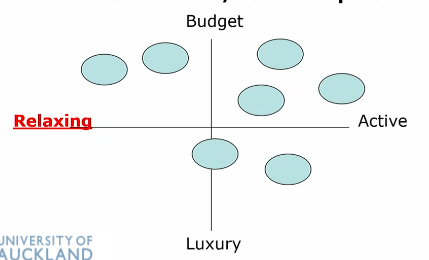
Perceptual Maps
Measure positioning visually.
Visual representation of brand perception along key dimensions.
Identifies market opportunities and gaps.
Why is positioning important?
For comparison
Your position veiwed by consumers is centural to their perceptions and choice decisions.
Positioning distinguishes one option from its competitors
Knowing your position helps you figure out who your closet competitors are (threats)
For Strategy
Knowing your position helps you determine if ther are opportunies in the marketplace
All elements of the marketing programs can affect the position
Clear position stragey is needed before coherent marketing plan can be developed.