Photosynthesis- Light-dependent Reaction using TM
Photosynthesis- 6CO2 + 6H2O = C6H1206 + 6H2O
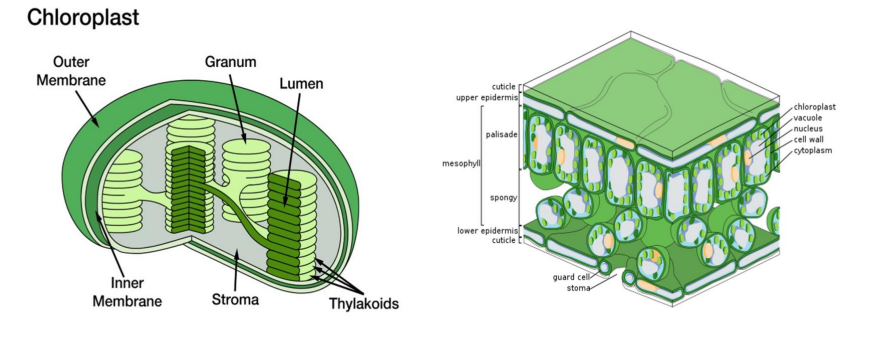
Structure of a leaf contains a waxy cuticle to stop water evaporation and epidermis Palisade cells- contain chloroplasts, spongy spaces so structure and for CO2 to go, lower epidermis has guard cells and stomata which allows gases in and out
Chloroplast has a double membrane and a liquid called stoma which contain thylakoid which are small stacks (Grana) which membrane and are all connected by lamellae within the thylakoids are where the pigments are which absorb light
OILRIG- Oxidation is loss (Gain O lose H and E) reduction is gain ( Gain H and E lose O)
Light Dependent Reaction
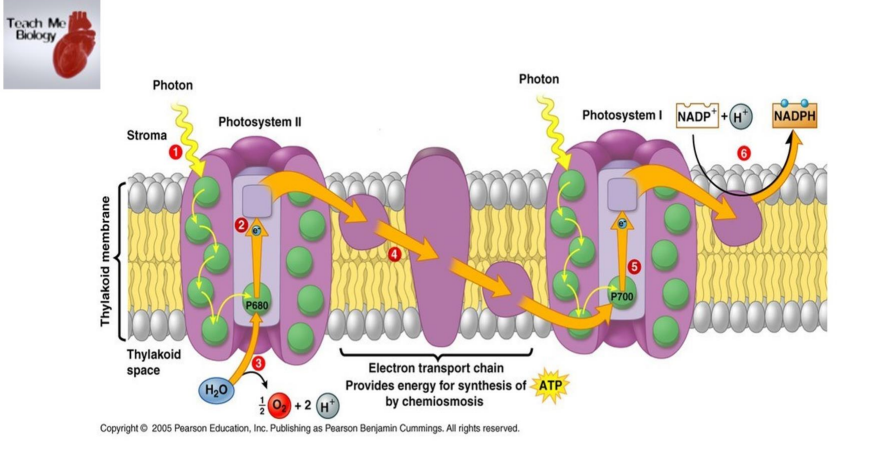
In the thylakoid membrane there are 2 photosystems PSI (680) and PSII (700) and contain chlorophyll a +b or carotene (Photosynthetic Pigments)
Three stages of this reaction:
Photoionization-PSII absorbs light, provided energy therefore two electrons gain energy then they are propelled out out of the chlorophyll leaving it a positive molecule and oxidisation
Photophosphorylation-
Passed along carriers in the electron transport chain (Redox), as they move along there any levels go down and stay at PSI
This provided energy to the protons in the stroma which can now be actively transported through the ETC into the thylakoid to be used for chemiosmosis
As they go through ATP synthase to create ATP and are back down the concentration gradient to the stoma.
The electrons at PSI then get passed onto a Coenzyme of NAD and a proton to form NADPH.
Both ATP and NADPH are used in the Light-independent reaction. Electrons are then replace by Photolysis
This is non-cyclic phosphorylation
Cyclic phosphorylation is where electrons go into a cycle across the ETC without PSII back to PSI to remake more ATP
Photolysis-Where a water molecule is split by light to form Electron, proton and oxygen.
E- Used to replenish PSII
H- Used in proton gradient
O- Waste product
Electron transport chain