Leadership
Leadership
What Is Leadership?
Definition: Leadership is the process whereby an individual influences a group of individuals to achieve a common goal.
Exemplary Leaders: Key characteristics include:
Create a sense of vision or mission for the group.
Motivate others to join them in pursuit of that mission.
Create culture/environment for followers to operate.
Generate optimism and trust in followers.
Develop other leaders in the group.
Achieve results.
Methods of Choosing Leaders
Appointed or Prescribed Leaders: Individuals appointed by some authority to a leadership position (e.g., health club manager, coach, head athletic trainer).
Emergent Leaders: Individuals who emerge from a group and take charge (e.g., captain of an intramural team, student leader of an exercise class).
Approaches to Studying Leadership
Trait Approach (Leadership is Born)
Focus: Identifying personality characteristics common in great leaders.
Key Insights:
Leaders possess a variety of personality characteristics.
No specific set of traits guarantees leadership success.
Behavioral Approach (Leadership is Made)
Focus: Identifying universal behaviors of effective leaders rather than traits.
Key Behaviors:
Successful leaders use both:
Consideration: Focus on friendship, mutual trust, and respect.
Initiating Structure: Focus on rules, goals, and objectives.
Leaders in Sport:
Effective coaches focus positively on instruction and demonstration, providing clear feedback and technical instruction.
Coaches vs. Peer Leaders:
Coaches: Primarily exhibit training and instruction and autocratic behavior.
Peer leaders: Utilize social support, positive feedback, and democratic behavior.
Situational Approach
Insight: Effective leadership is more dependent on situational characteristics than on the traits or behaviors of leaders.
Significance: This approach illustrates how situational features greatly influence leader success.
Interactional Approach
Focus: Personal and situational factors must be examined to understand effective leadership.
Implications:
No single set of characteristics guarantees successful leaders, but characteristics are important.
Effective leadership styles adapt to the specific situation at hand.
Leadership styles can be modified.
Types of Leaders:
Relationship-Oriented Leader: Focuses on developing and maintaining good interpersonal relationships.
Task-Oriented Leader: Concentrates on setting goals and achieving tasks.
Effectiveness:
Task-oriented leaders are effective in extremely favorable or unfavorable situations.
Relationship-oriented leaders function best in moderately favorable situations.
Cognitive-Mediational Model
Definition: Coach leadership behaviors arise from their personal characteristics, mediated by situational factors and the athletes' interpretations of these behaviors.
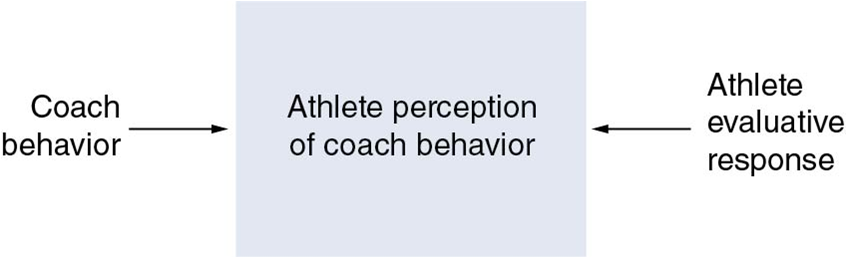
Coaching Behavior Assessment System (CBAS)
Overview: Focuses on leaders' reactive and spontaneous behaviors in sport.
Recommendation: Encouraging the use of positive coaching behaviors, such as frequent reinforcement and mistake-contingent encouragement leads to greater athlete enjoyment, self-esteem, and lower dropout rates, especially among youth athletes.
Multidimensional Model of Sport Leadership
Definition: Leader effectiveness can differ based on athletes' characteristics, leader behaviors, and situational constraints.
Leadership Scale for Sport (LSS) Dimensions:
Training: Instructive behaviors.
Democratic Behavior: Decision-making style.
Autocratic Behavior: Decision-making style.
Social Support: Motivational tendencies.
Positive Feedback: Motivational tendencies.
Optimal Outcomes: Achieved when the leader’s required, preferred, and actual behaviors align effectively.
Required Leader Behavior: Expected behavior by the group.
Actual Leader Behavior: Behavior as exhibited by the leader.
Preferred Leader Behavior: Desired behavior by the followers.
Leadership Guidelines for the Pursuit of Excellence
Creation of a compelling vision for followers.
Inspirational communication to instill pride and enhance morale.
Provide intellectual stimulation to help followers understand the bigger picture.
Individualized attention and supportive behavior towards each follower.
Recognition of achievements and efforts of individuals.
Demanding and directing behaviors that establish clear expectations.
Promotion of self-efficacy and self-esteem among followers.
Emphasis on winning—while ensuring that winning is not prioritized above all else.
Promote competitiveness within the team while maintaining balance.
Integrate task and ego orientations appropriately within the team climate.
Provide cognitive, emotional, and technical training as necessary.
Facilitate conditions for achieving a state of flow.
Transformational Leadership in Sport
Definition: Transformational leadership occurs when leaders take a visionary role and inspire followers to work collaboratively towards excellence.
Characteristics:
Idealized Influence: Leaders serve as role models, earning respect and trust from followers.
Inspirational Motivation: Leaders convey a powerful vision and encourage followers to engage in challenging tasks.
Intellectual Stimulation: Leaders motivate followers to explore creative approaches to challenges.
Individualized Consideration: Leaders recognize and respond to each group member's needs.
Servant and Authentic Leadership
Definition: Servant leadership focuses on clarifying goals and actively supporting followers to achieve success; the leader considers themselves in service to others.
Key Insight: Authenticity is a leader's most valuable trait, emphasizing genuine commitment to others’ success.
Notable Figures:
Marcus Buckingham
Kenneth H. Blanchard
Antecedents of Leadership
Factors Influencing Leadership Preferences:
Age and Maturity: Preferences shift from high school to university, with older athletes favoring more autocratic and supportive coaching styles, while younger athletes prefer more training and instruction.
Sex: Males generally prefer instructive and autocratic styles; females favor democratic, participatory approaches.
Nationality: Cultural backgrounds influence preferences in coaching styles.
Type of Sport: Athletes in highly interactive sports prefer more autocratic styles than those in less interactive sports.
Team Sports Need more Autocratic Style as they often require quick decision-making and a clear hierarchy for effective communication and strategy execution.
Individual Sports need more of Democratic Style as athletes benefit from having a greater say in their training and competition strategies, encouraging personal accountability and fostering a sense of autonomy.
Psychological Characteristics: Athletes with different internal or external loci of control exhibit varied preferences for leadership styles.
For example, those with an internal locus of control may thrive under democratic leadership, as they take responsibility for their actions and decisions, whereas athletes with an external locus may feel more comfortable in structured environments where directions are clearly provided.
Females high in trait anxiety prefer more positive and social support behaviors than their counterparts with low trait anxiety; this indicates a need for inclusive leadership that emphasizes understanding and empathy in their interactions, allowing them to feel more secure and valued in high-pressure situations.
Consequences of Leadership
Satisfaction:
Coach–athlete compatibility in decision-making style, generous social support of the coach, rewards and democratic decisions are generally associated with higher satisfaction of athletes.
Team sports emphasize the importance of positive coaching behaviors for satisfaction.
Cohesion:
Coaches high in training and instruction, democratic behavior, social support, and positive feedback and low in autocratic behaviors have teams with greater cohesion.
Exercise leaders exhibiting more task-related behaviors and providing task-specific reinforcement were associated with more cohesive exercise groups.
Performance: Support is crucial for losing teams to maintain motivation; intrinsic motivation decreases with autocratic coaching styles.
More Democatic style of leadership can enhance team morale and encourage active participation from all team members, leading to improved overall performance and satisfaction within the group.
Intrinsic motivation
•Coaches who exhibit an autocratic style have athletes with lower levels of intrinsic motivation and perceived competence.
•The effect of coaching style influences athletes’ degree of persistence in sport.
The Four Components of Effective Leadership
Visual Representation:
Leader's qualities
Situational factors
Leadership styles
Follower's qualities
The Art of Leadership
Insight: Leadership is both a science and an art, influenced by wisdom, intelligence, and creativity.
Commitment: Pursue knowledge of effective leadership through reading and observing successful leaders; focus on the interactive nature of attributes that lead to effective leadership and their implications for personal development.
Finding Your Leadership Style
Assessment: Engage in activities and reflections to discover and refine individual leadership styles.
Food for Thought from John Wooden
Insight: Emphasizes the significance of small acts of kindness and care in leadership, illustrating that minor gestures can greatly impact team dynamics and success.