Class Action Test 3
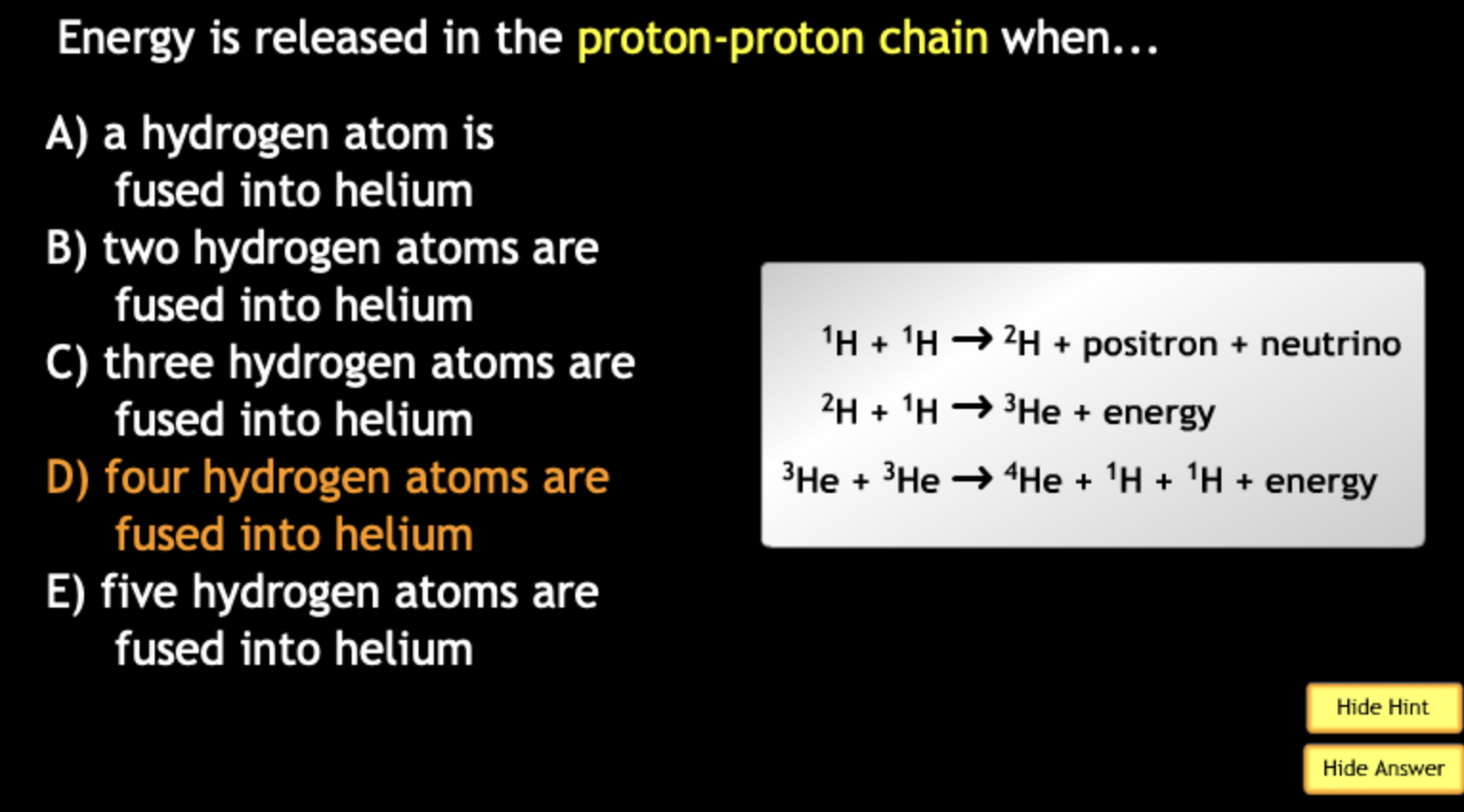
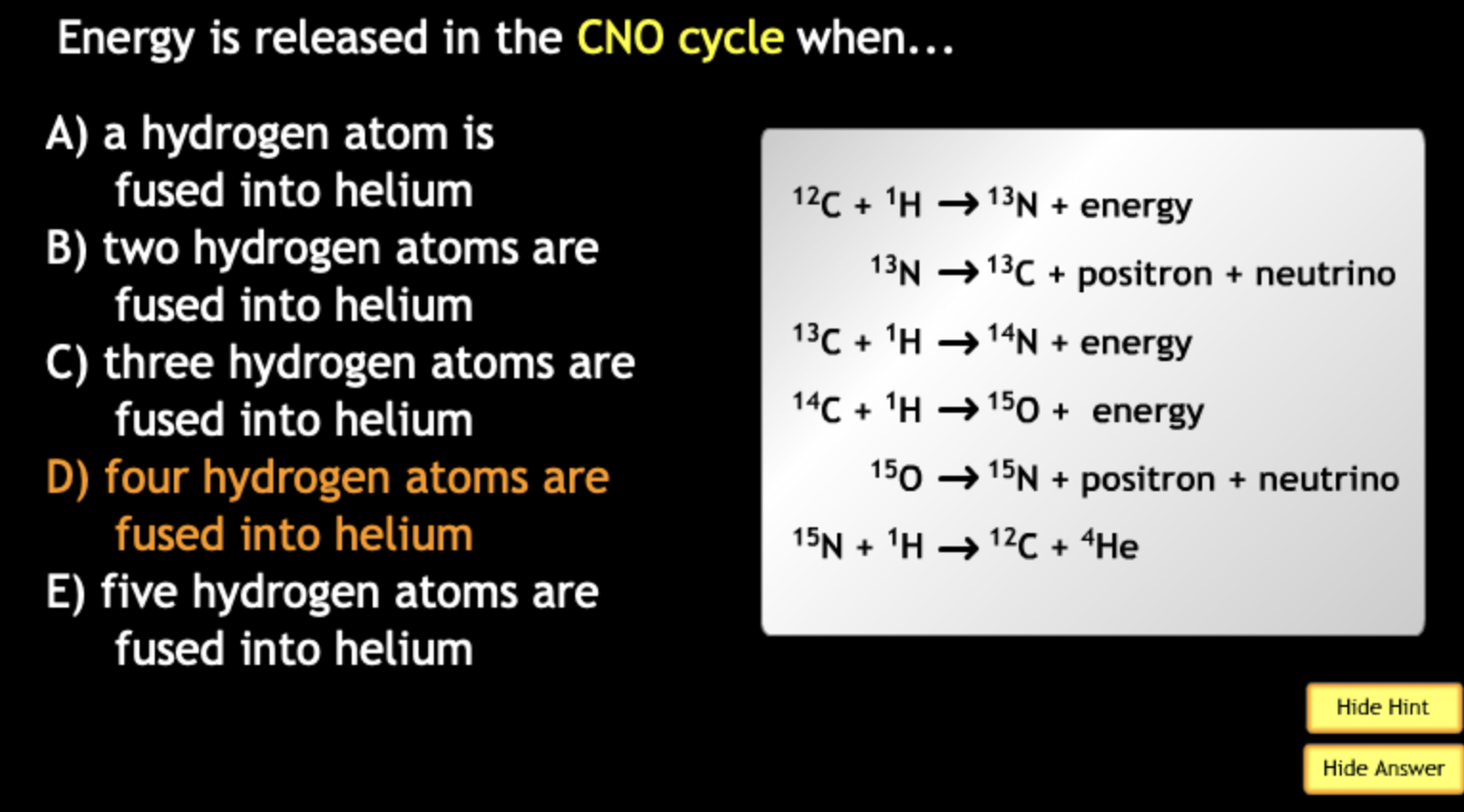
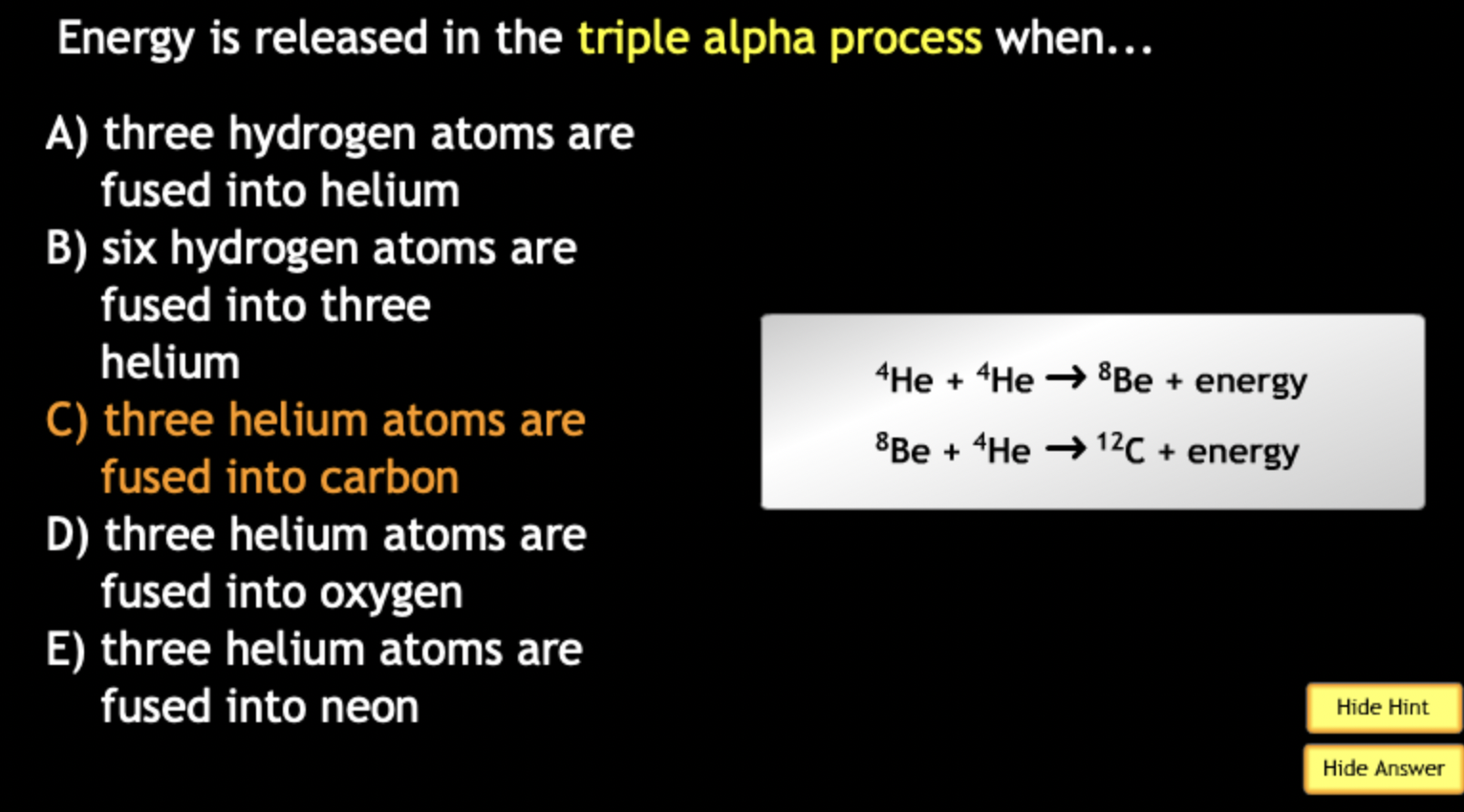
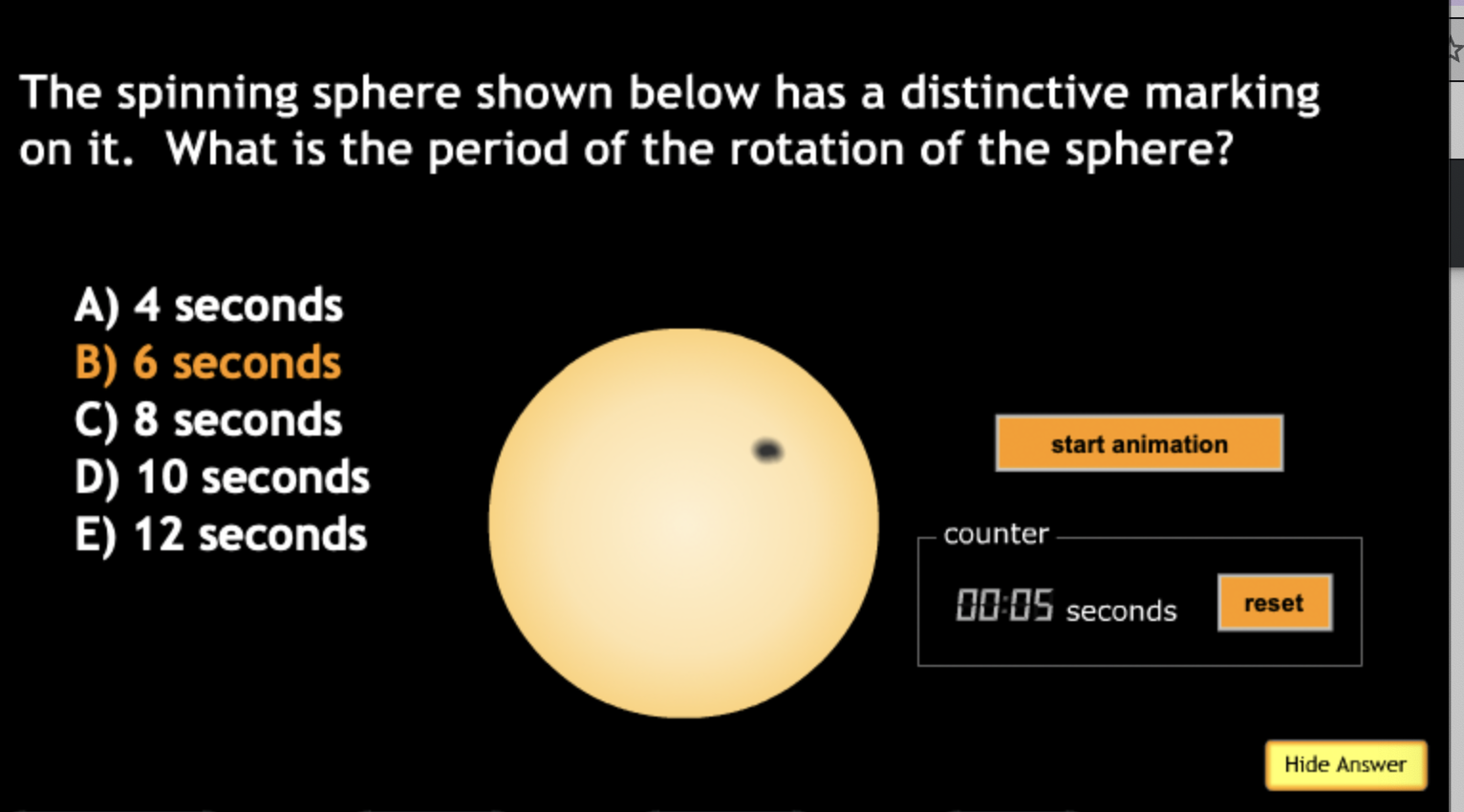
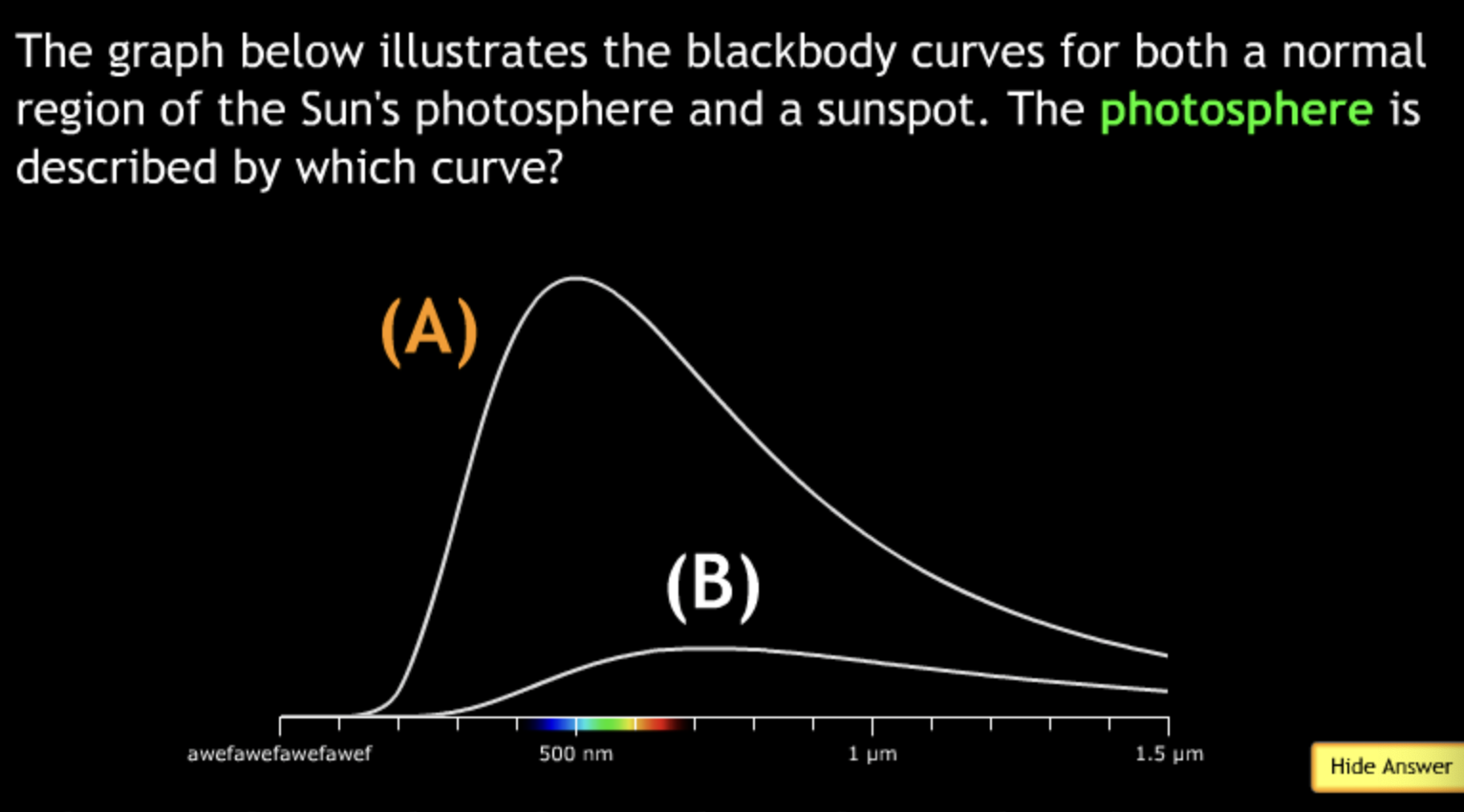
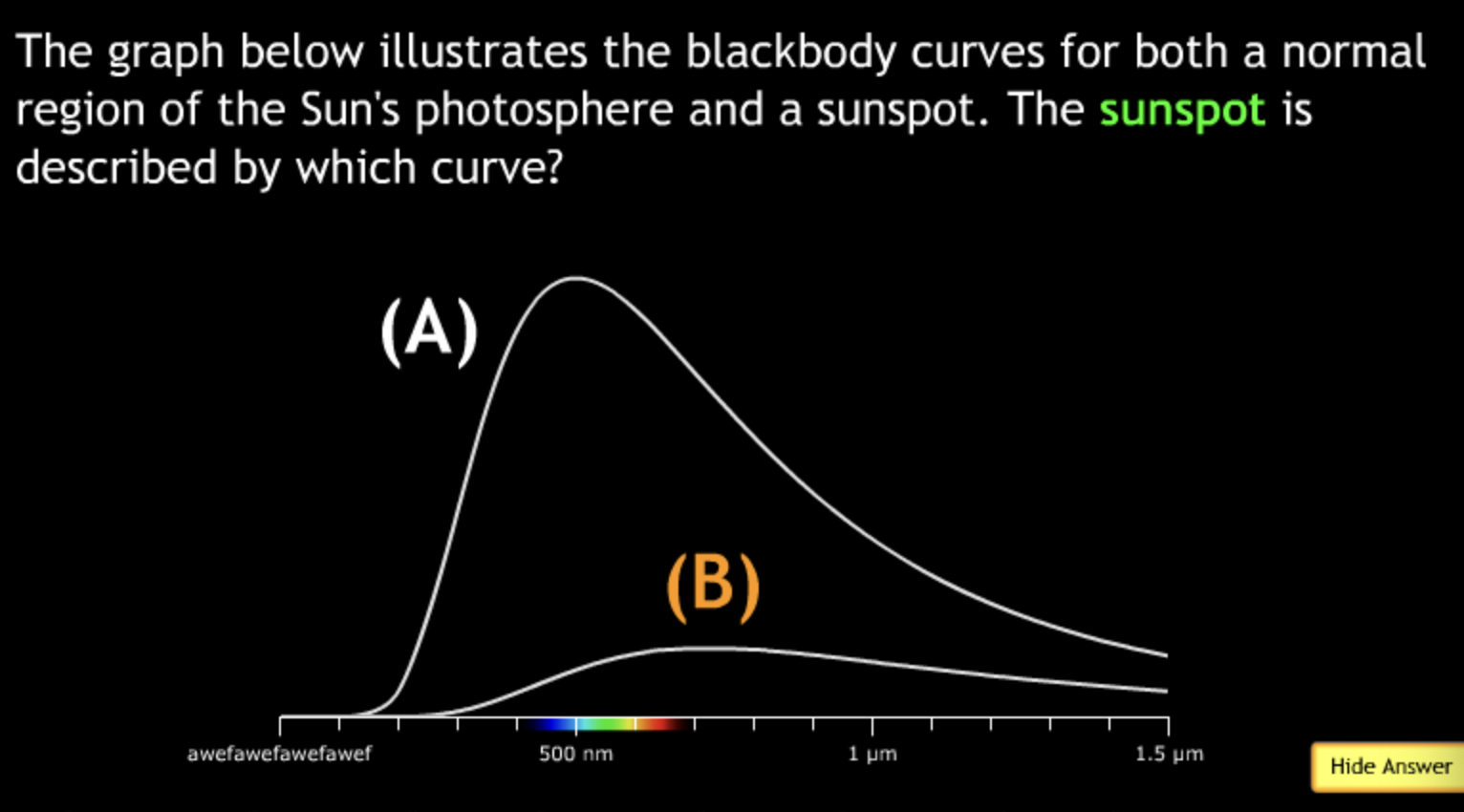
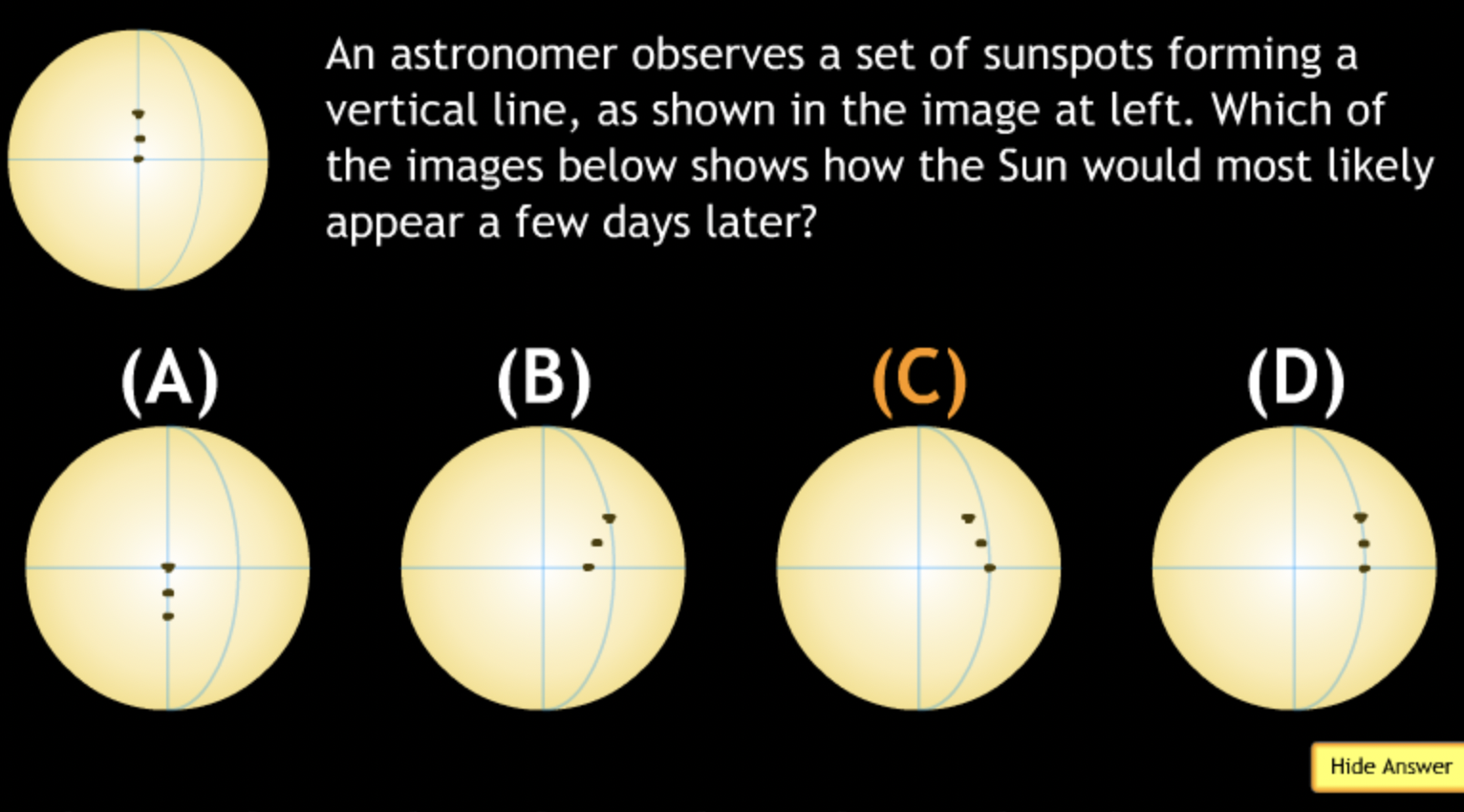
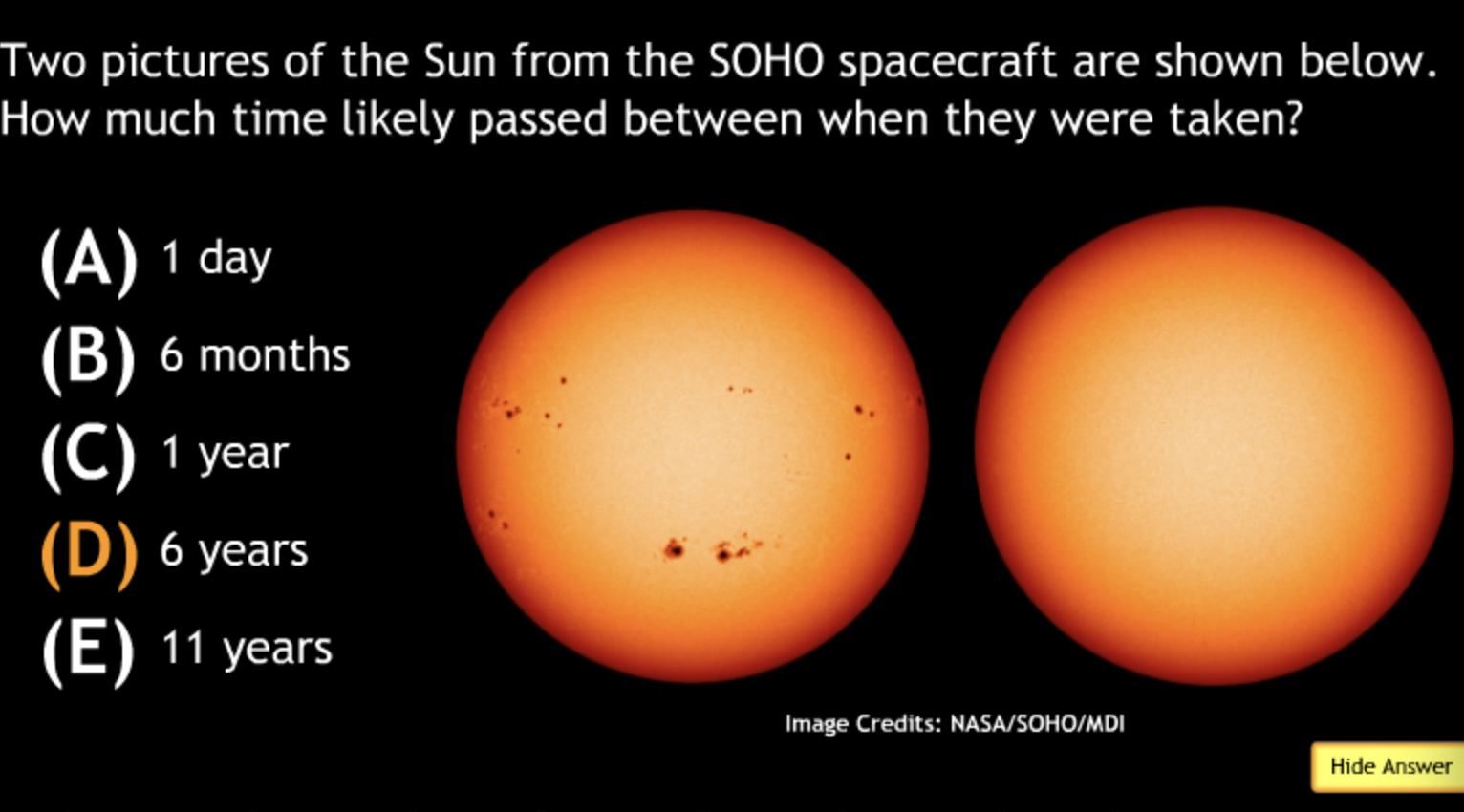
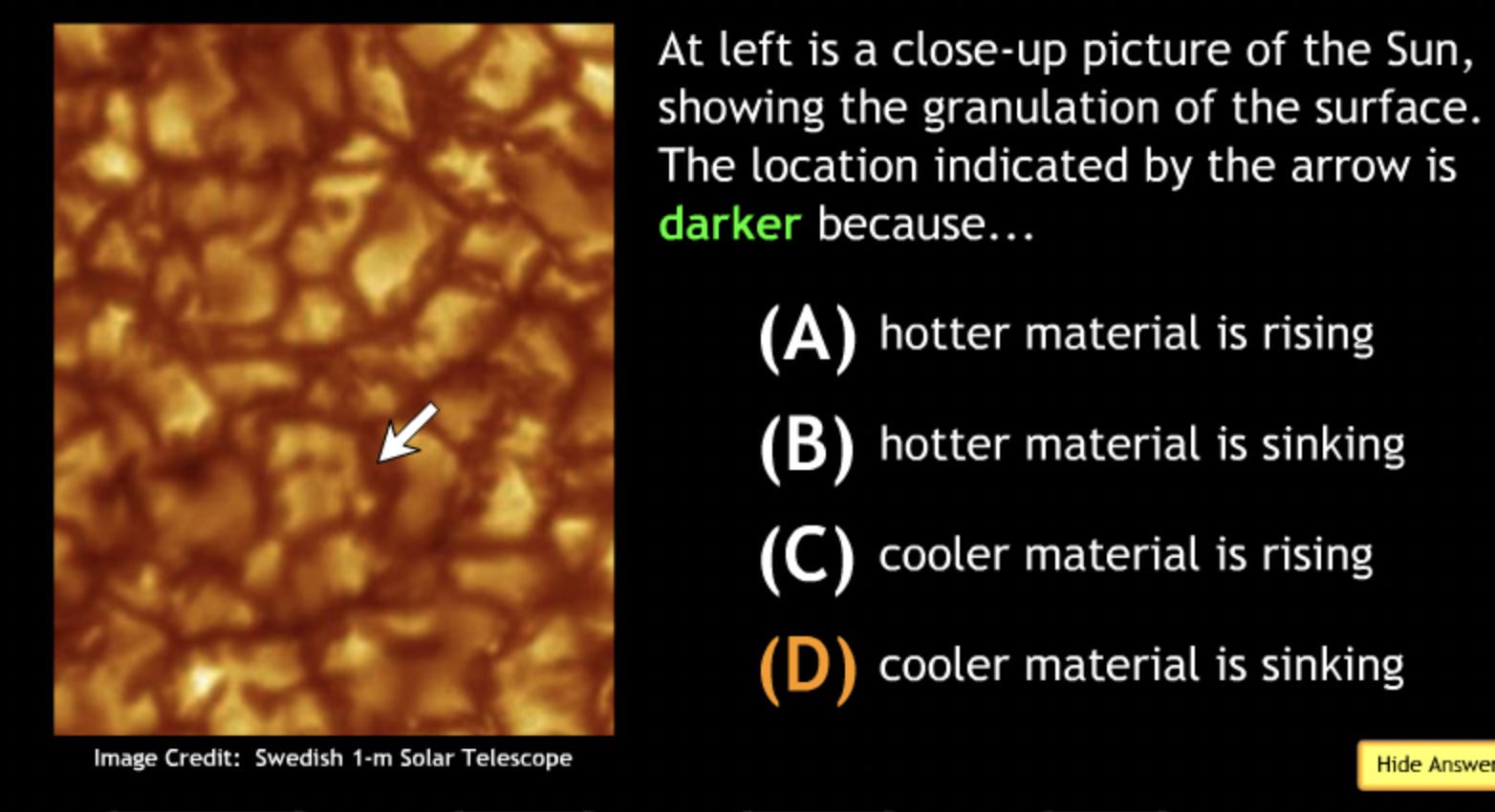
Sunspots appear dark because….. they are cooler than the surrounding region
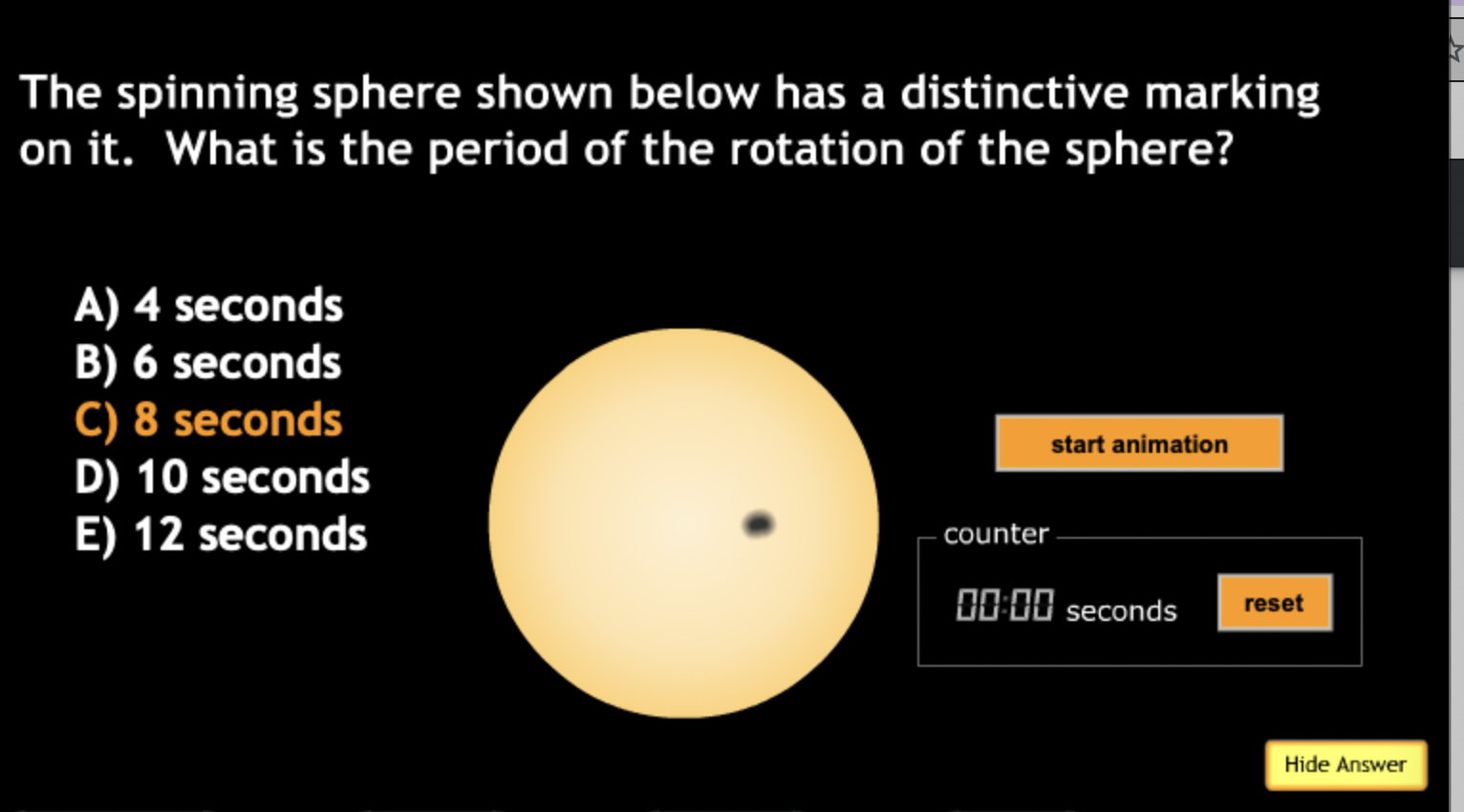
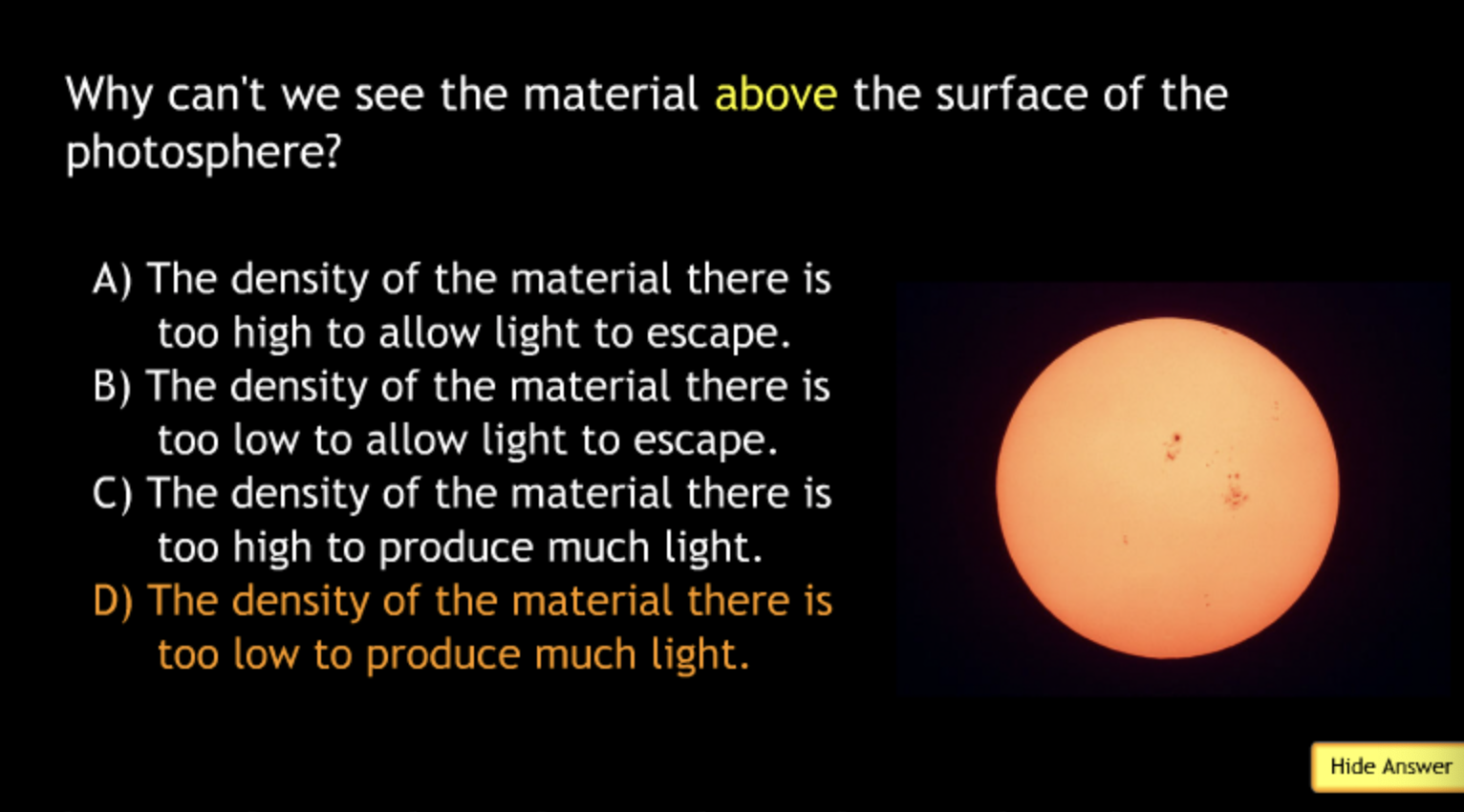
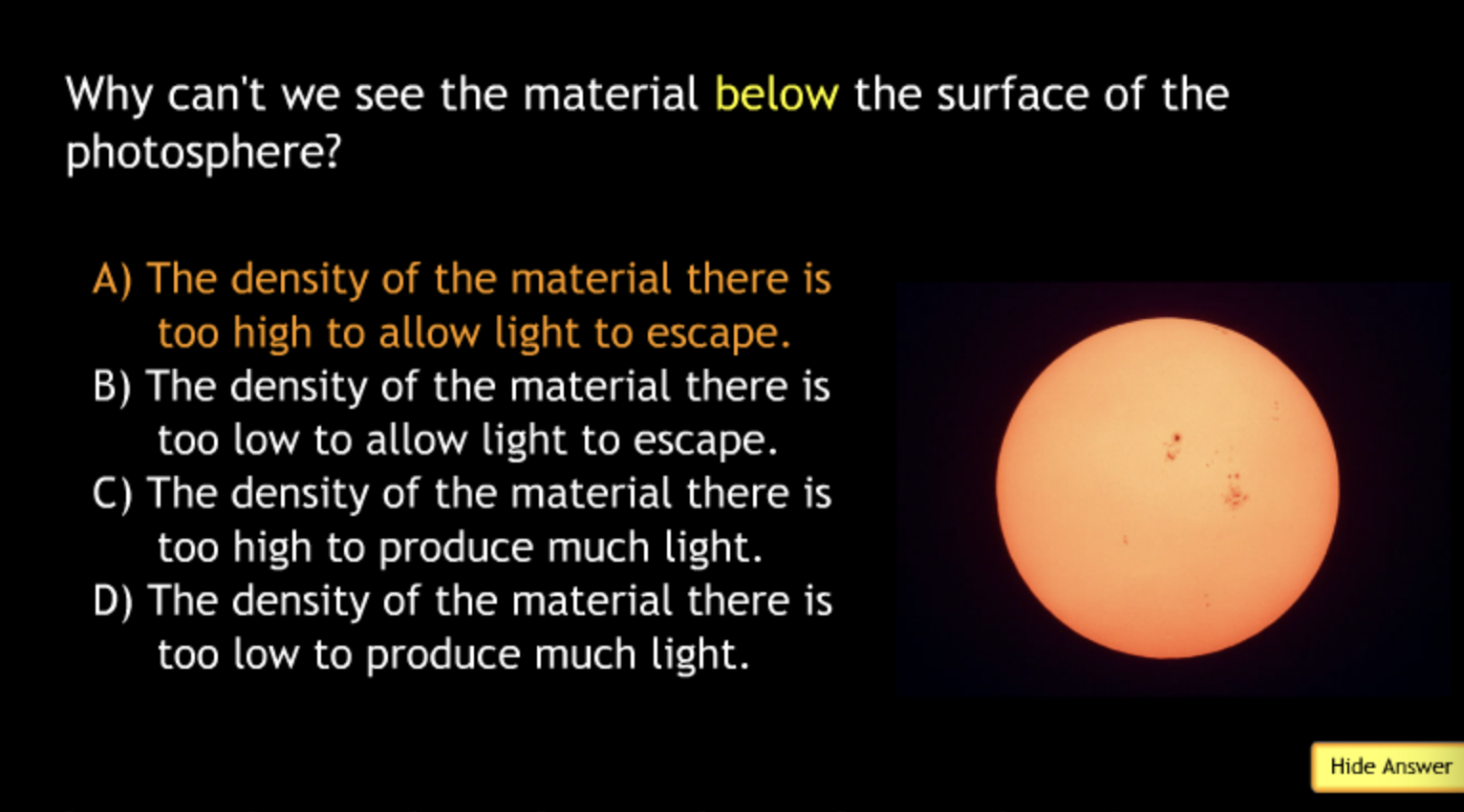
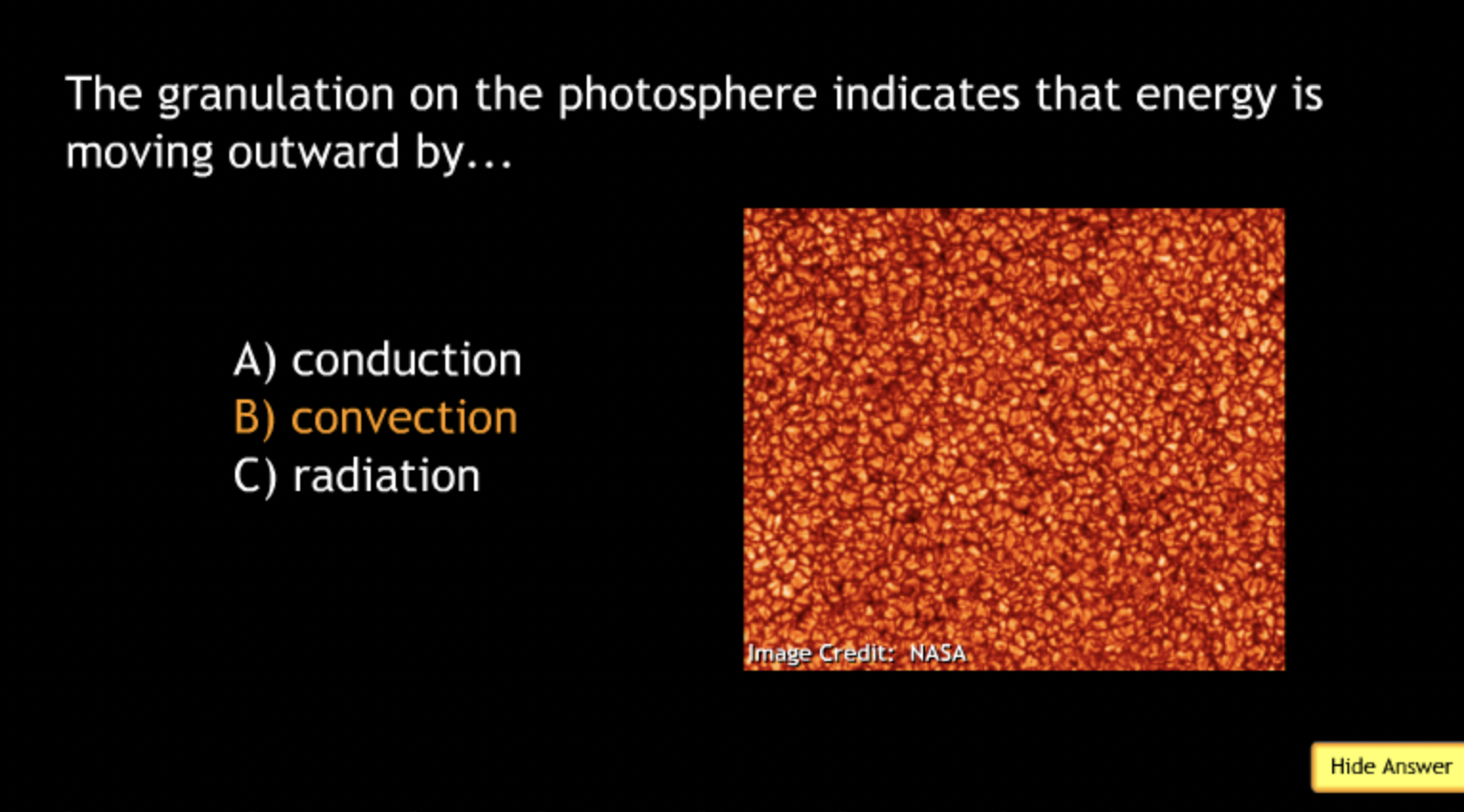
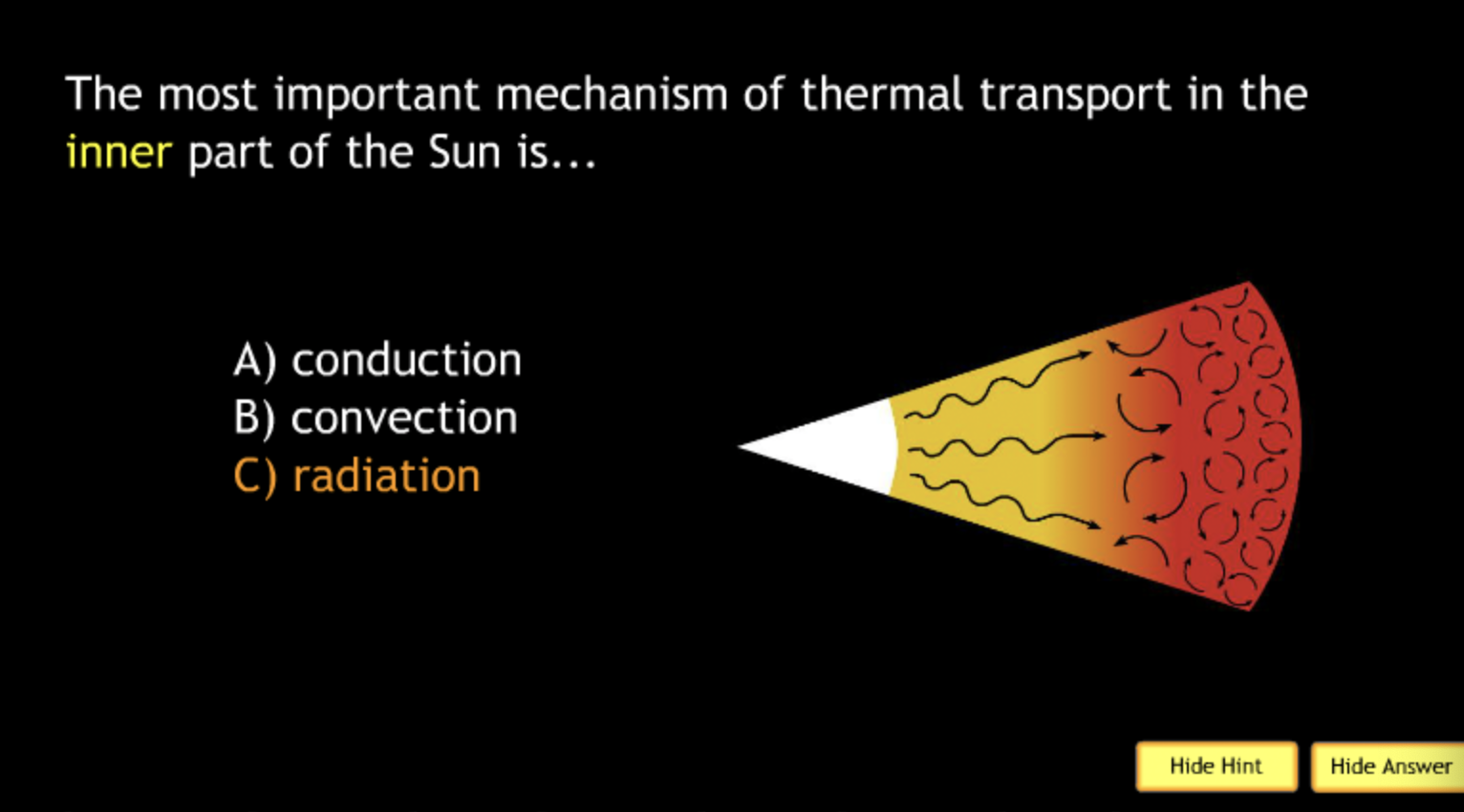
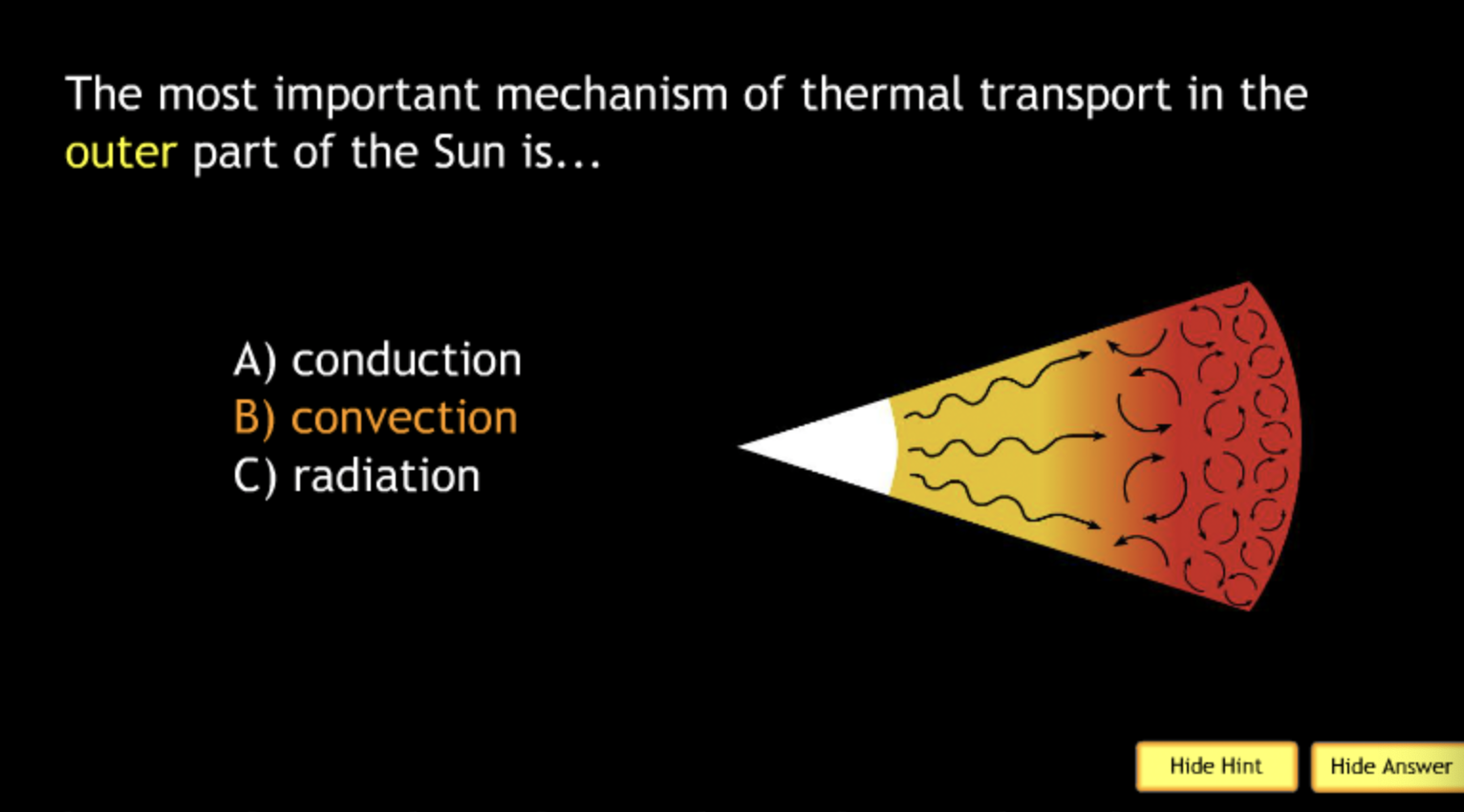
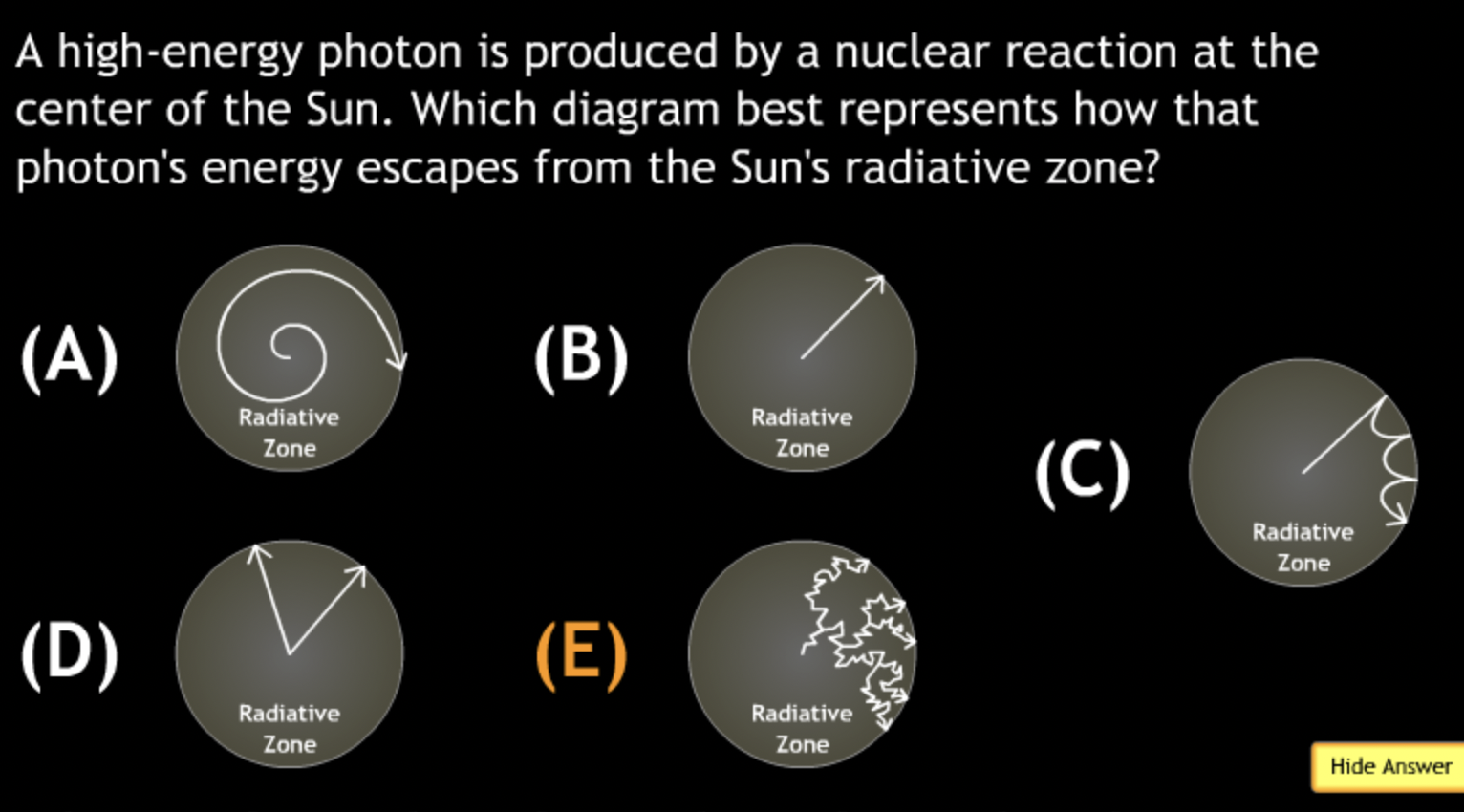
A high-energy photon is produced by a nuclear reaction at the center of the Sun. This energy will leave the Sun… much later as a bunch of lower-energy photons.




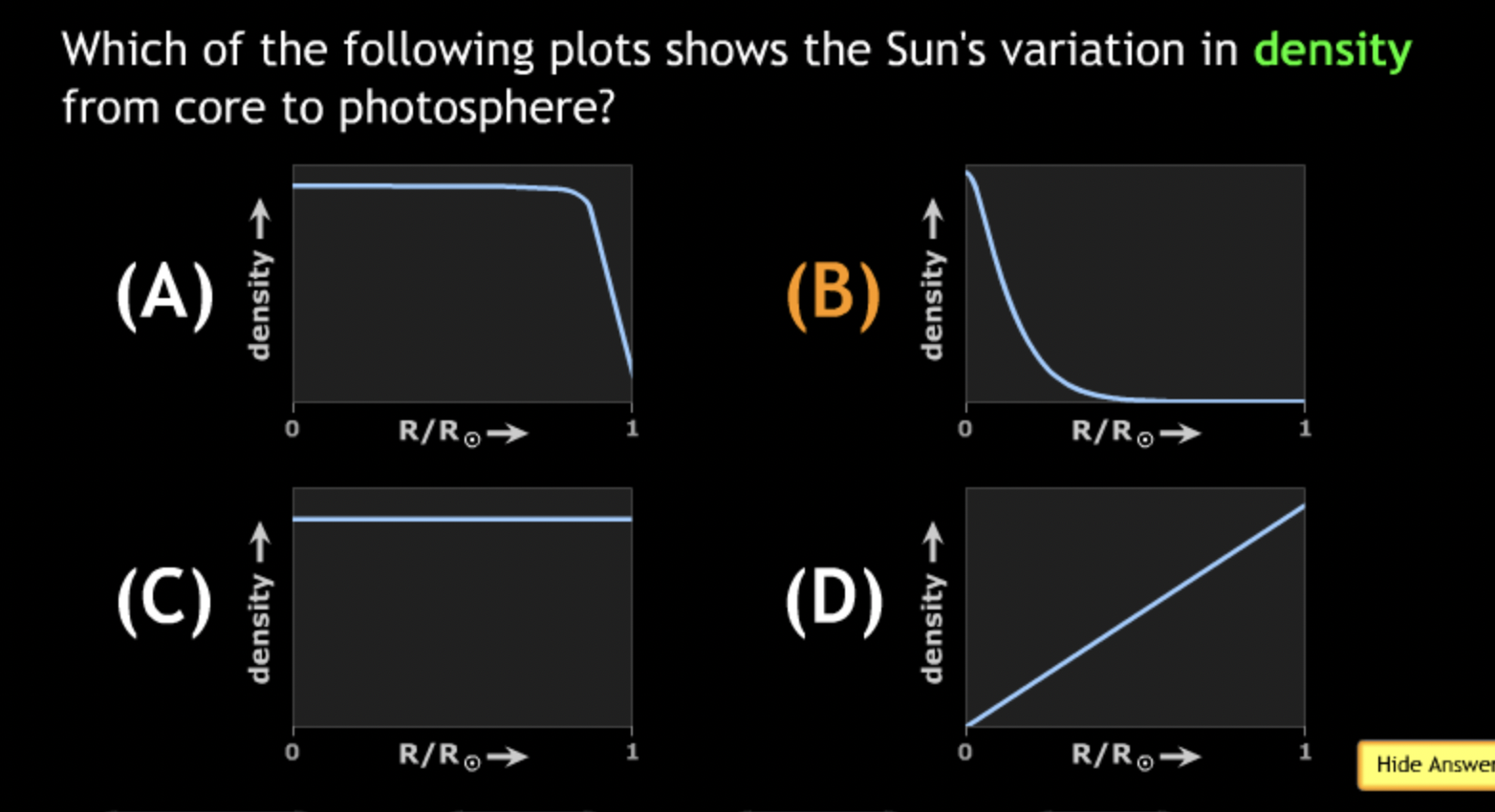
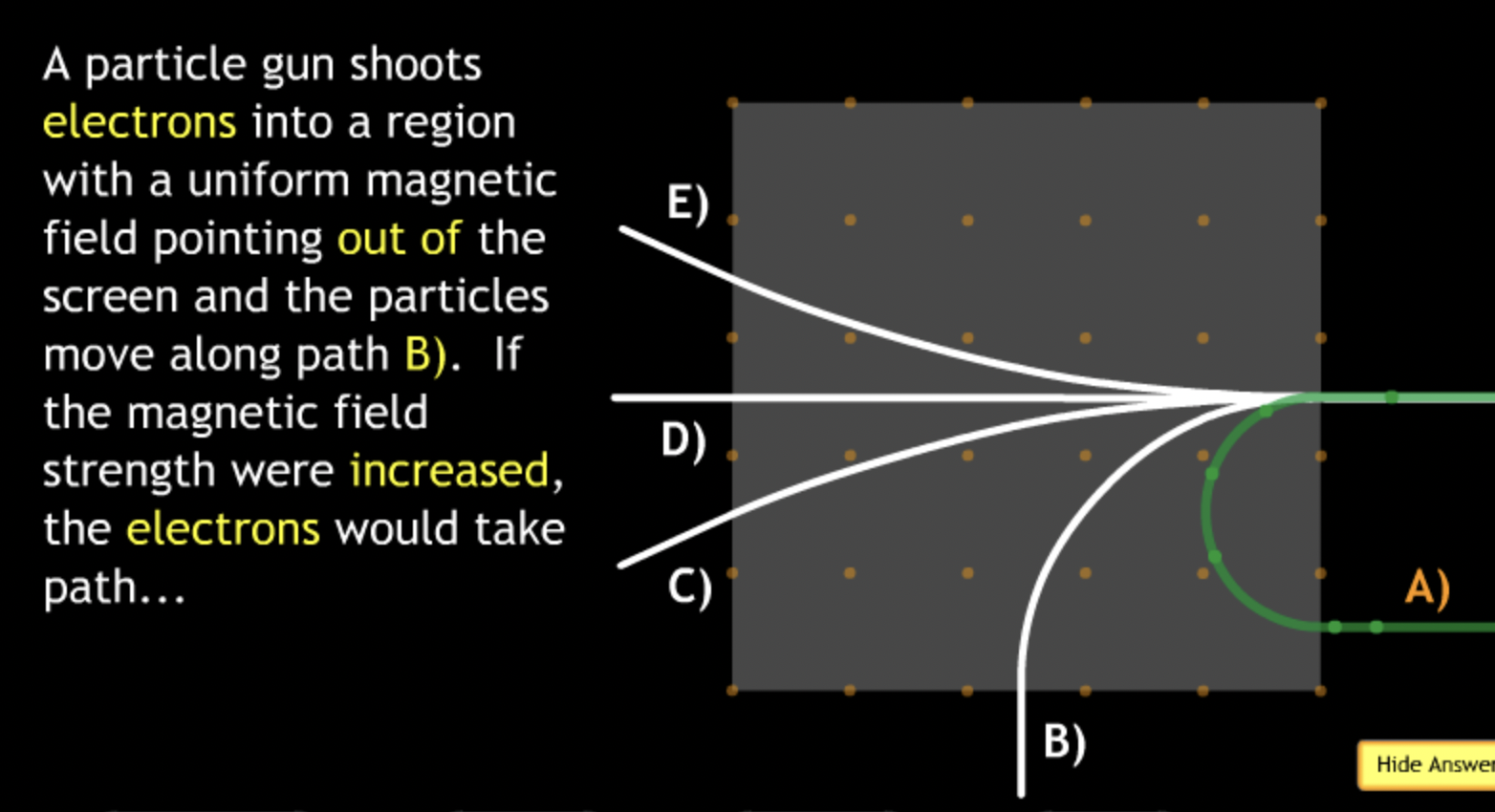
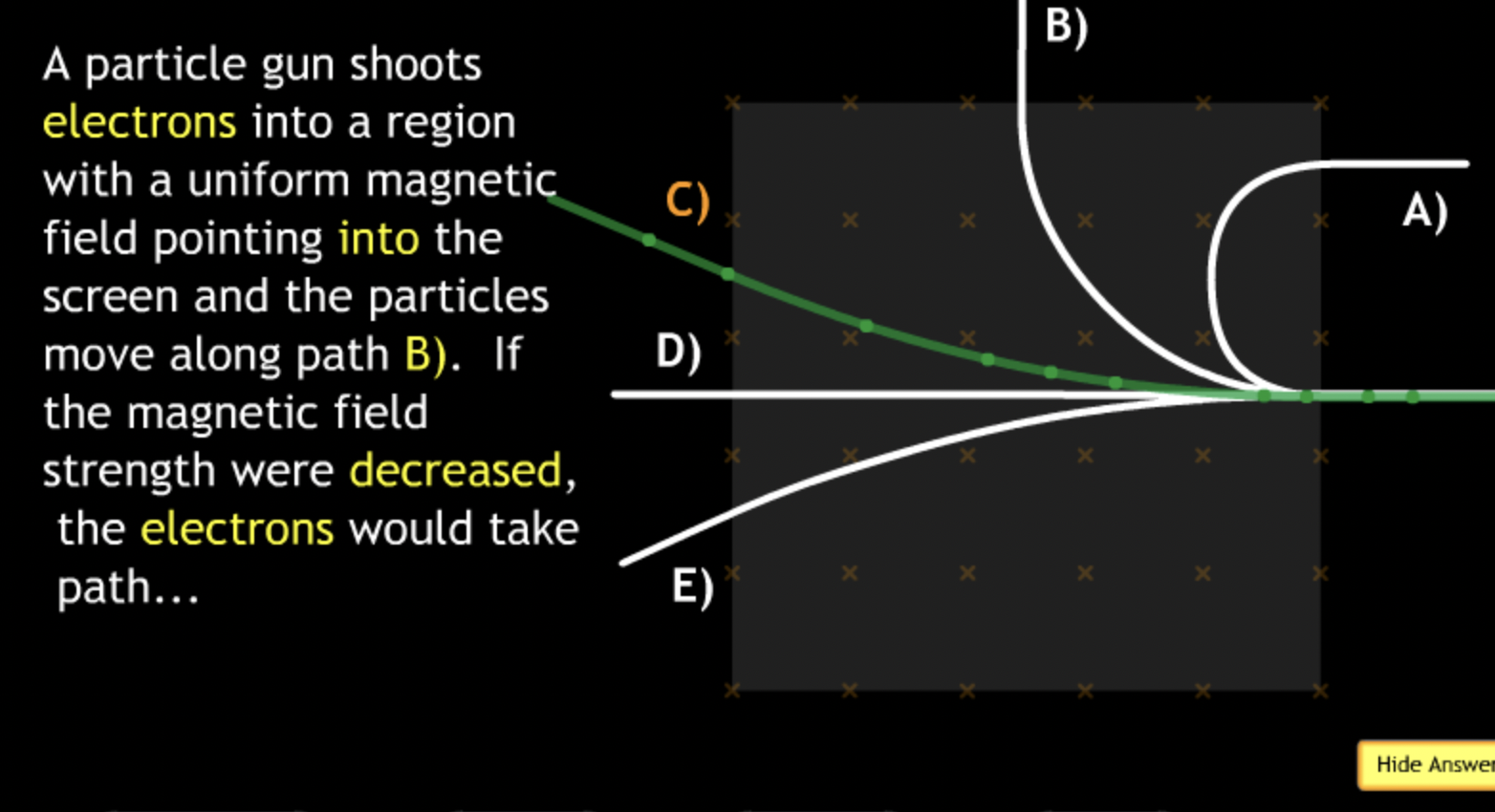
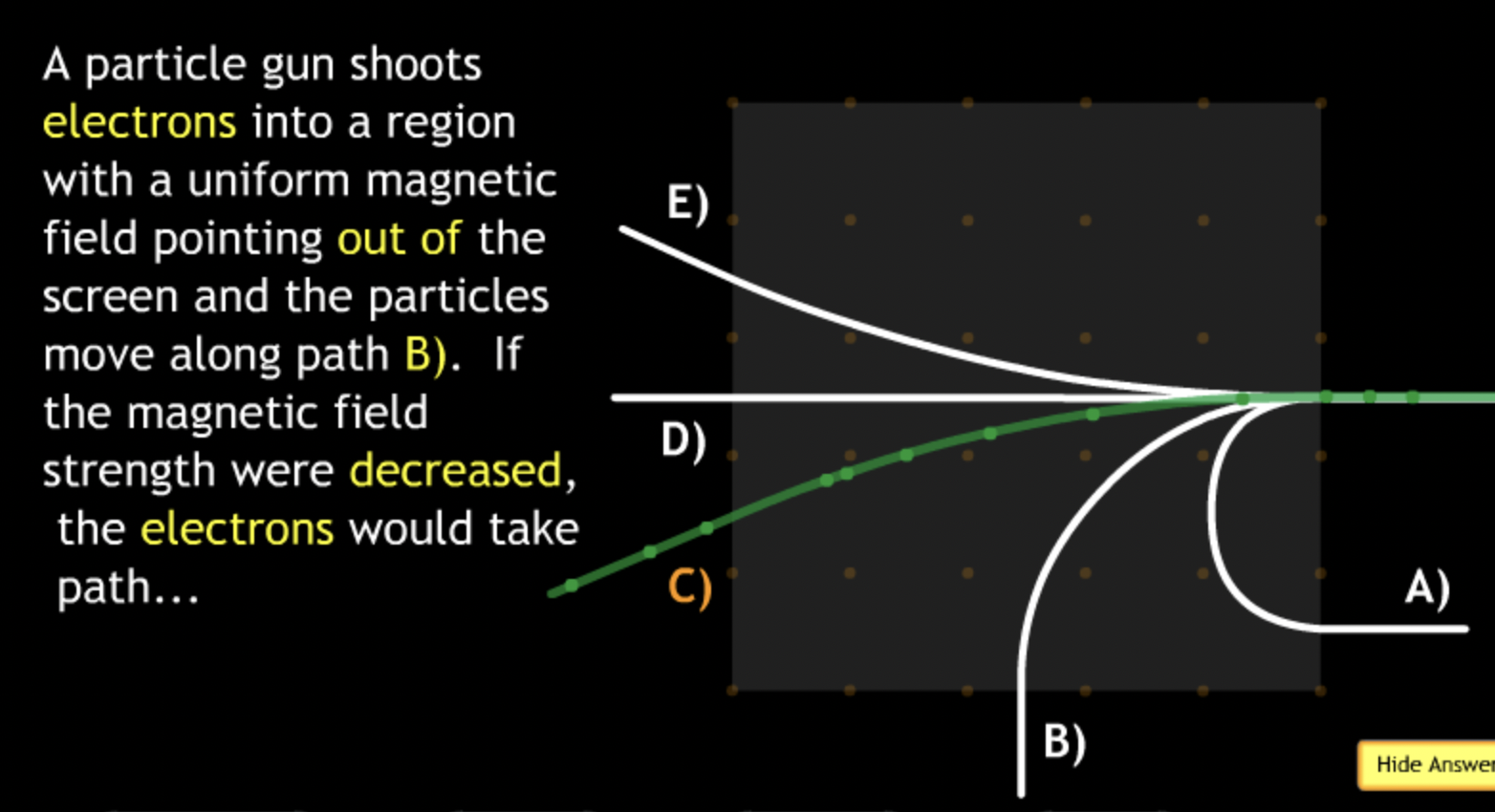
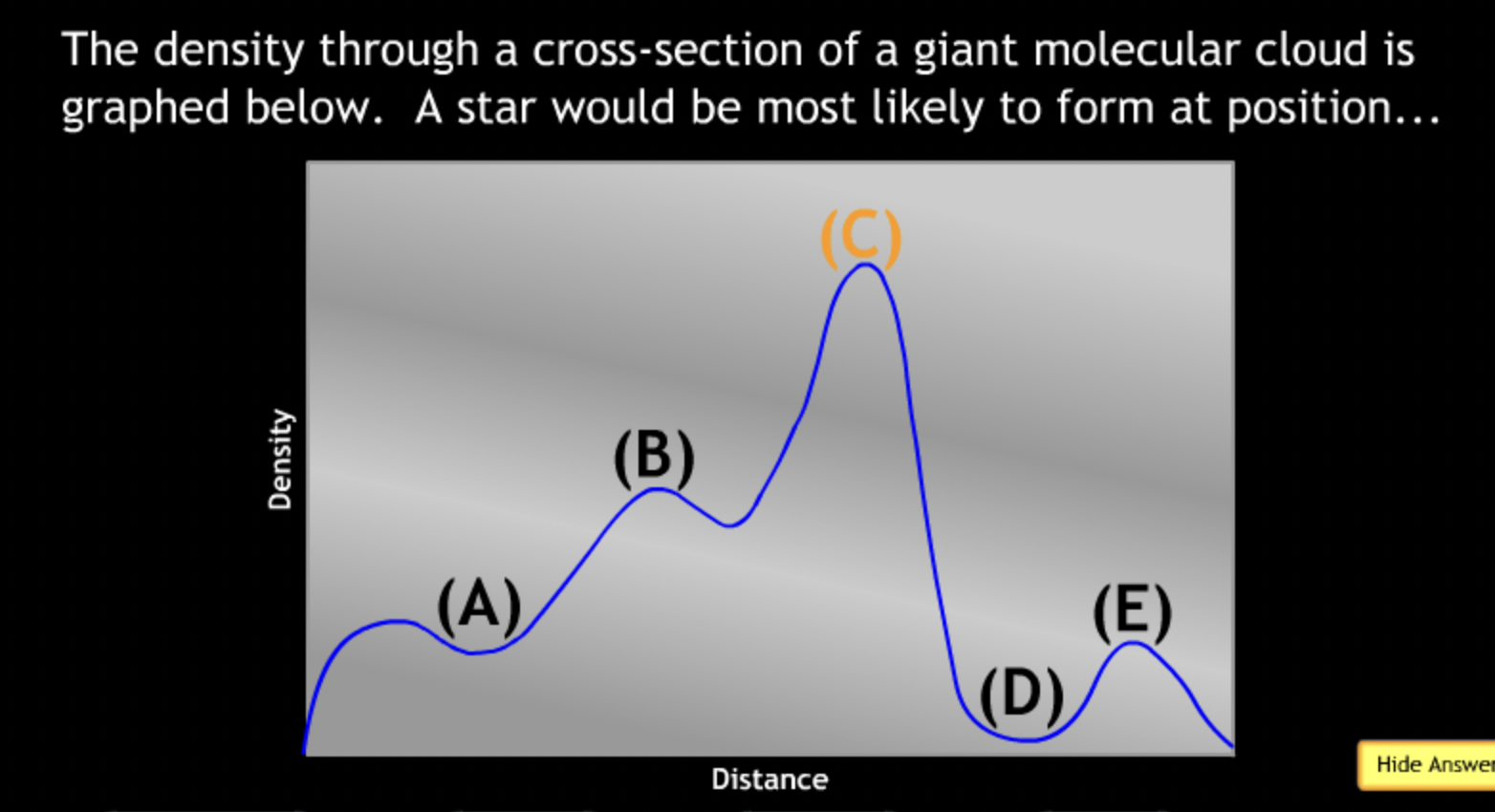
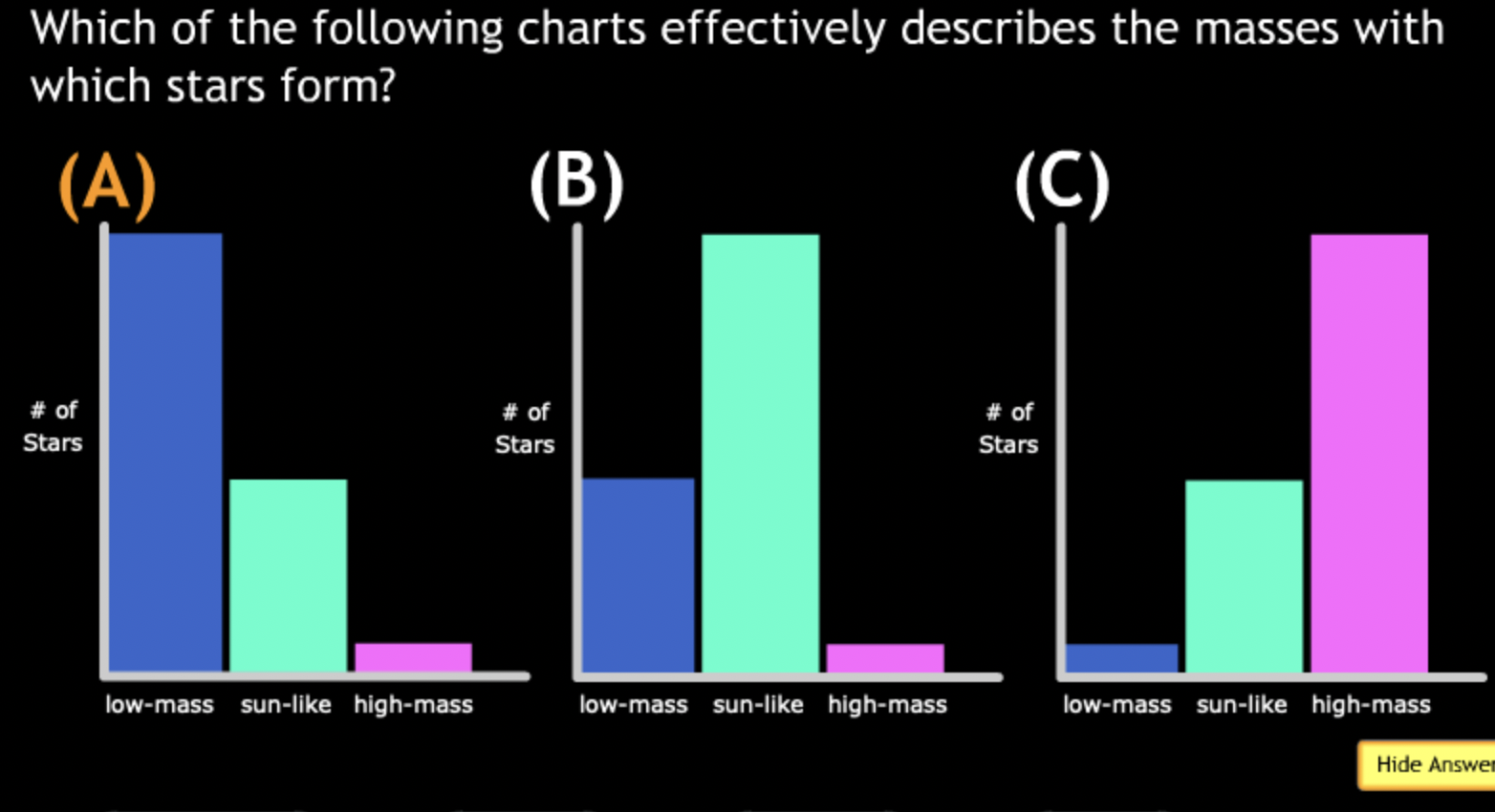
The likelihood of stars forming in a molecular cloud depends upon its….. temperature, mass, and radius
Gravity is more likely to overcome thermal pressure (and form stars) in a cloud whose mass is,,, large
-
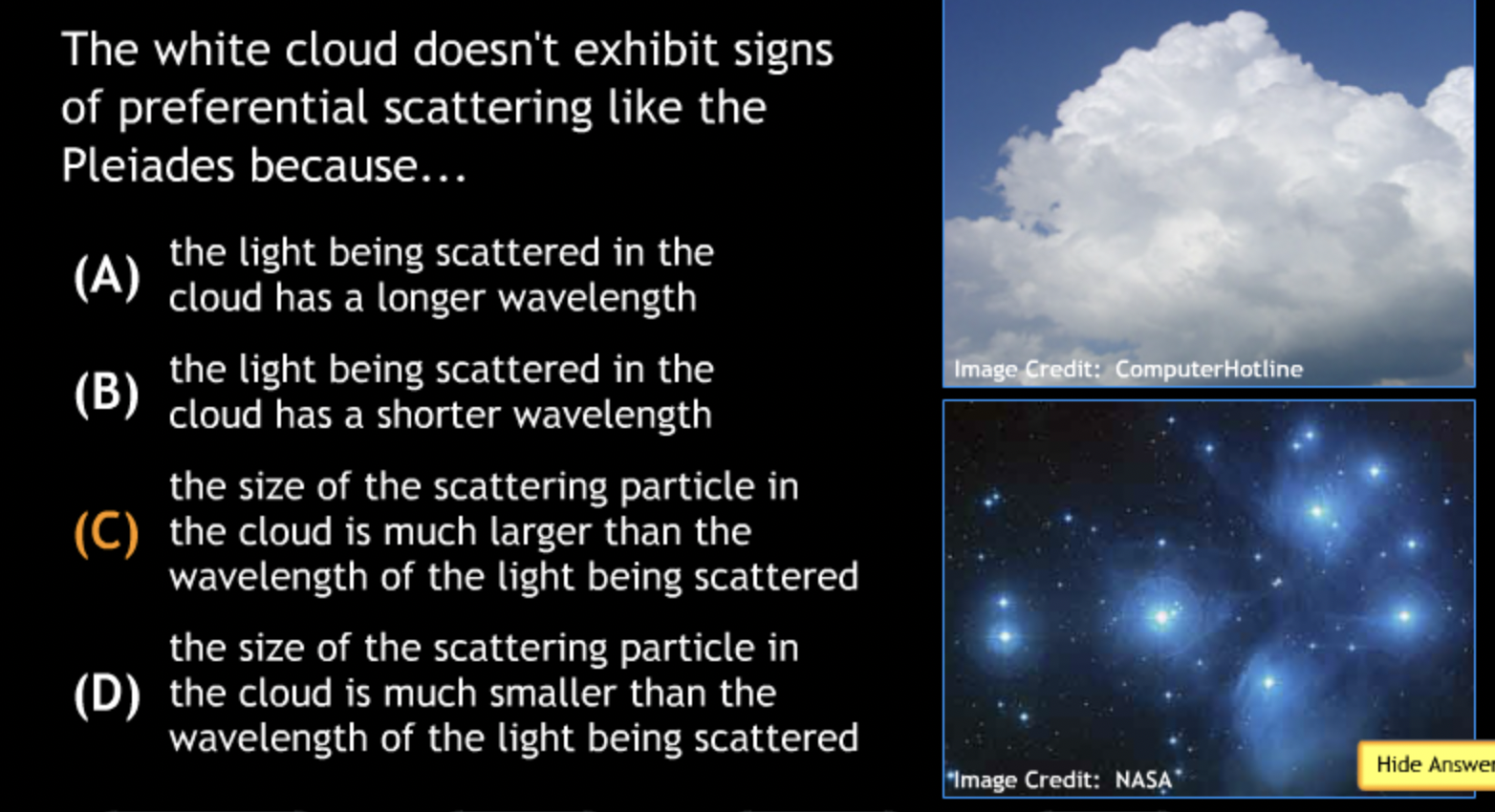
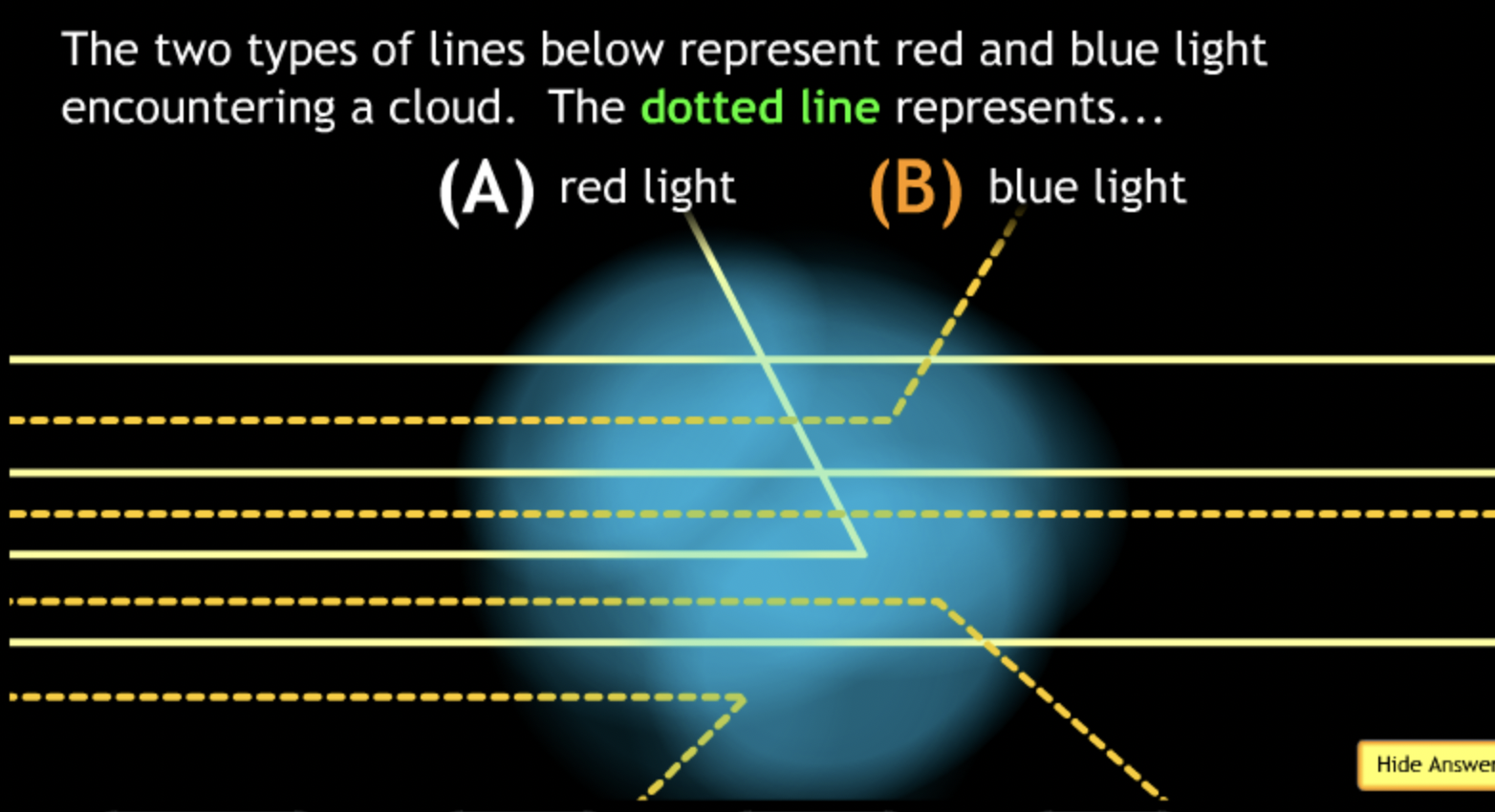
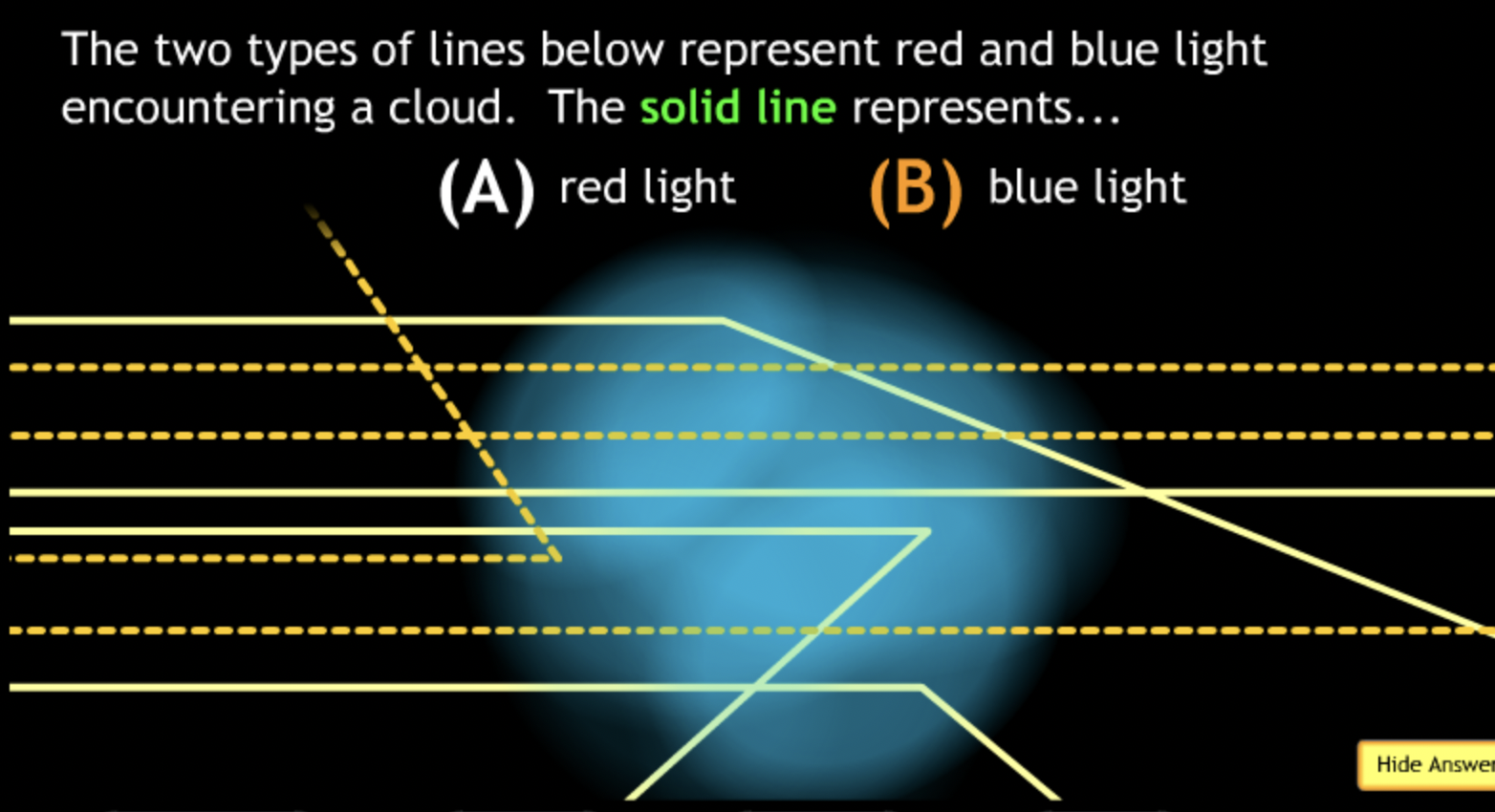
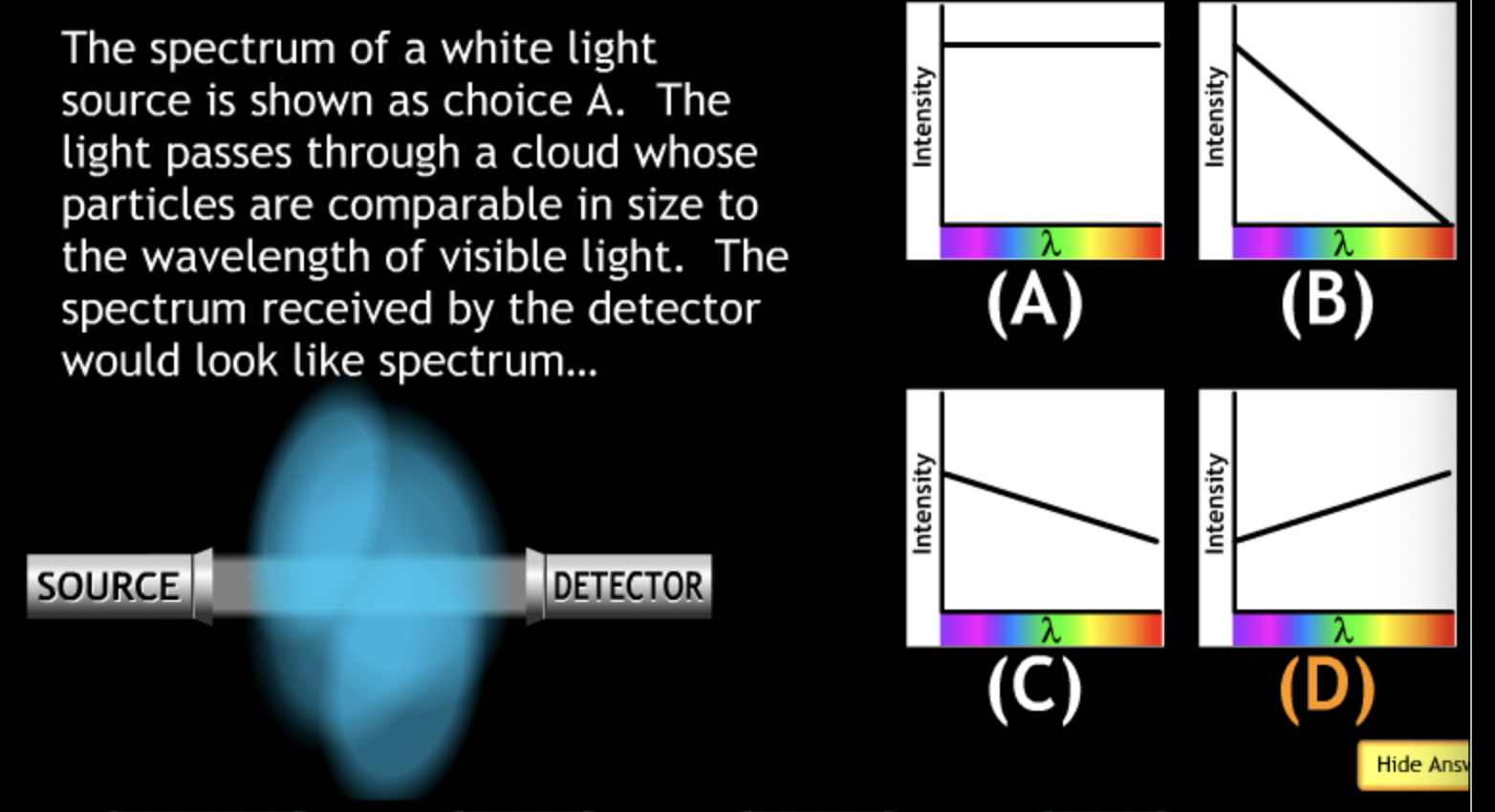
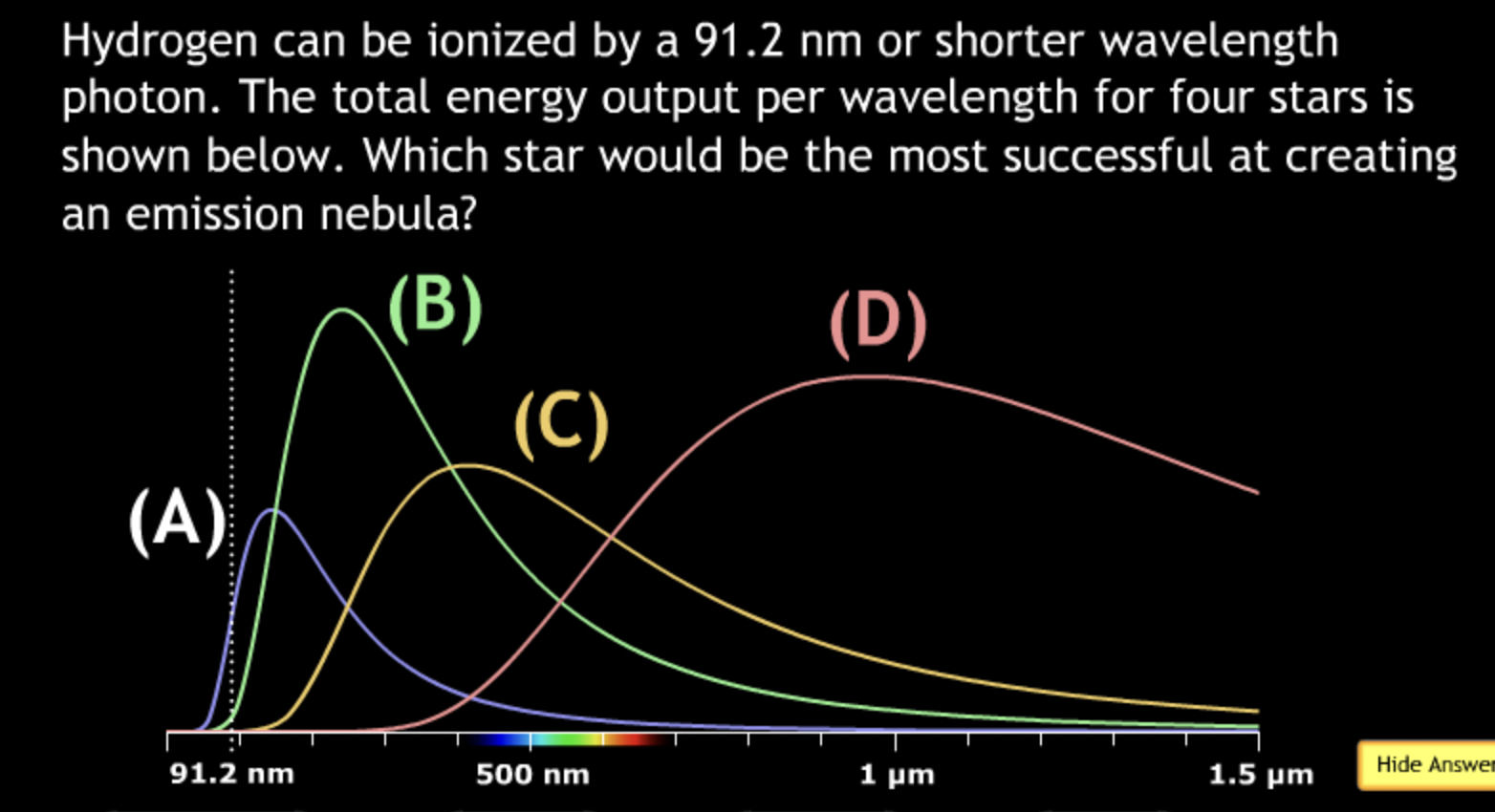
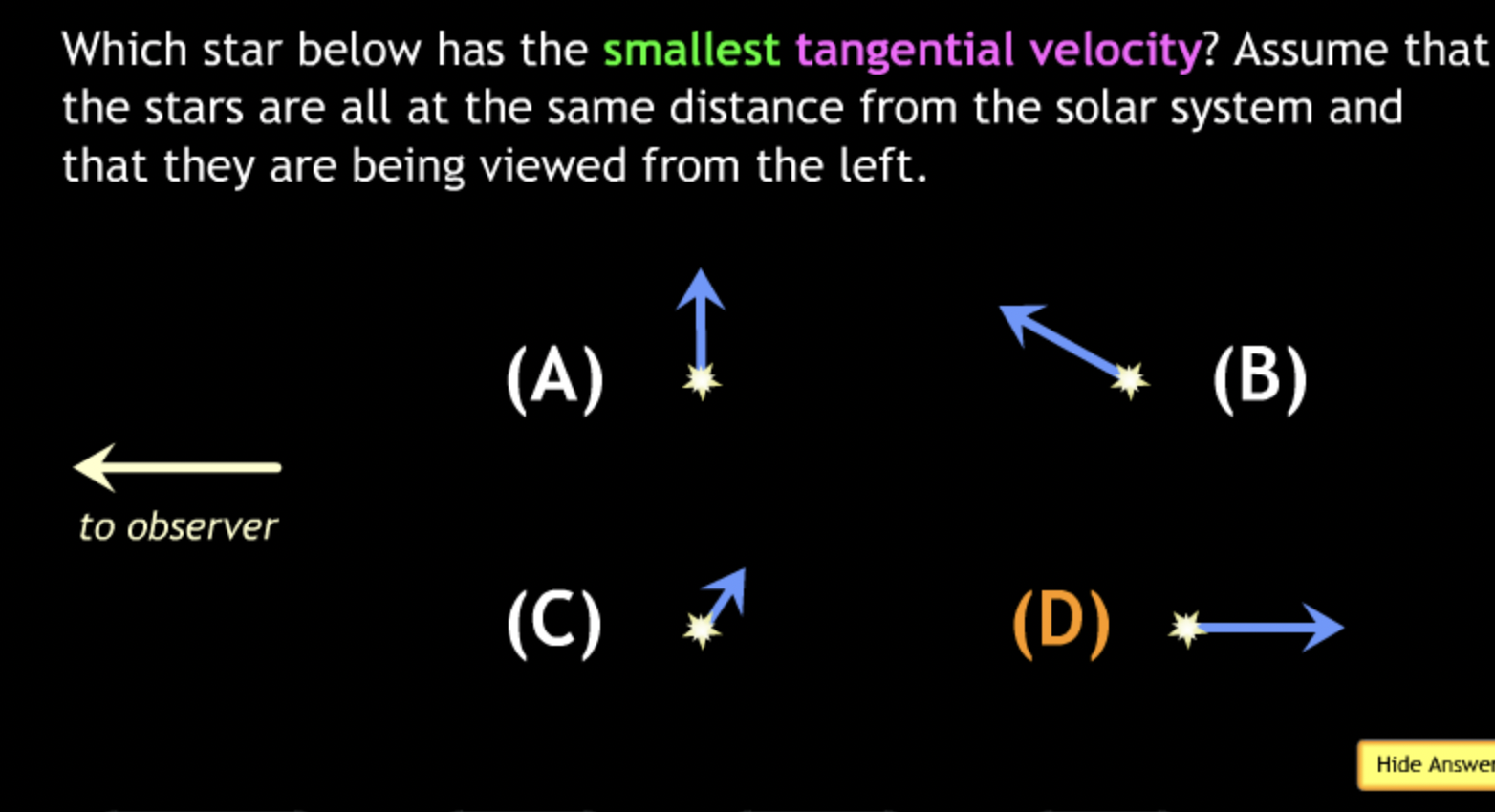
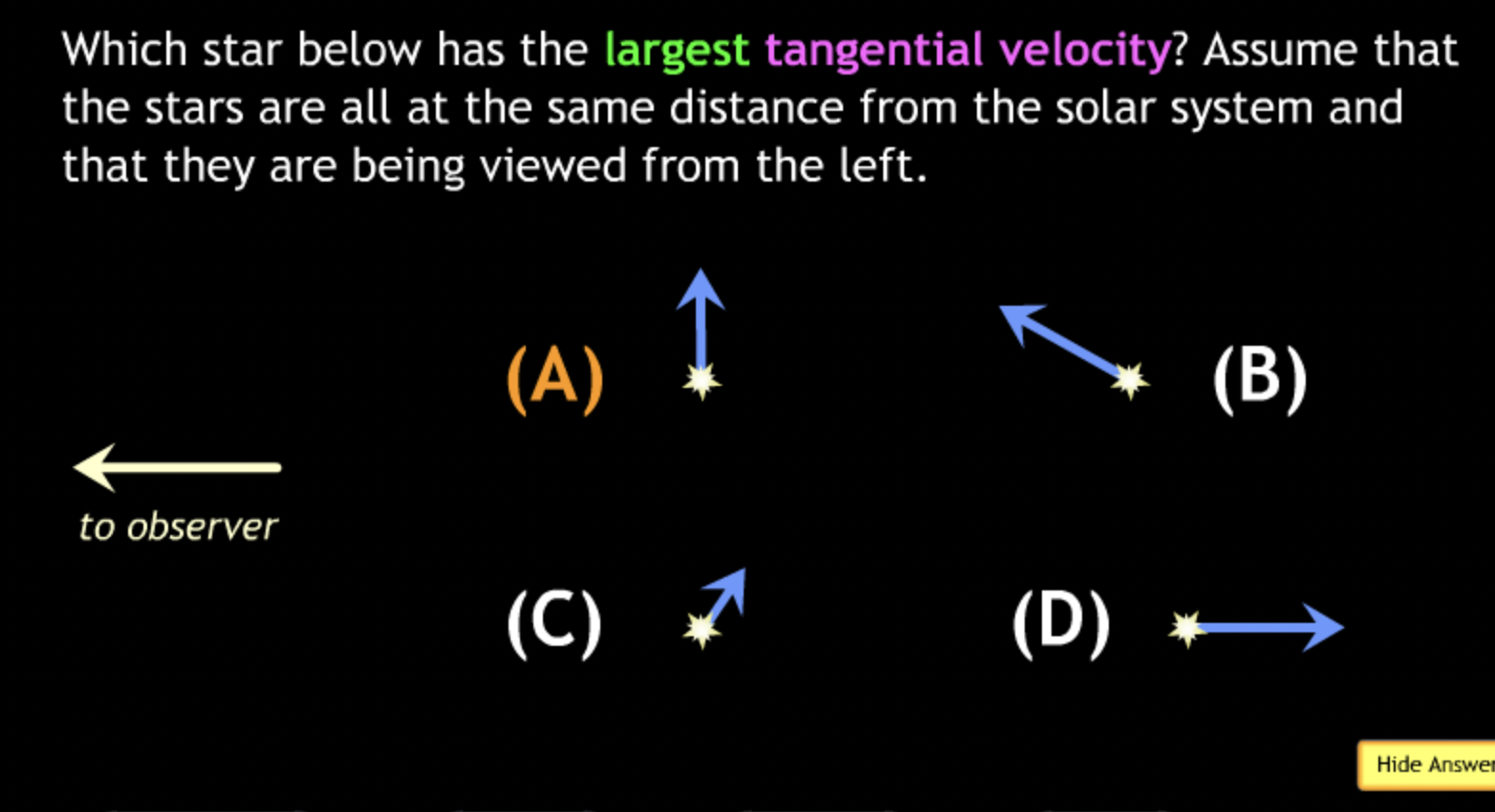
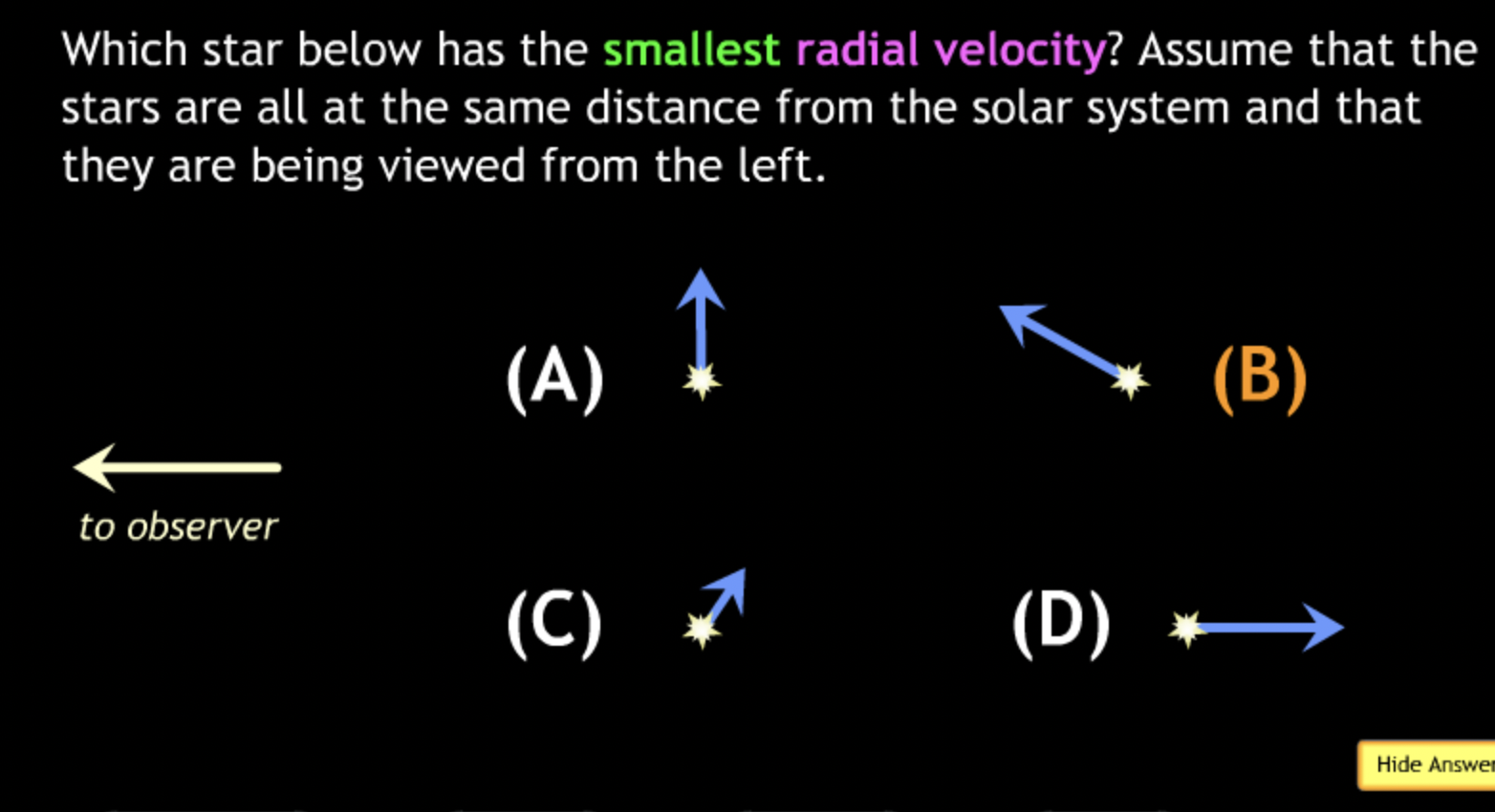
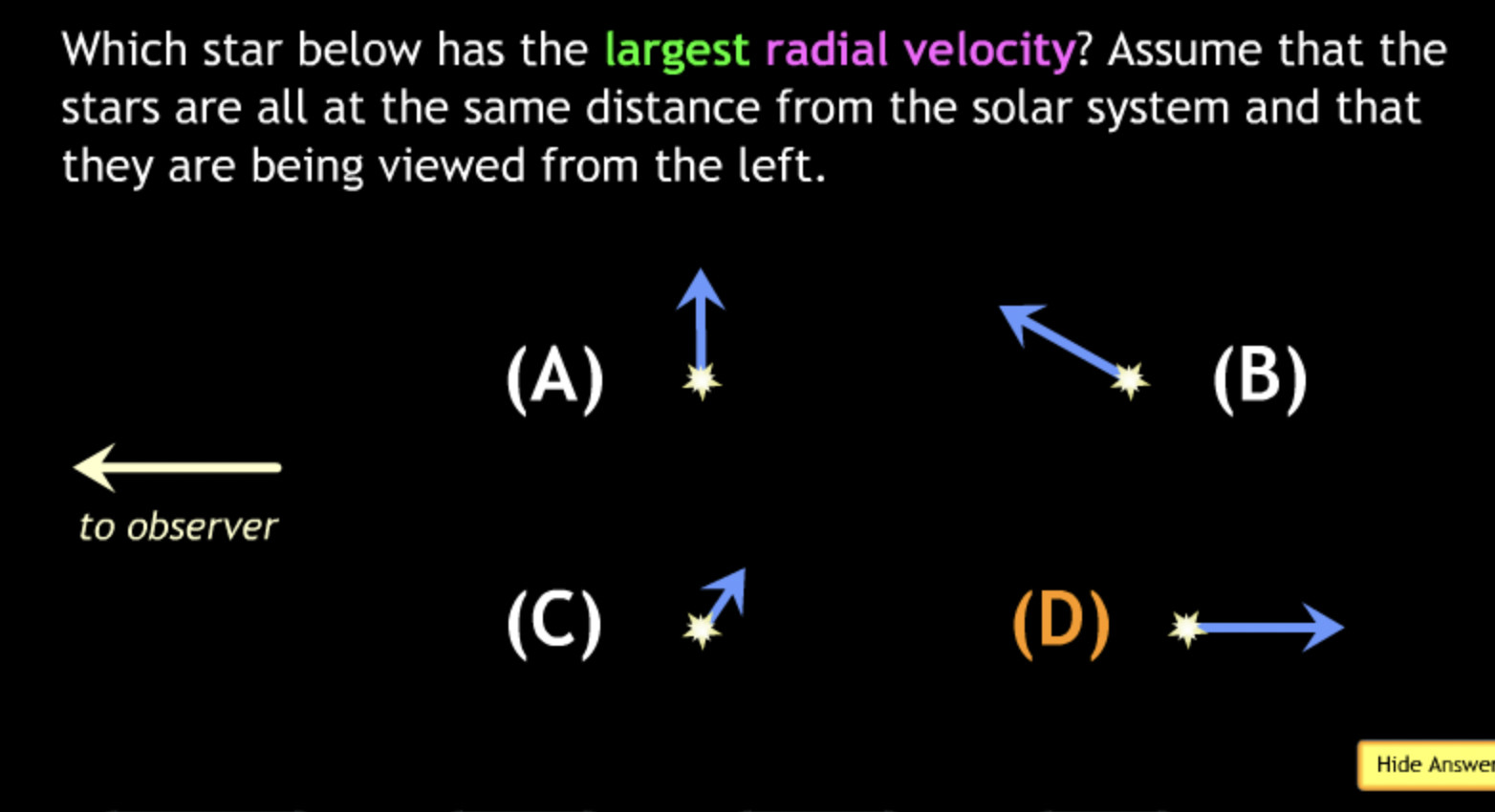
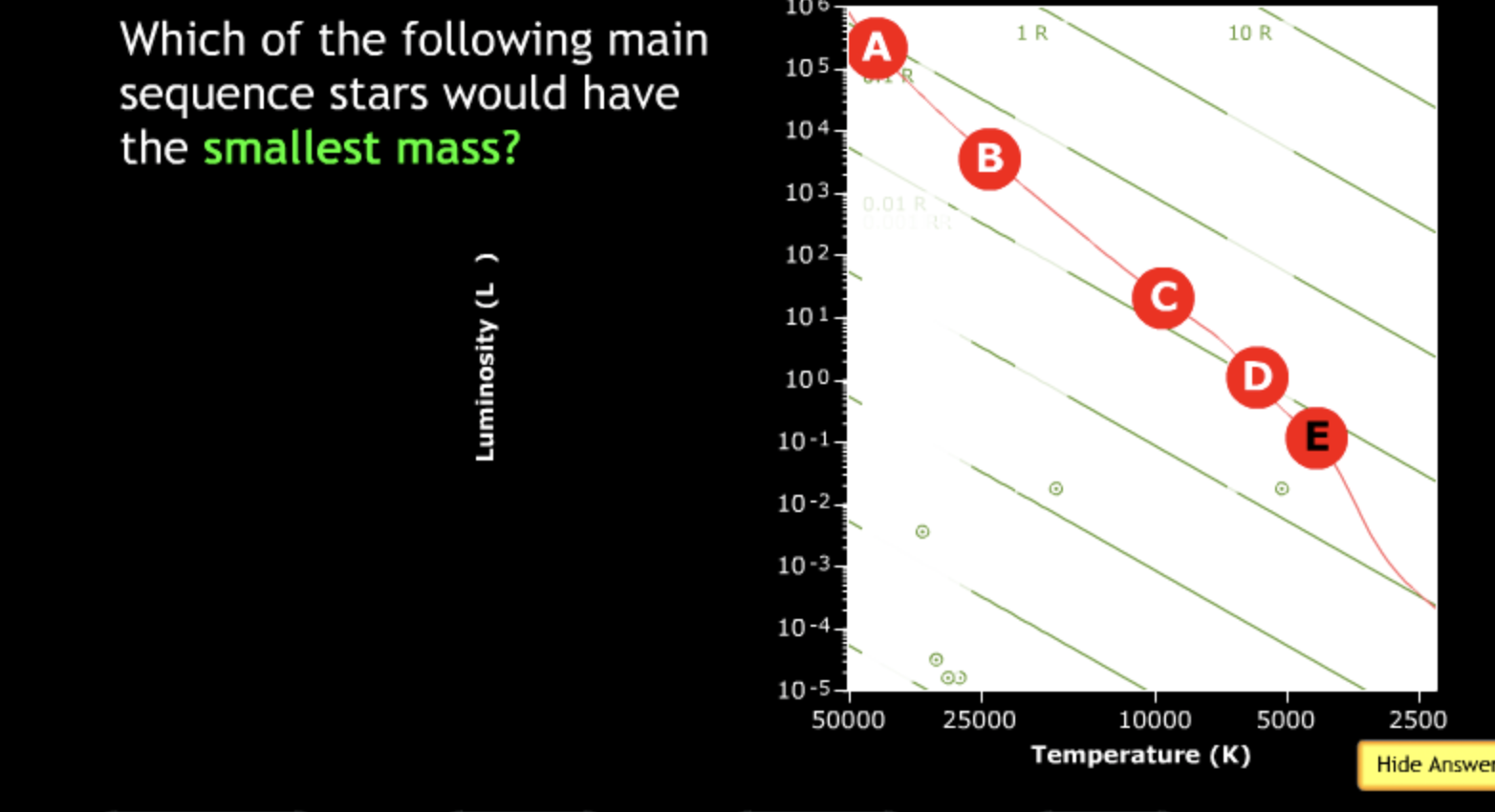
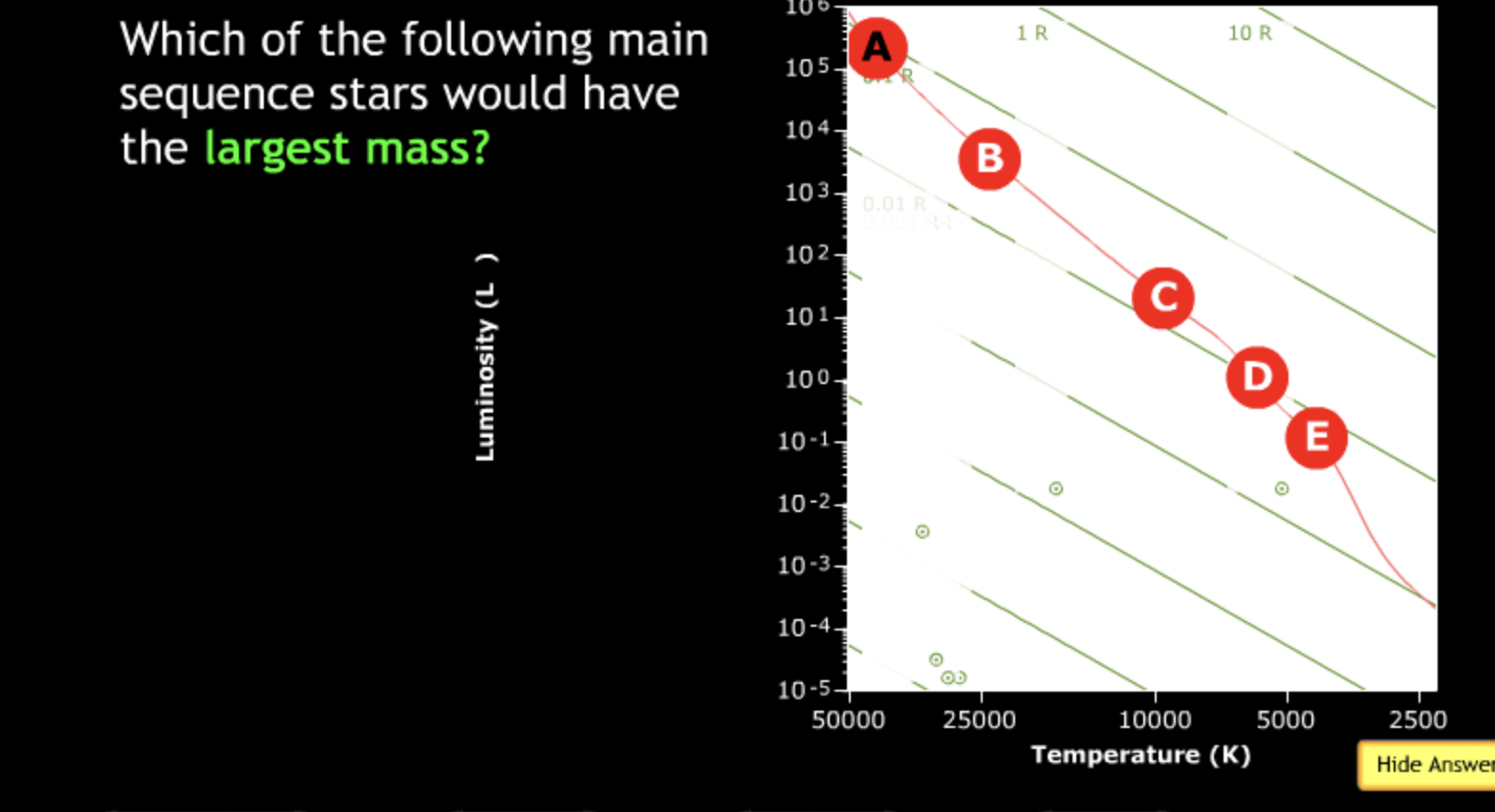
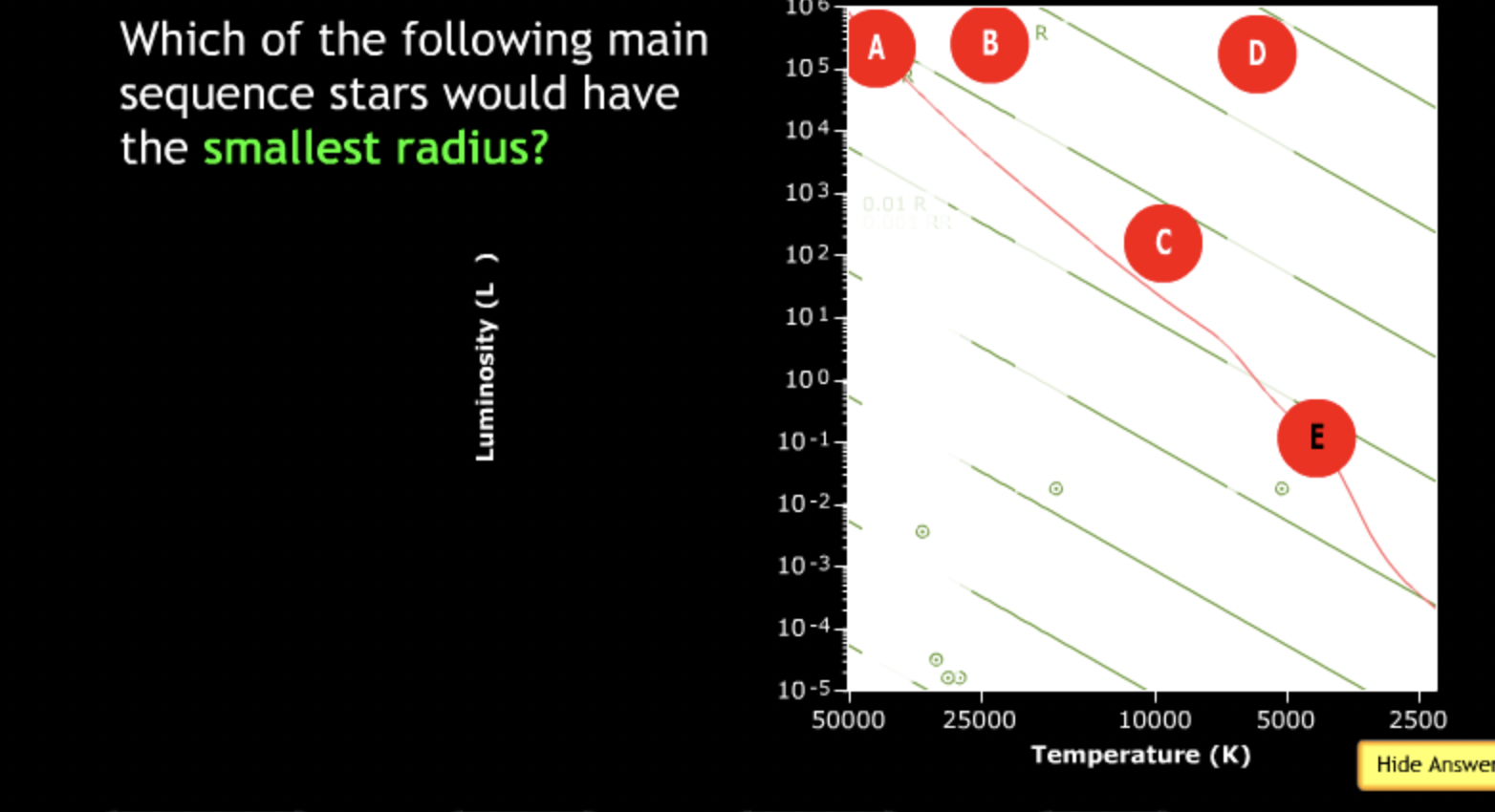
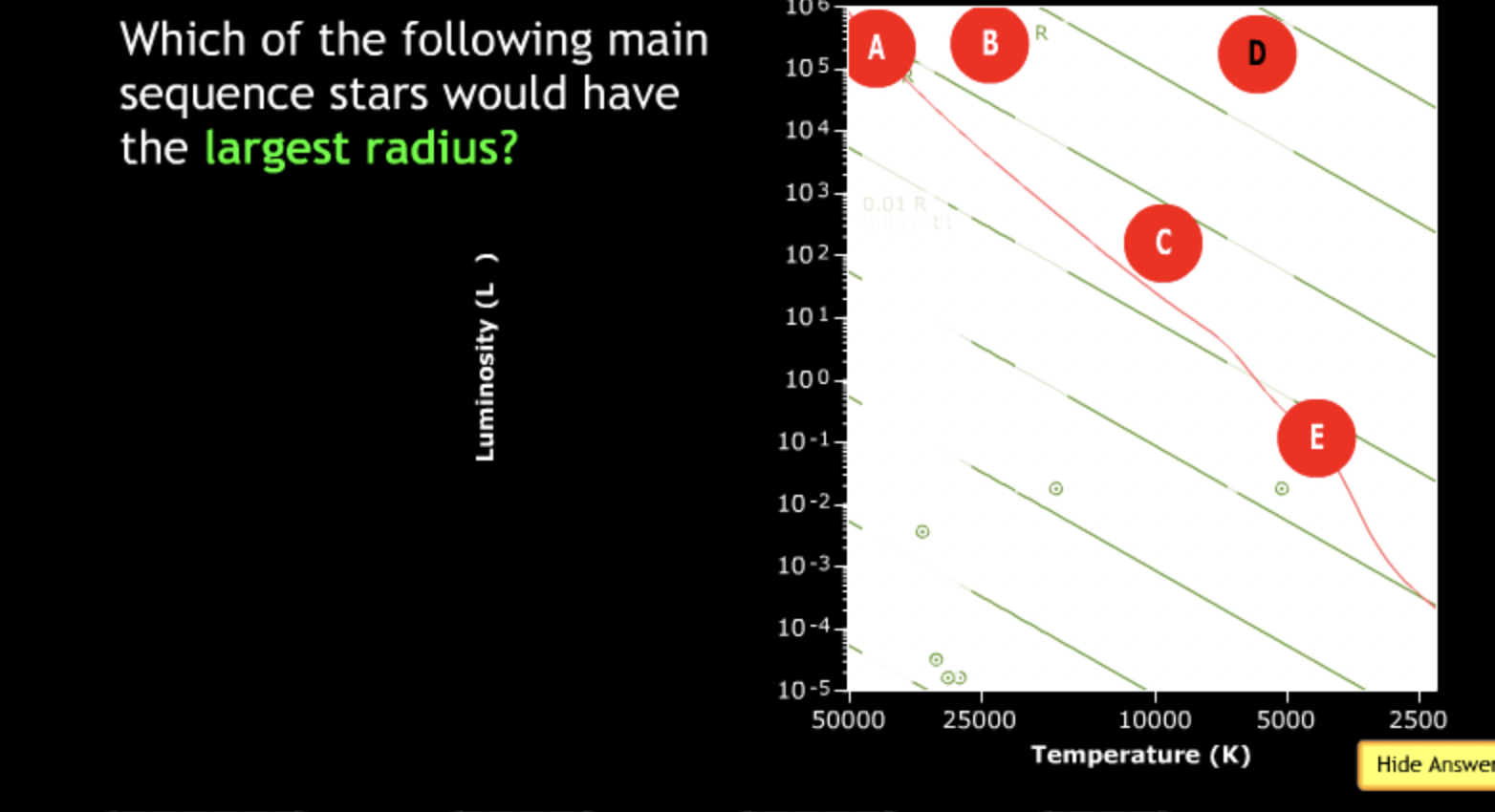
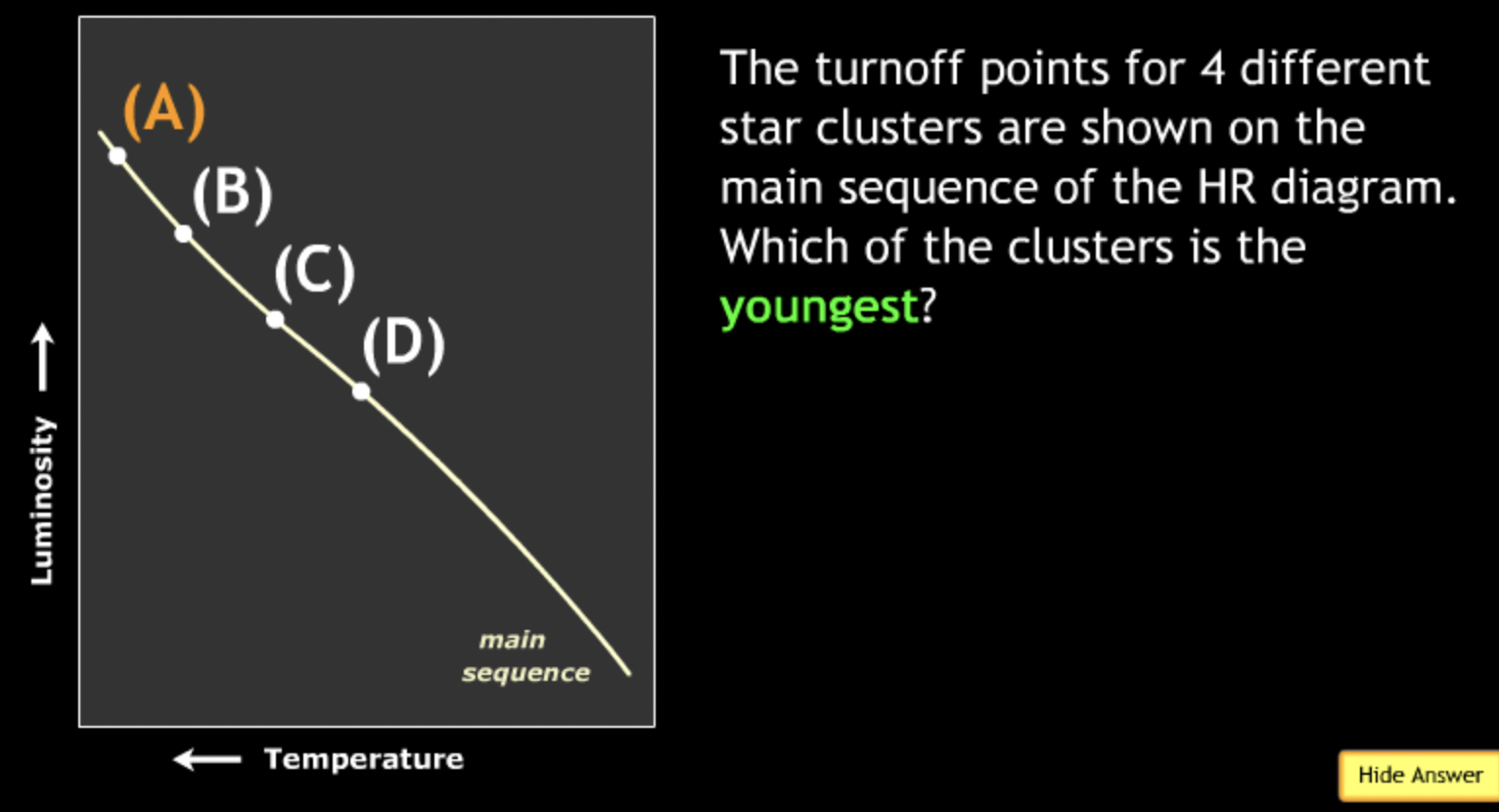
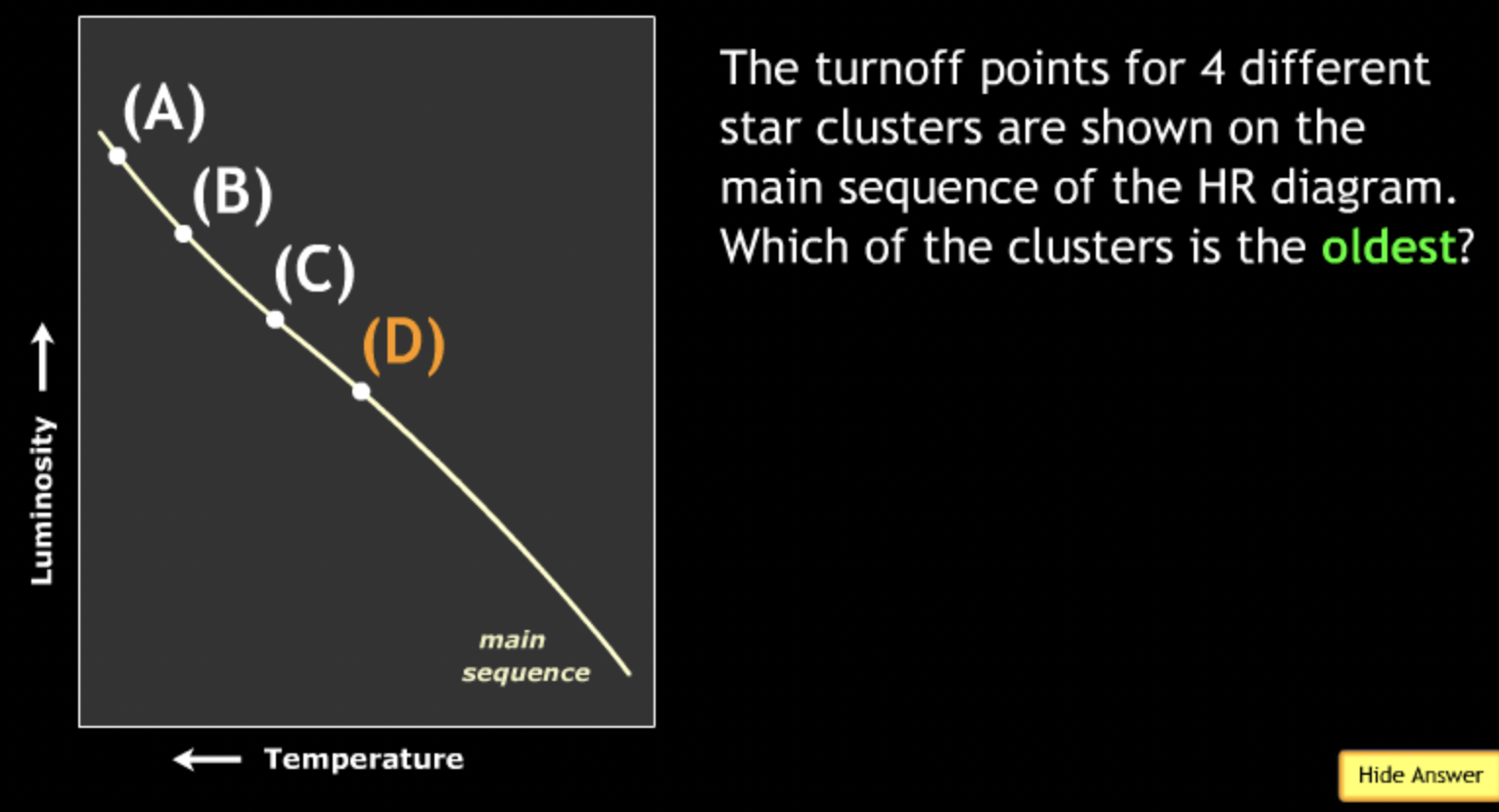
↑A
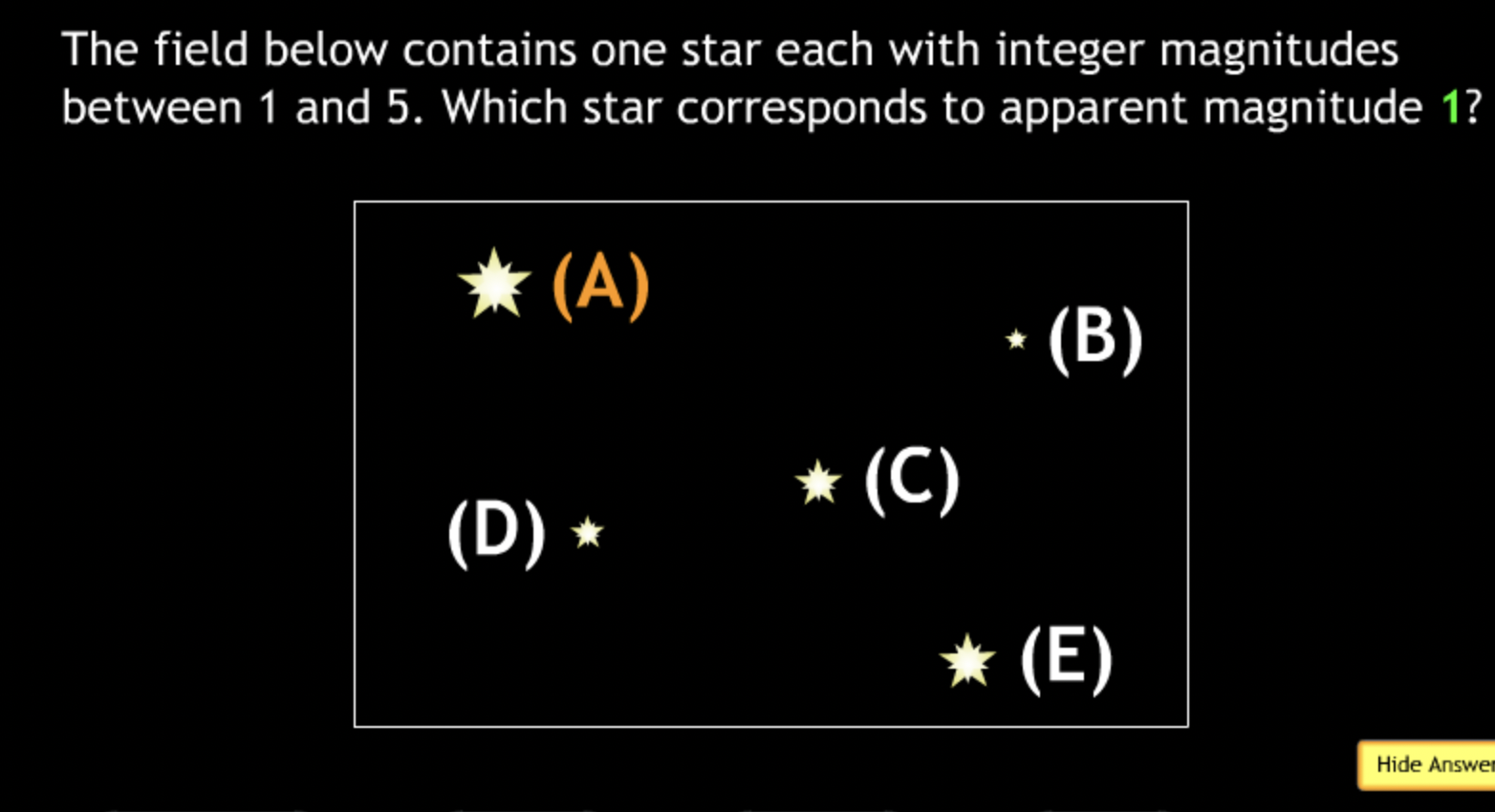
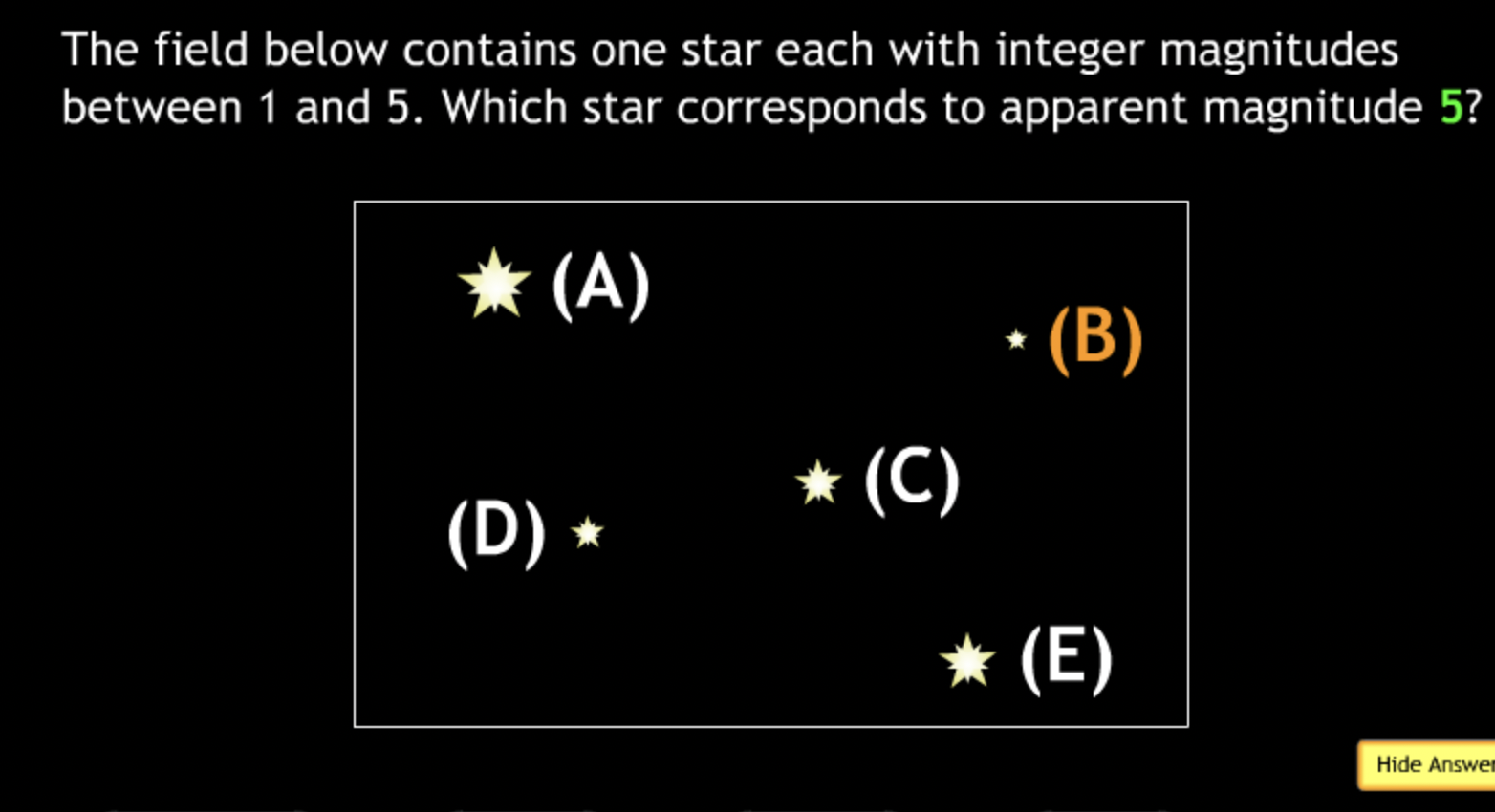
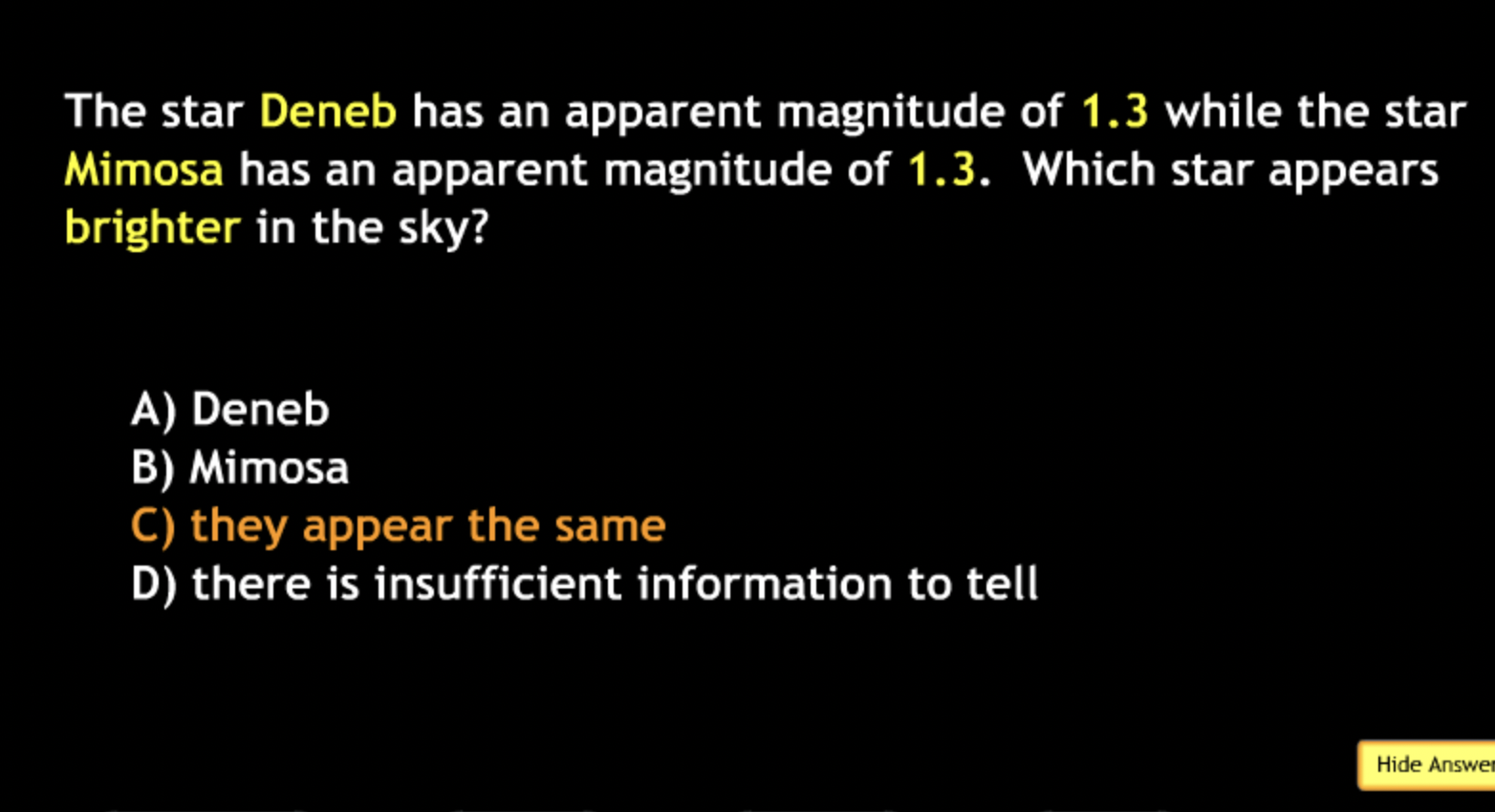
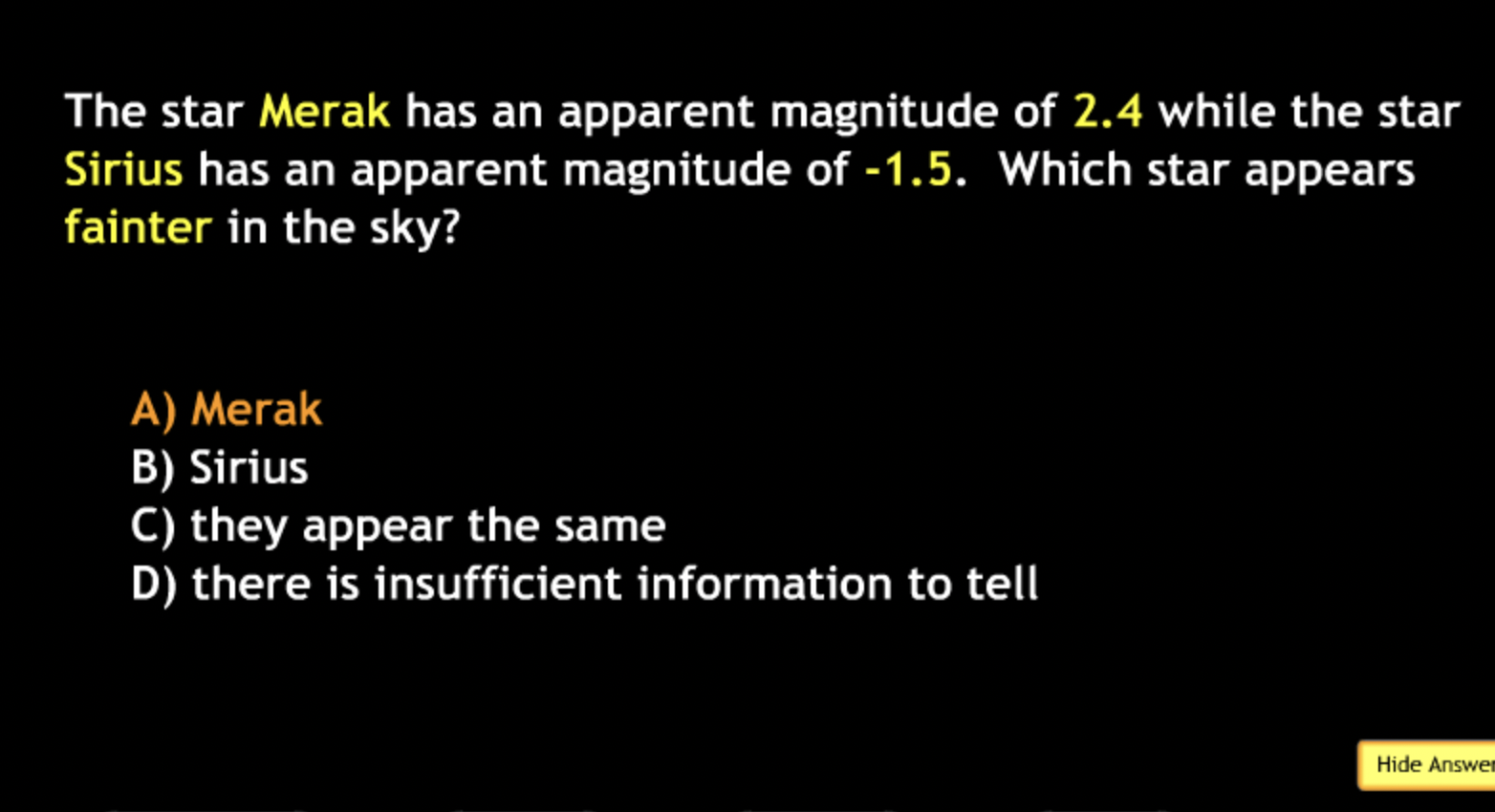
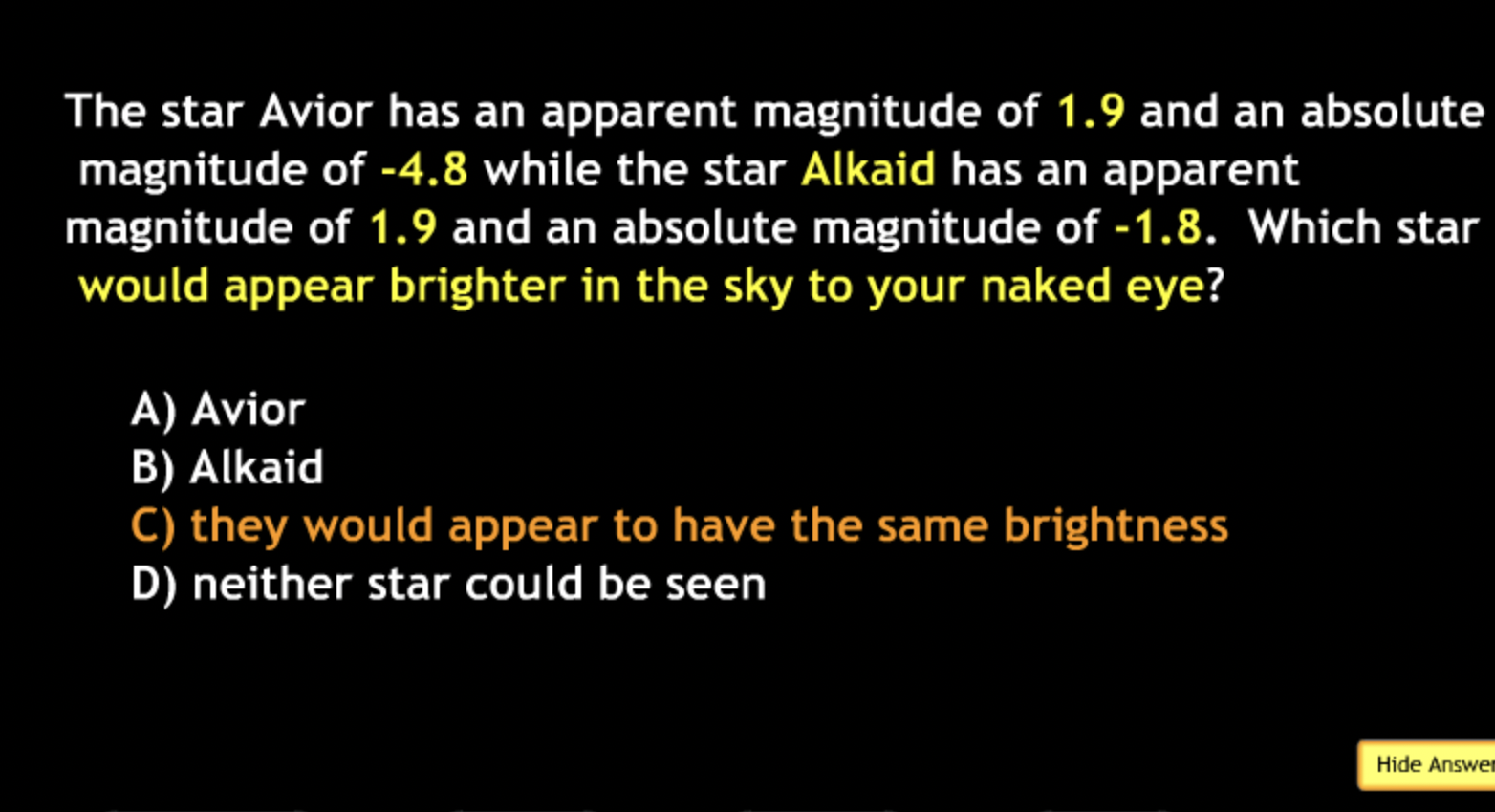
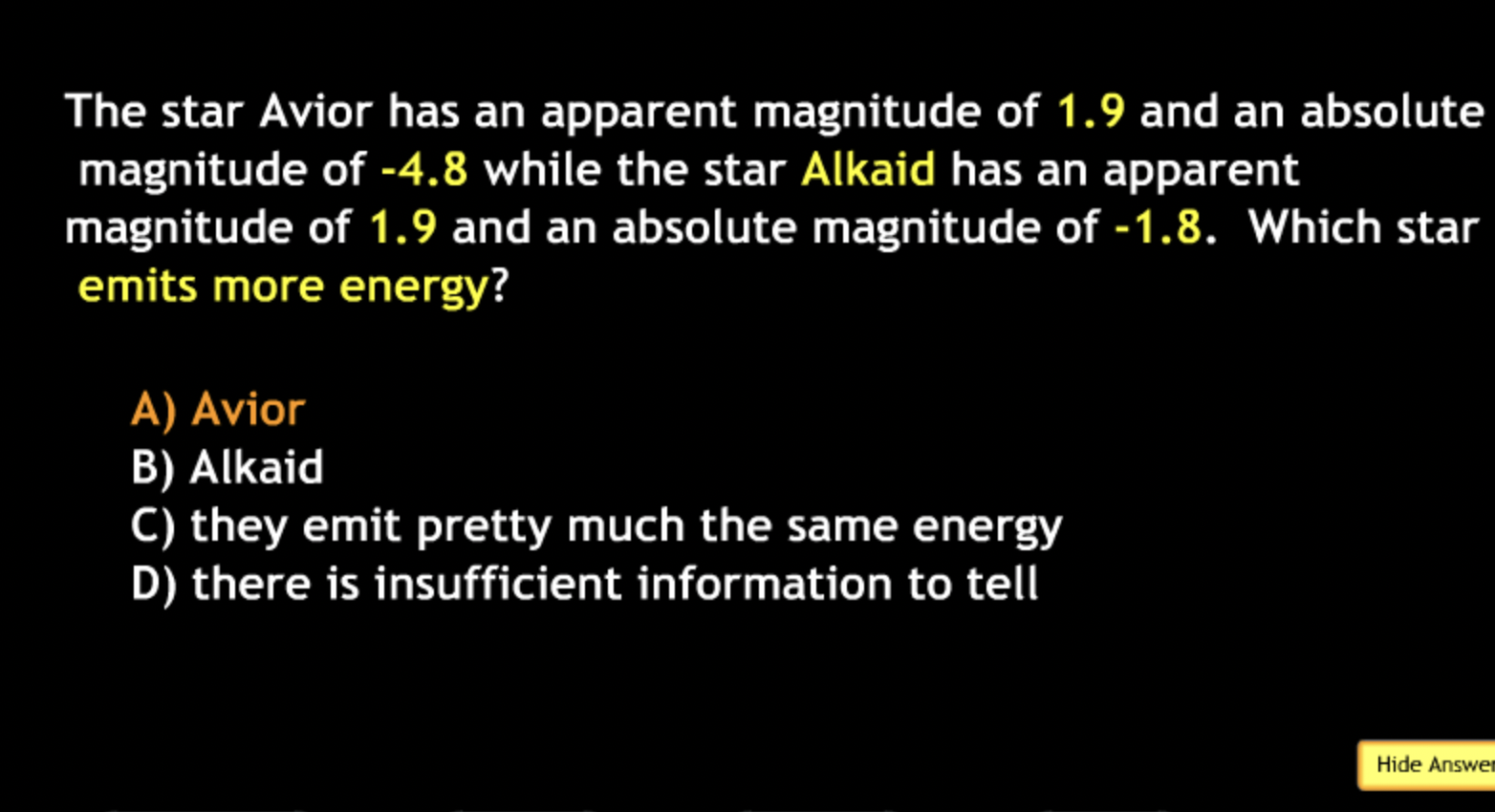
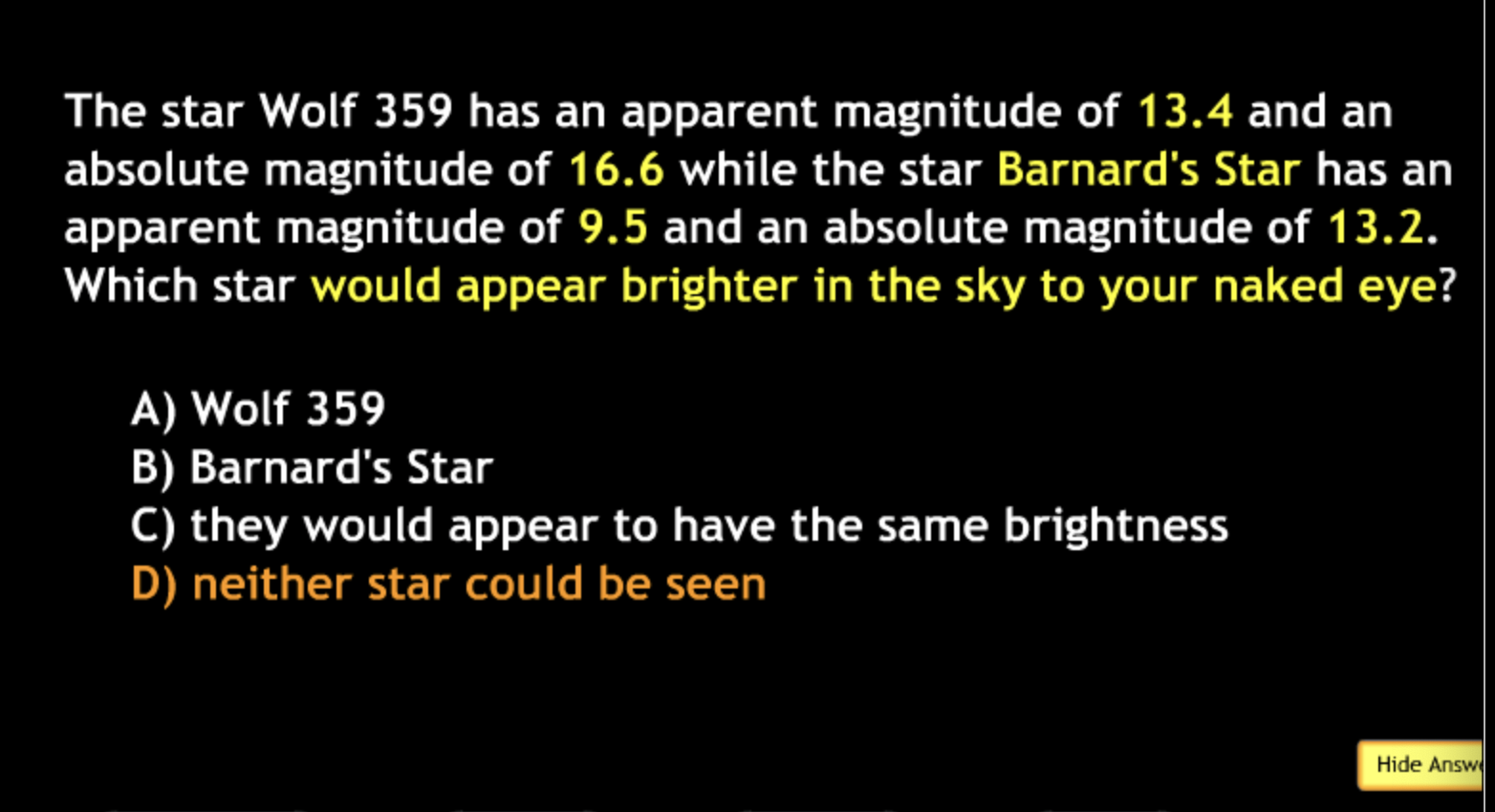
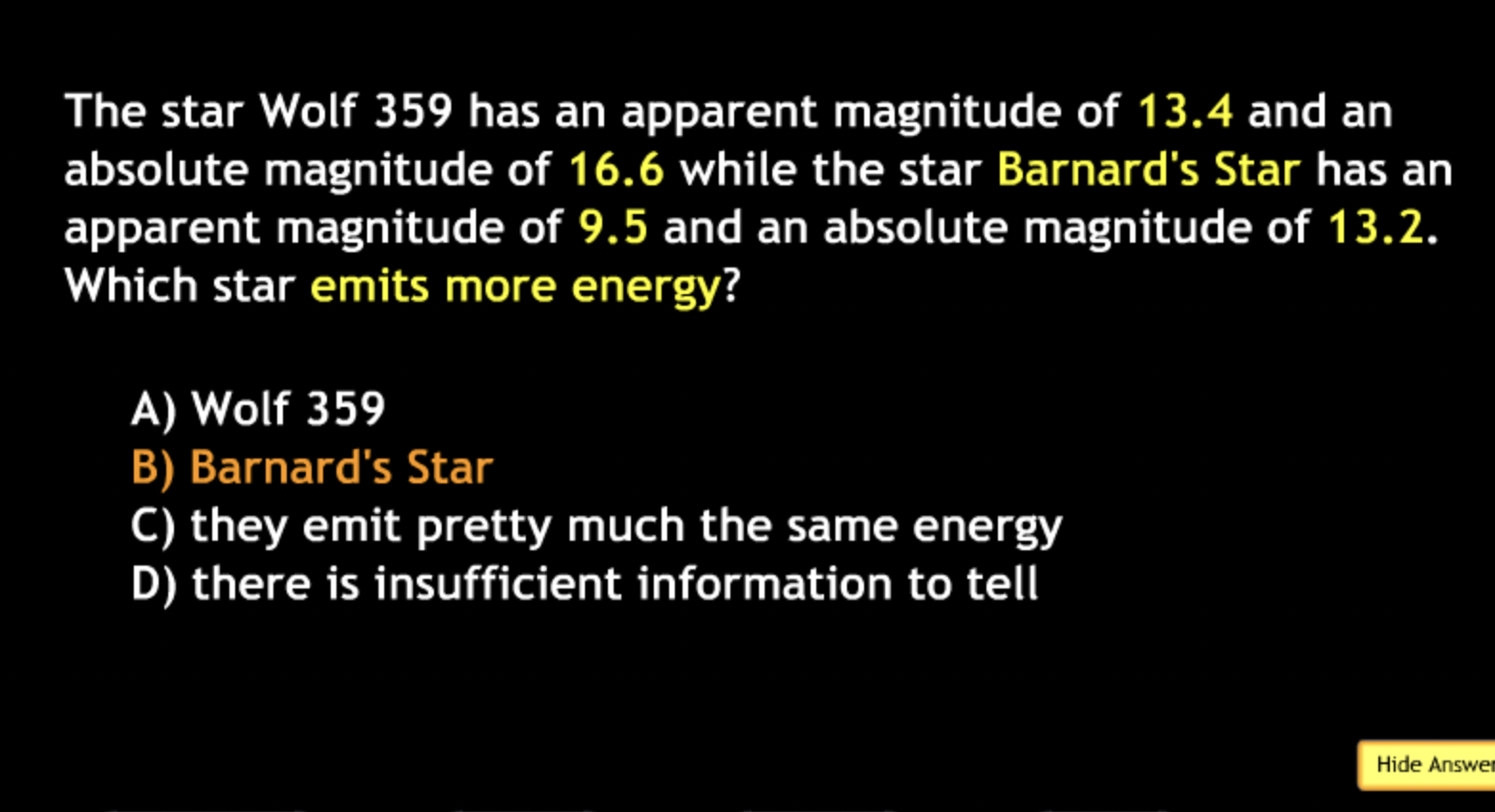
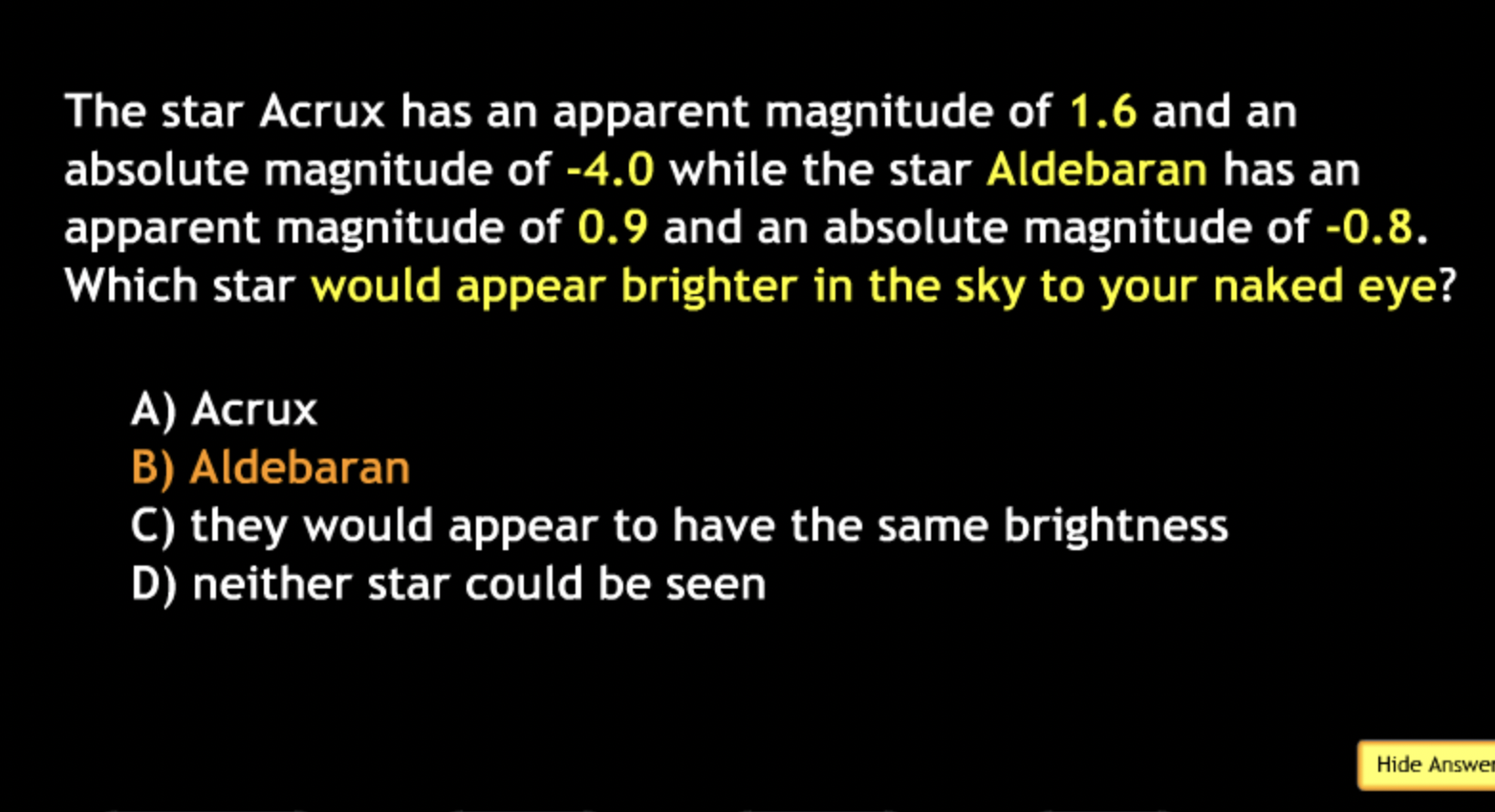
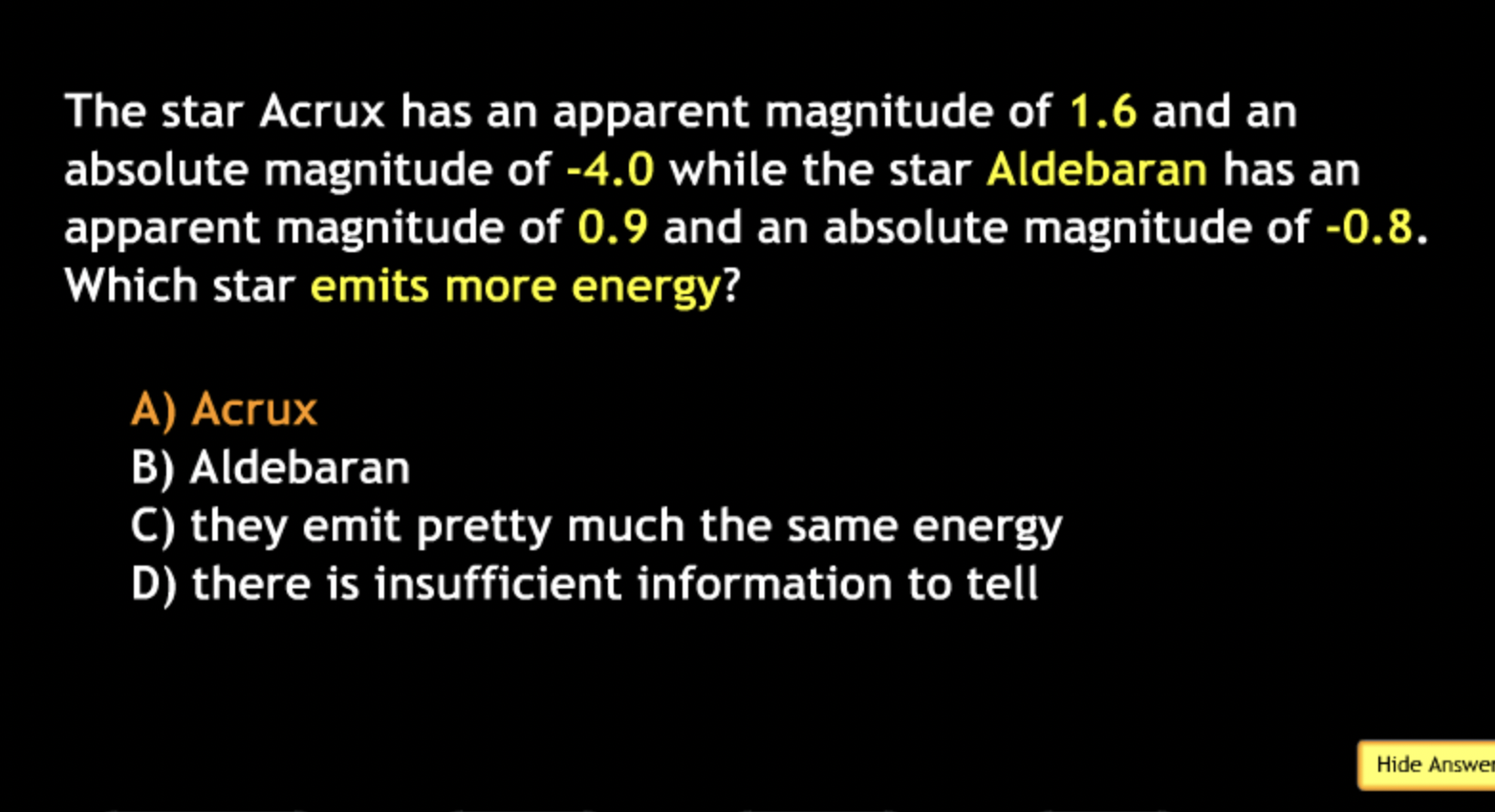
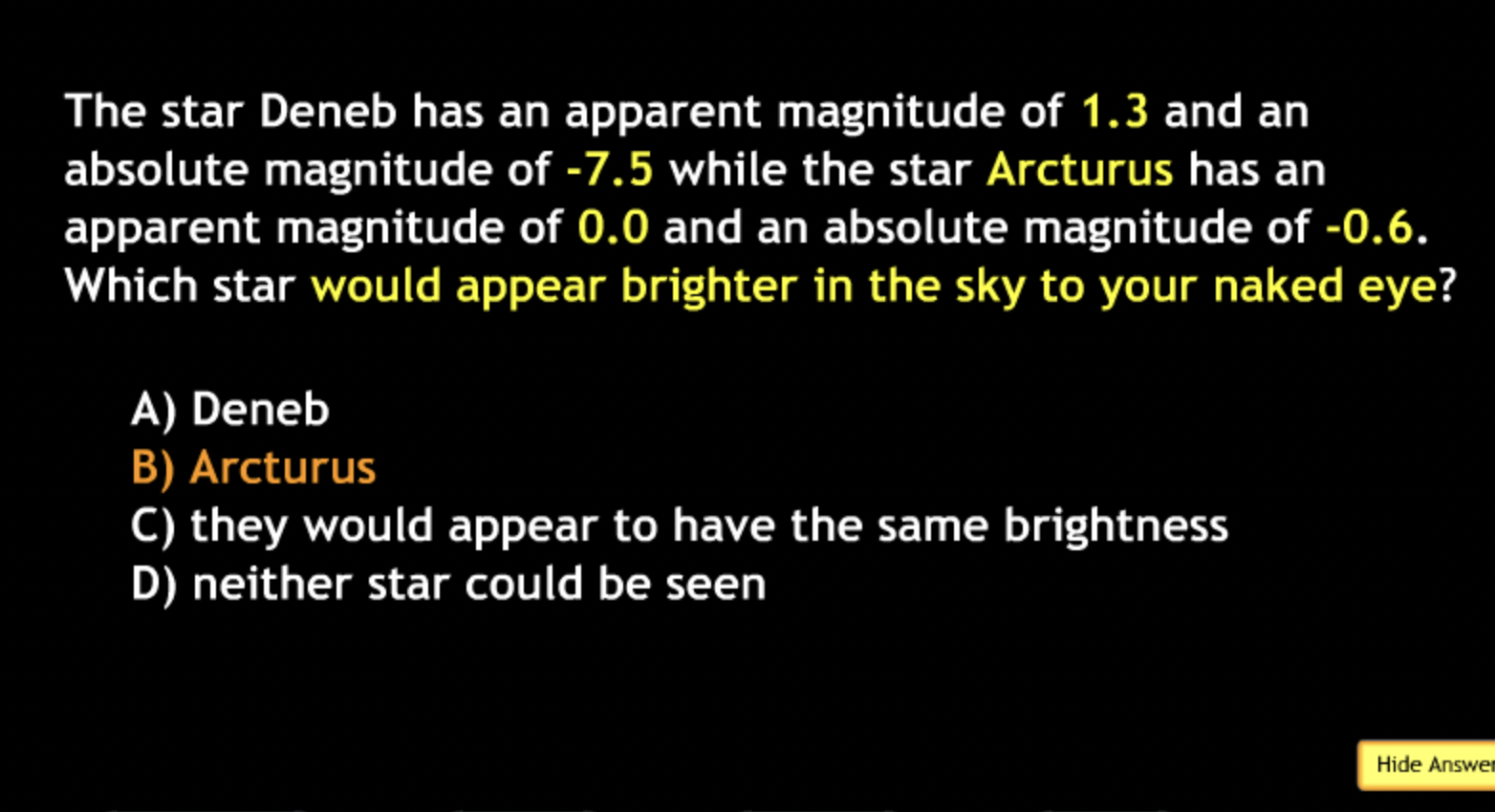
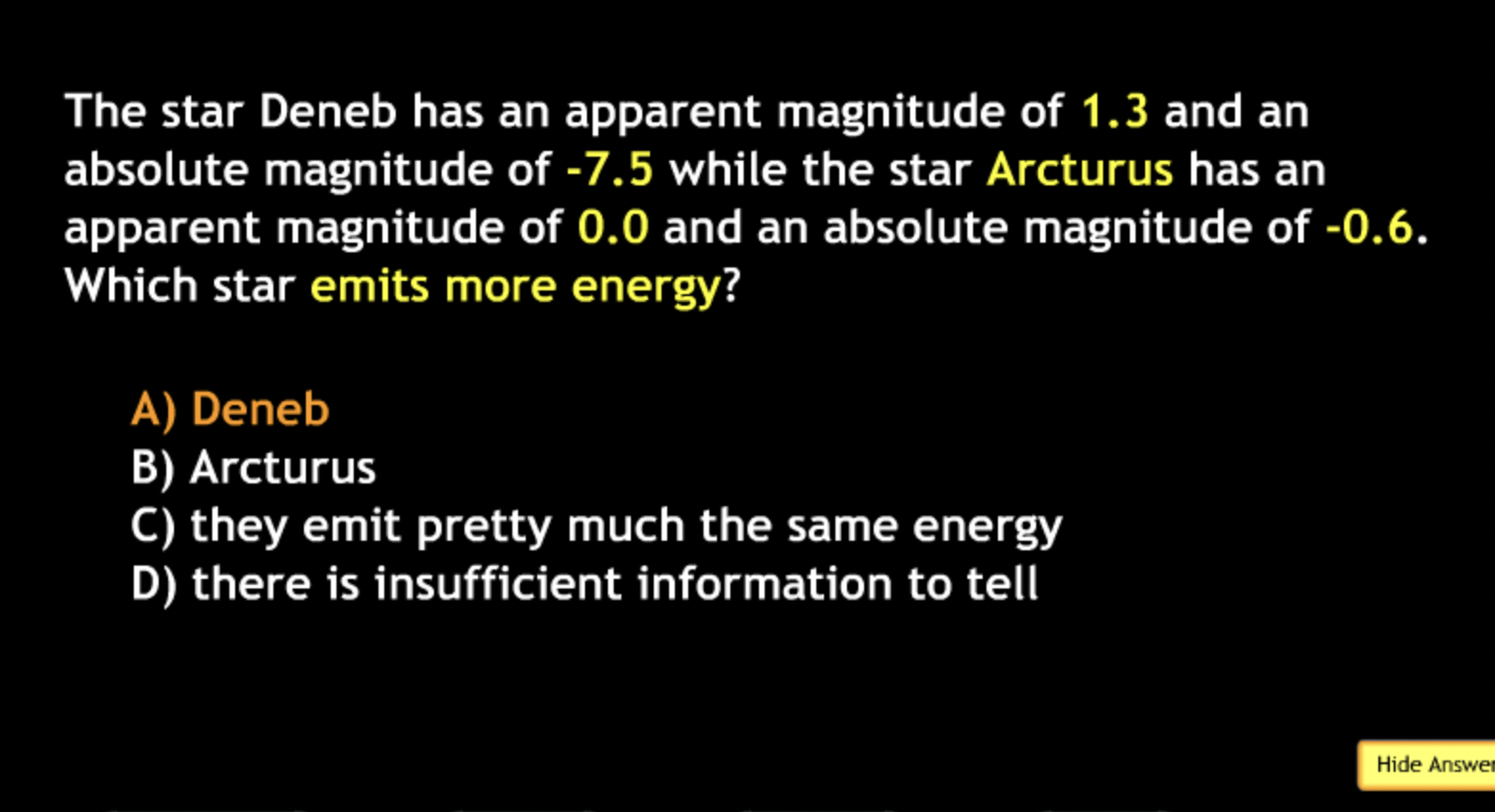
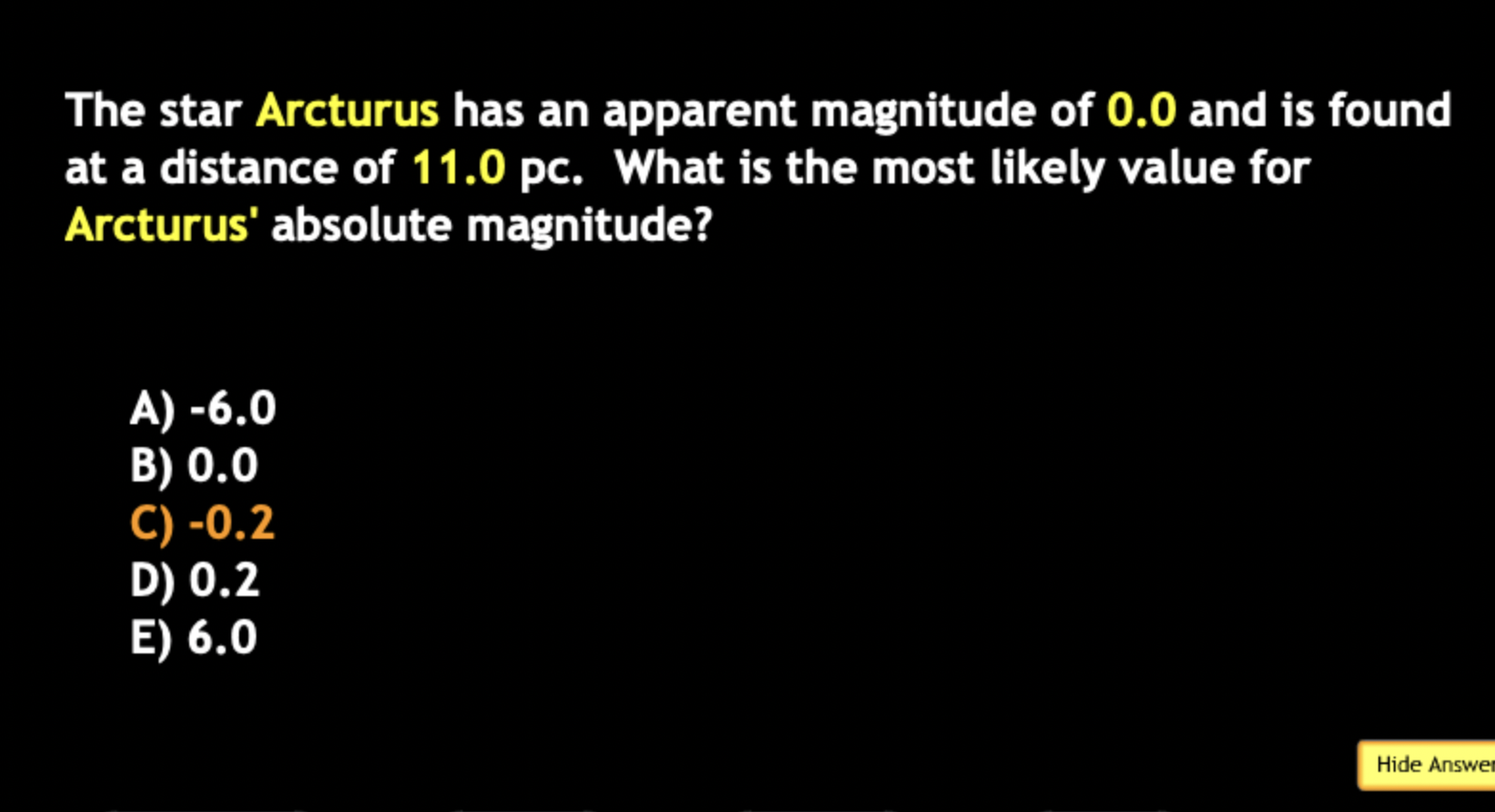
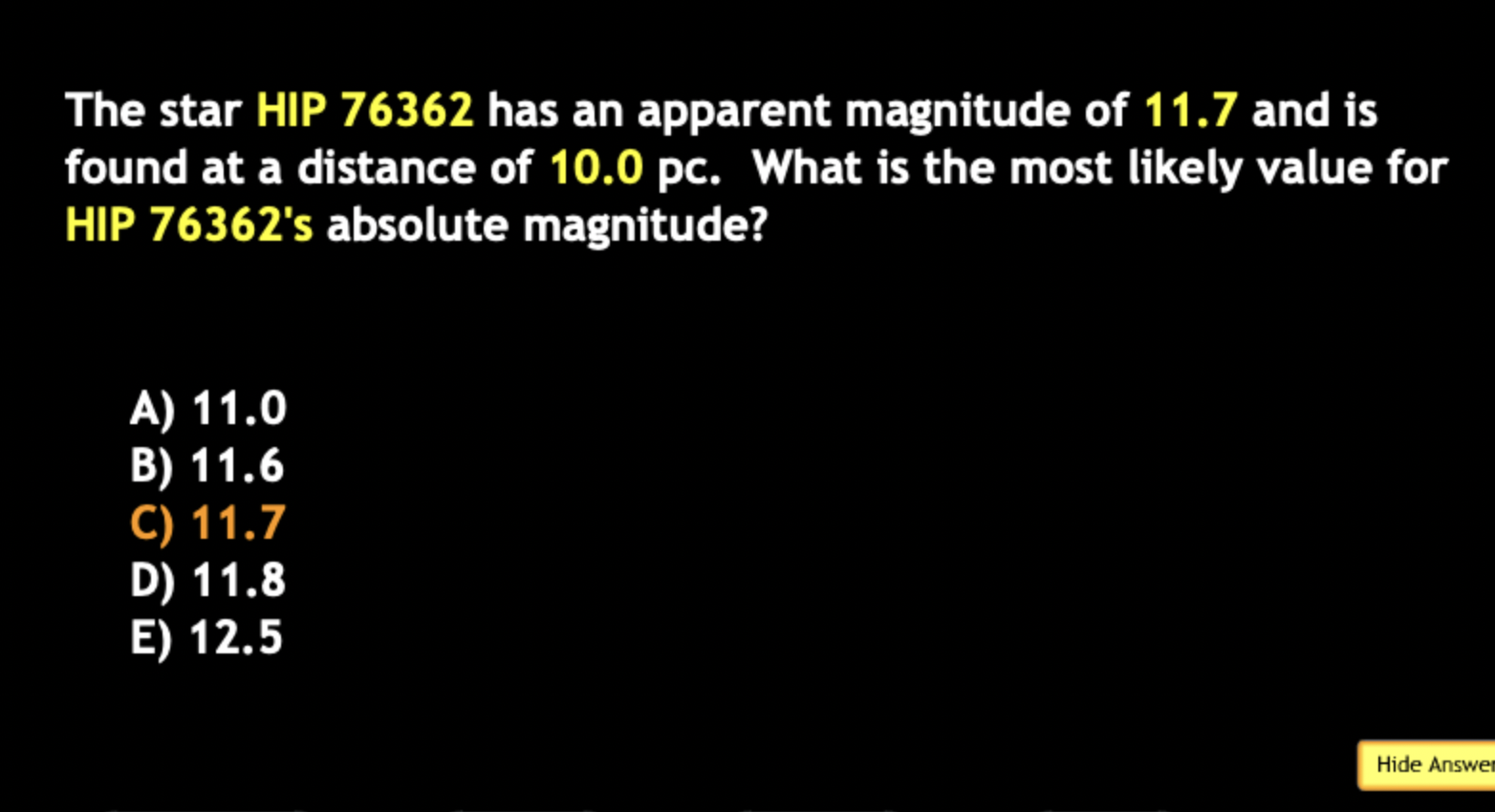
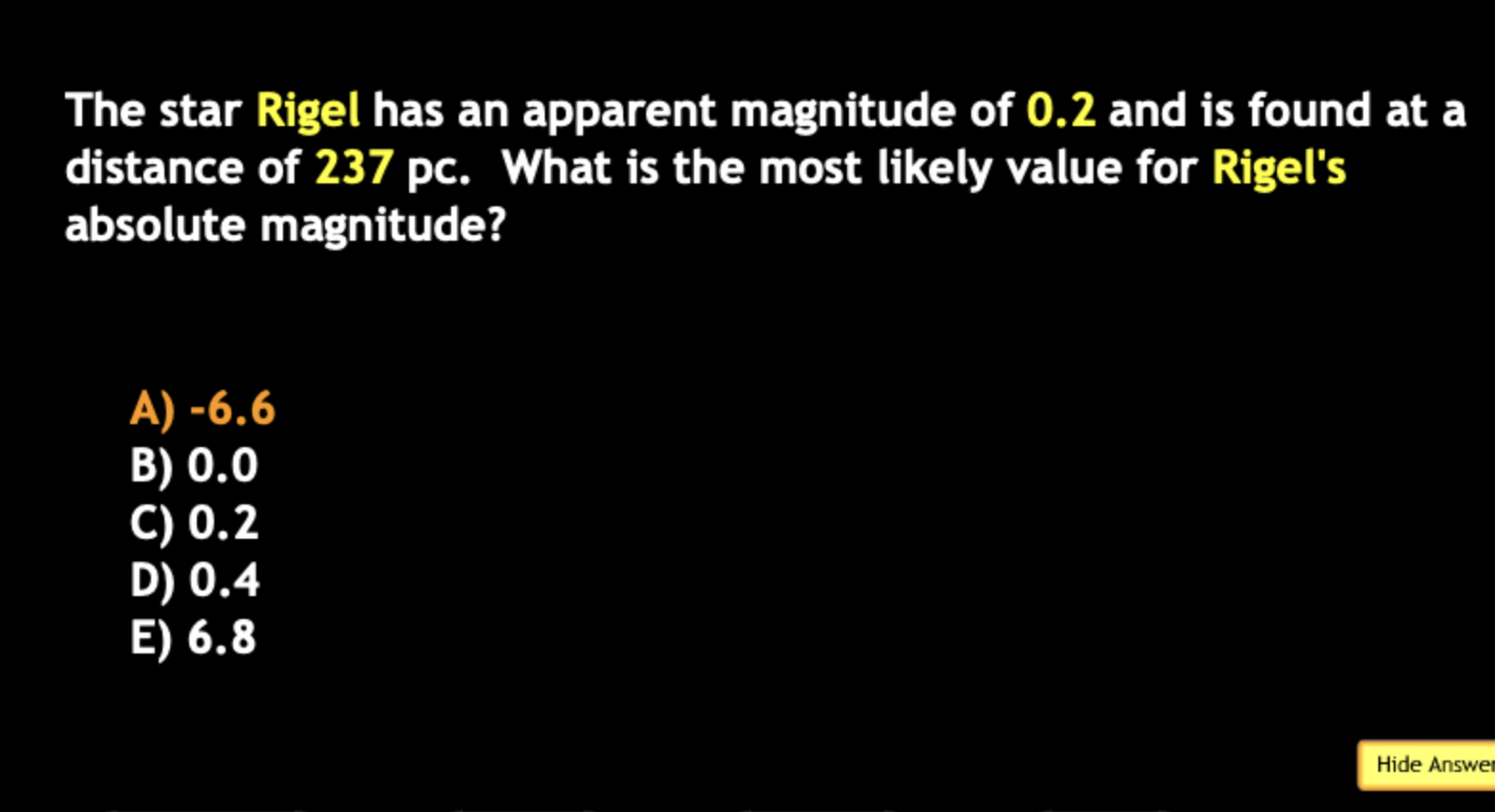
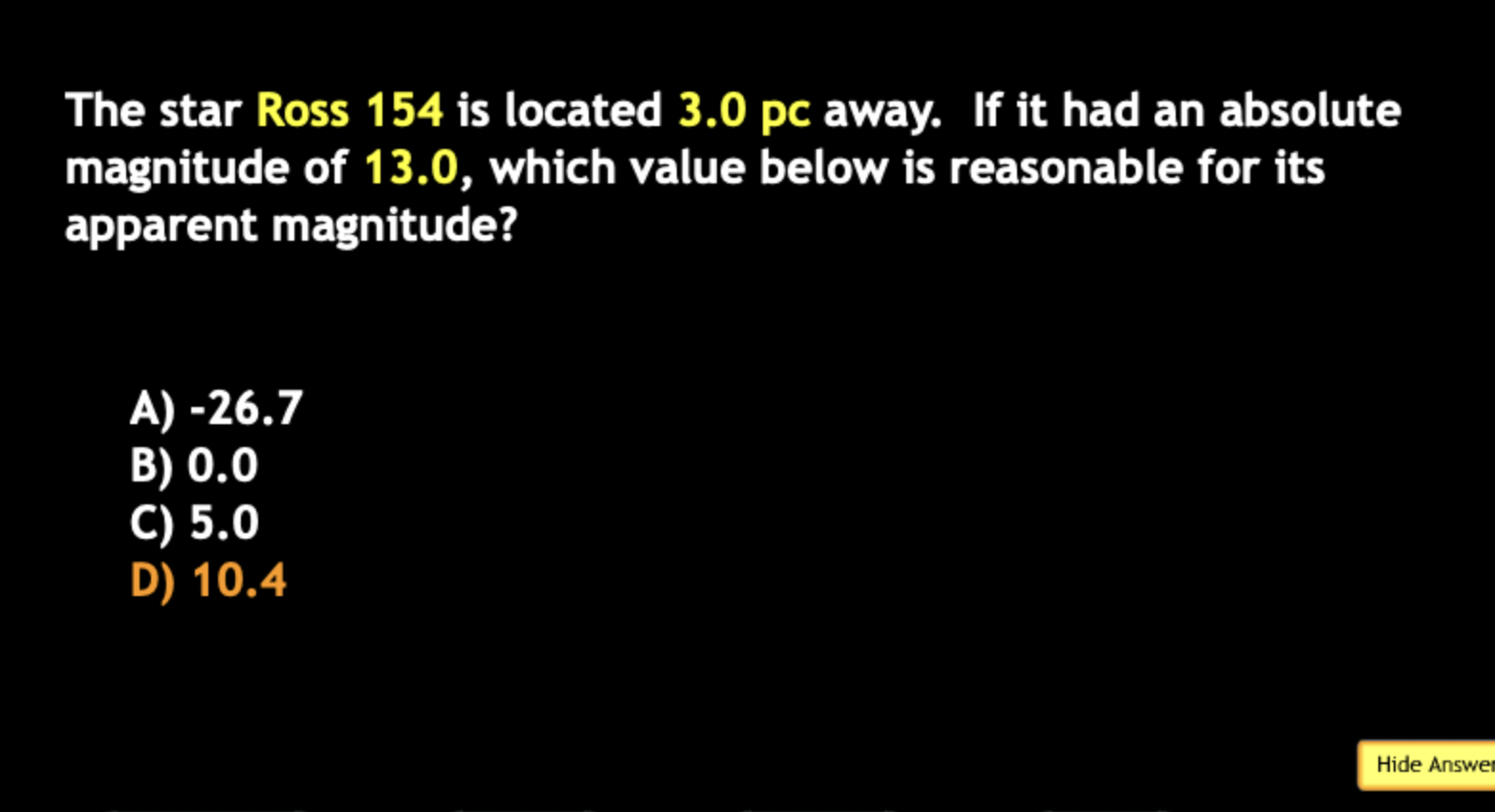
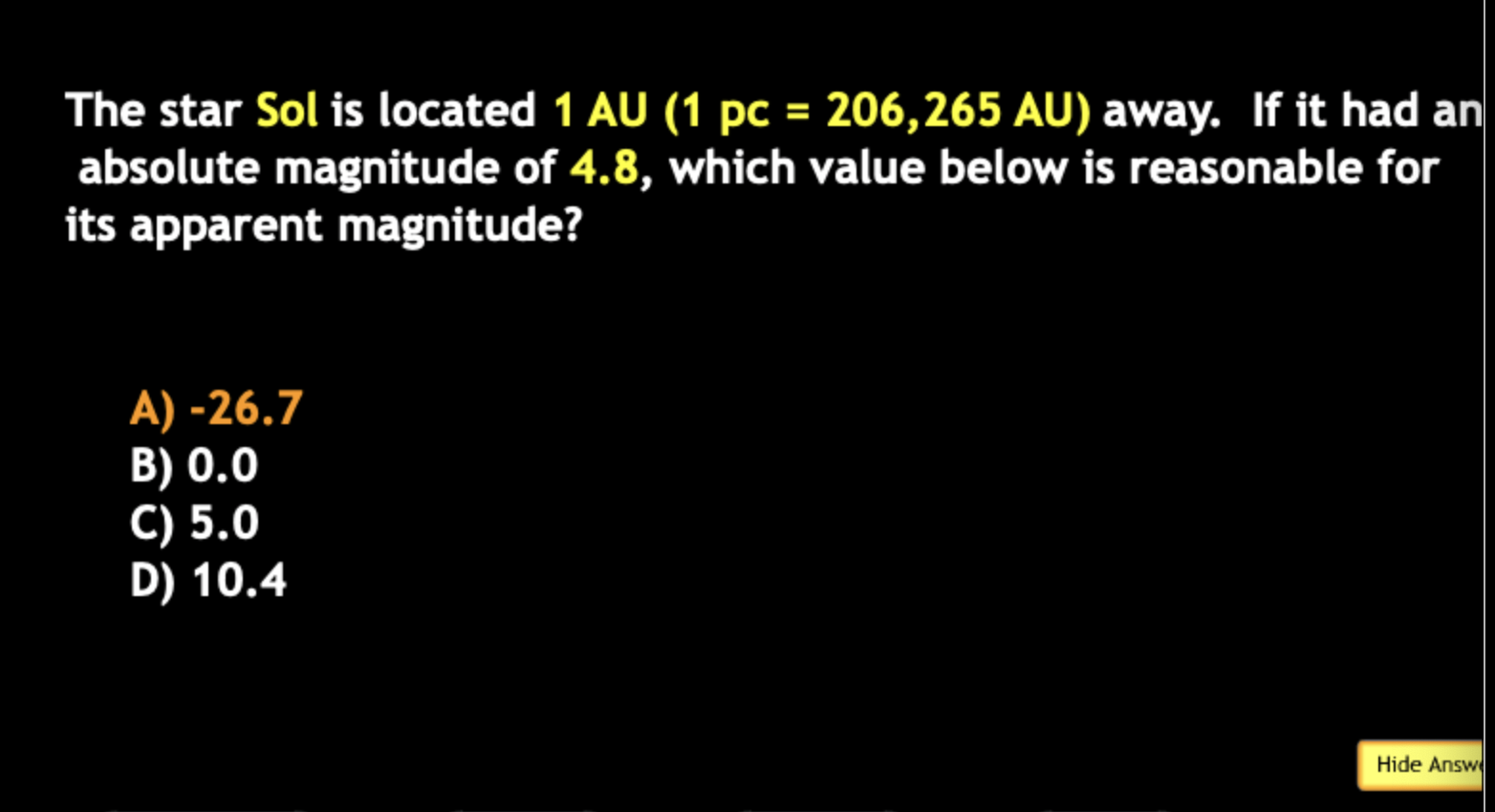
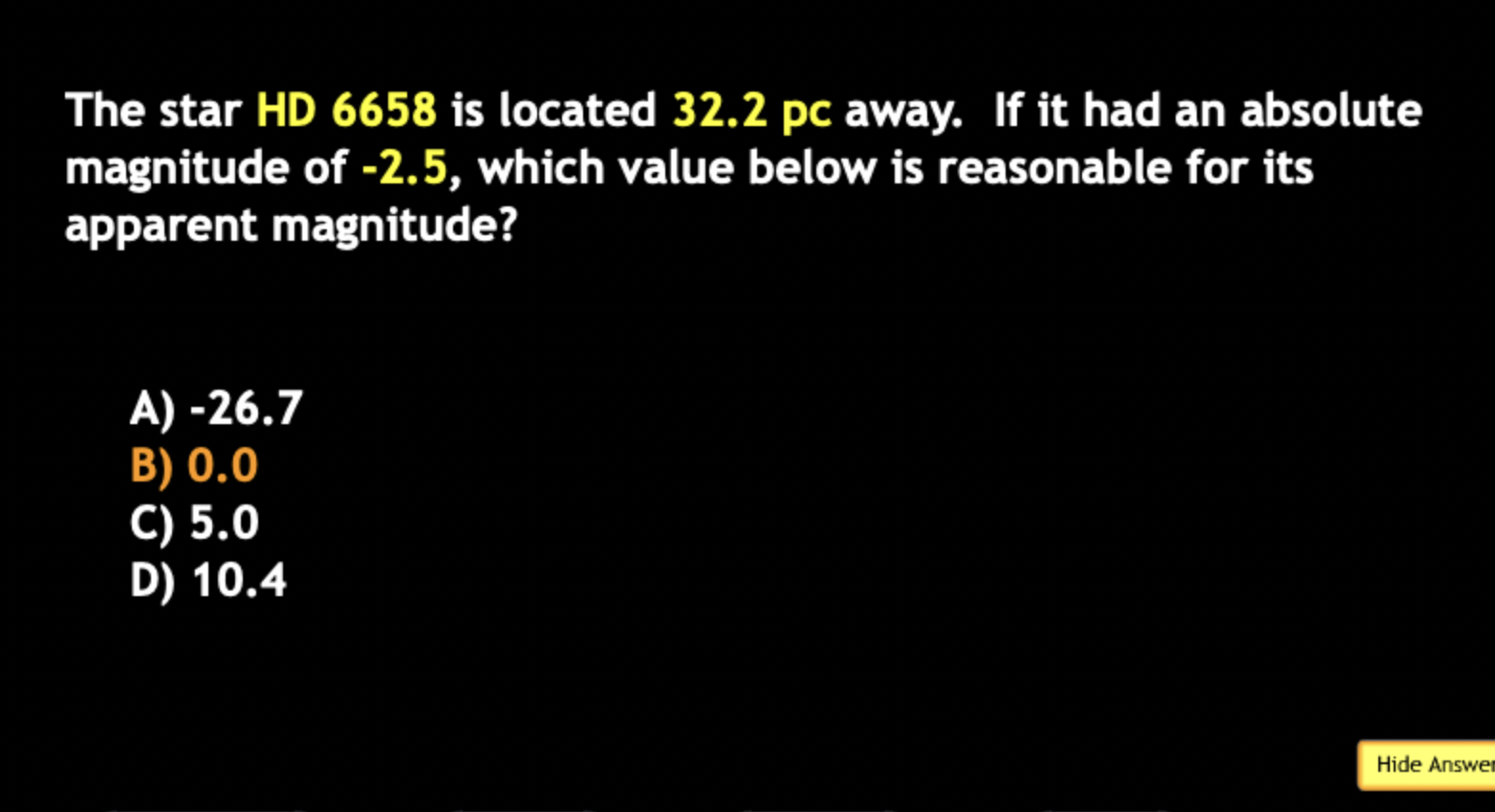
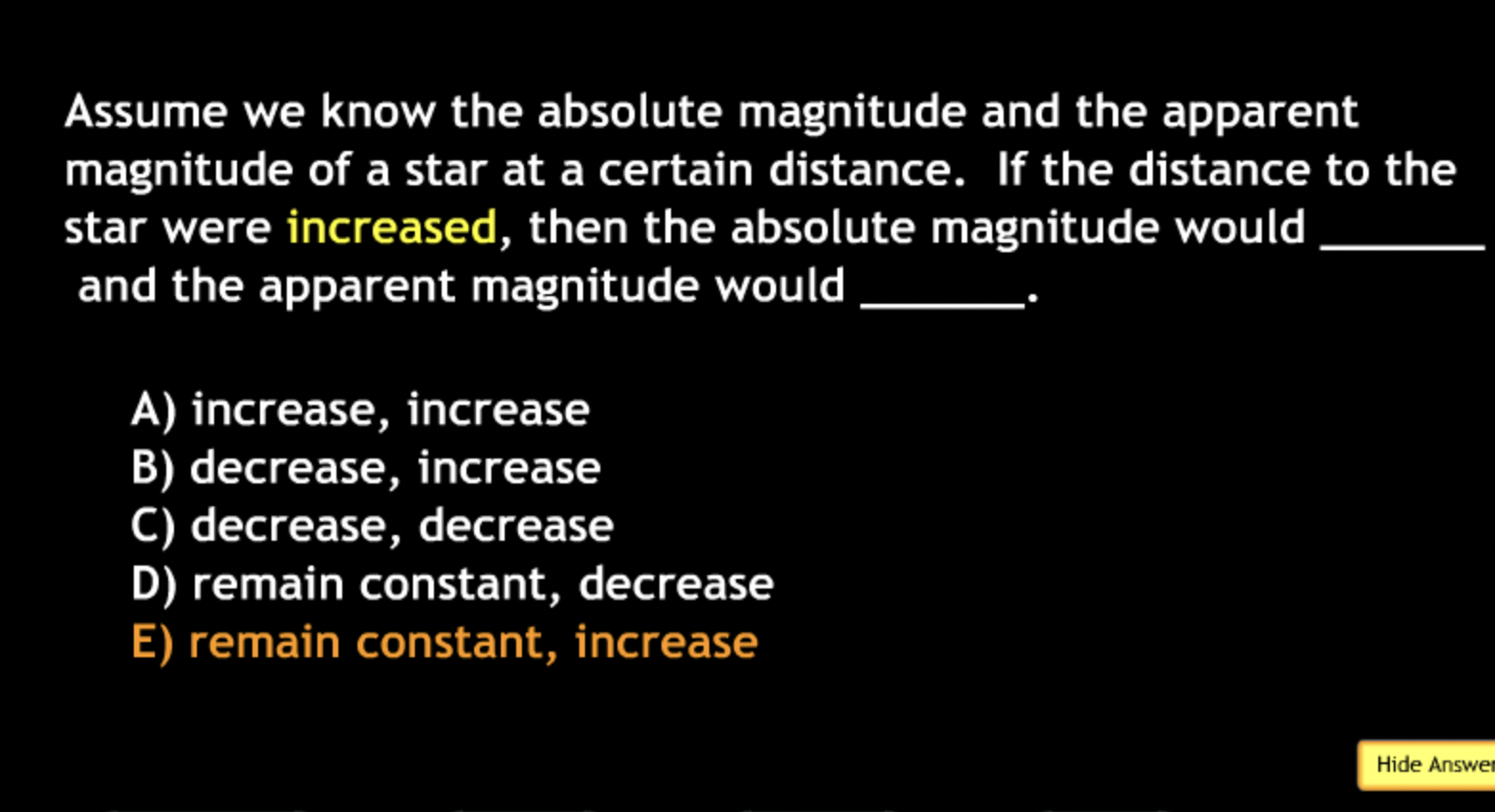
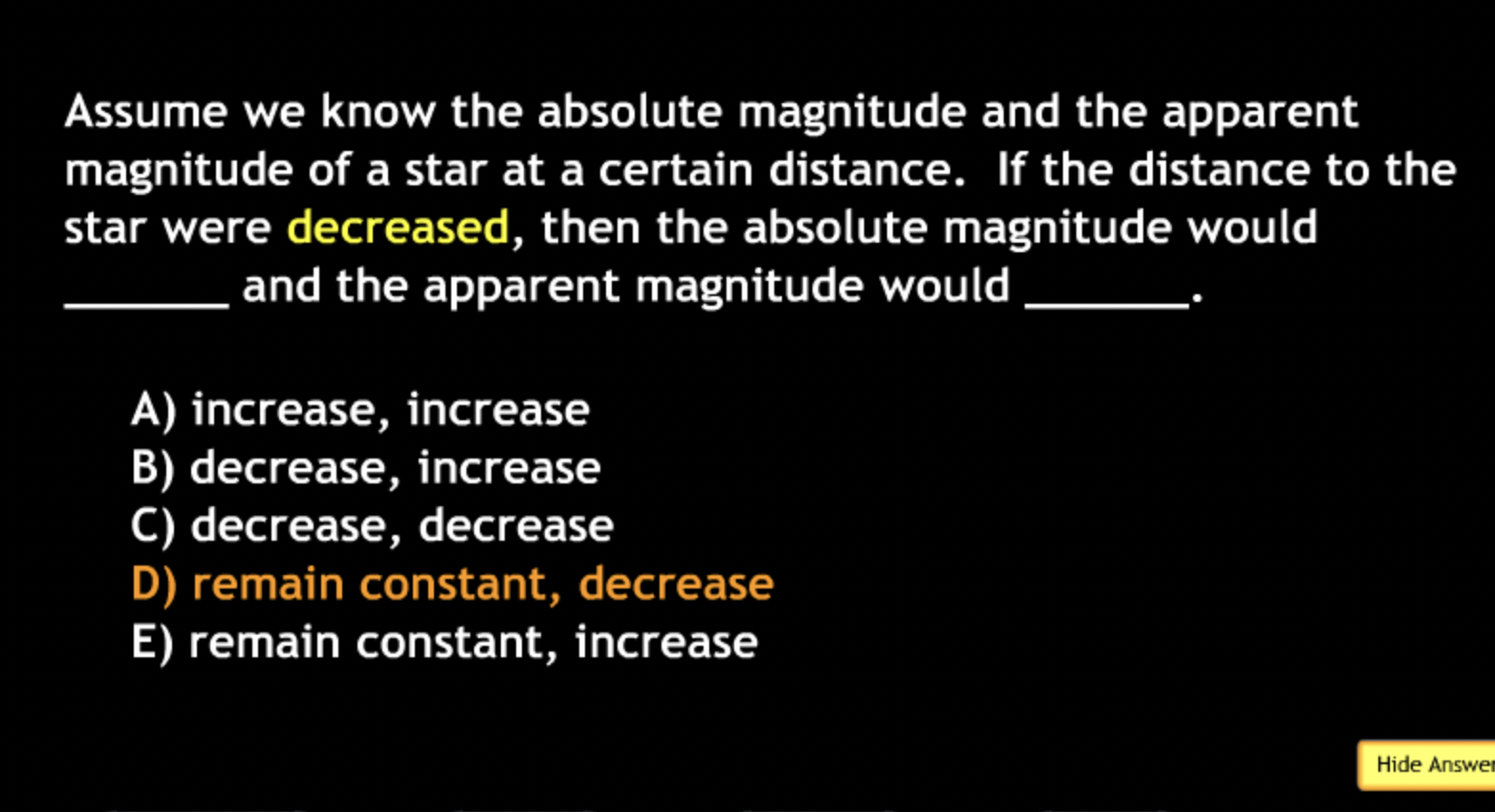

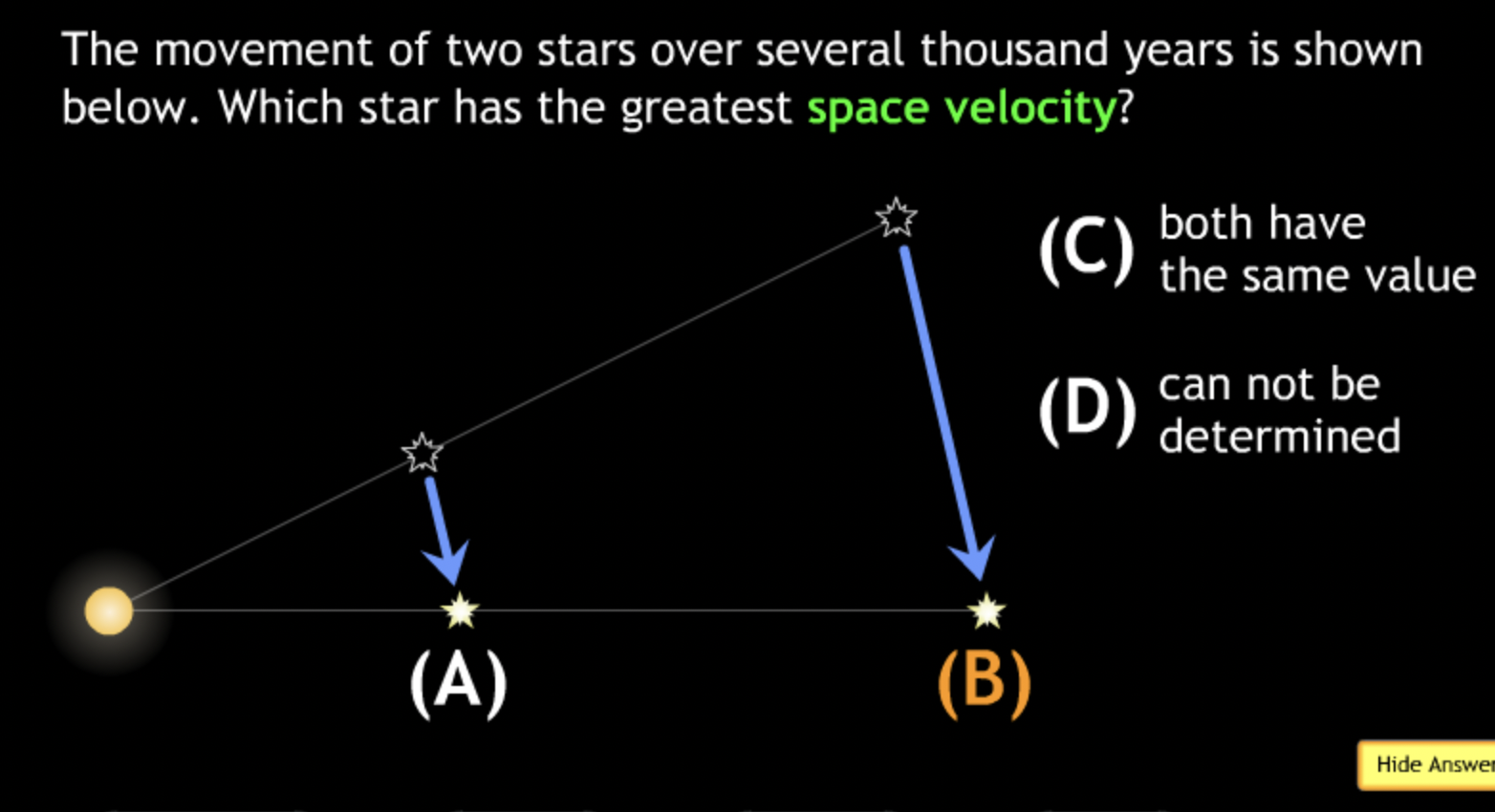
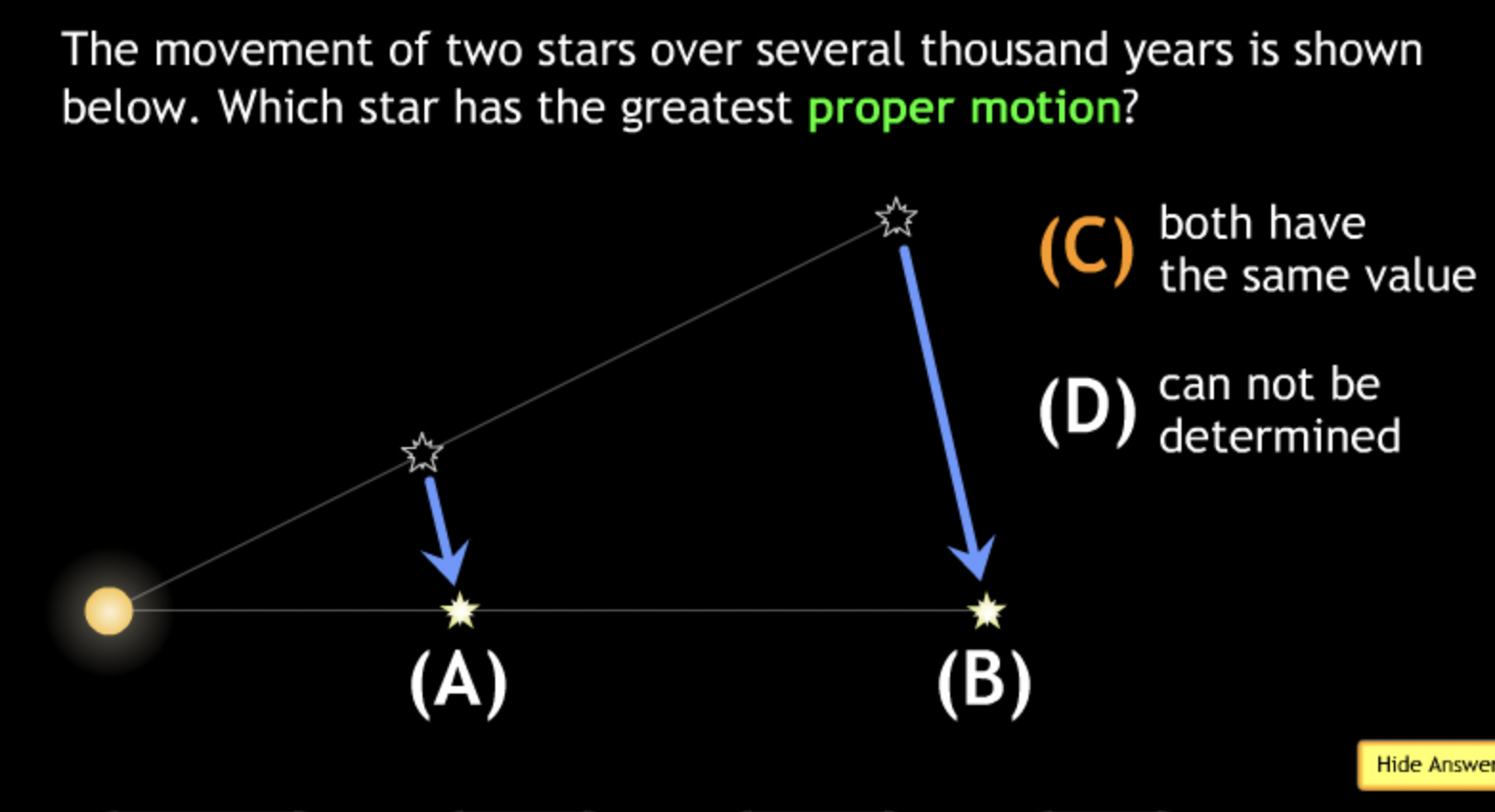
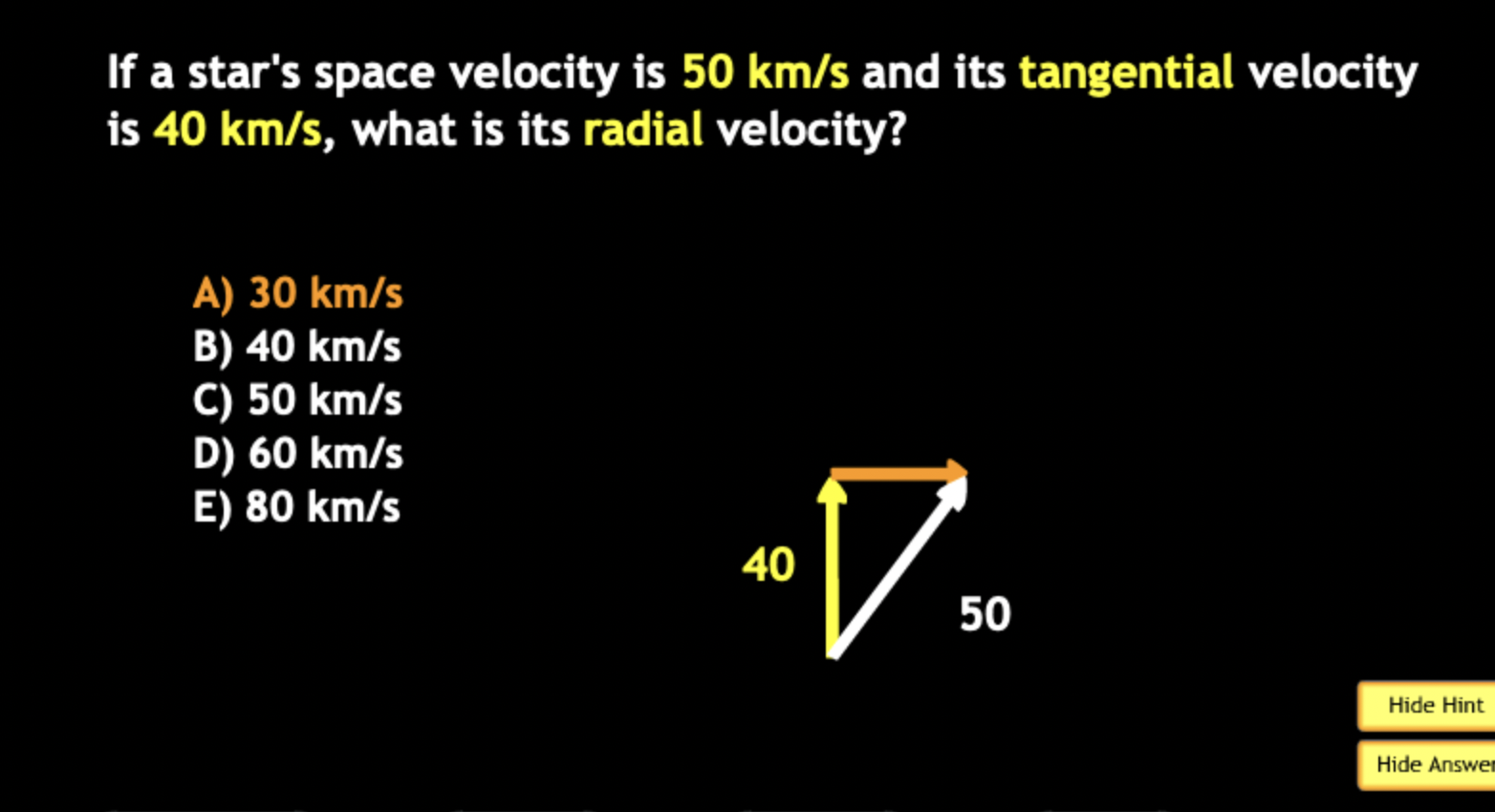
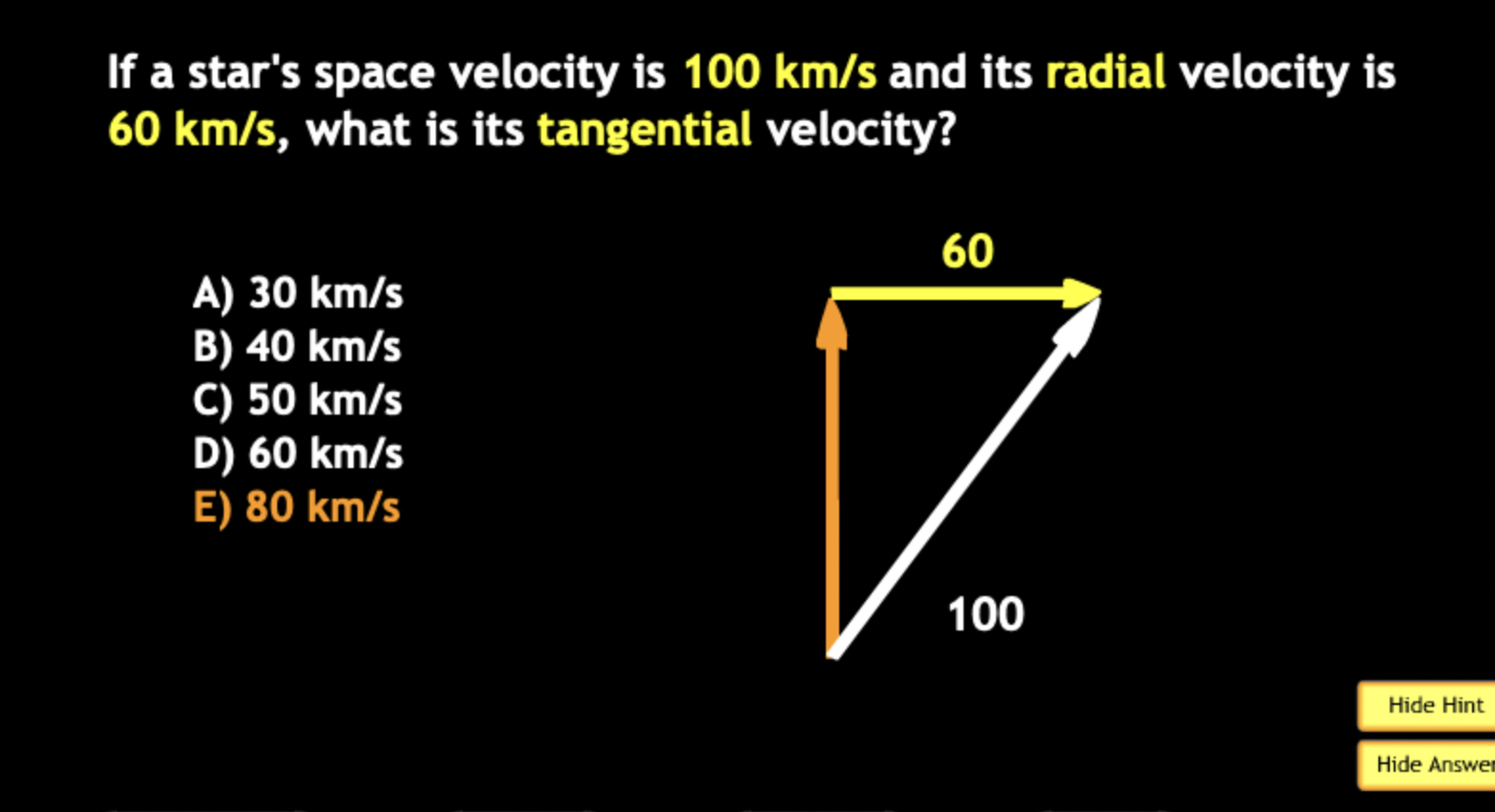
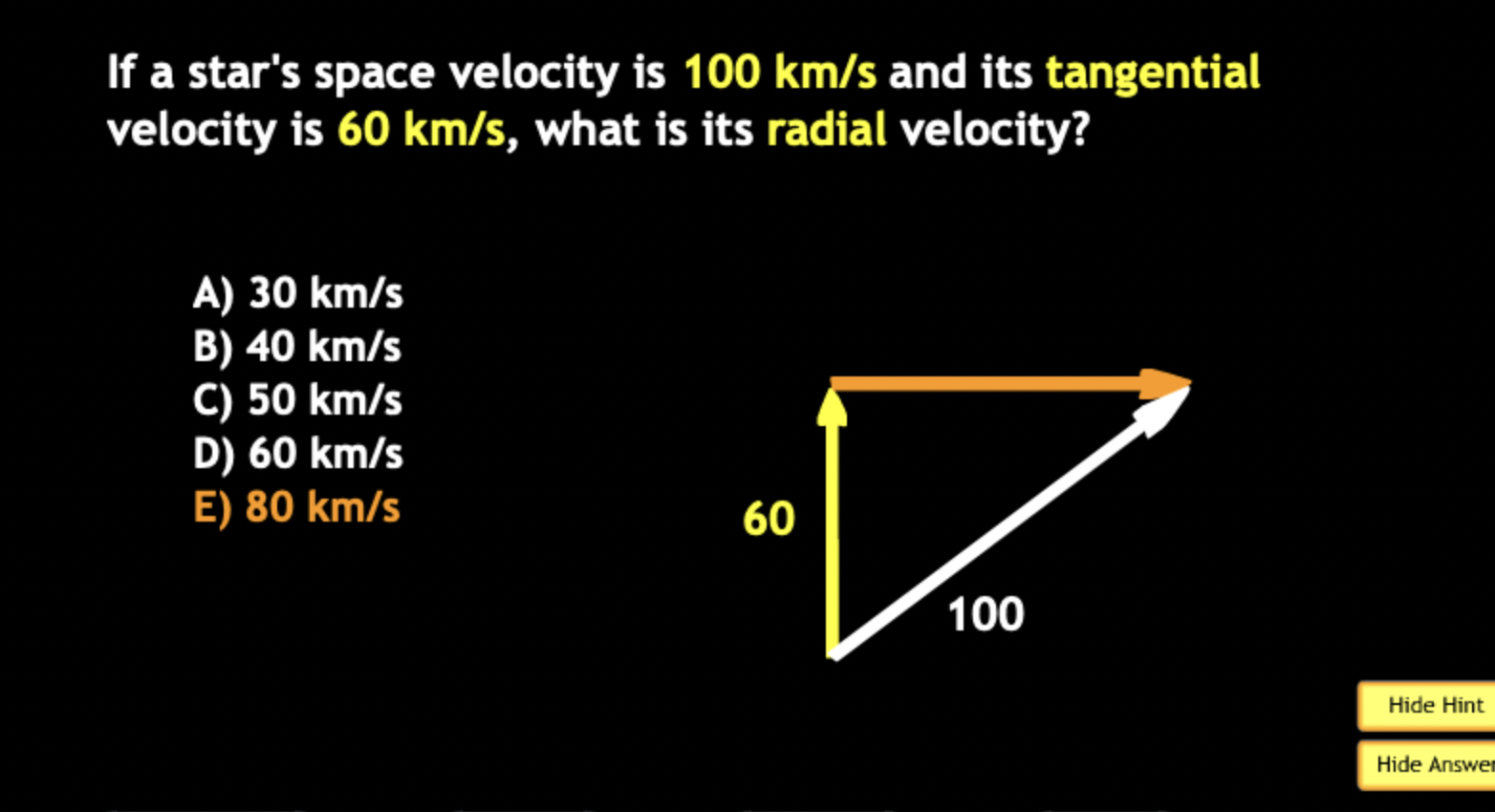
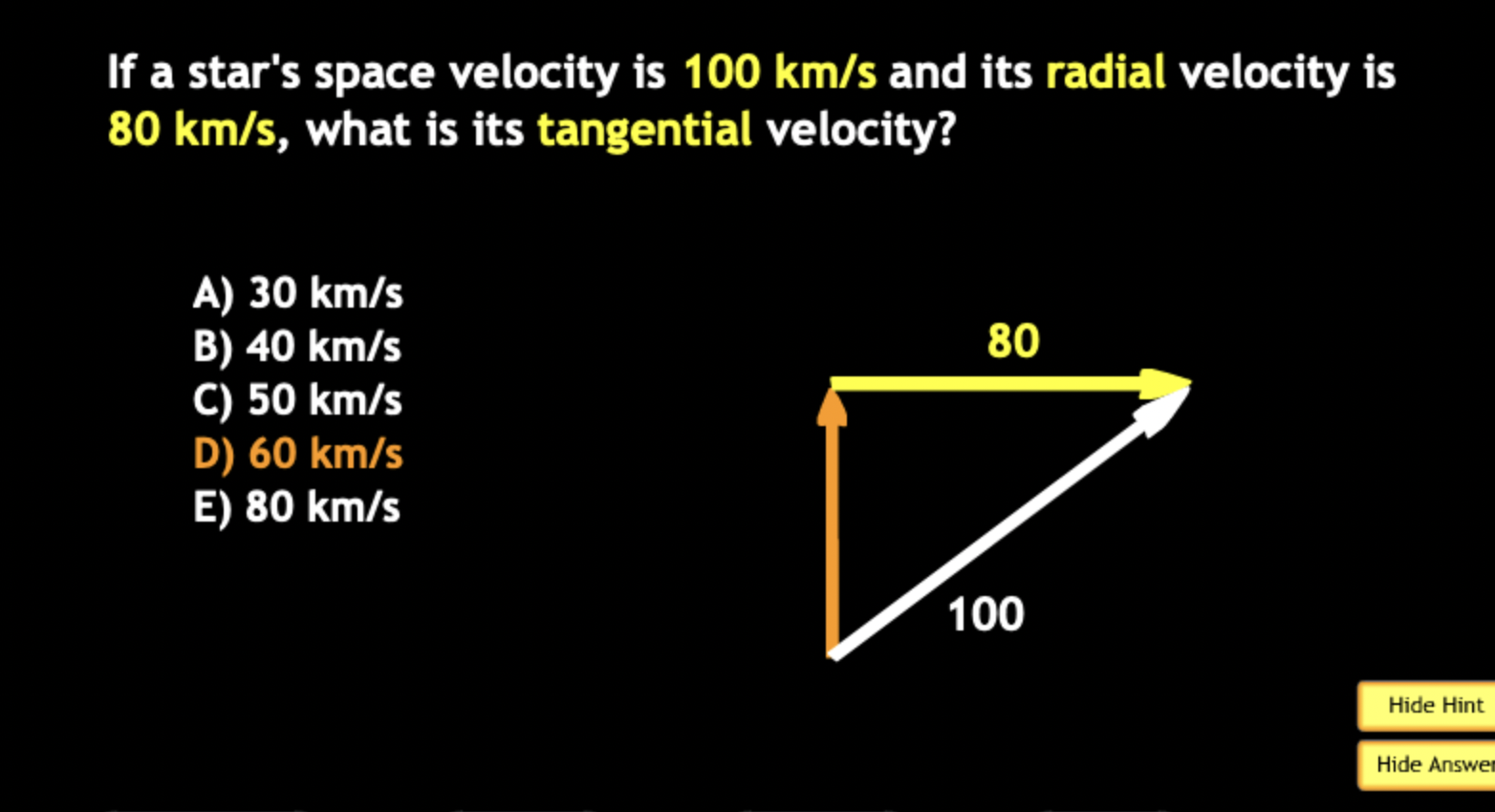
A star’s motion is given as 2.8”/year. This could be referring to the star’s…. proper motion.
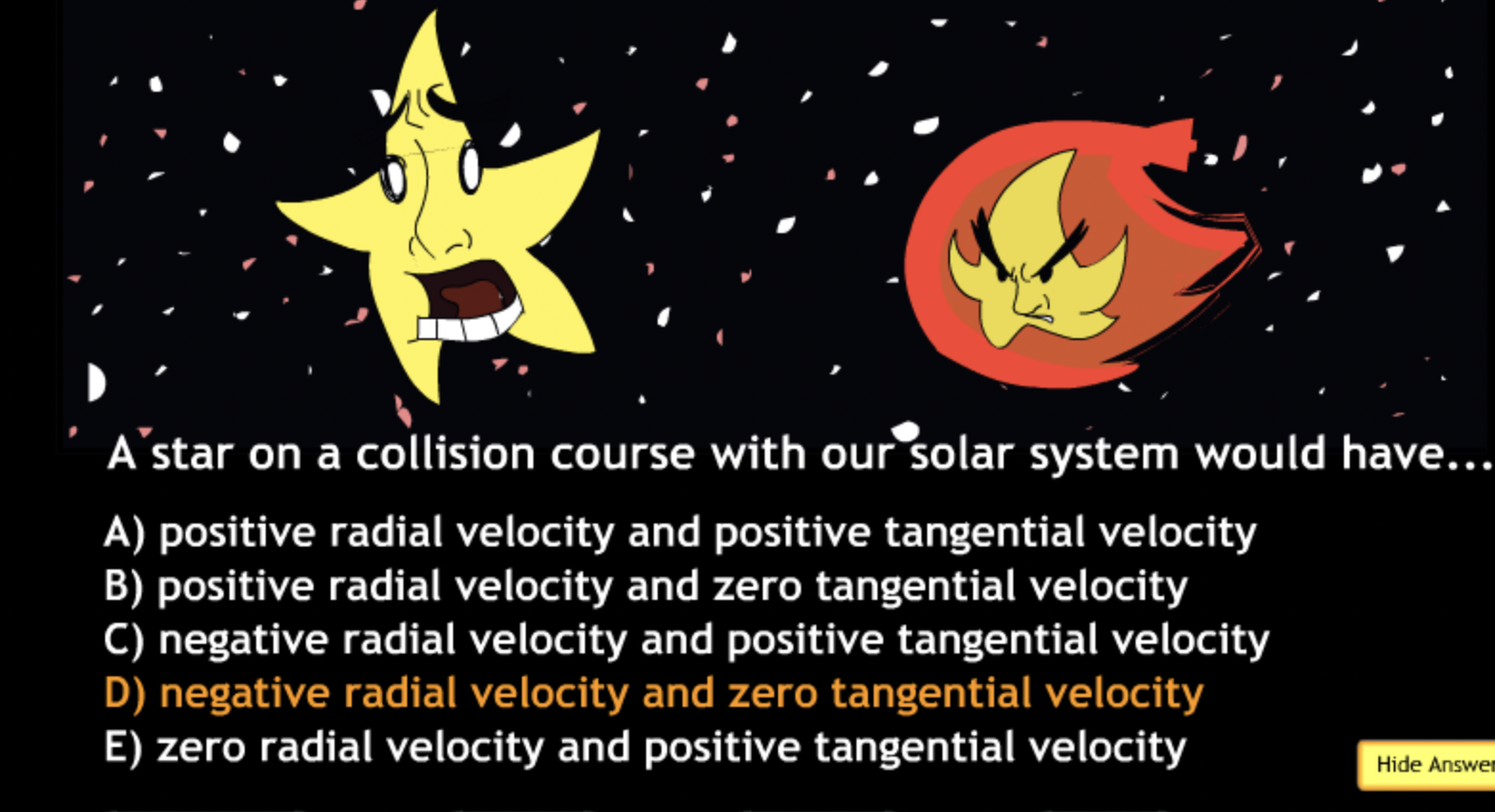
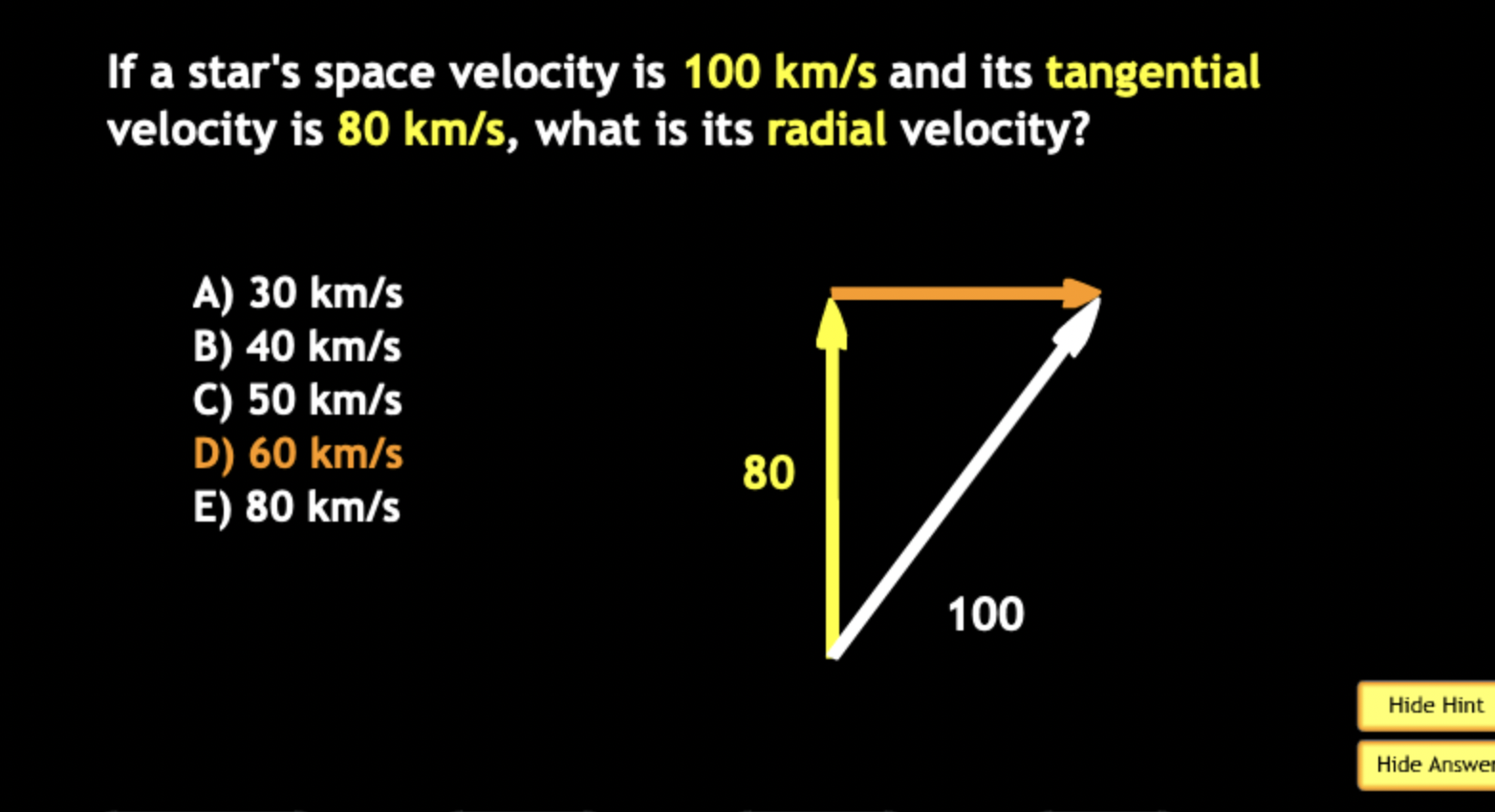
A star’s motion is given as 35km/s. This could be referring to the star’s… radial or tangential velocities.
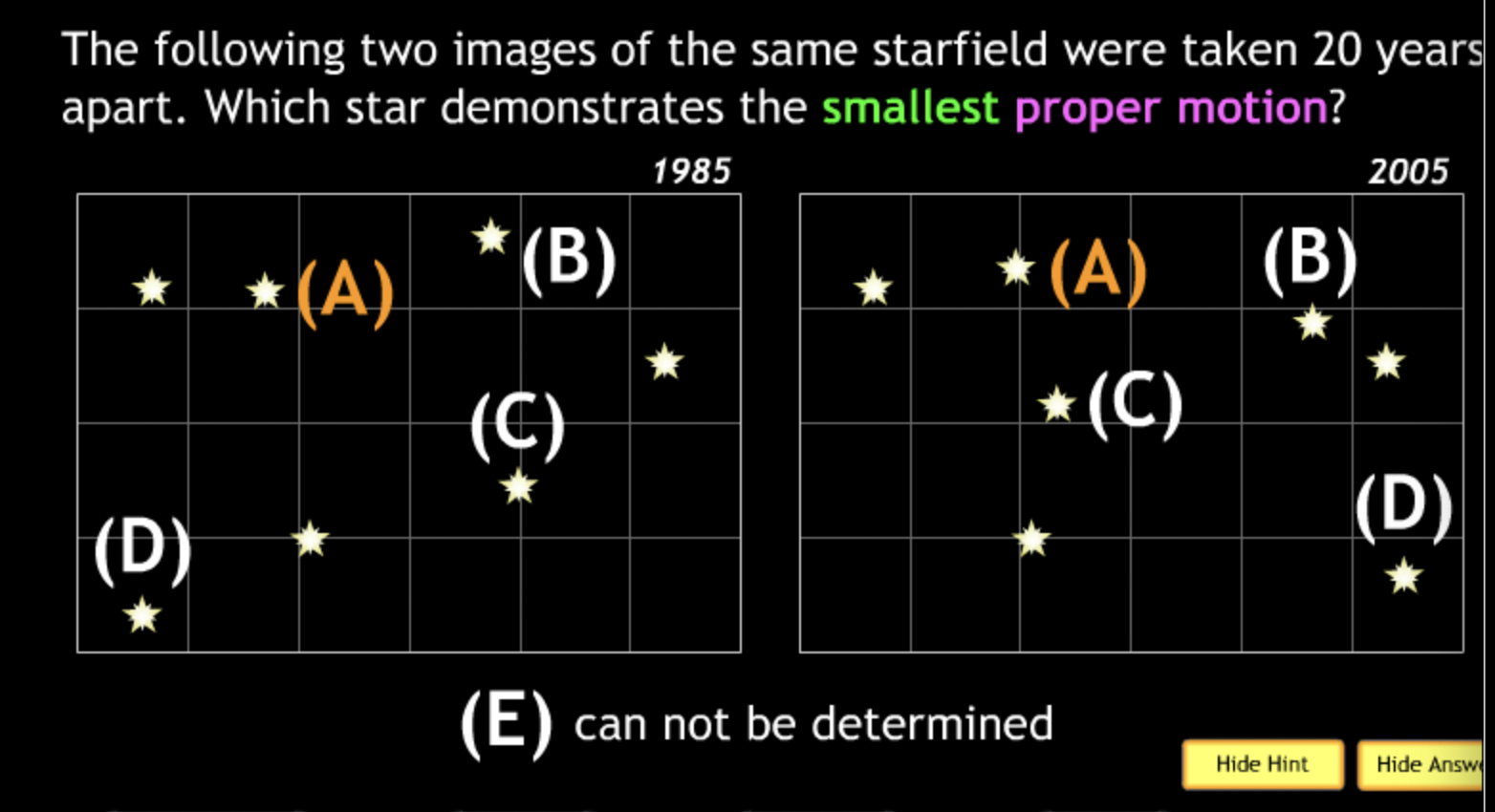
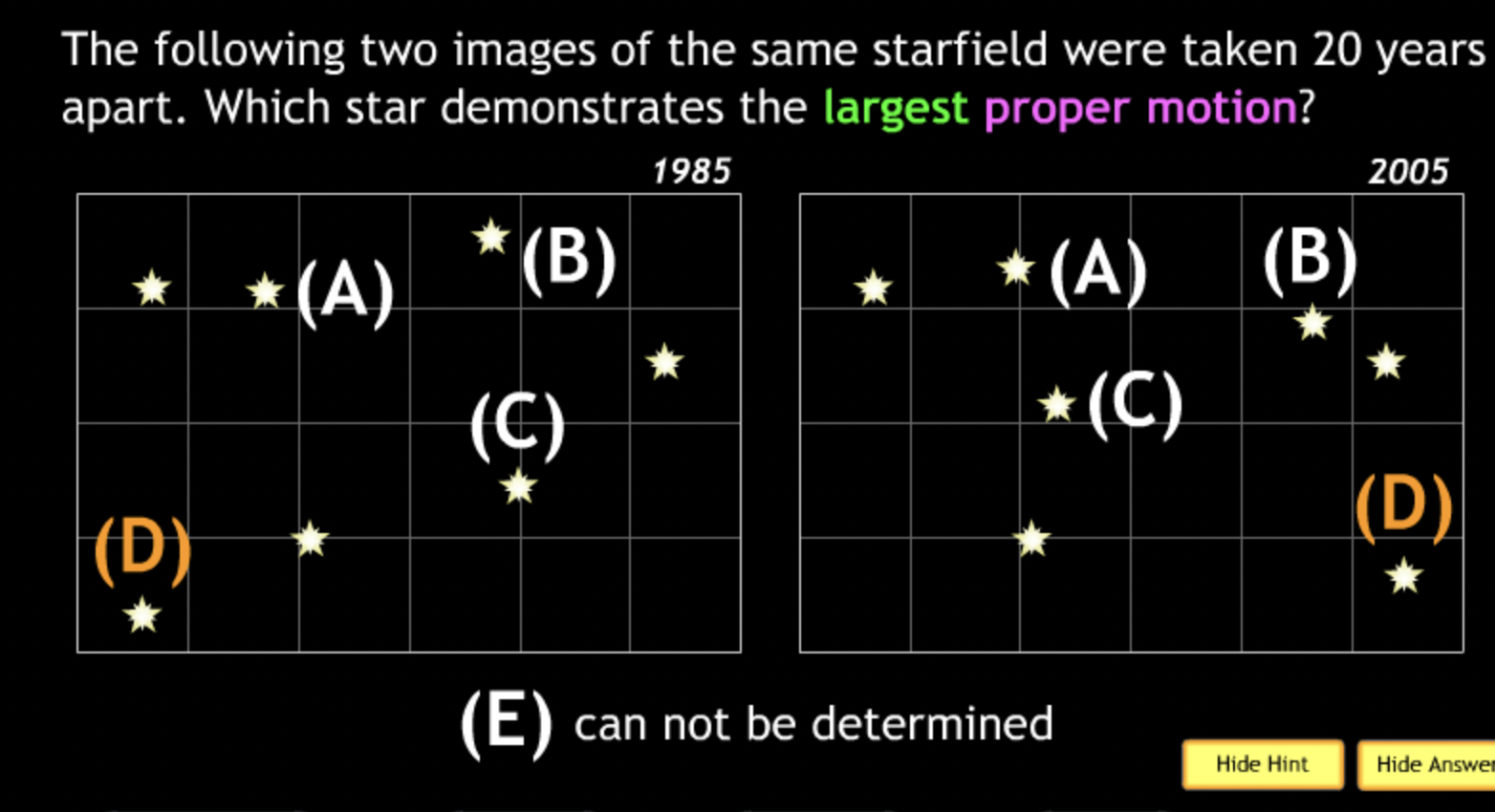
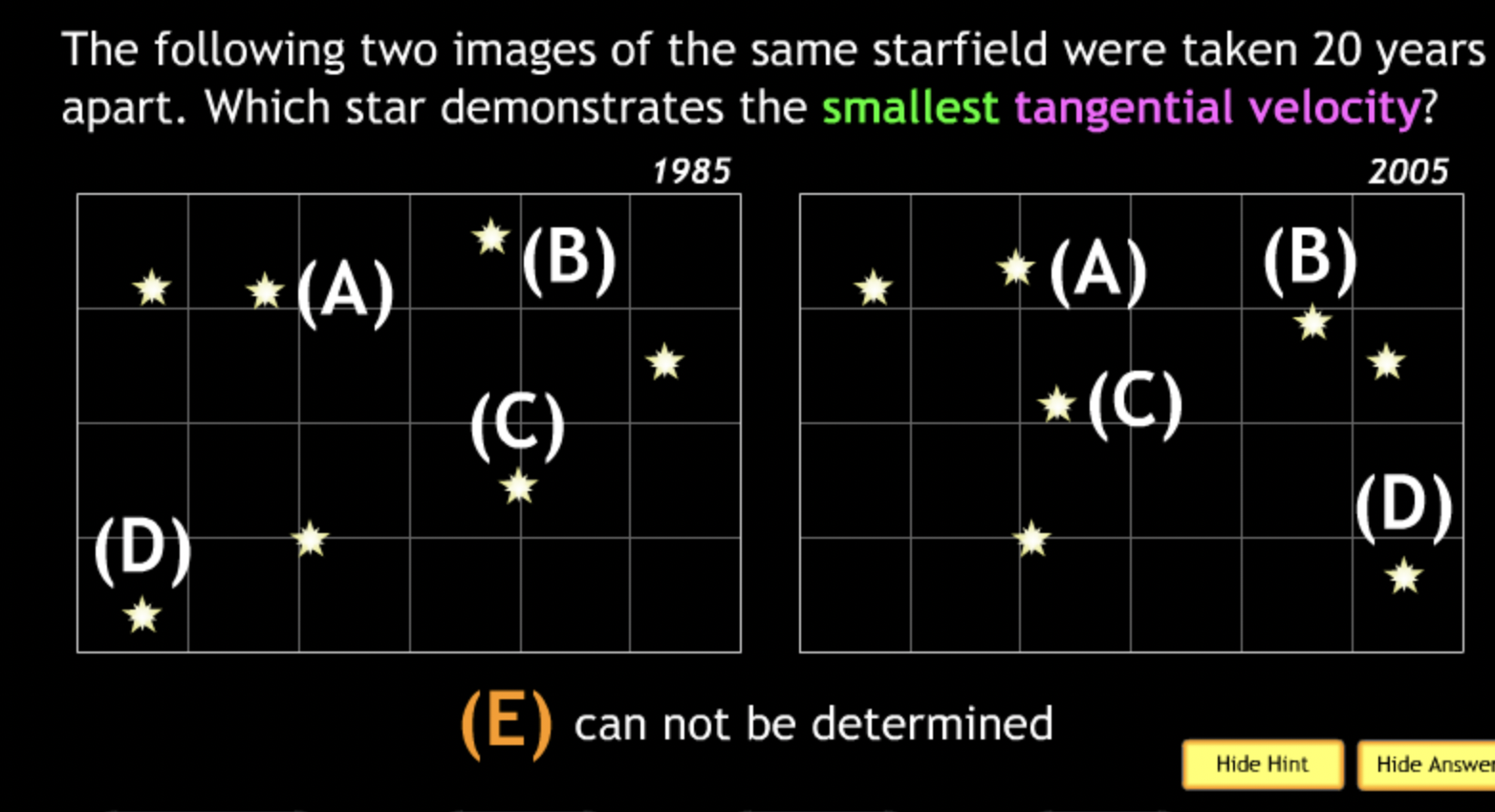
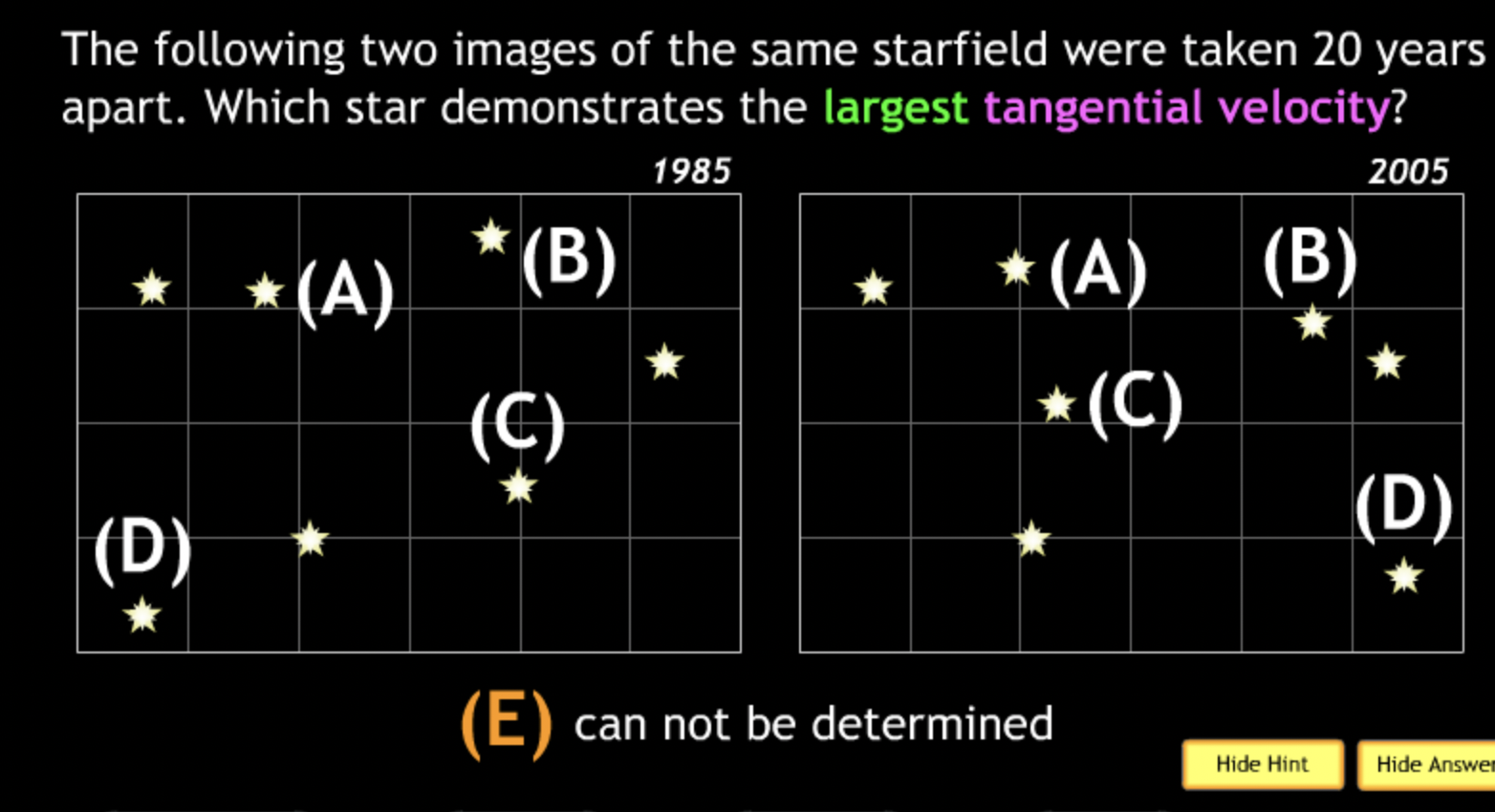
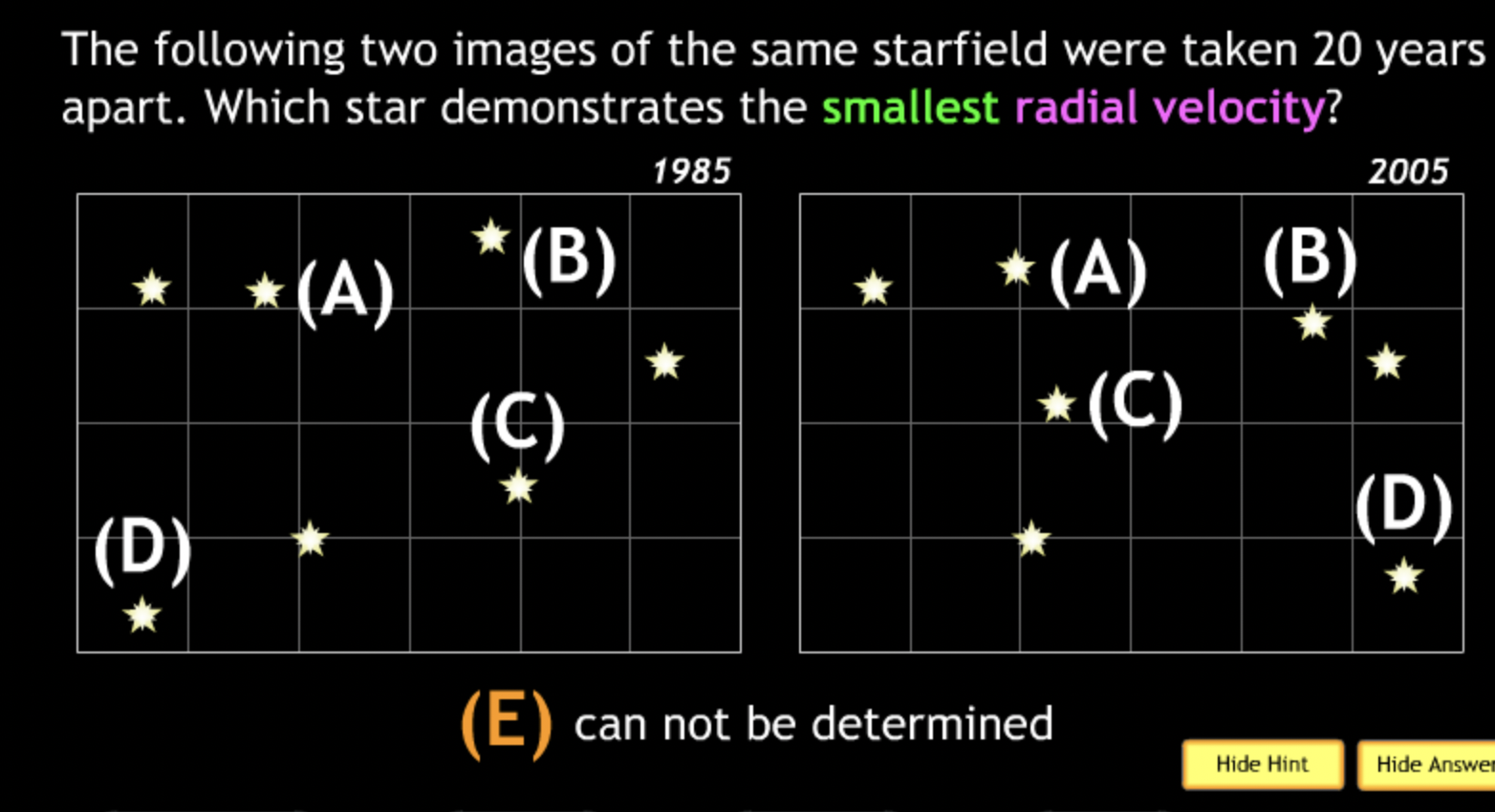
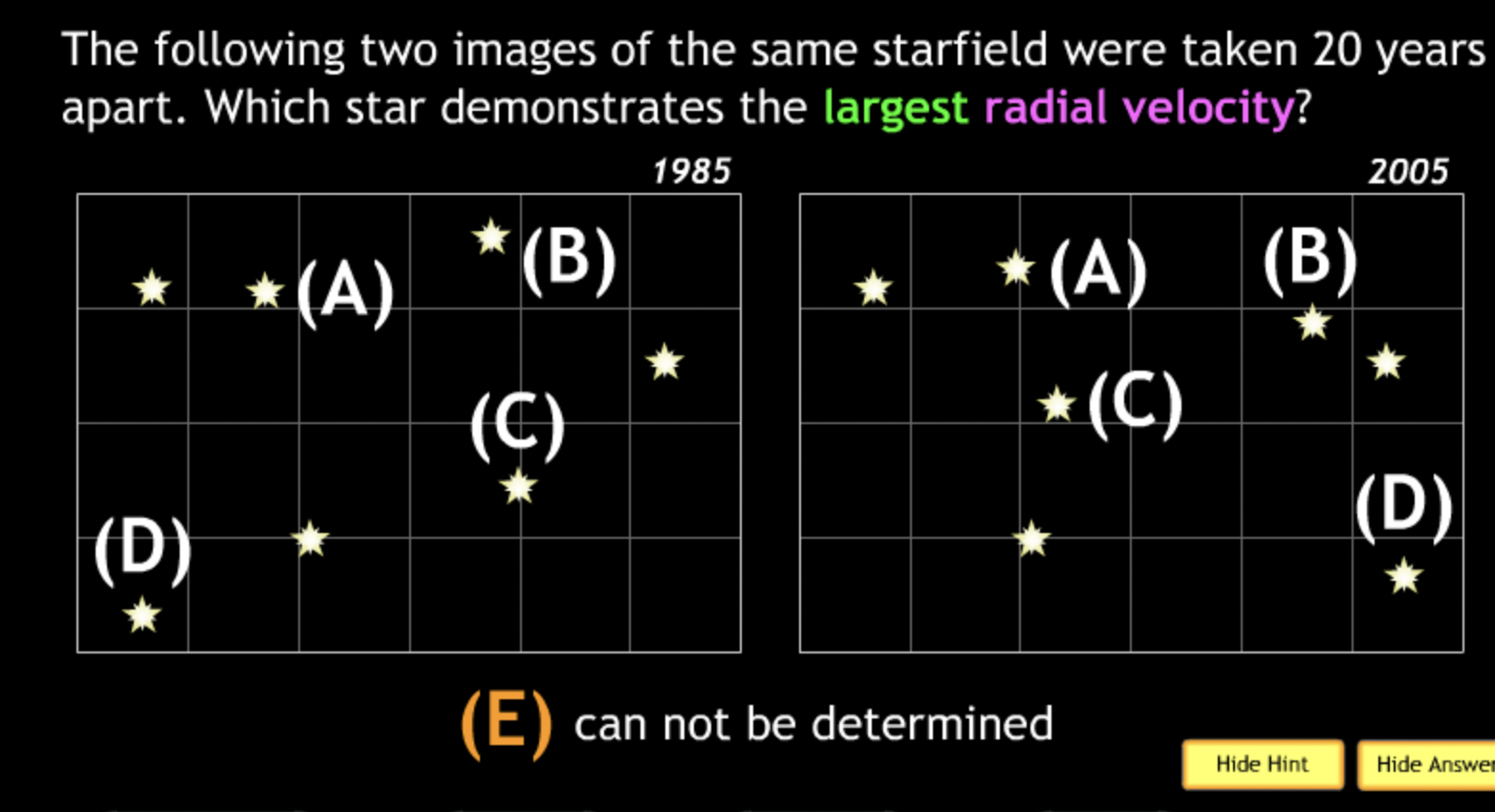
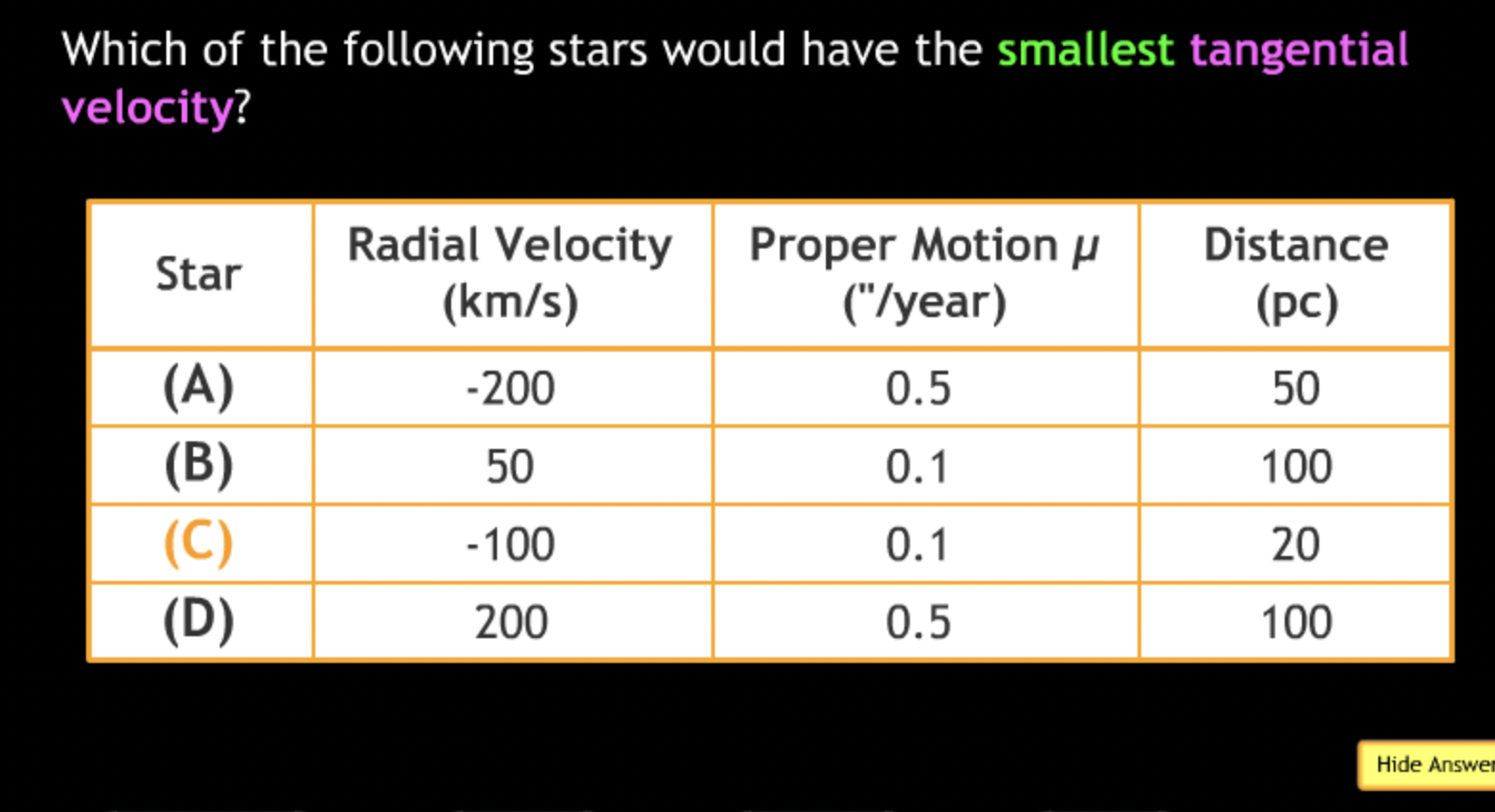
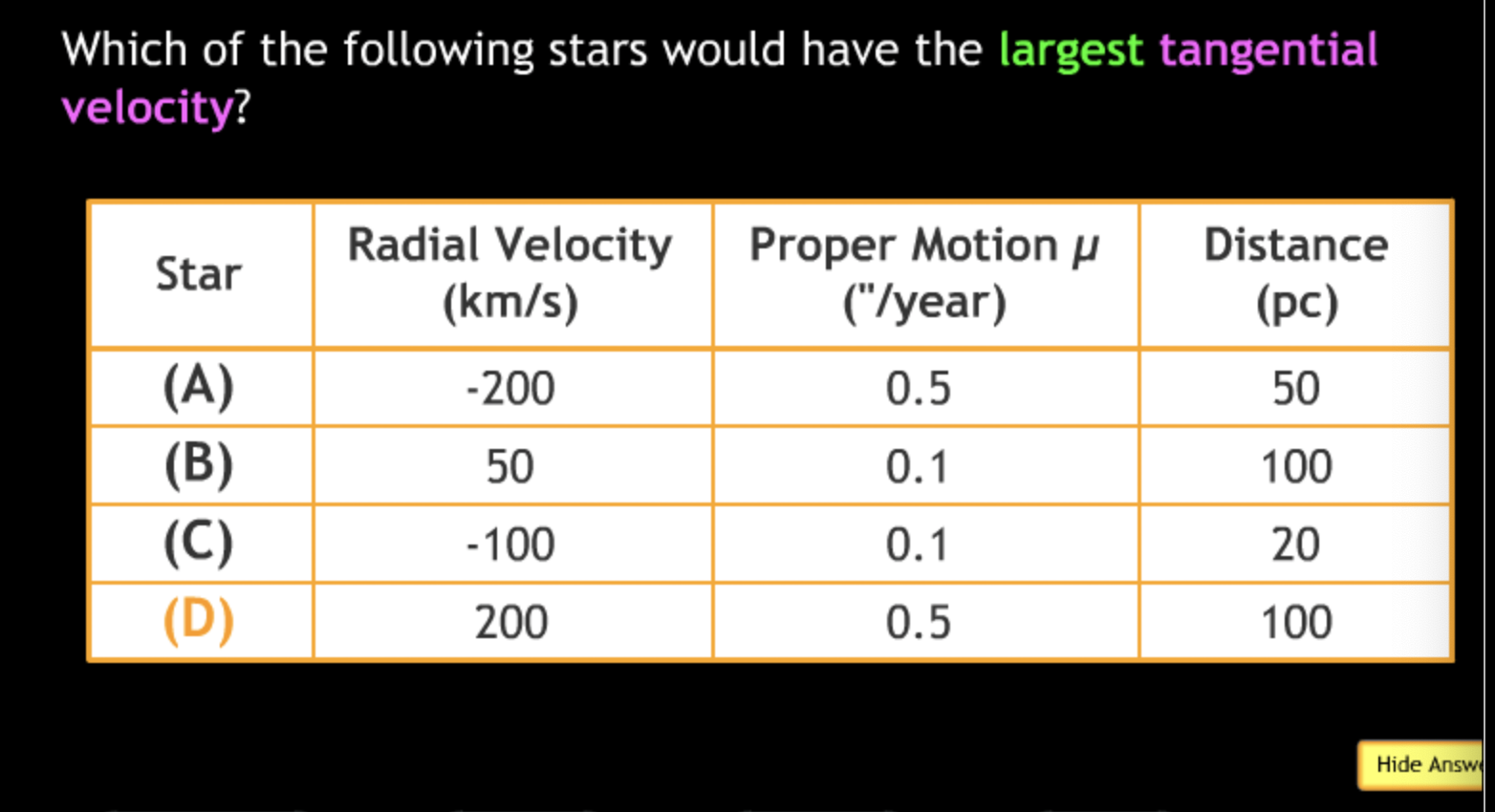
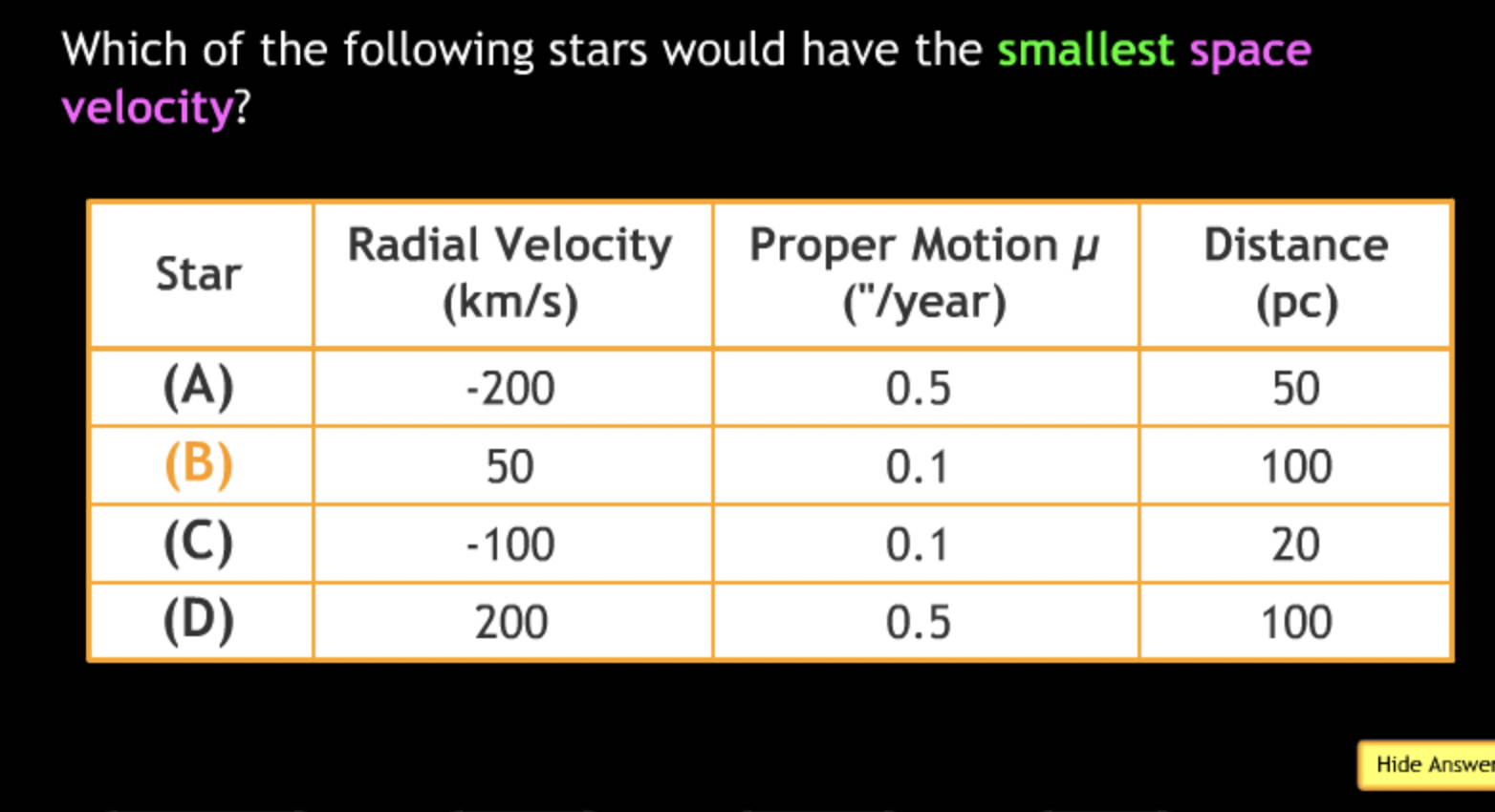
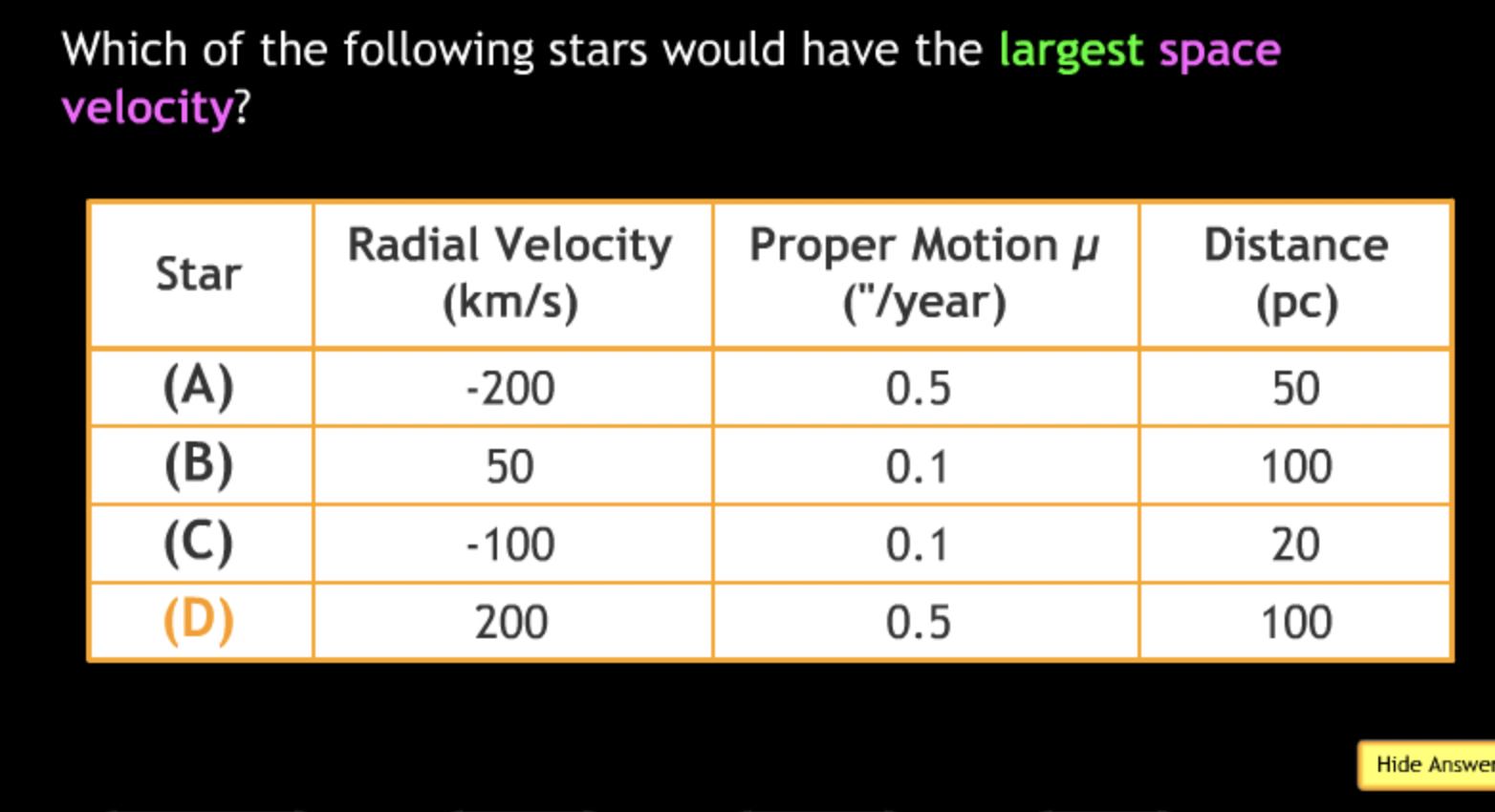
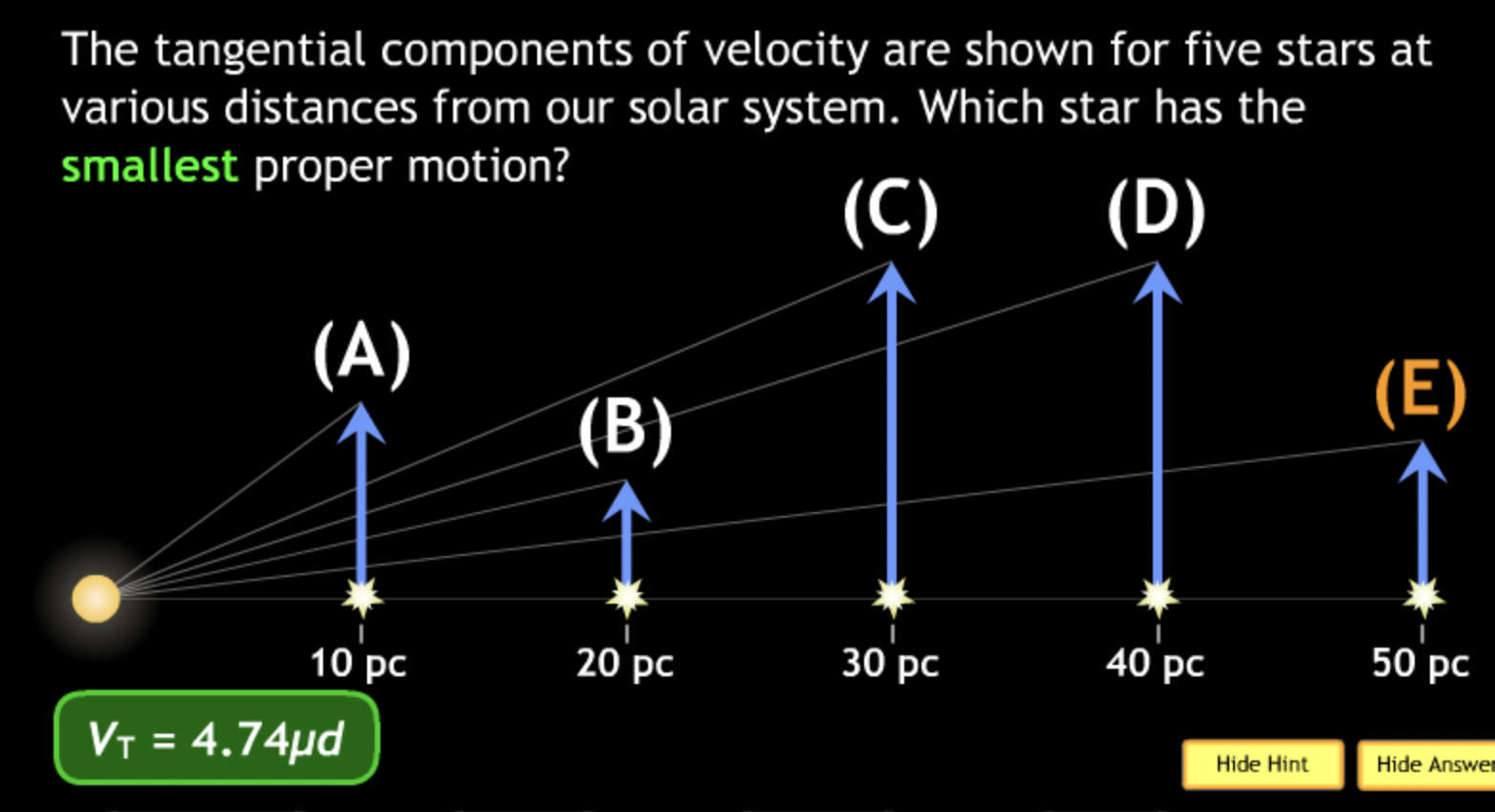
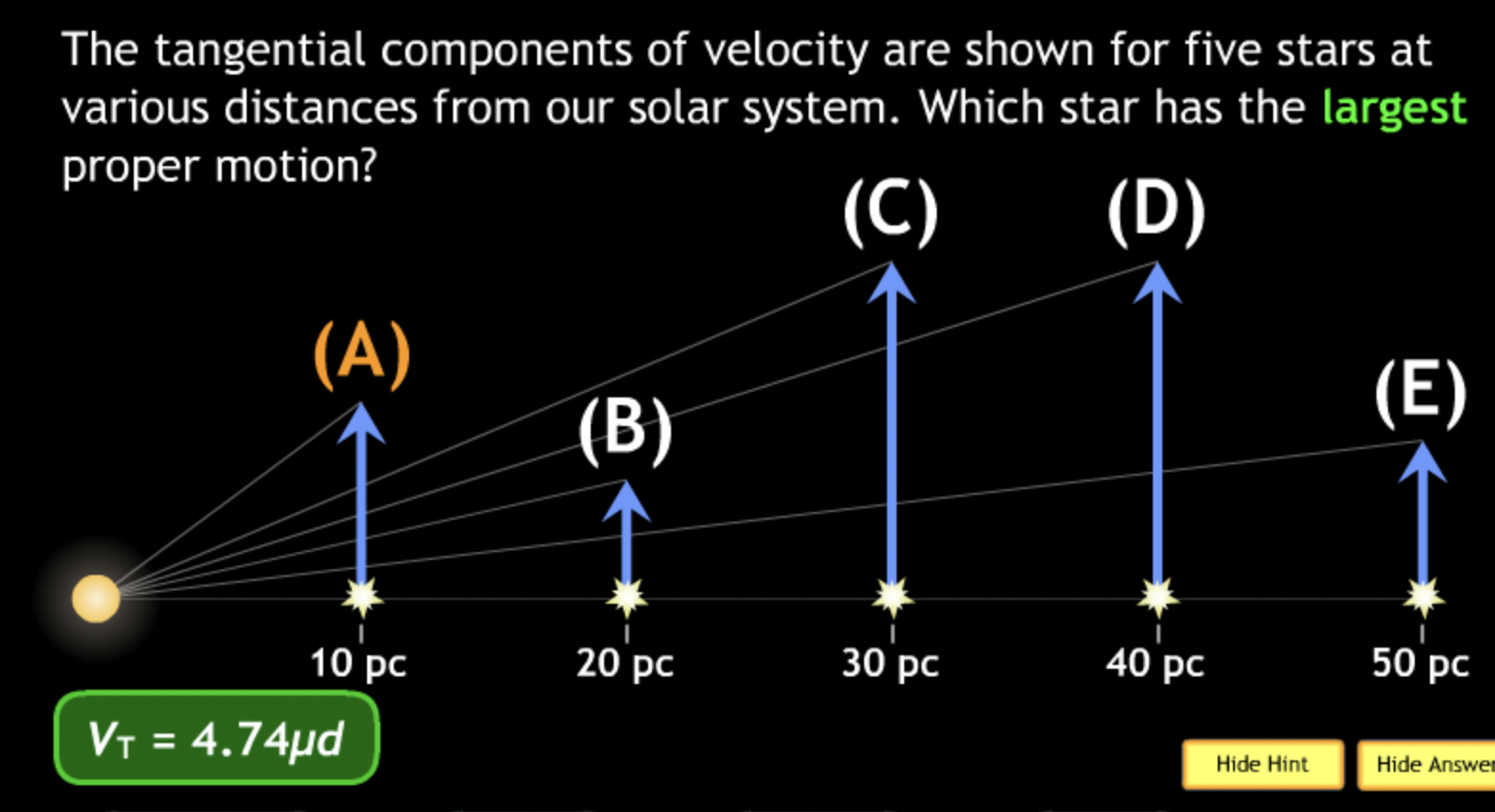
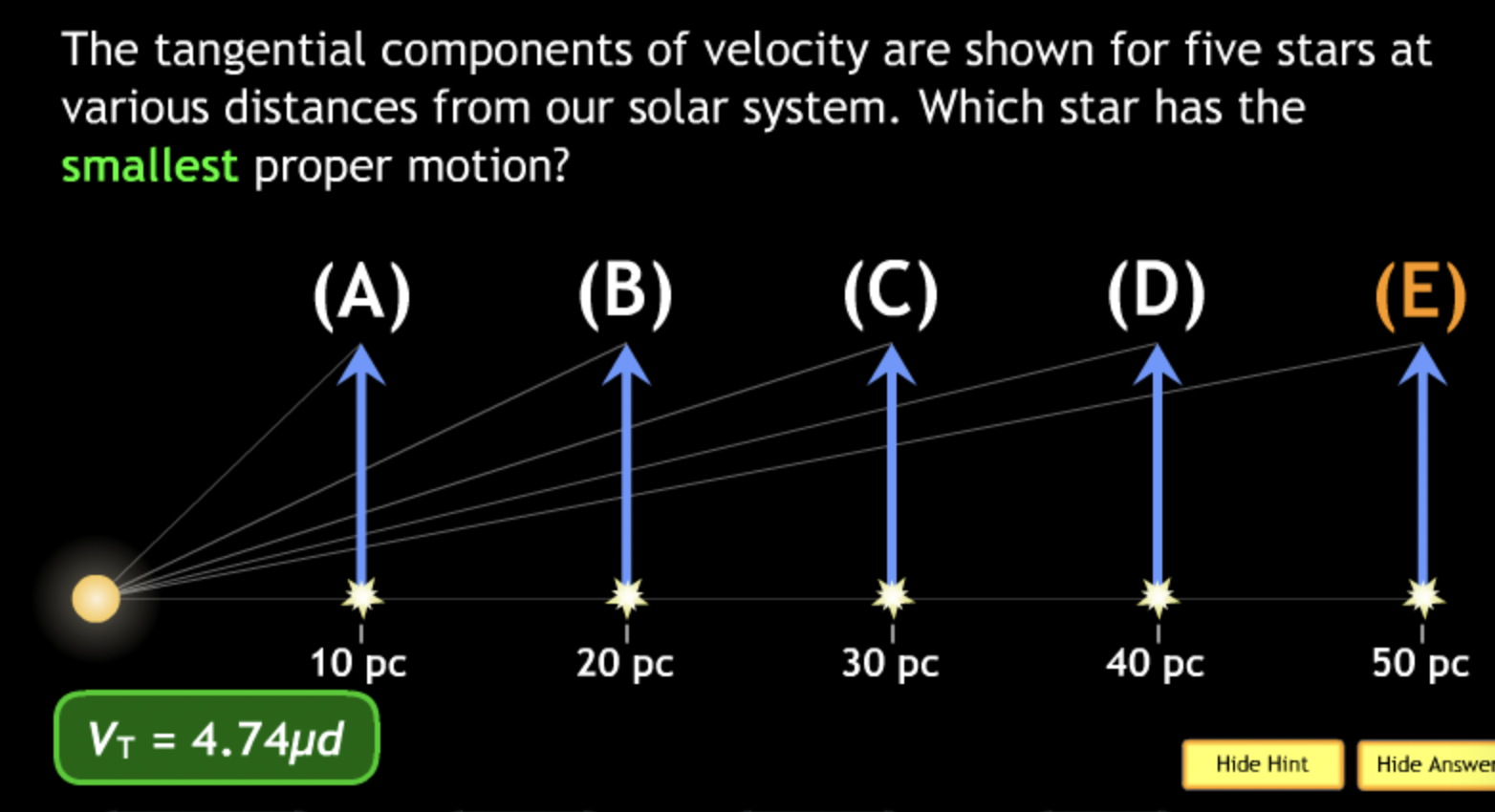
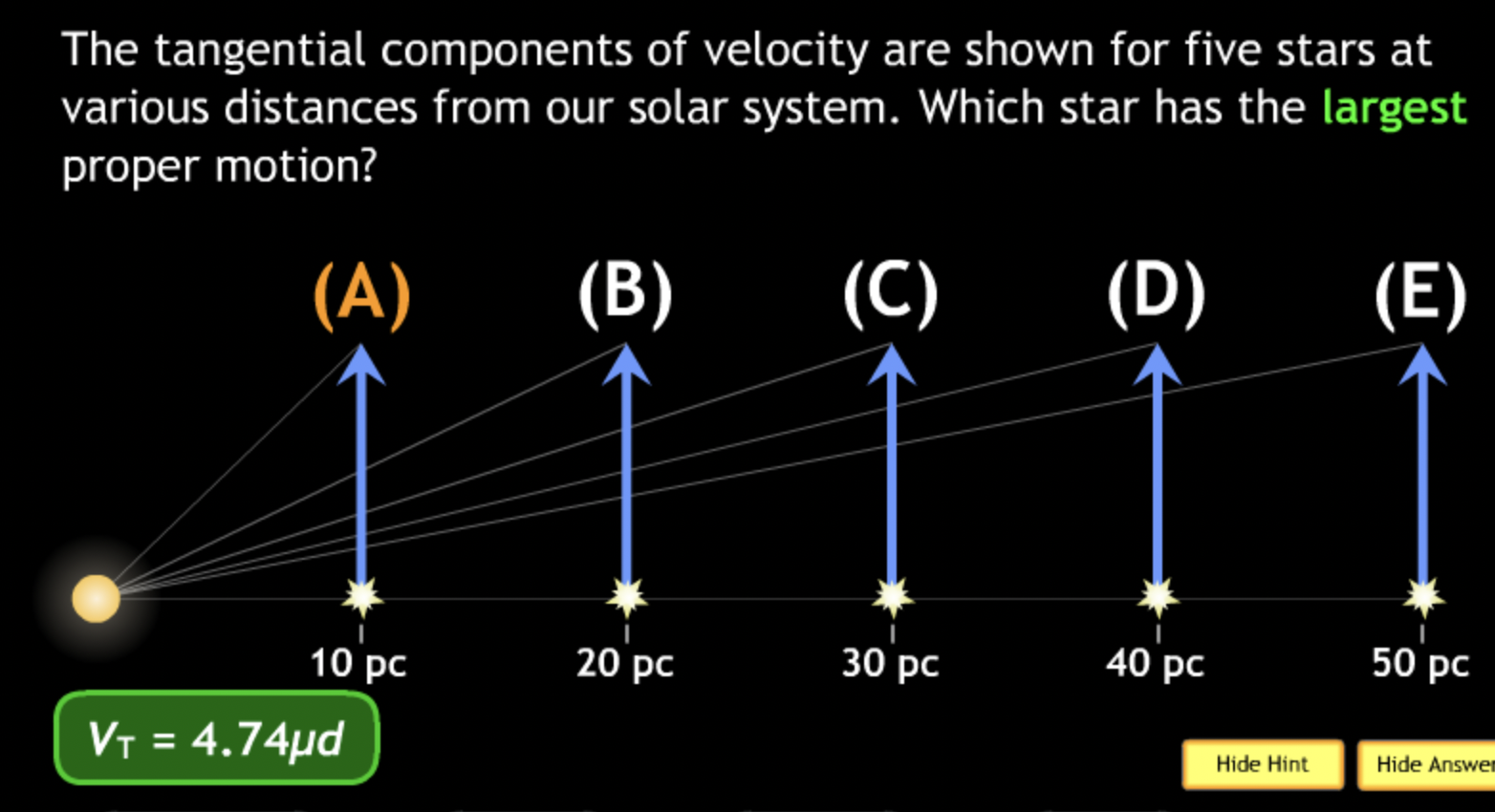
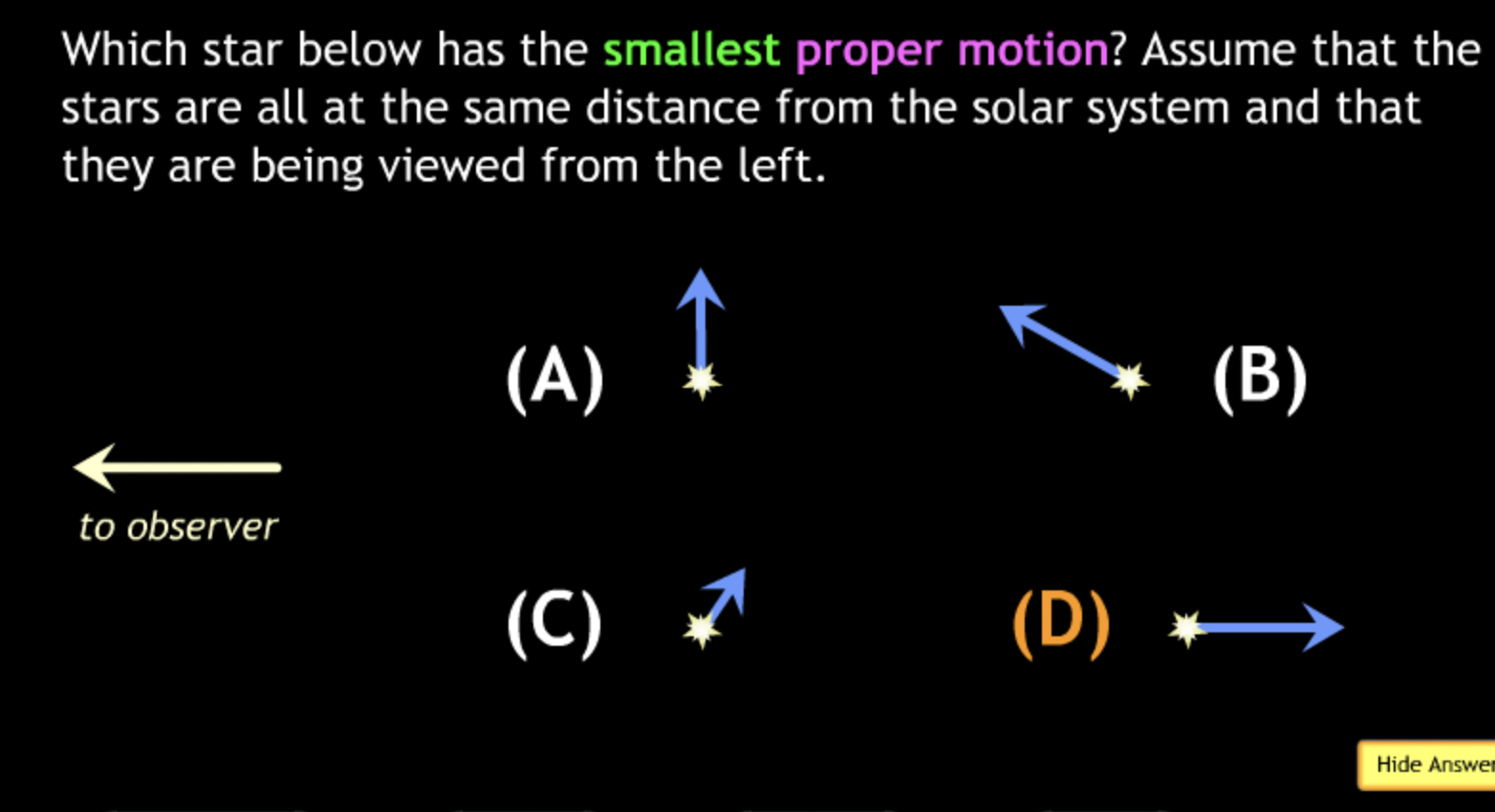
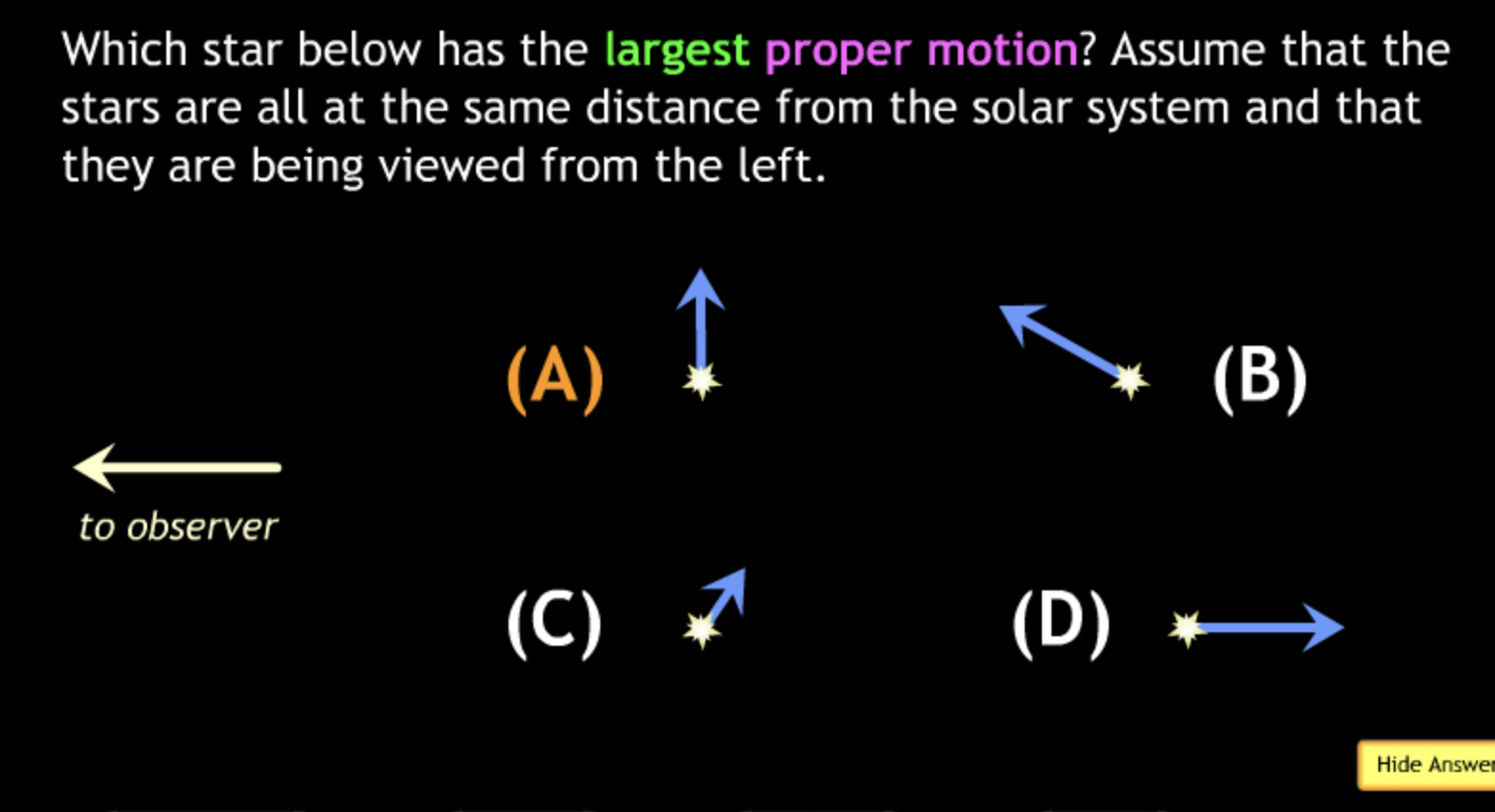
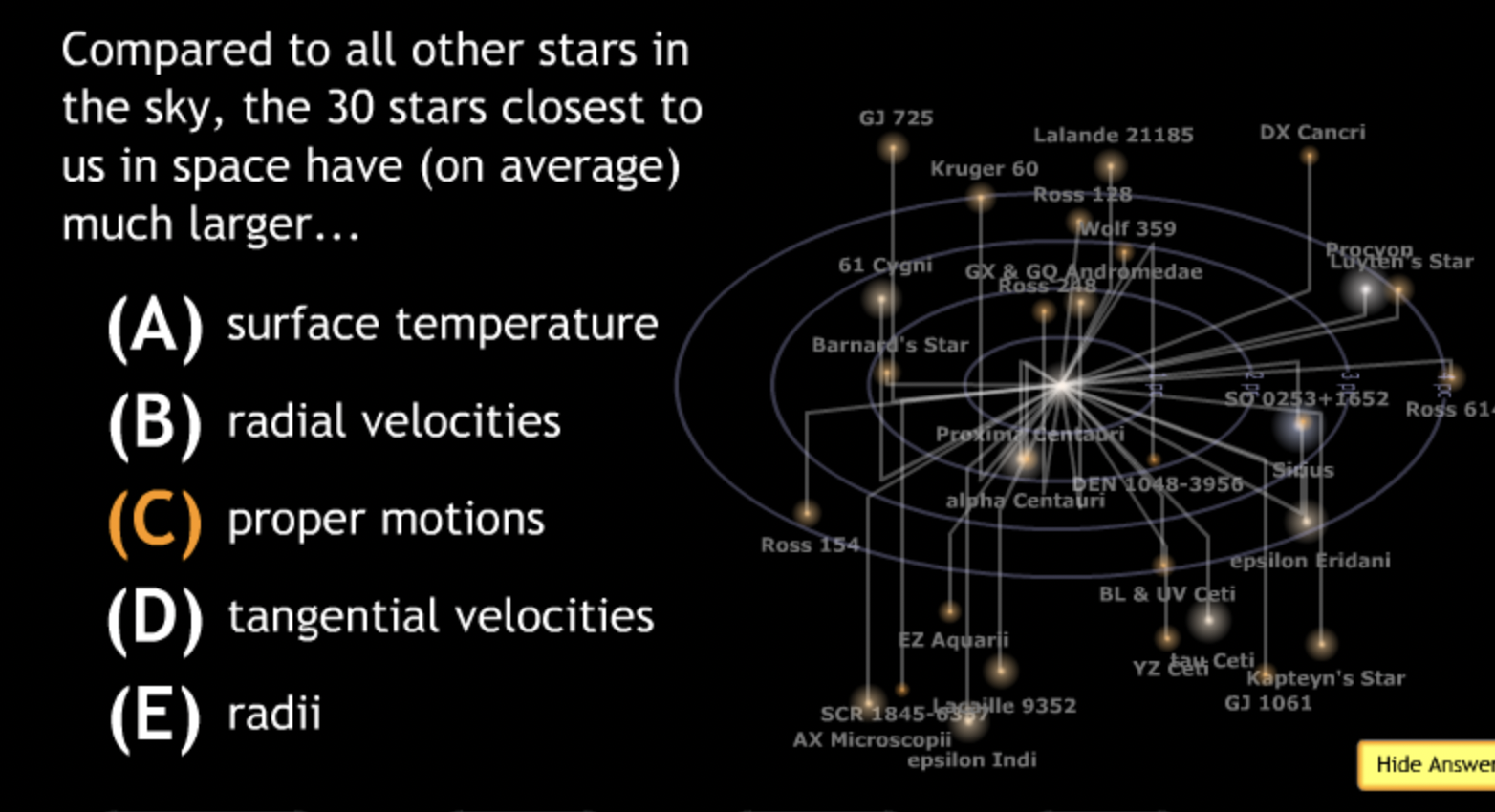
Barnard’s star has the largest proper motion of any star at 10.3 “/year. This large proper motion is (most logically) due to… the star being very close nearby
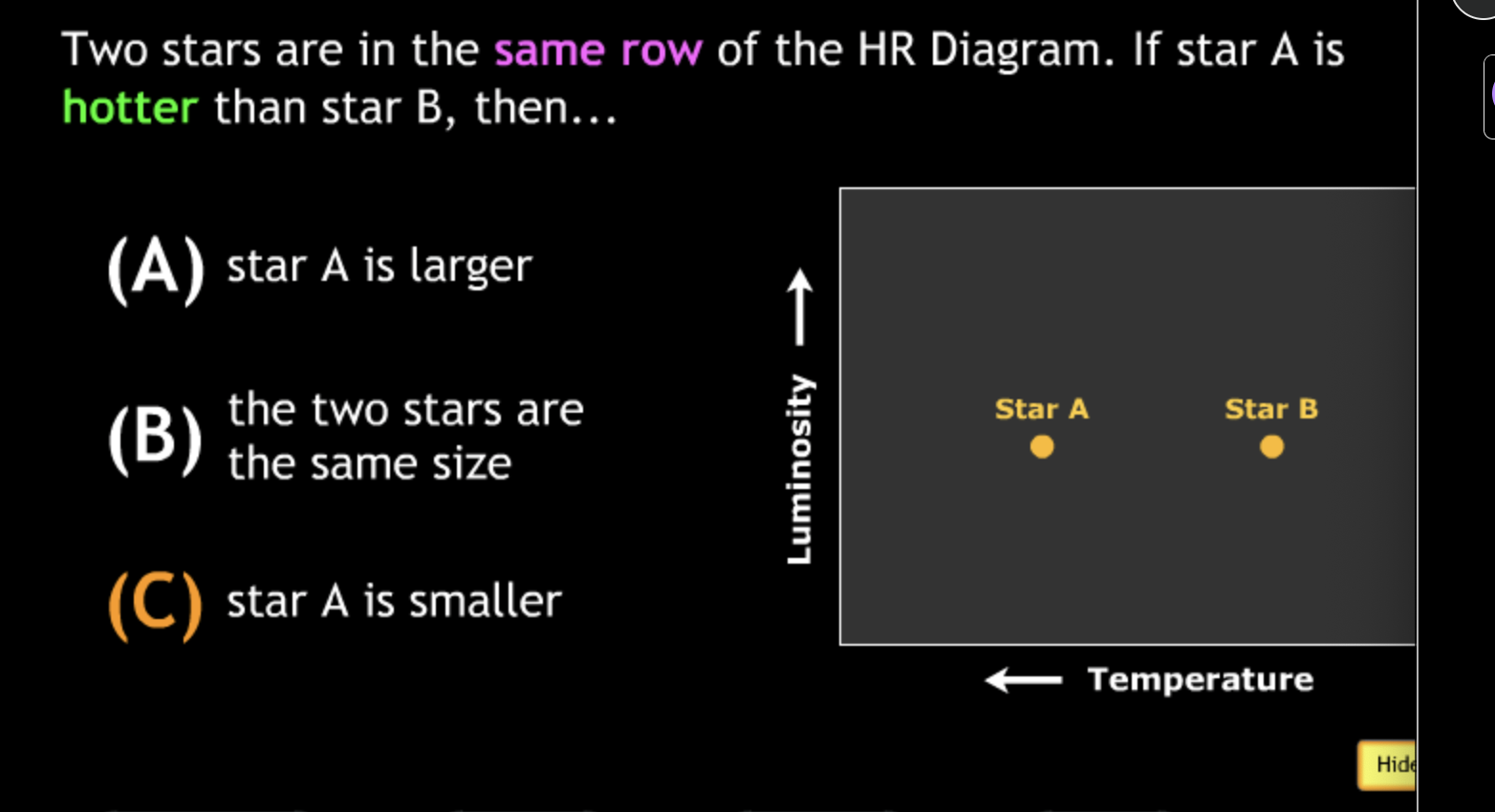
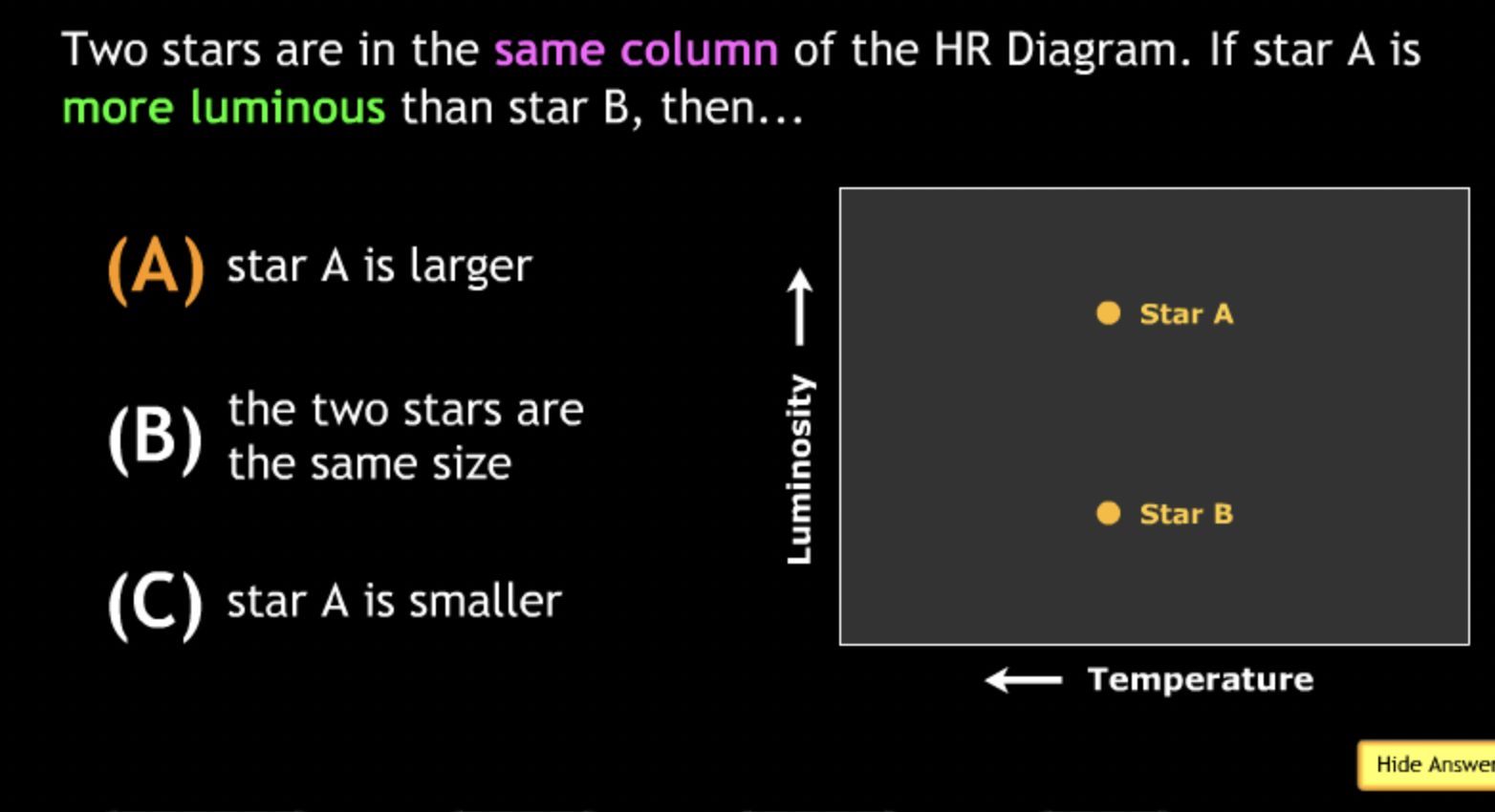
Two stars have the same luminosity. If star A has a hotter surface temperature than star B, then… star A is smaller
Two stars have the same surface temperature. If star A has a greater luminosity than star B, then… star A is larger
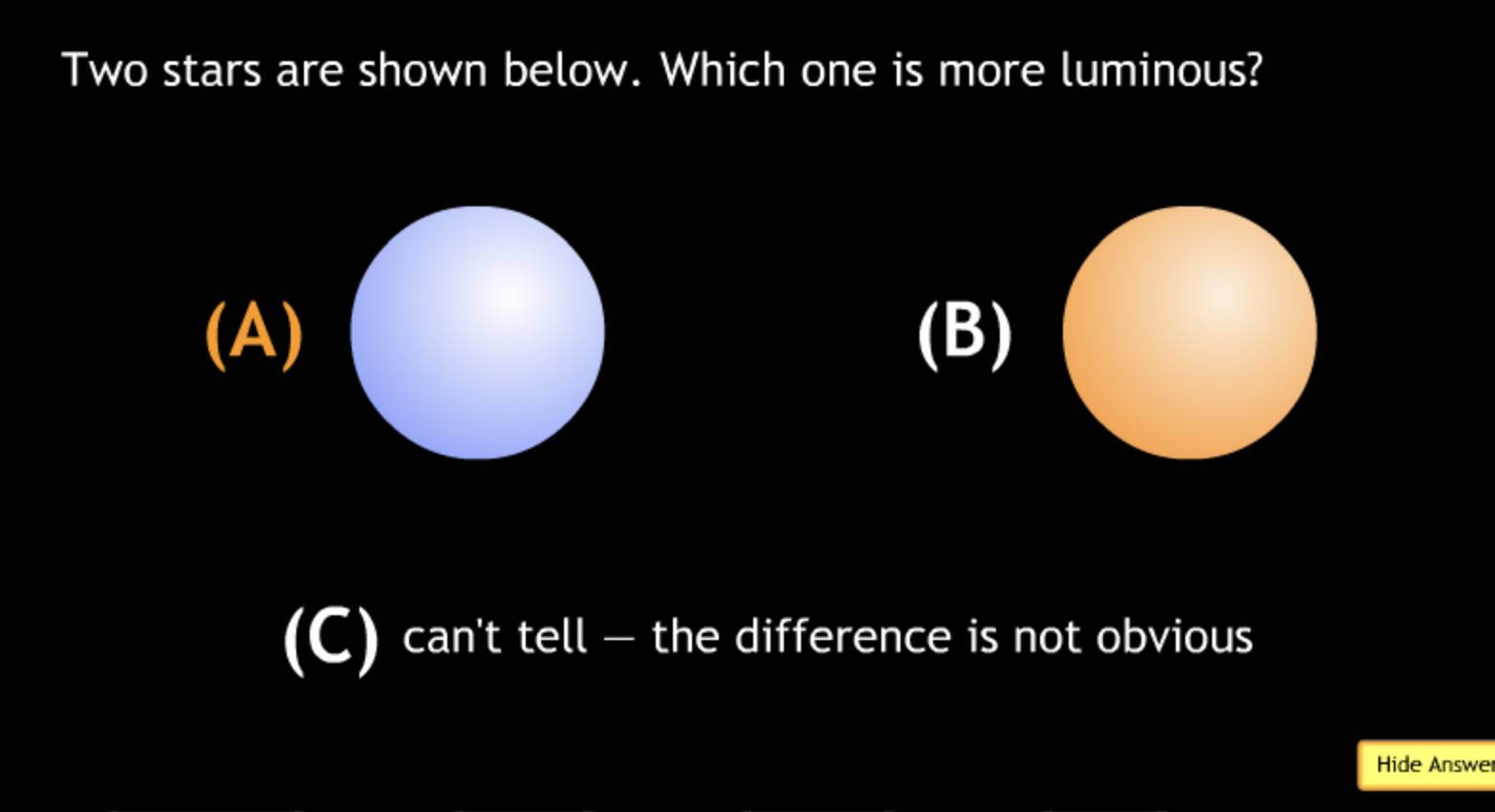
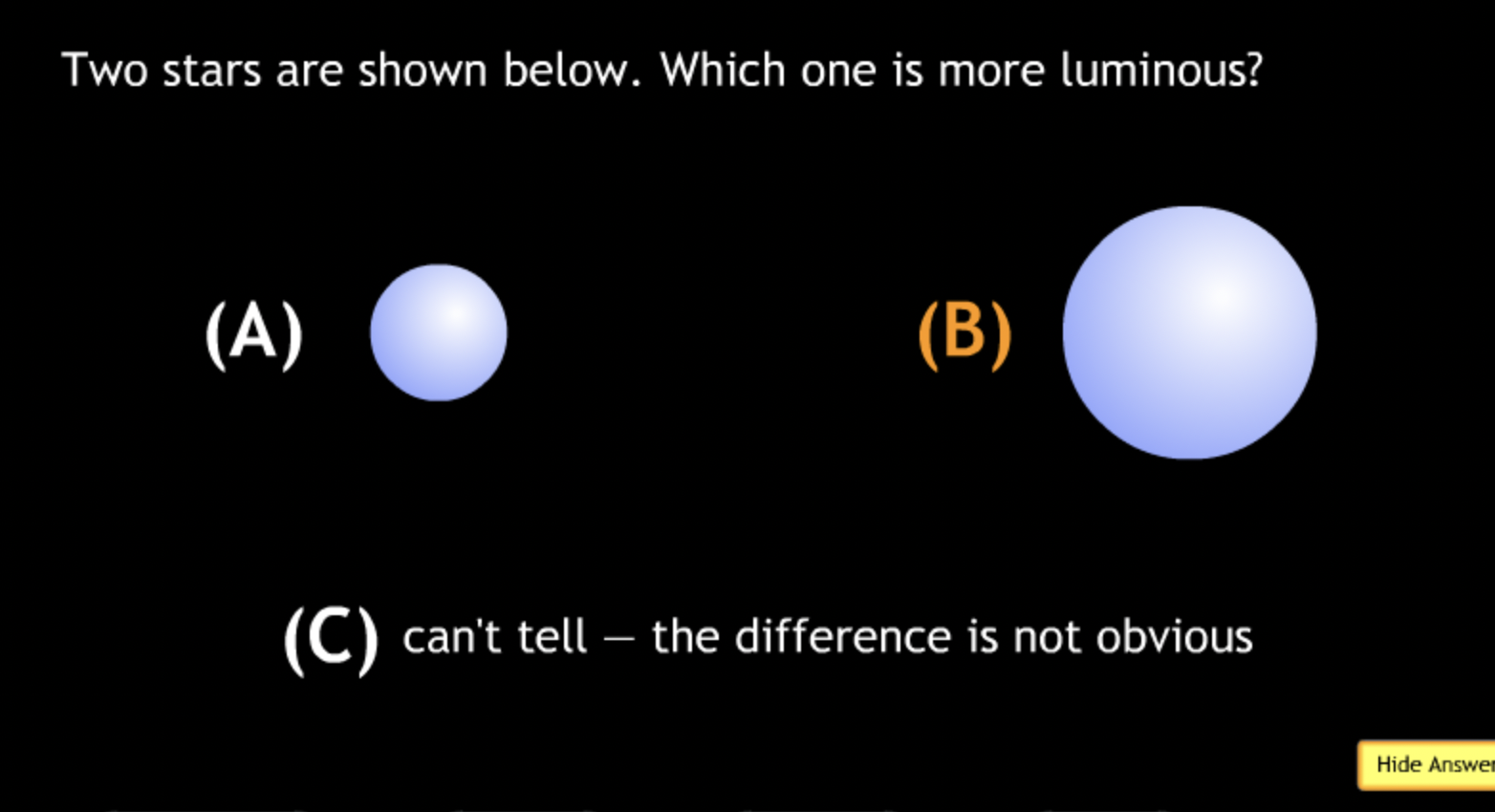
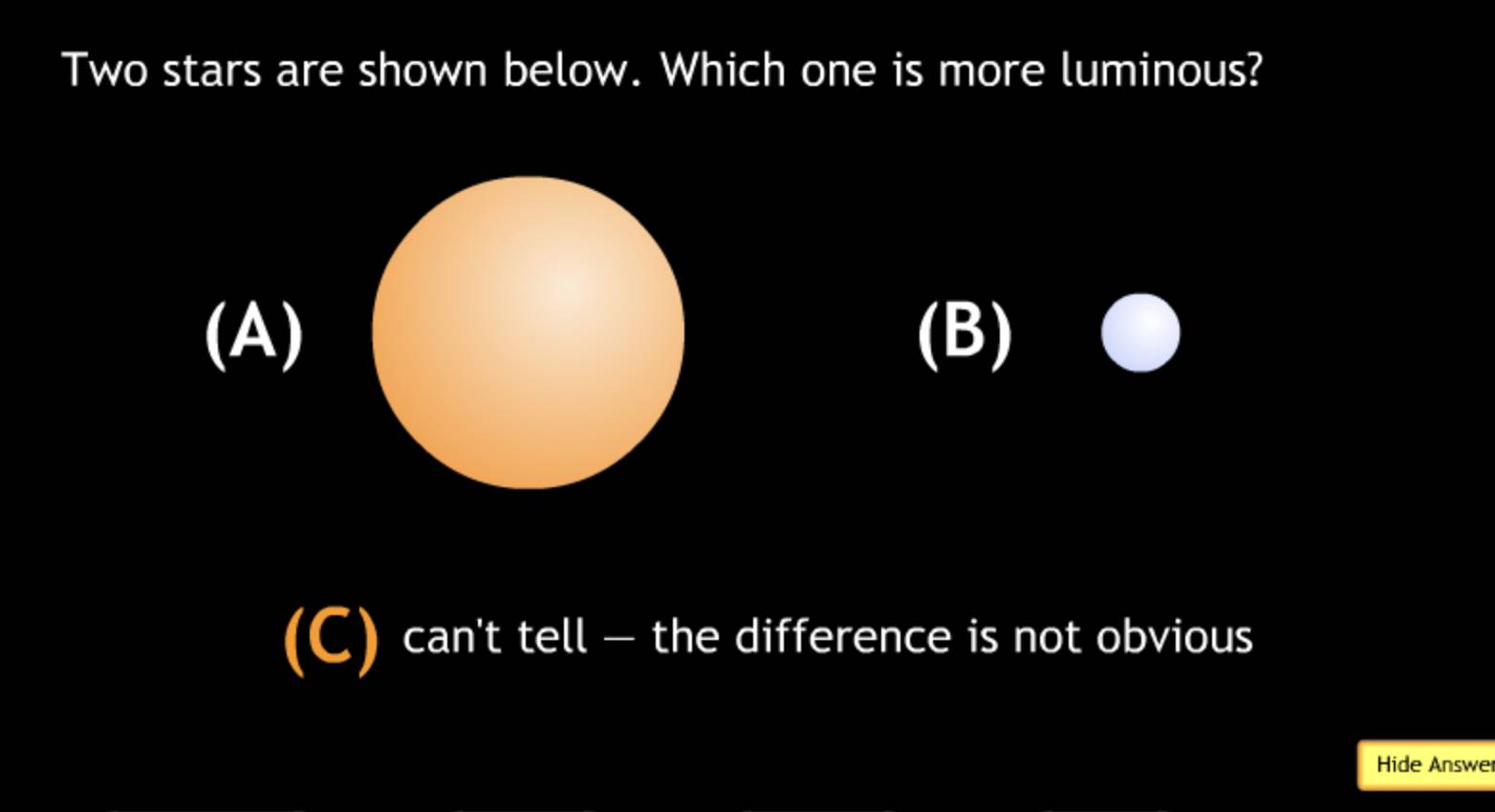
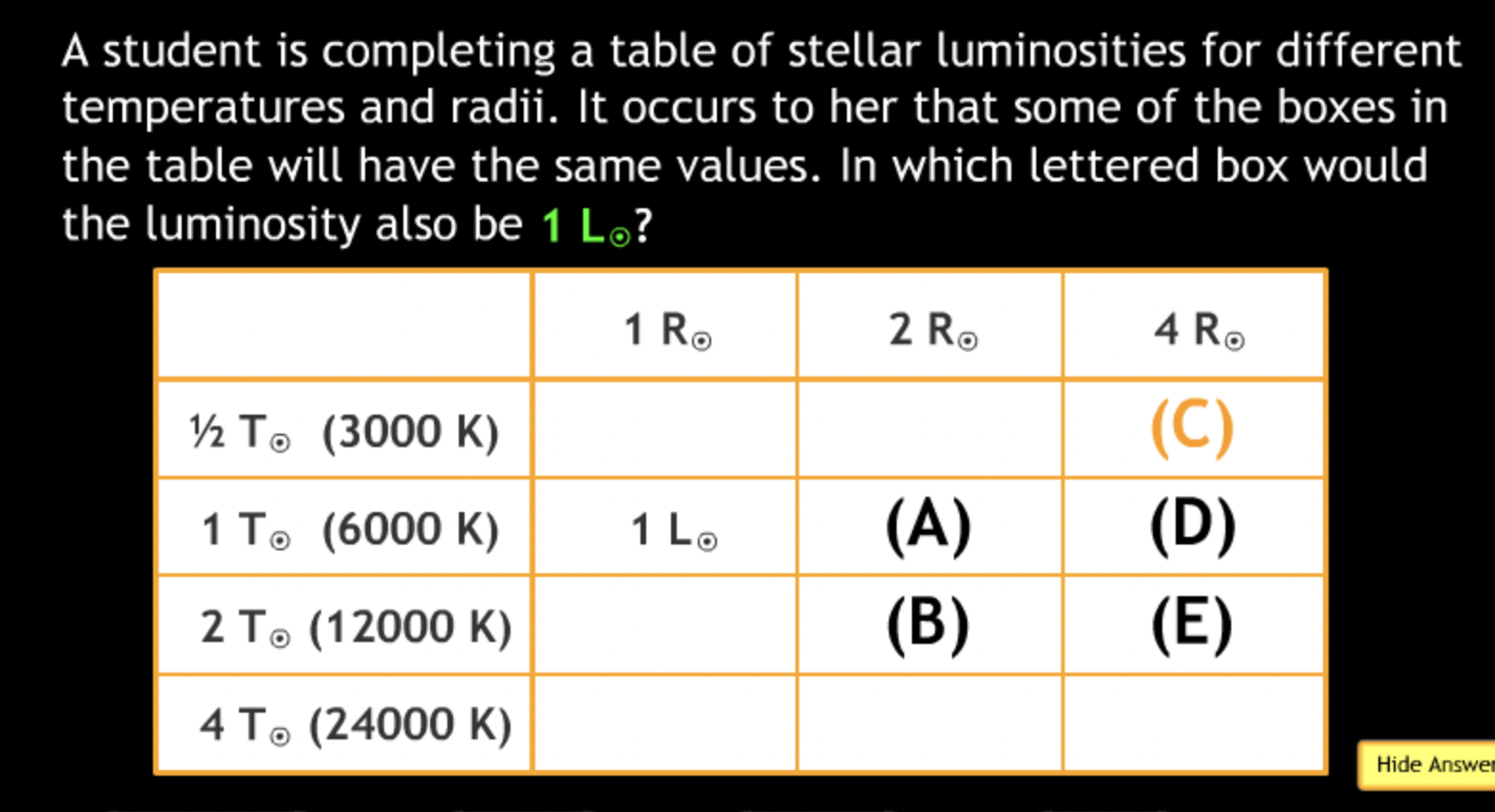
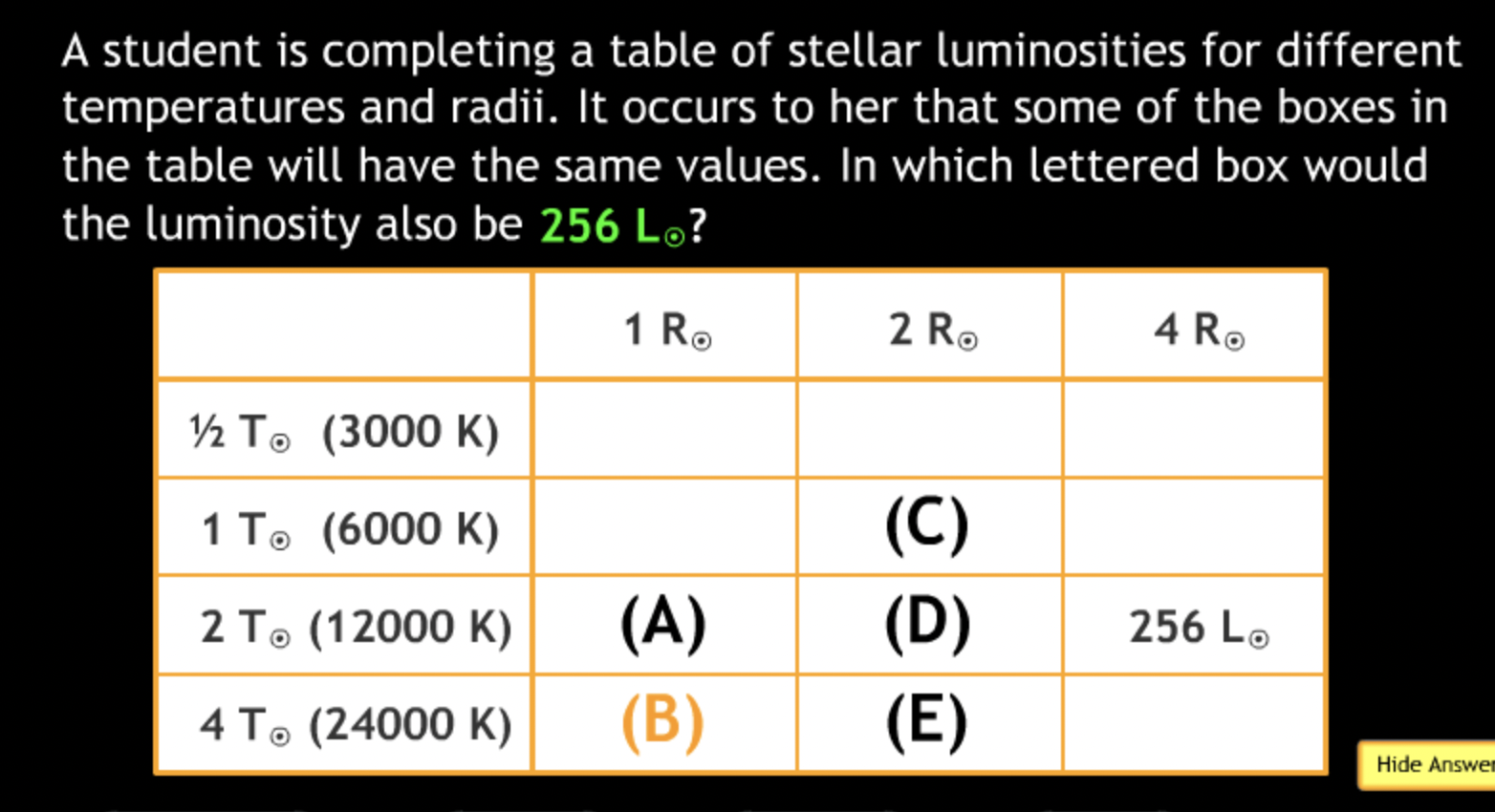
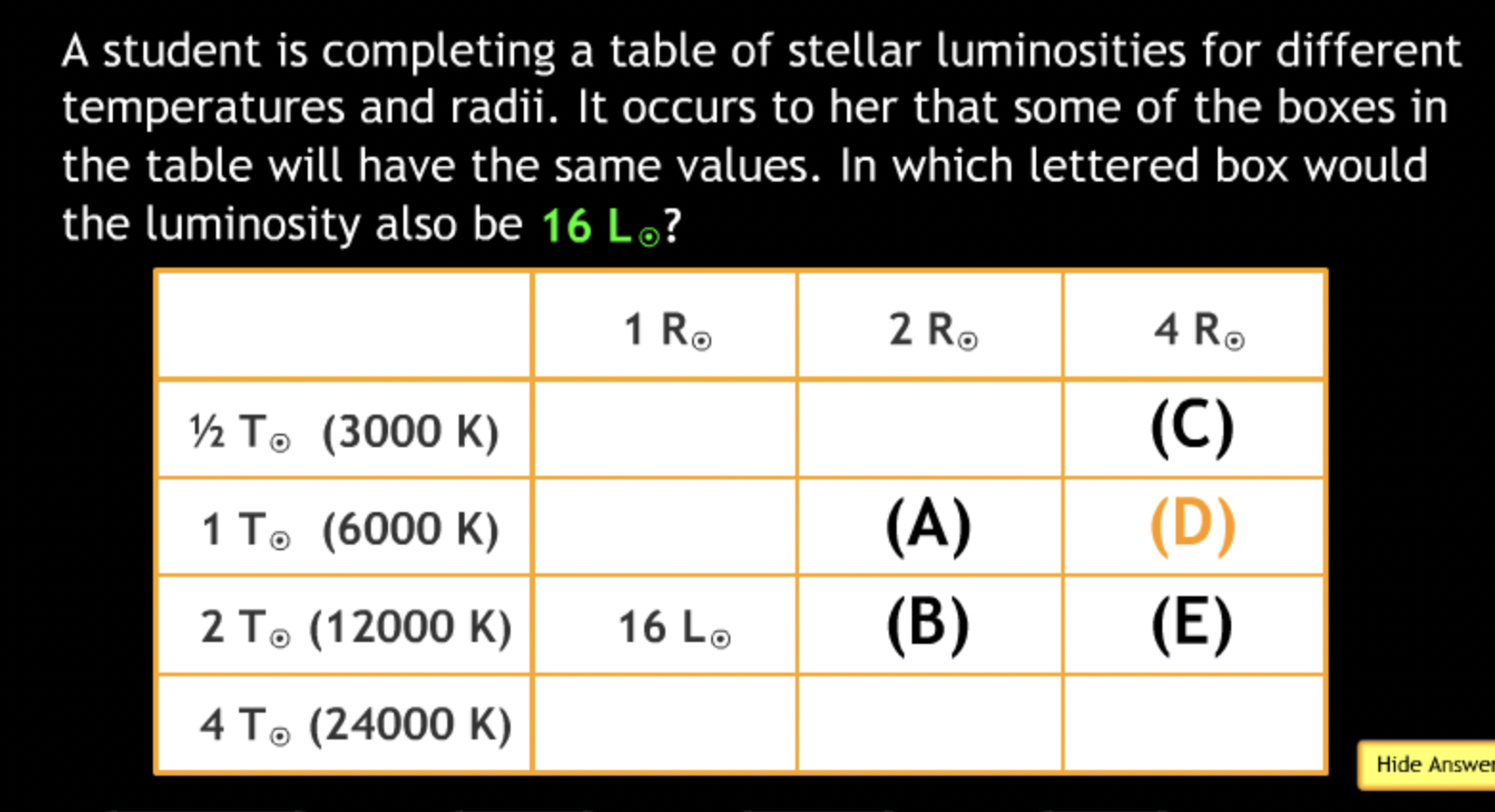
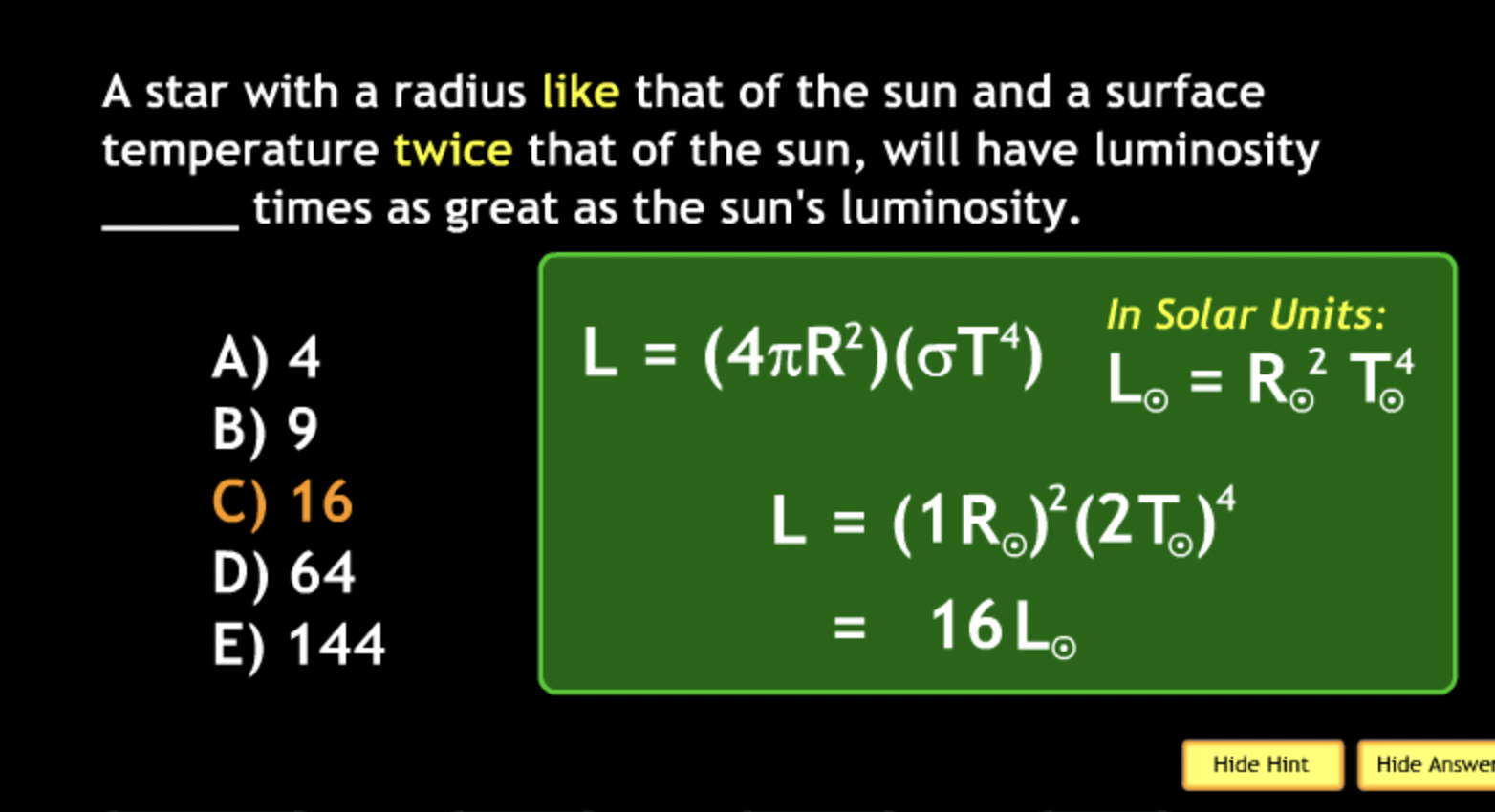
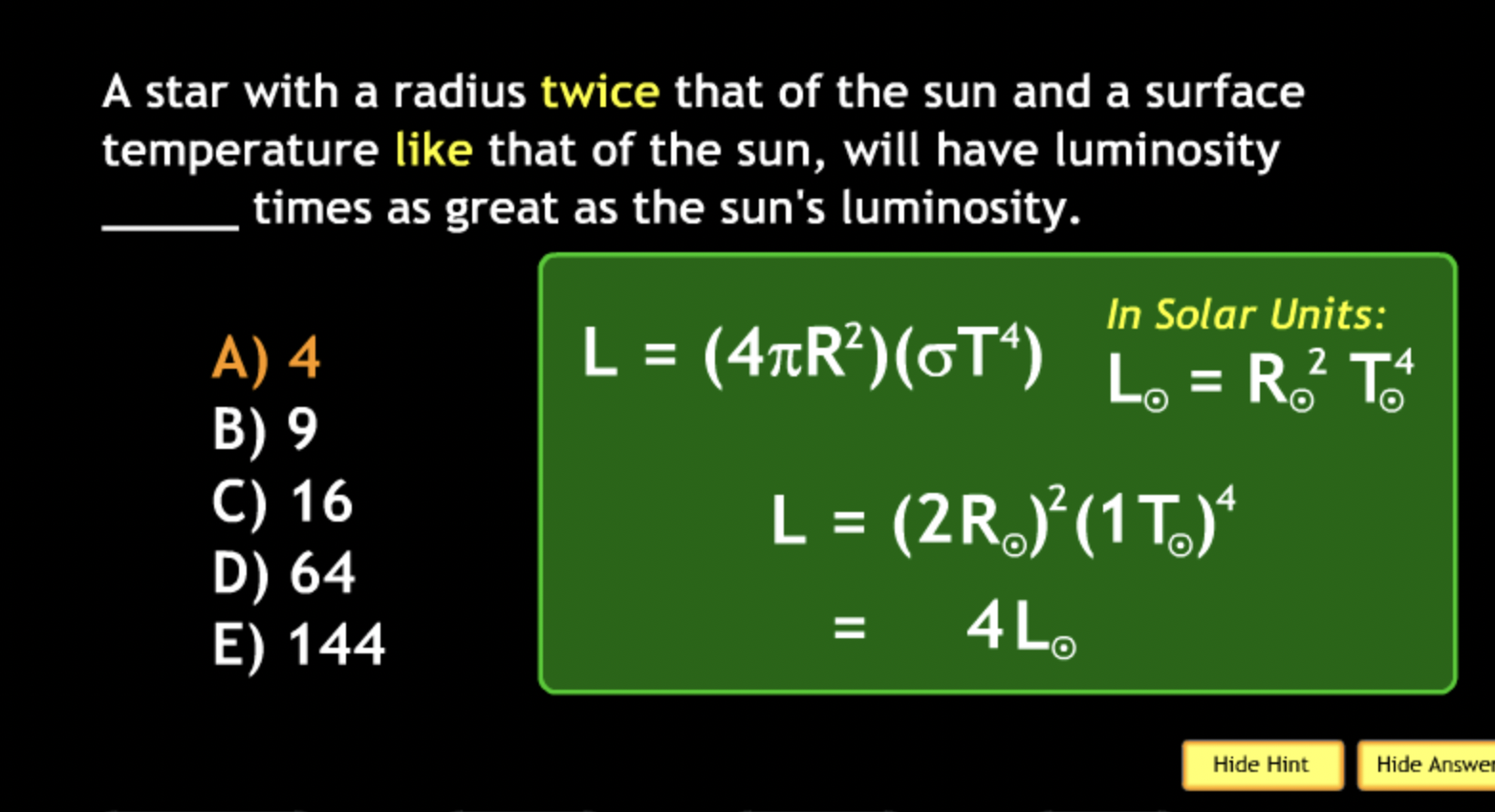
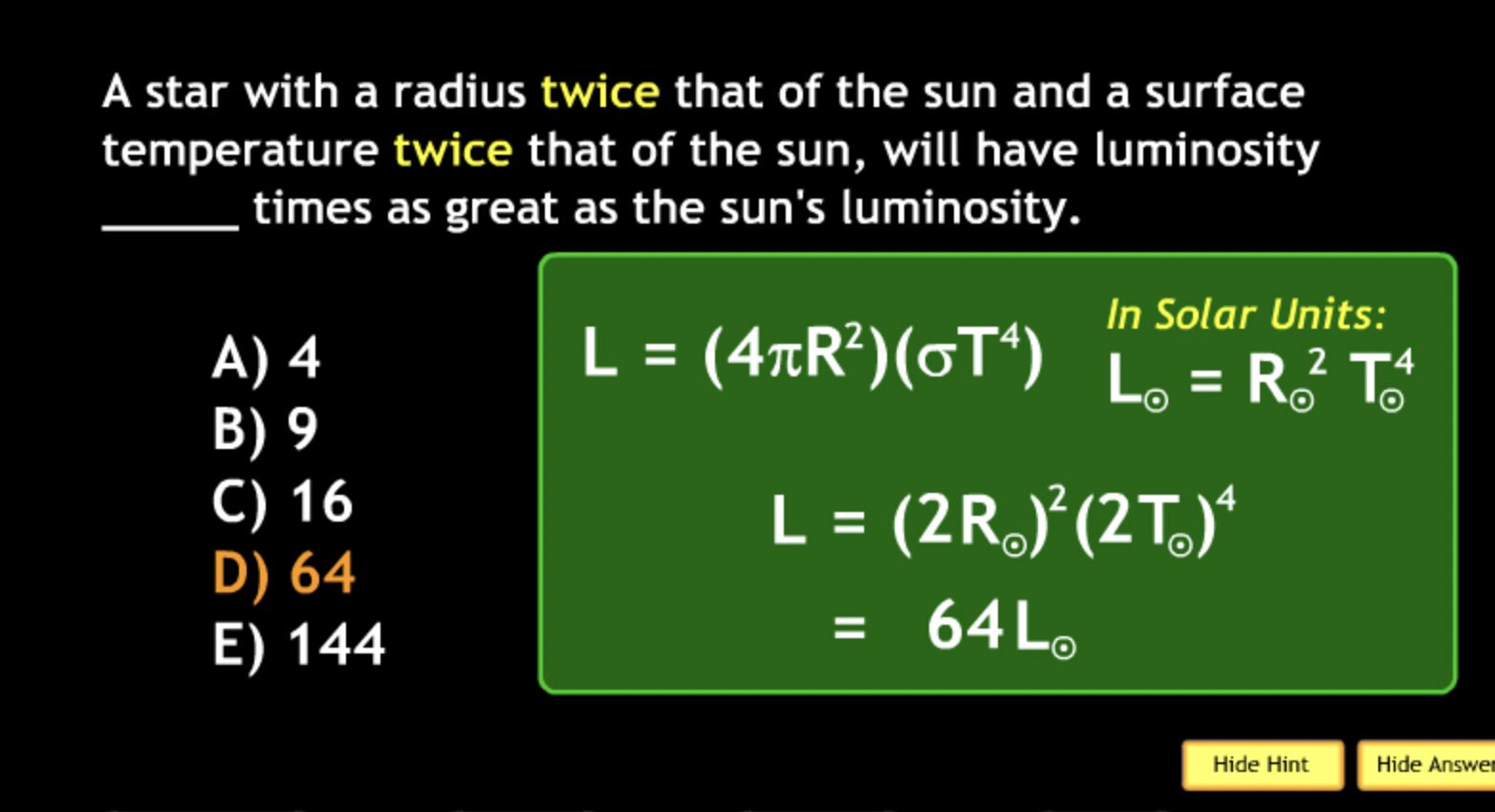
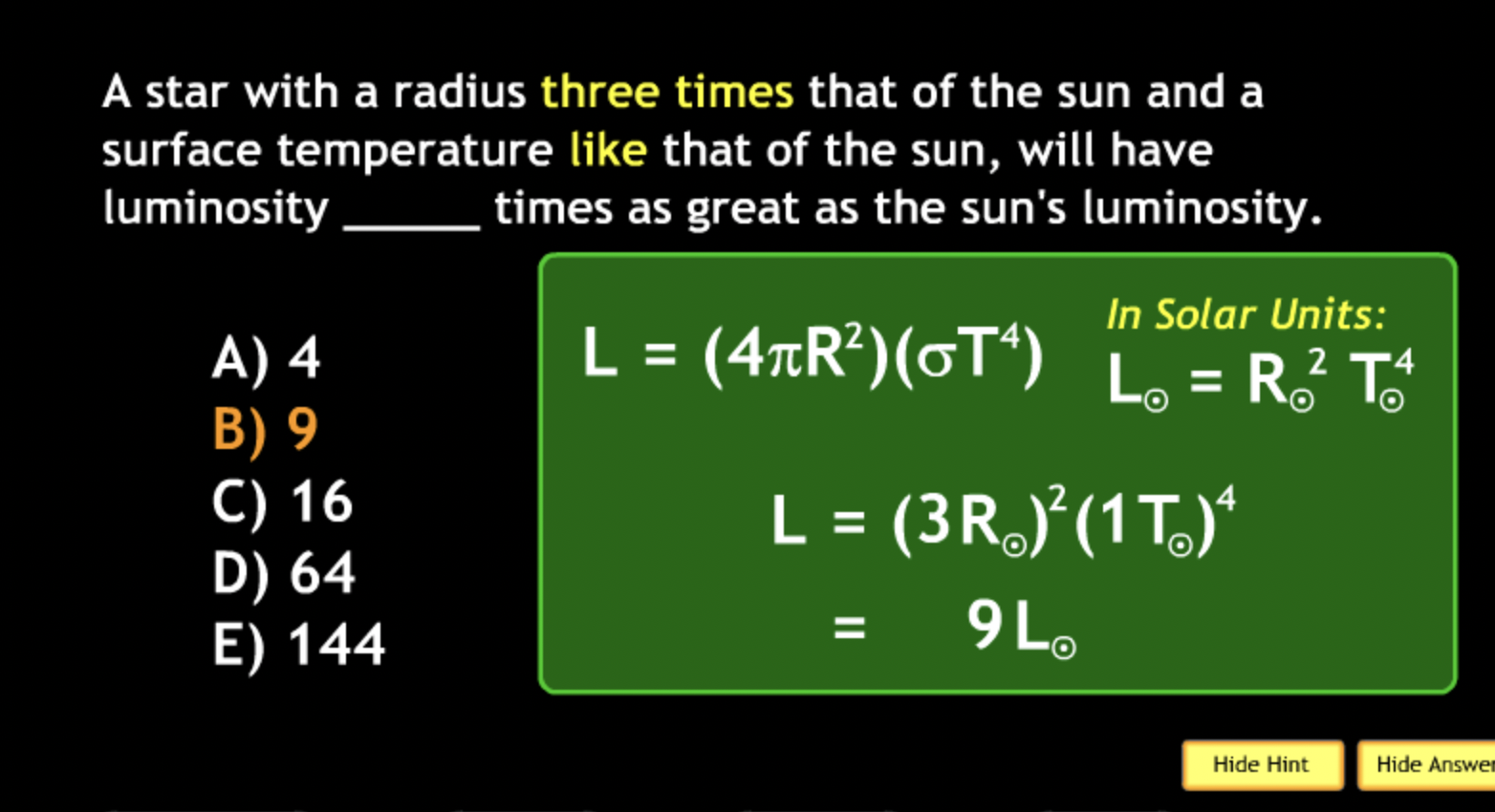
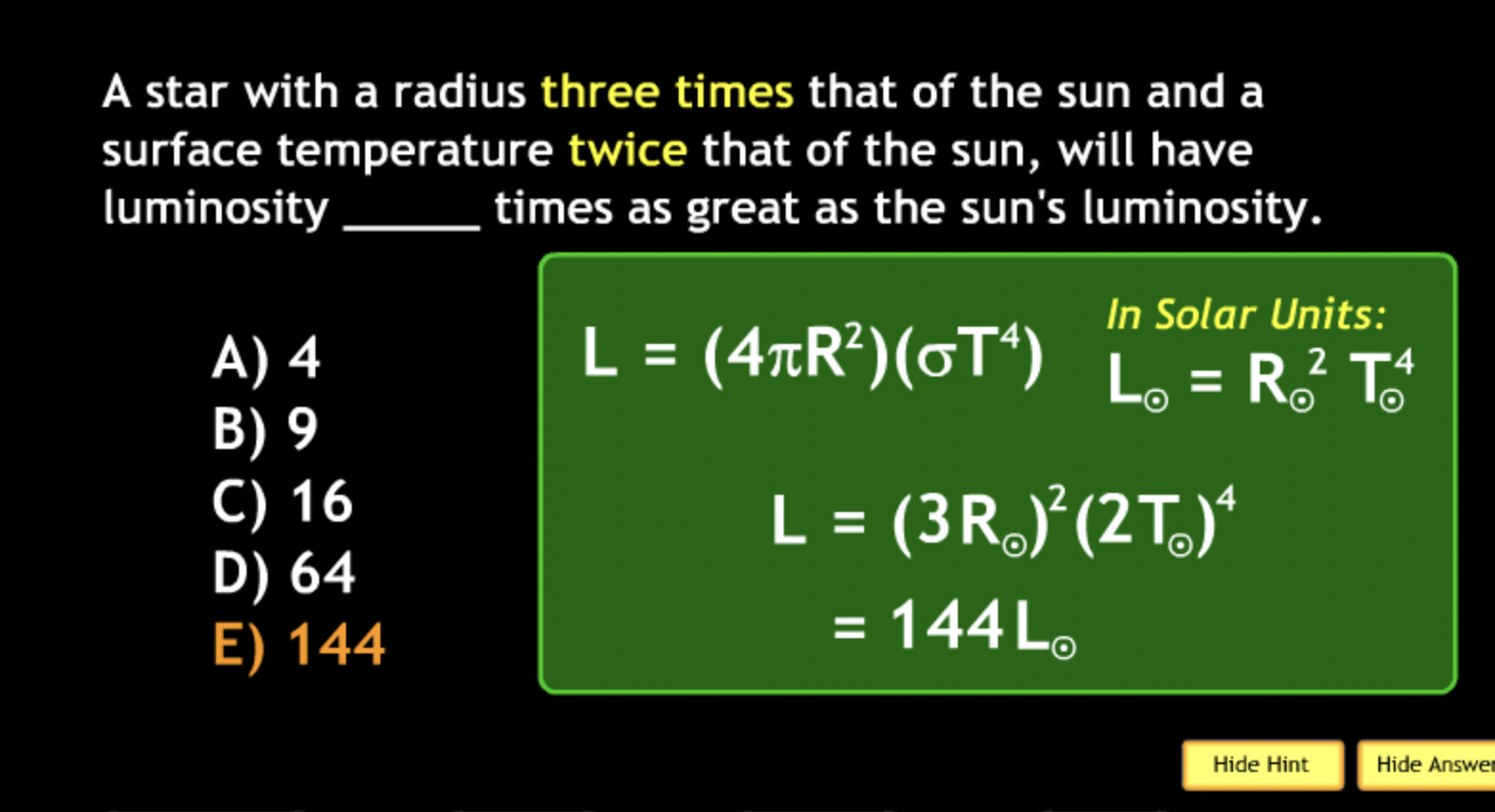
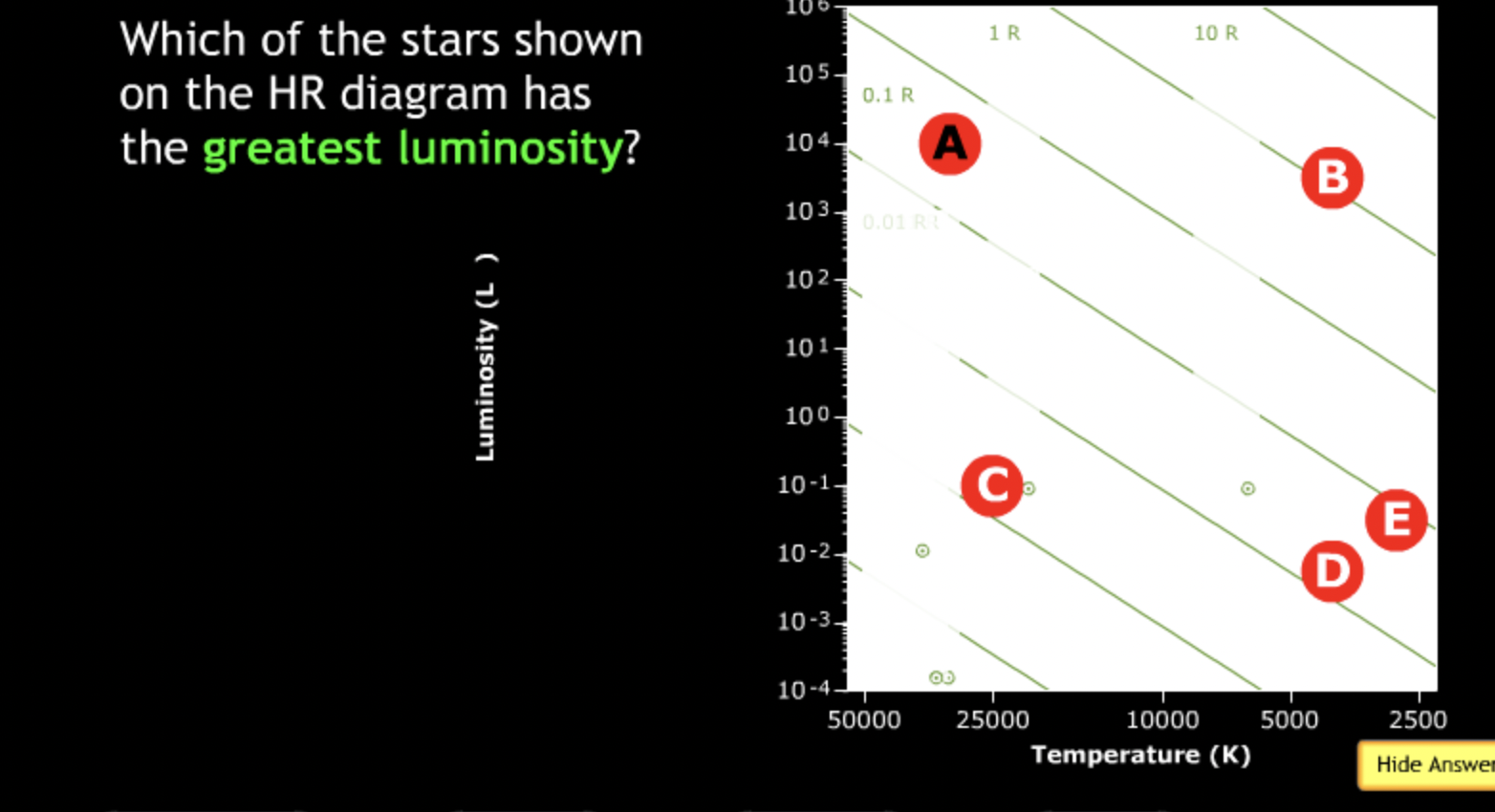
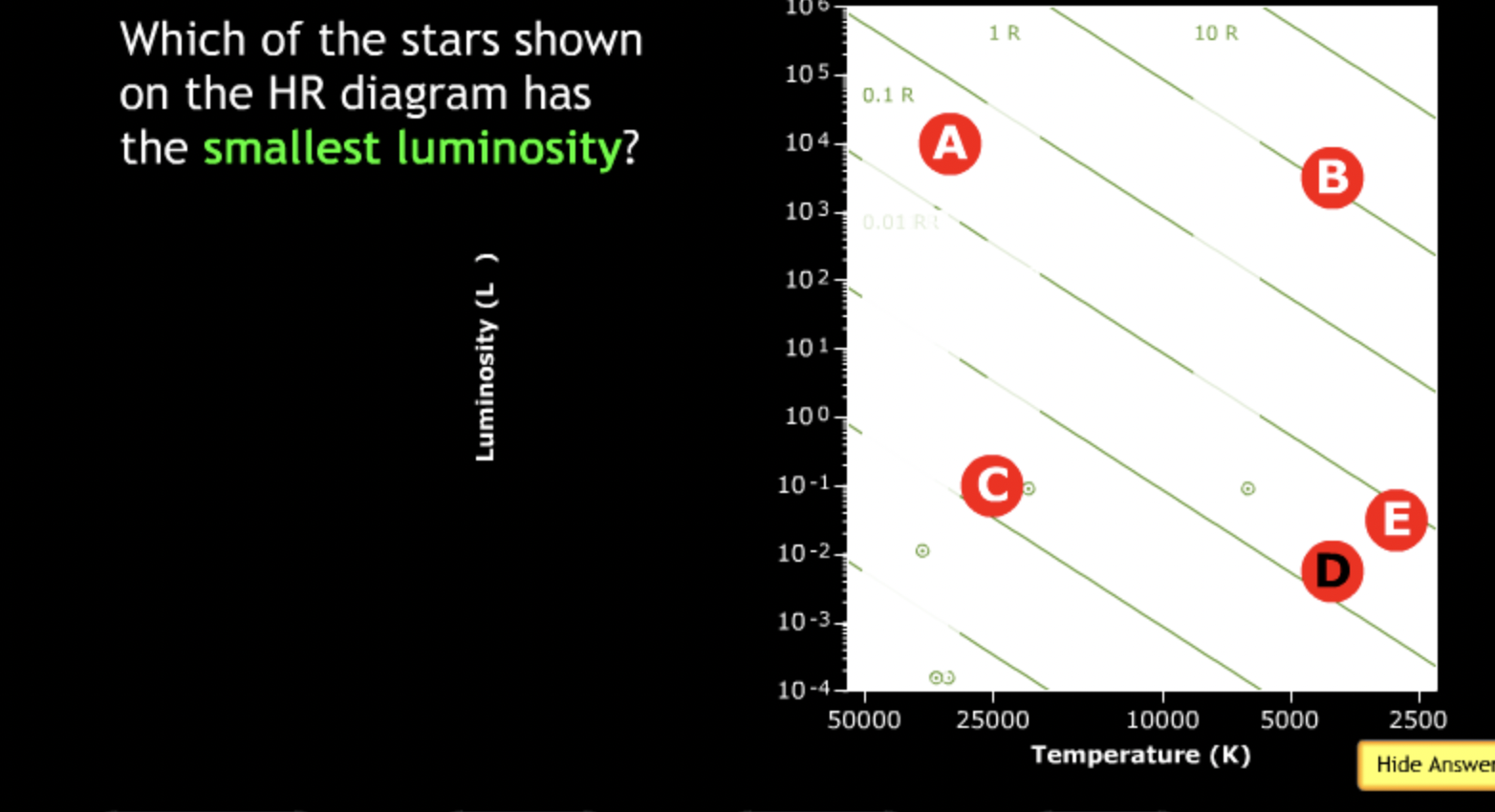
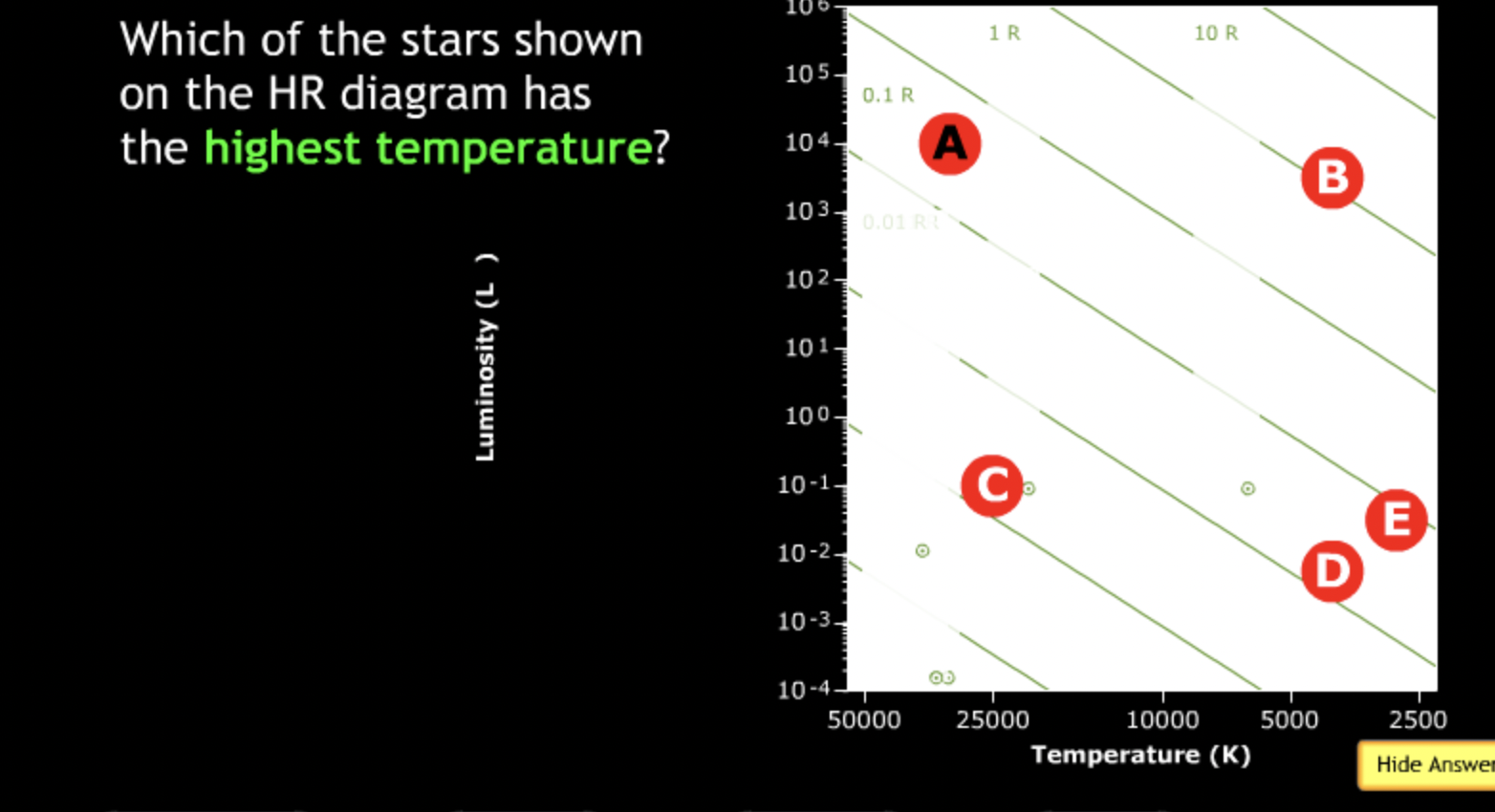
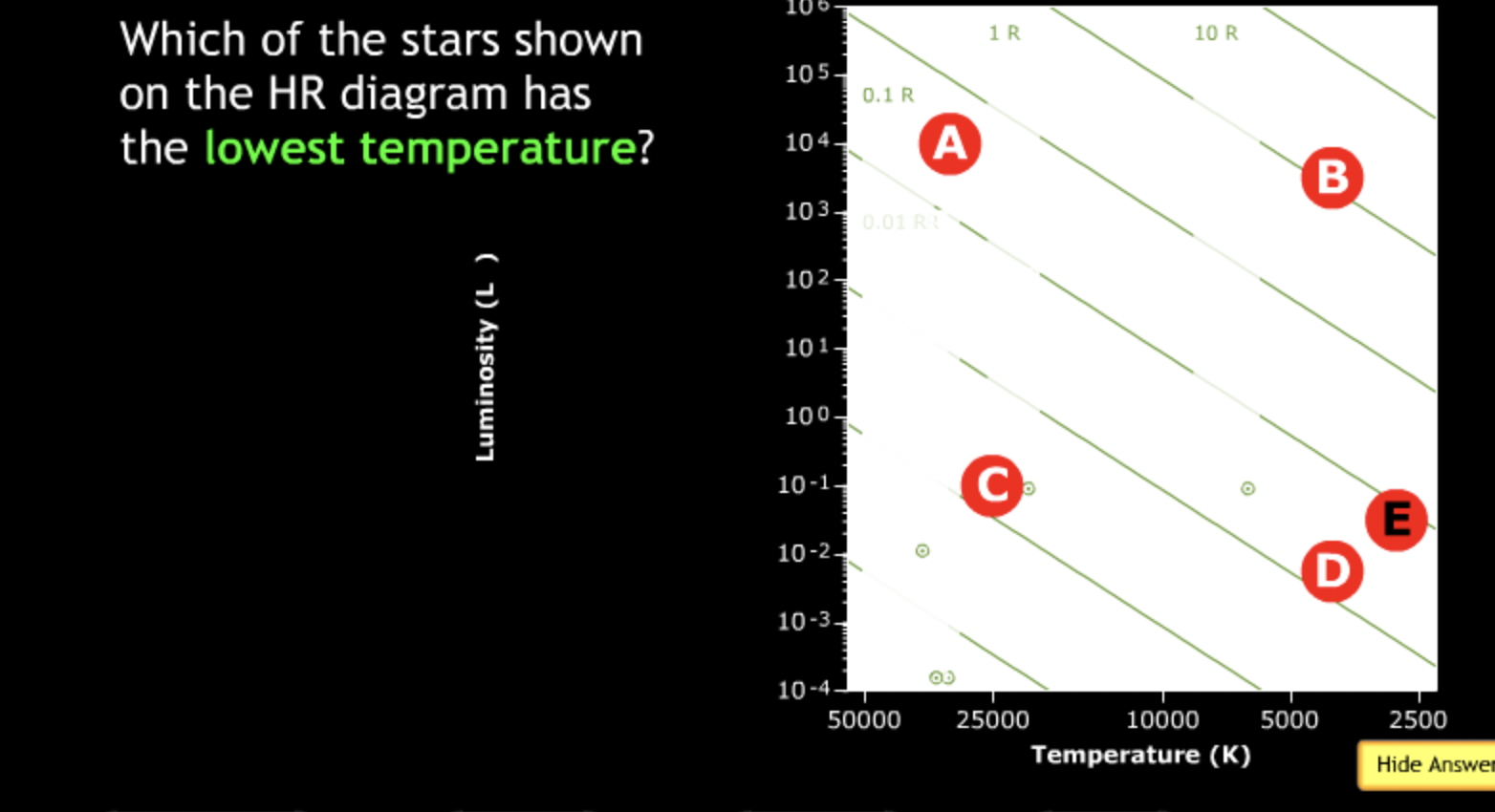
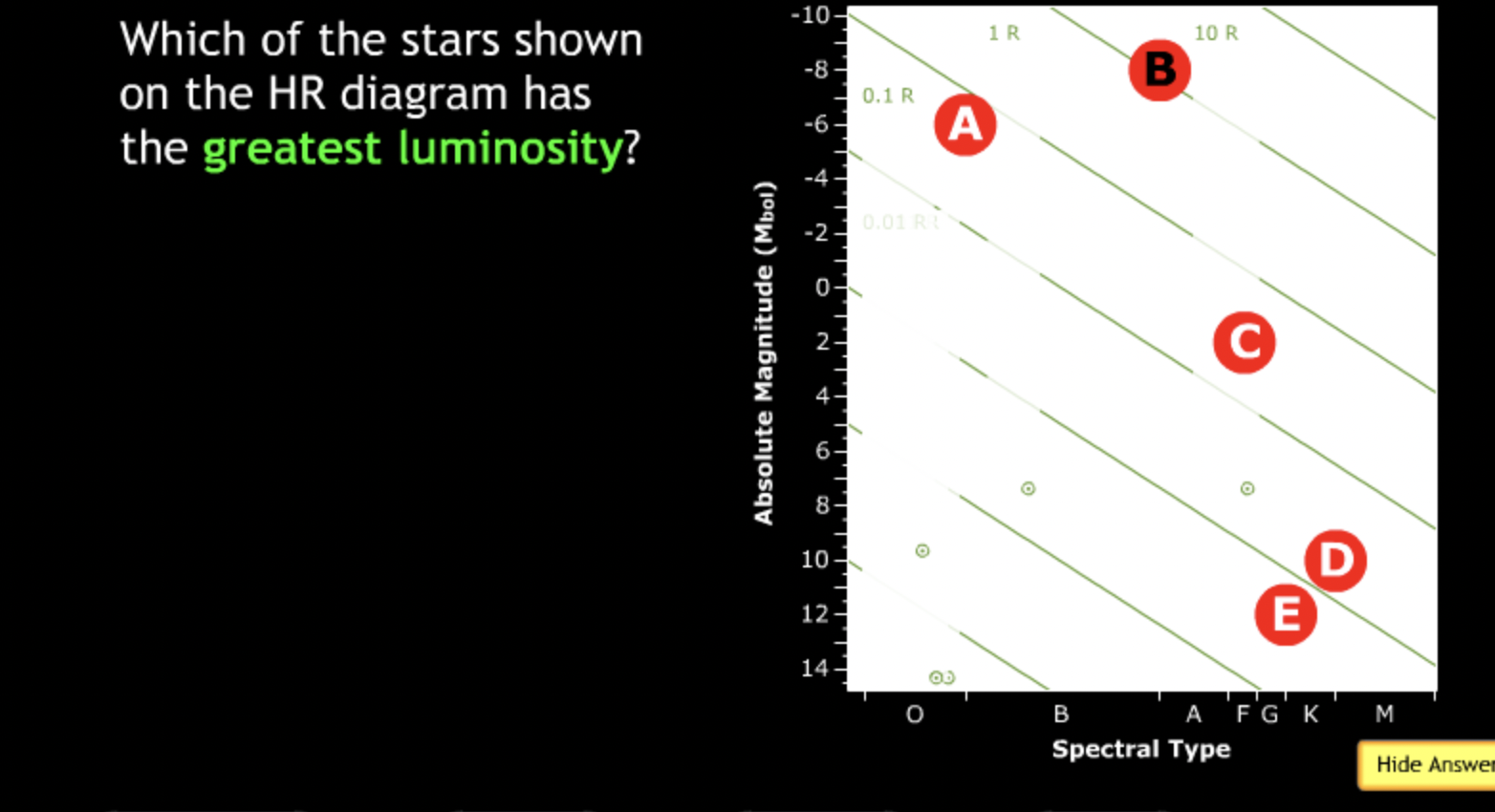
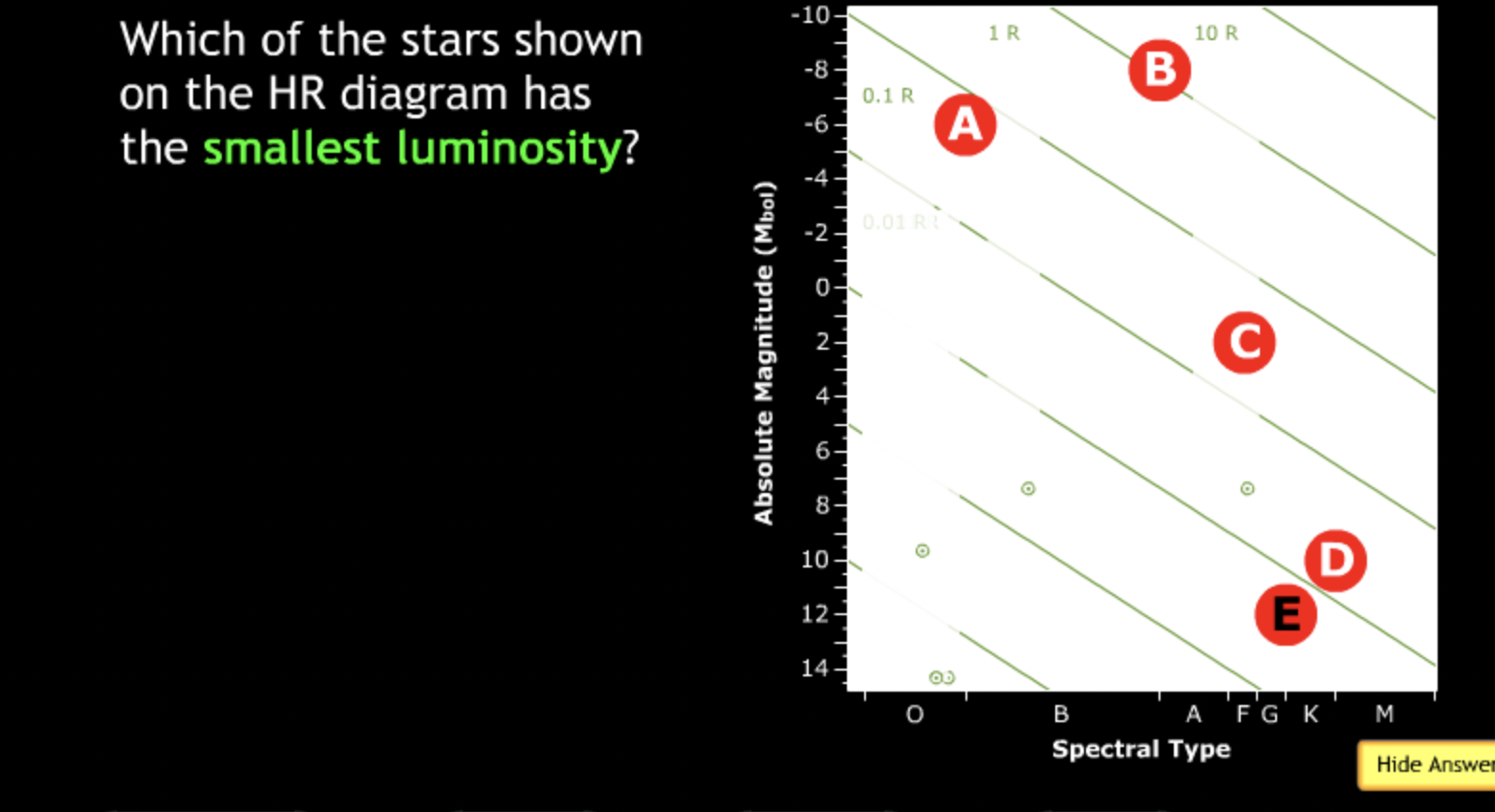
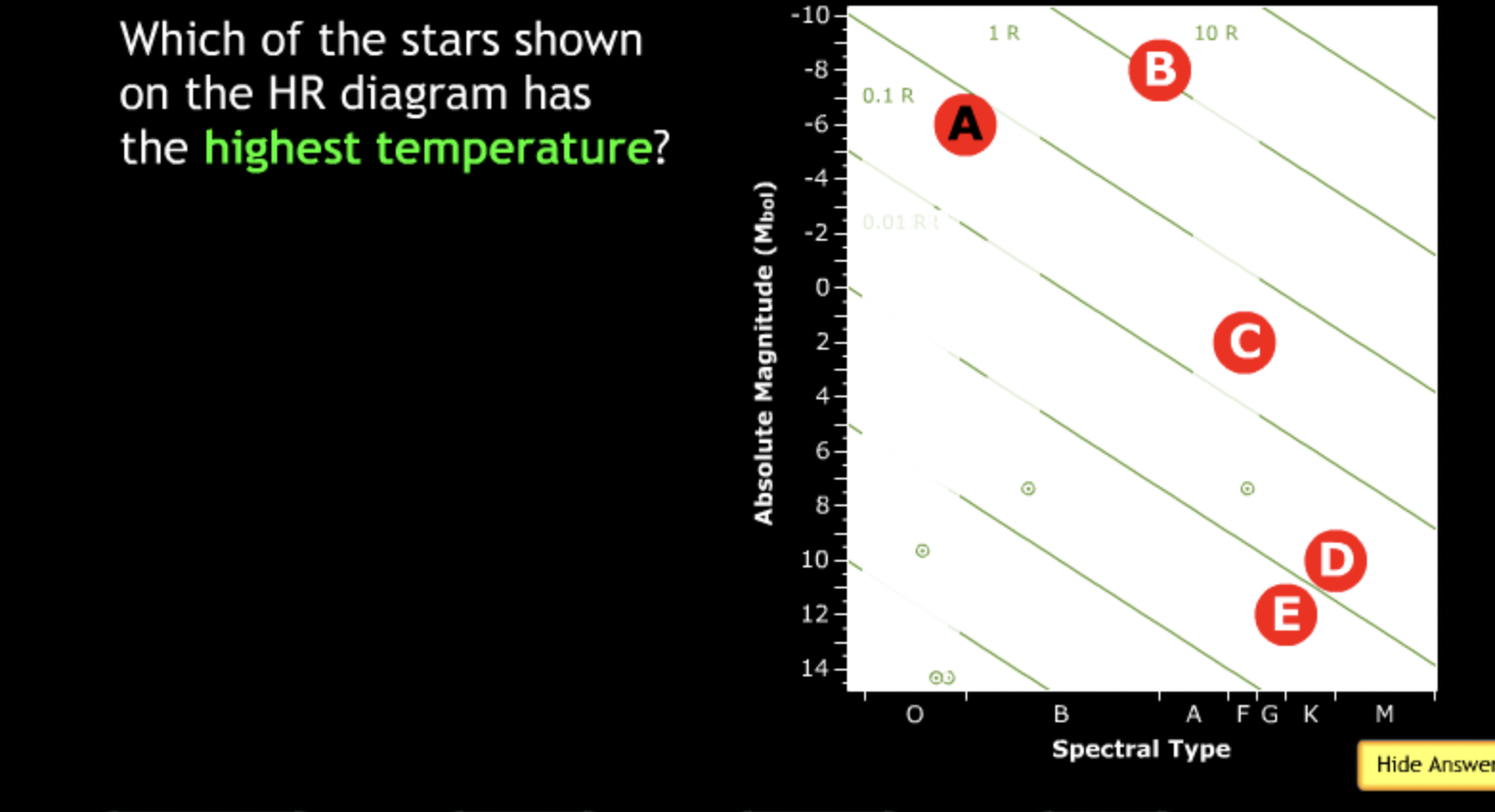
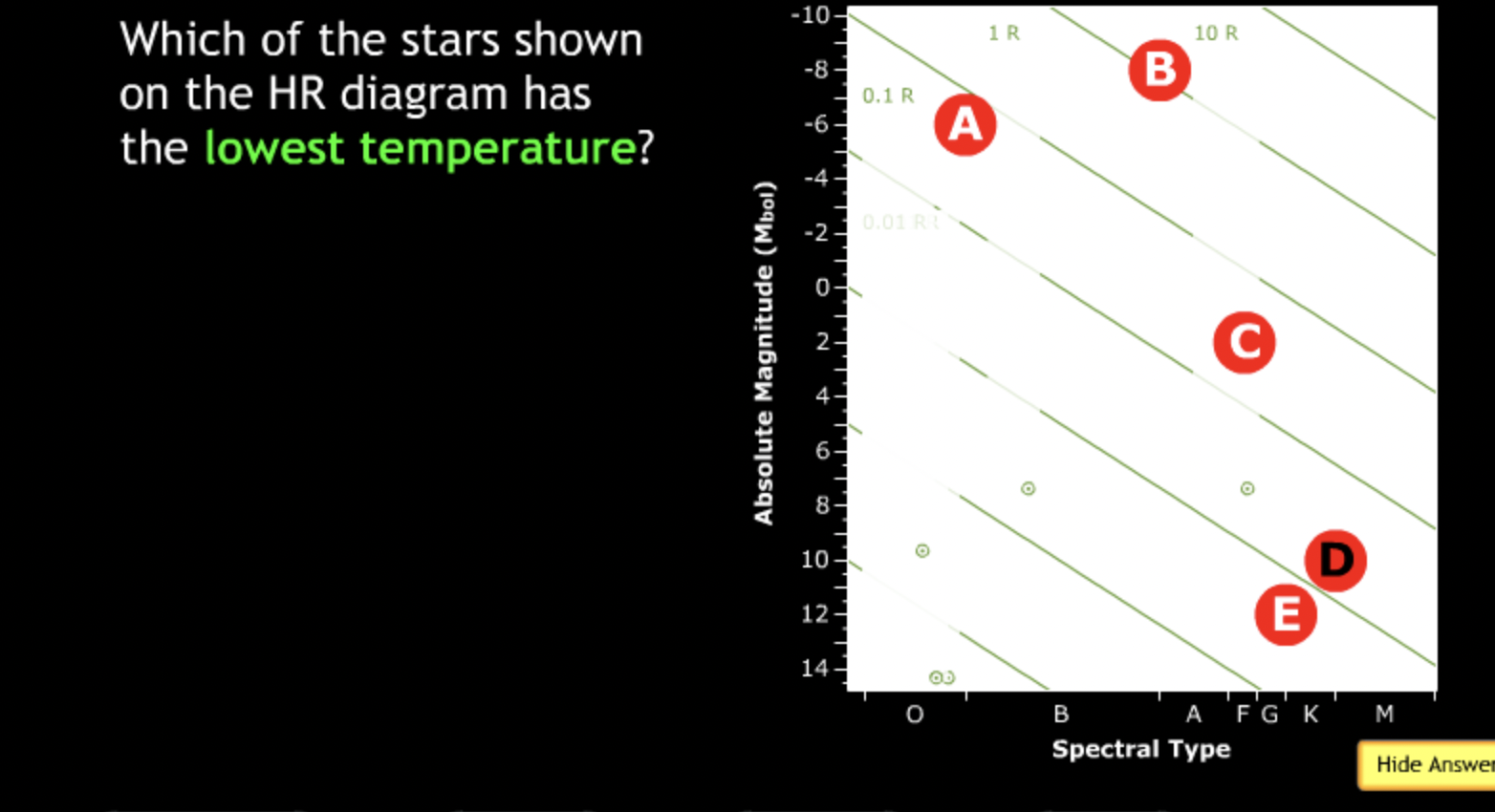
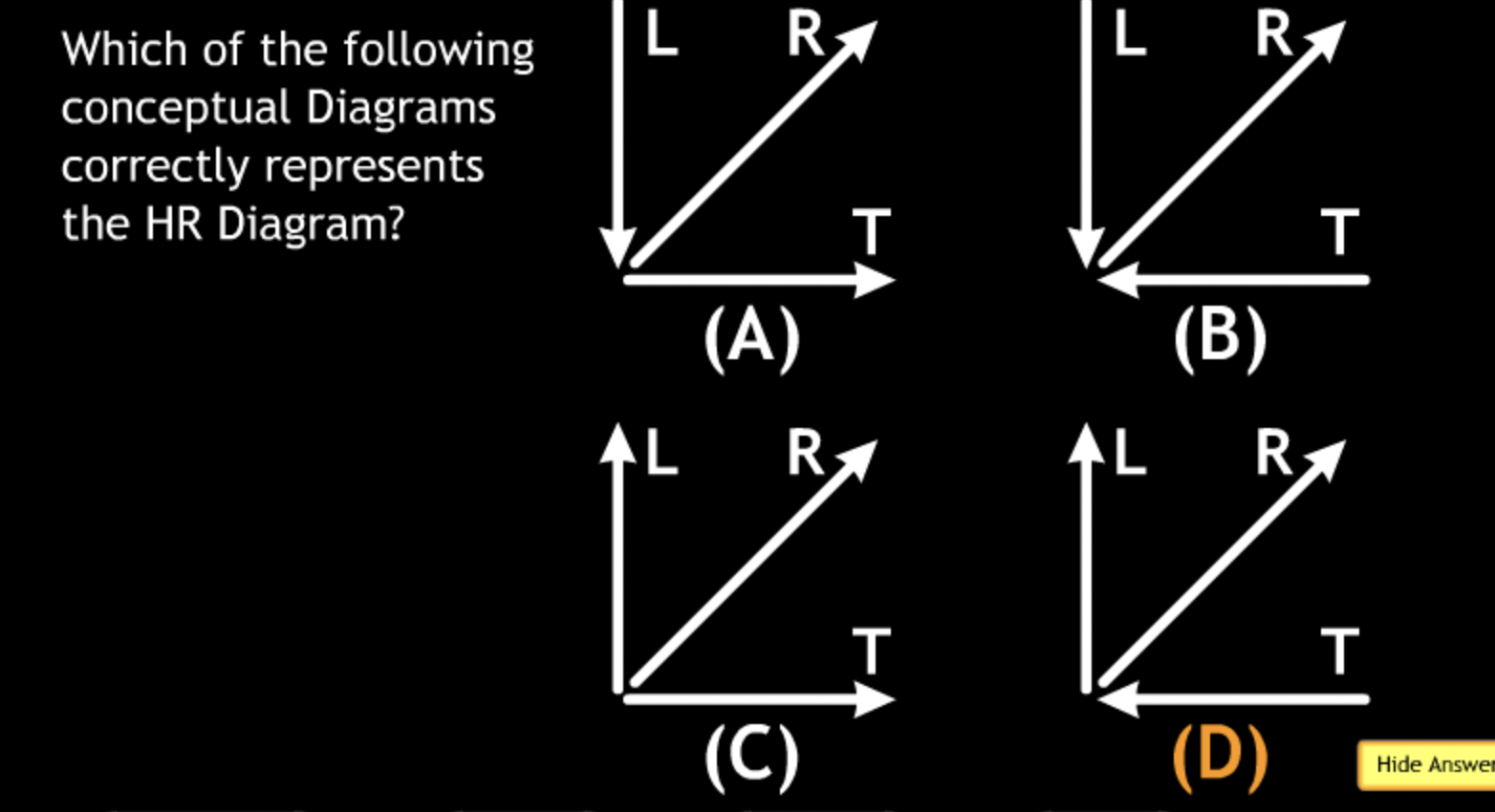
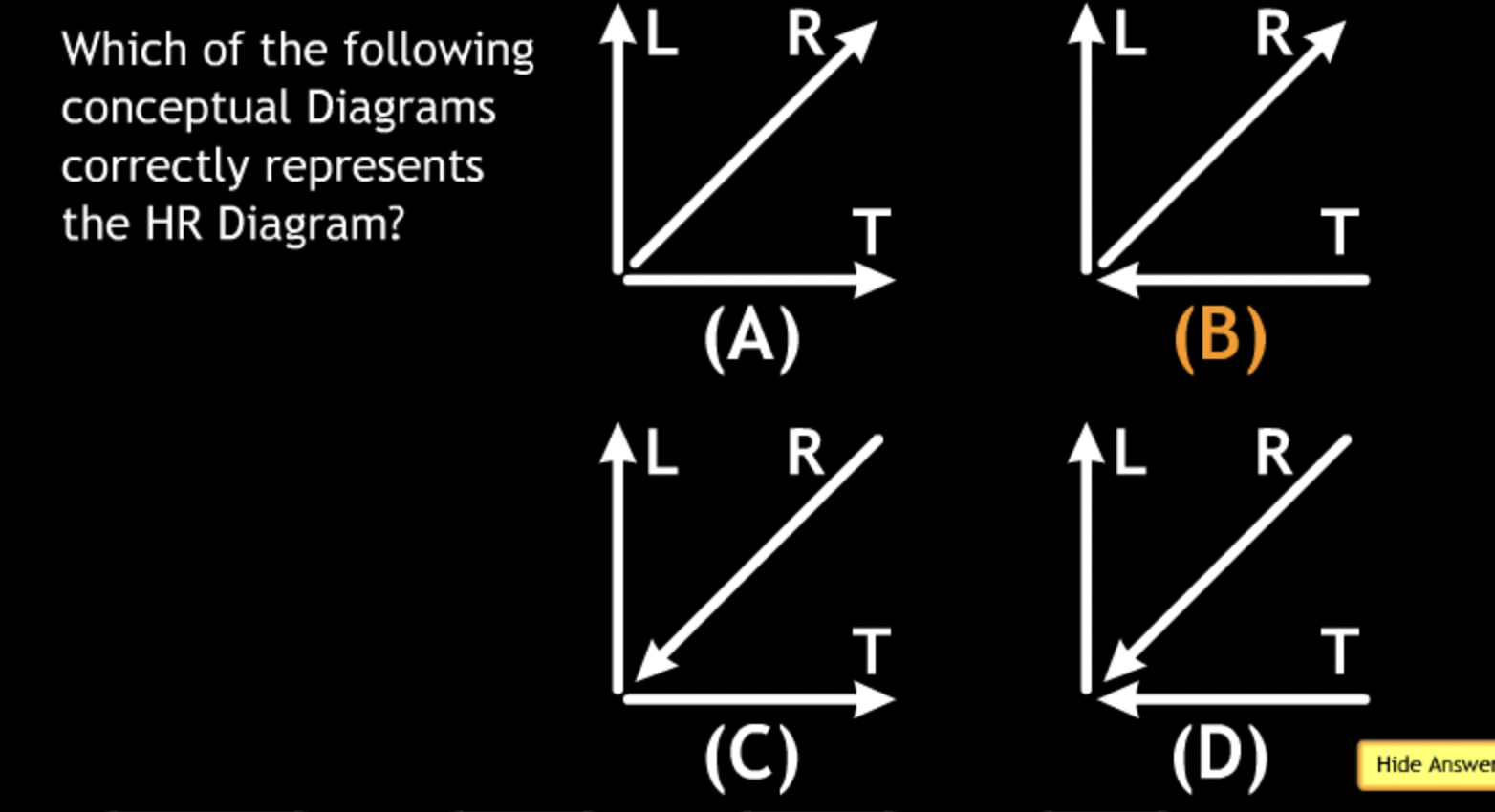
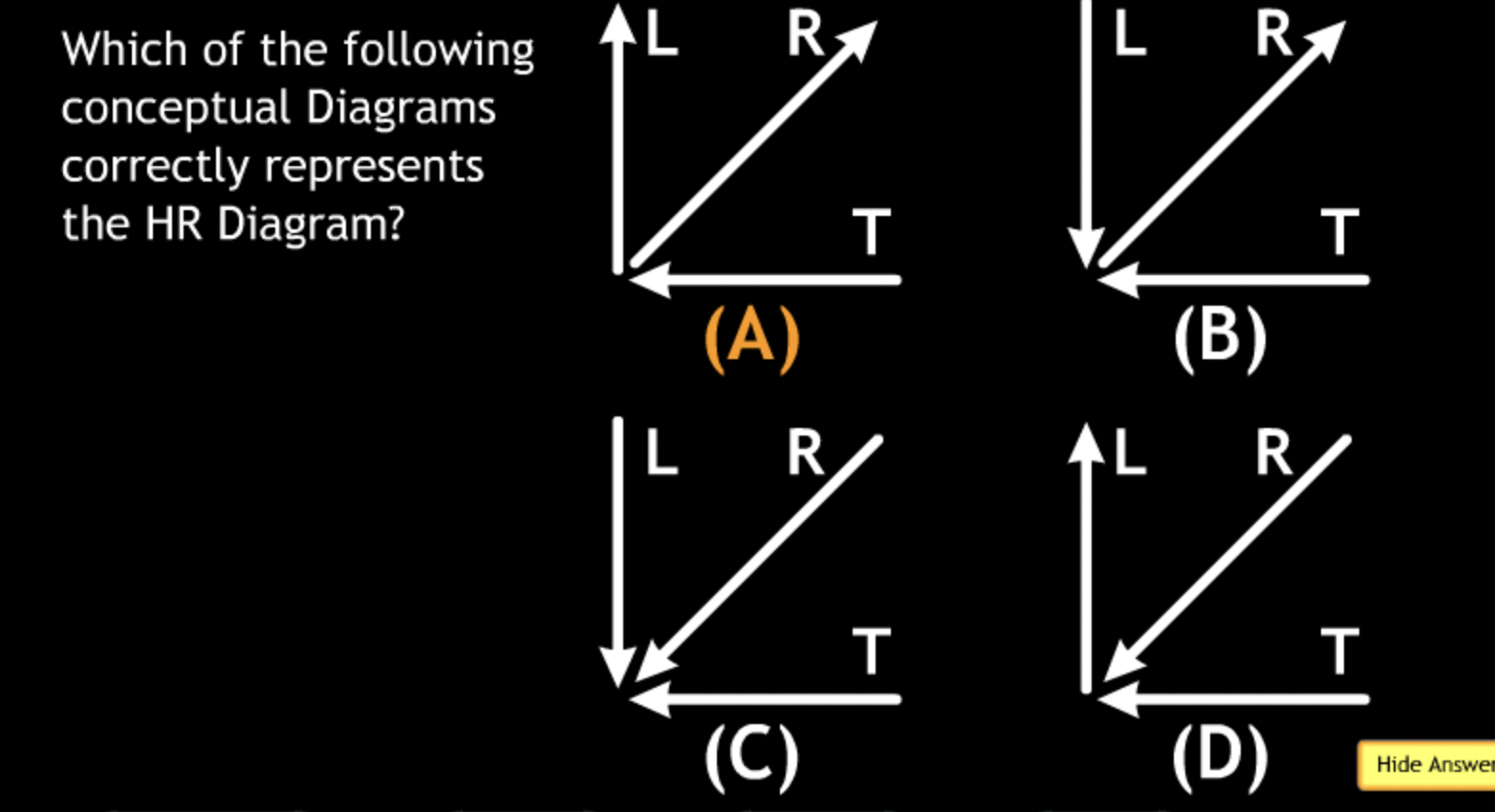
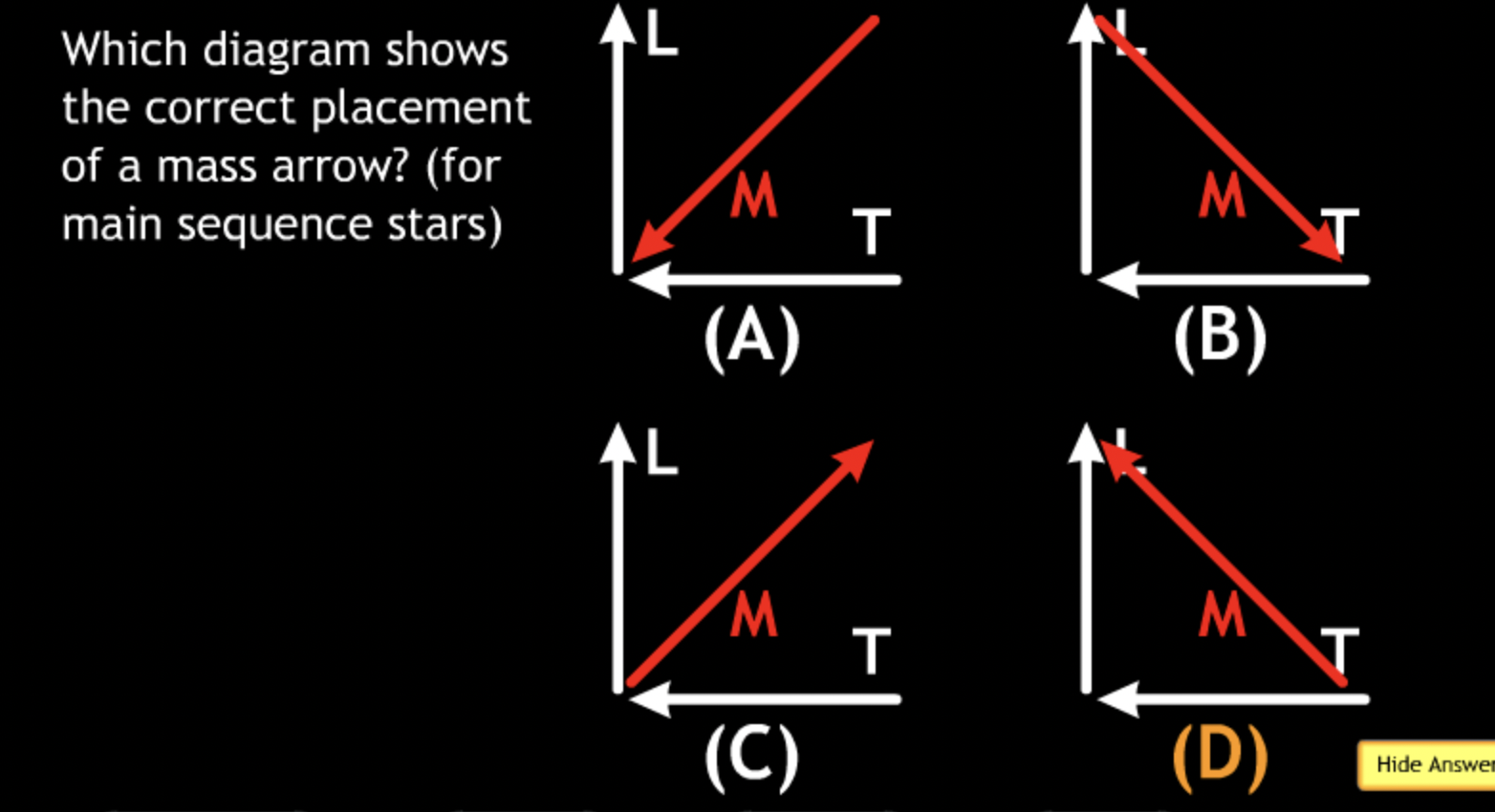
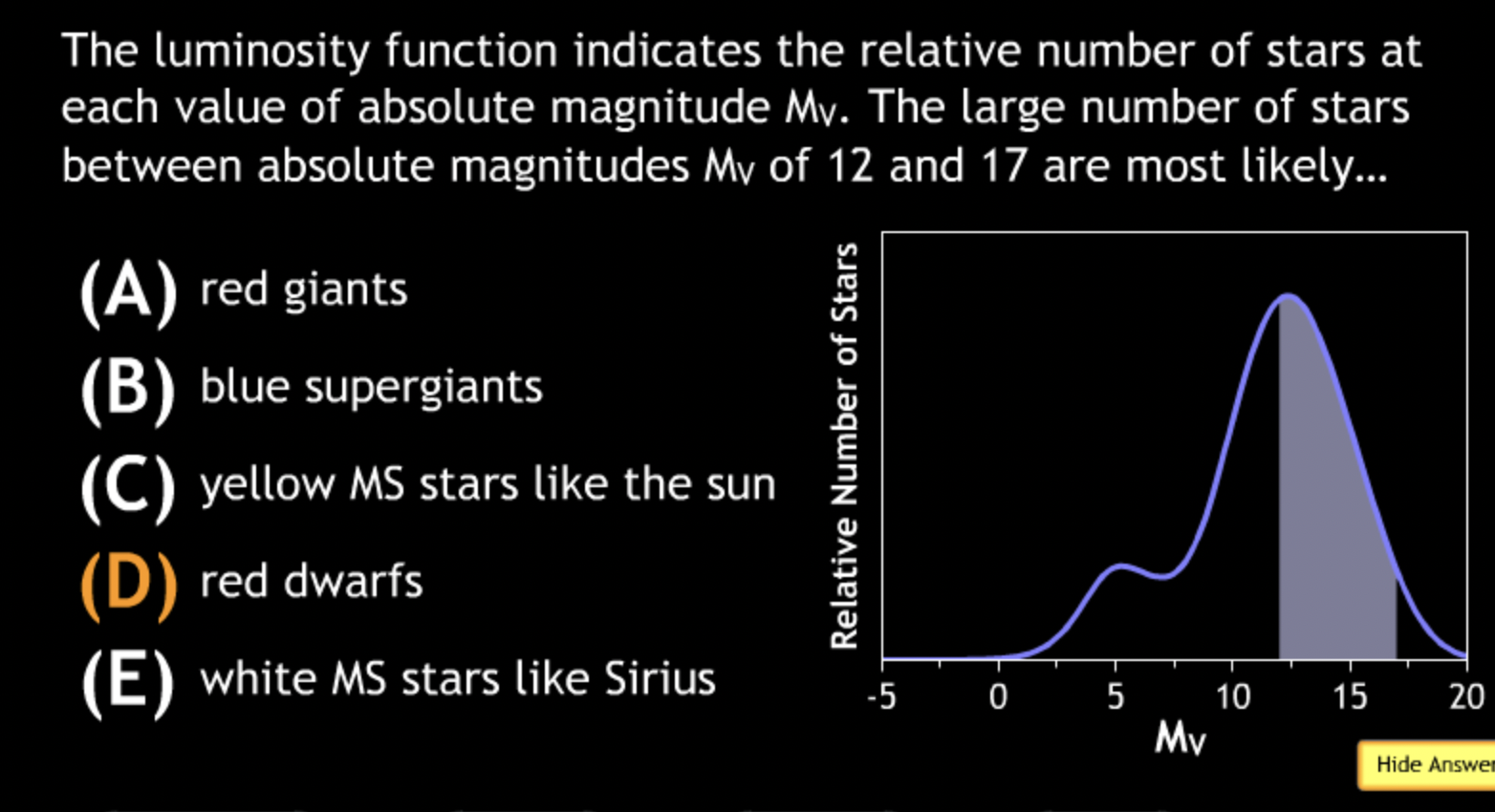
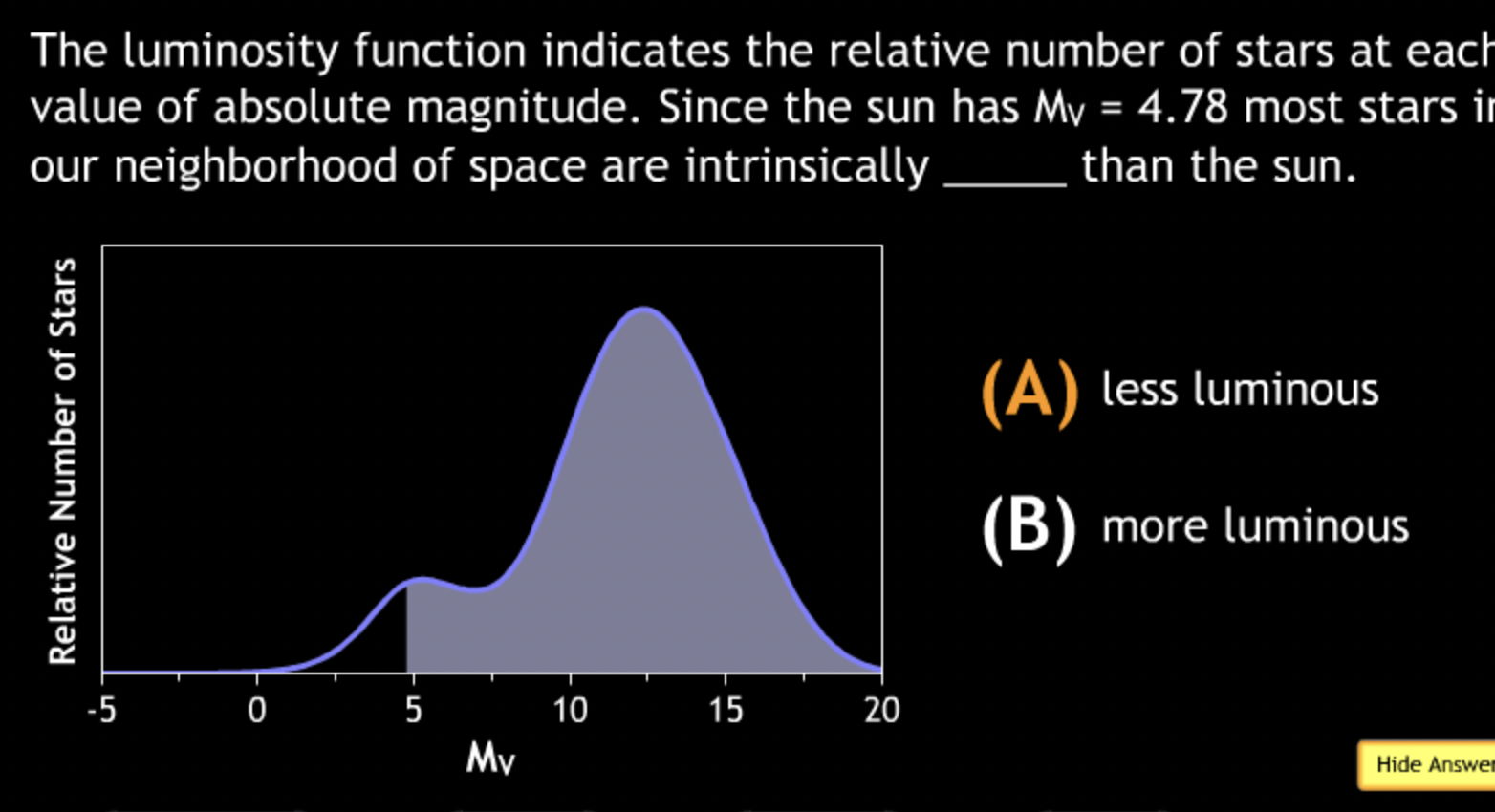
The most common stars are best described on the HR Diagram as… low luminosity, low temperature stars.
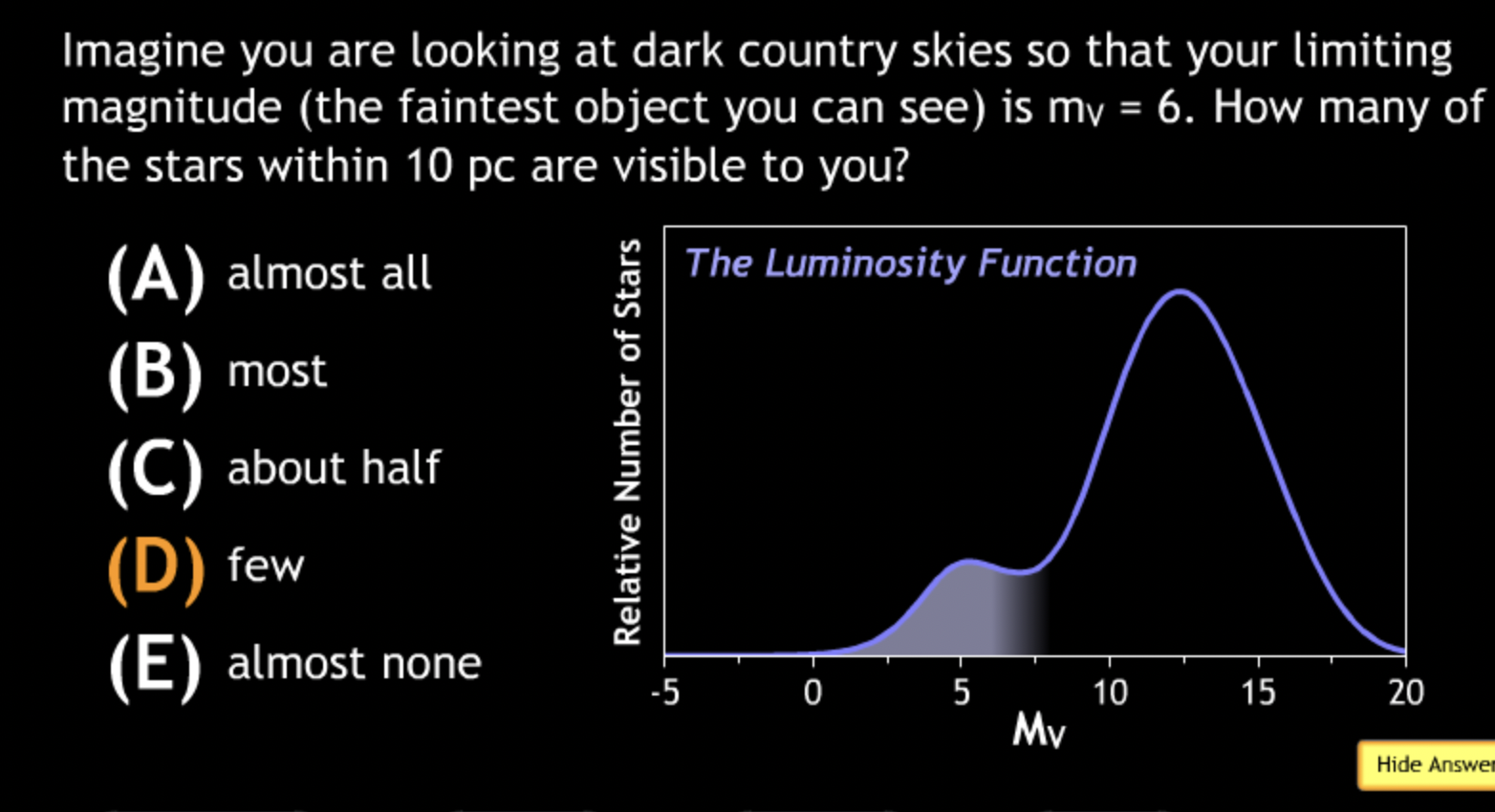
The brightest stars we see with our eyes are best described on the HR Diagram as… high luminosity stars.



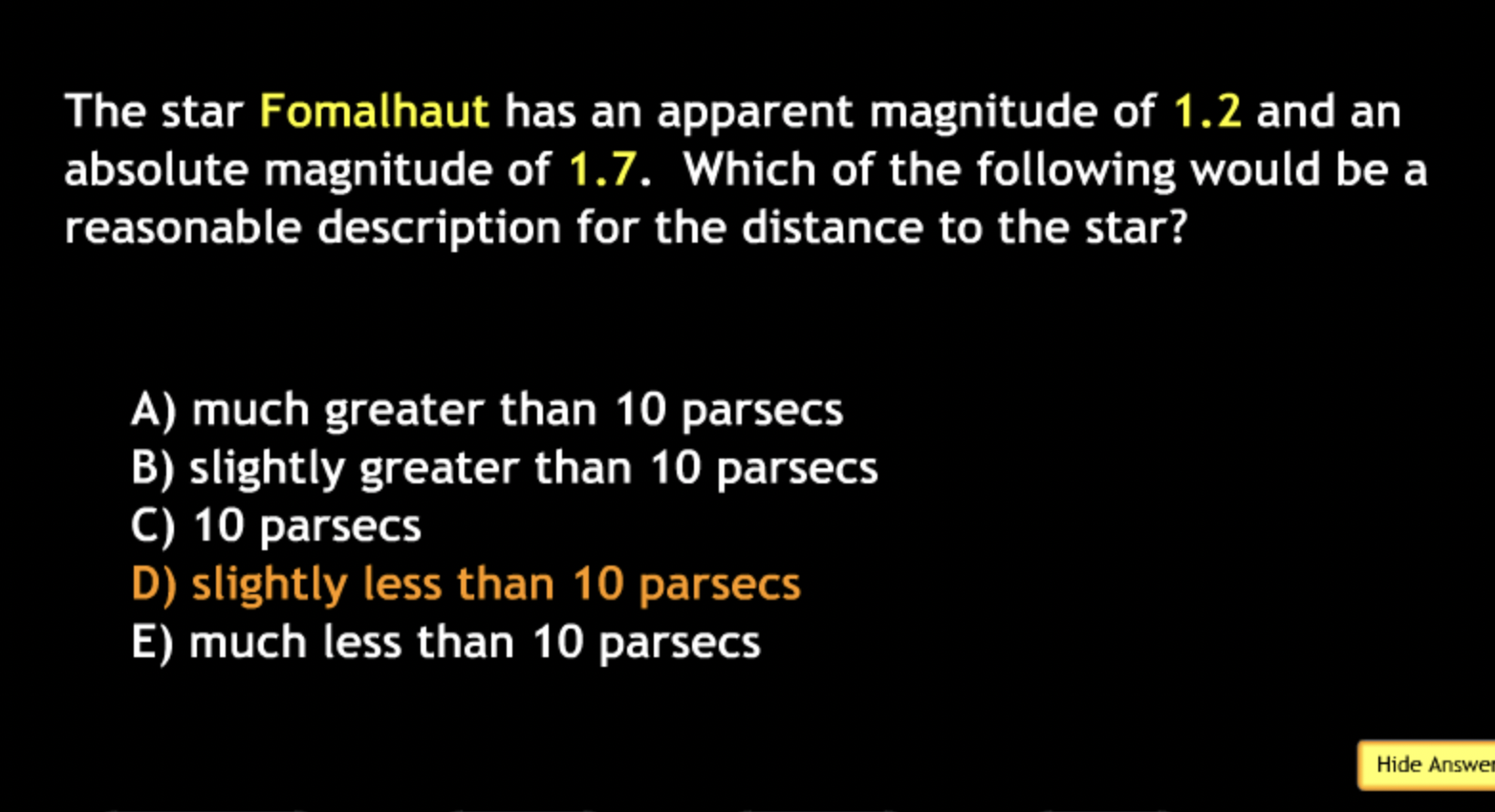
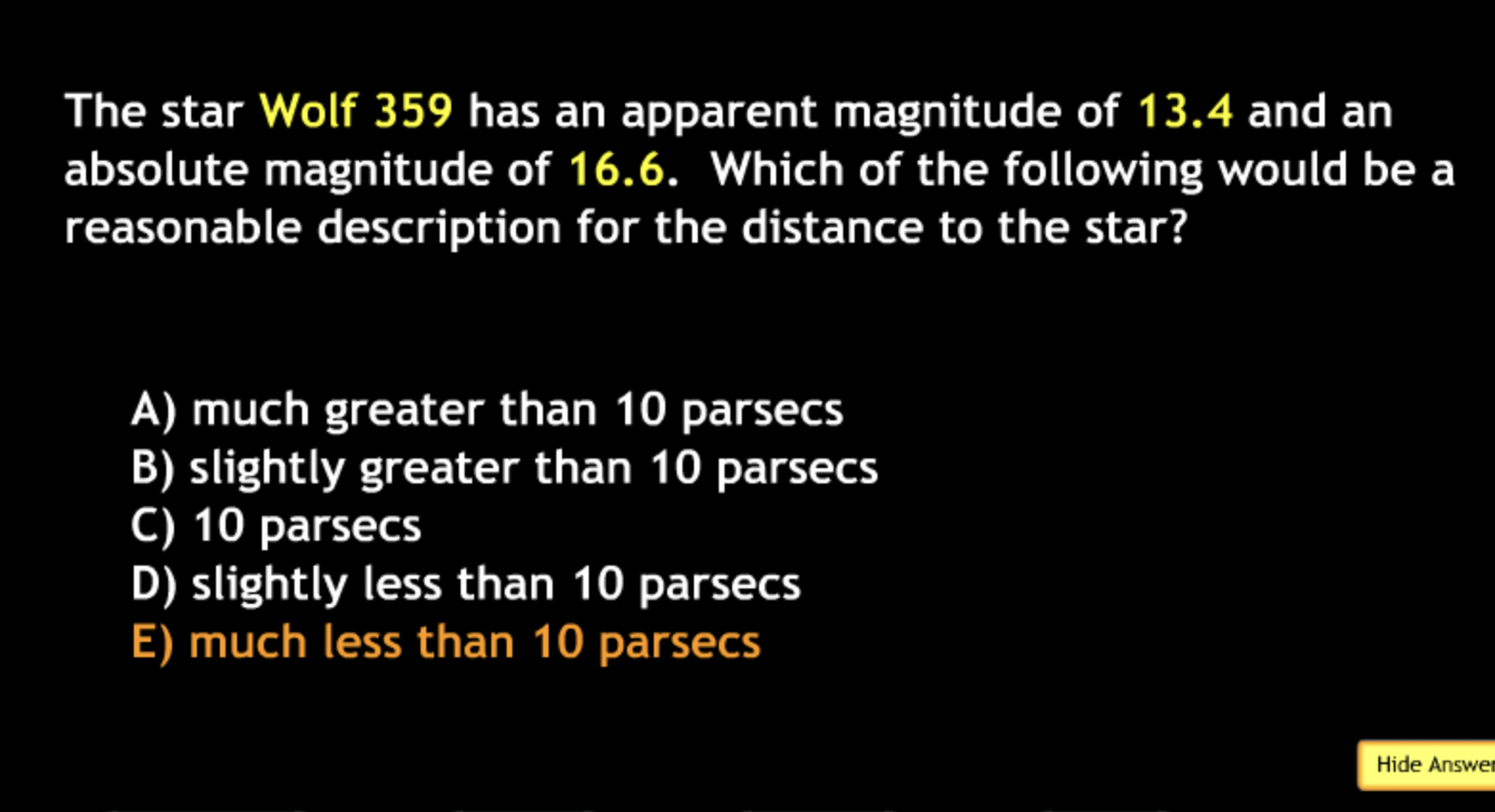
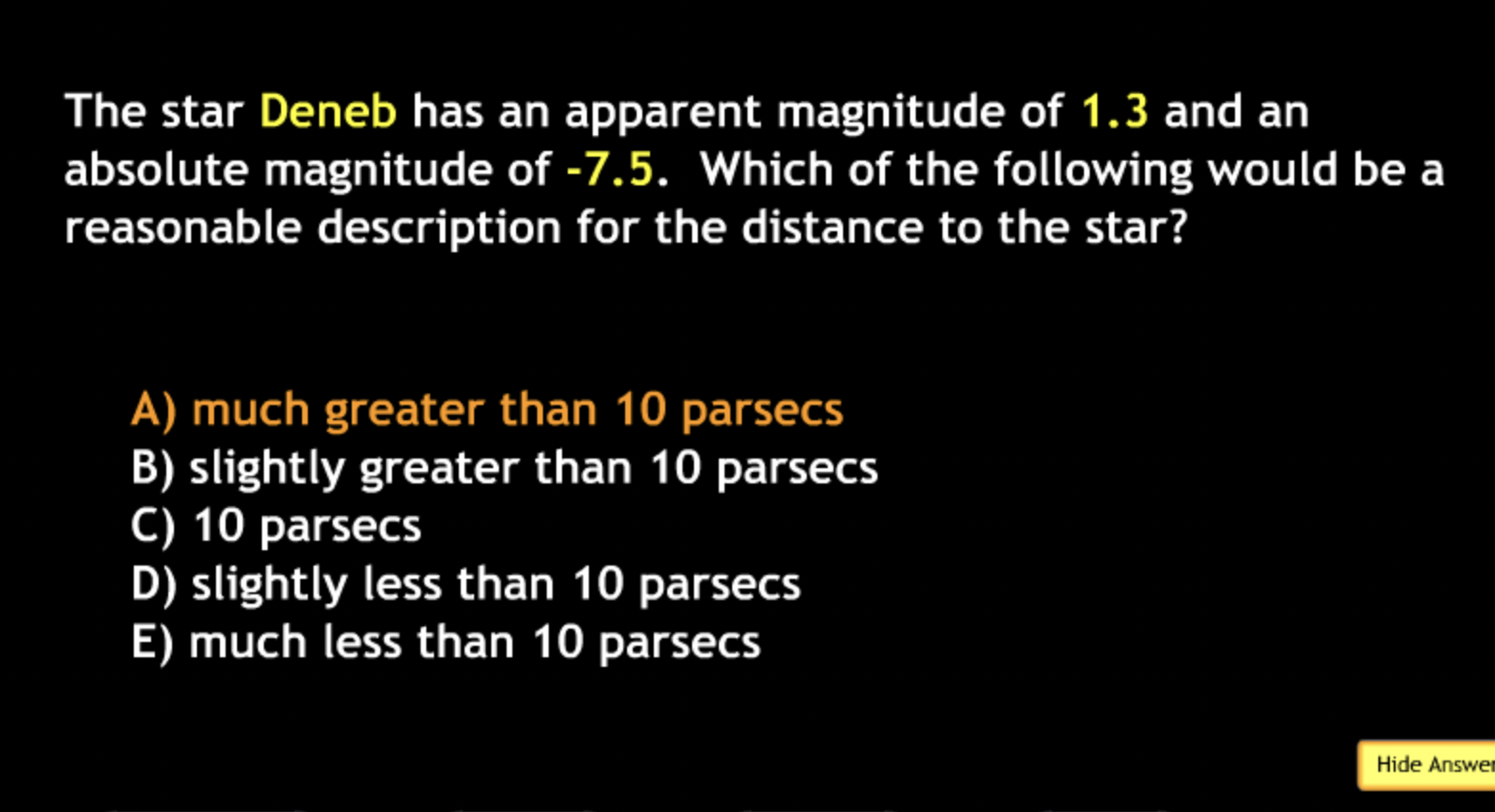
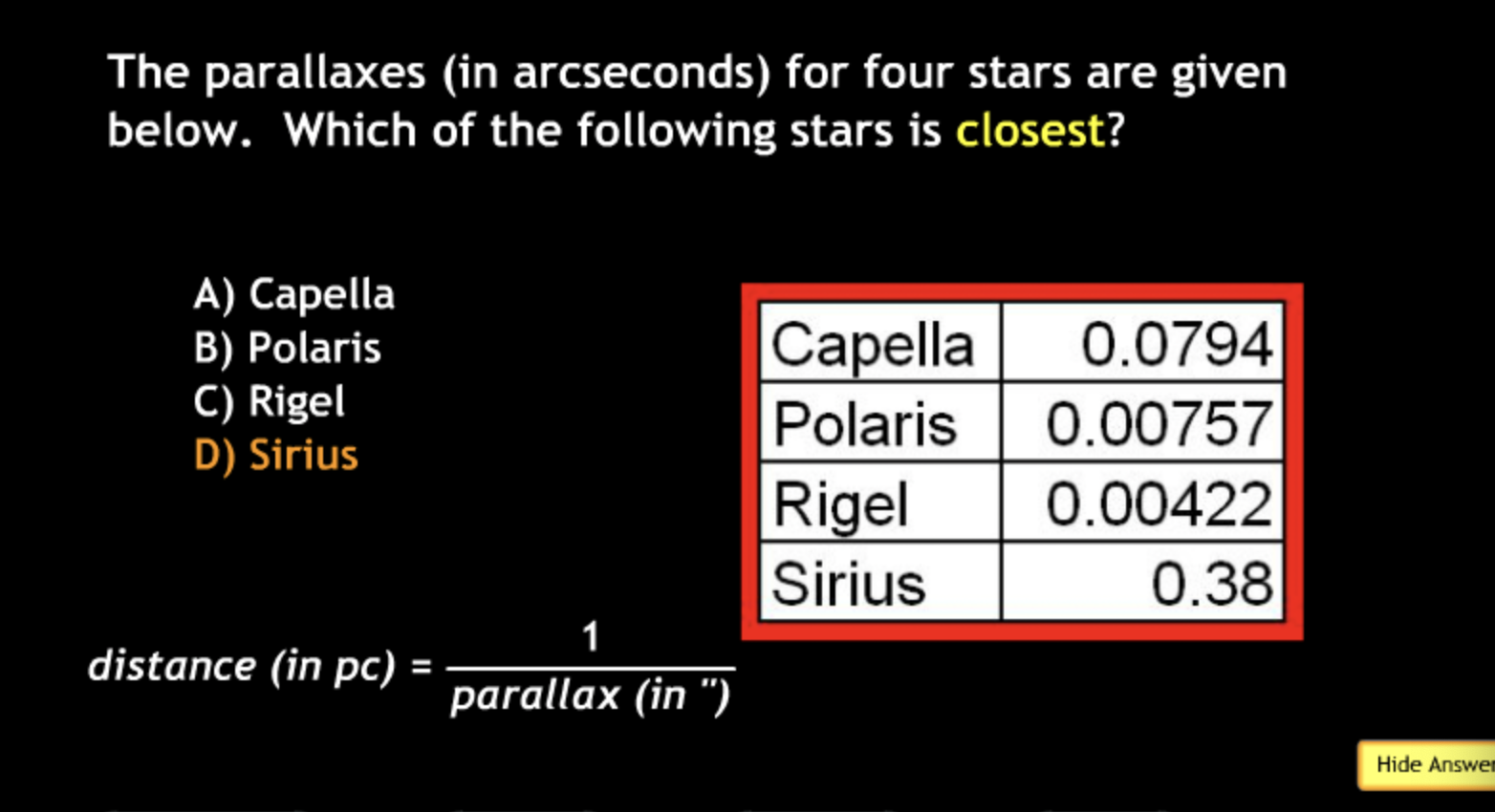
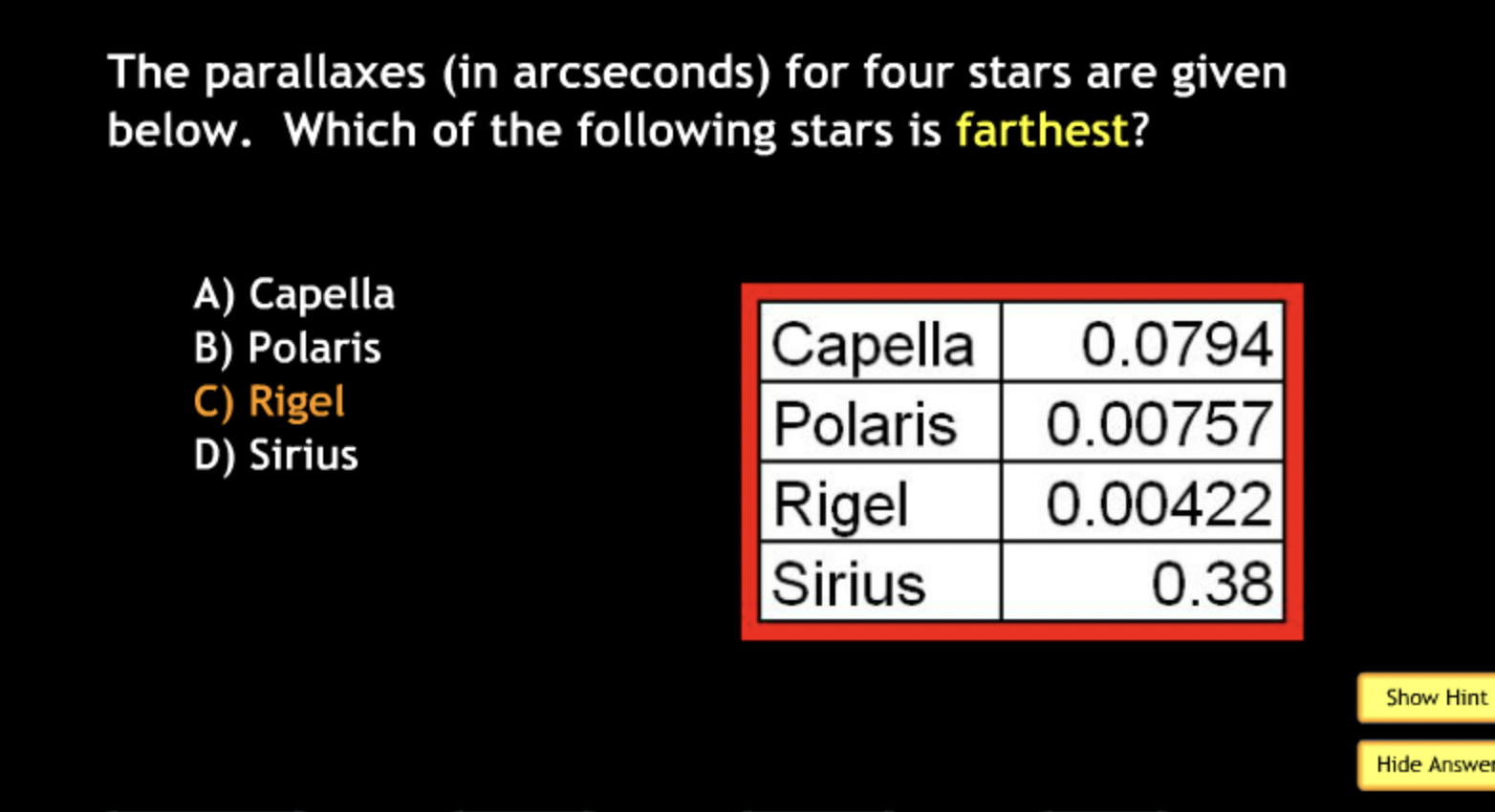
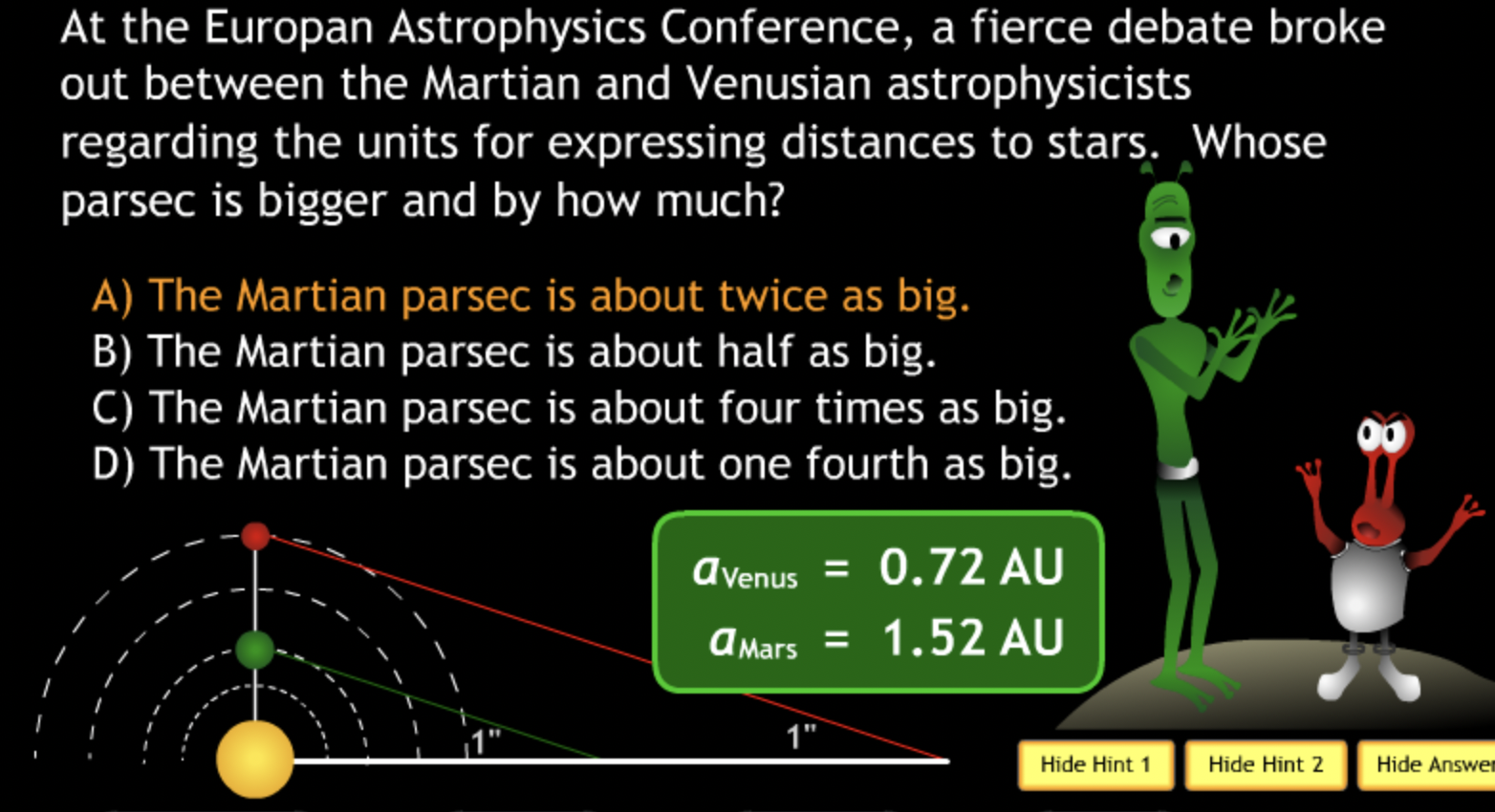
If a star has a parallax of 0.1 arcsecods, it must be at a distance of… 10 parsecs.
0.01 arcseconds → 100 parsecs.
0.05 arcseconds → 20 parsecs
0.2 arcseconds → 5 parsecs
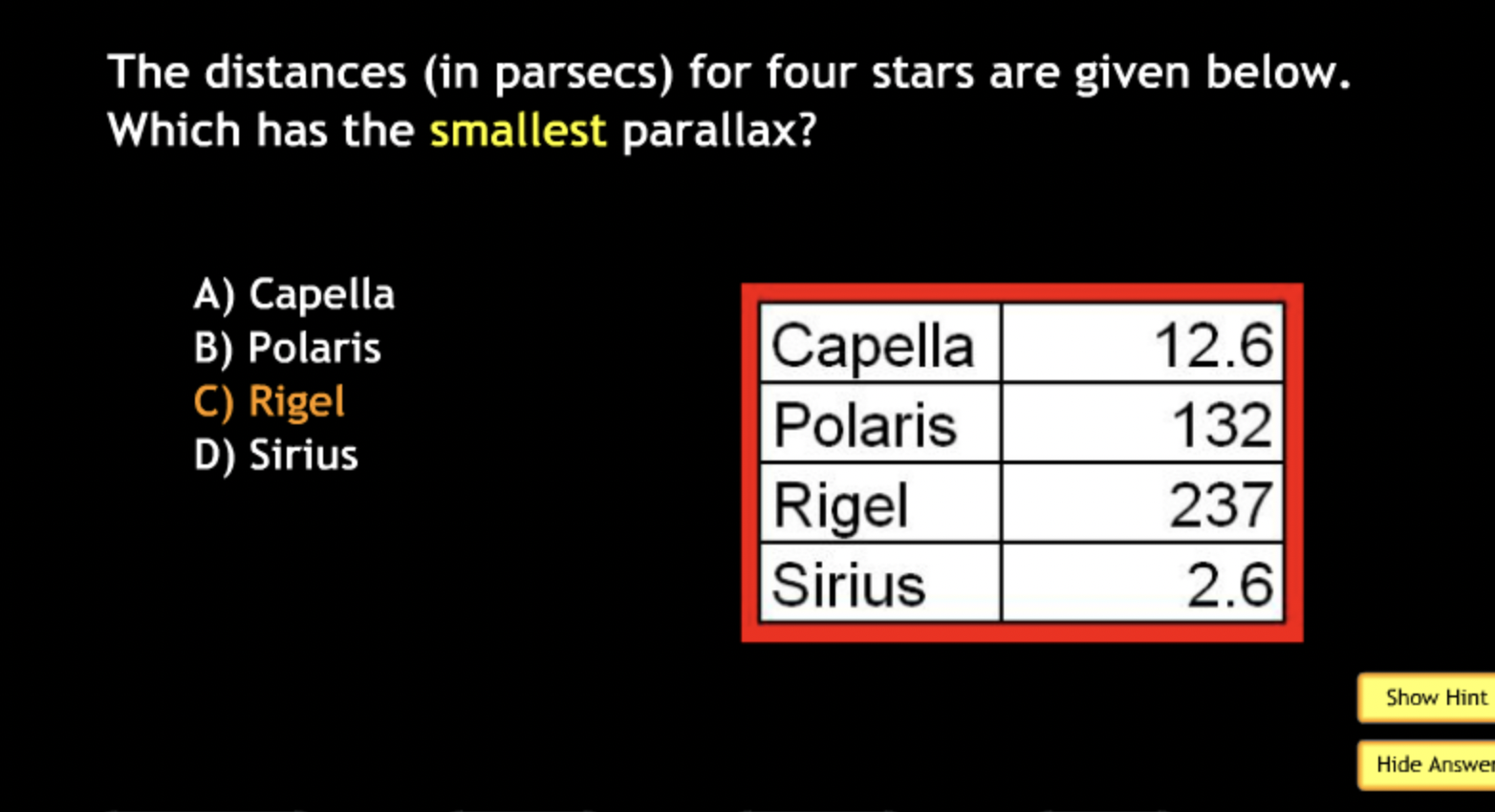
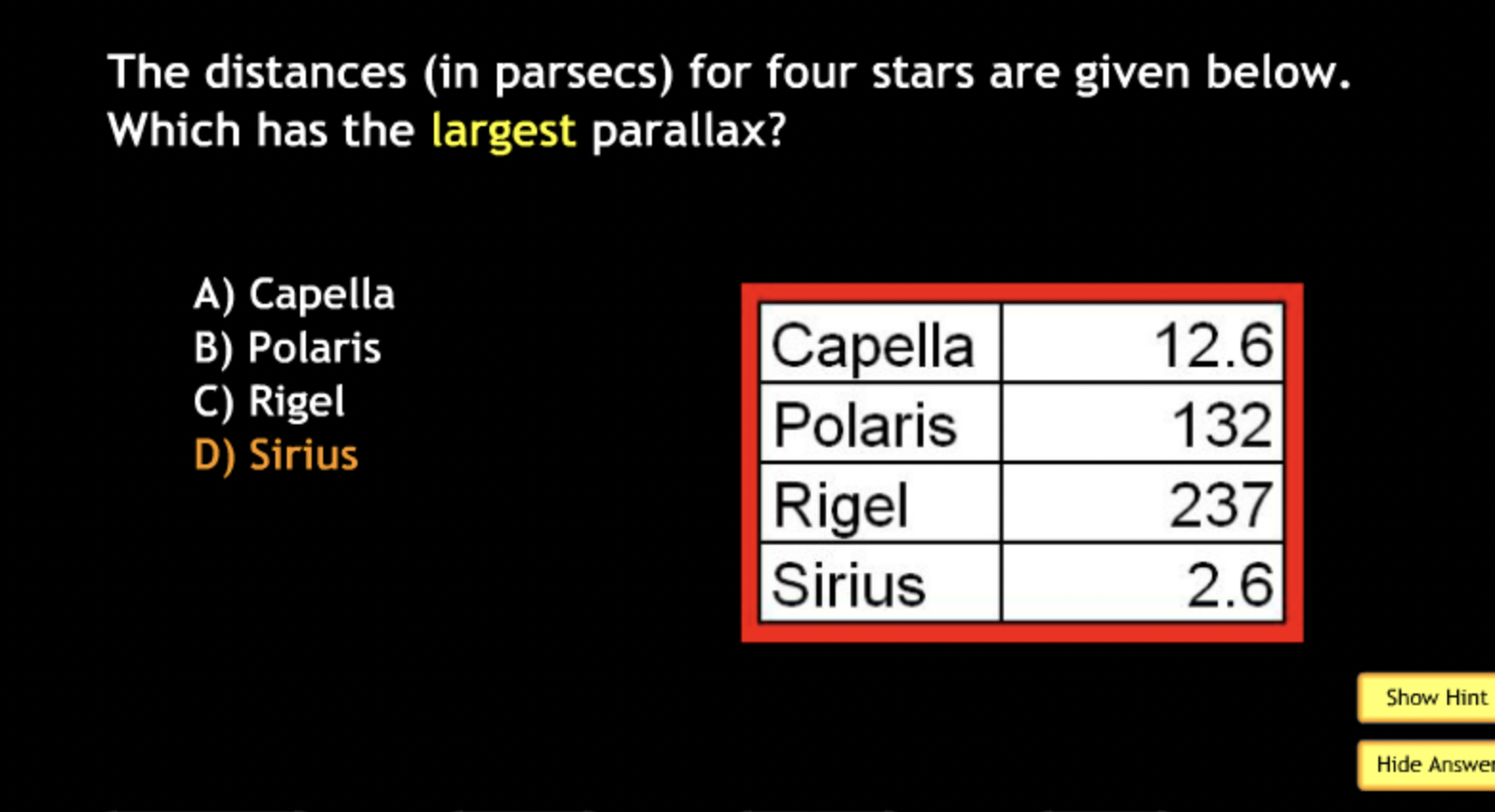
A star at a distance of 10 parsecs must have a parallax of… 0.1 arcseconds
100 parsecs → 0.01 arcseconds
20 parsecs → 0.05 arcseconds
5 parsecs → 0.2 arcseconds
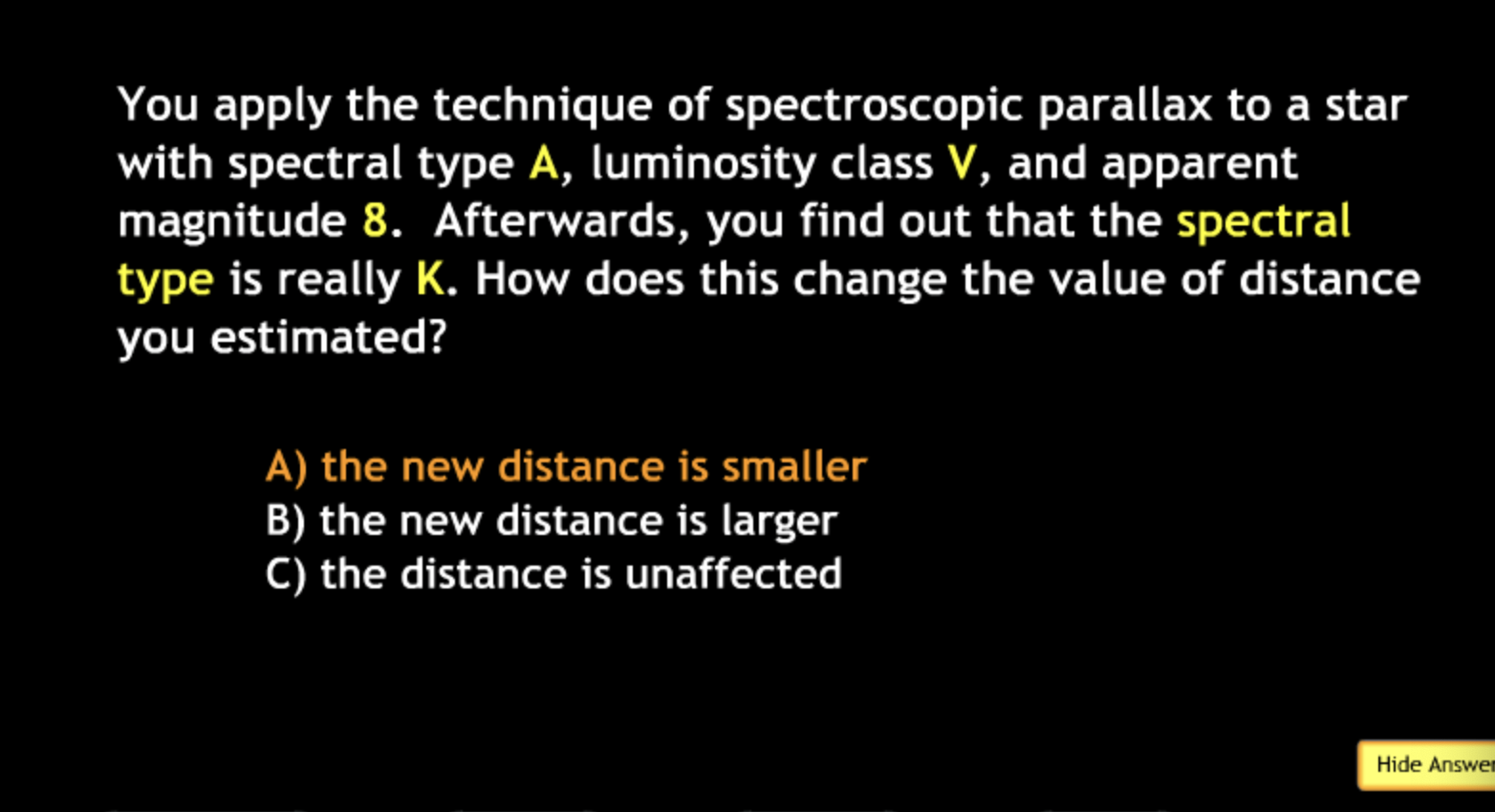
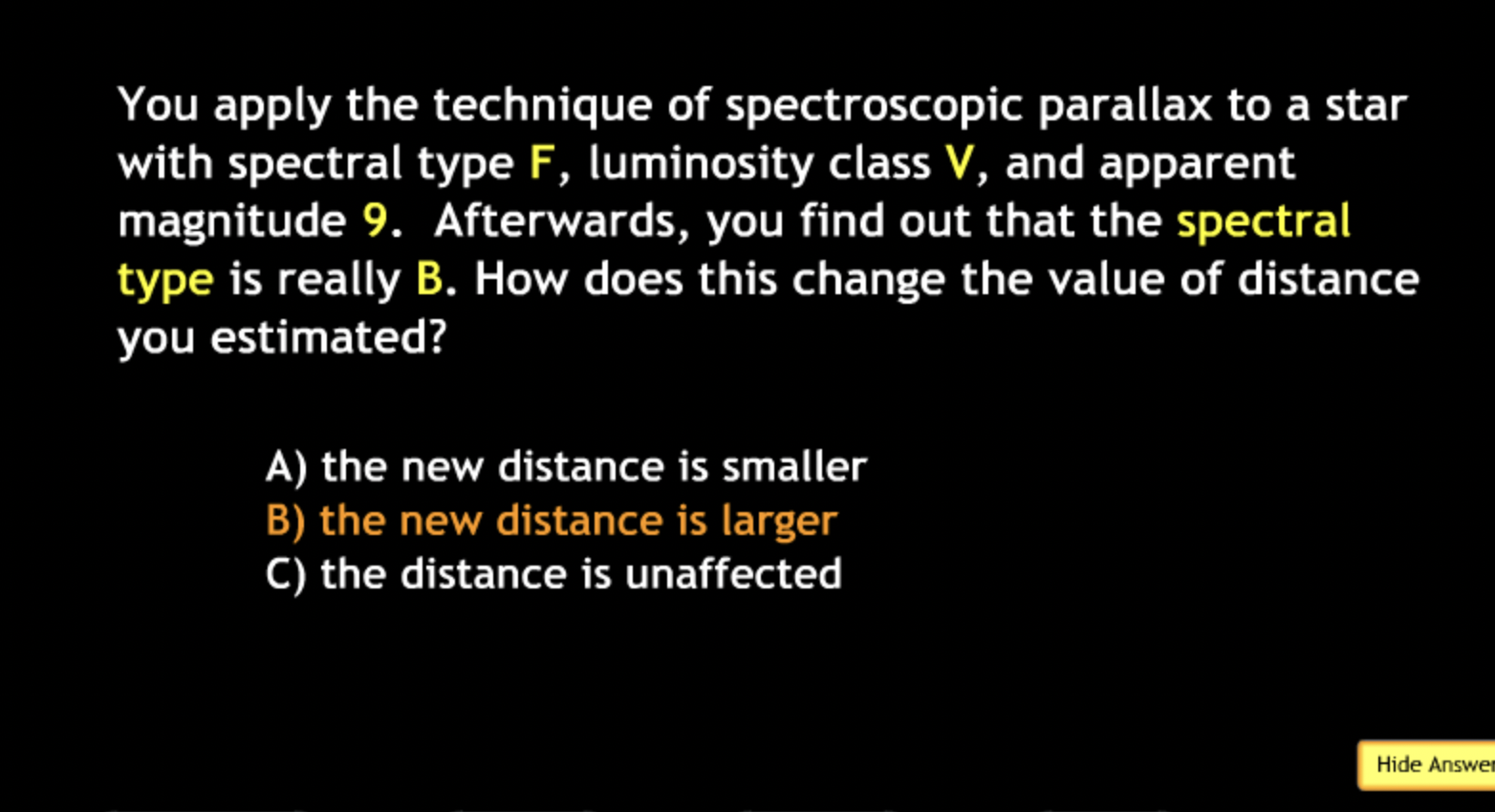
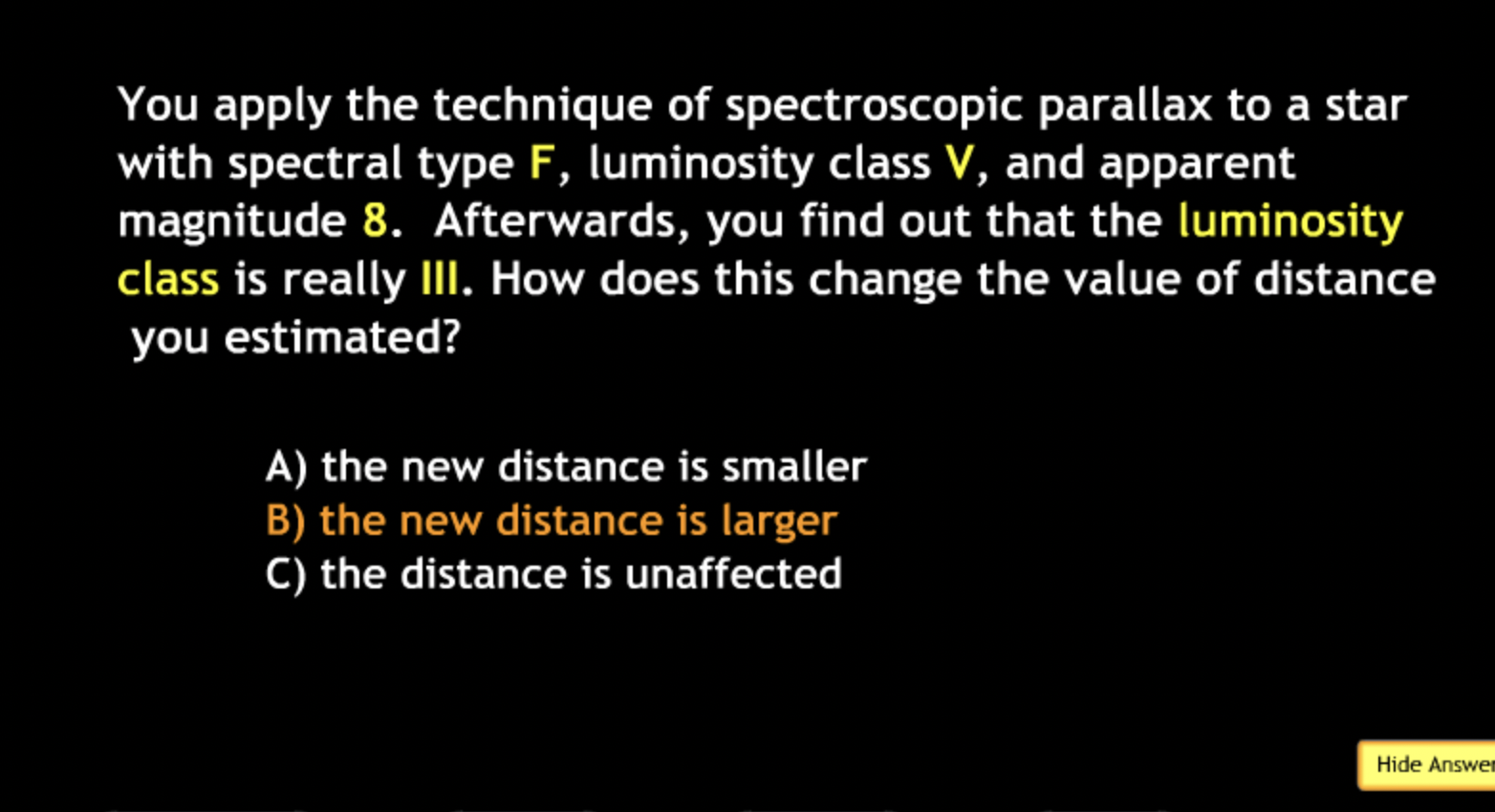
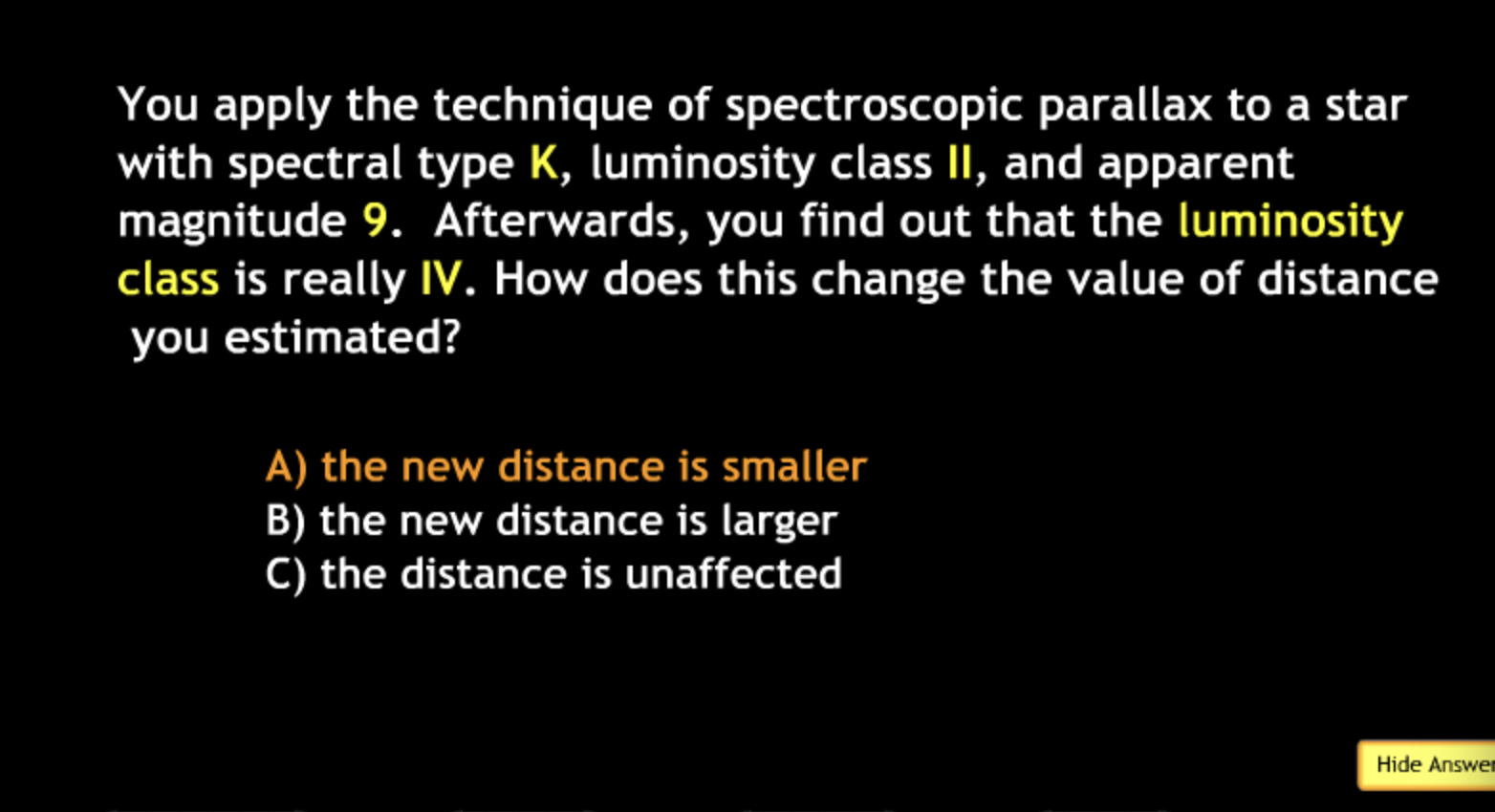
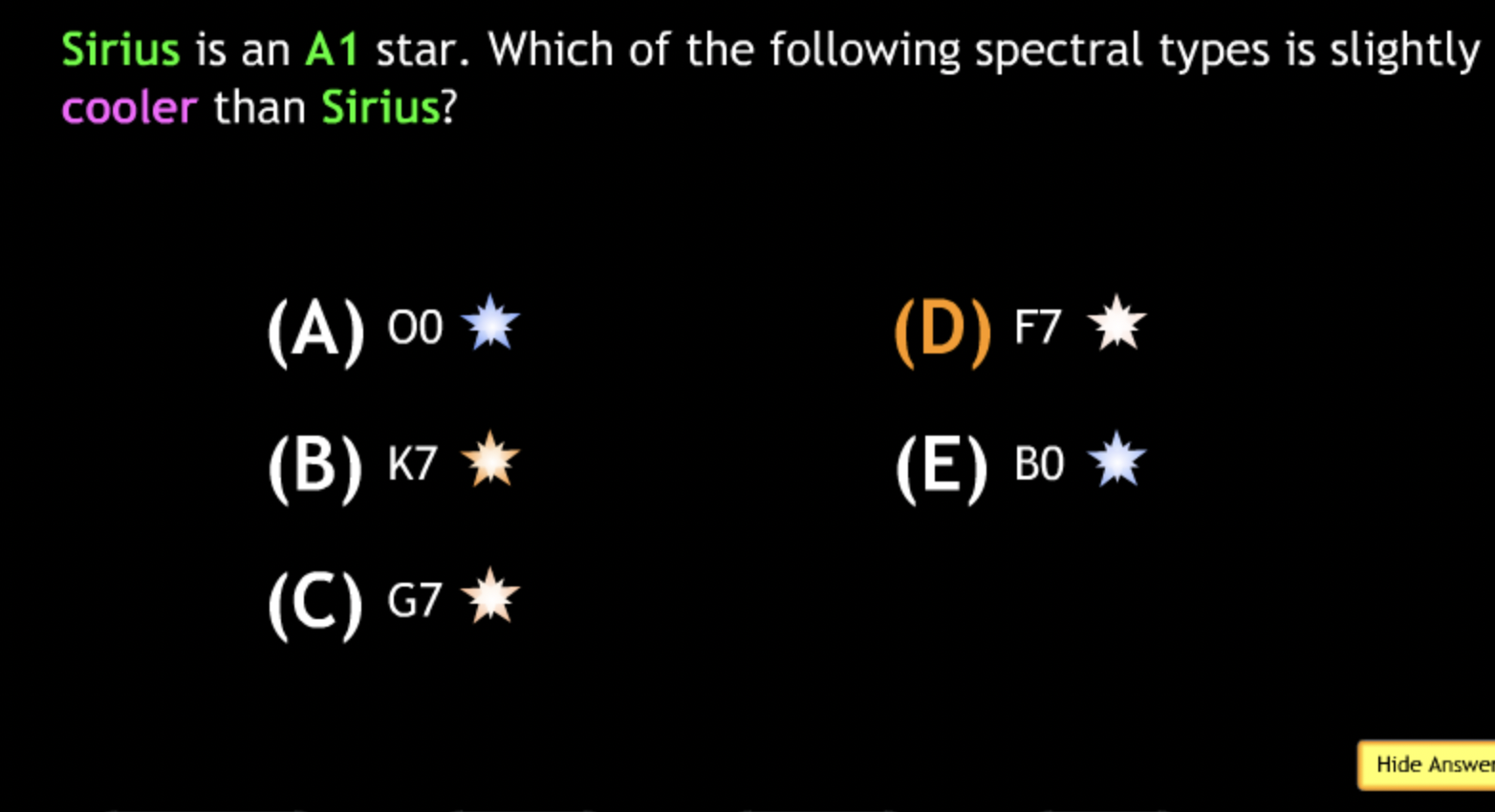
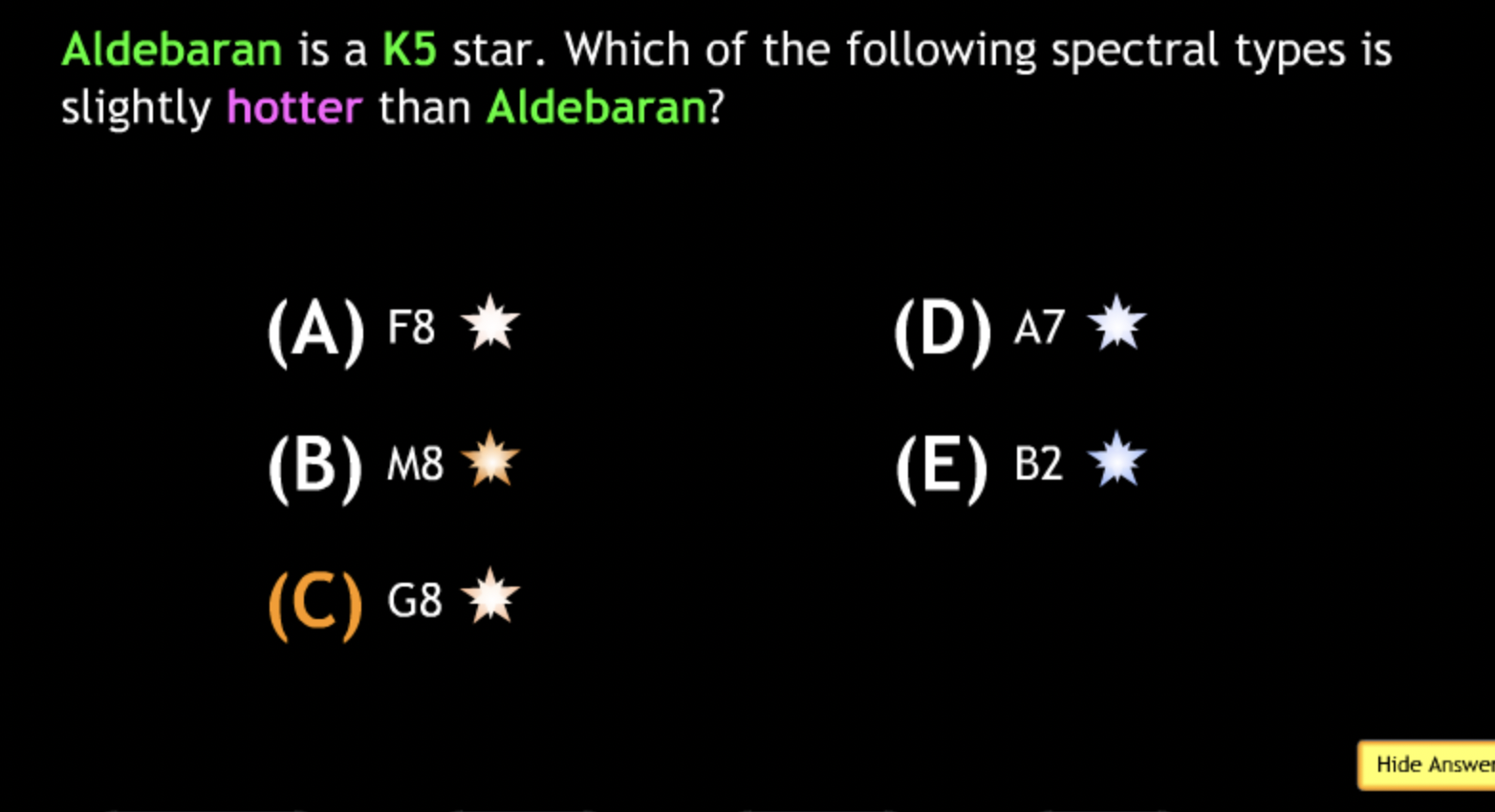
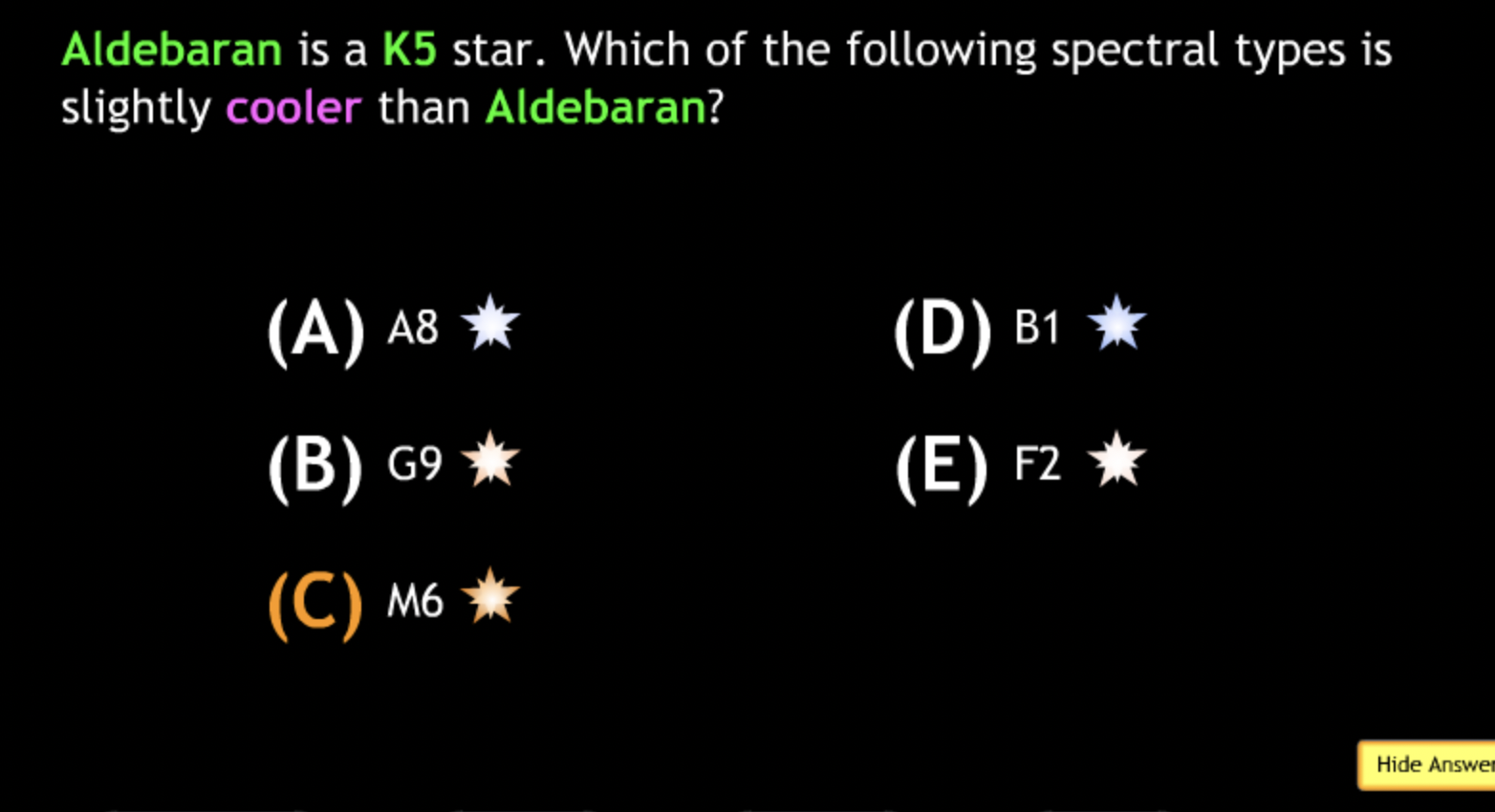
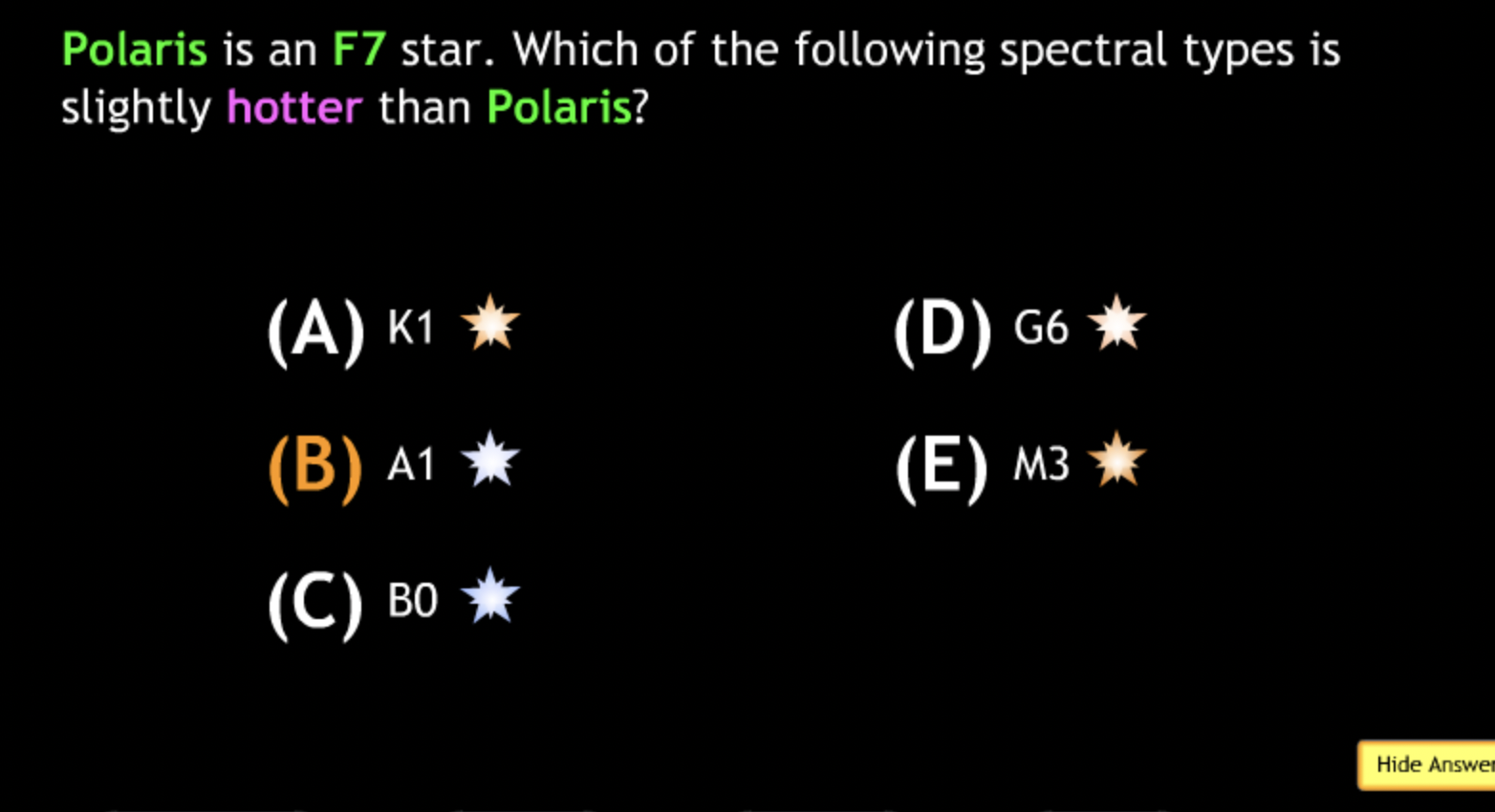
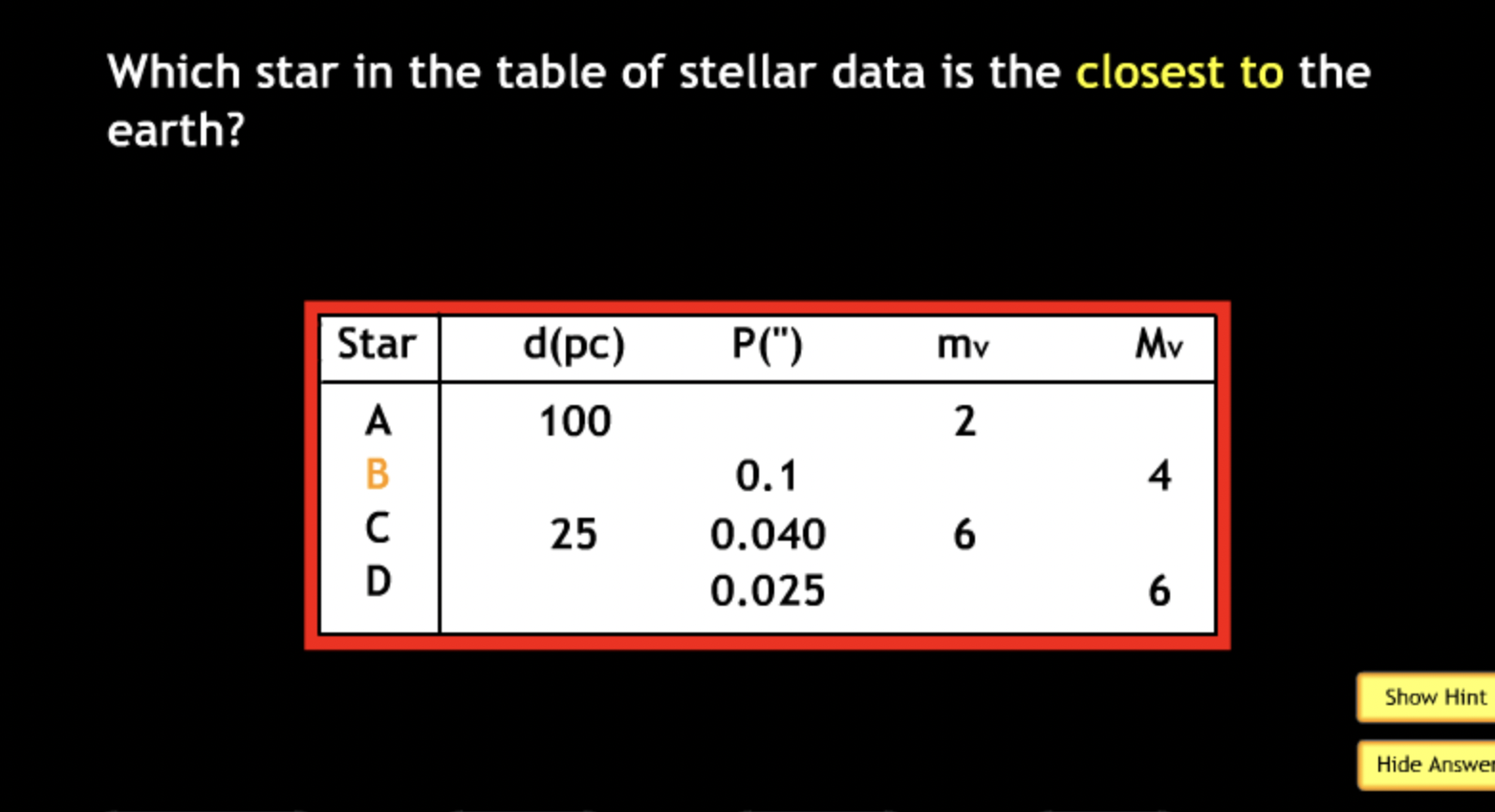
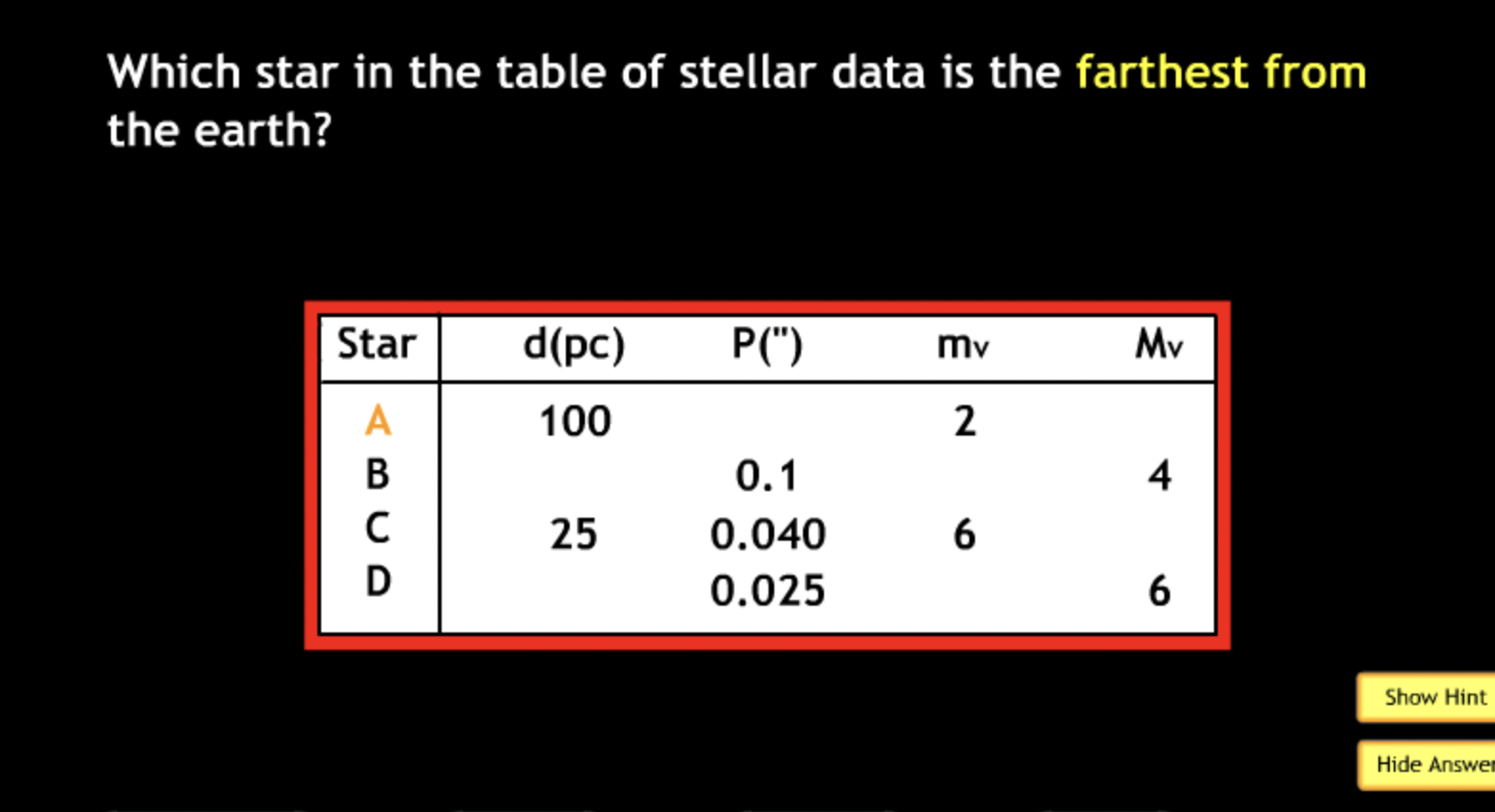
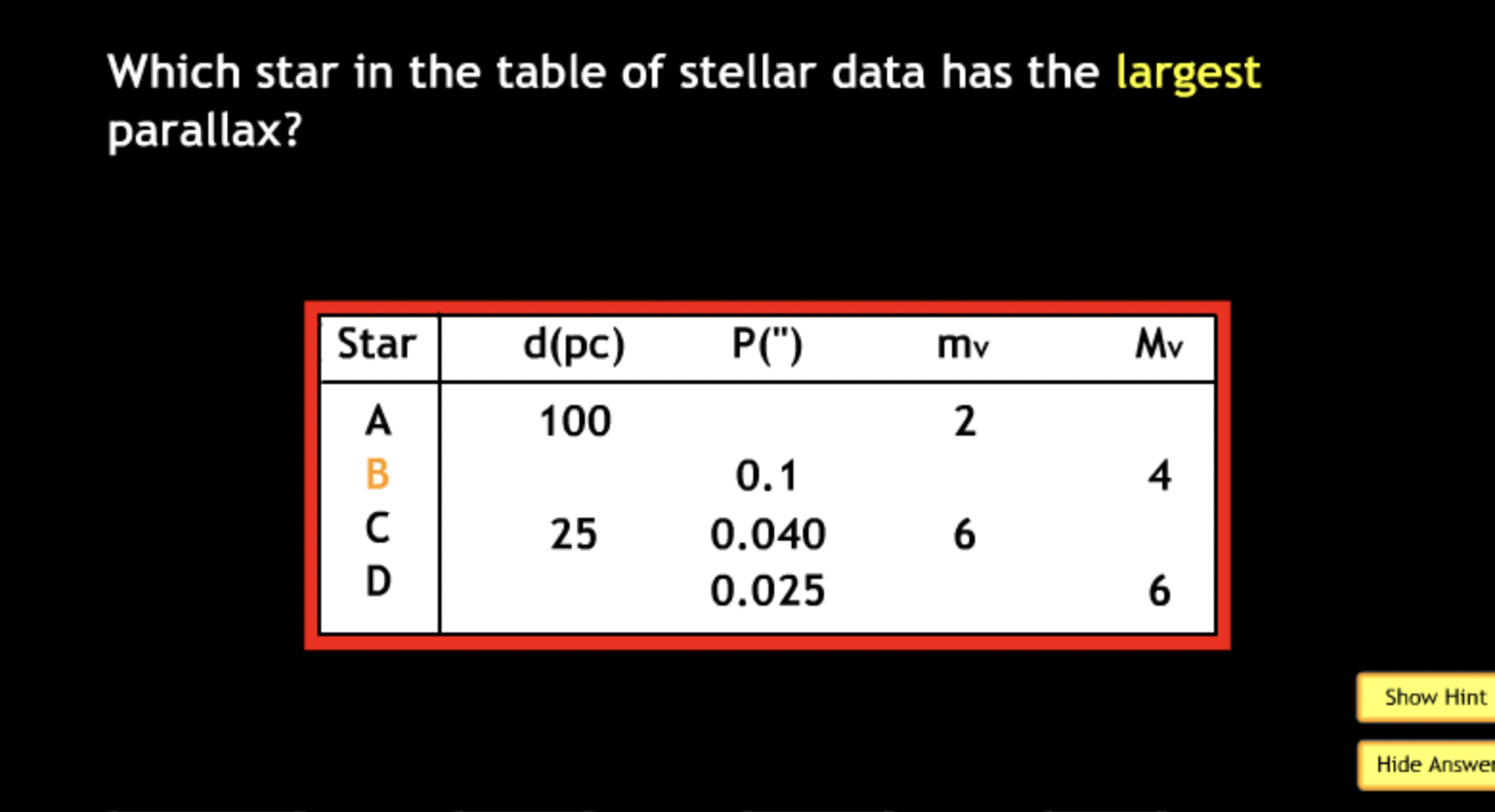
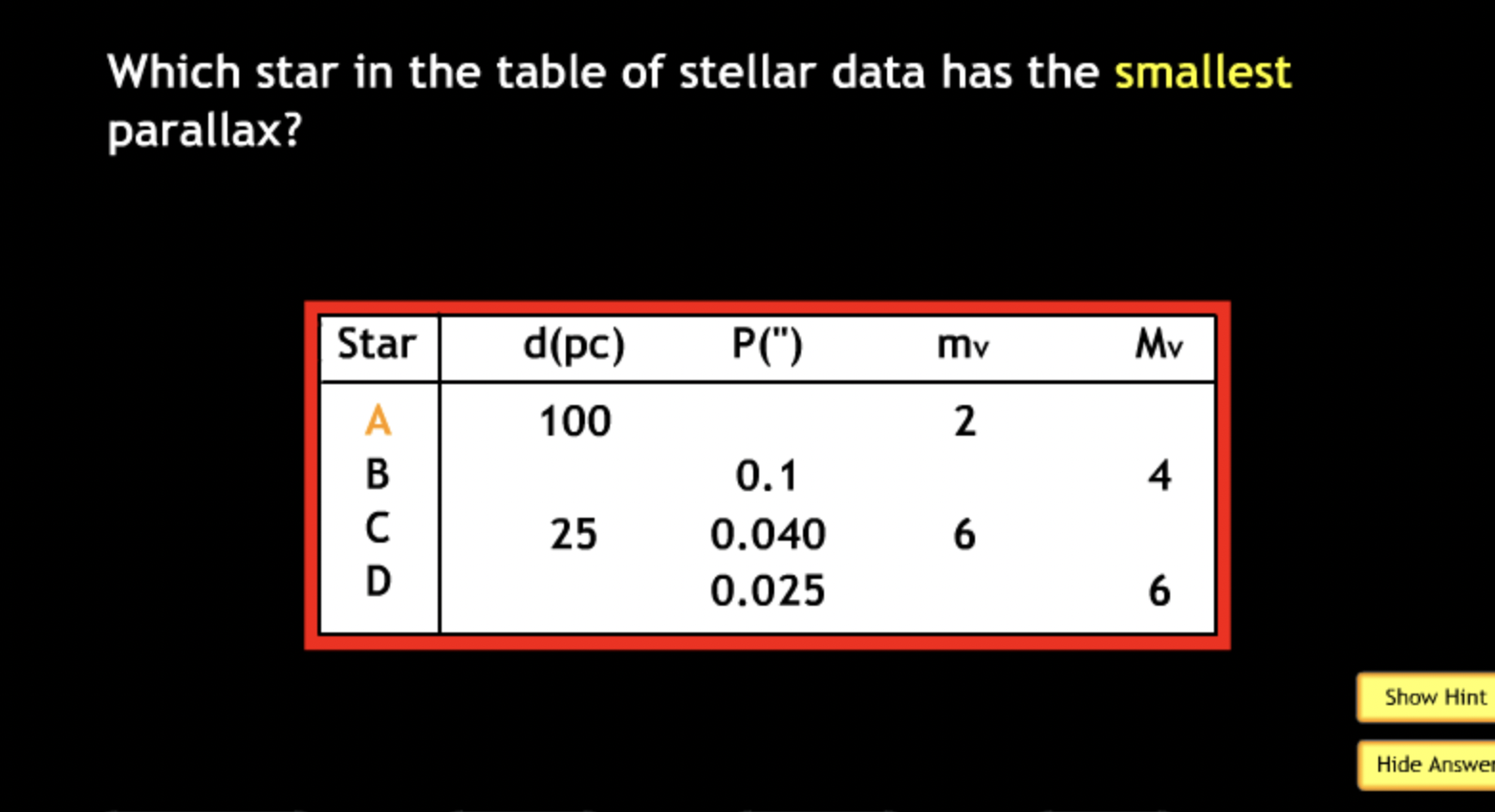
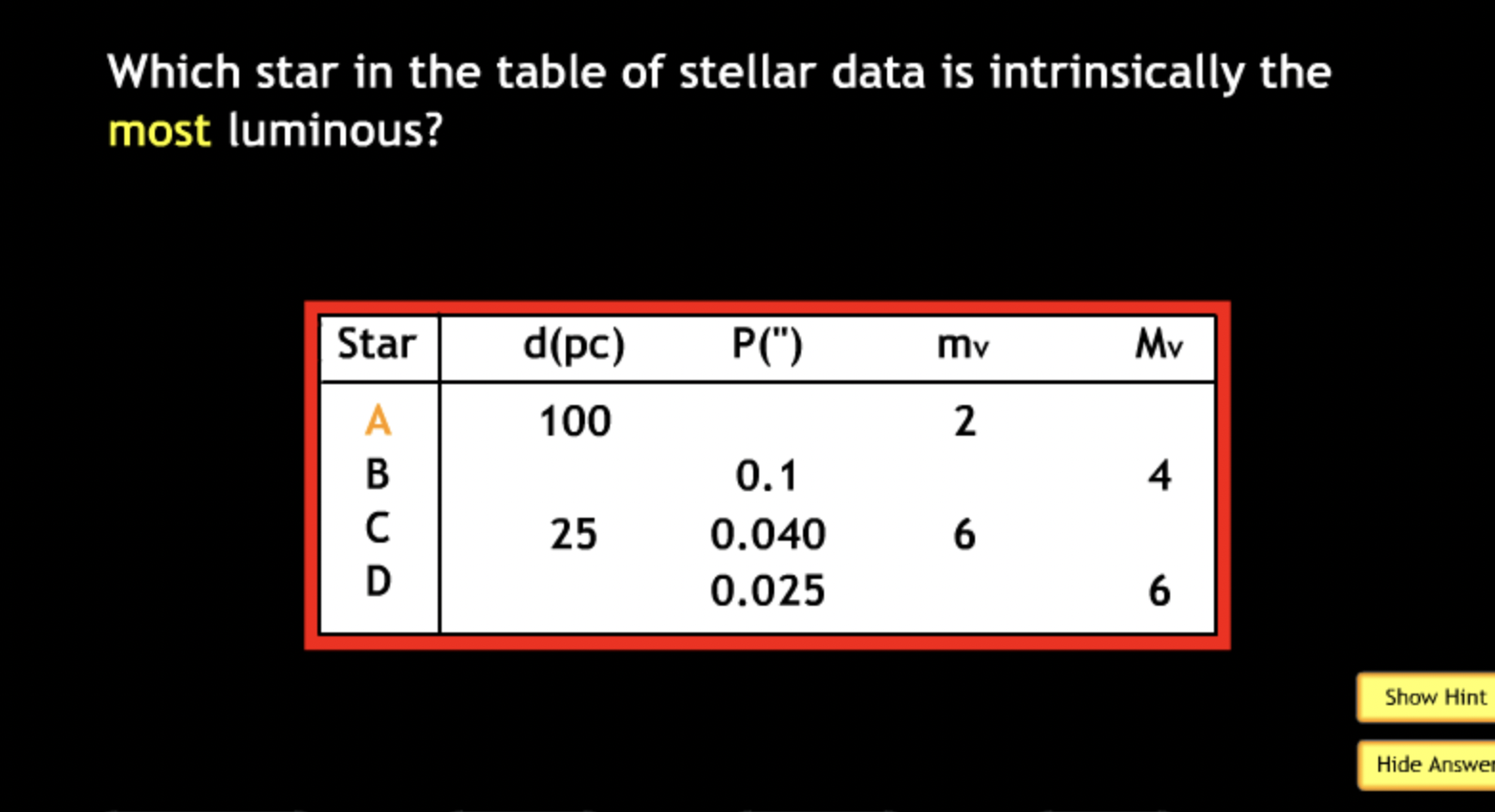
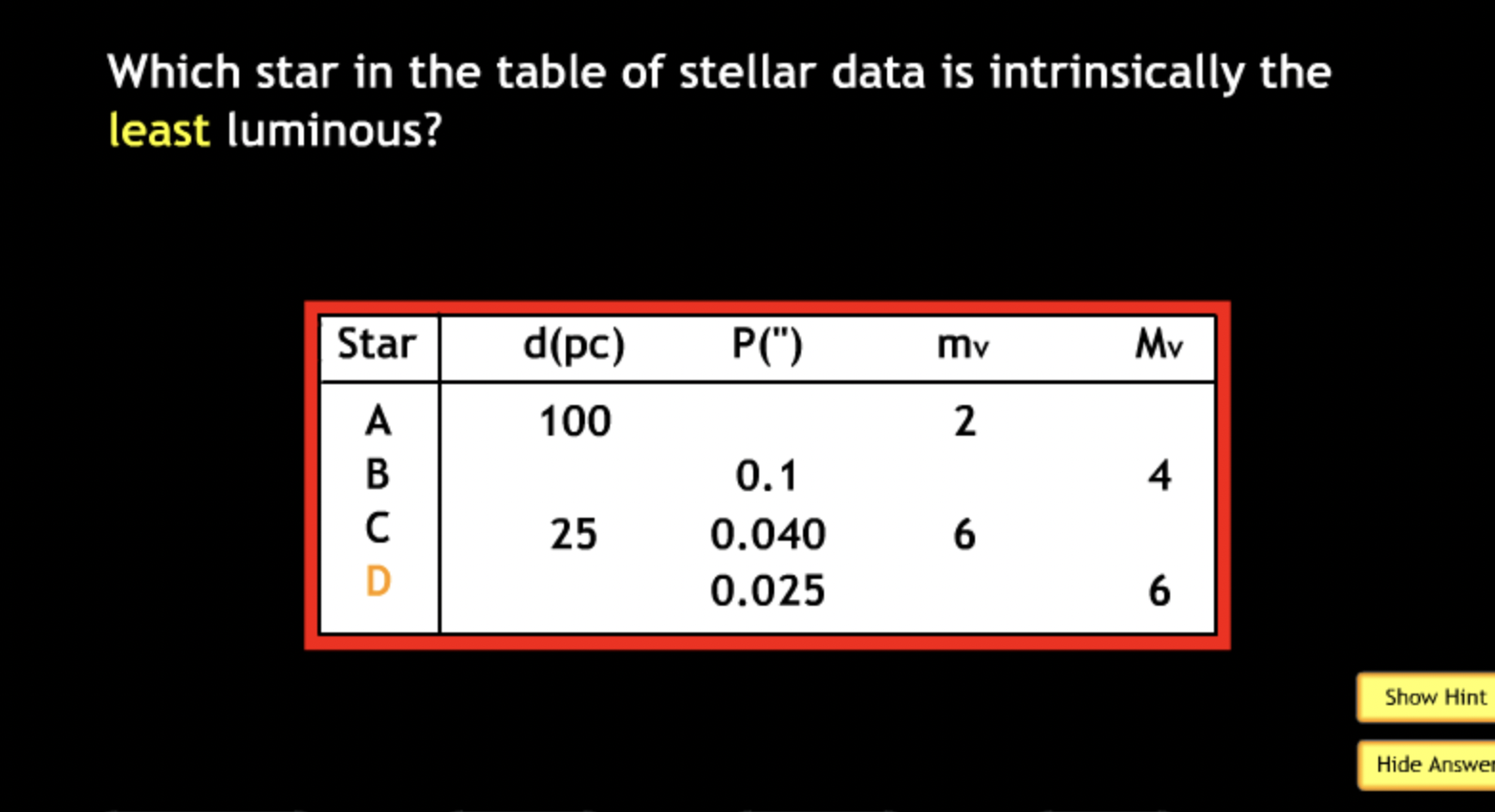
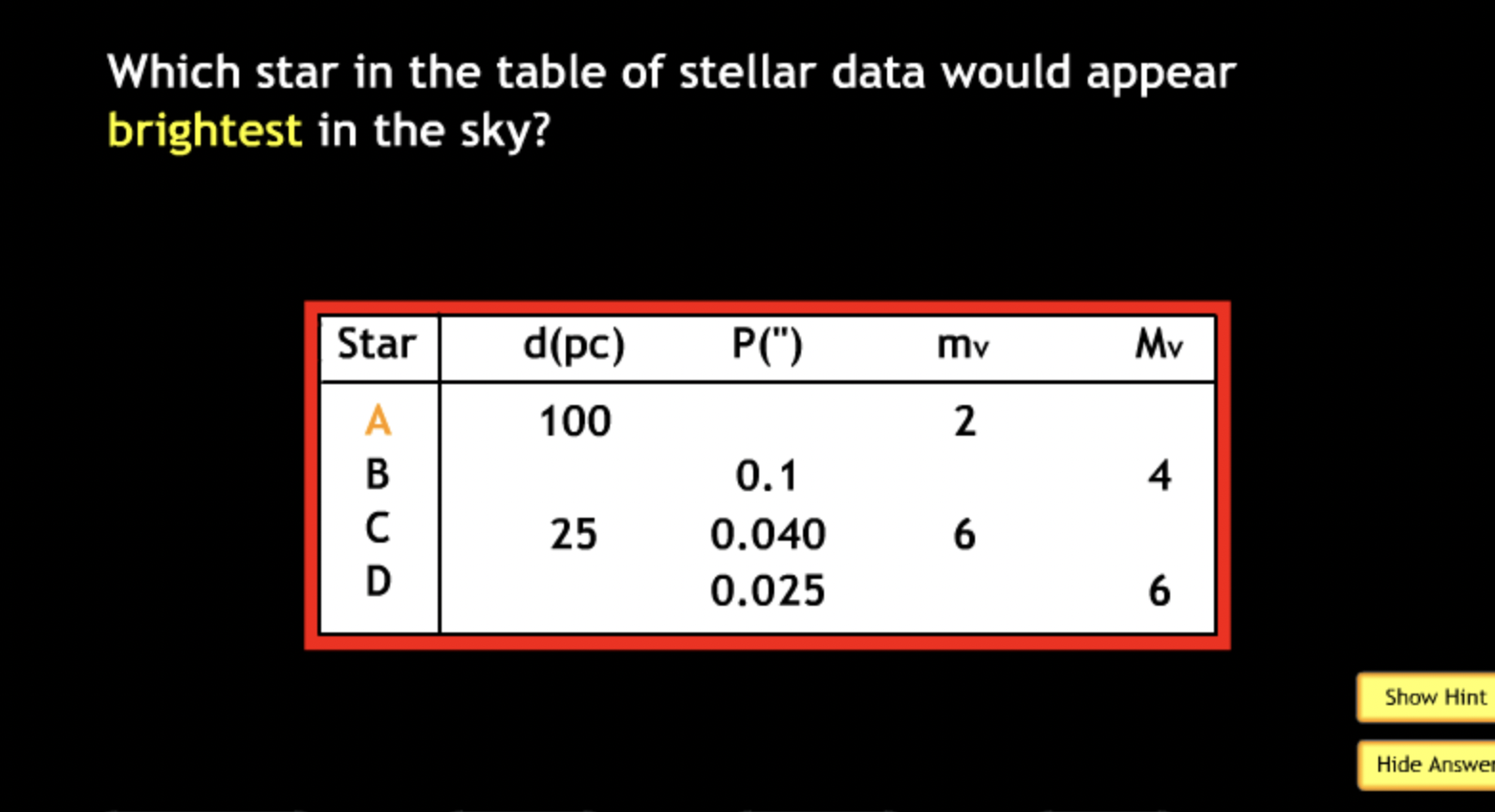
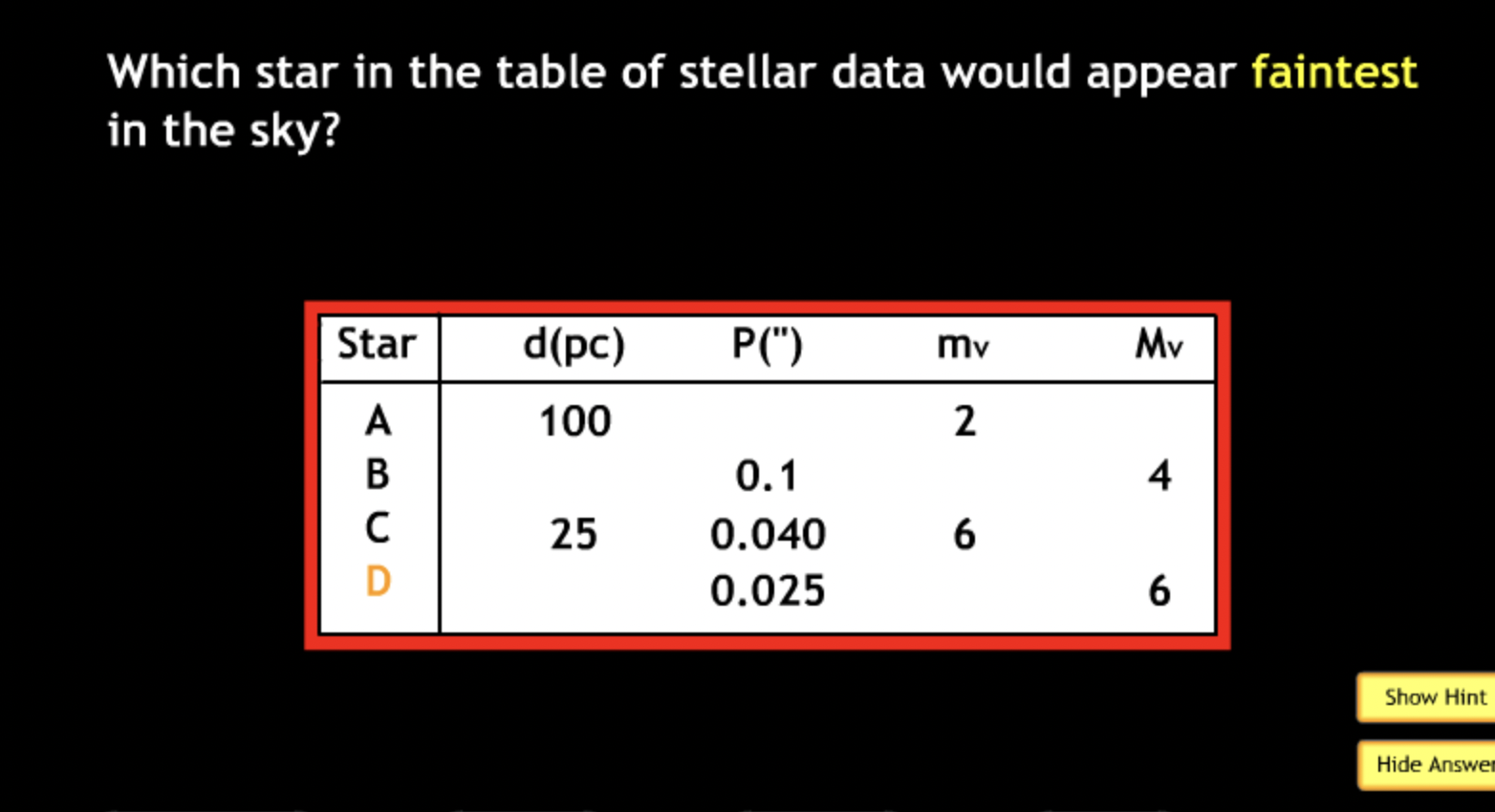
Which of the following sequence of stellear properties (luminosity L, mass M, radius R, and temperature T) are in increasing order of the ranges of possible values? T, M, R, L


The center of mass in a binary star system is… on a line connecting the two stars. closer to the more massive star.
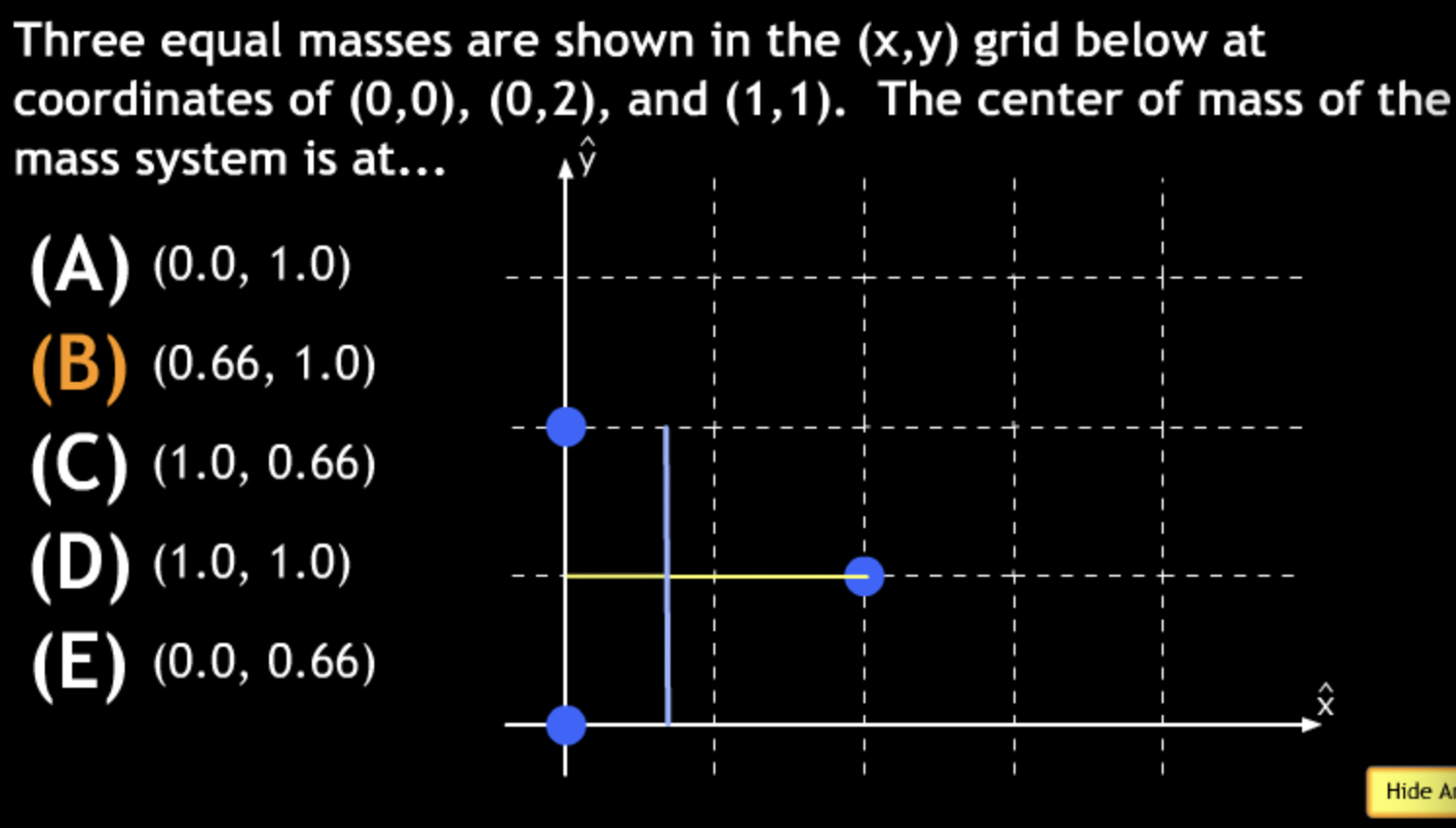
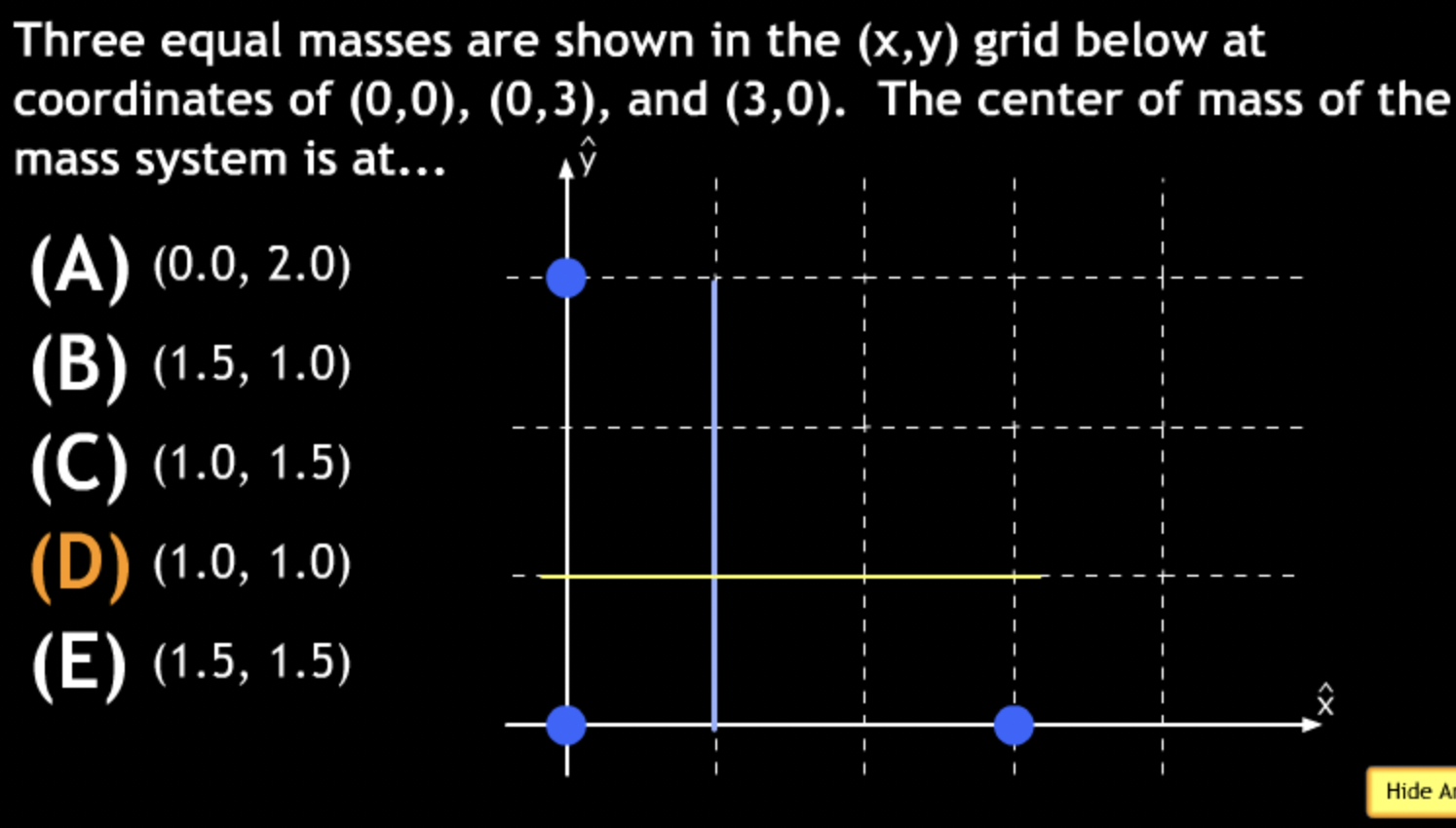
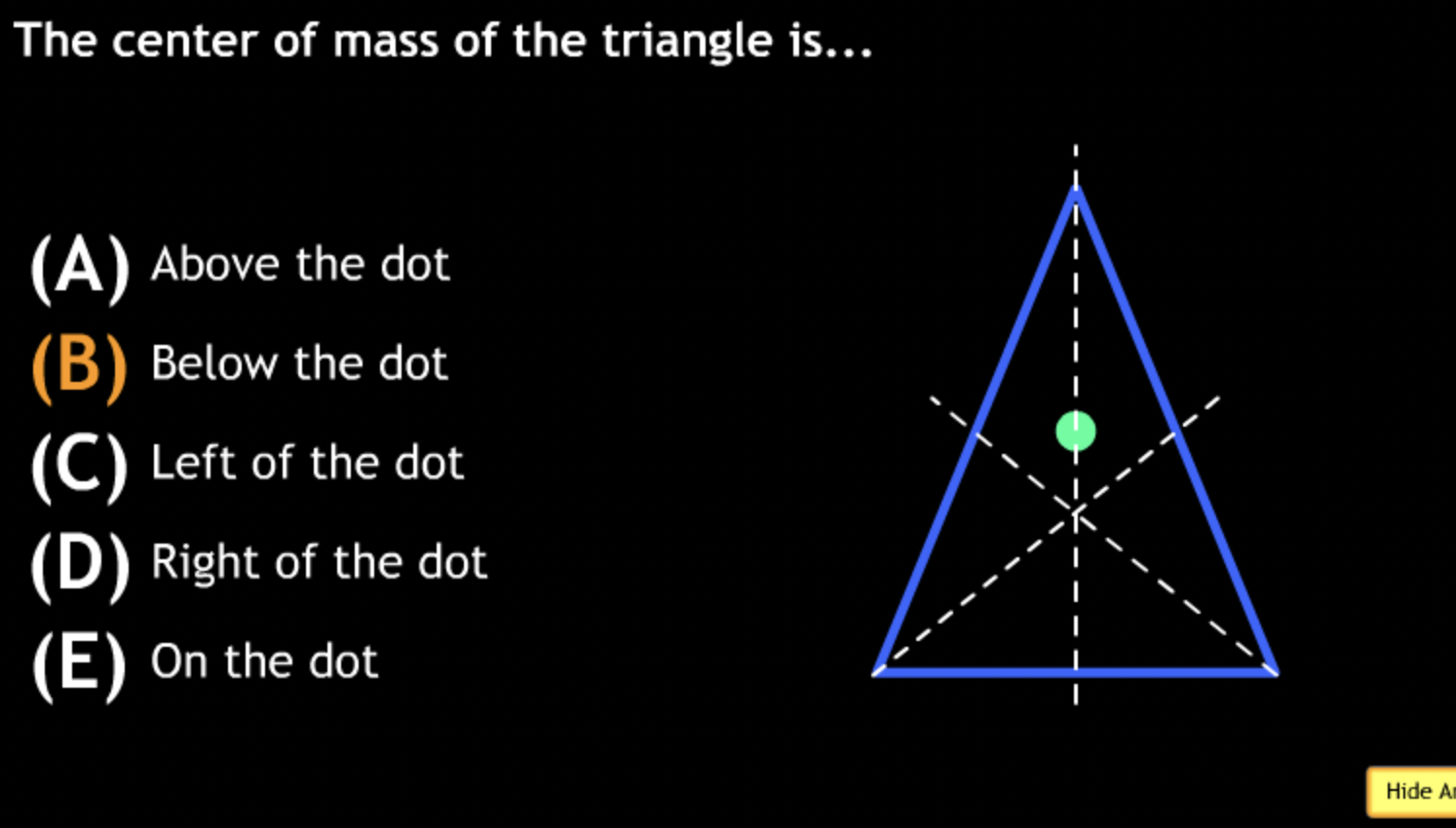
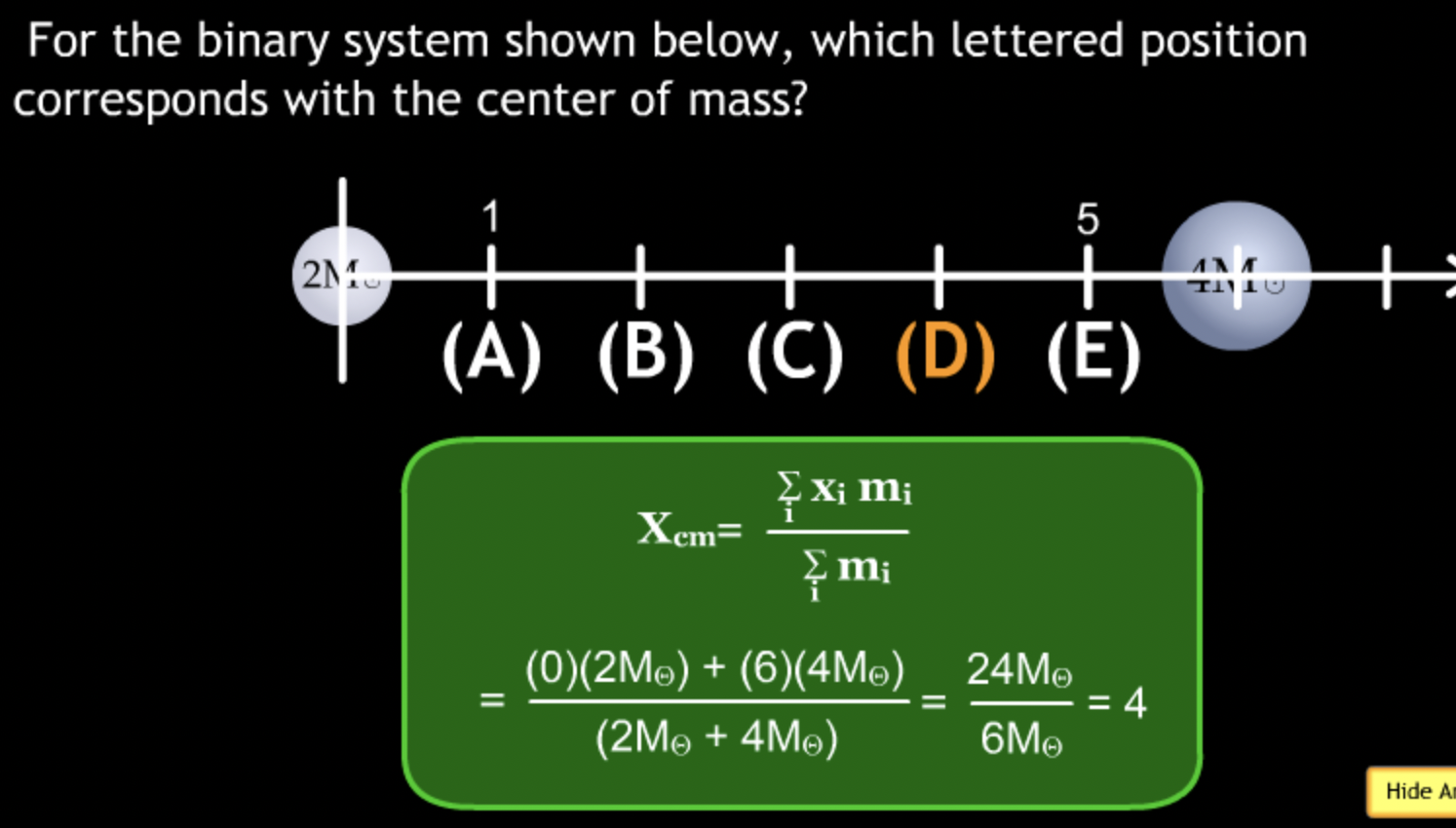
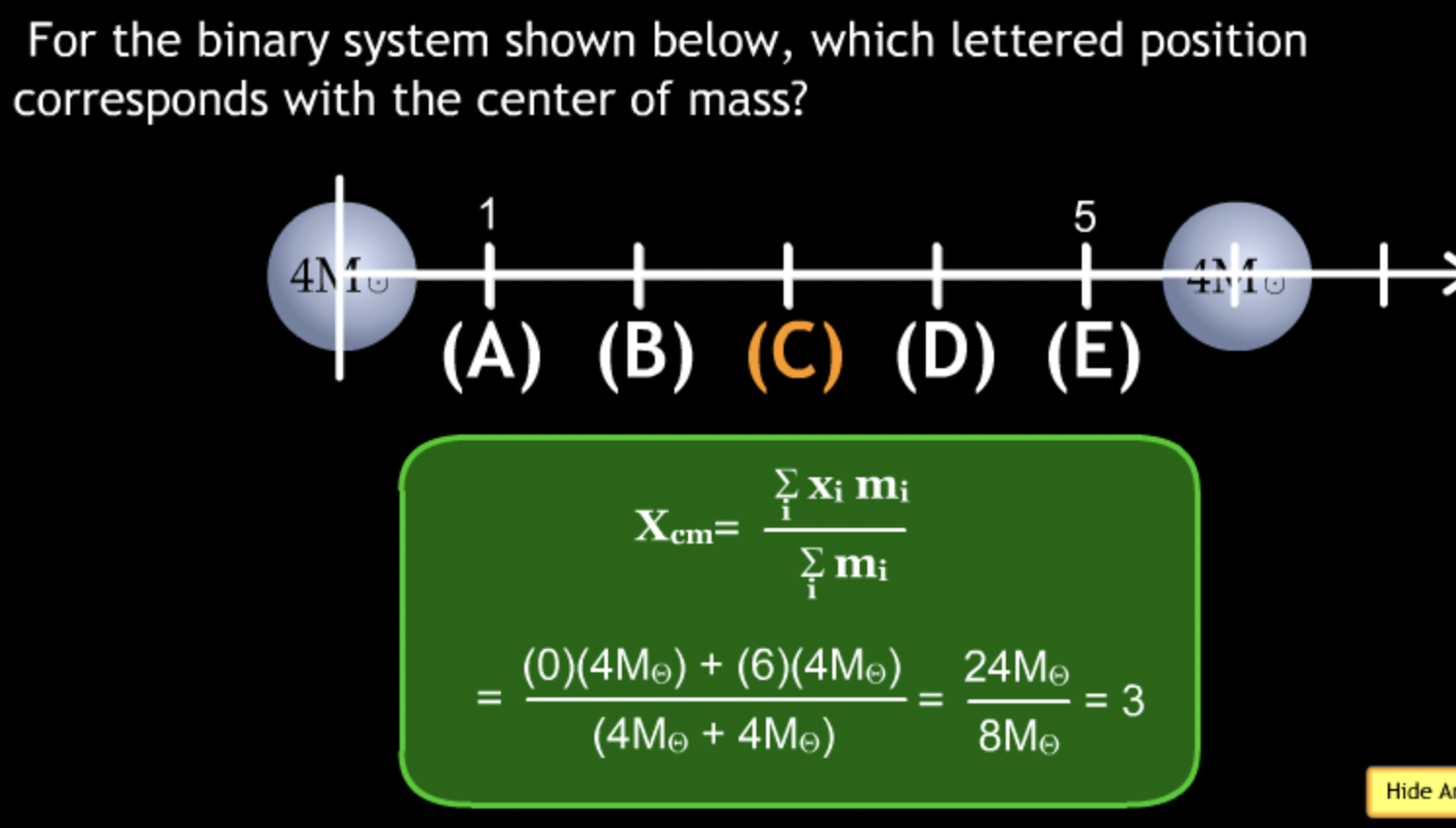
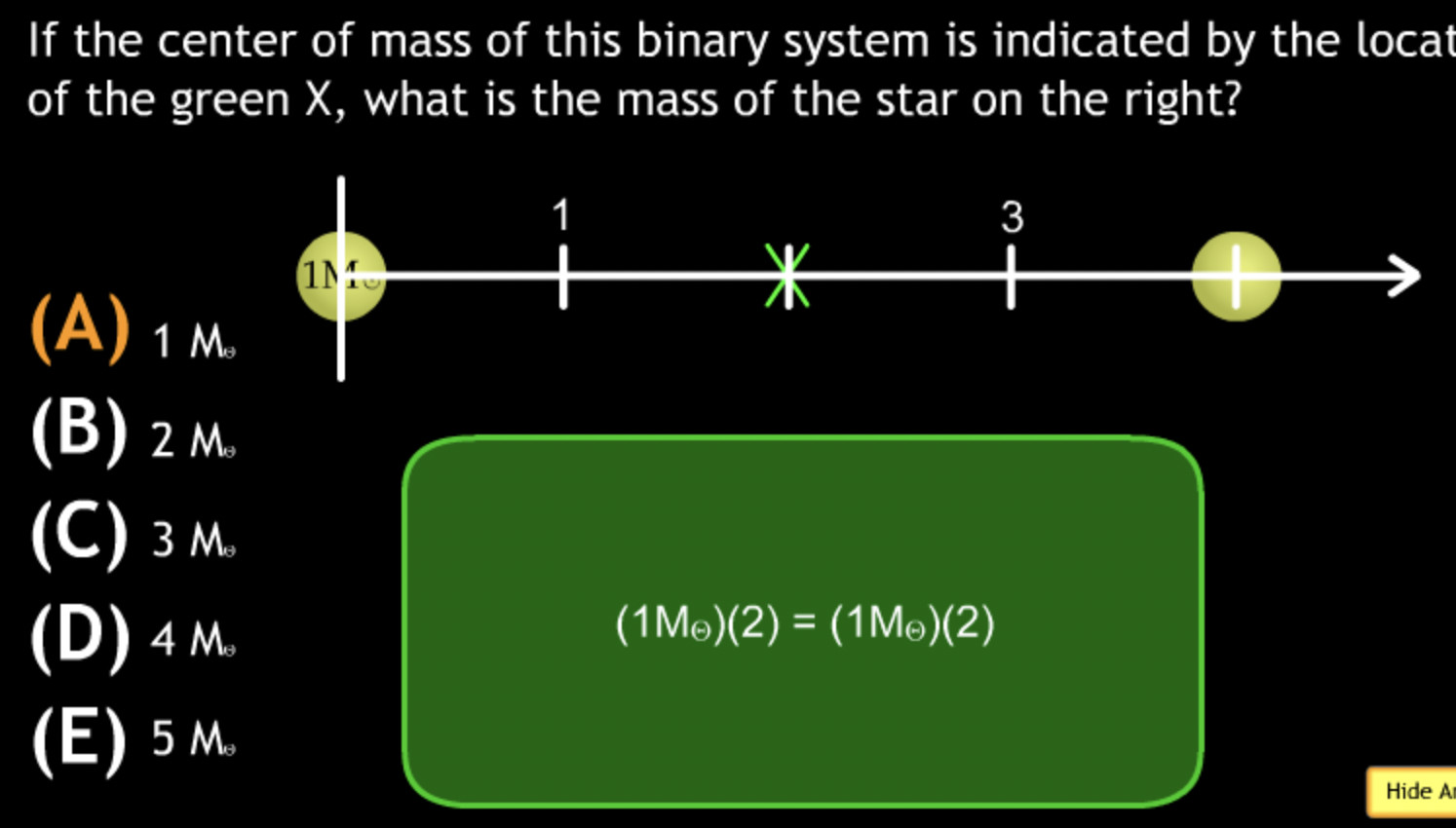
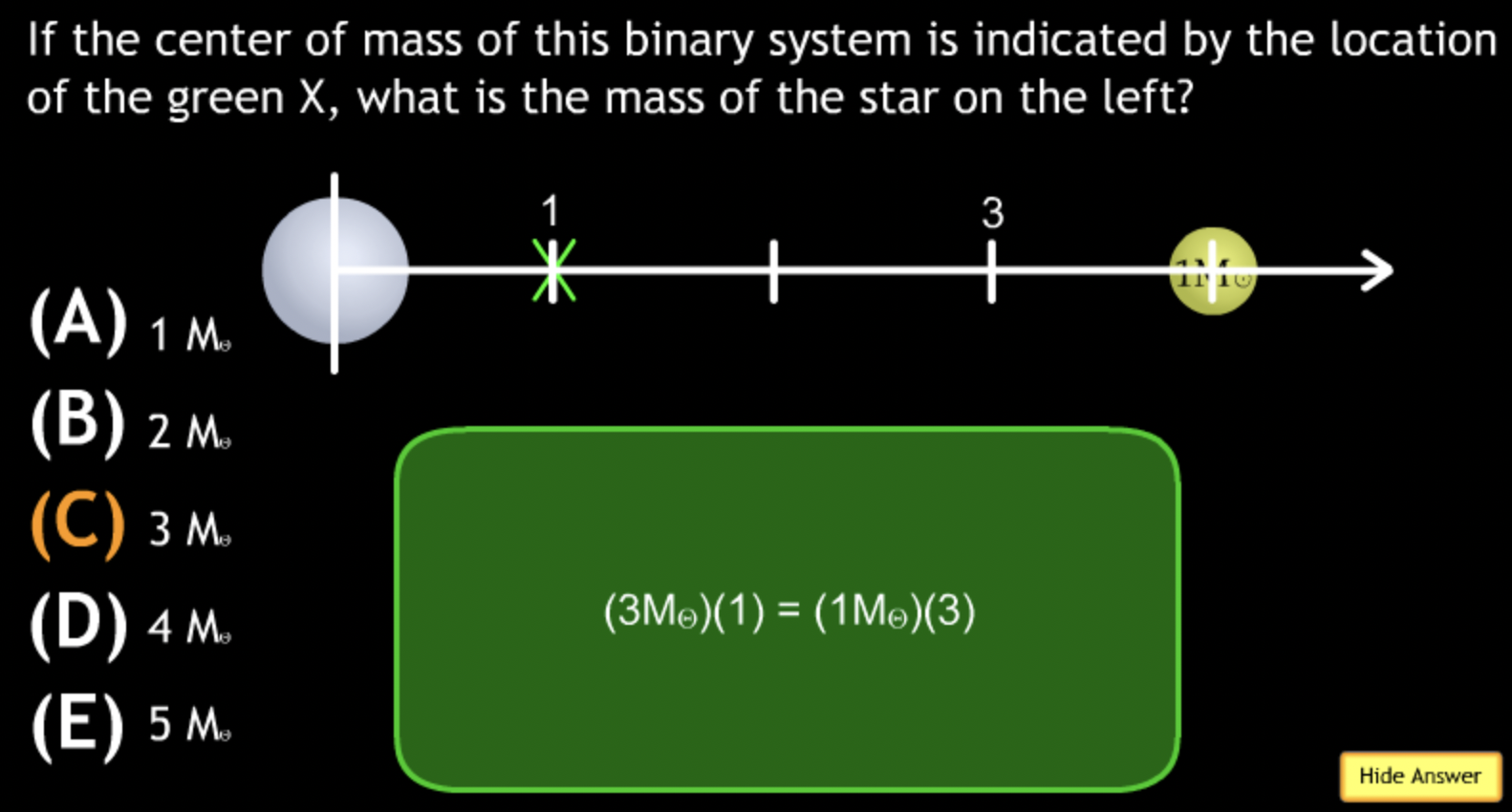
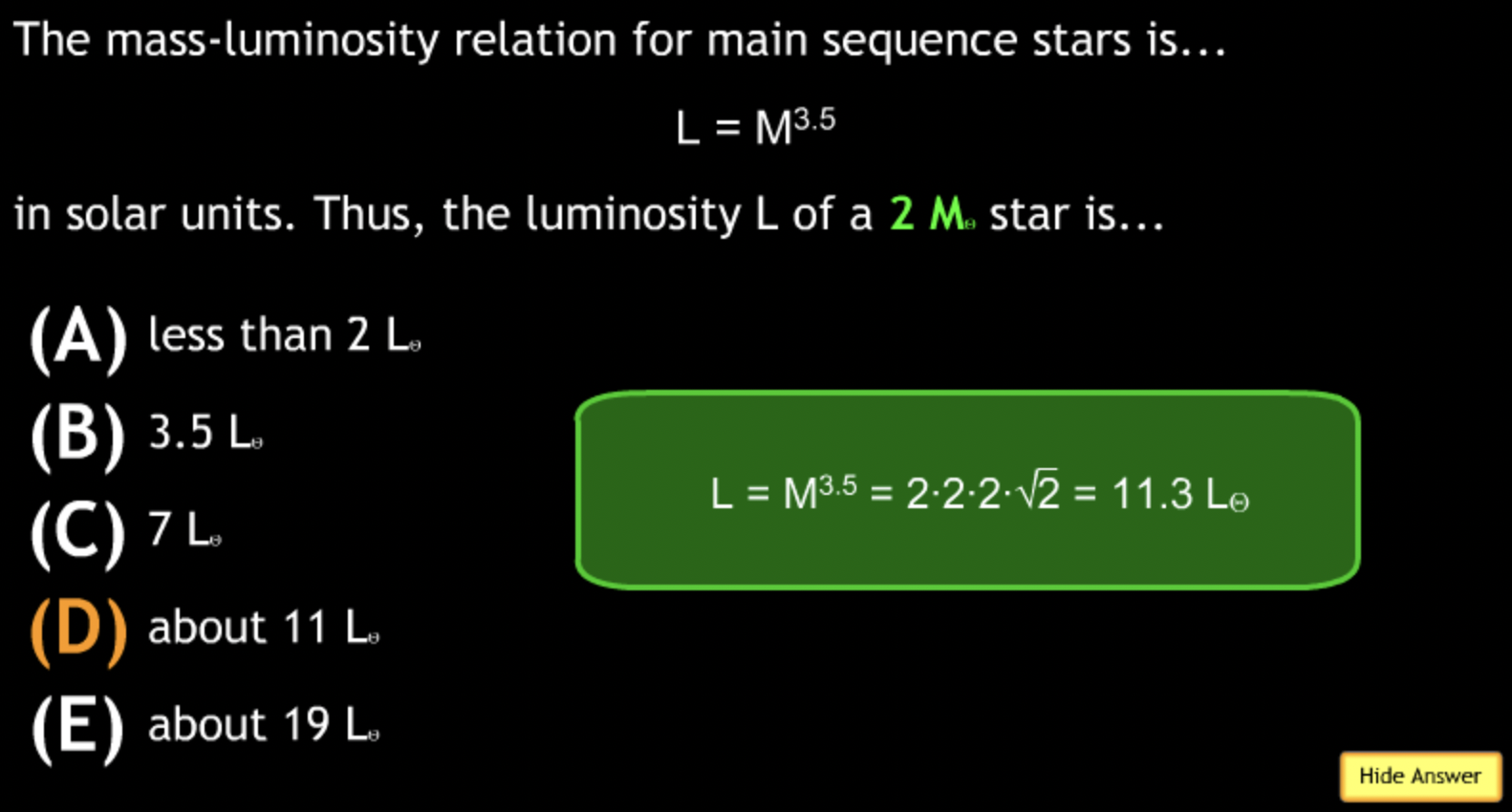
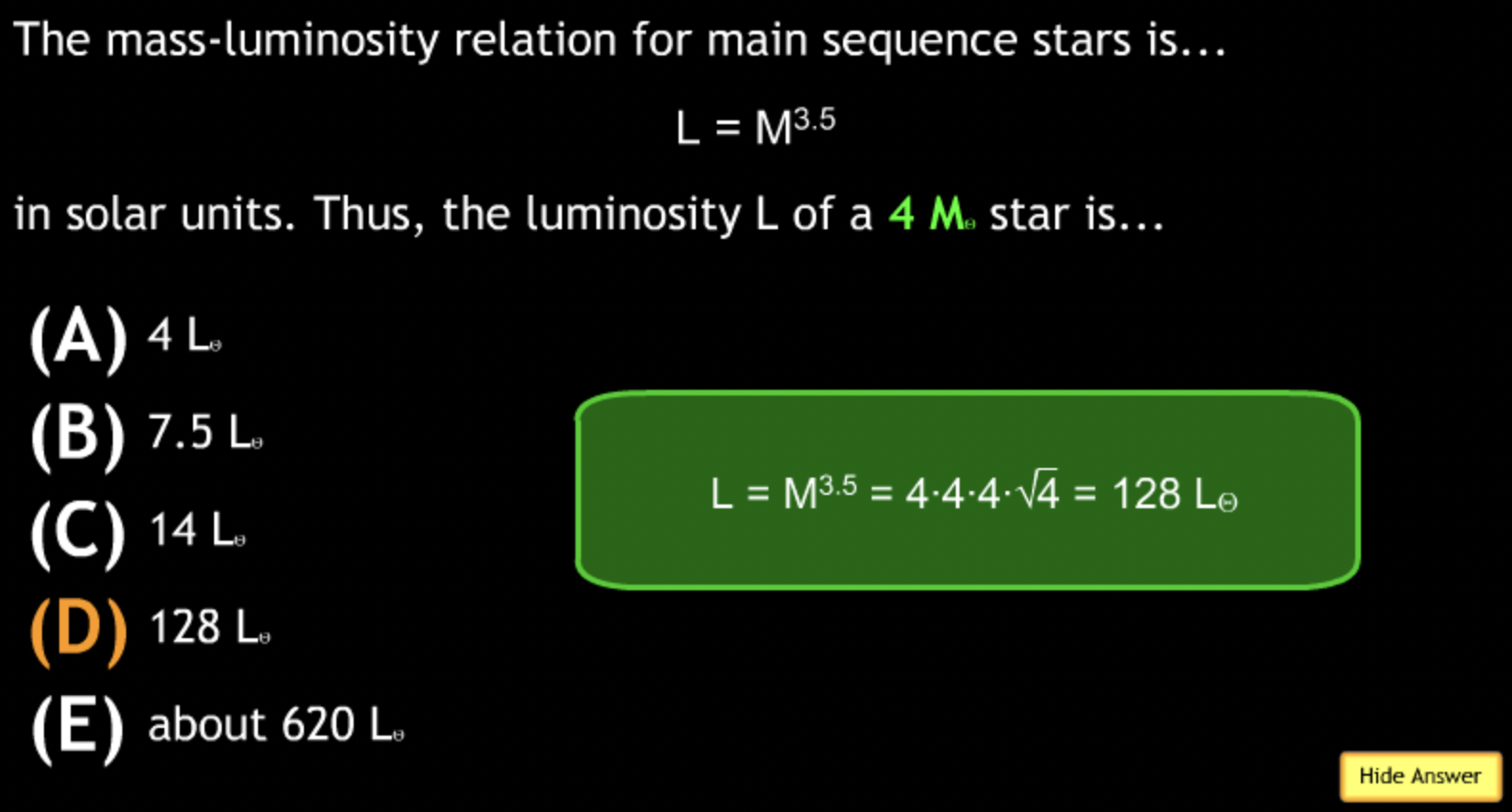
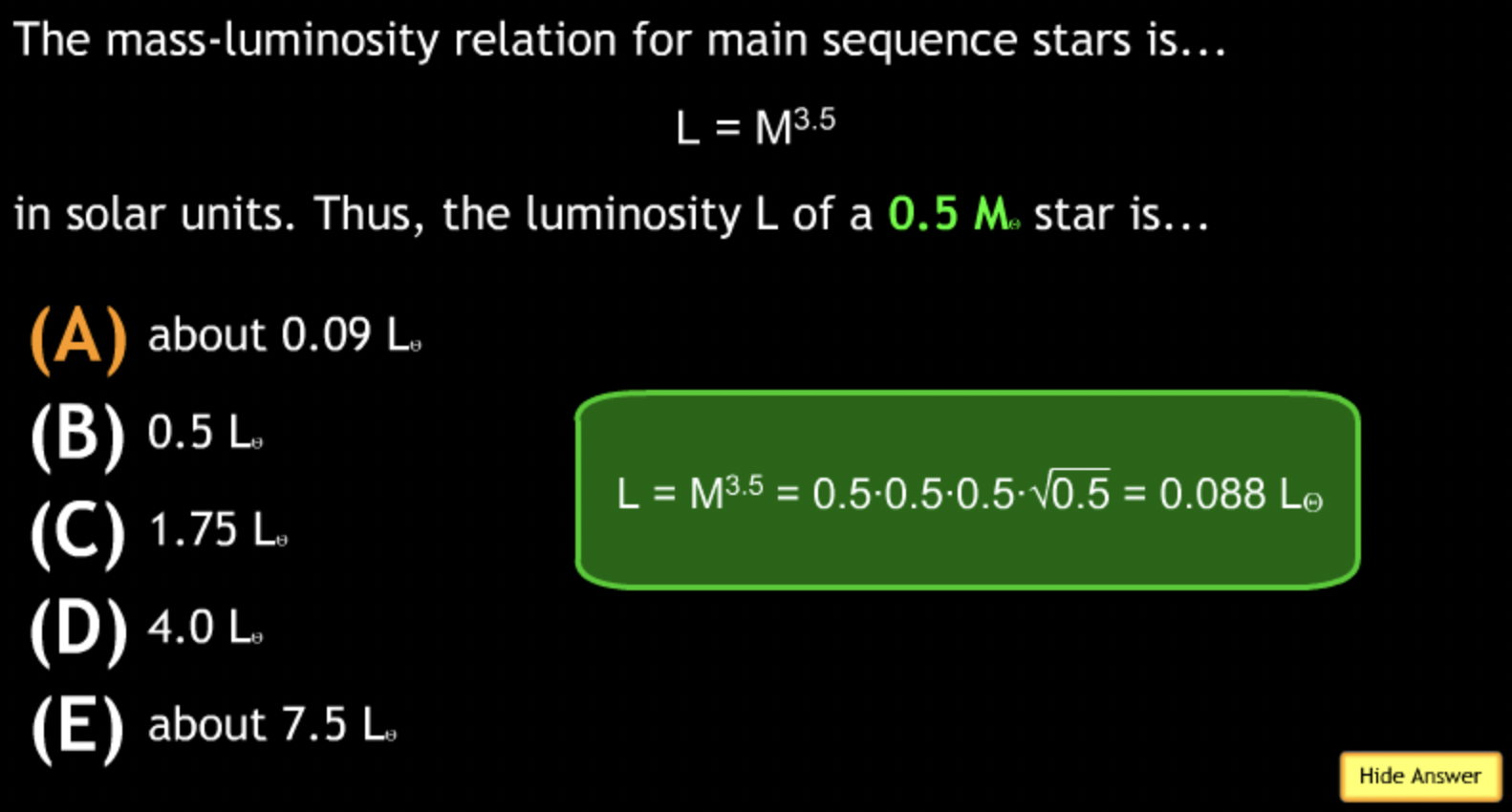
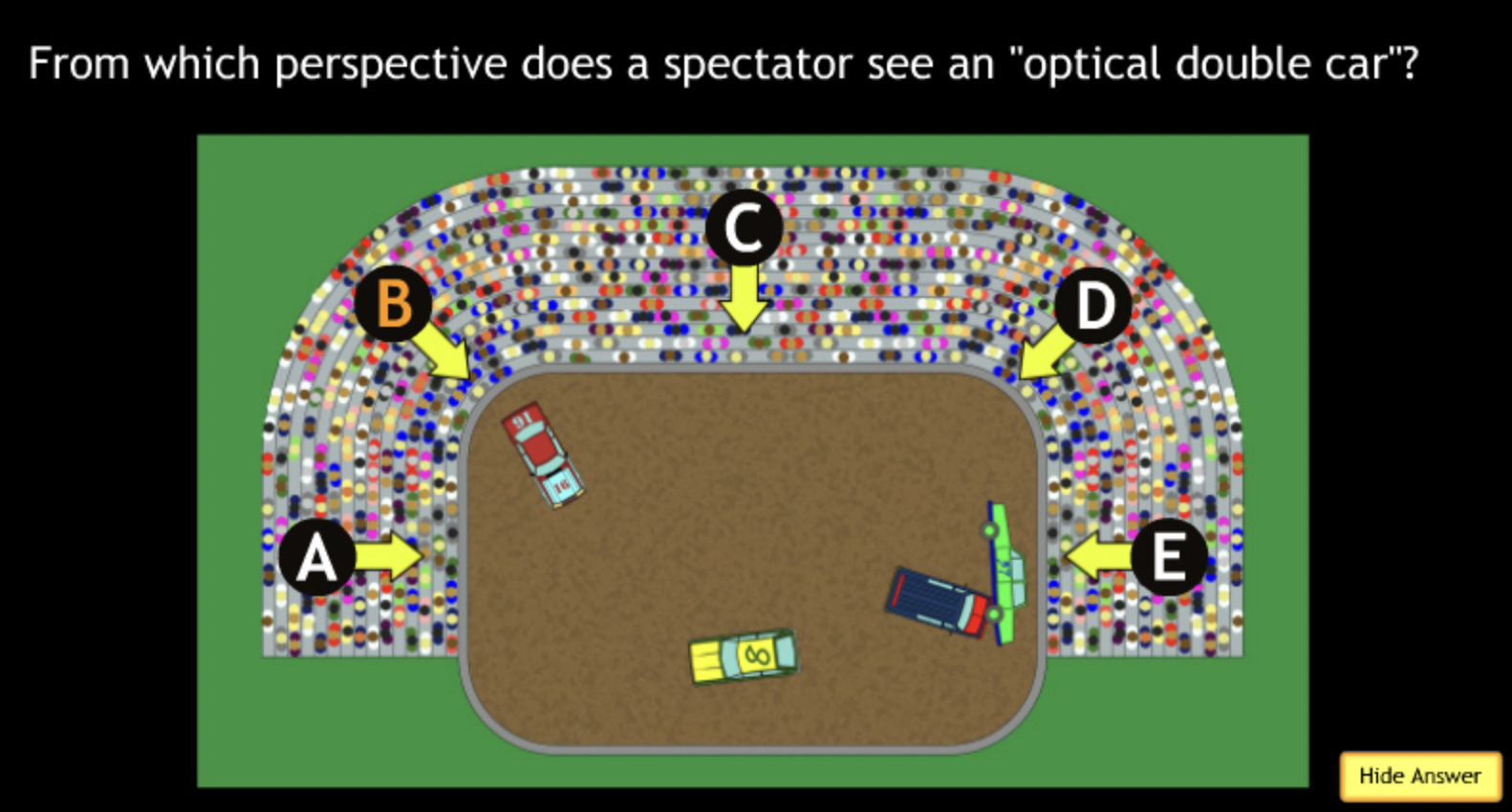
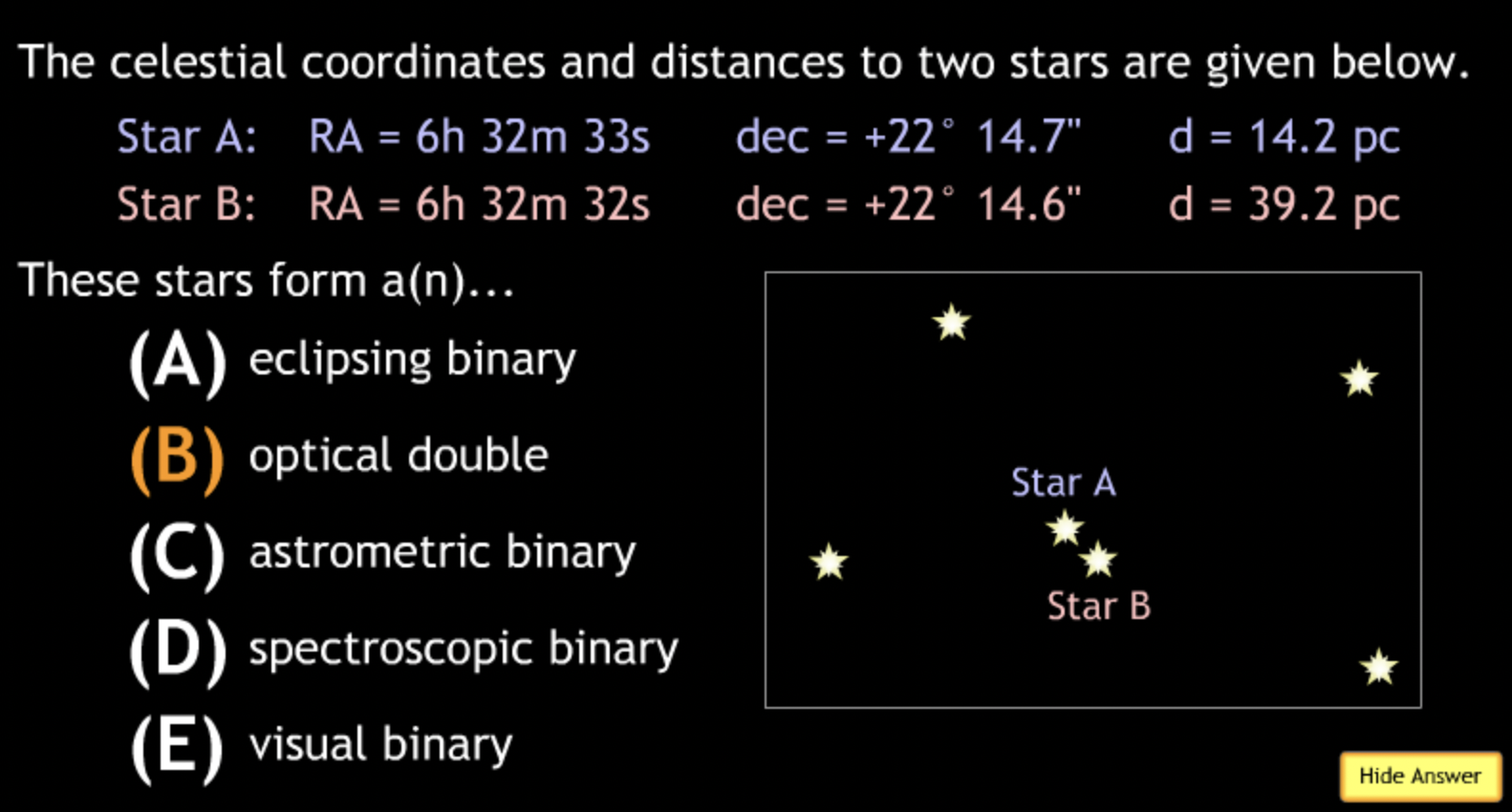
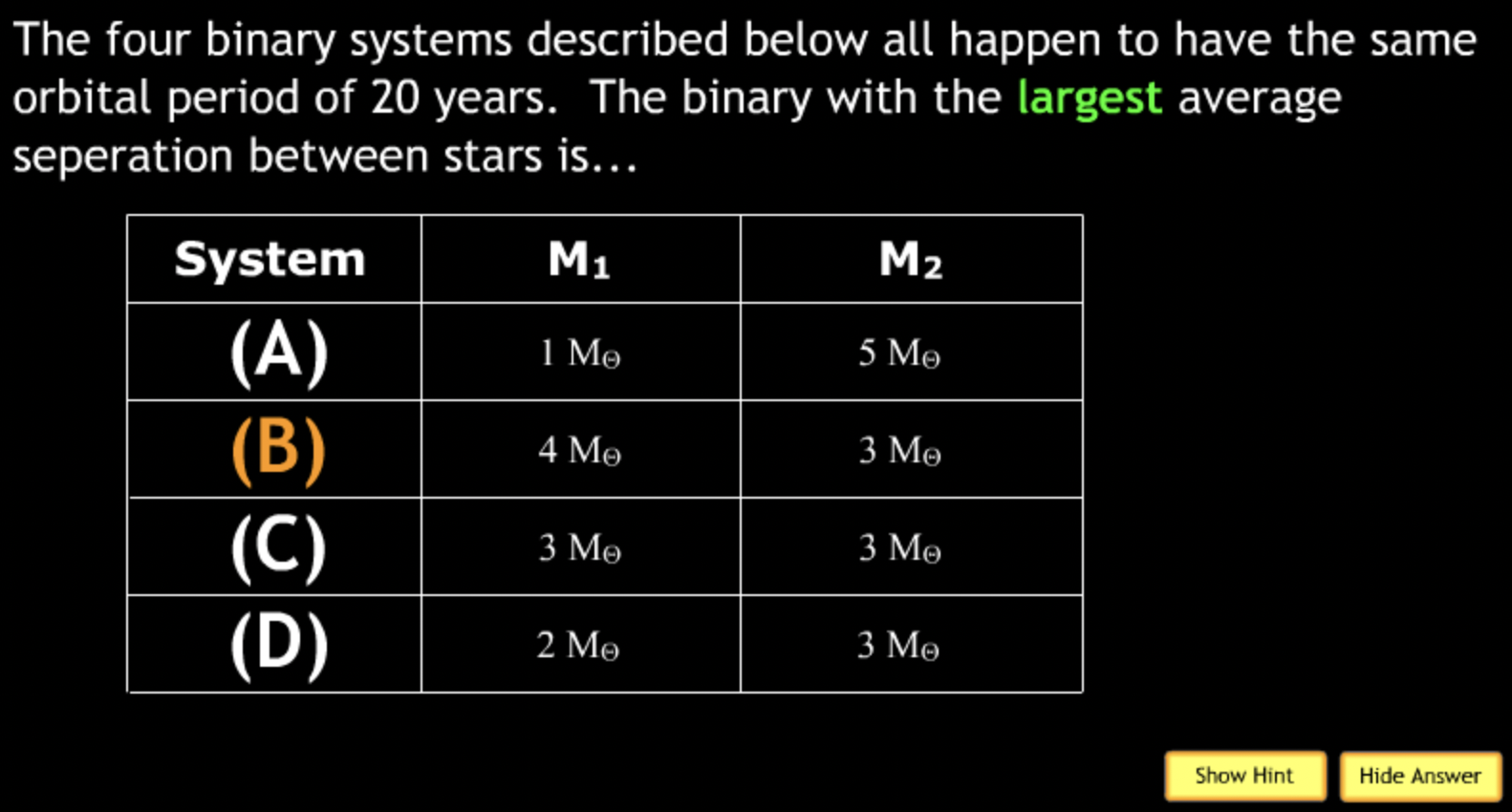
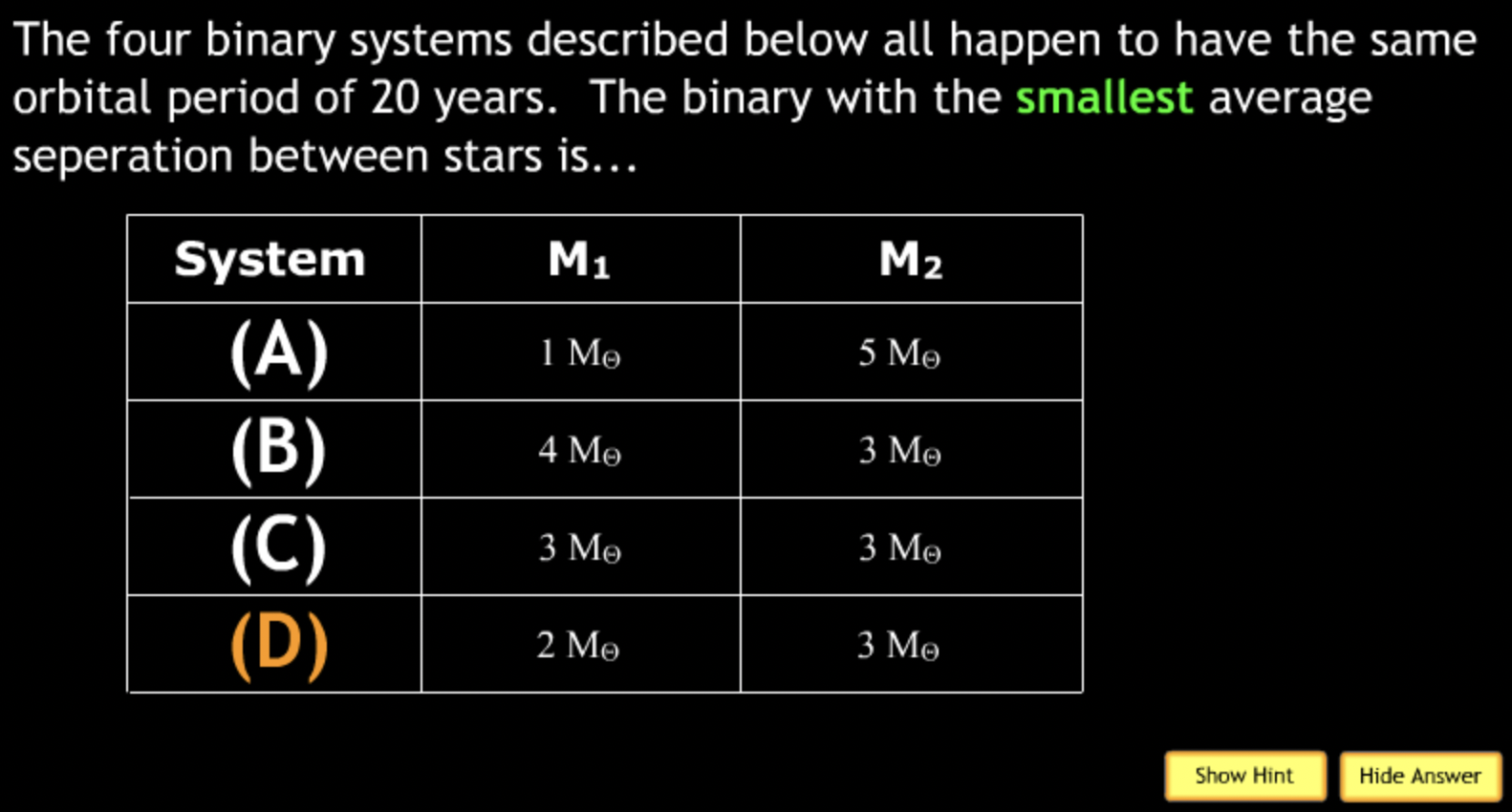
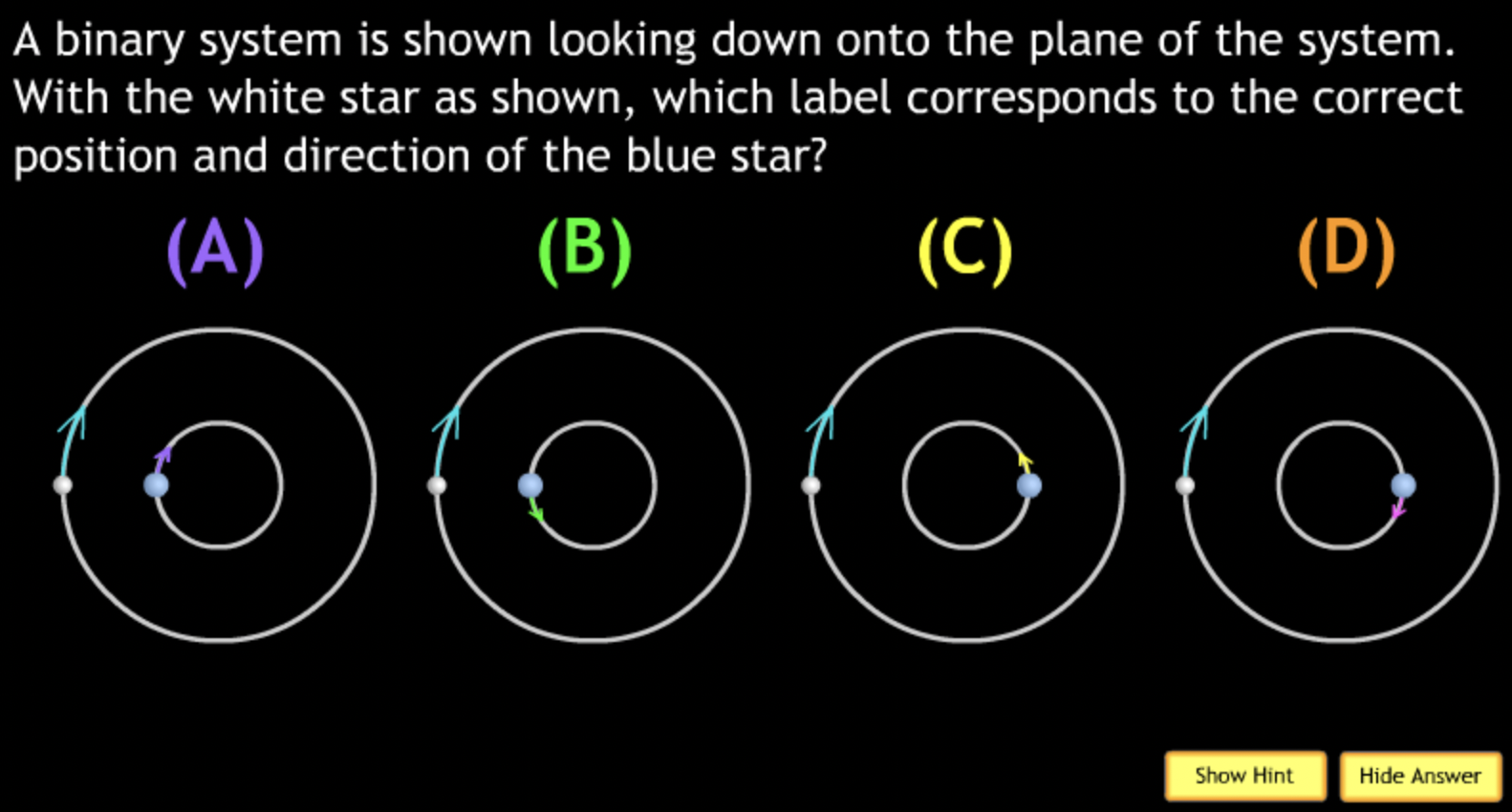
↑D
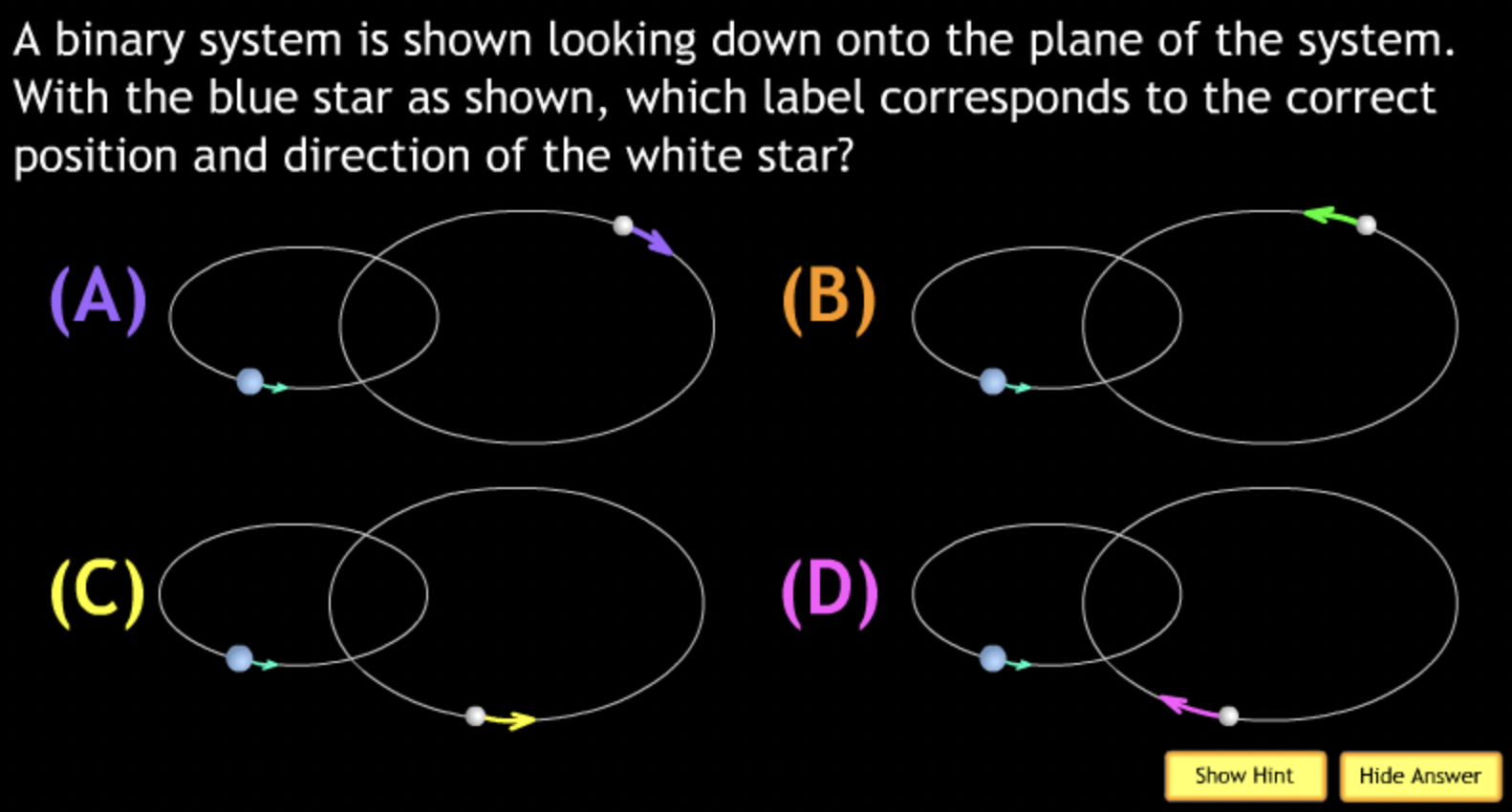
↑B
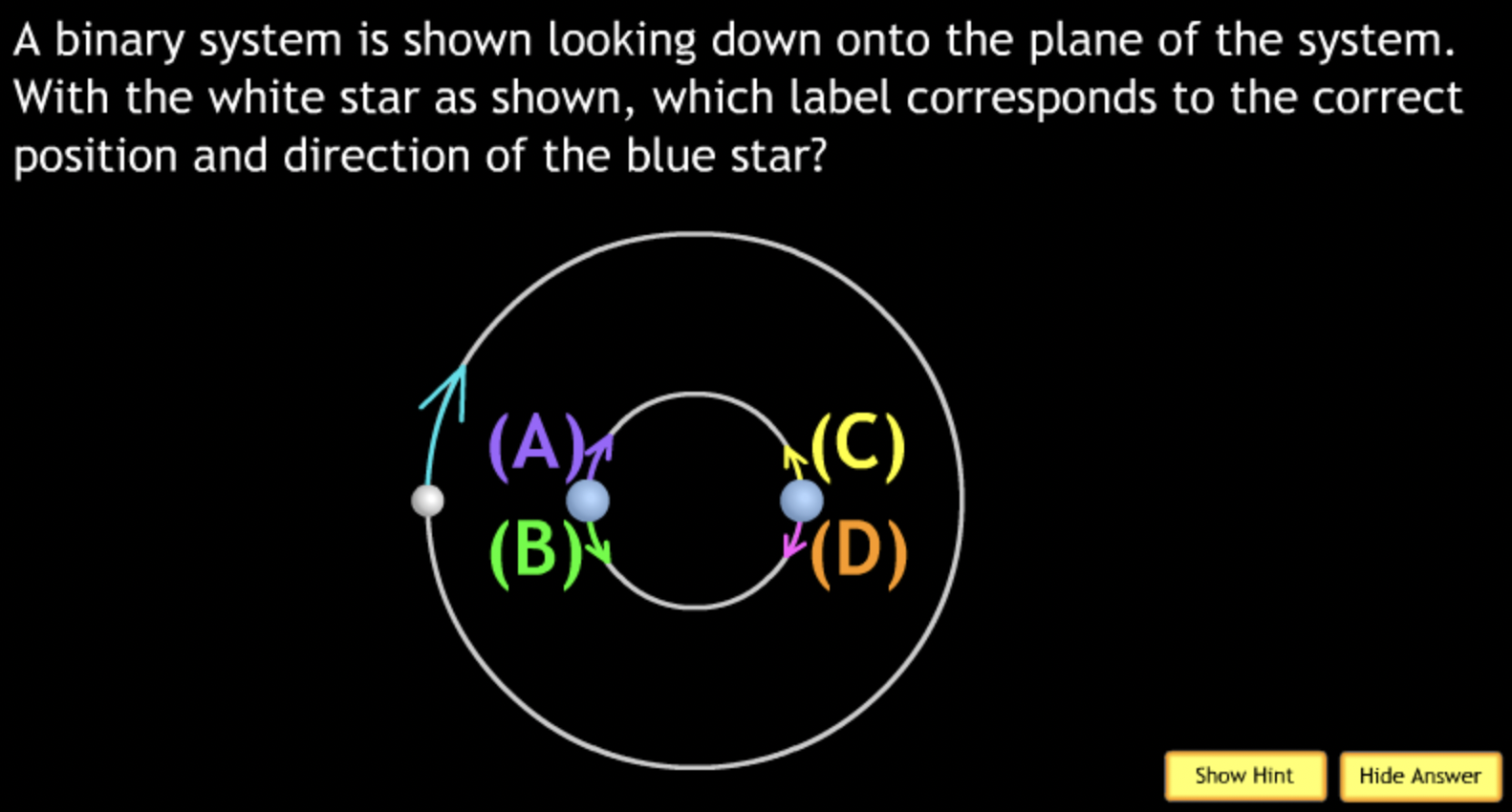
↑D
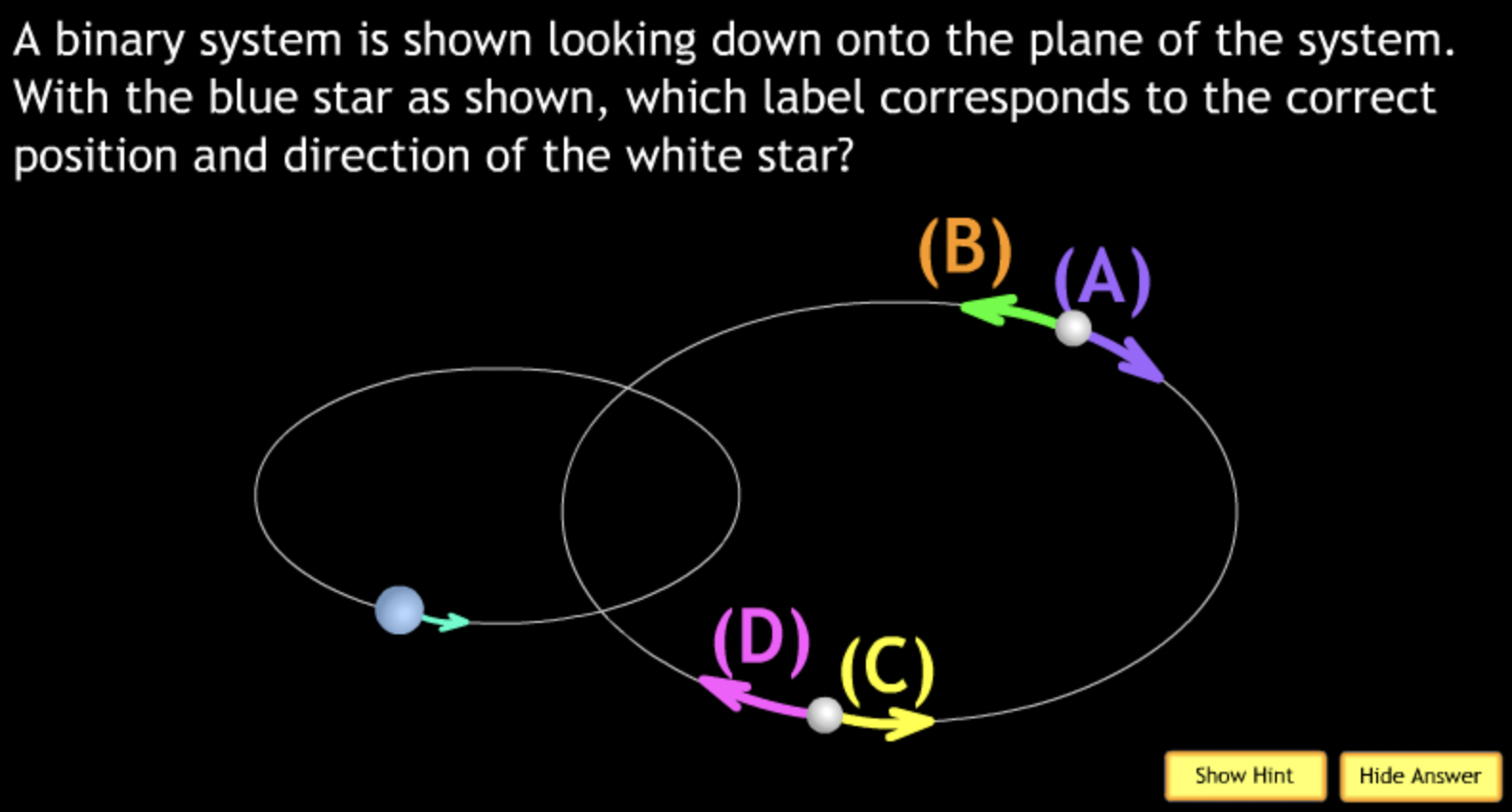
↑B






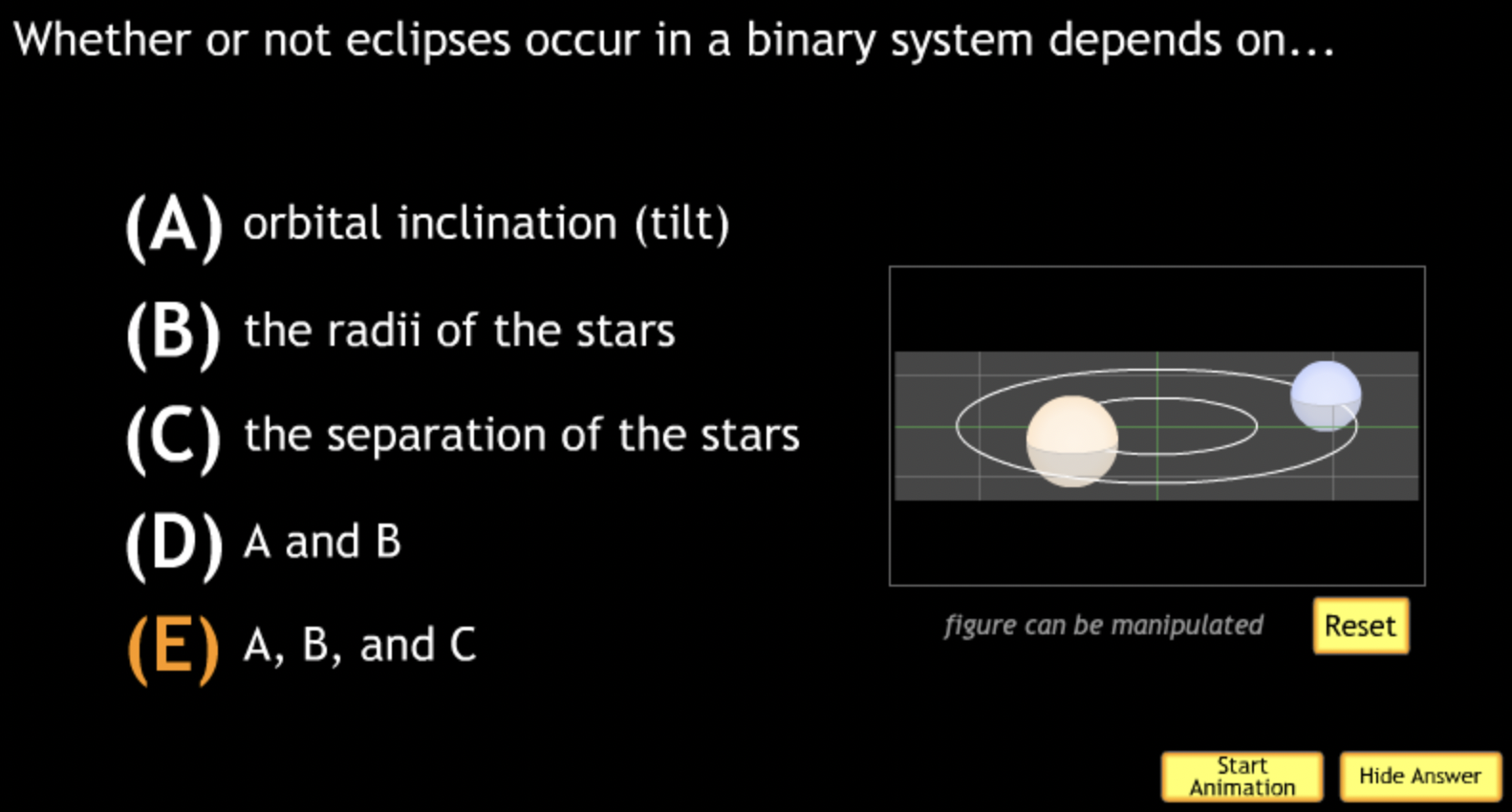
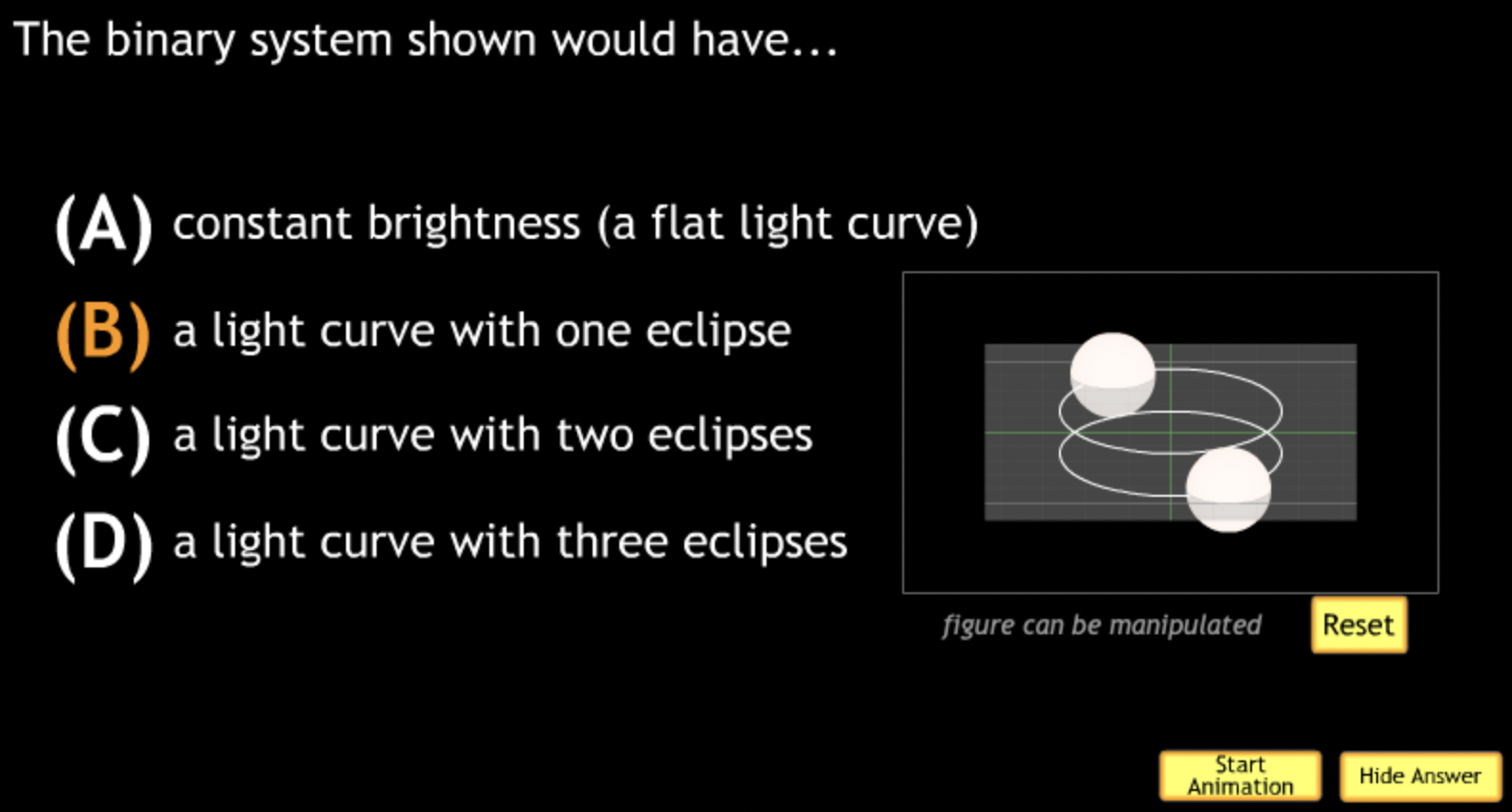
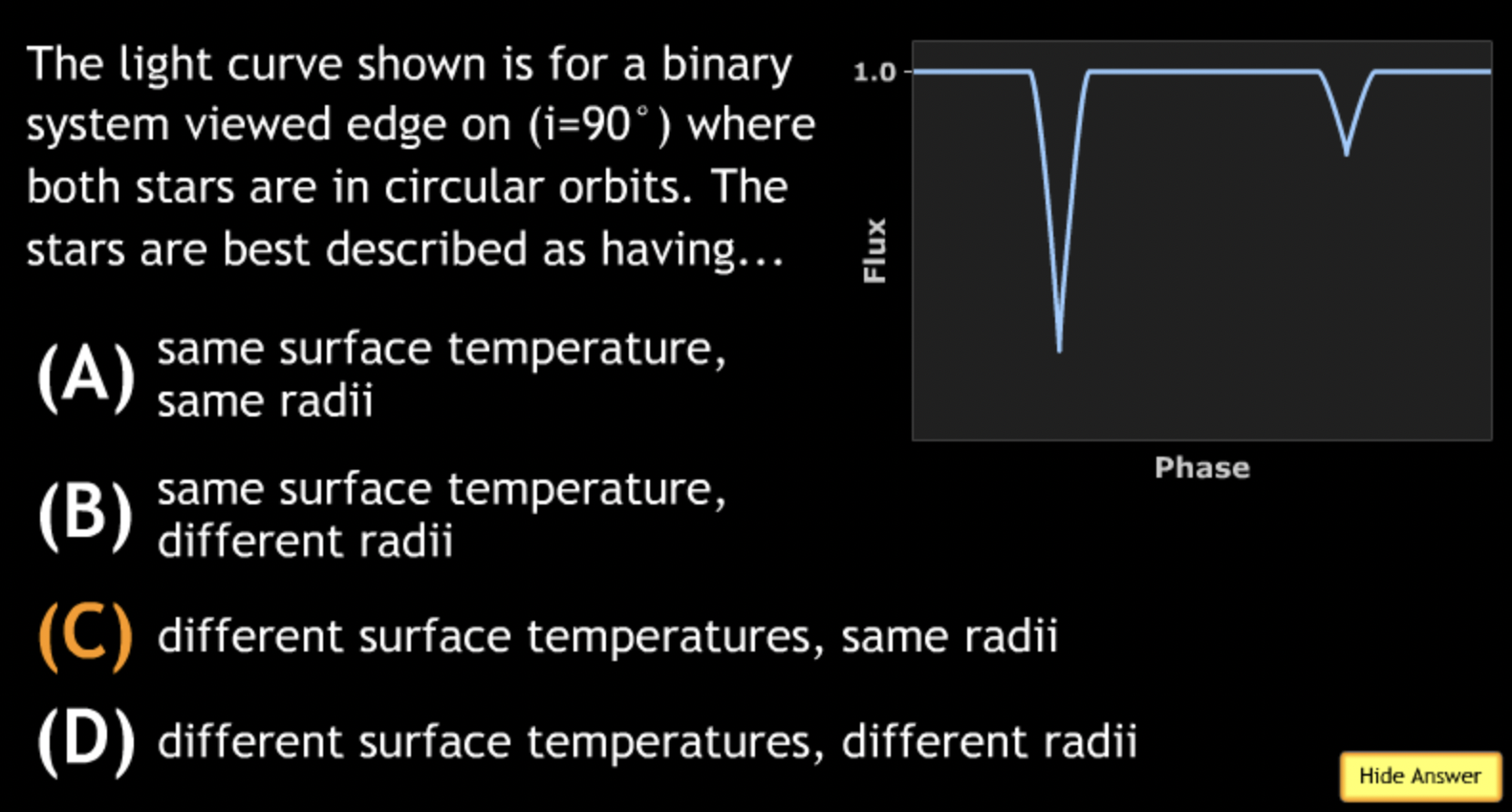
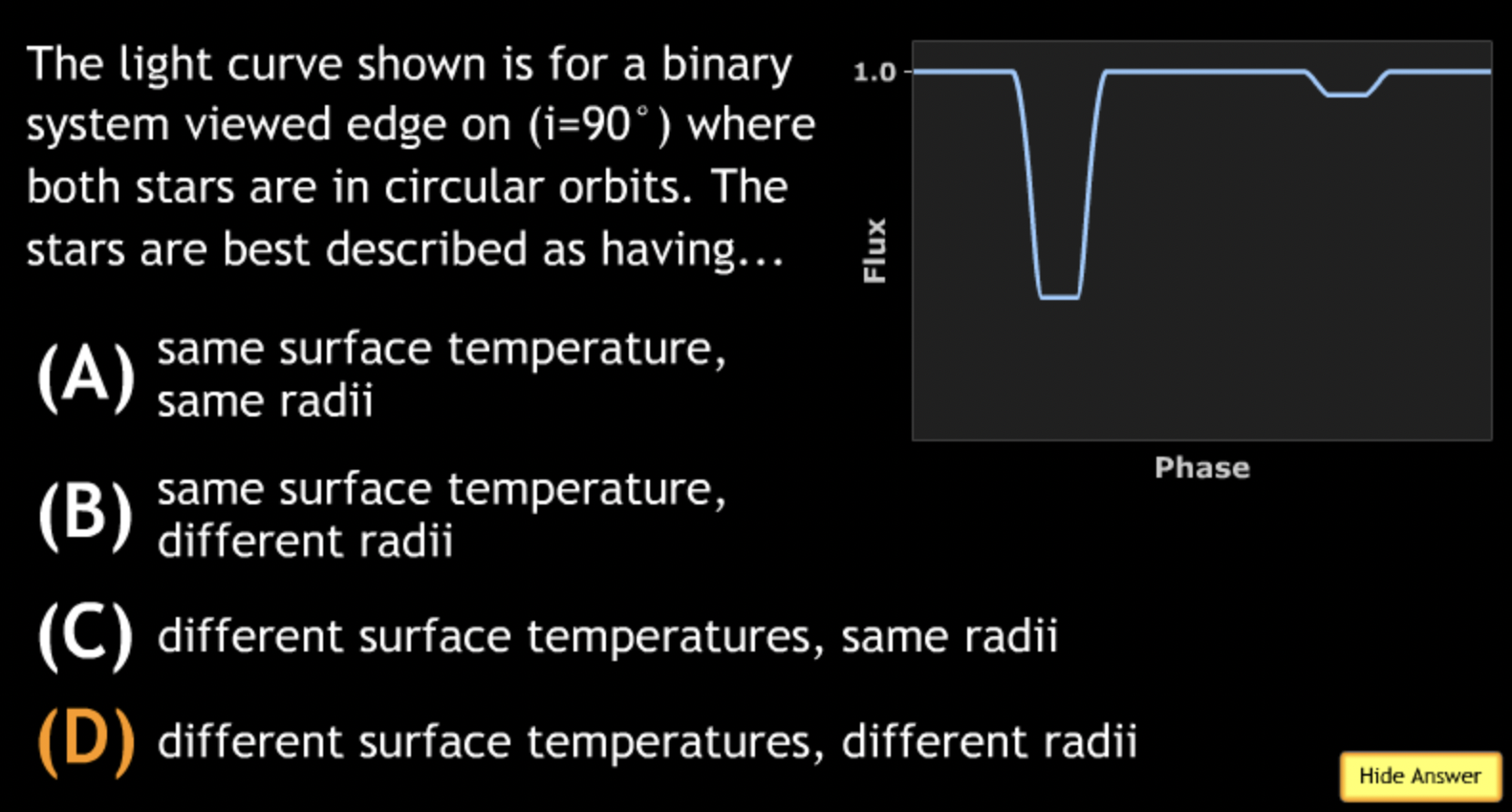
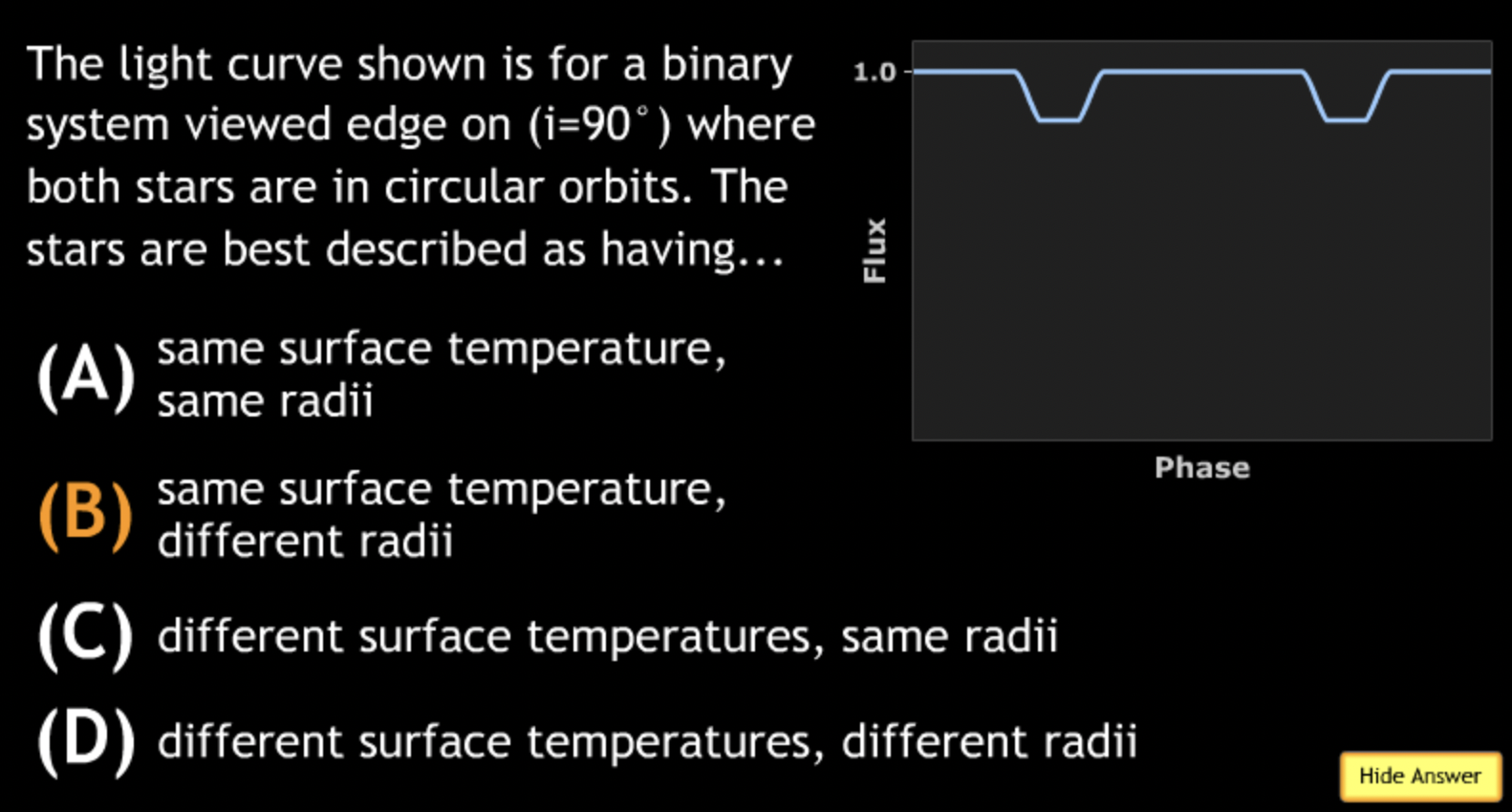
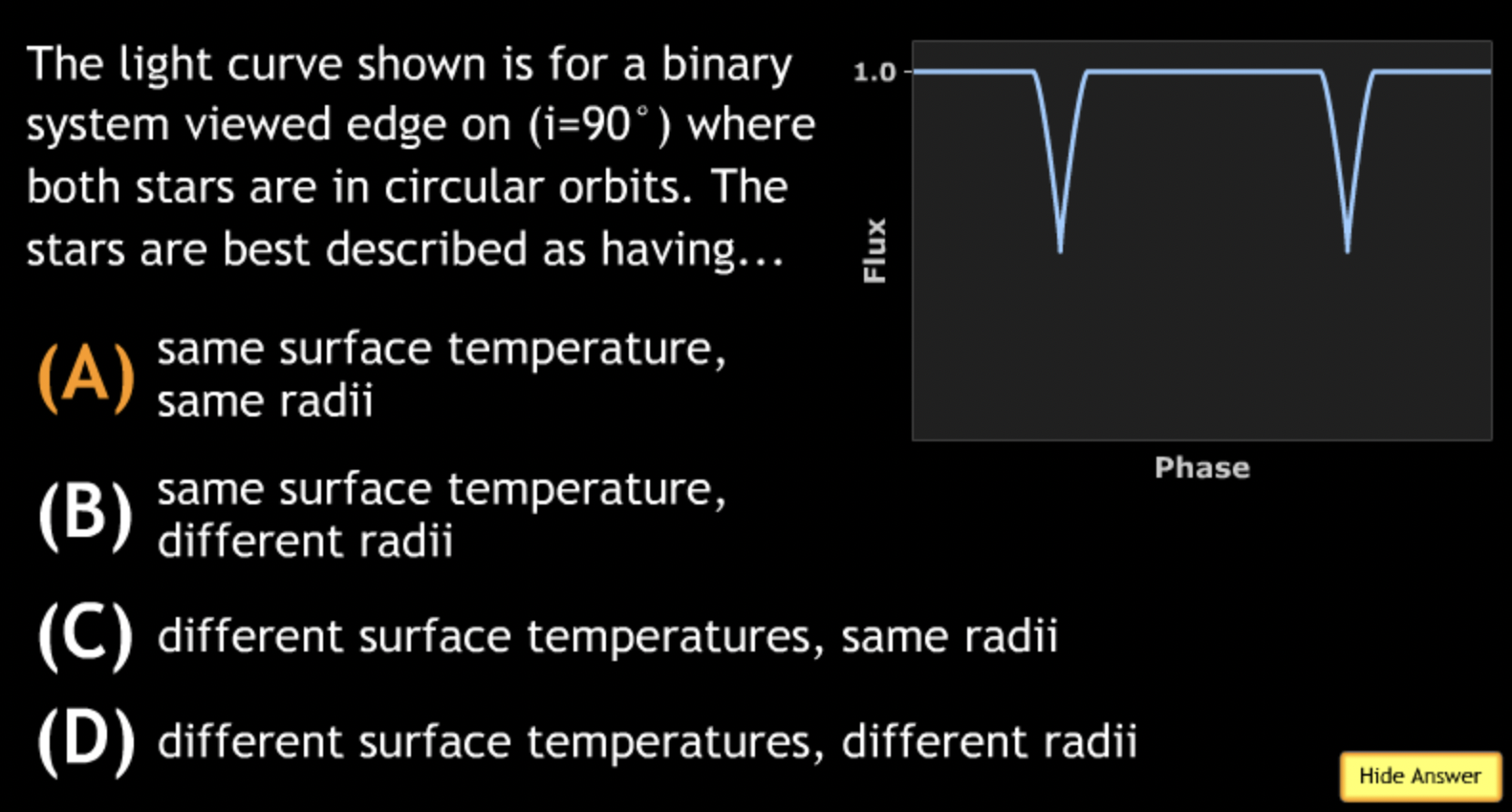
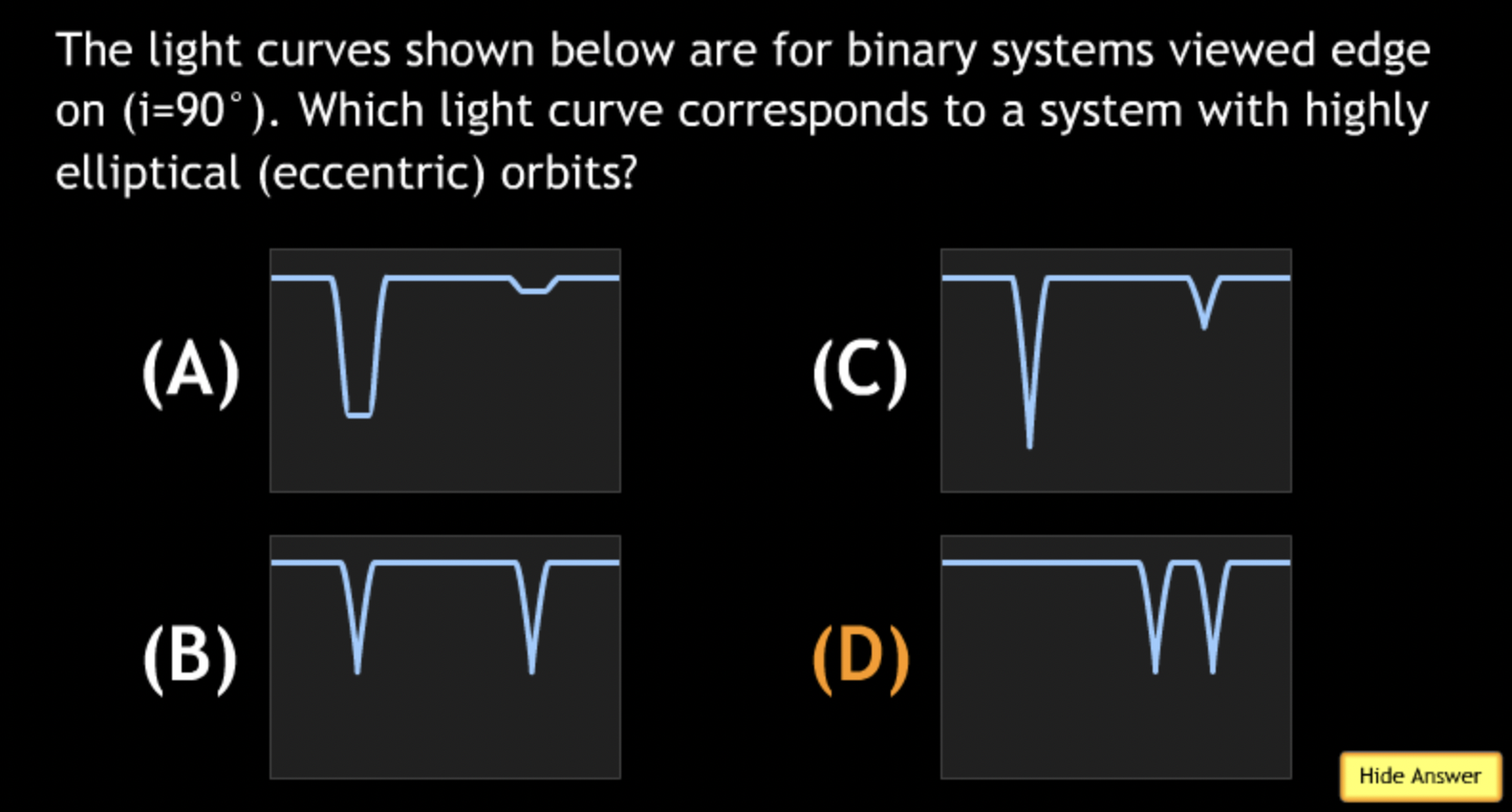
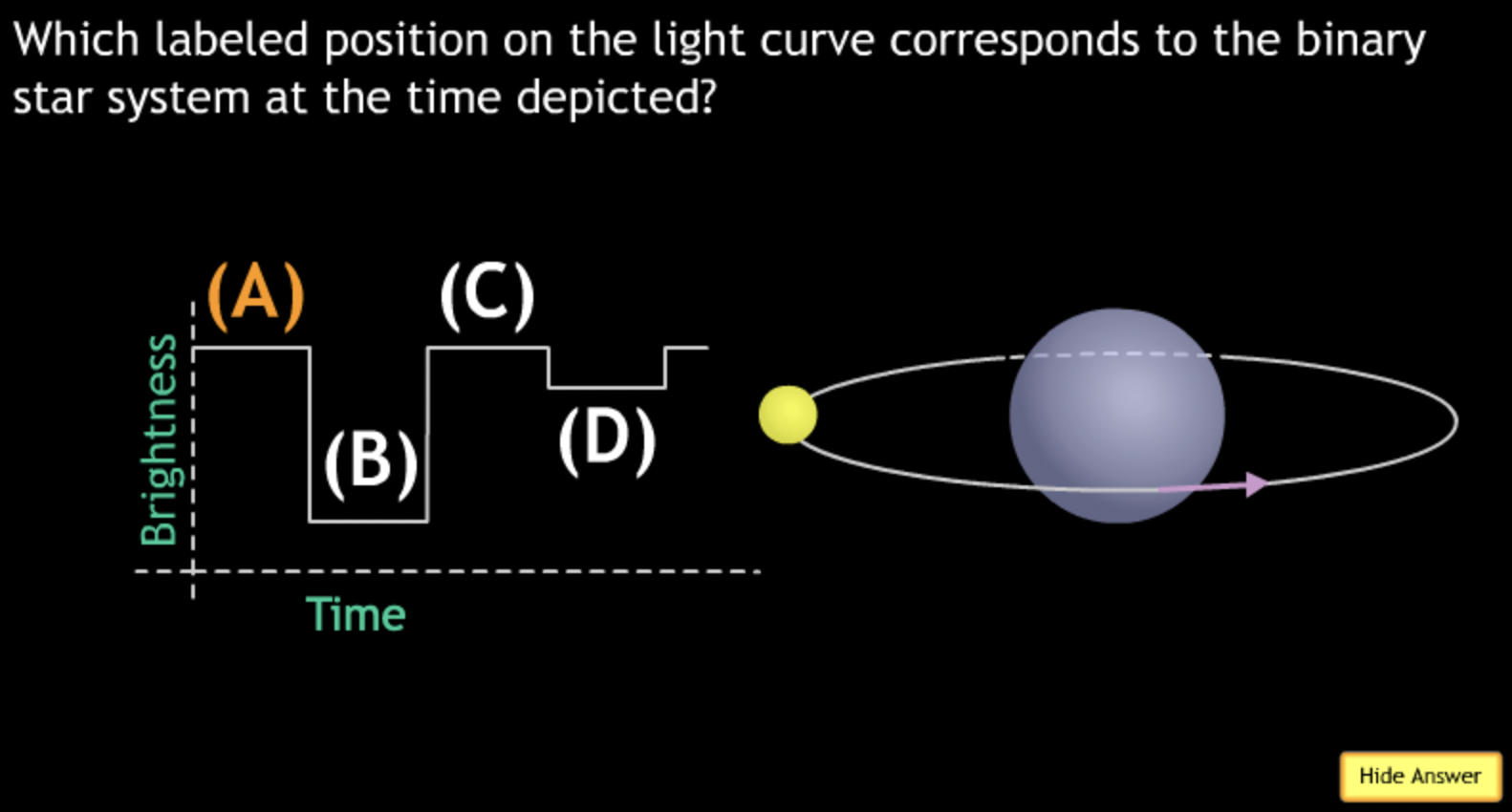
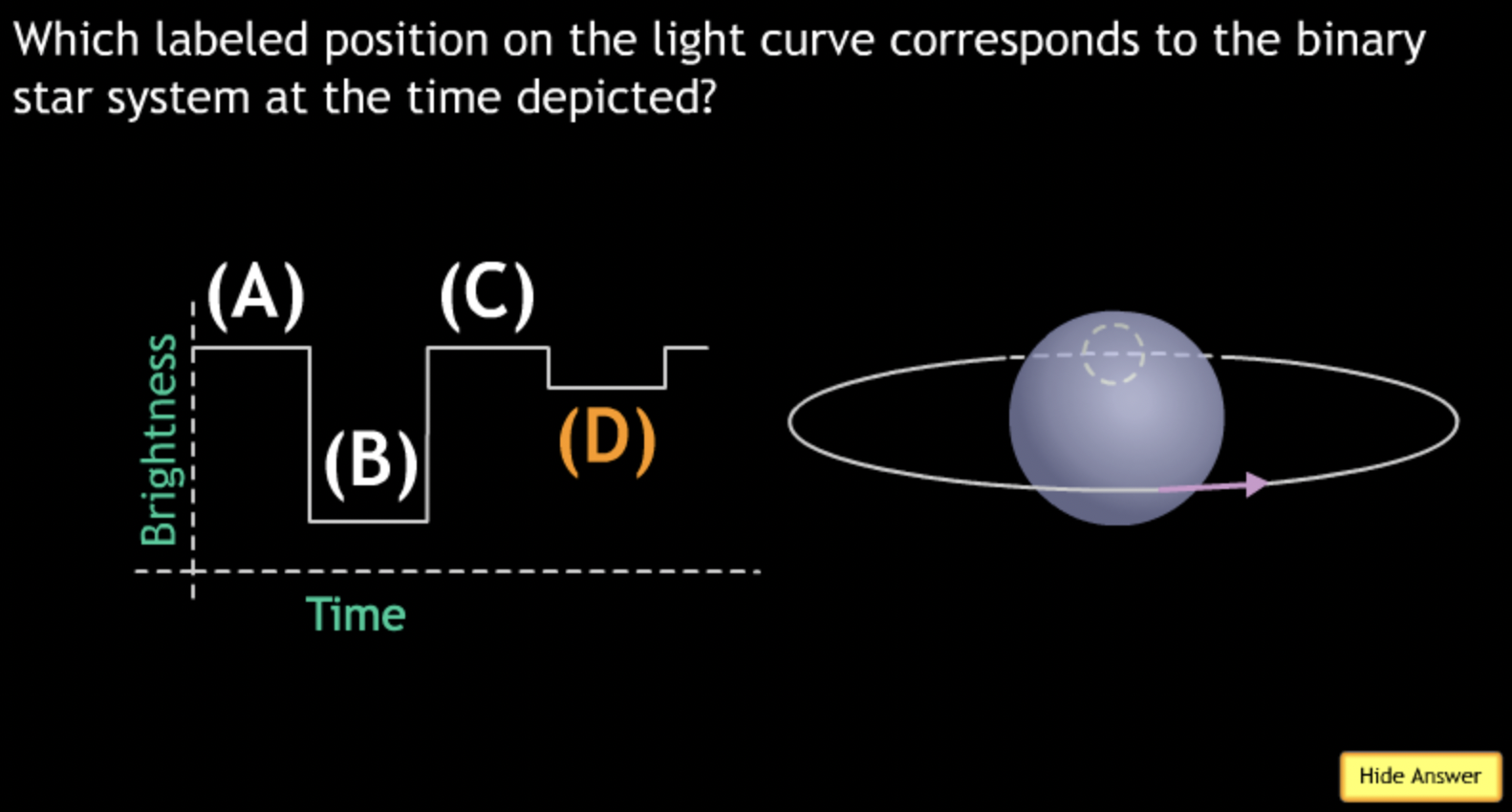
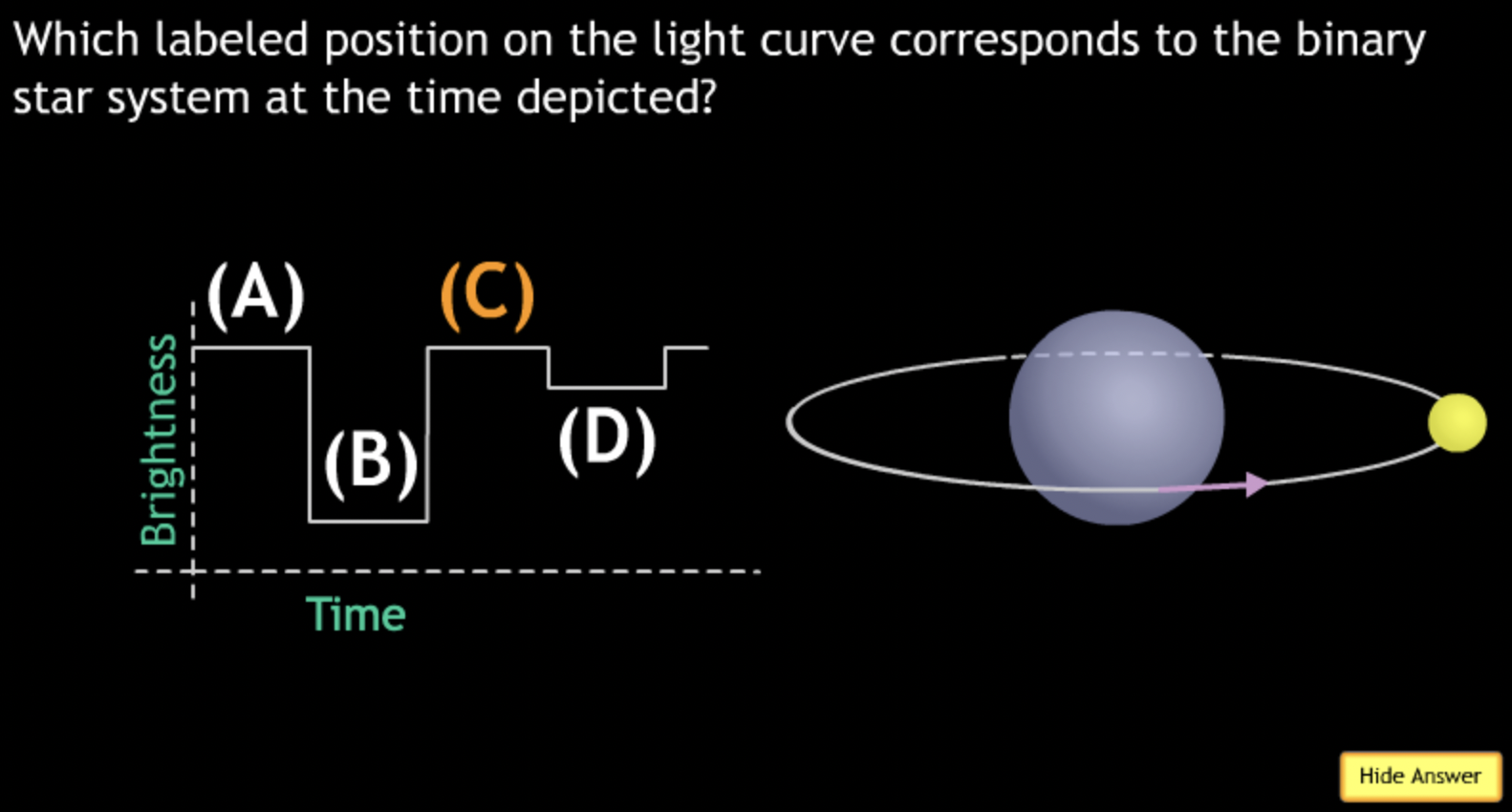
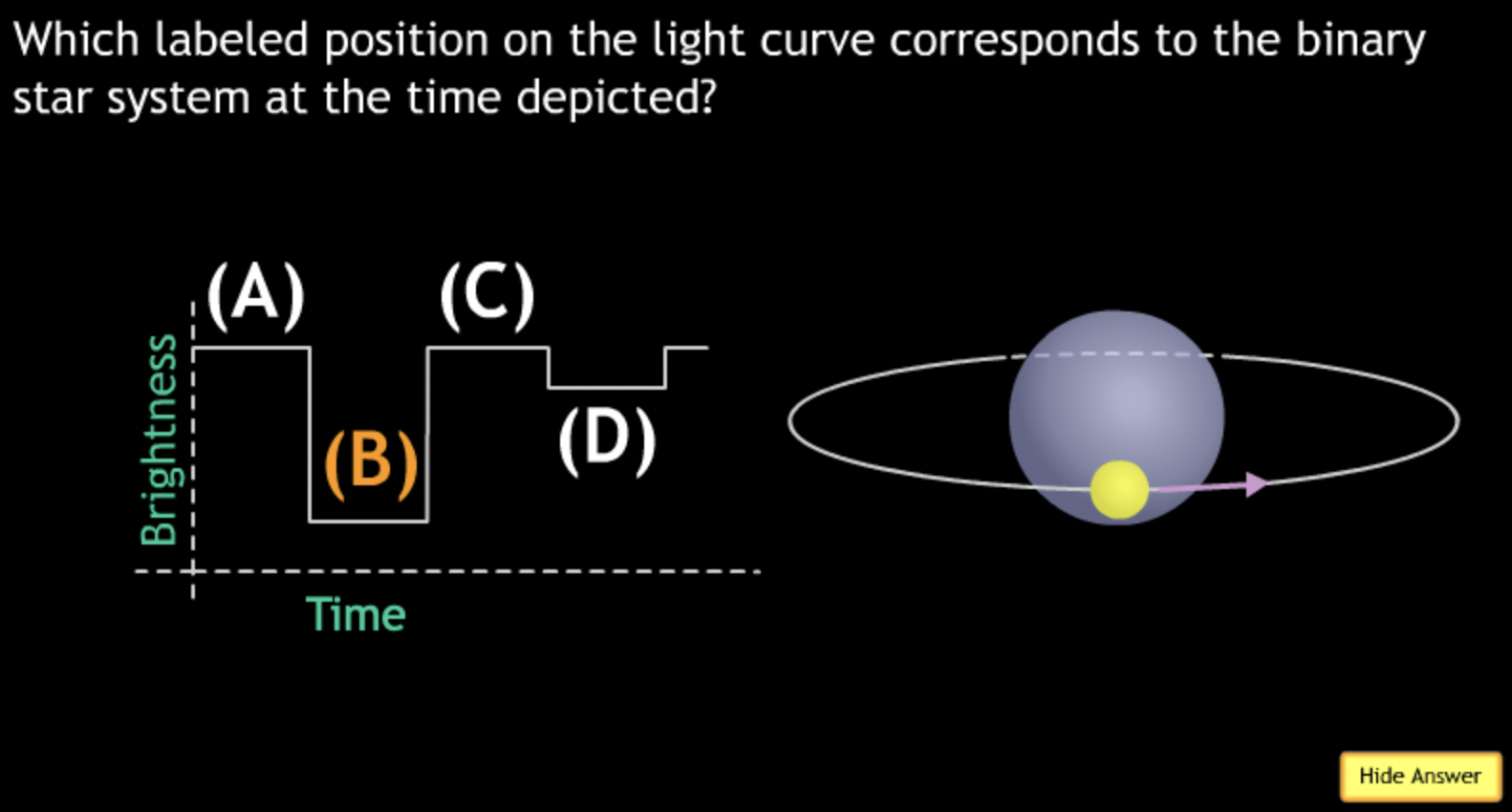
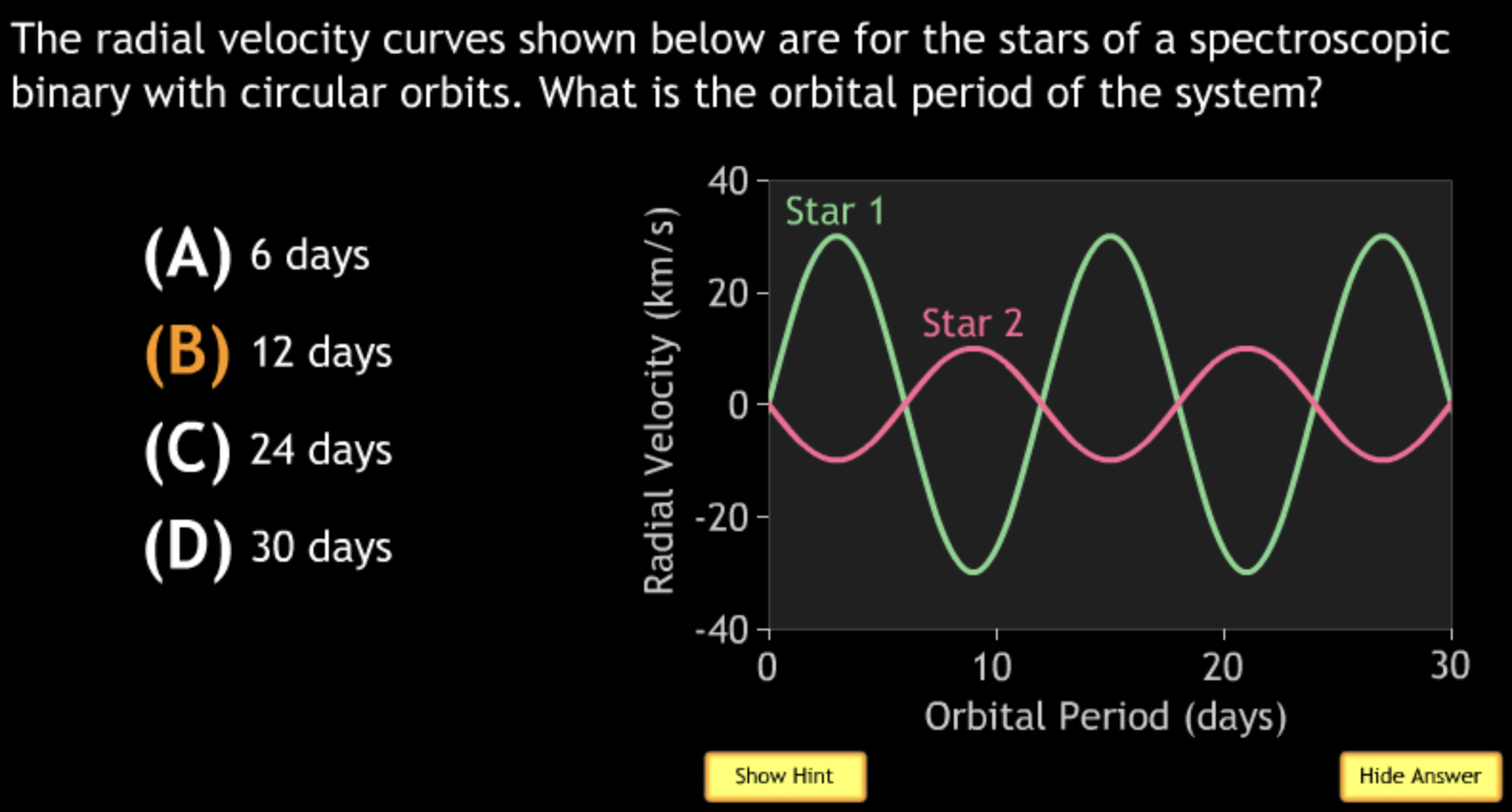
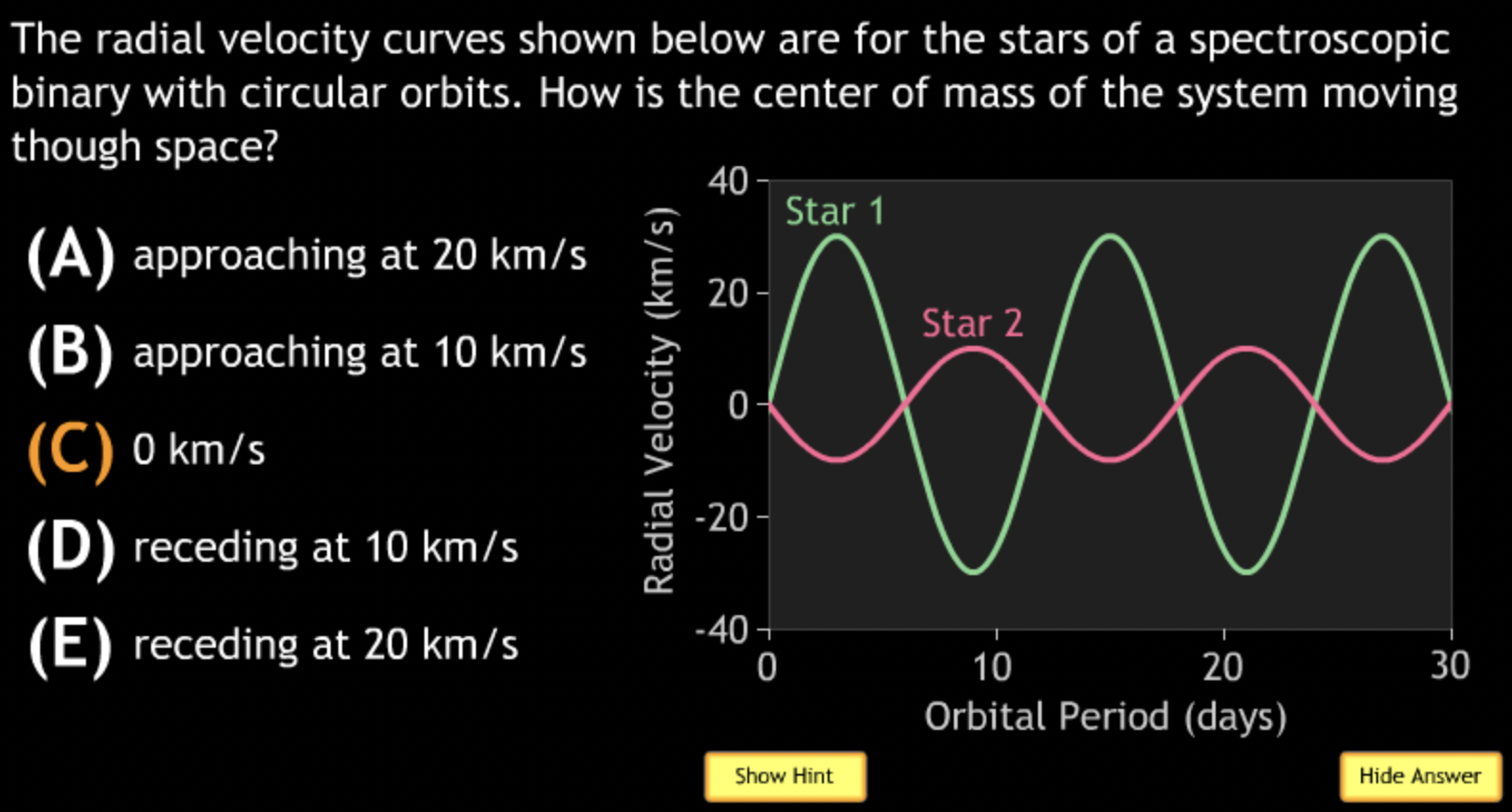
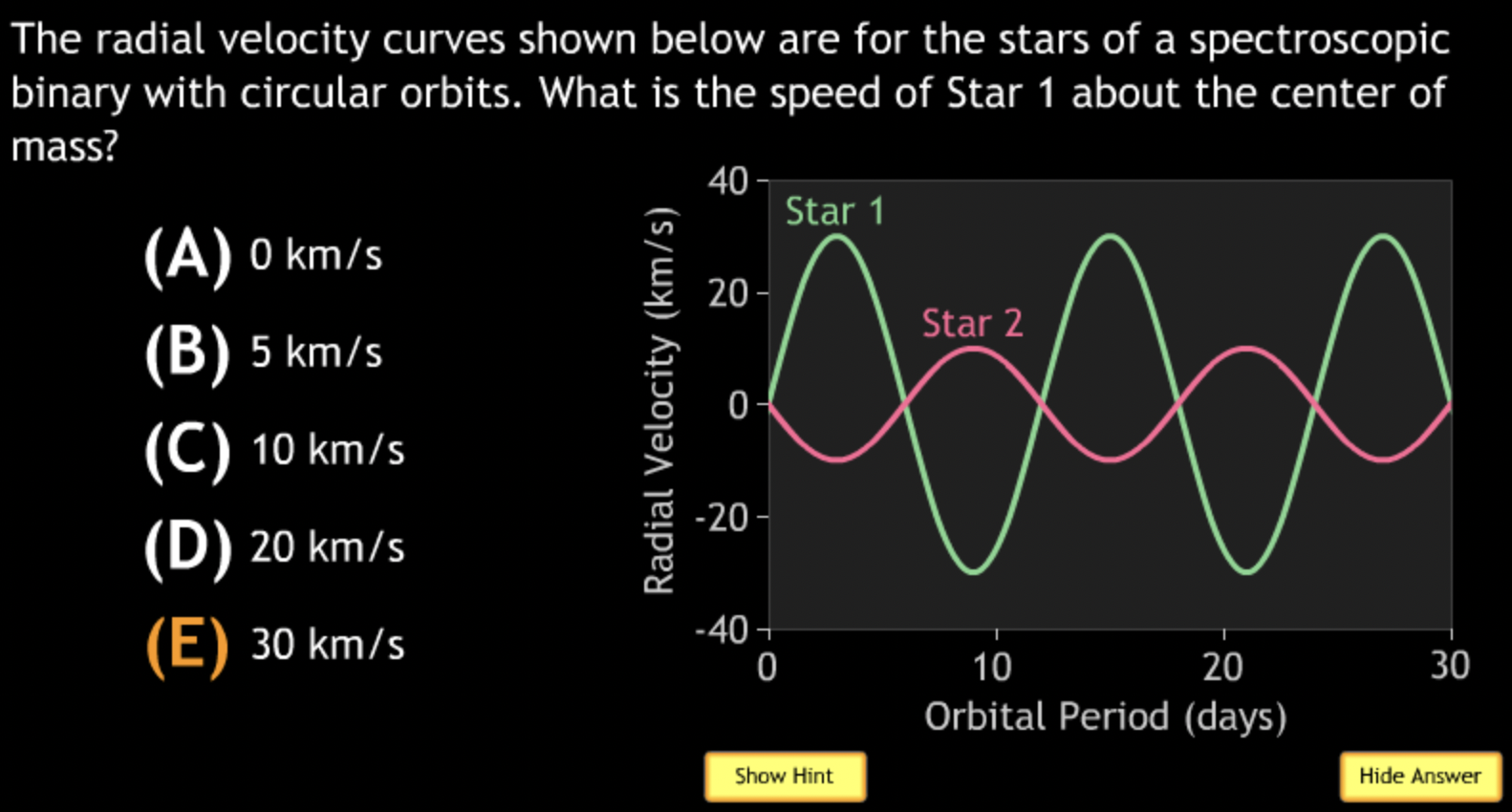
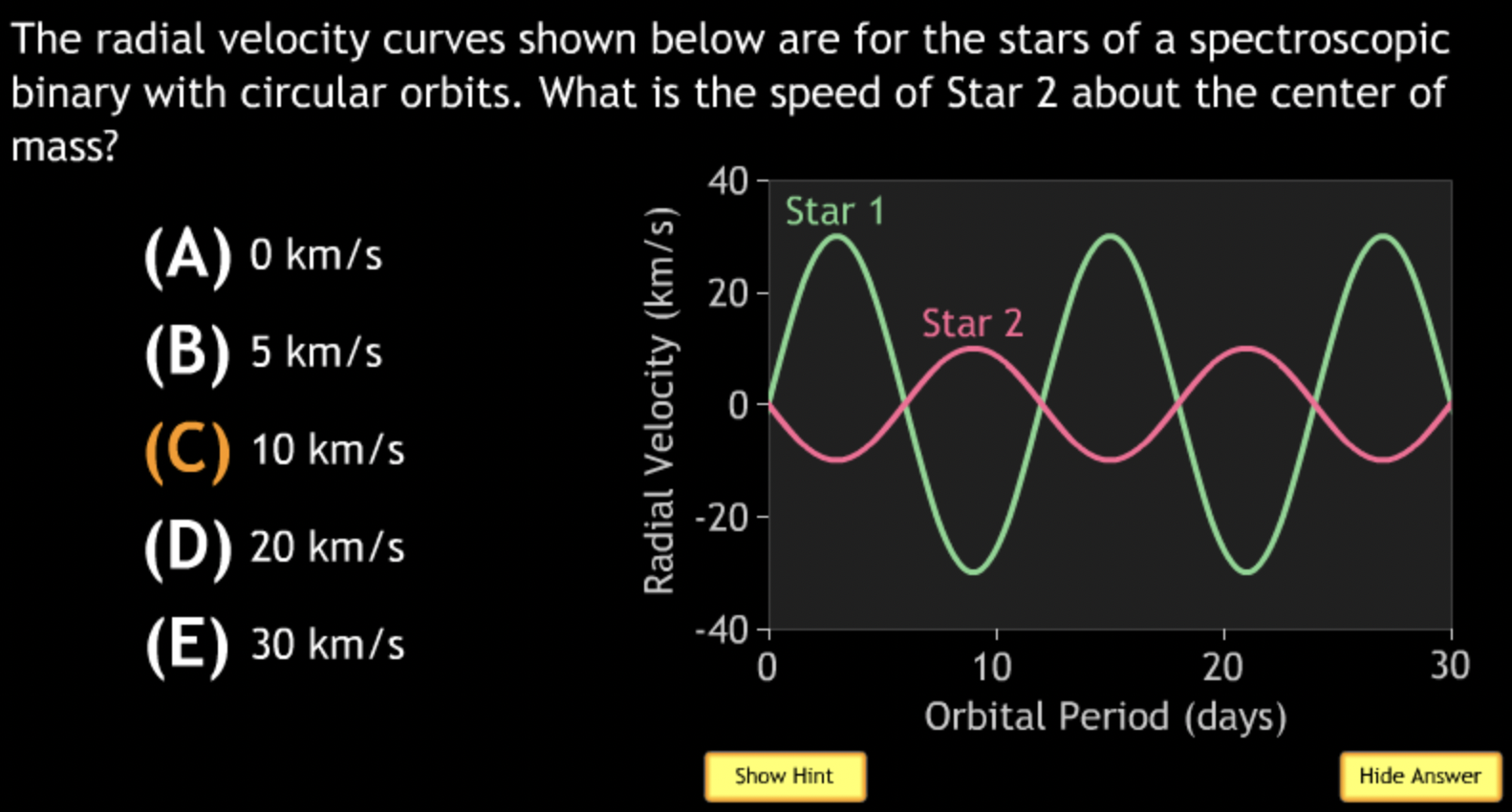
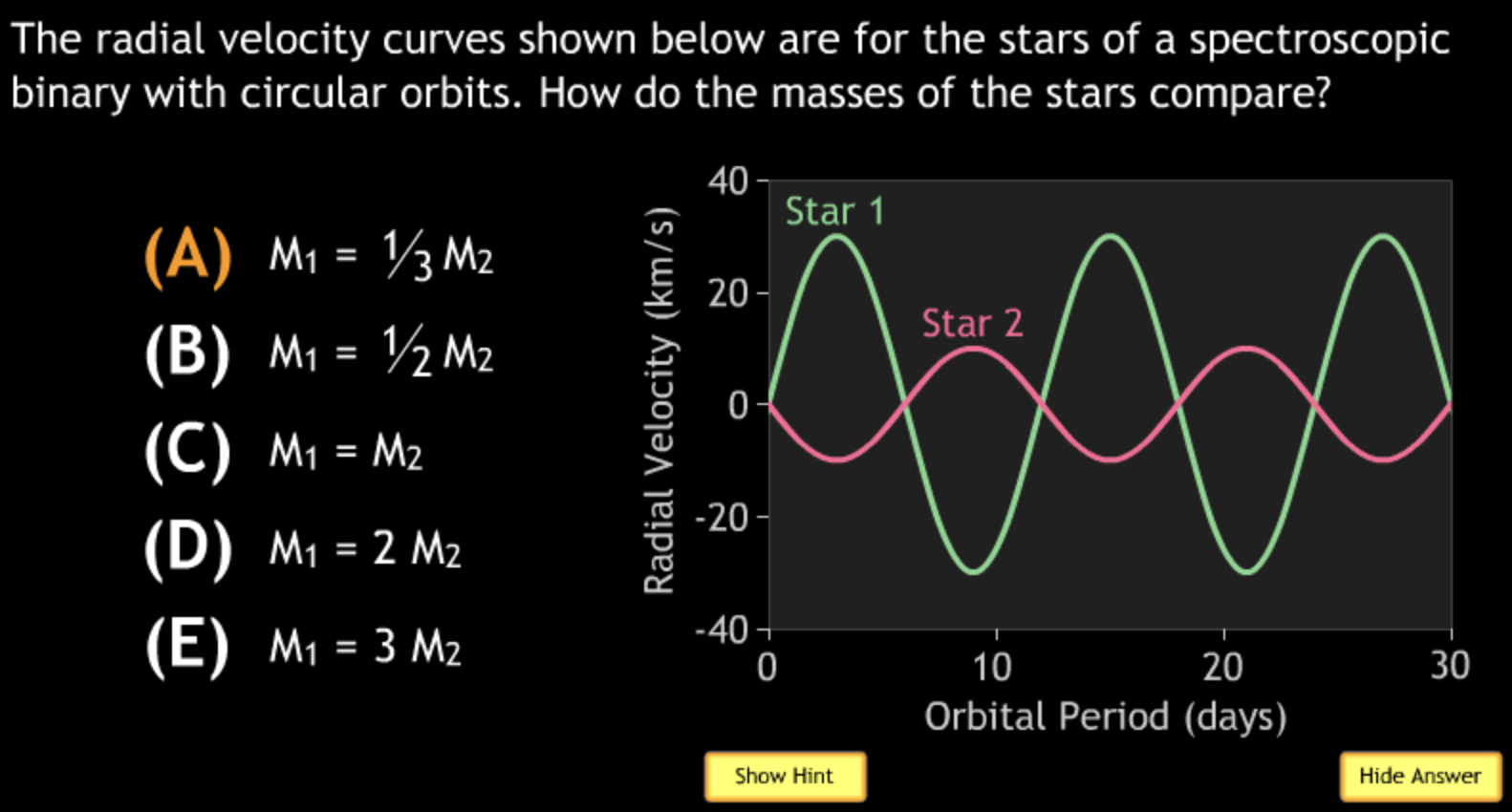
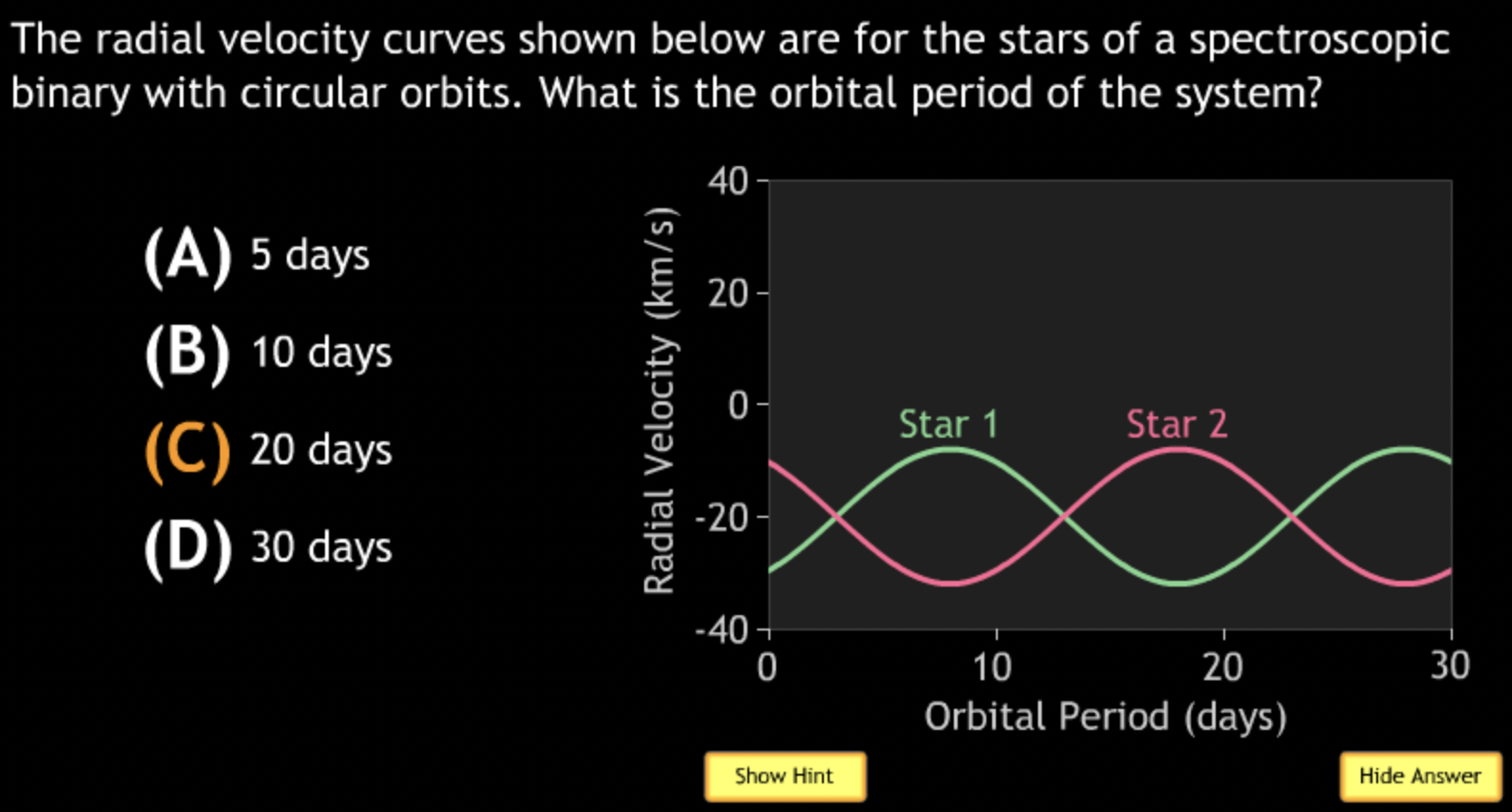
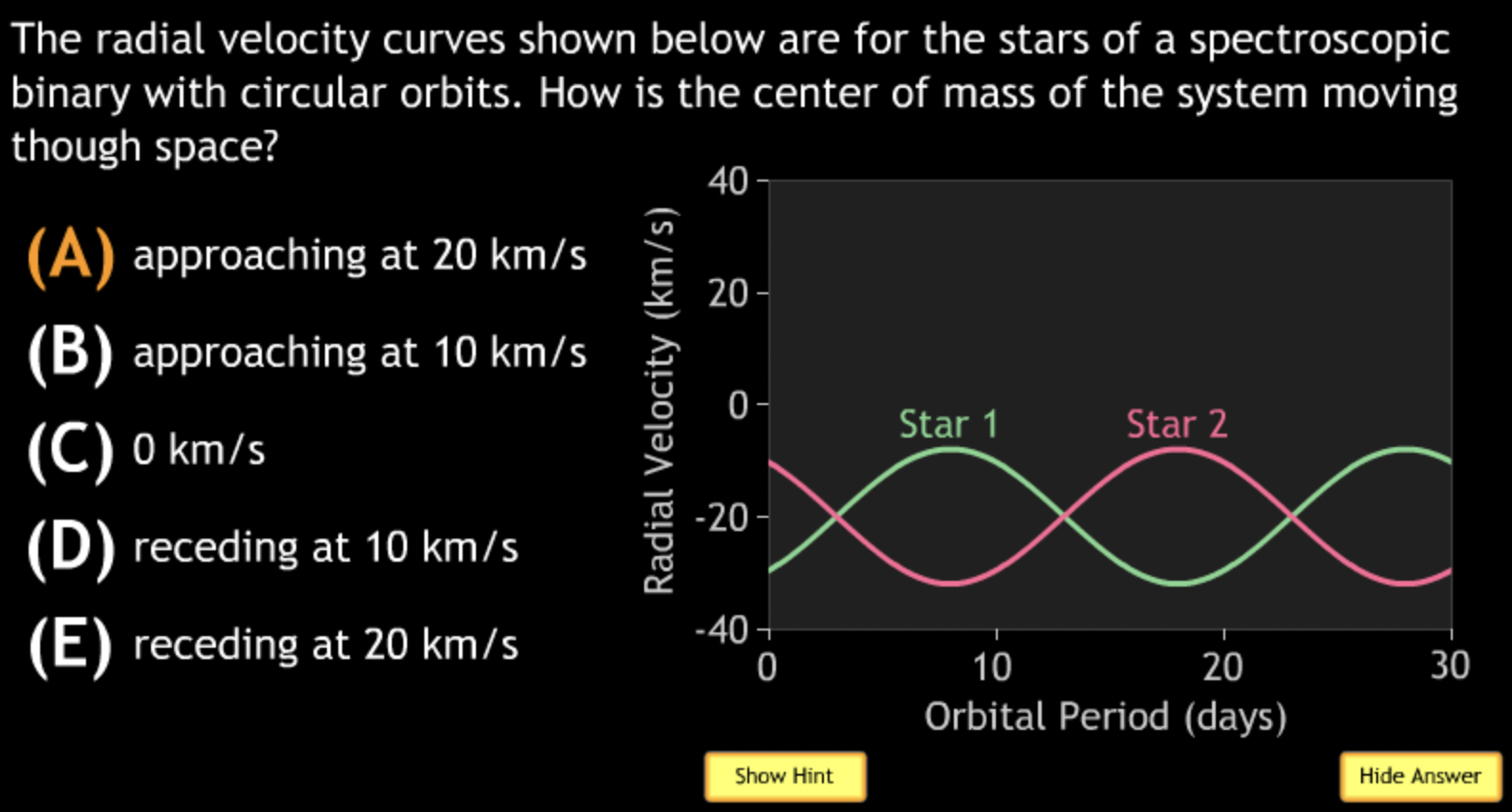
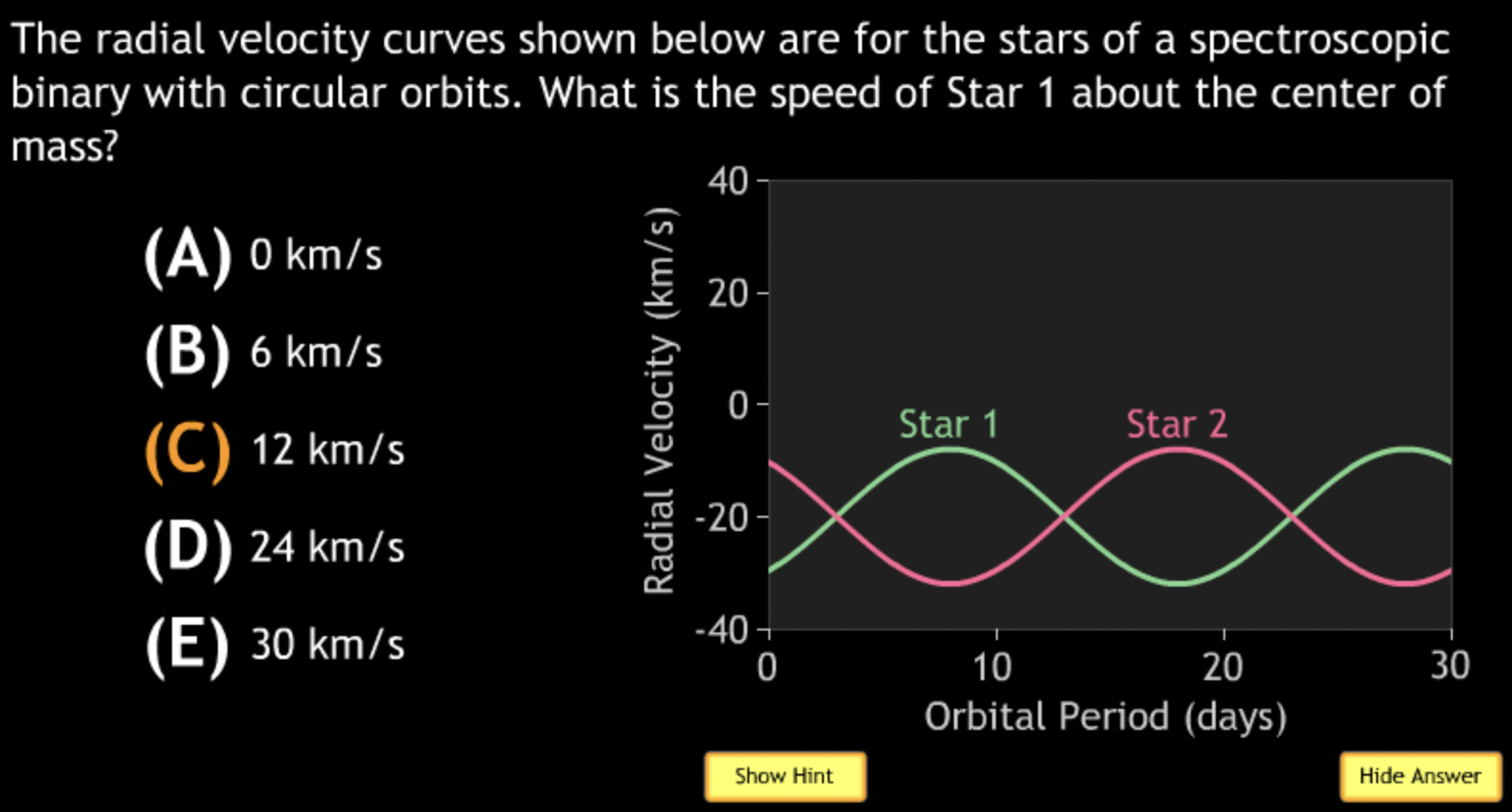
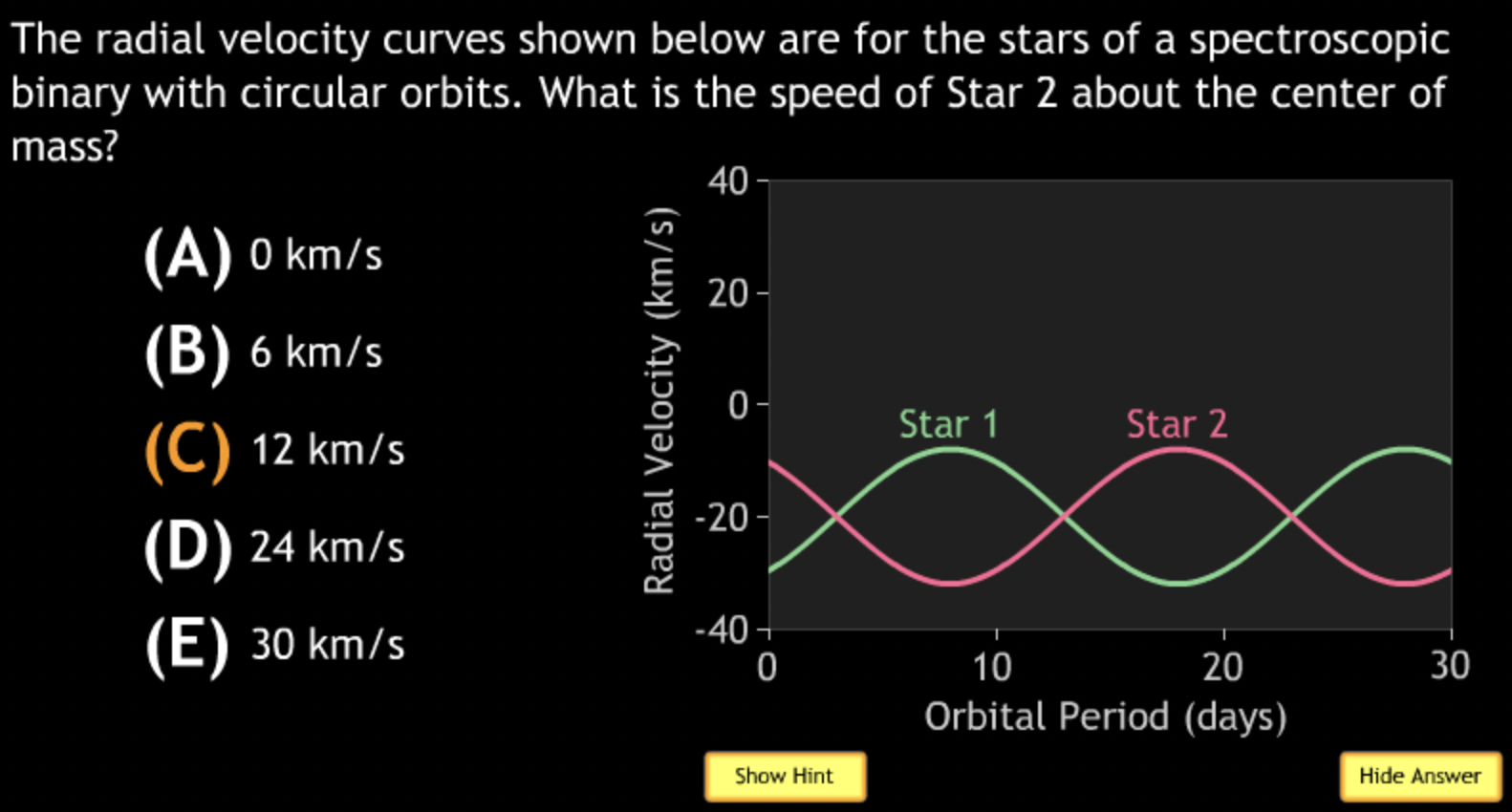
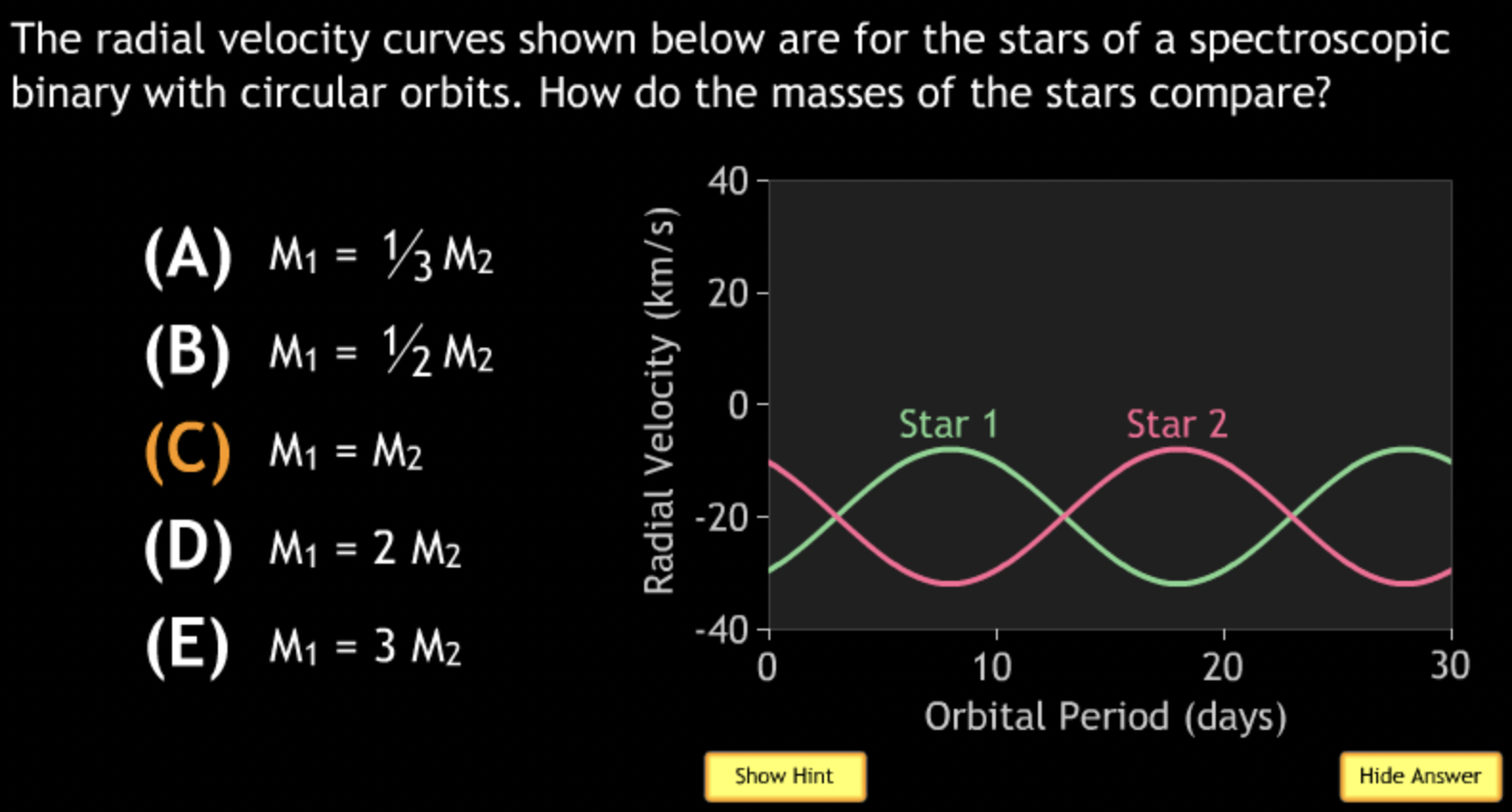
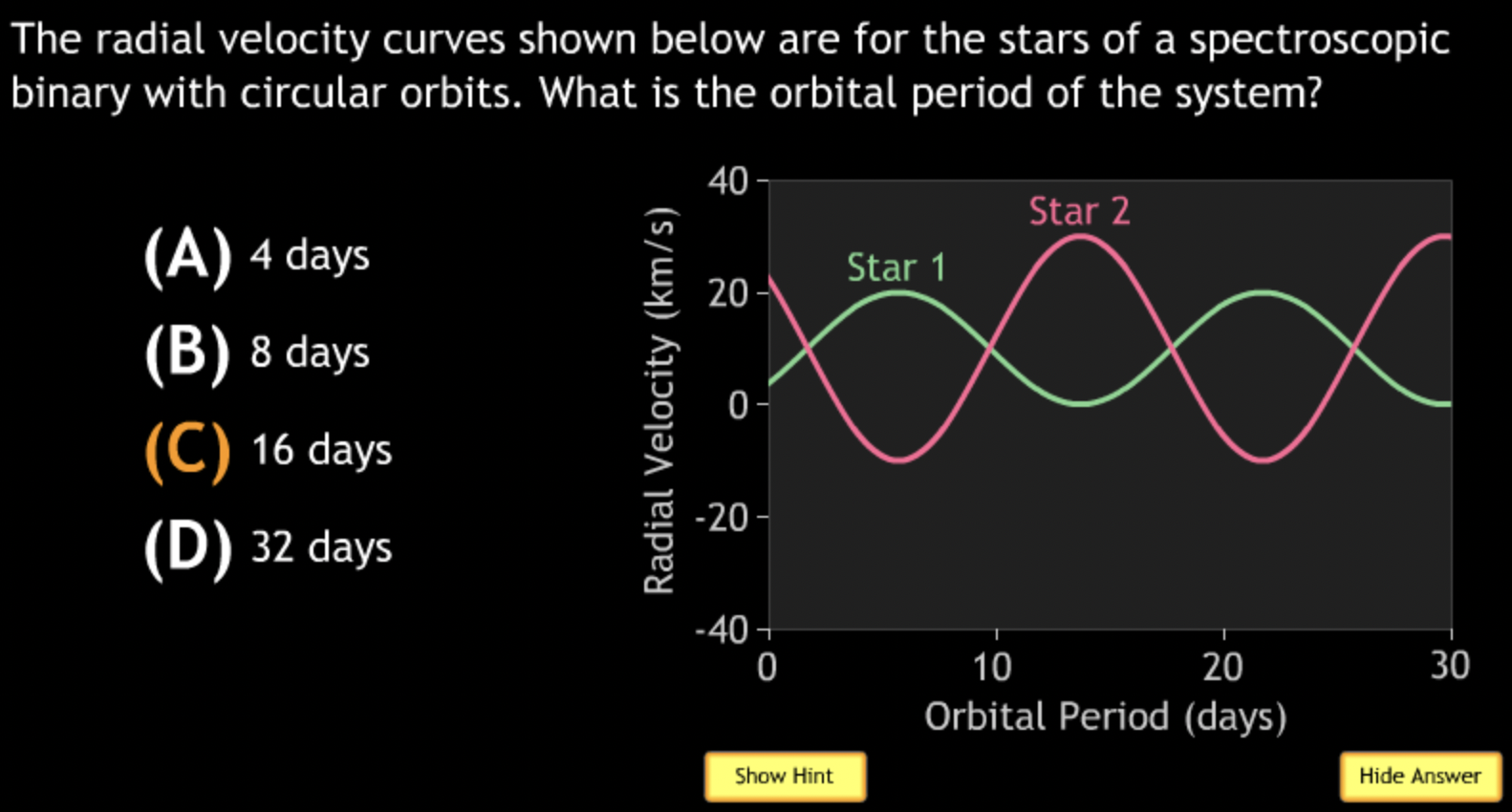
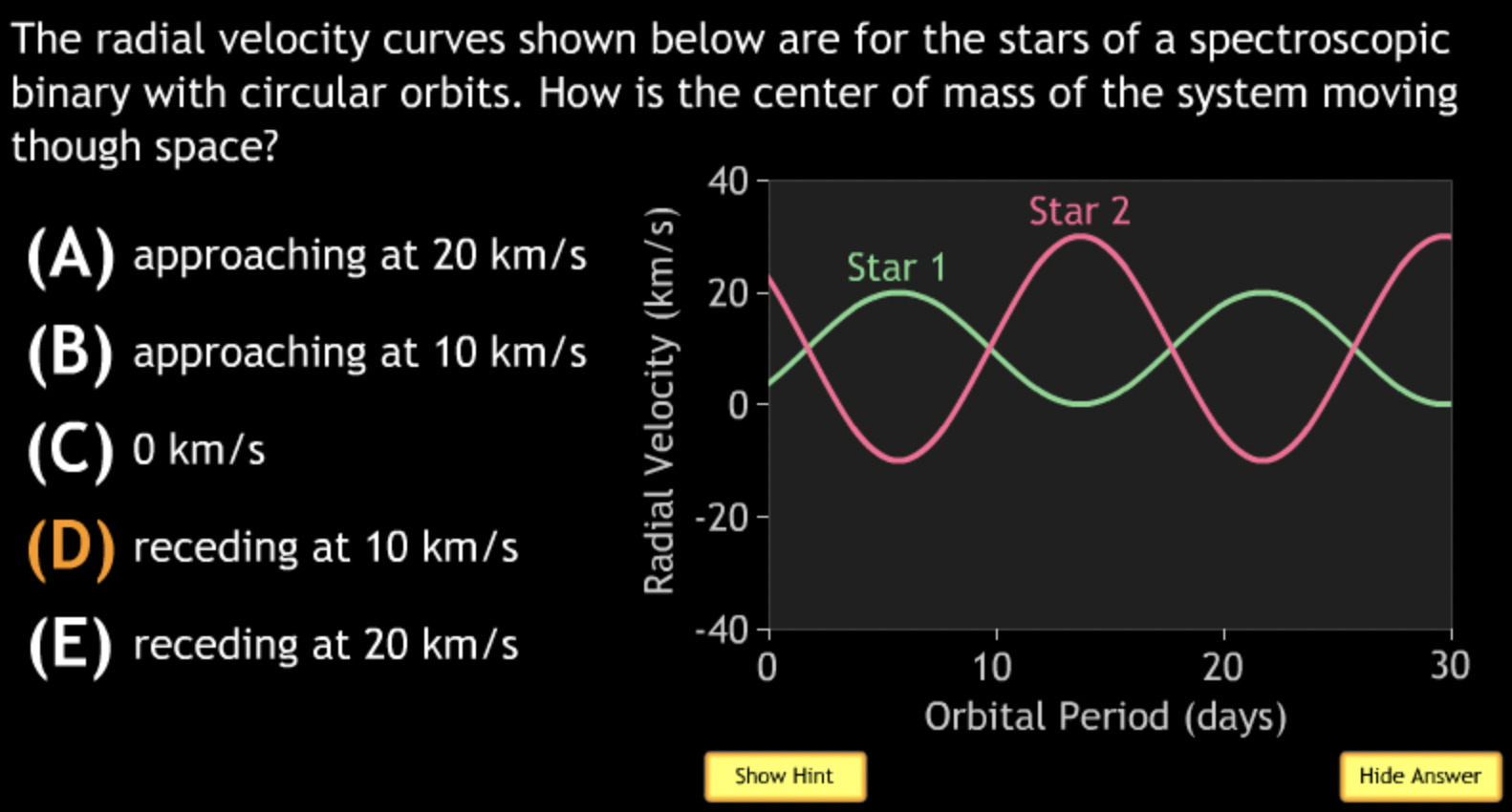
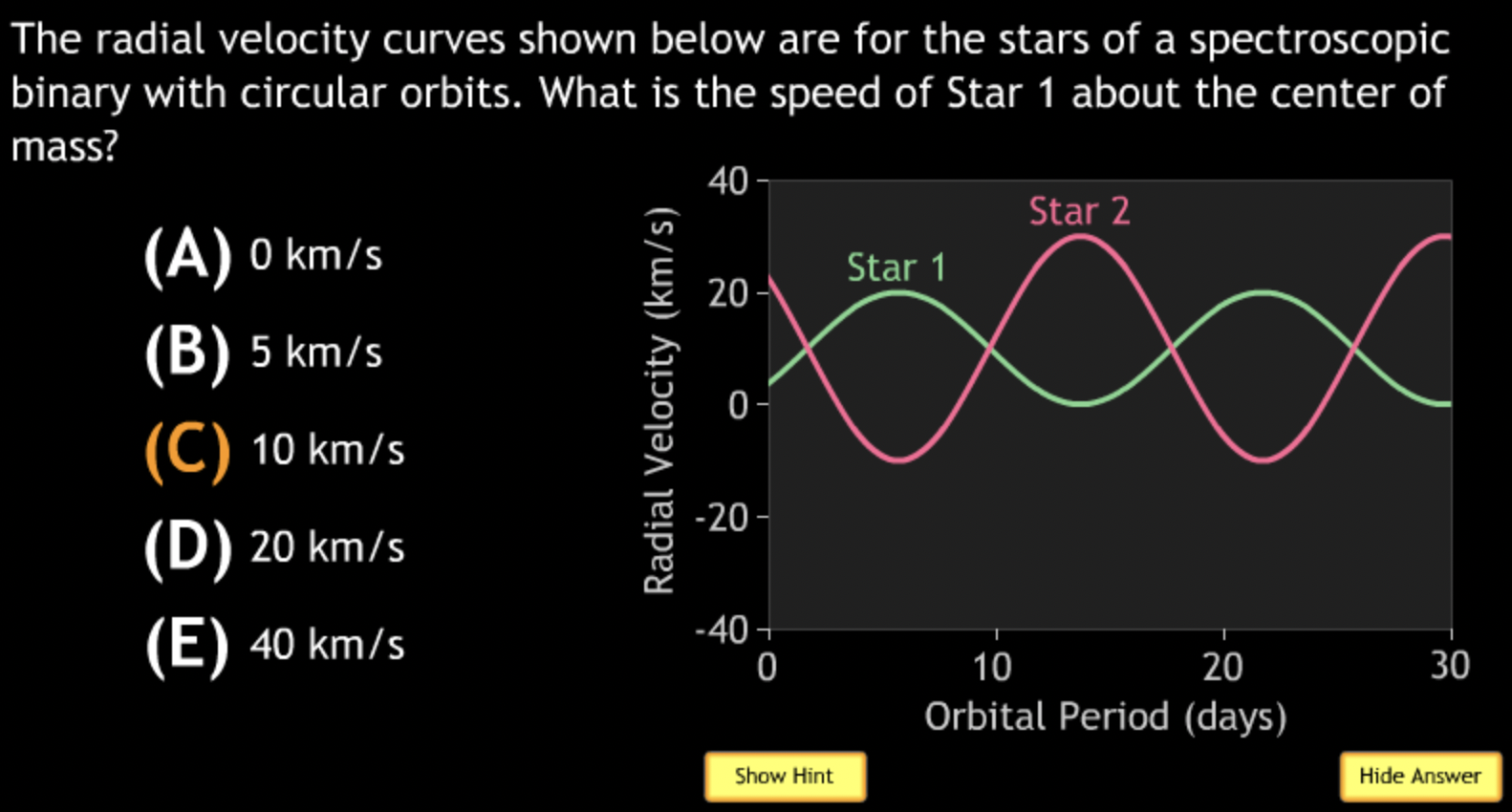
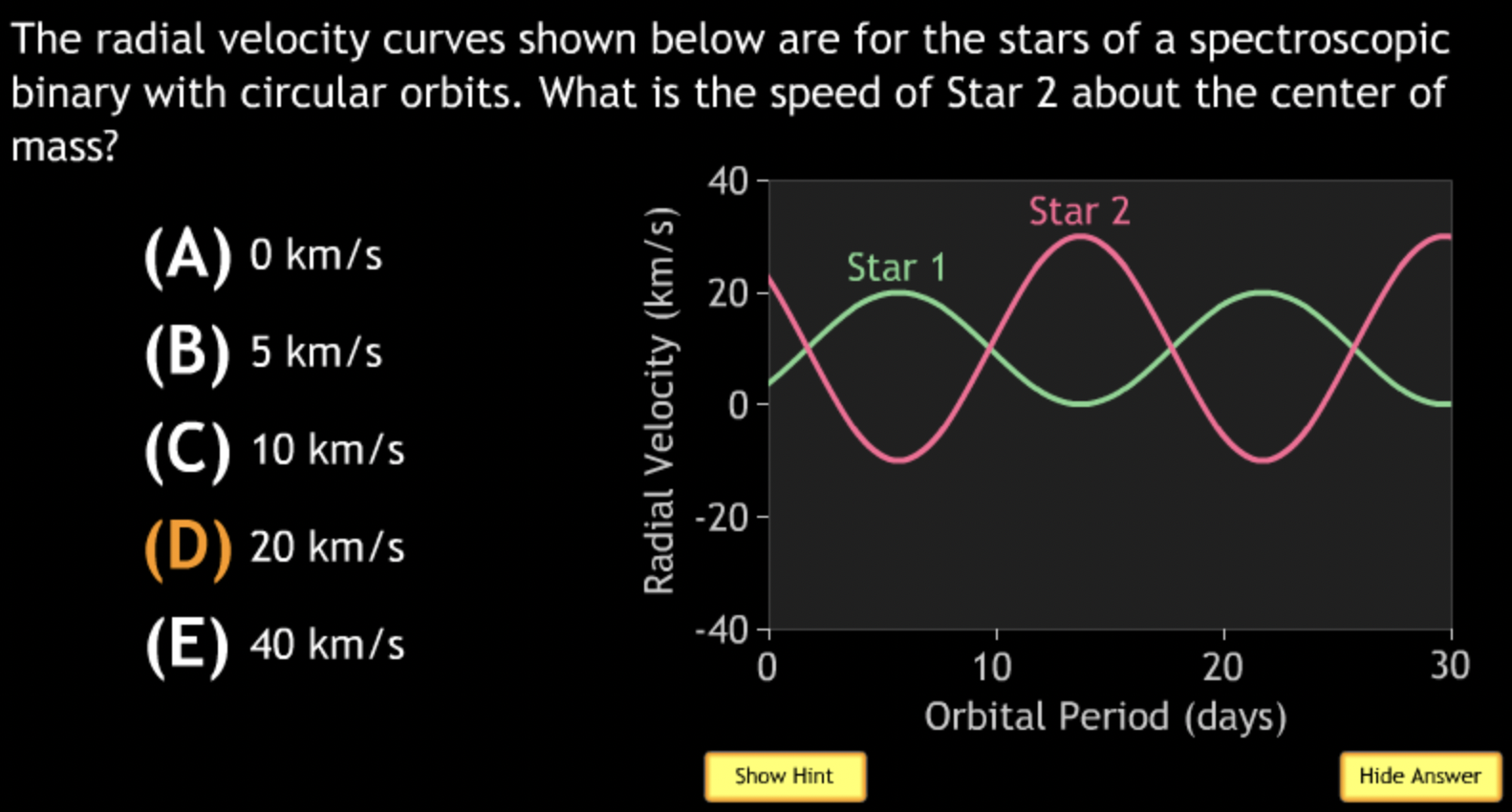
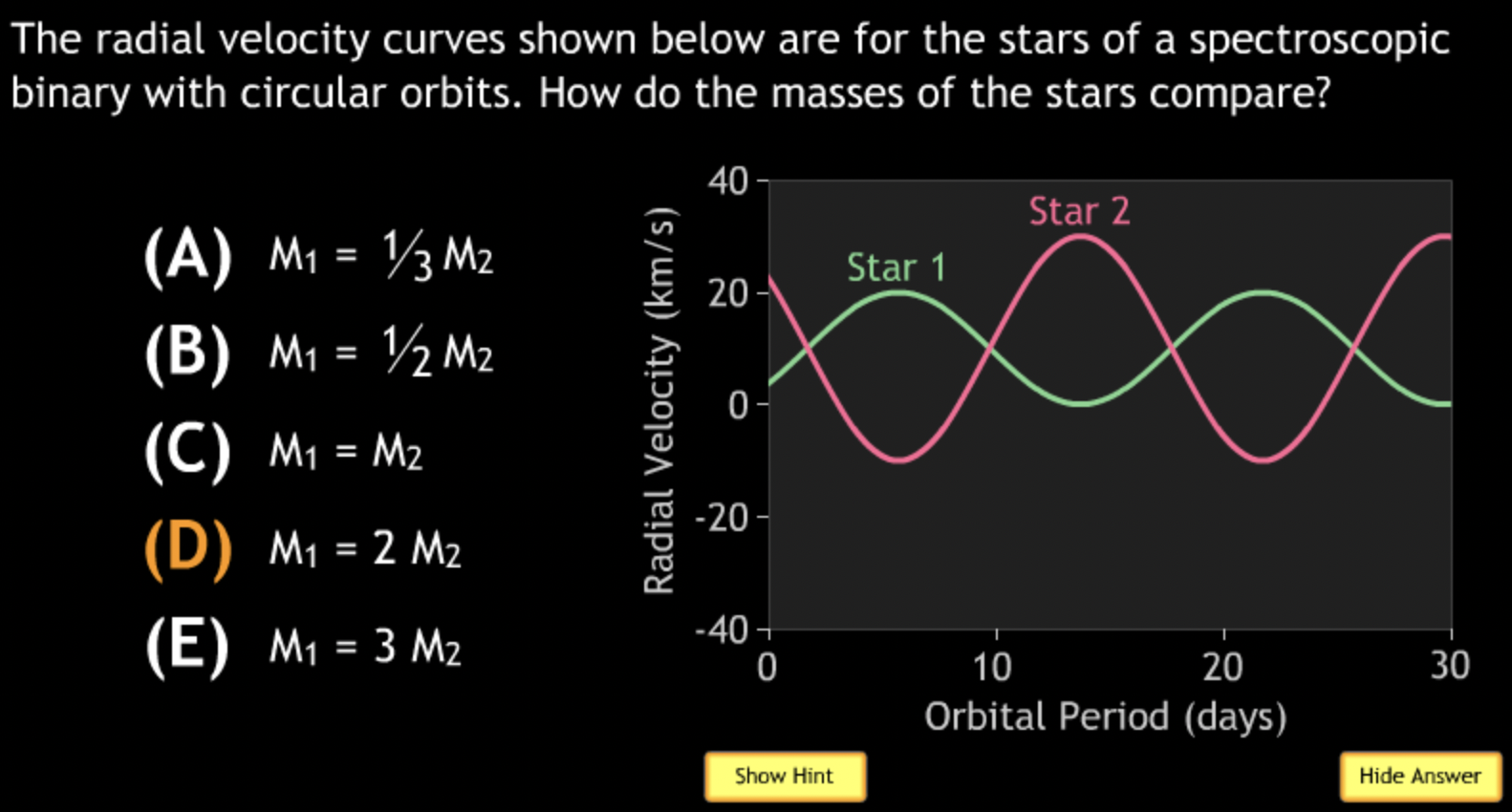
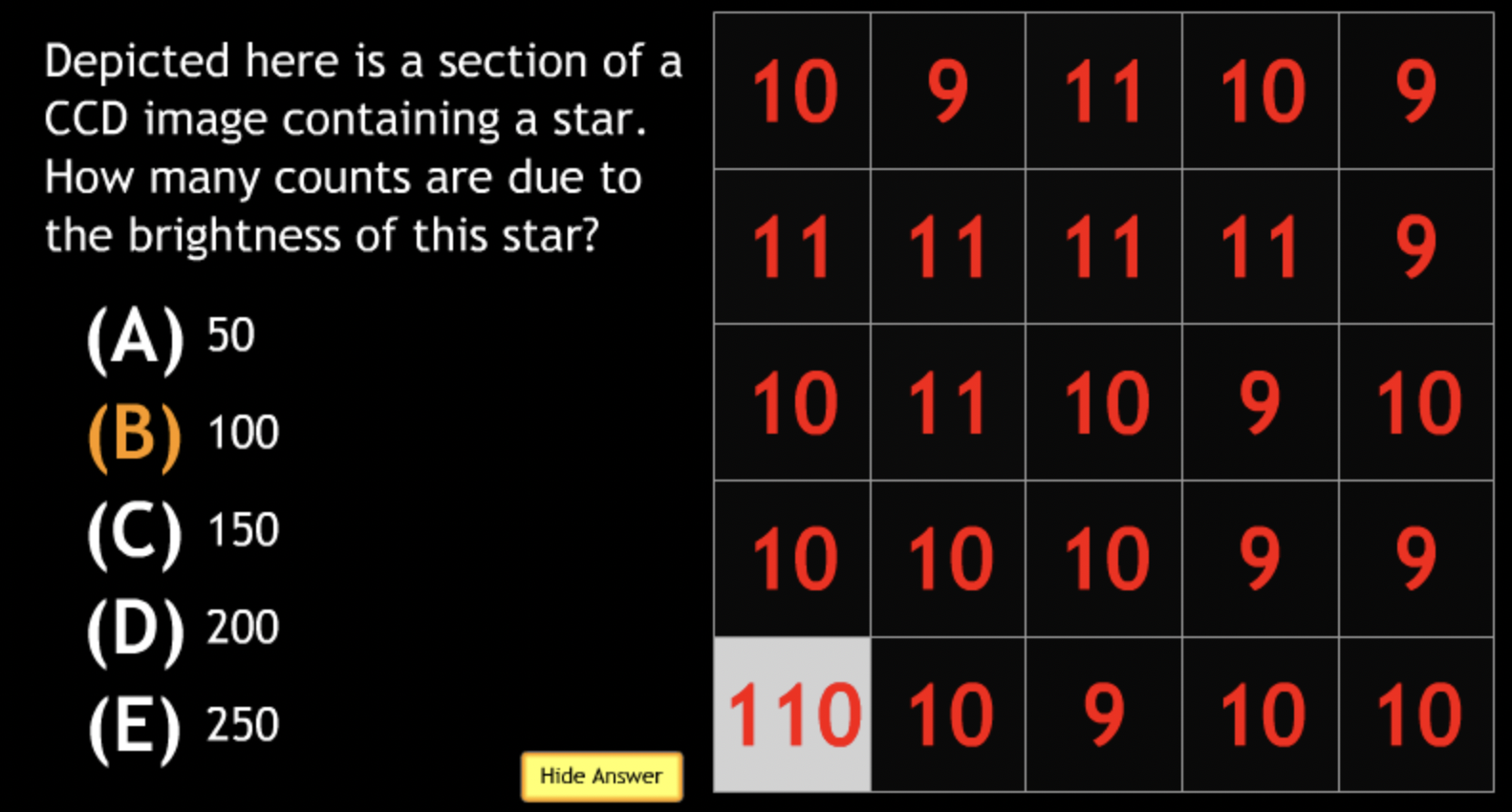
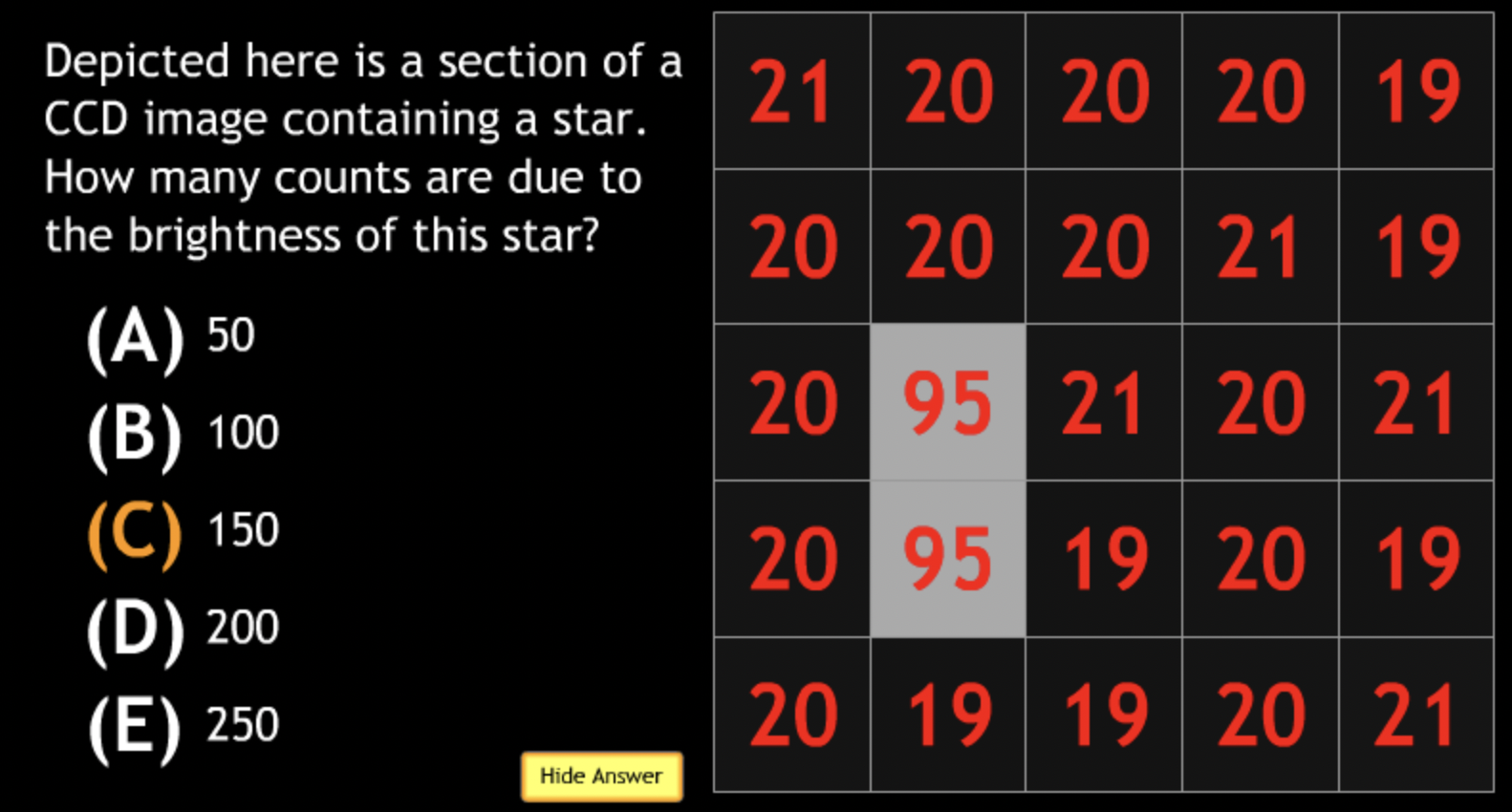
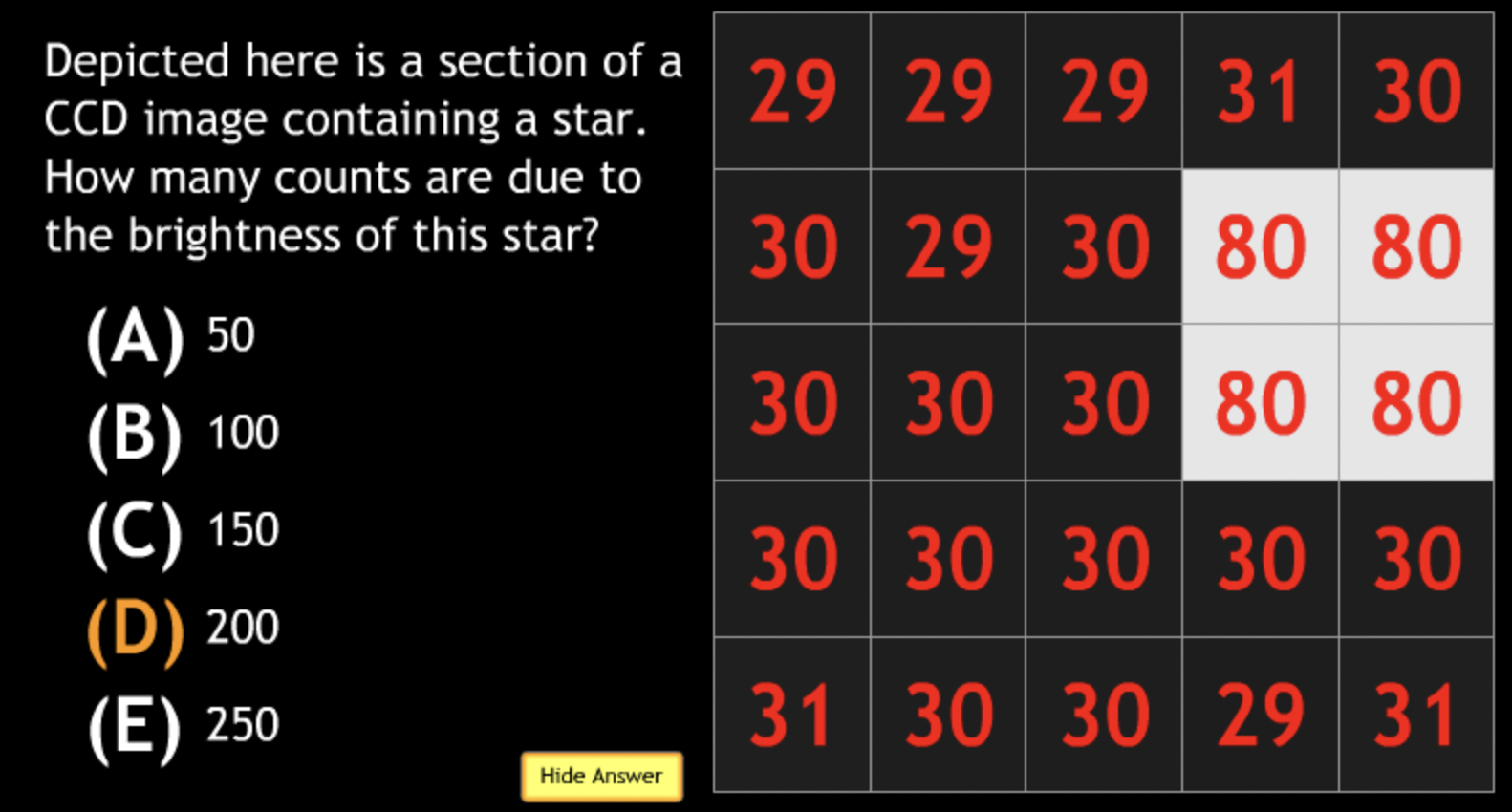
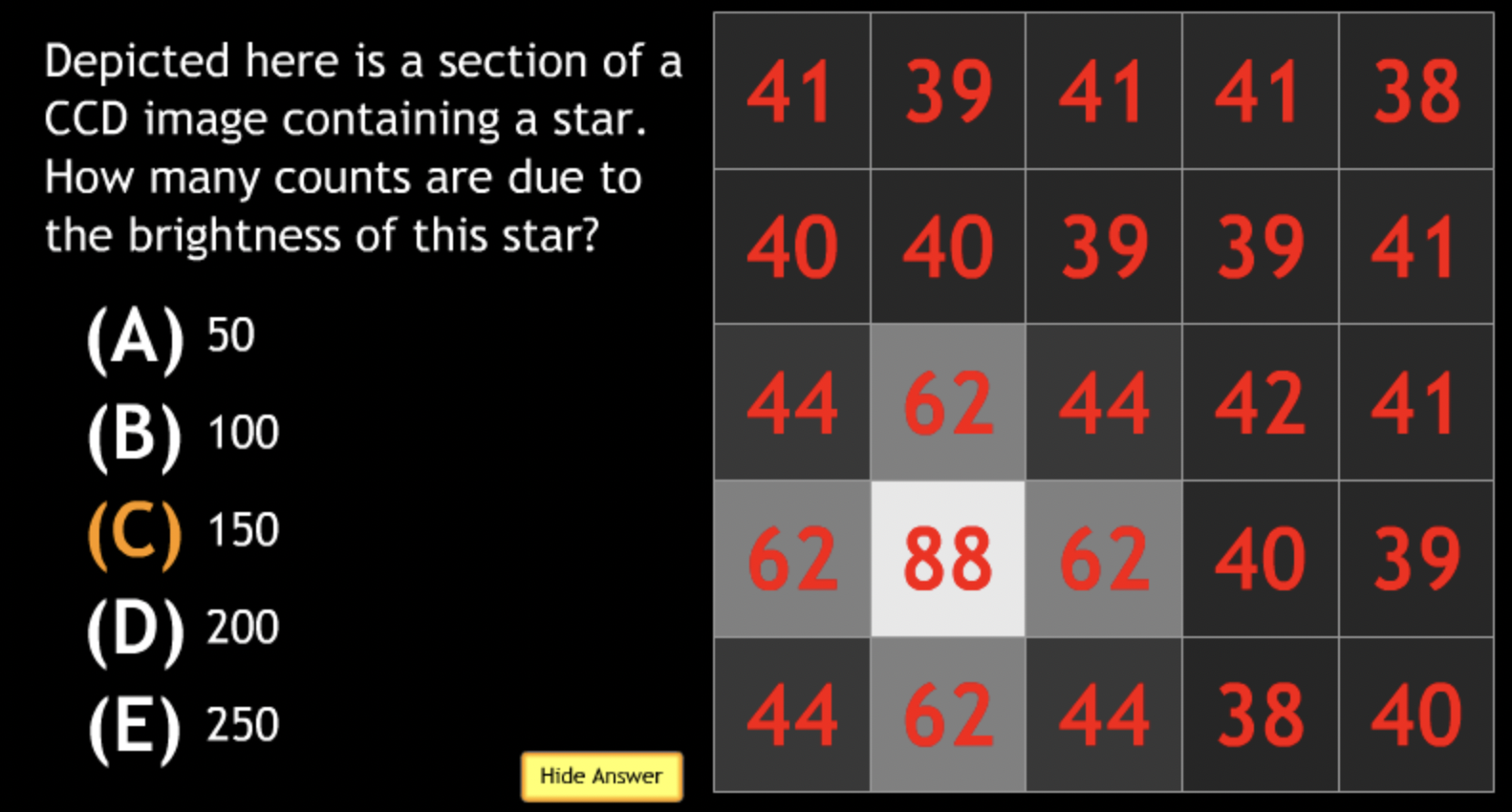
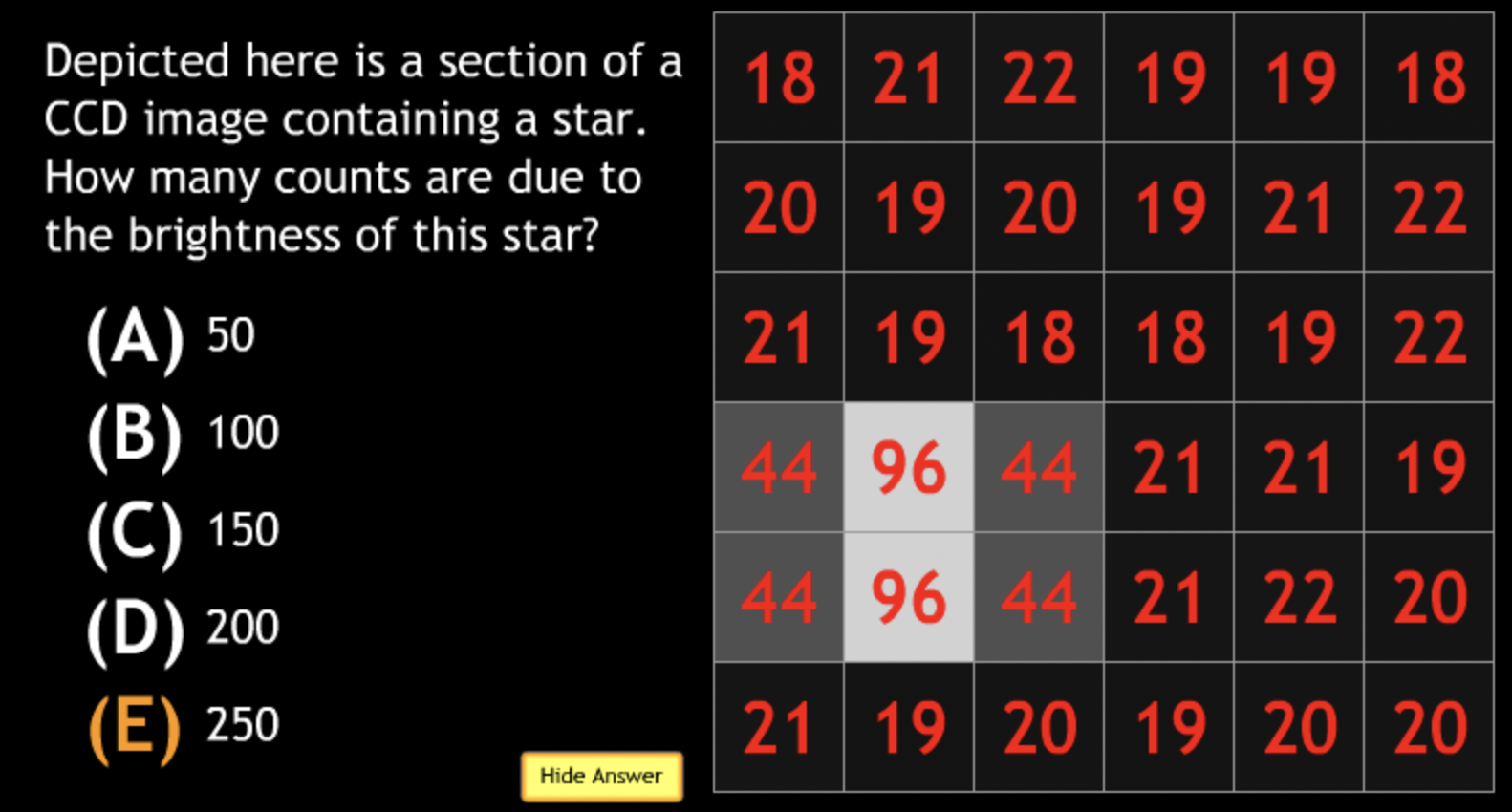
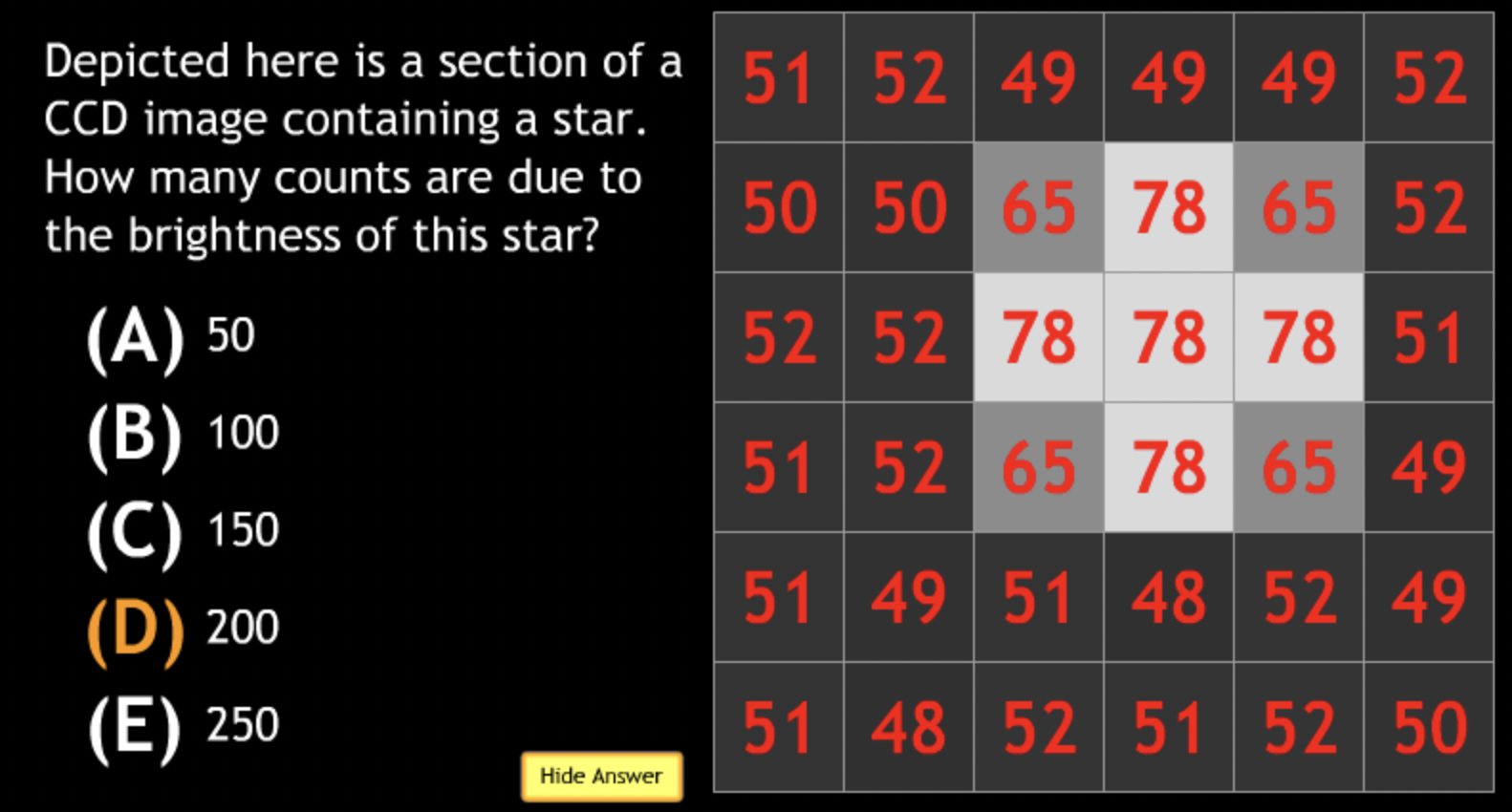
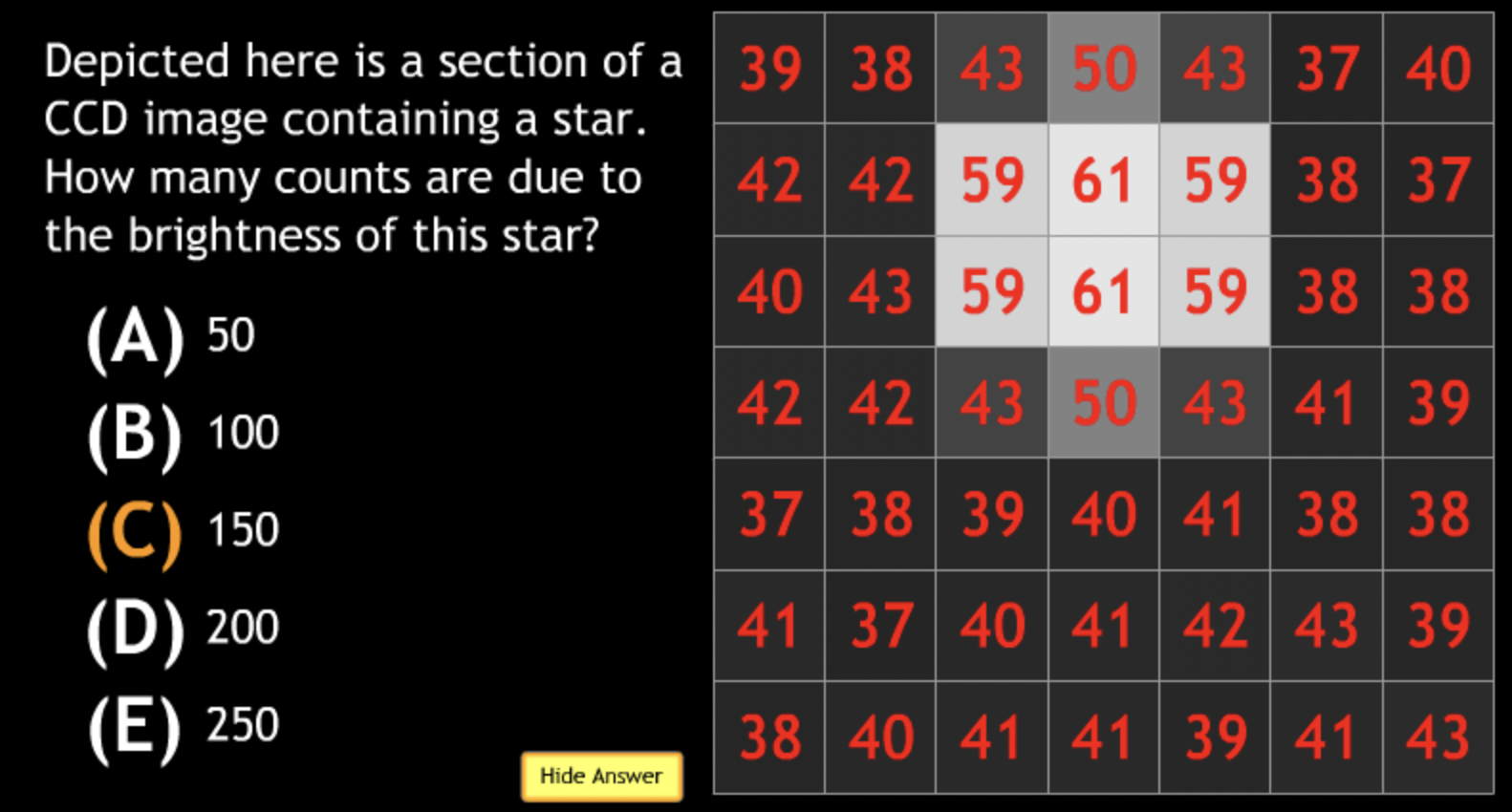
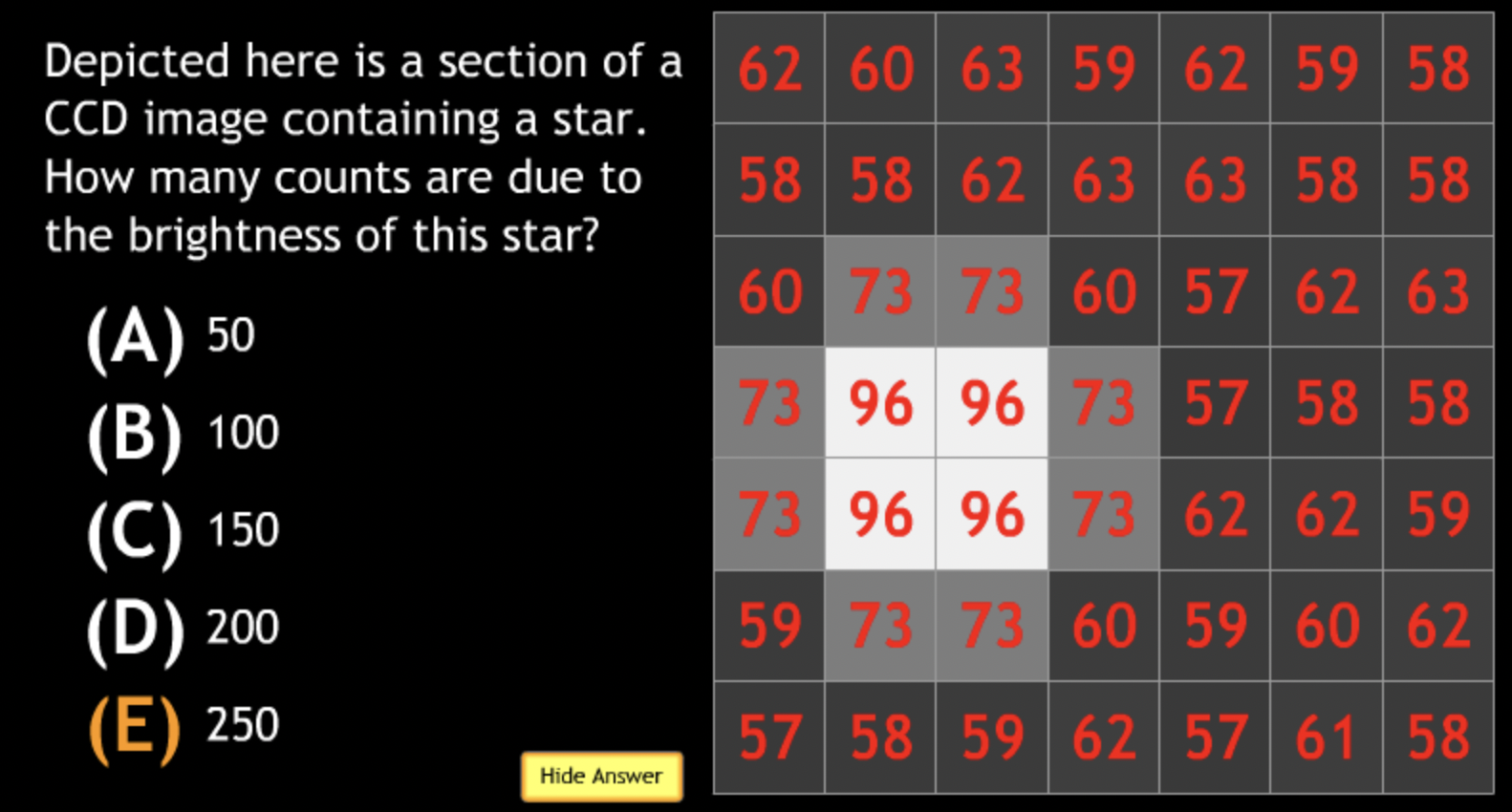
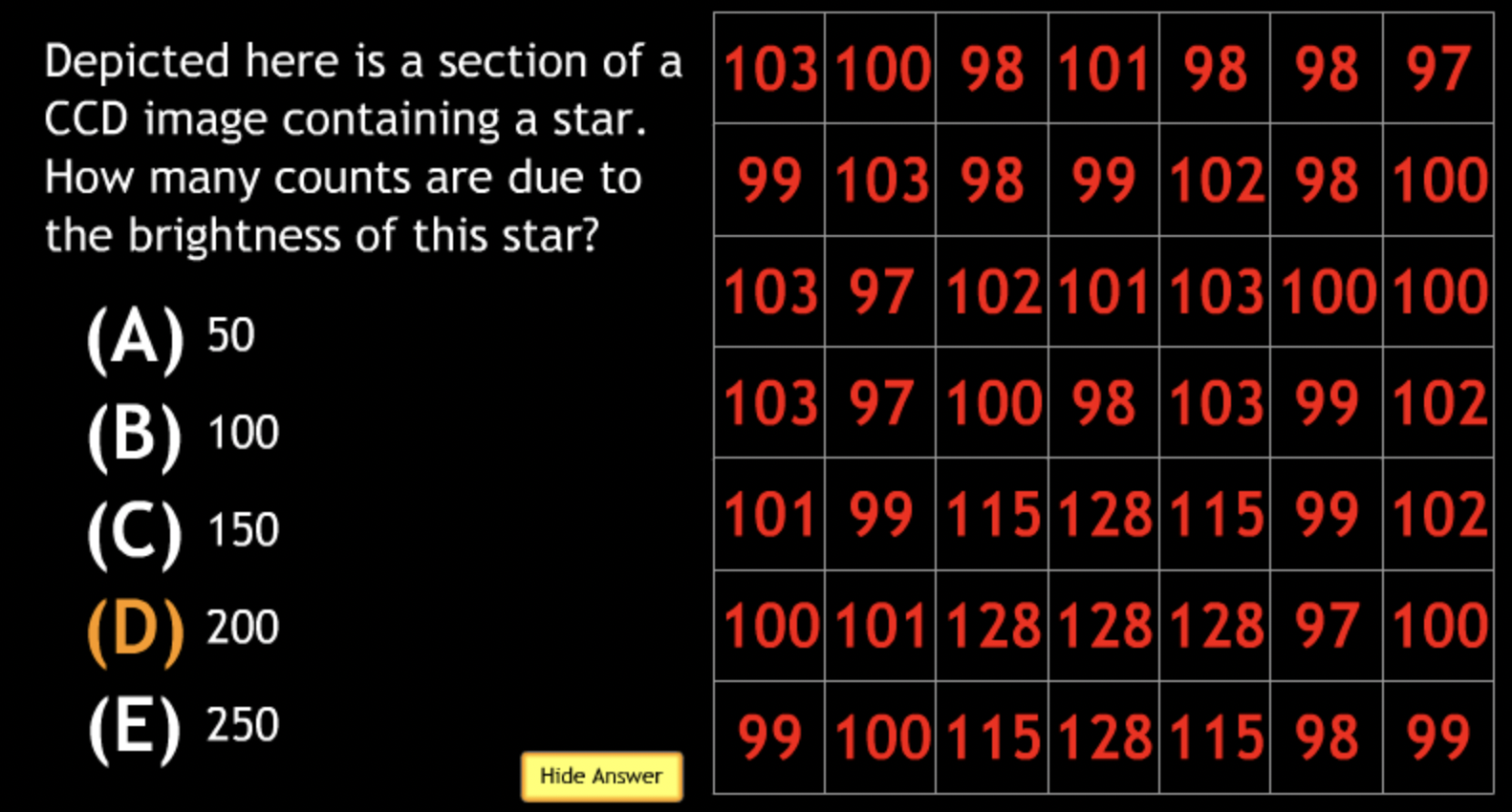
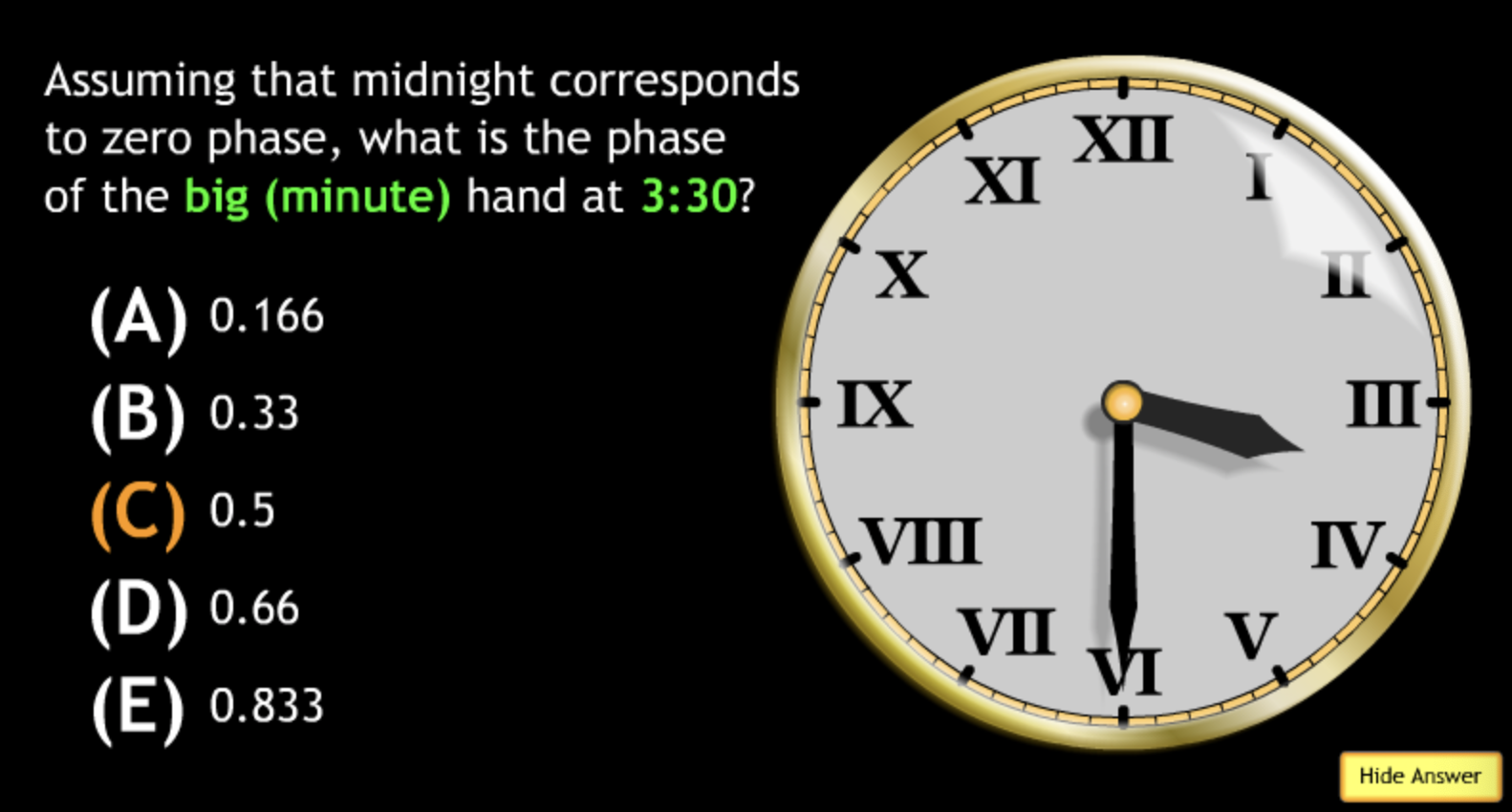
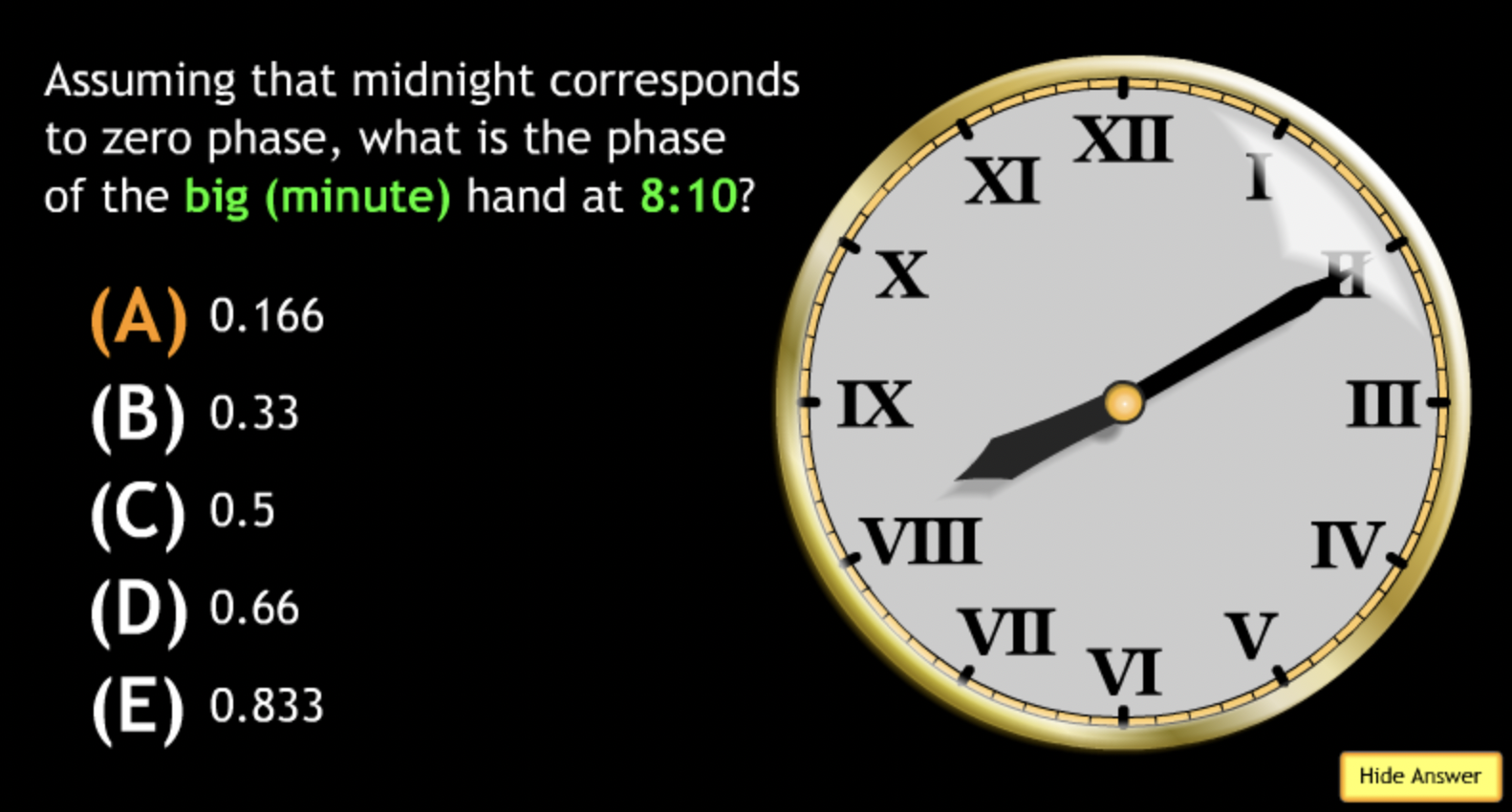
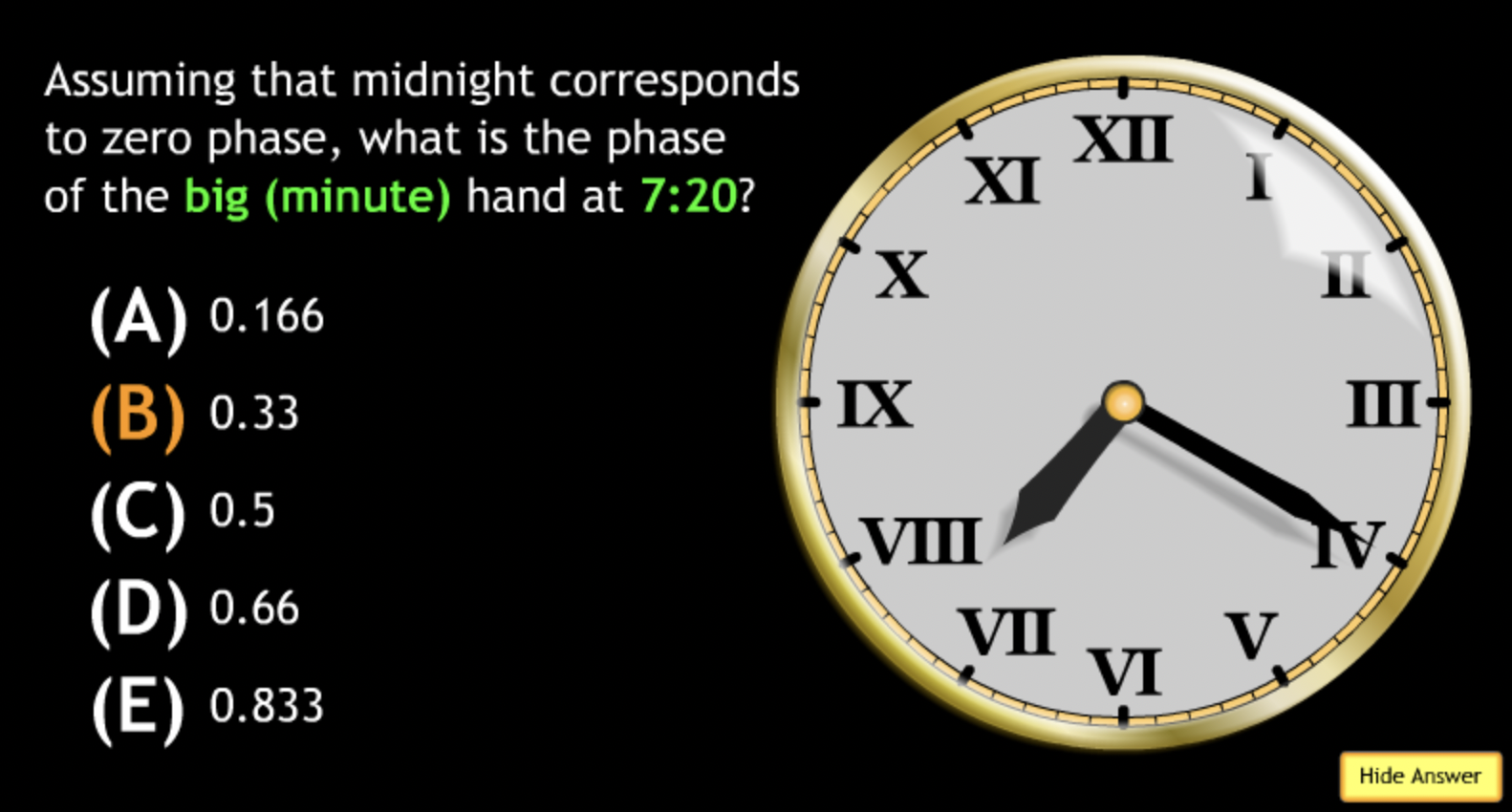
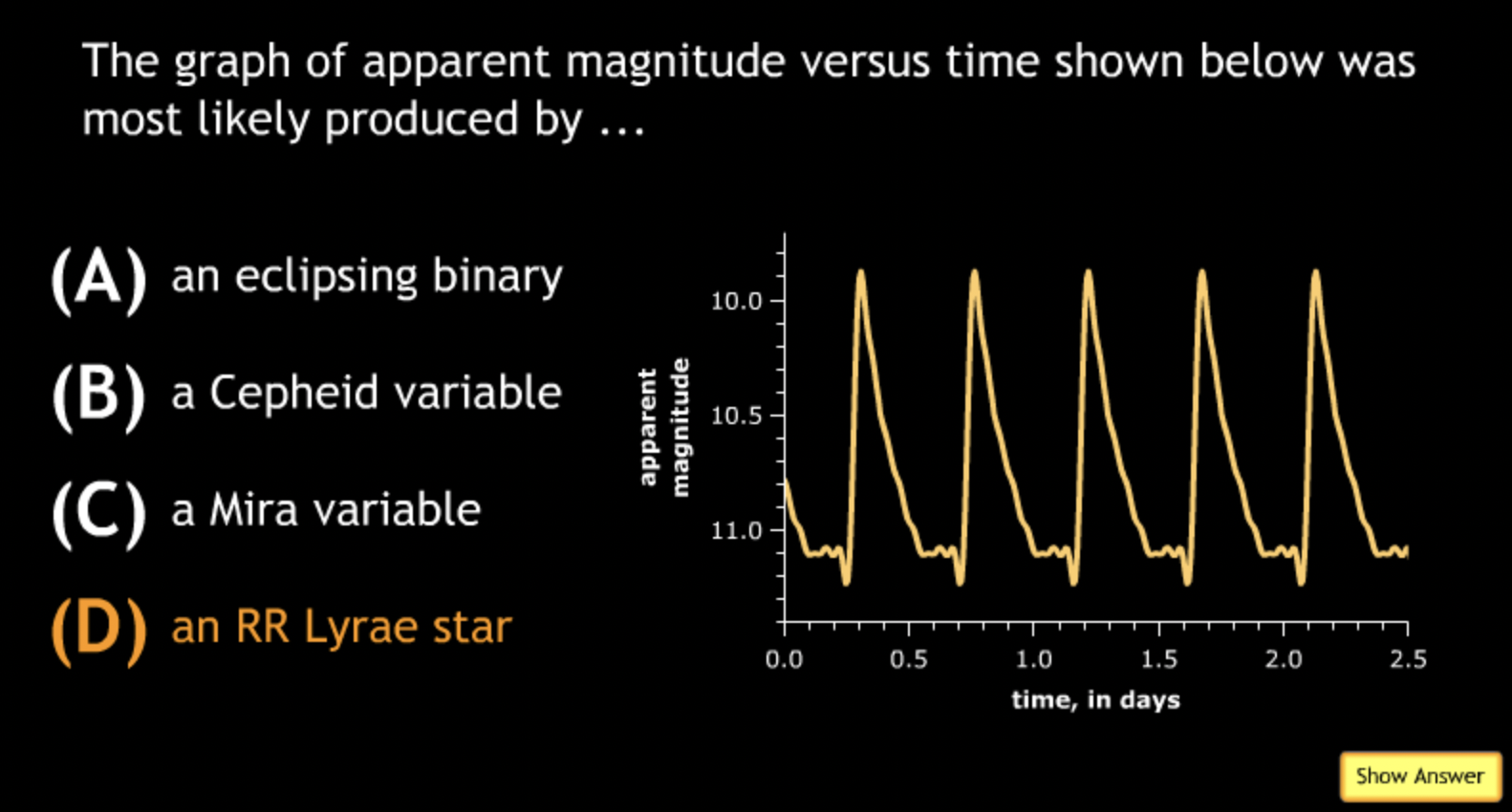
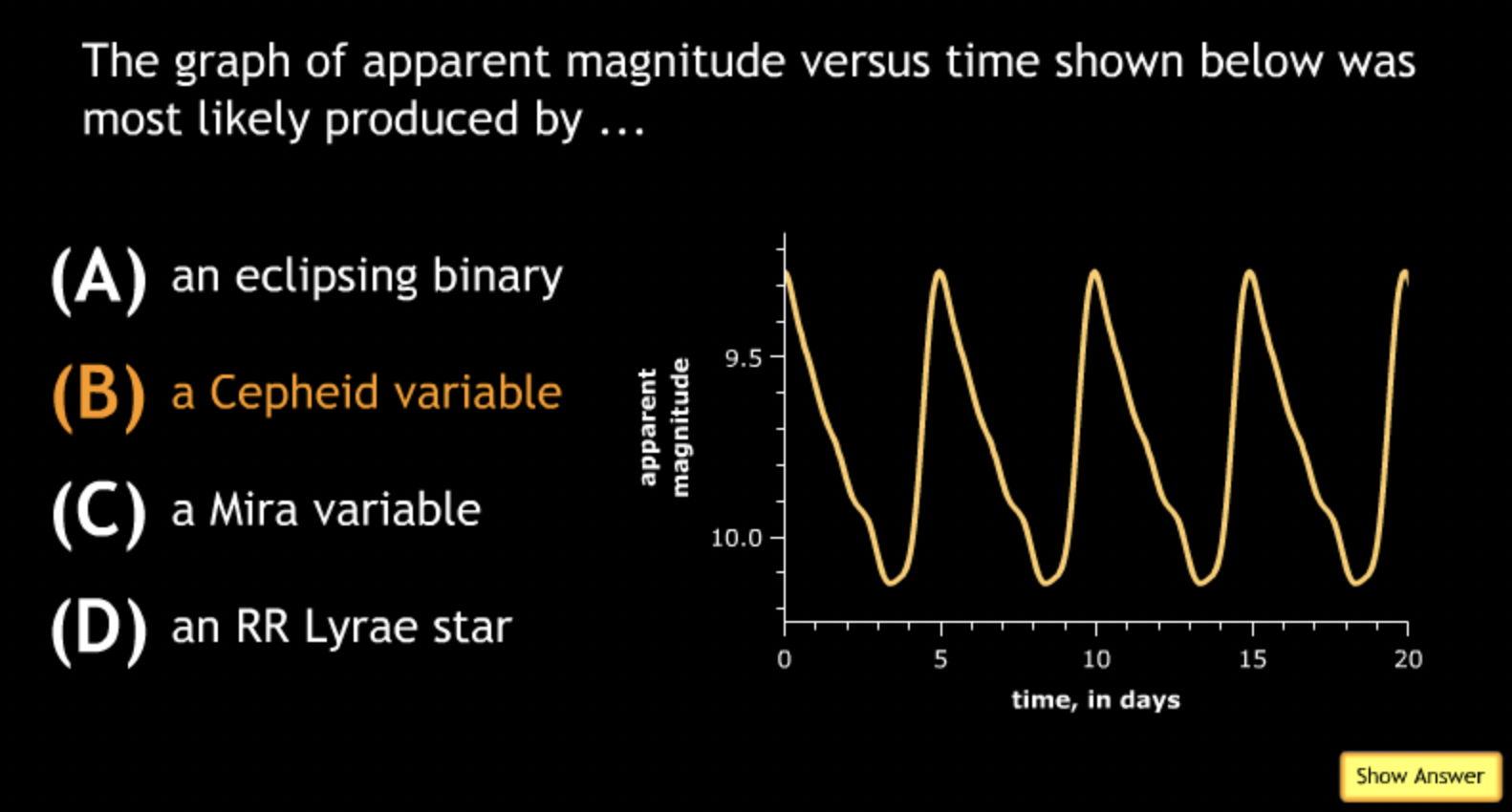
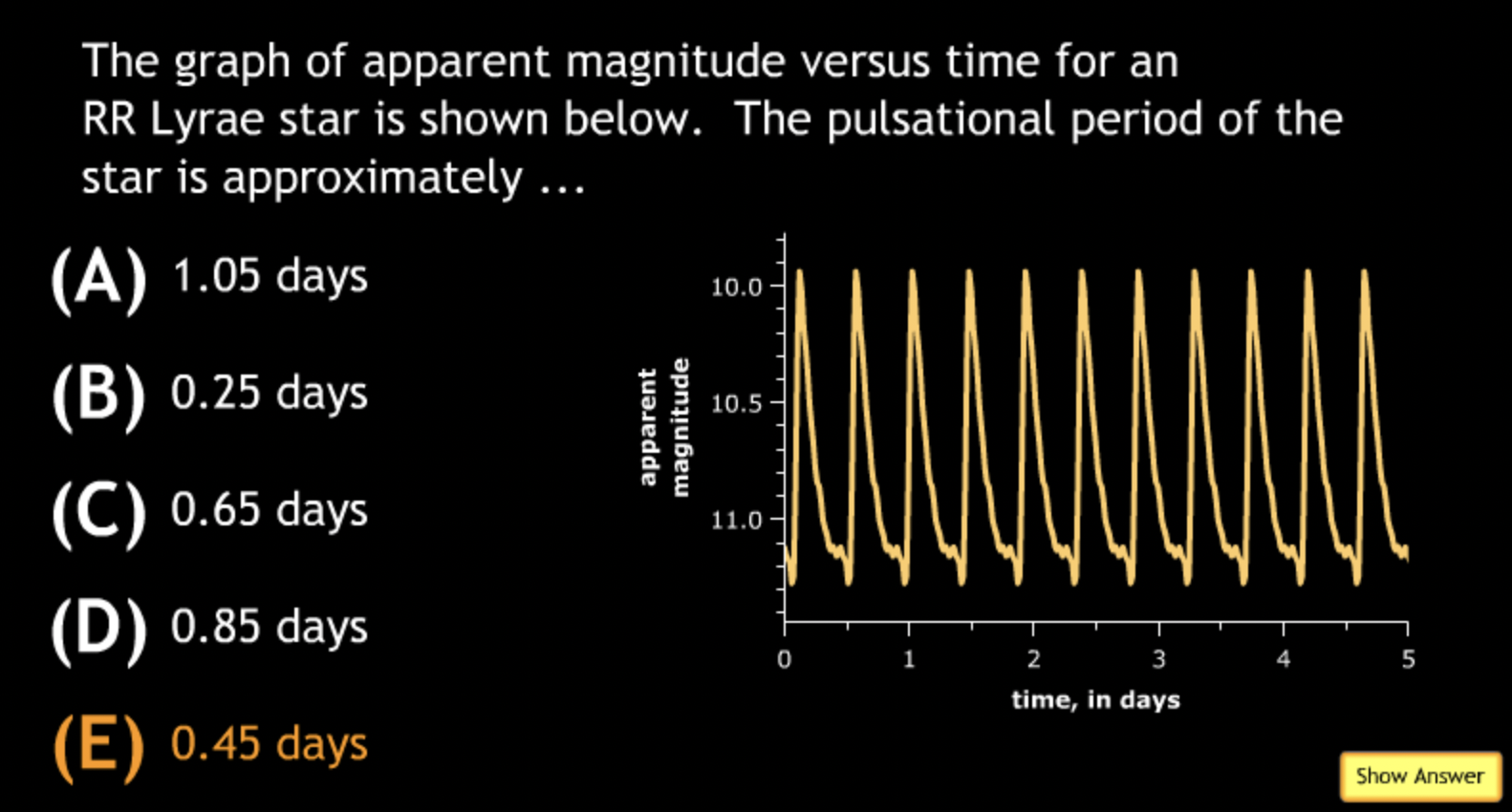
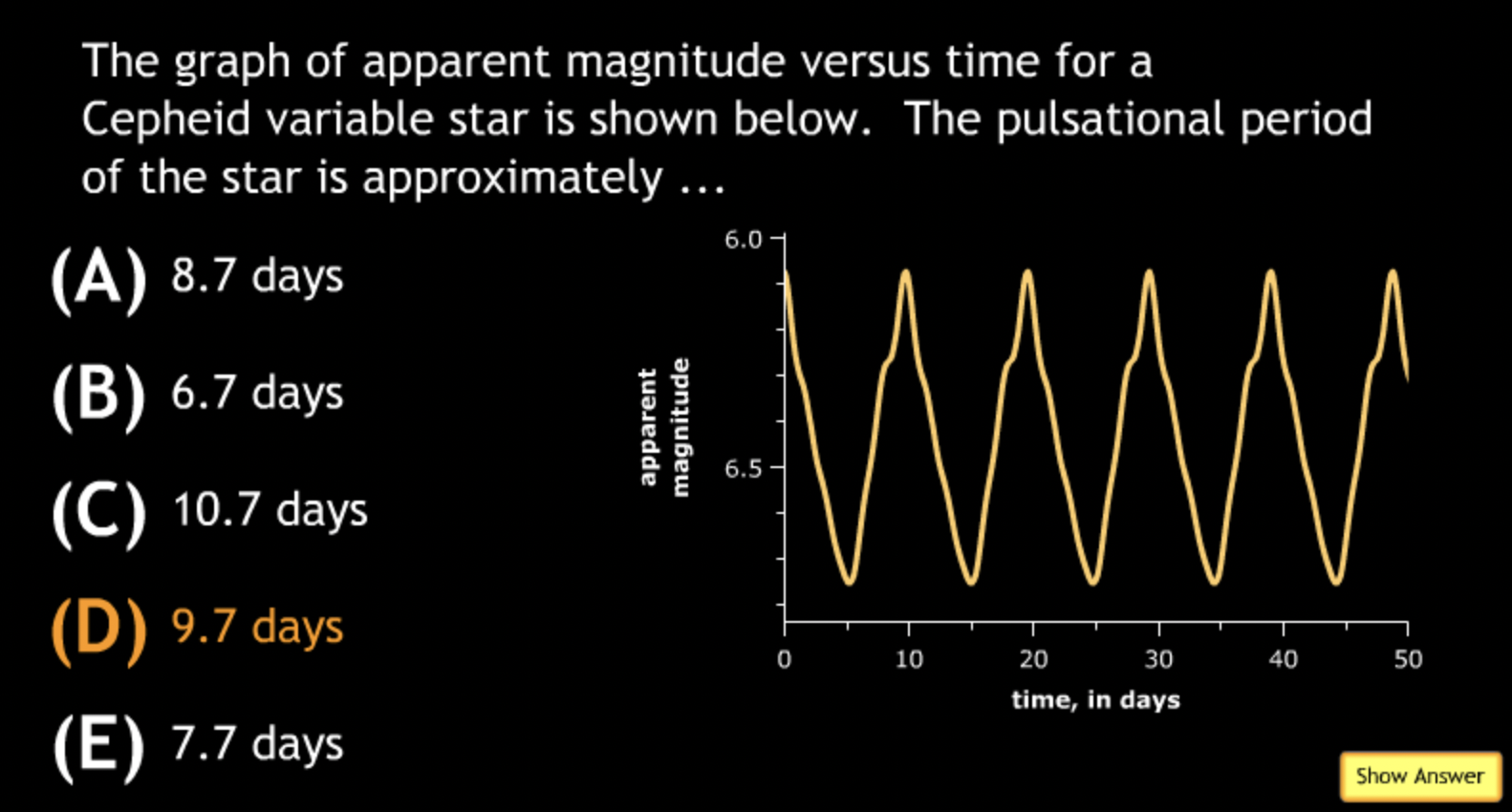
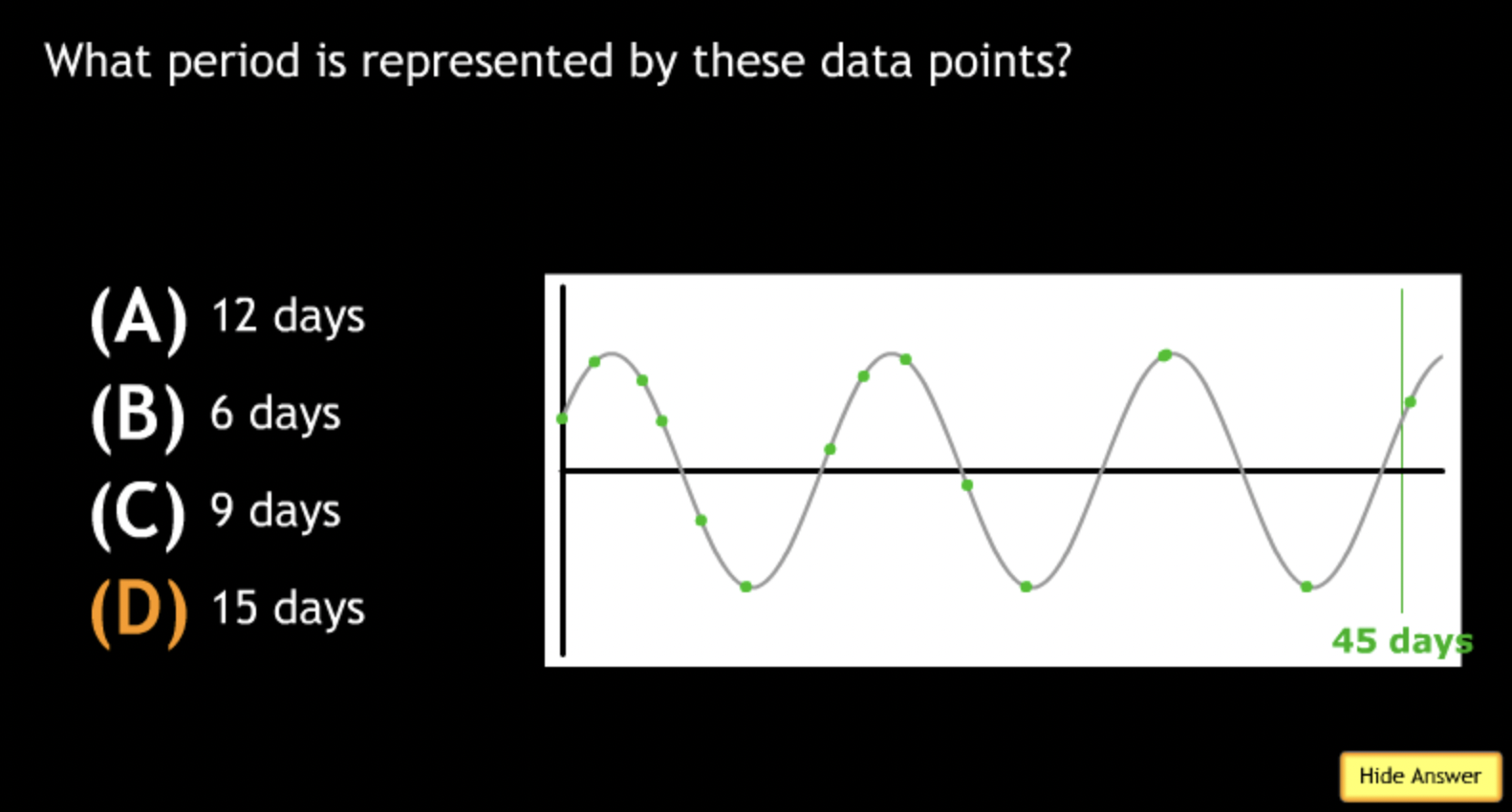
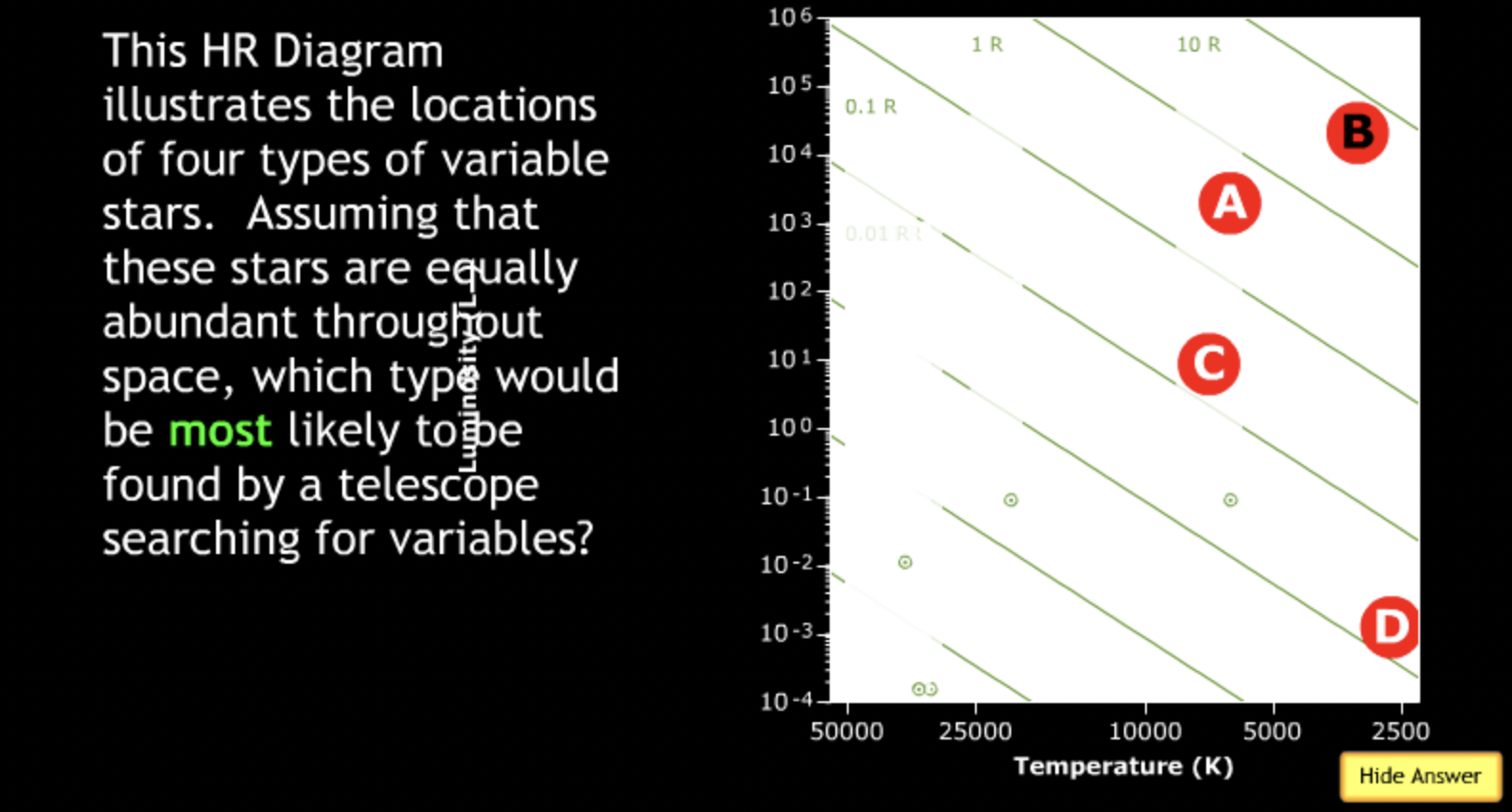
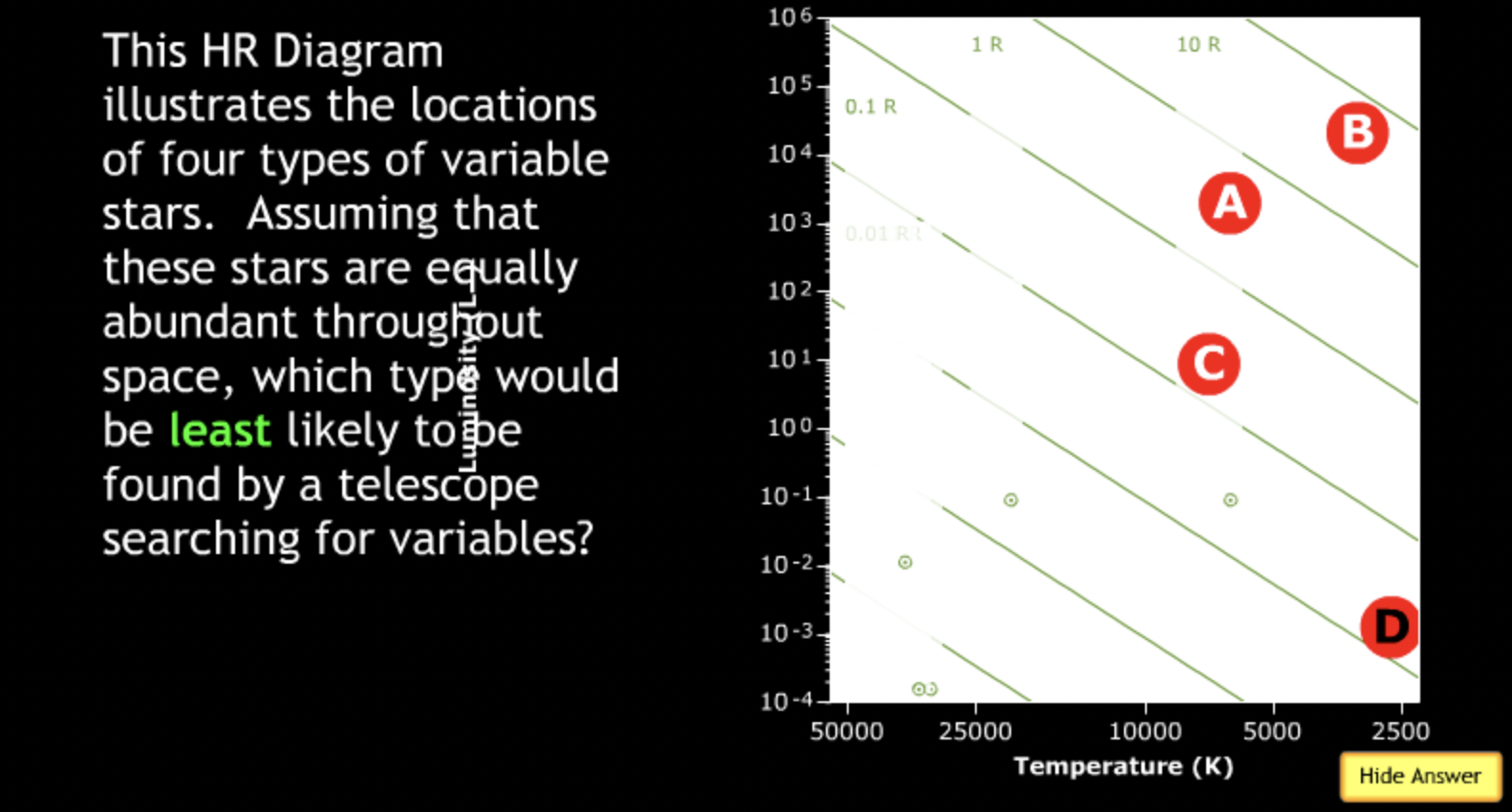
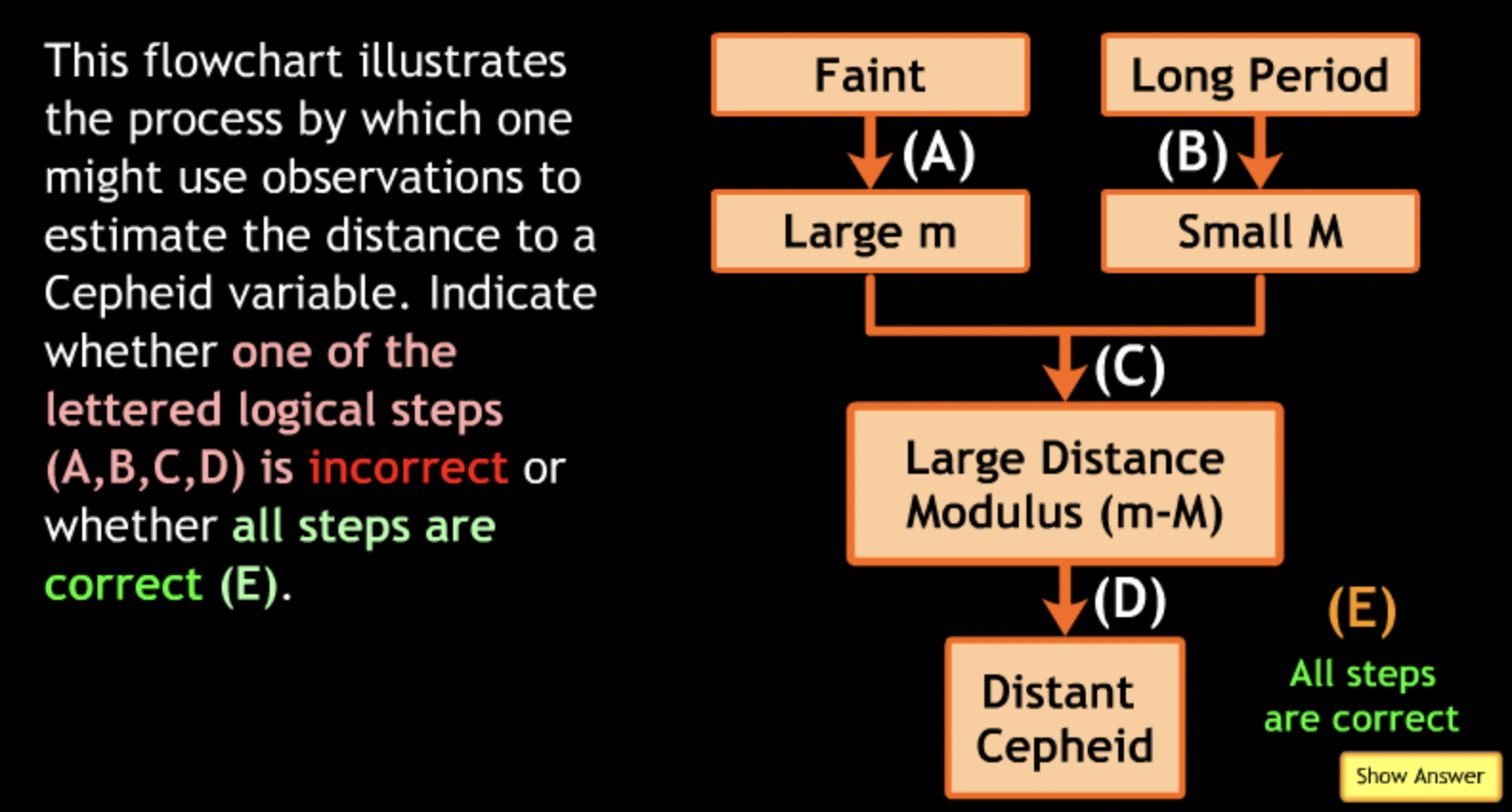
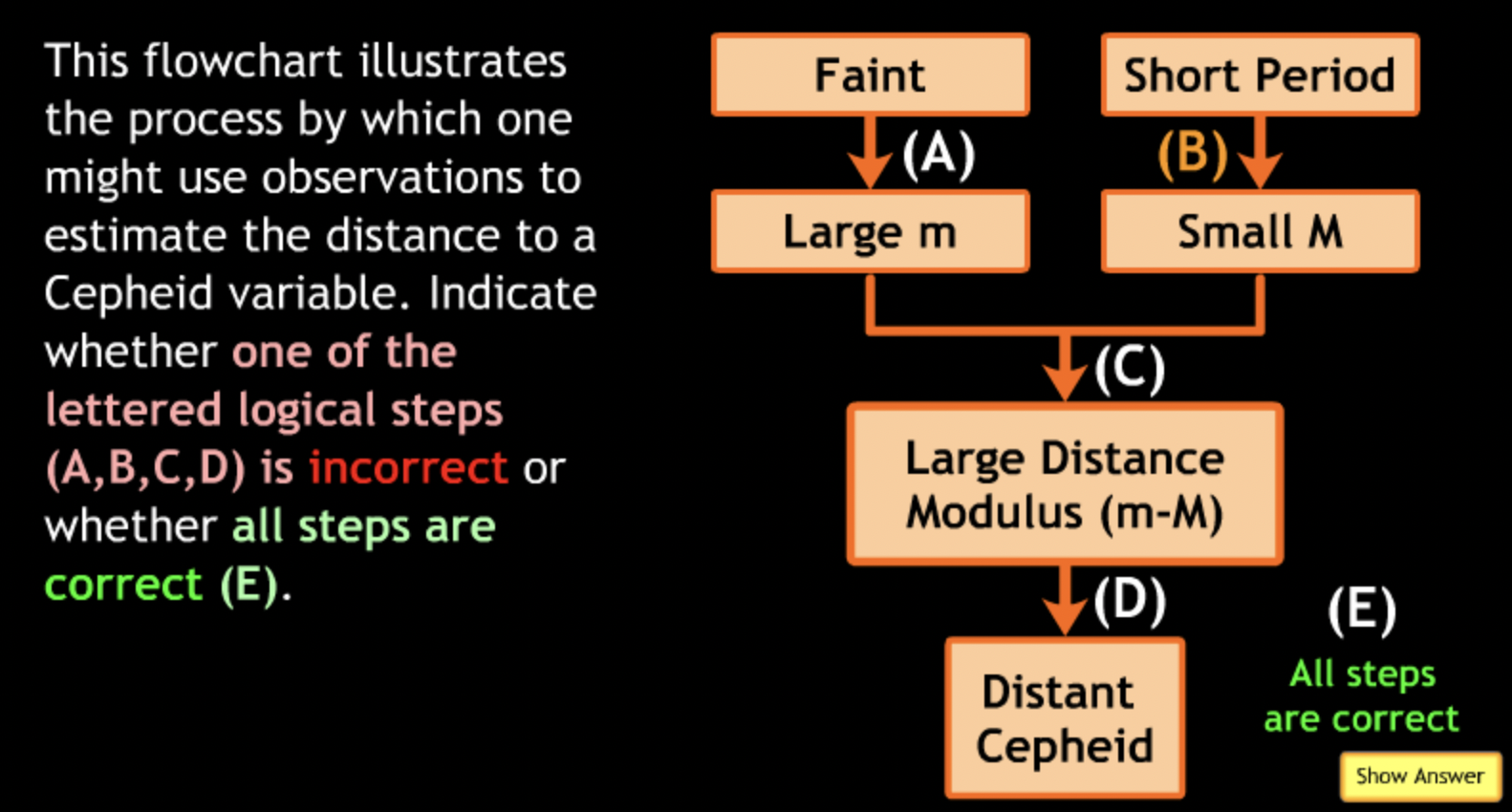
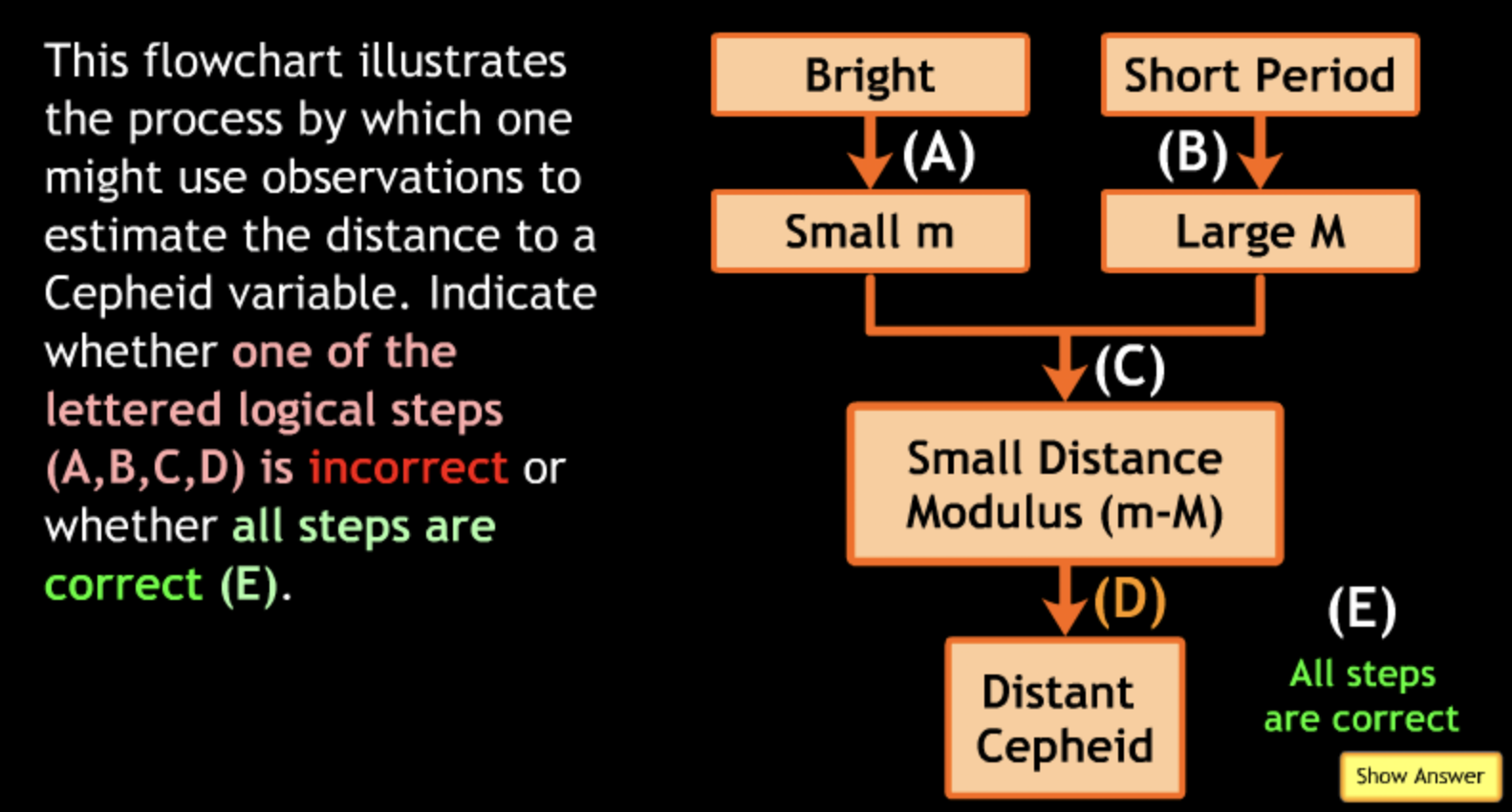
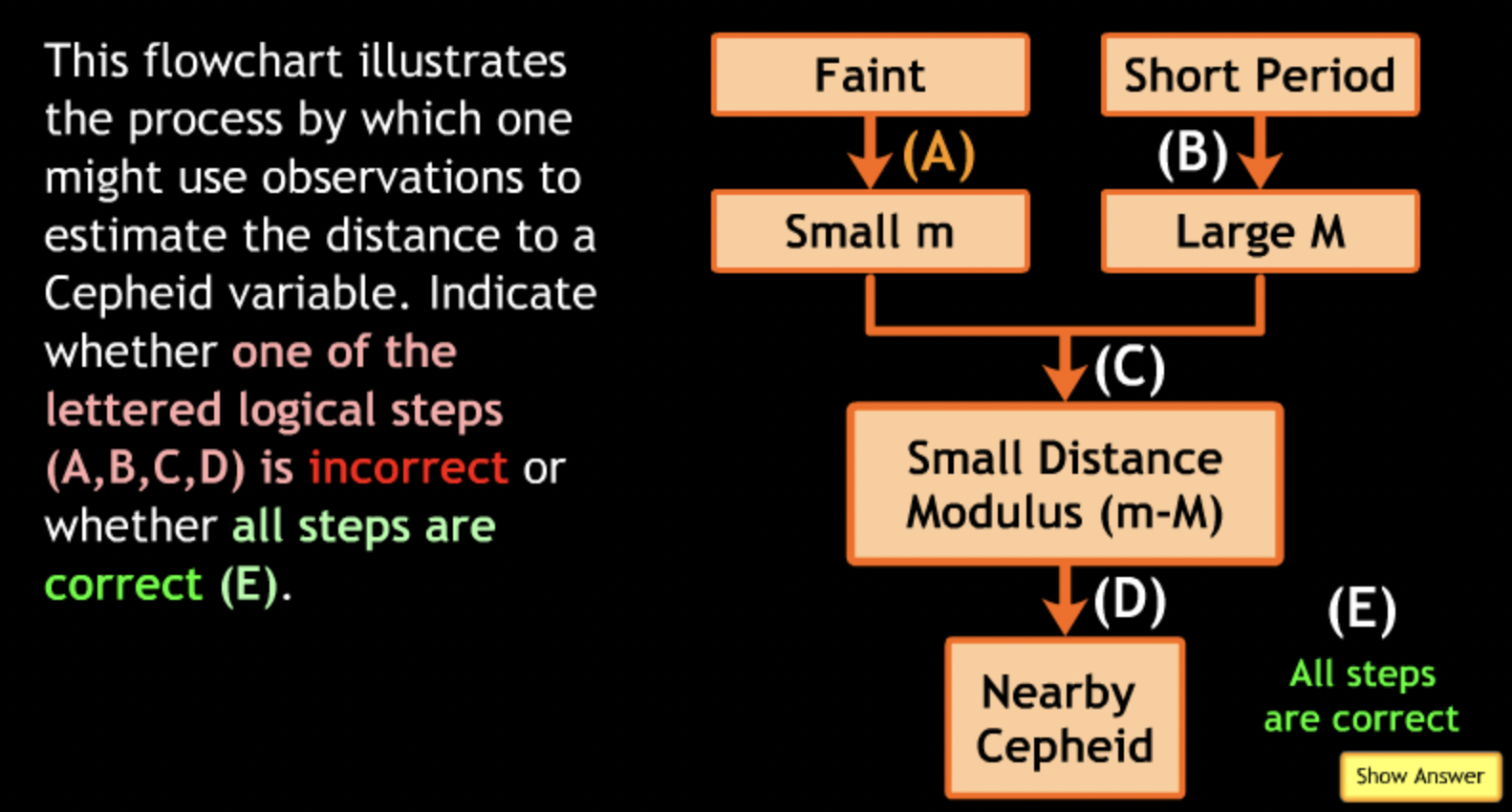
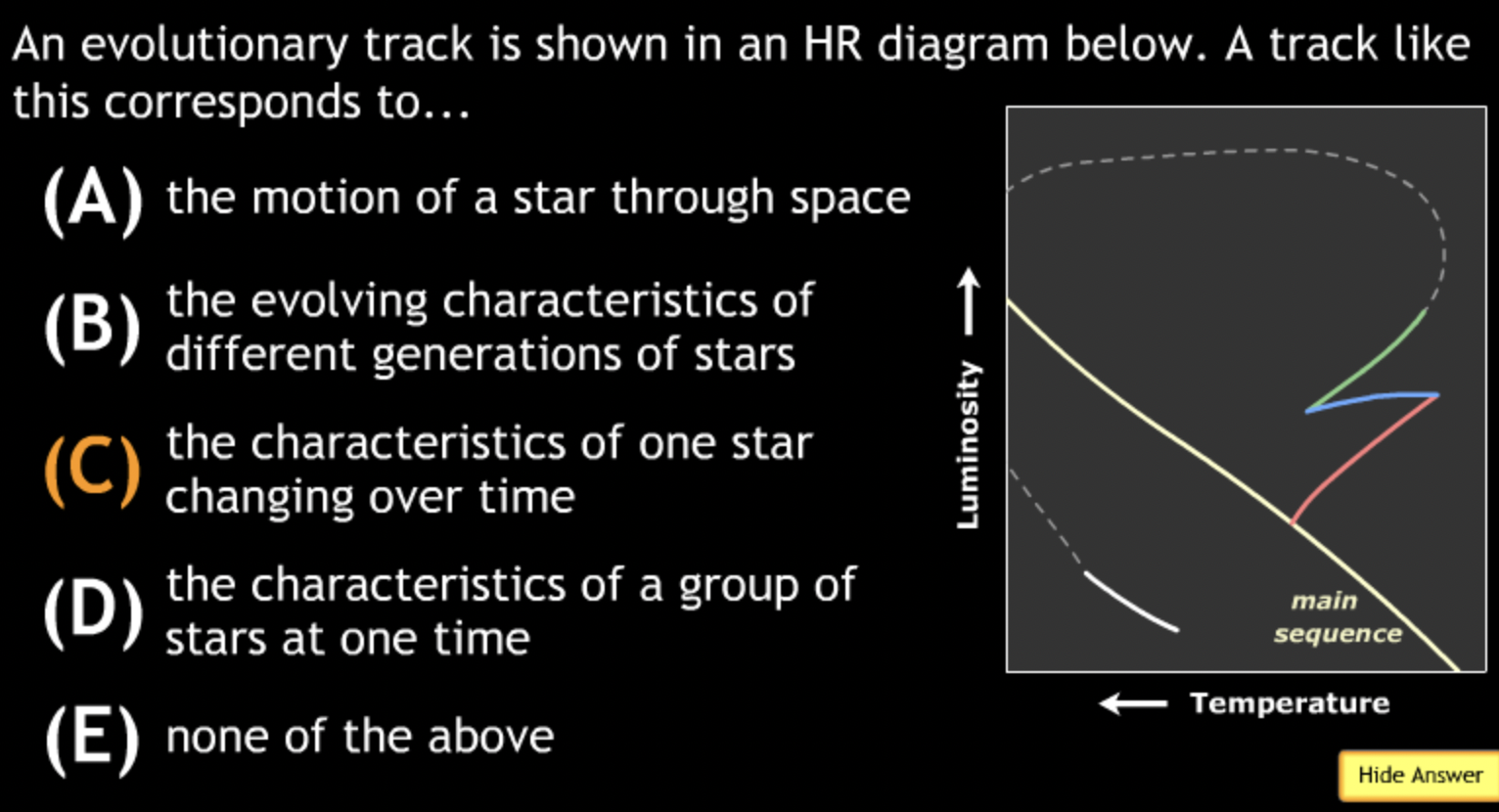
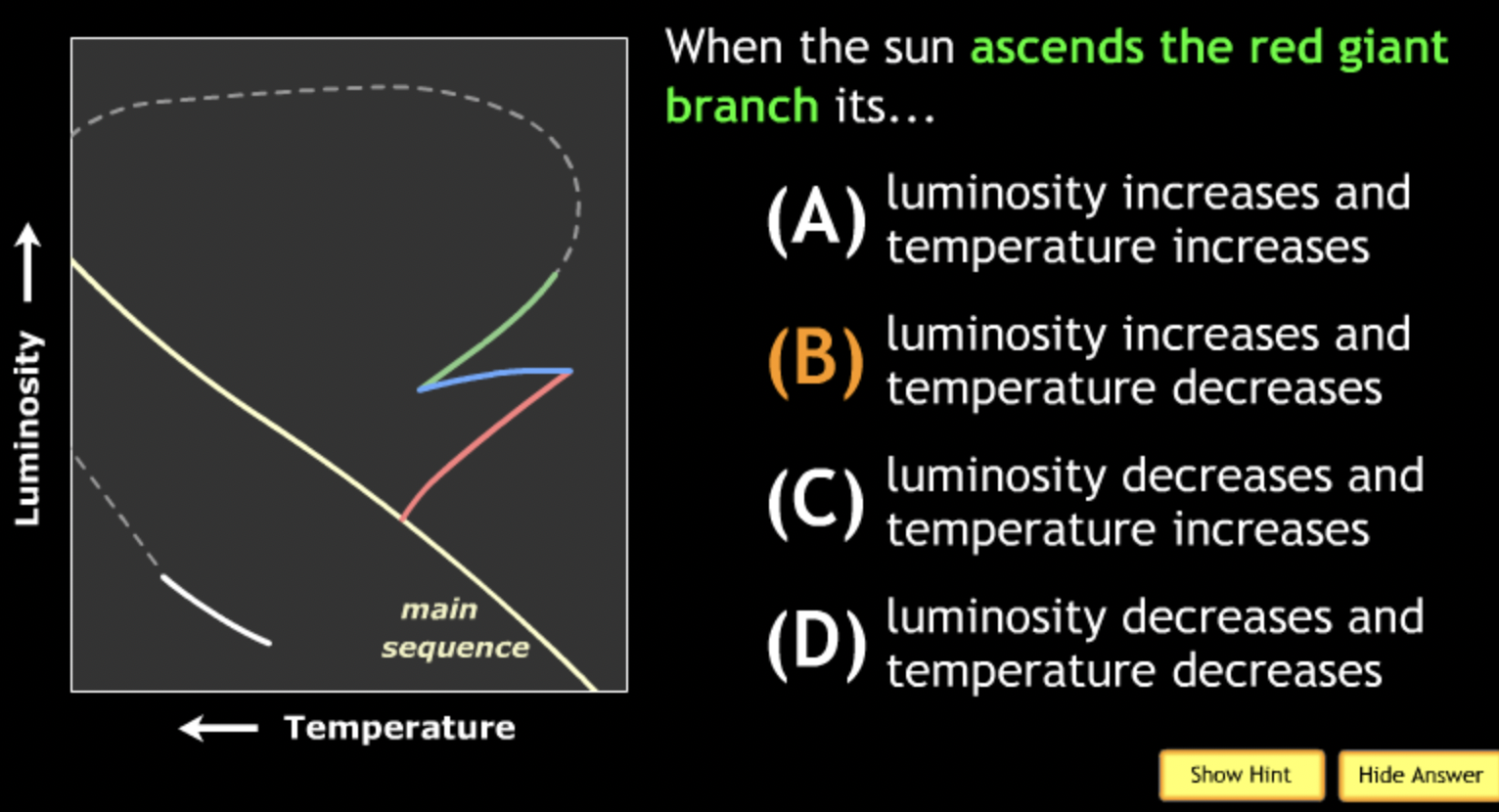
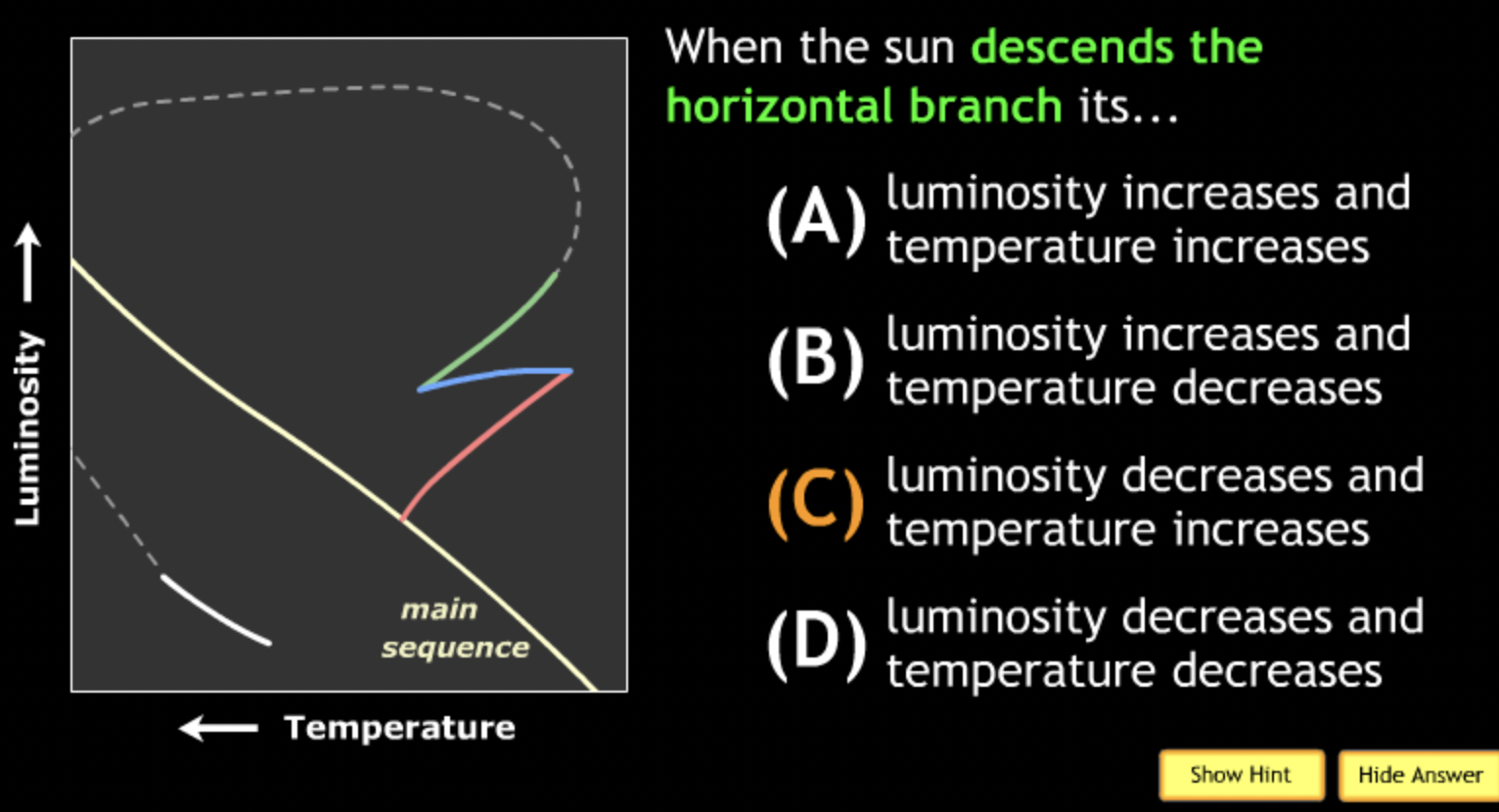
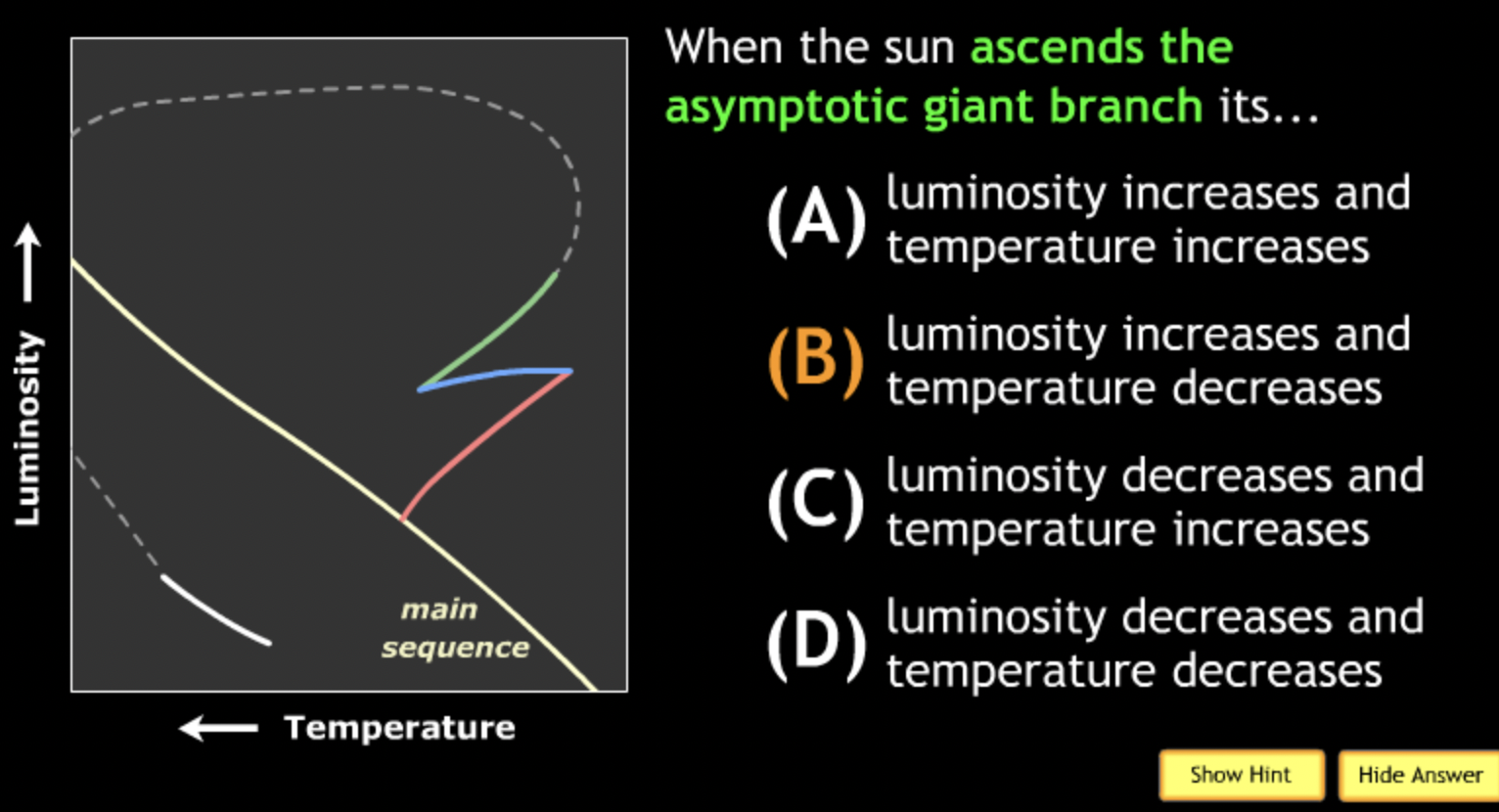
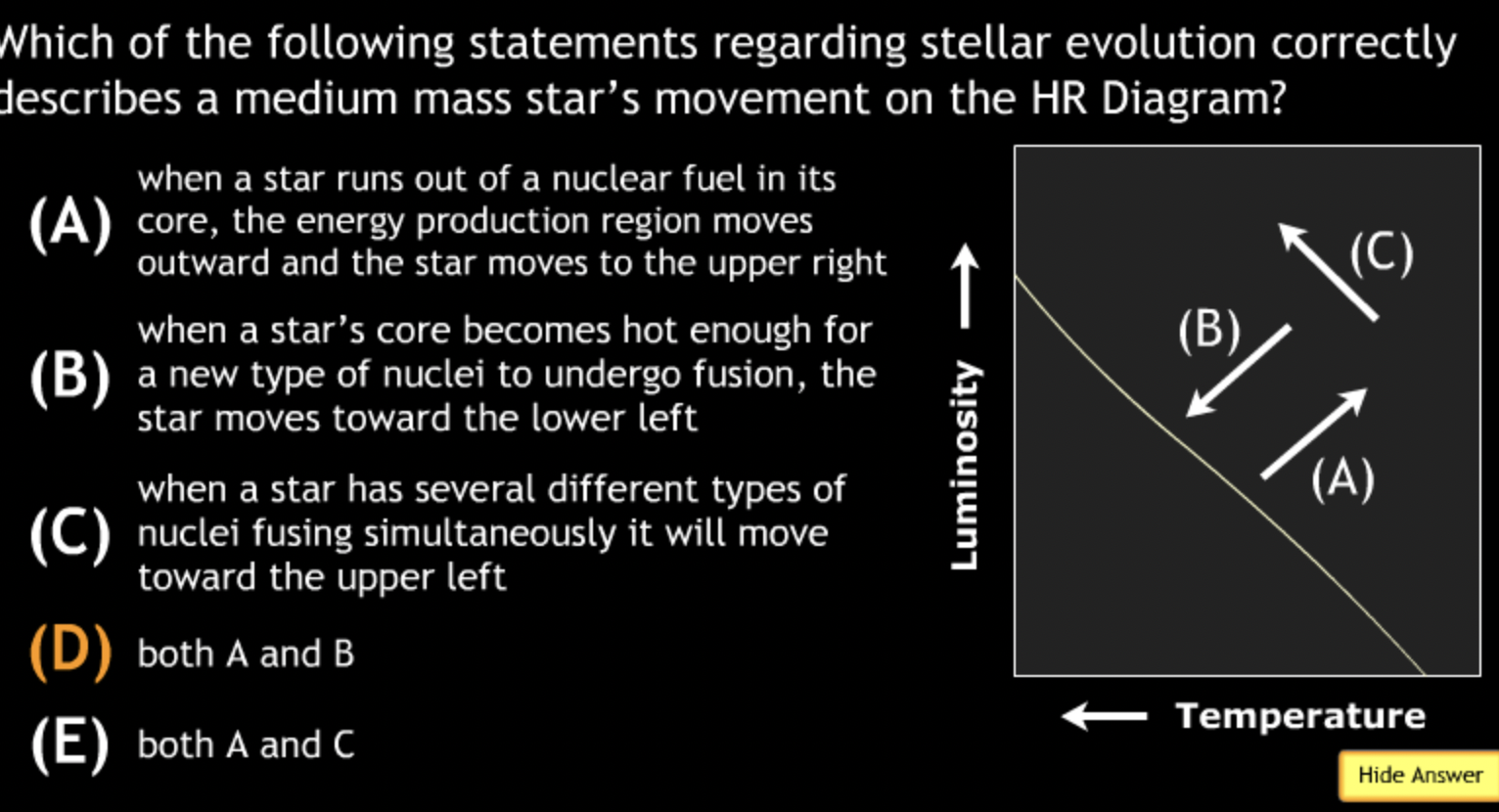
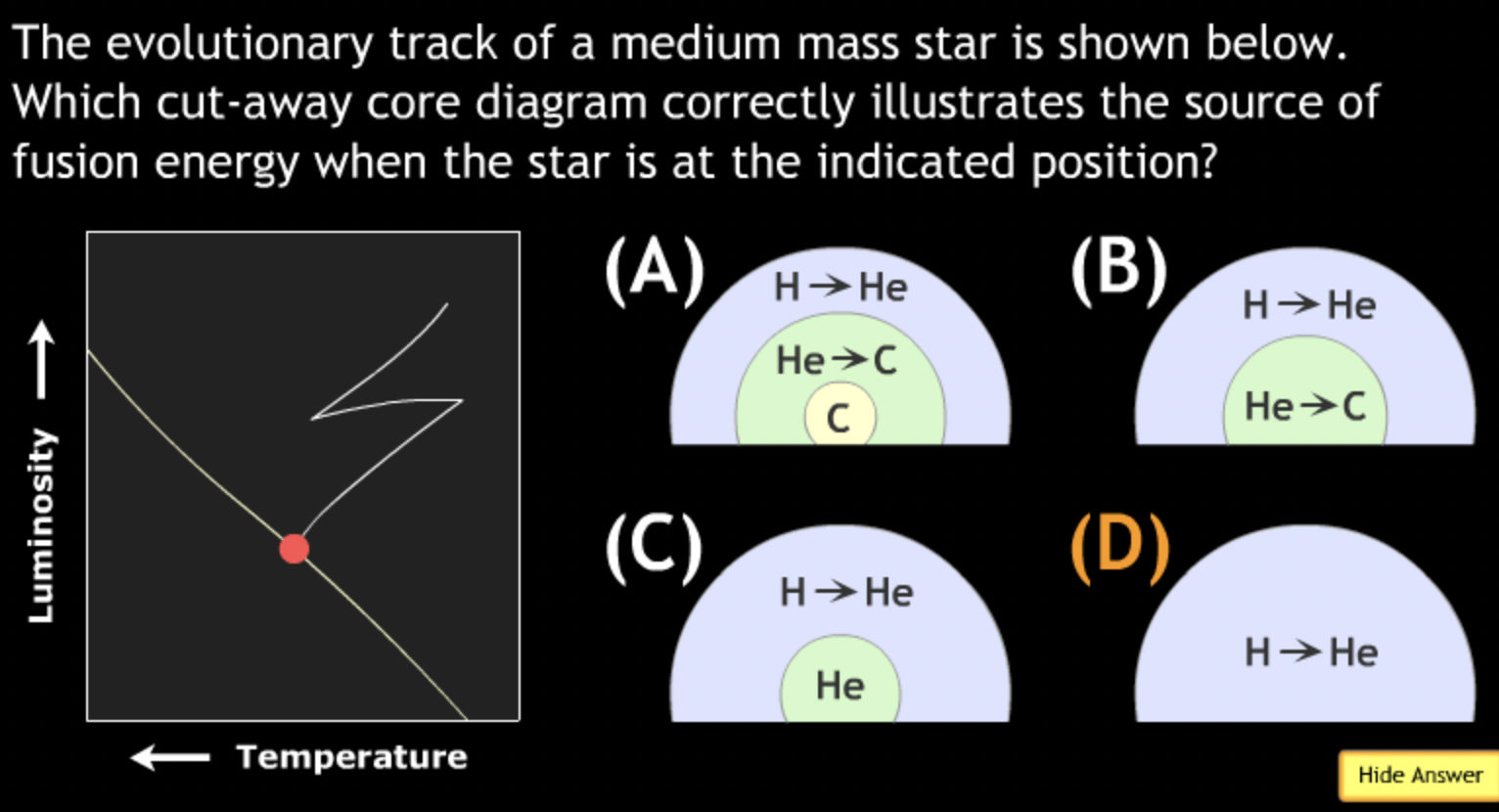
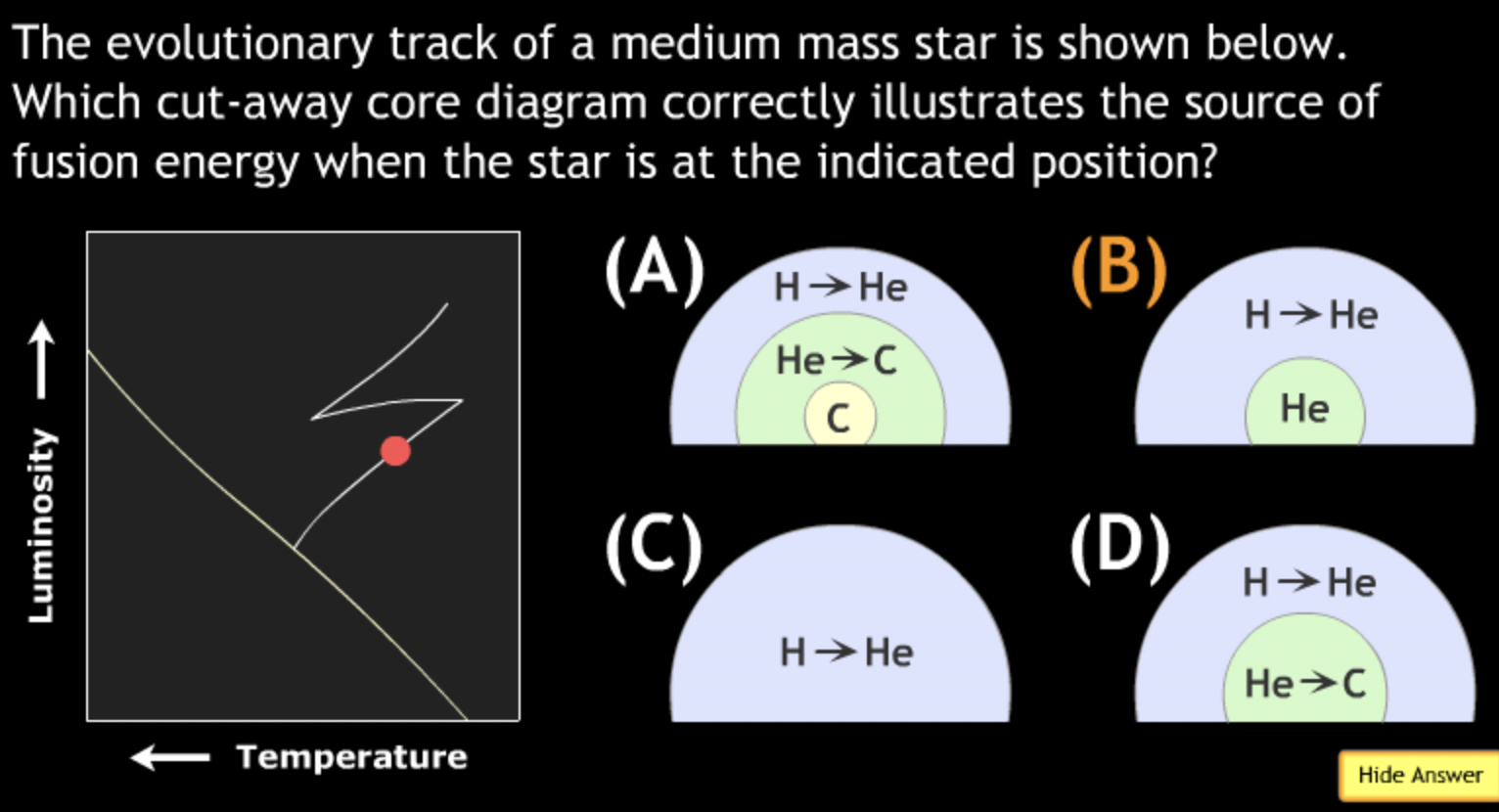
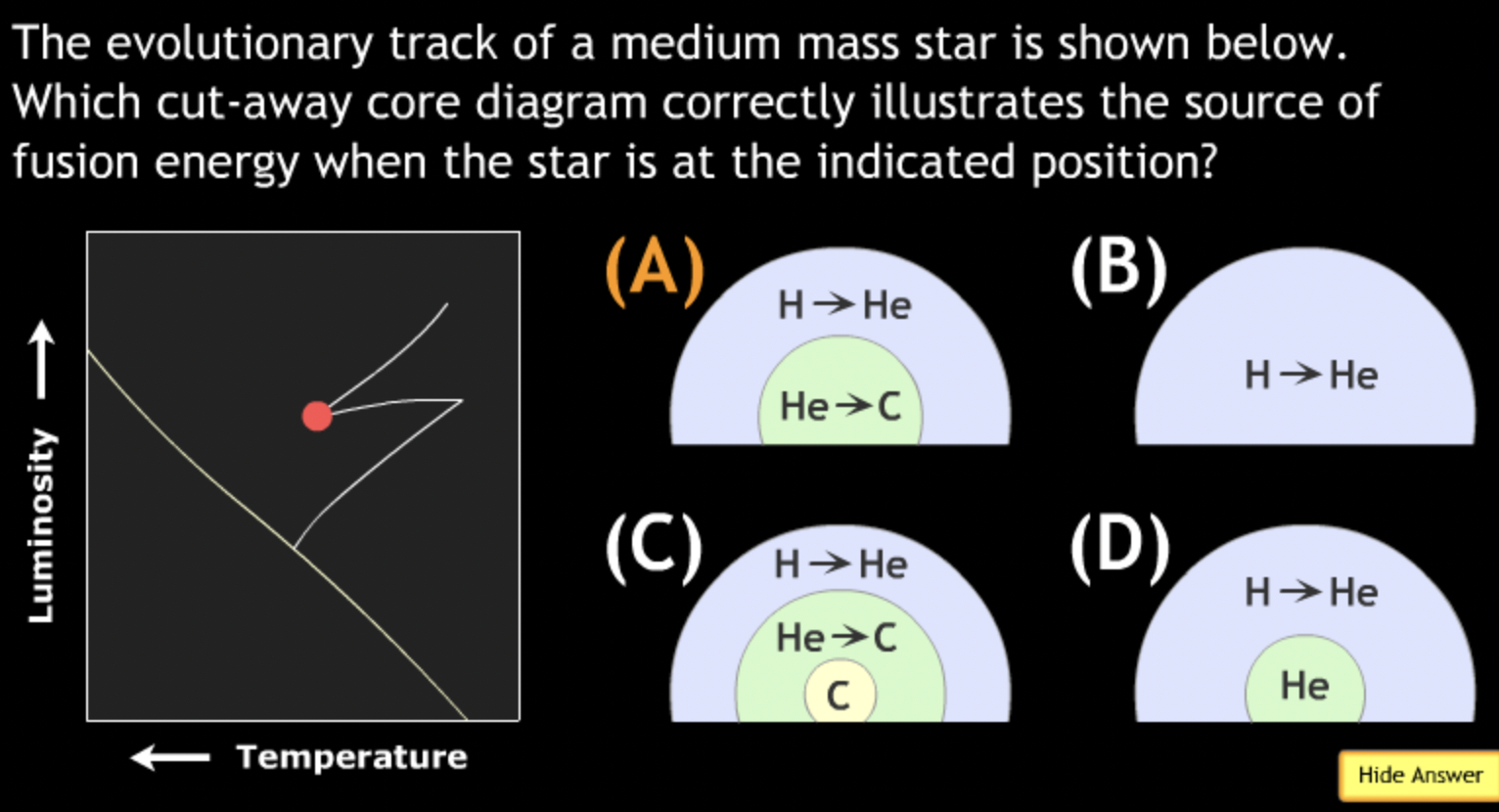
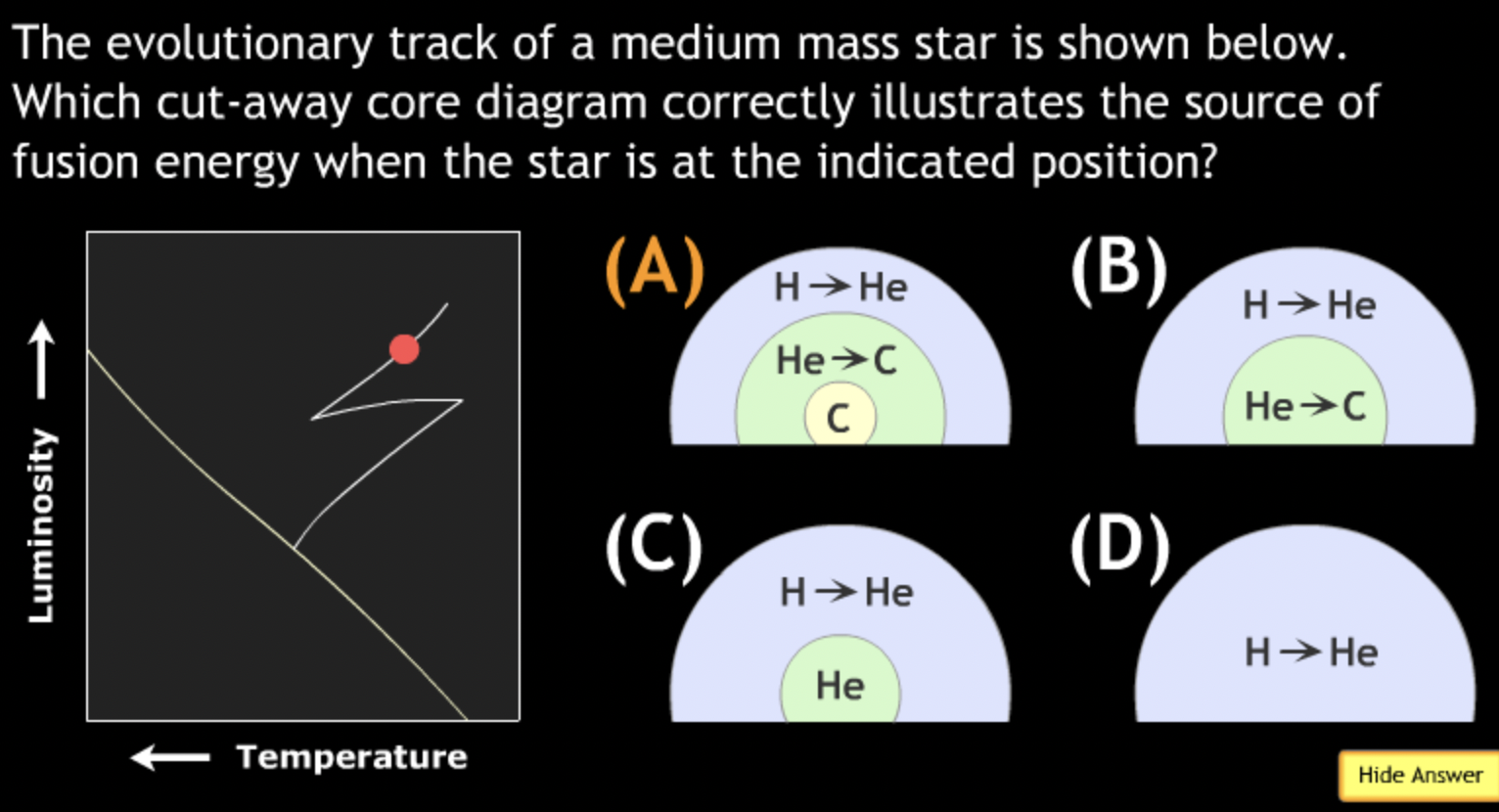
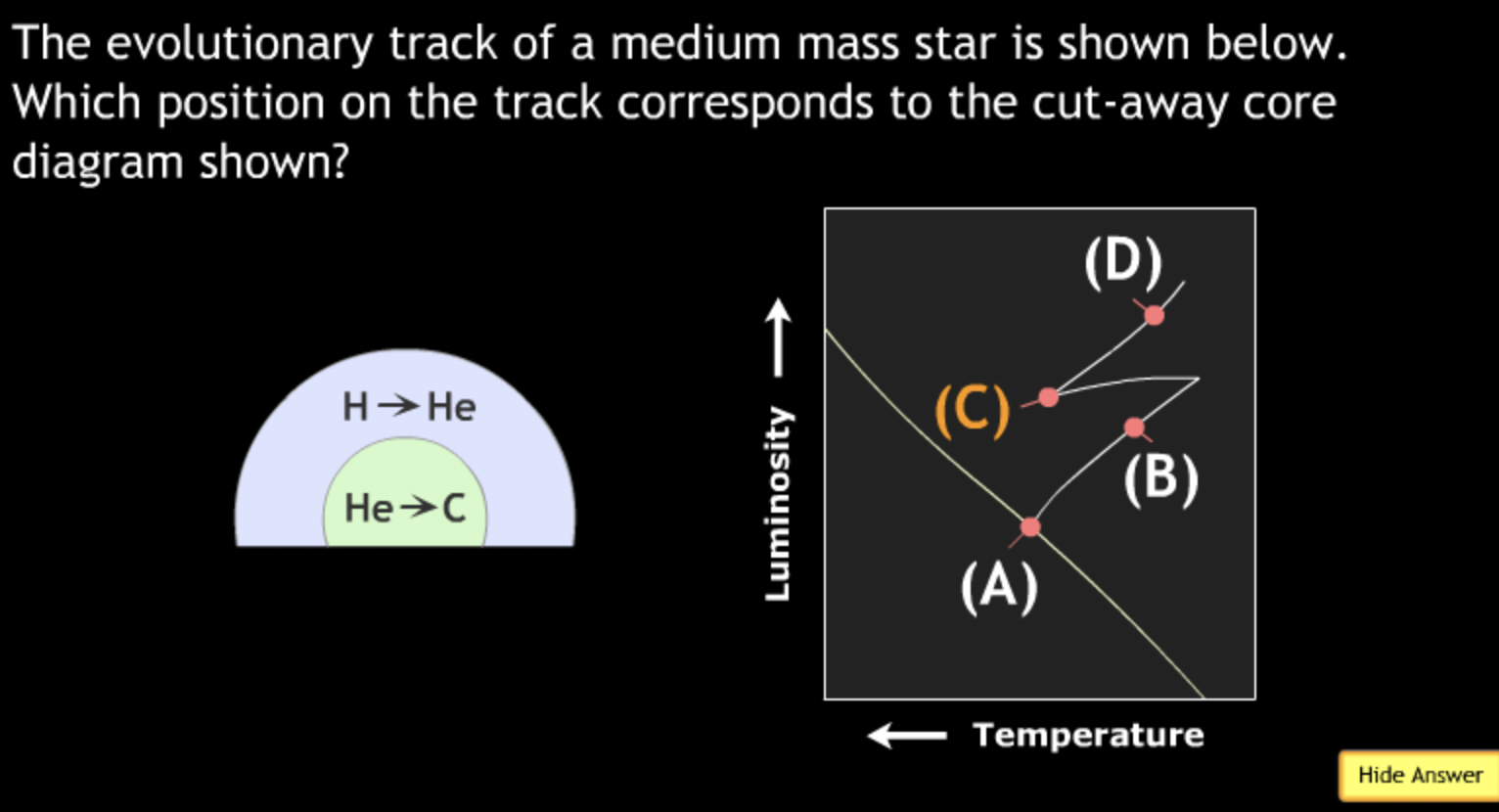
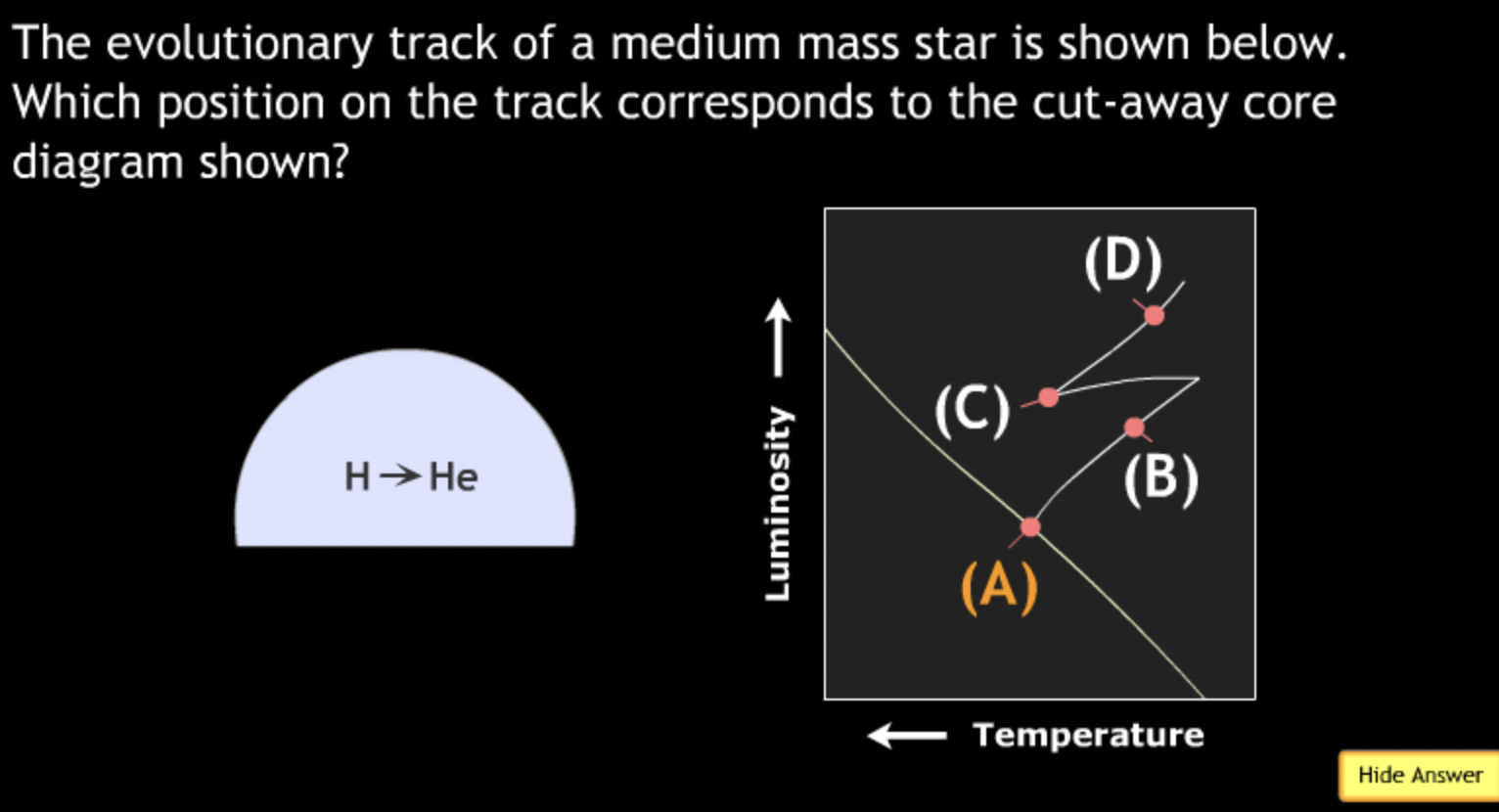
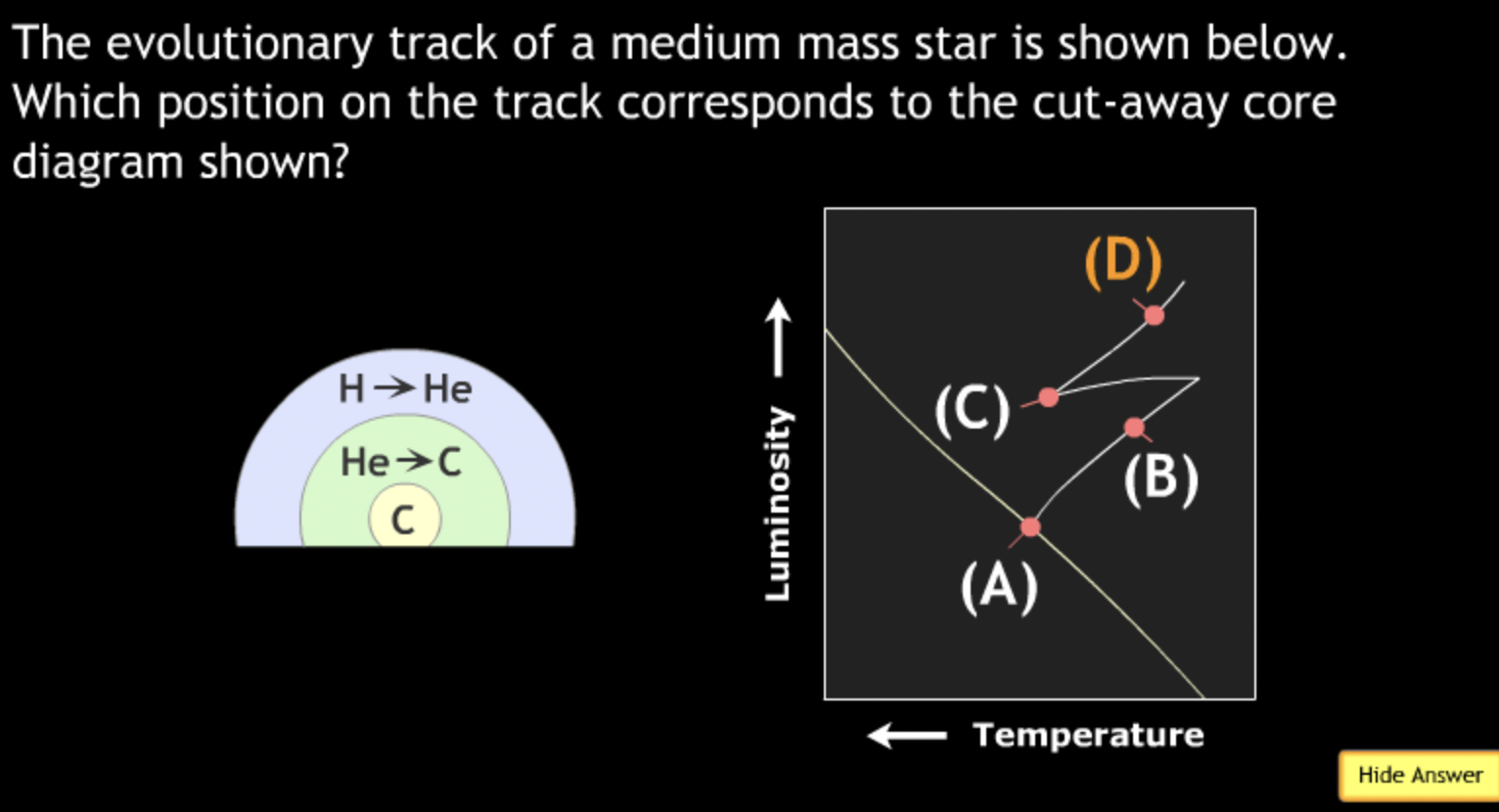
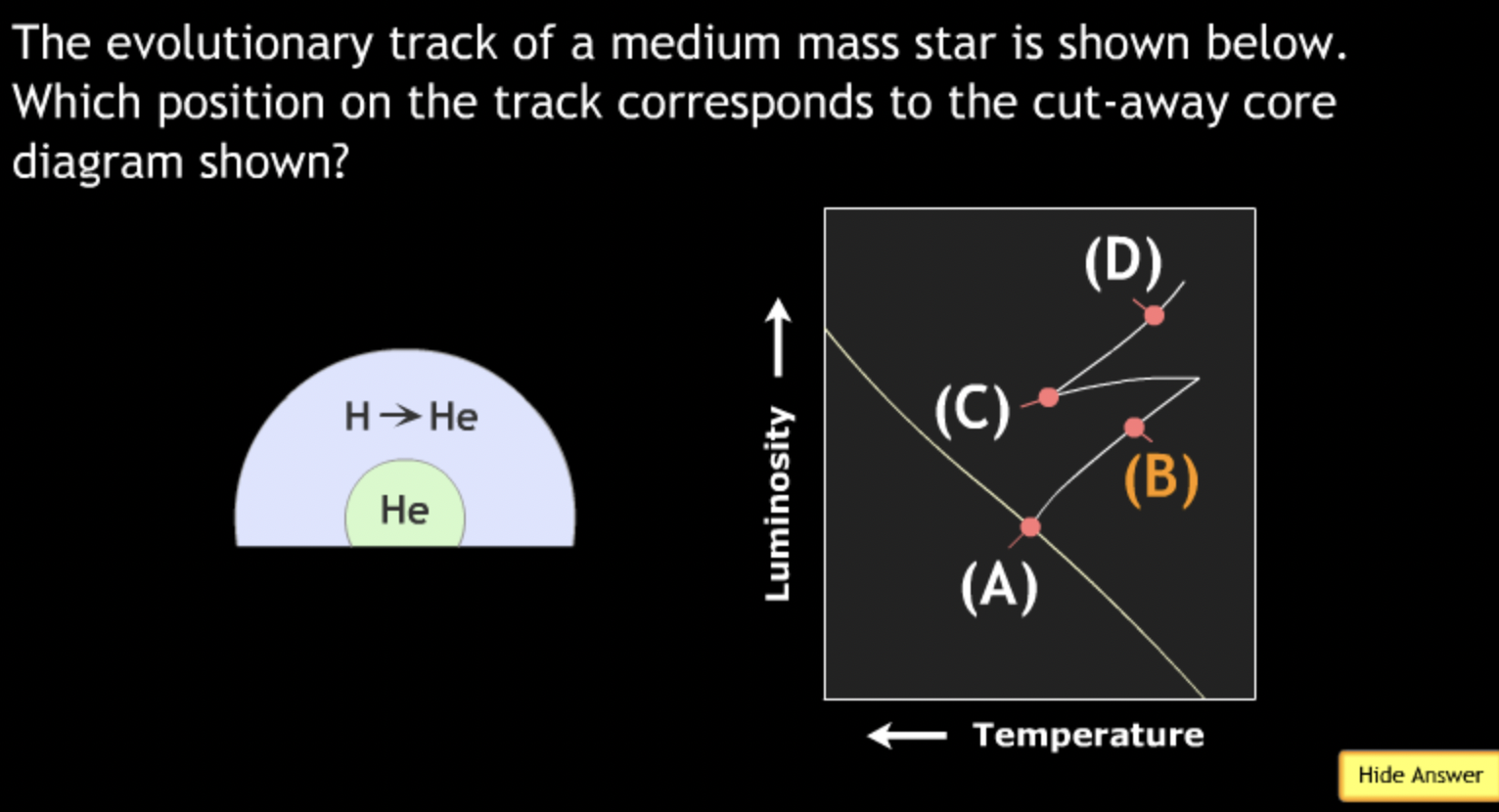
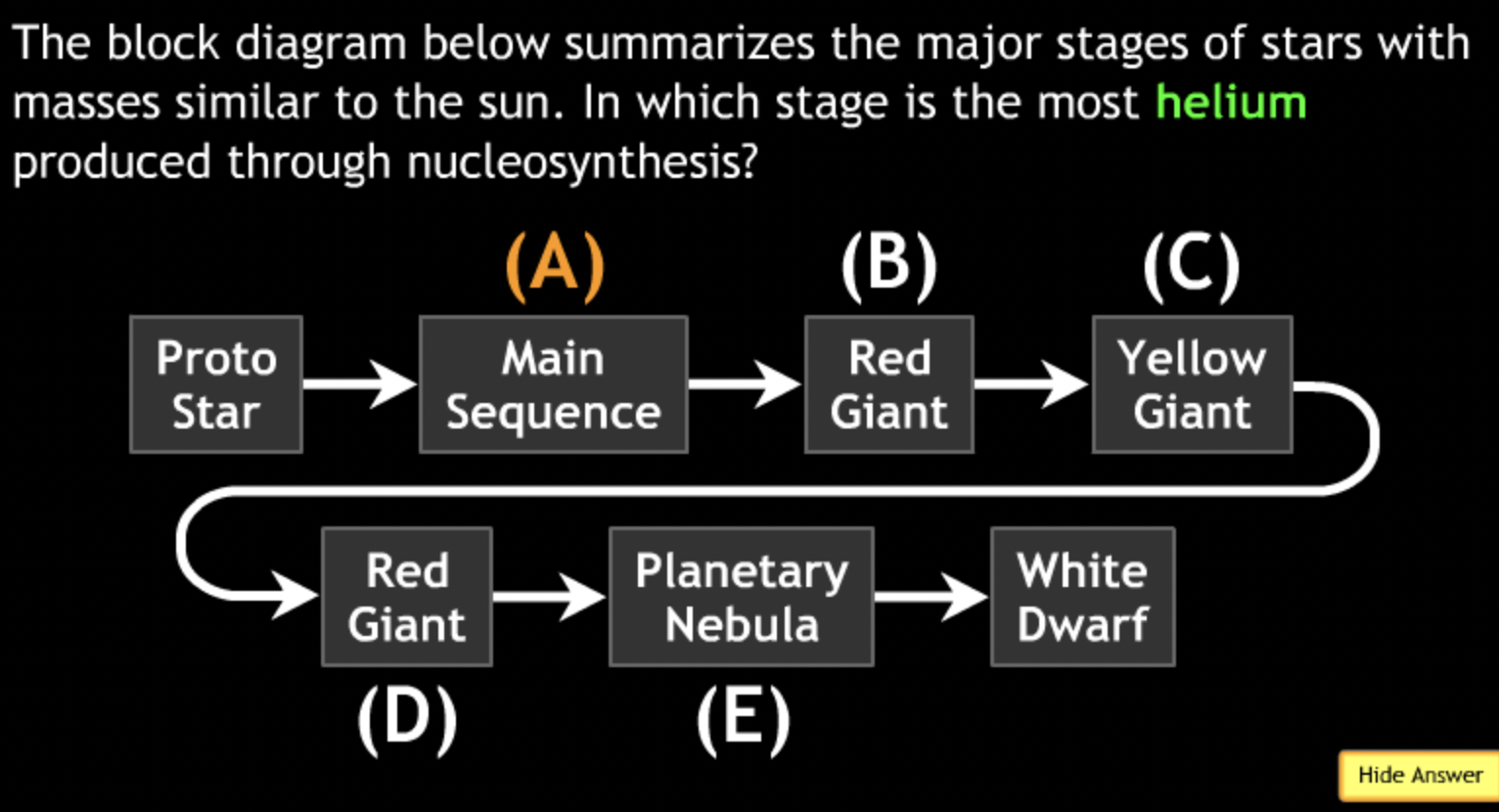
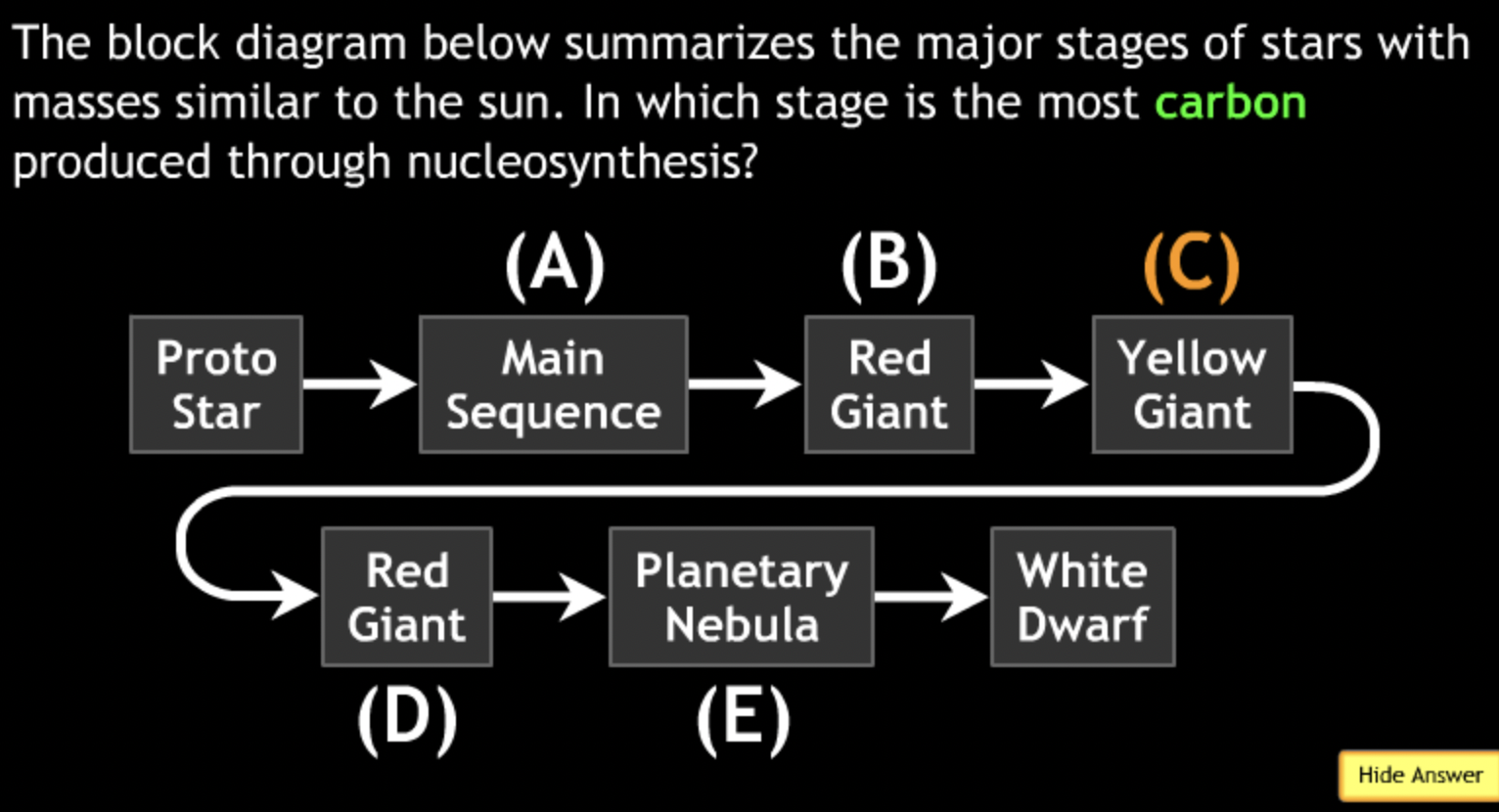
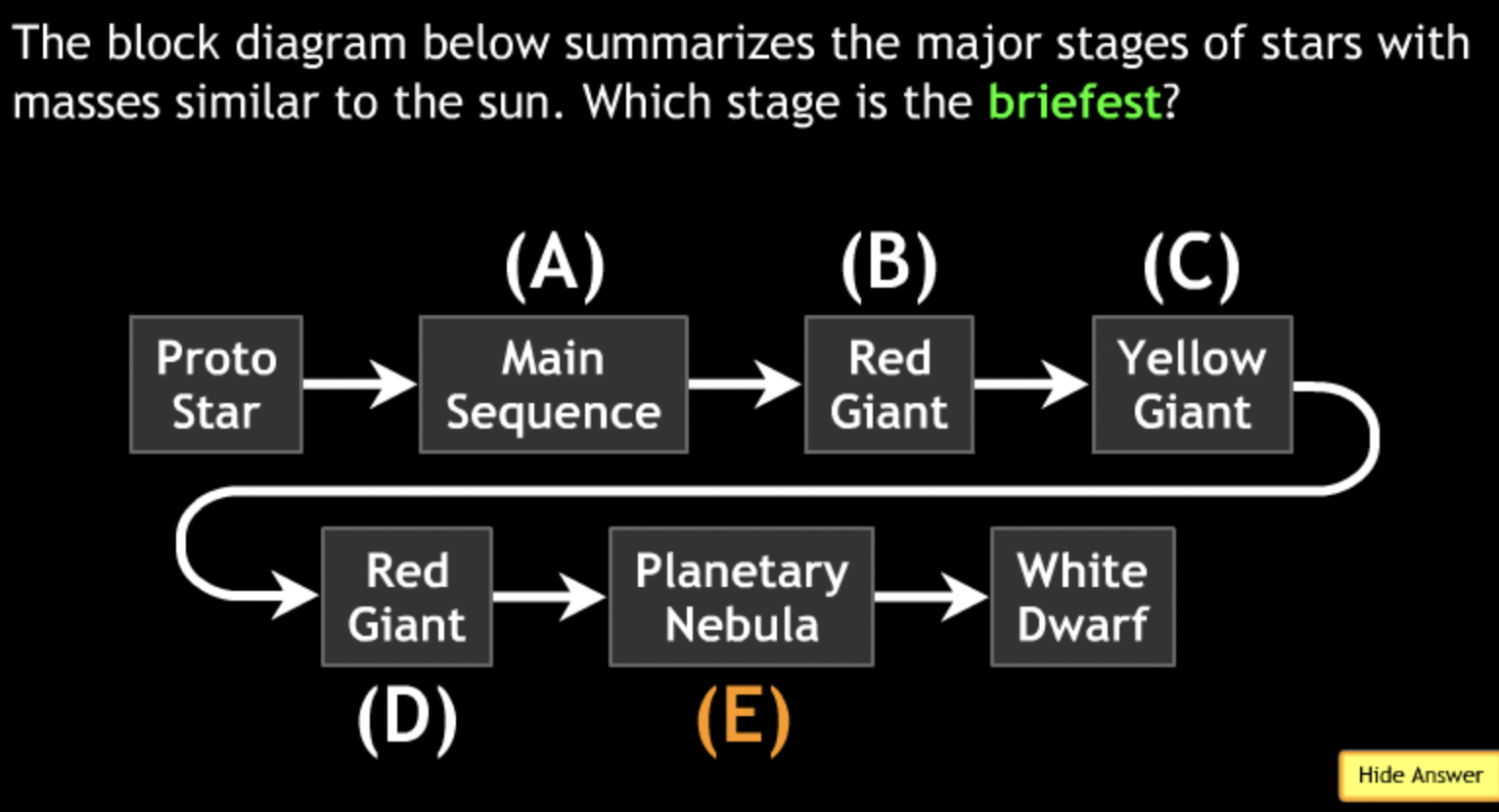
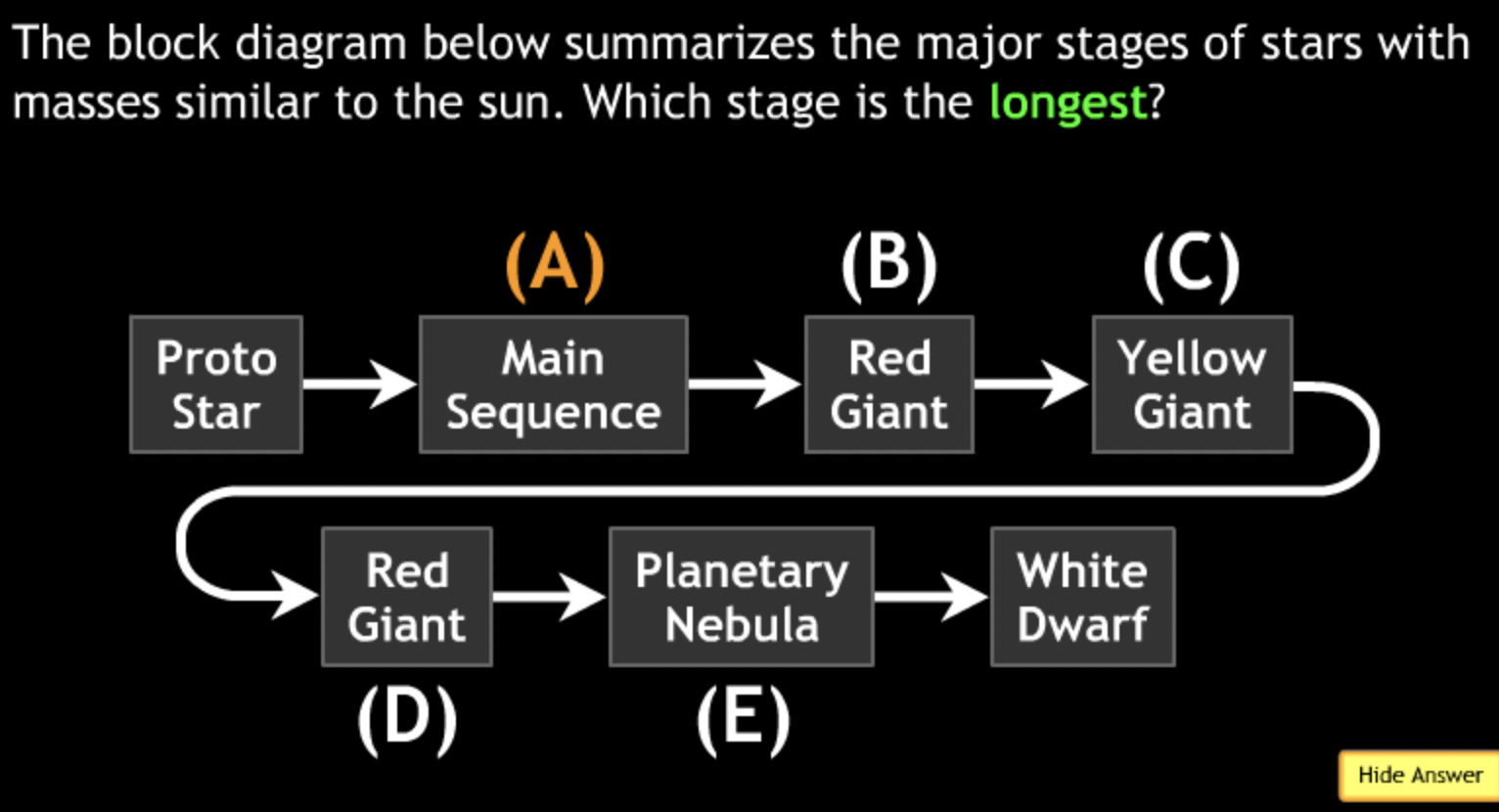
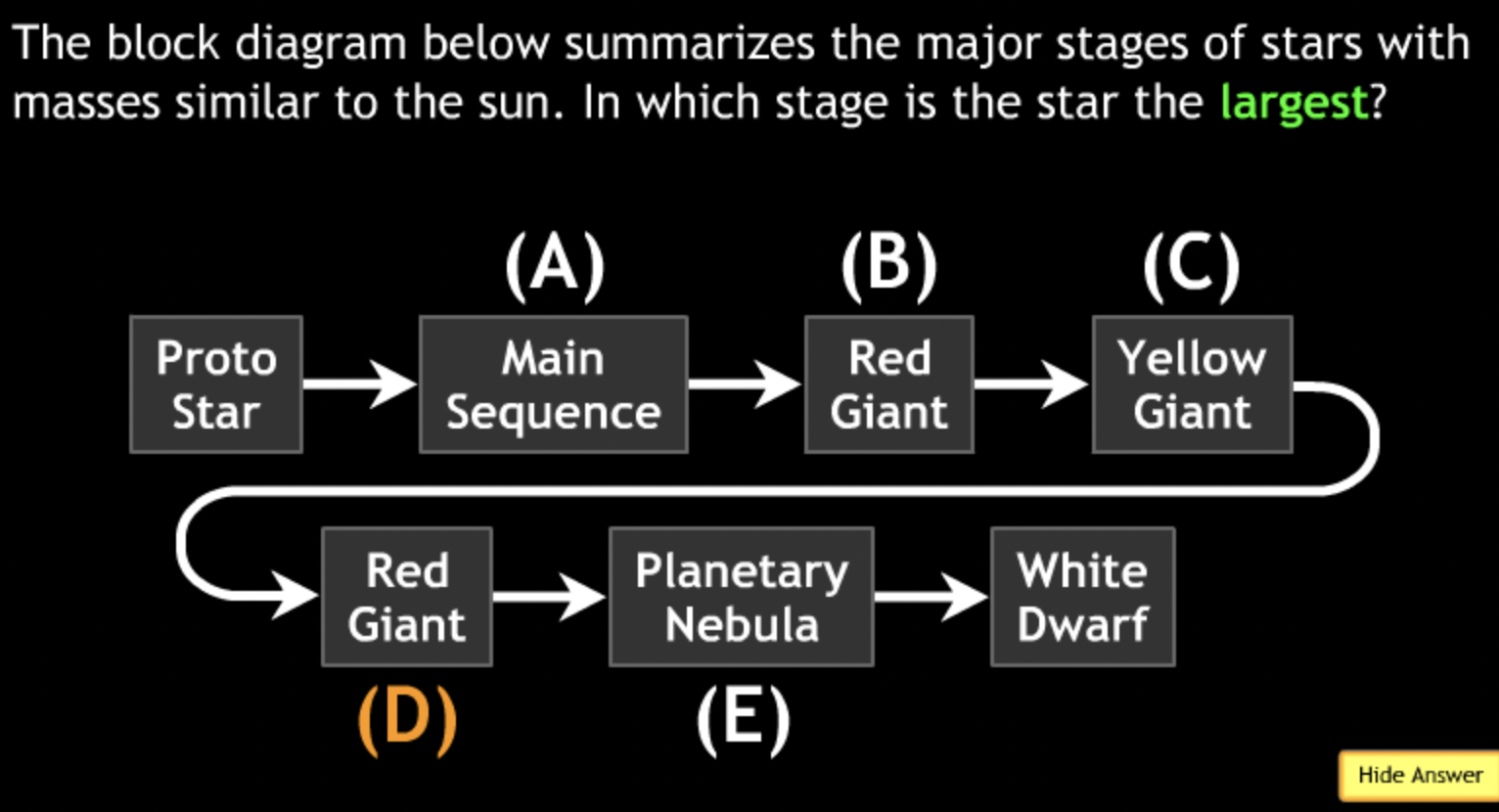
Compared to the evolutionary track of a star like the sun, the track of a high^mass star… all of the above
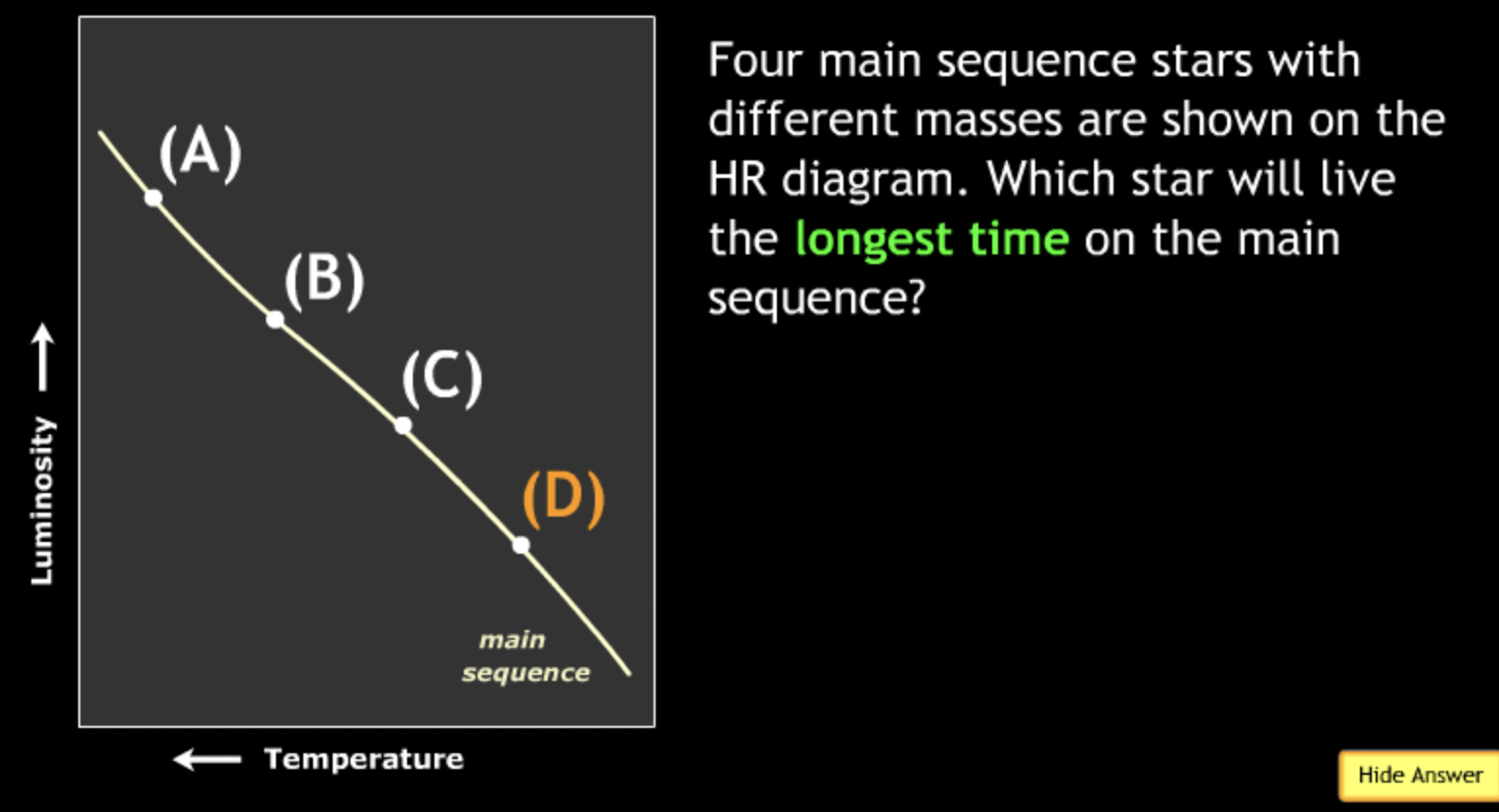
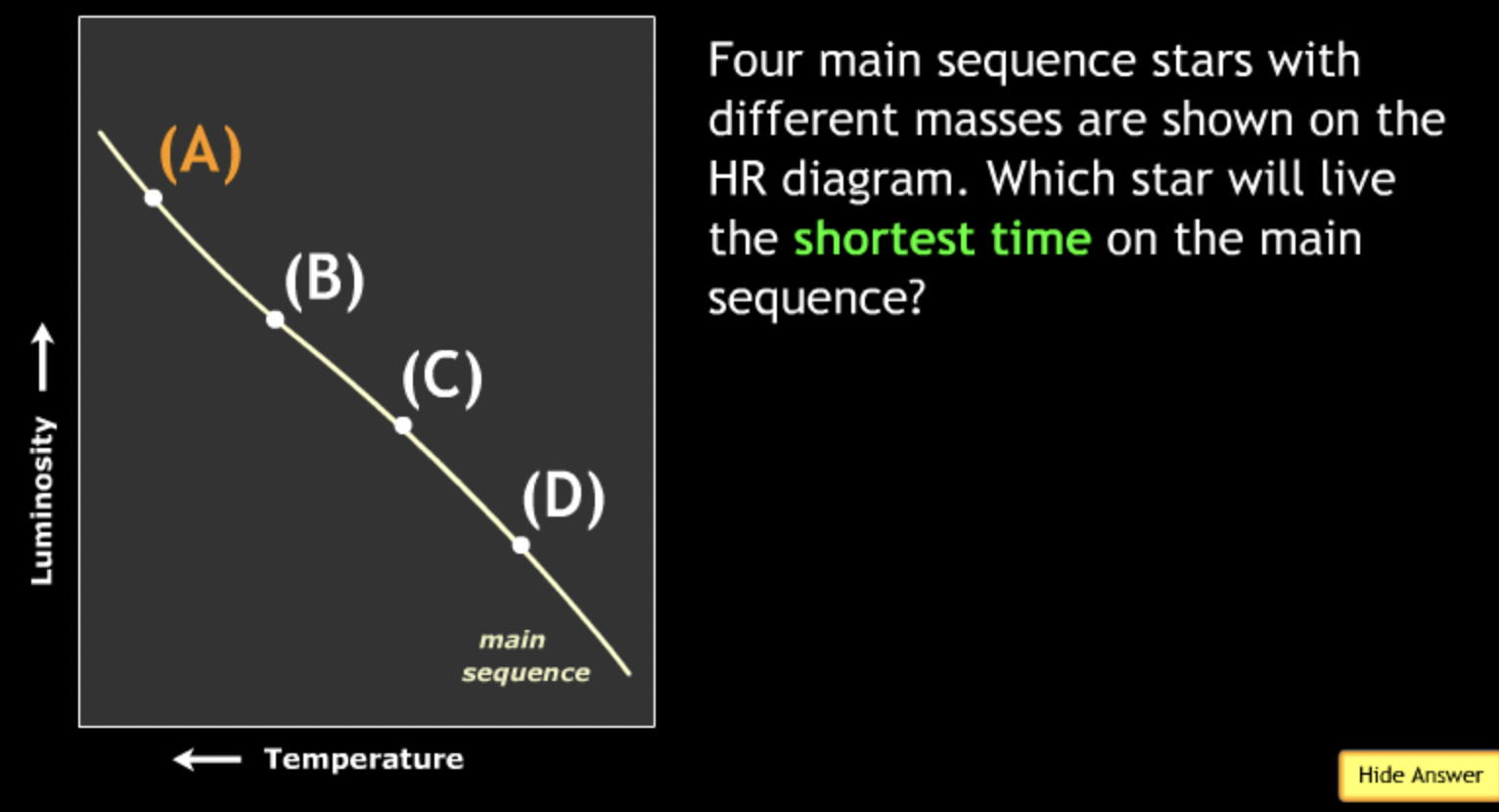
Asymptotic GIant Branch stars show strong evidence of carbon in their spectra and are known as carbon stars. This occurs because…. convective cells dis down to the helium burning shell and carry carbon to the surface
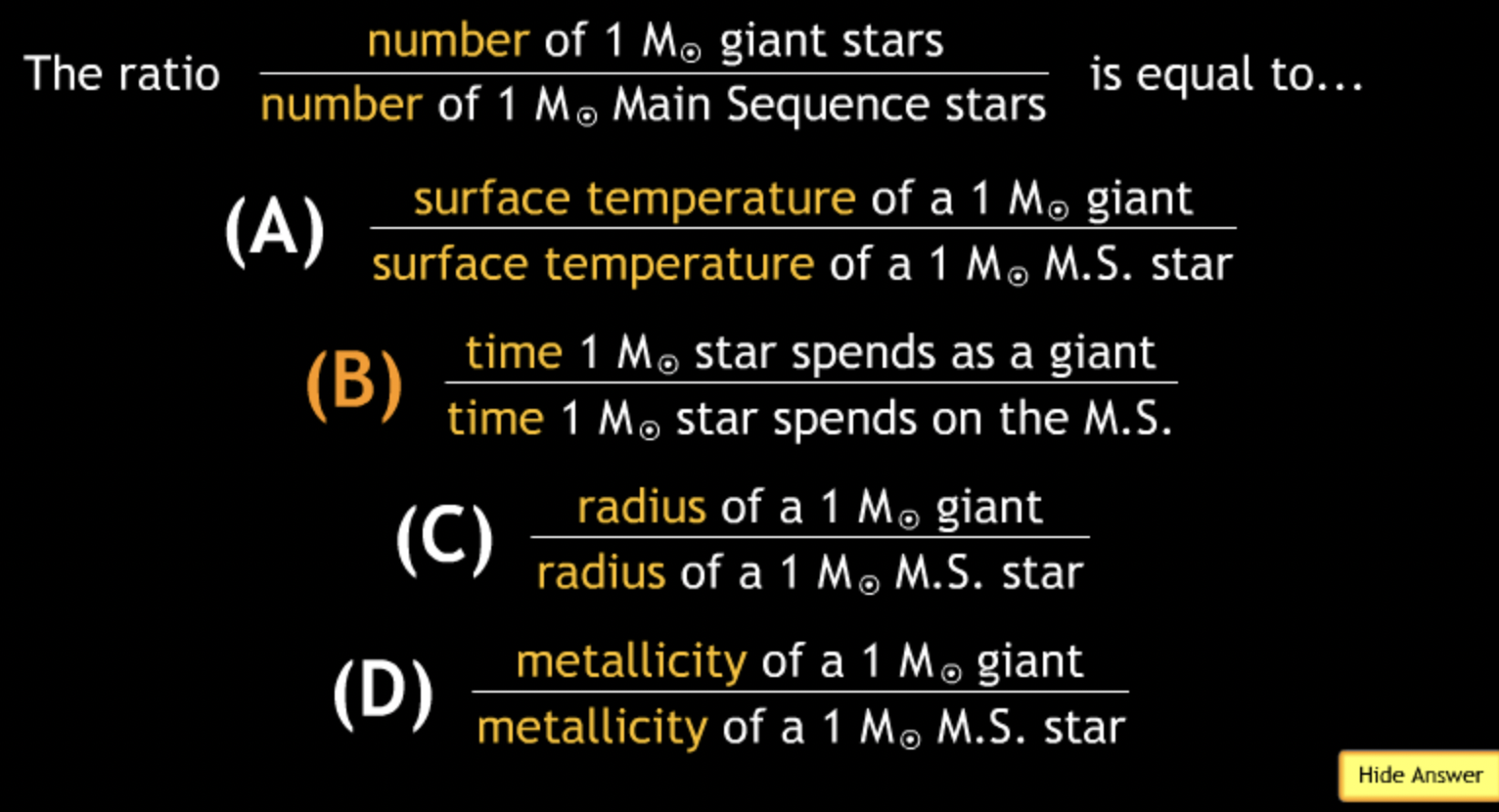

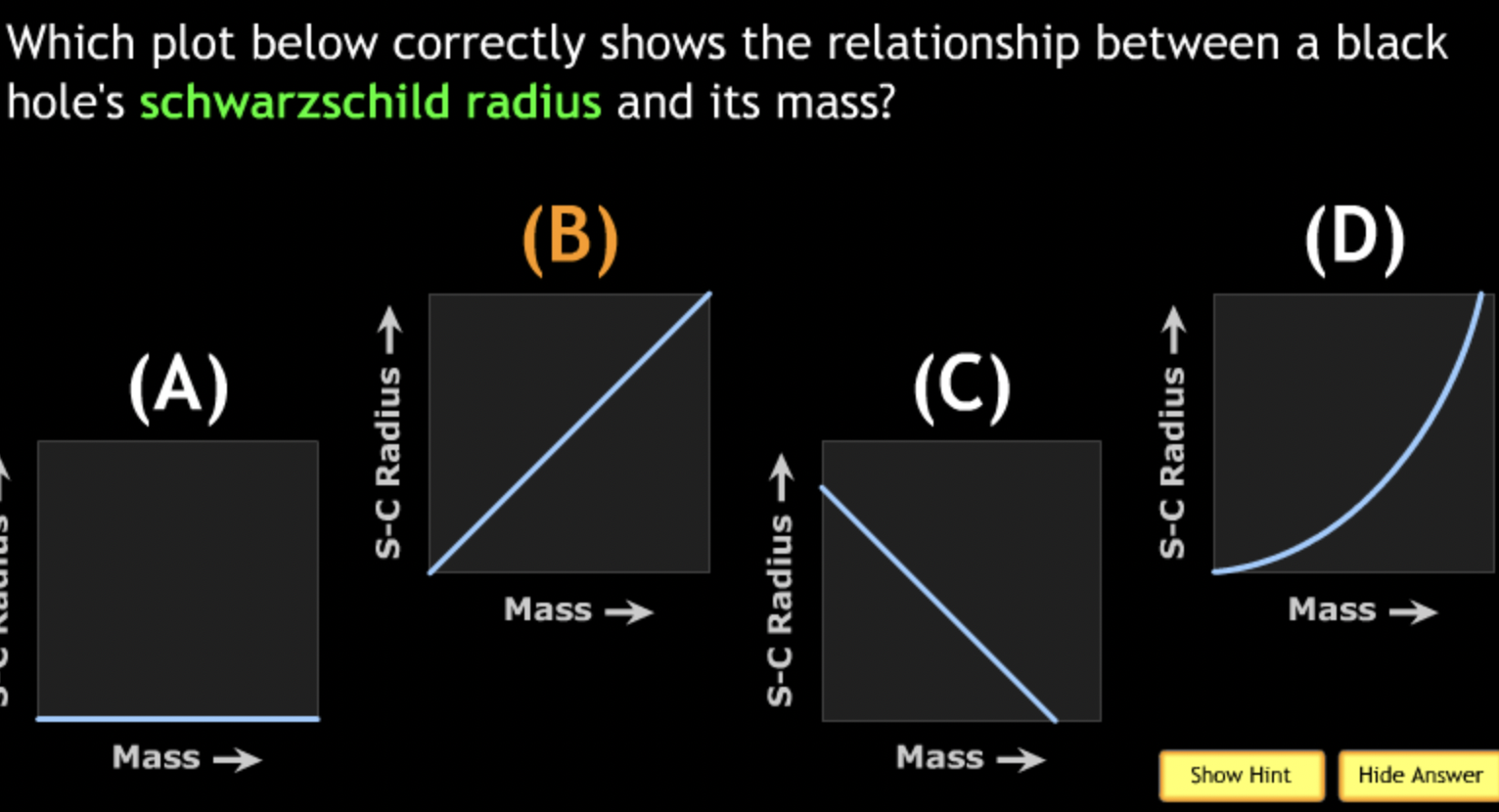
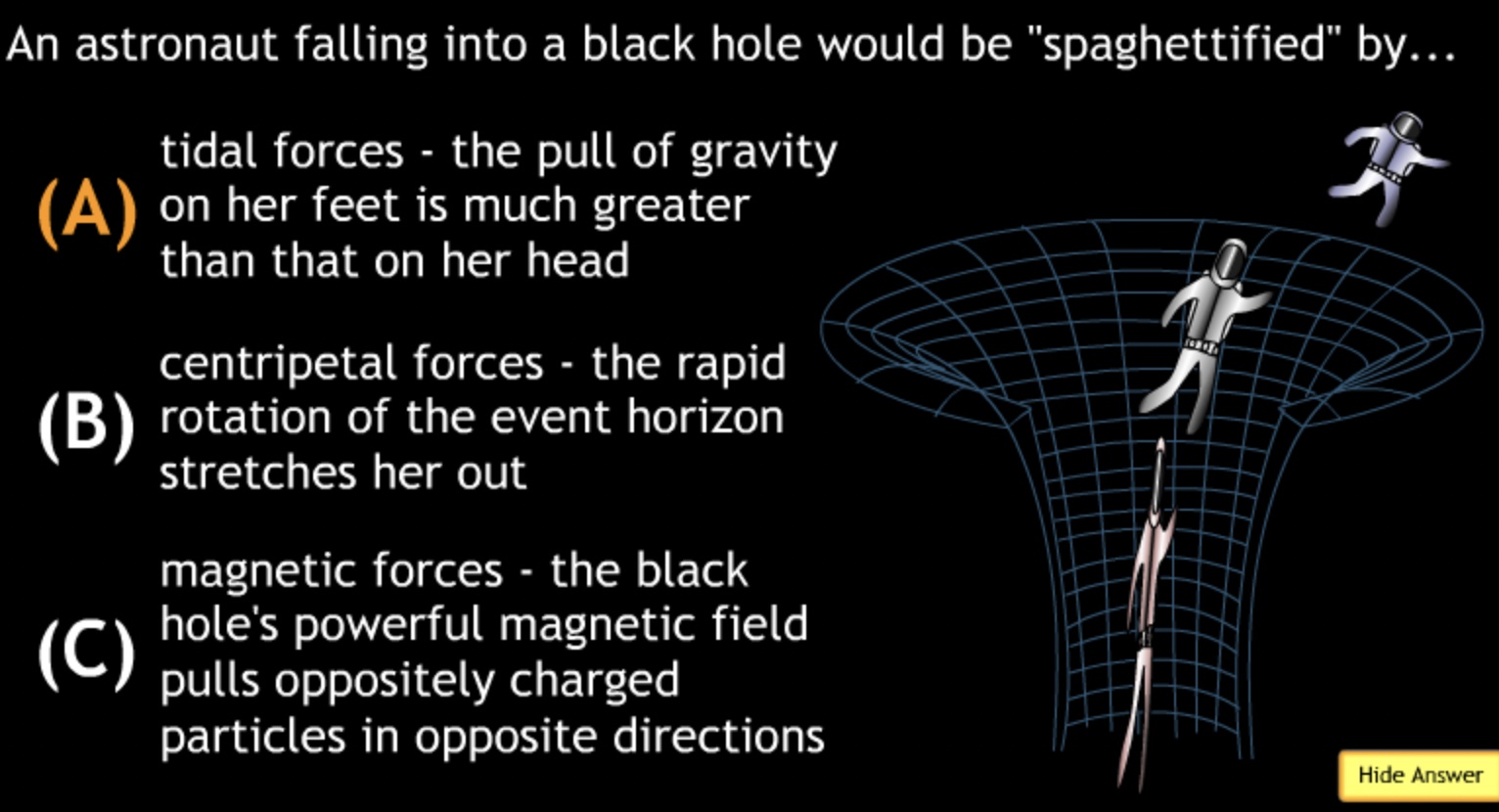
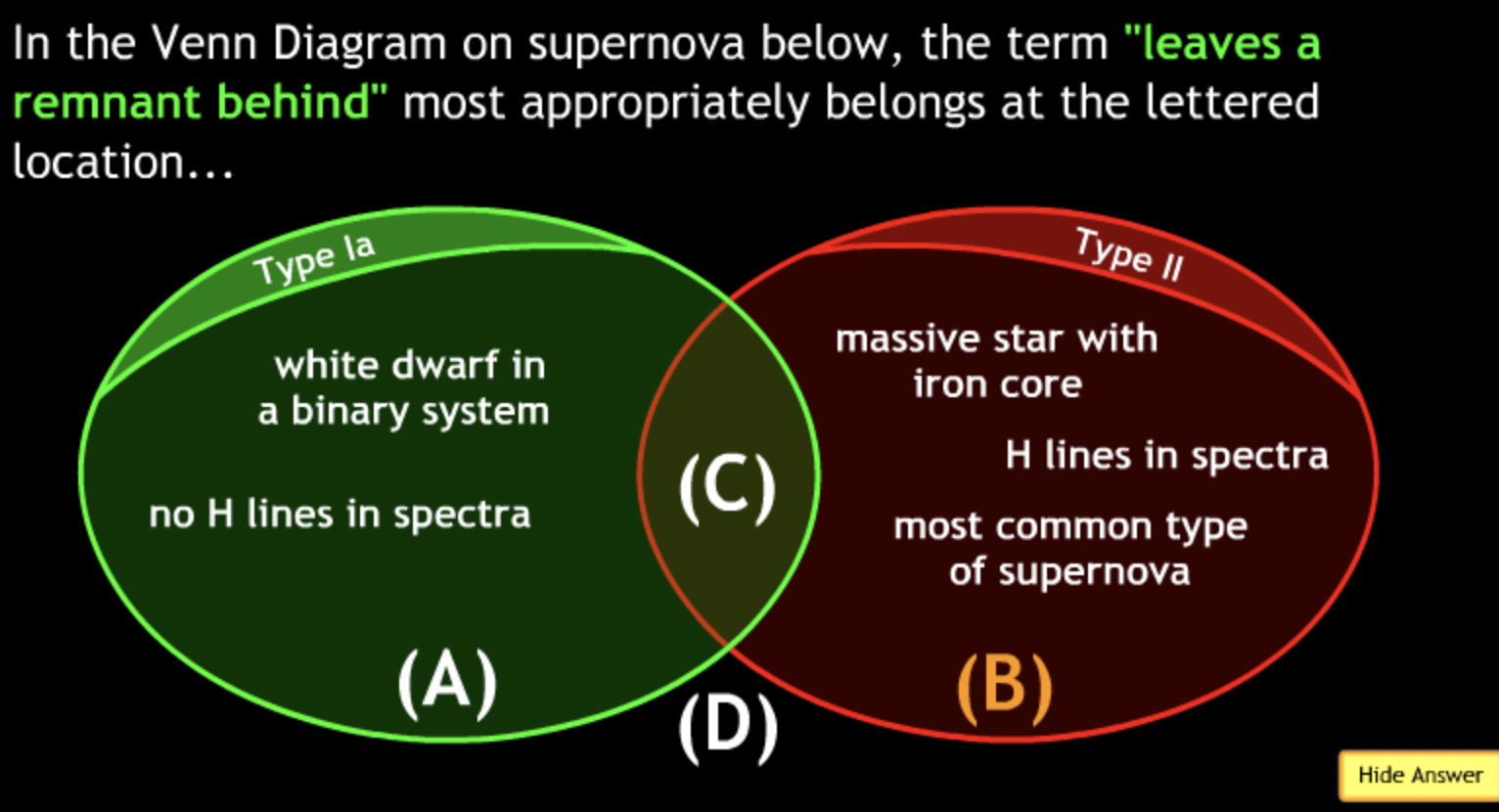
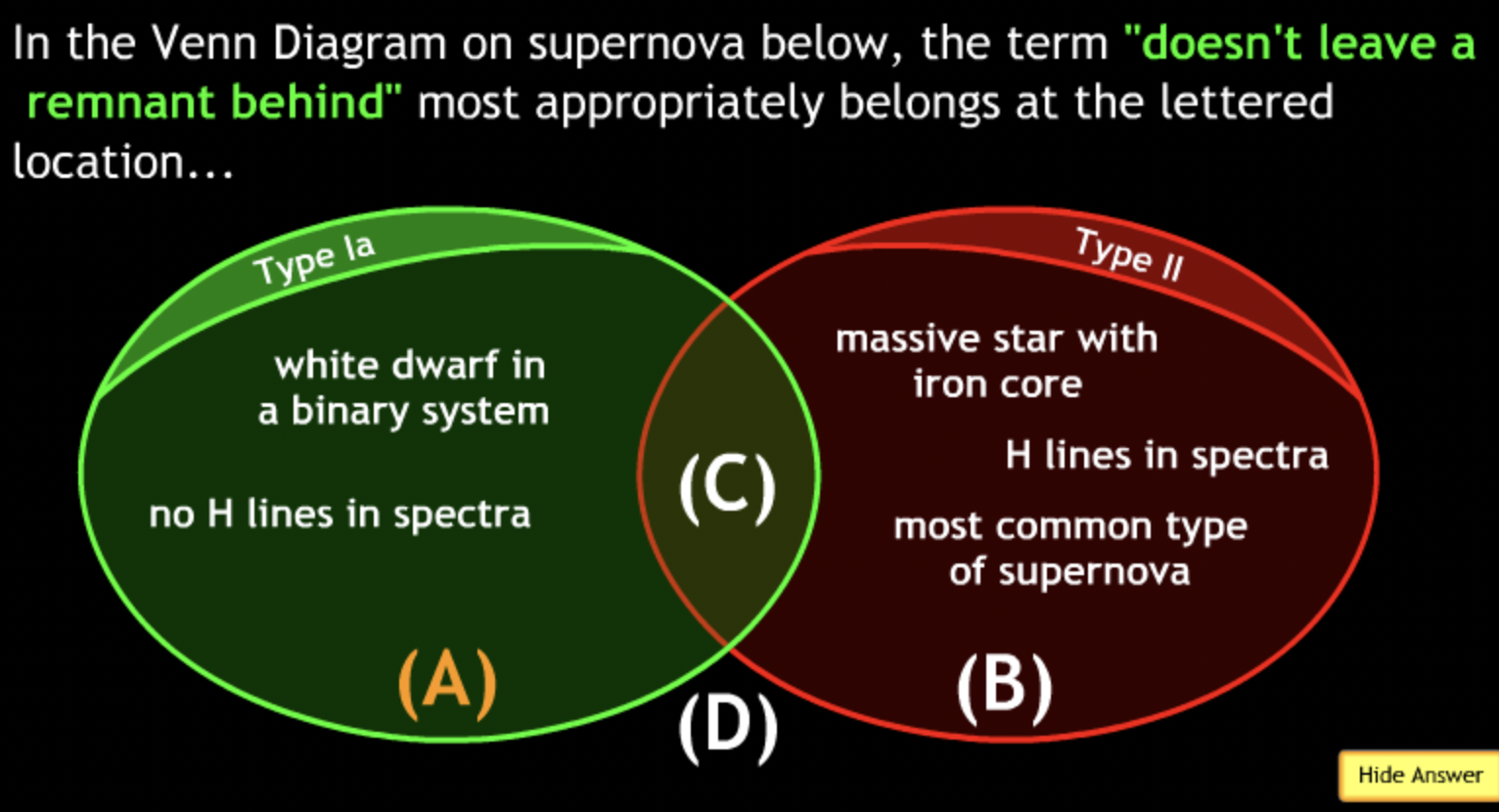





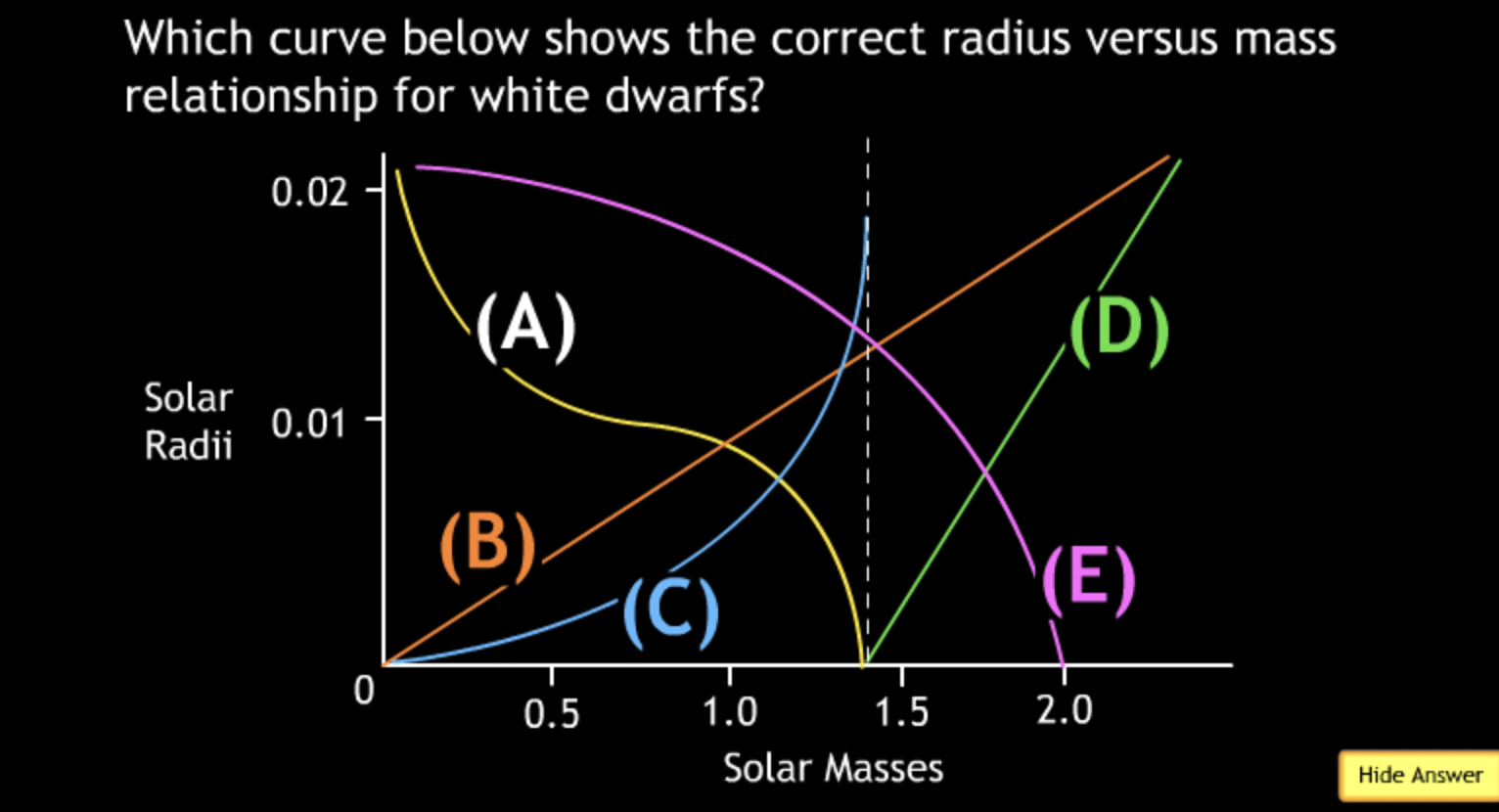
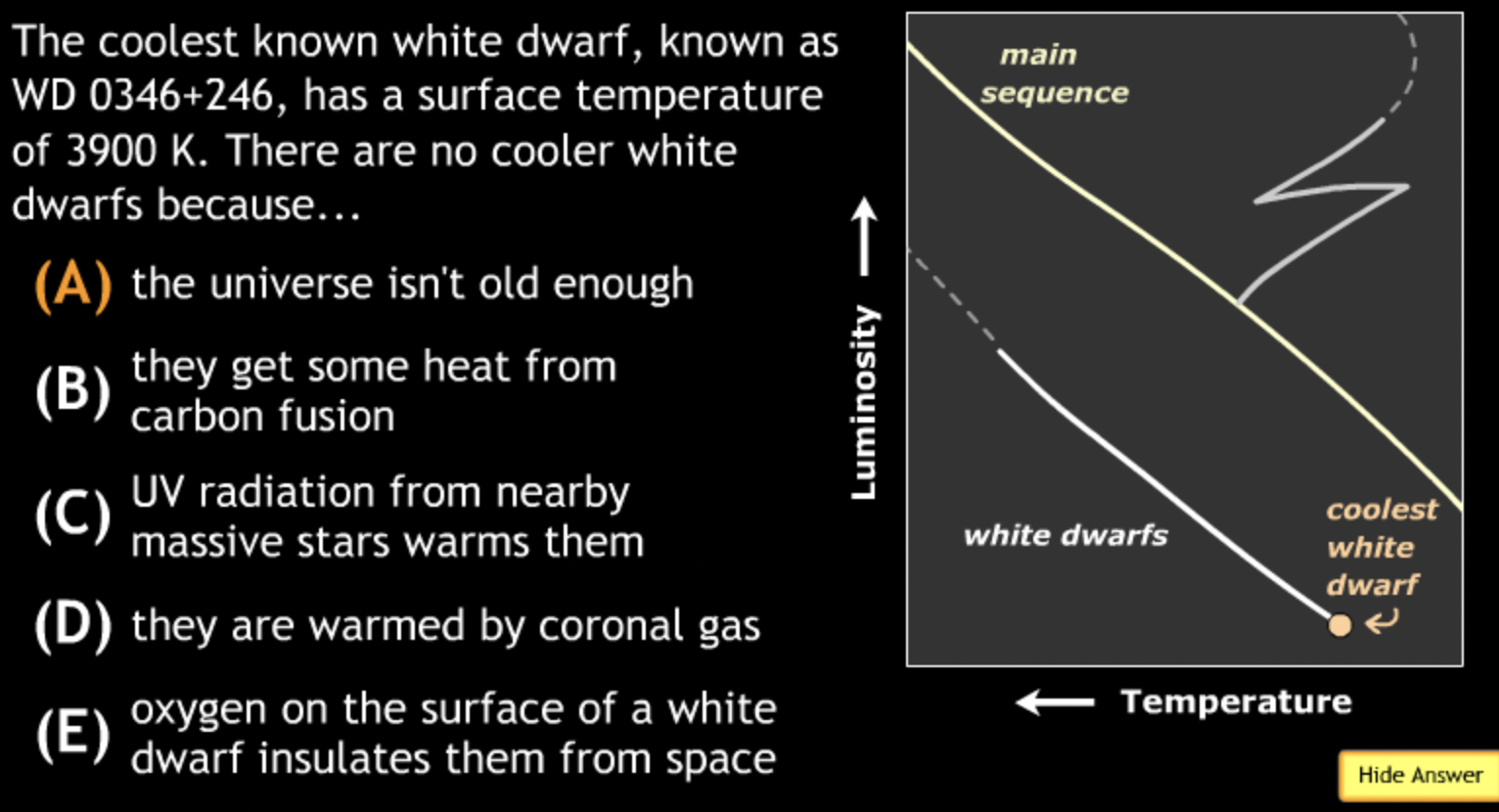
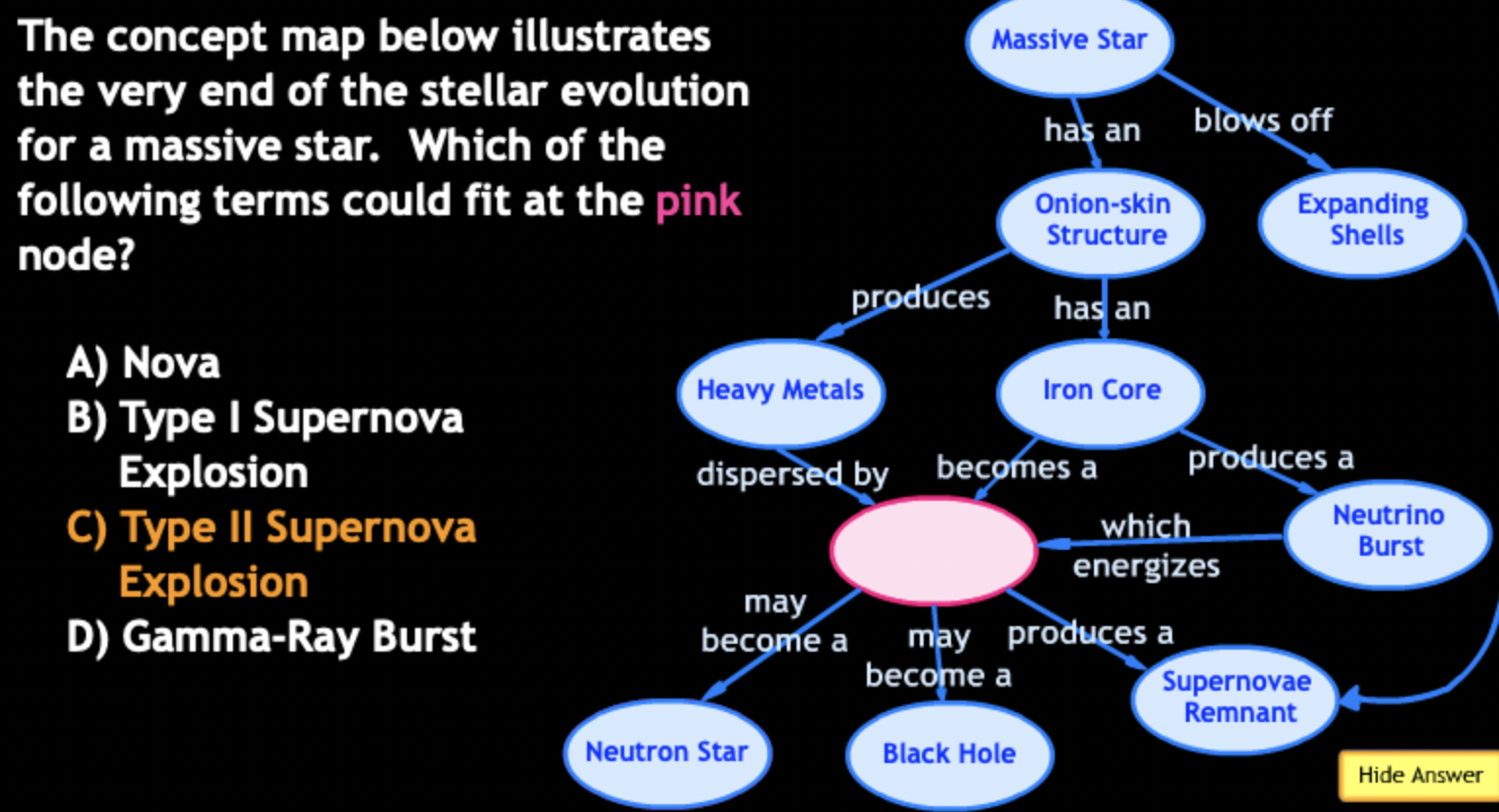

Emissions from the x-ray source Cygnus X-1 vary over timescales as small as 0.01 seconds. This implies that the size of the x-ray producing region must be…. smaller than 3000 km
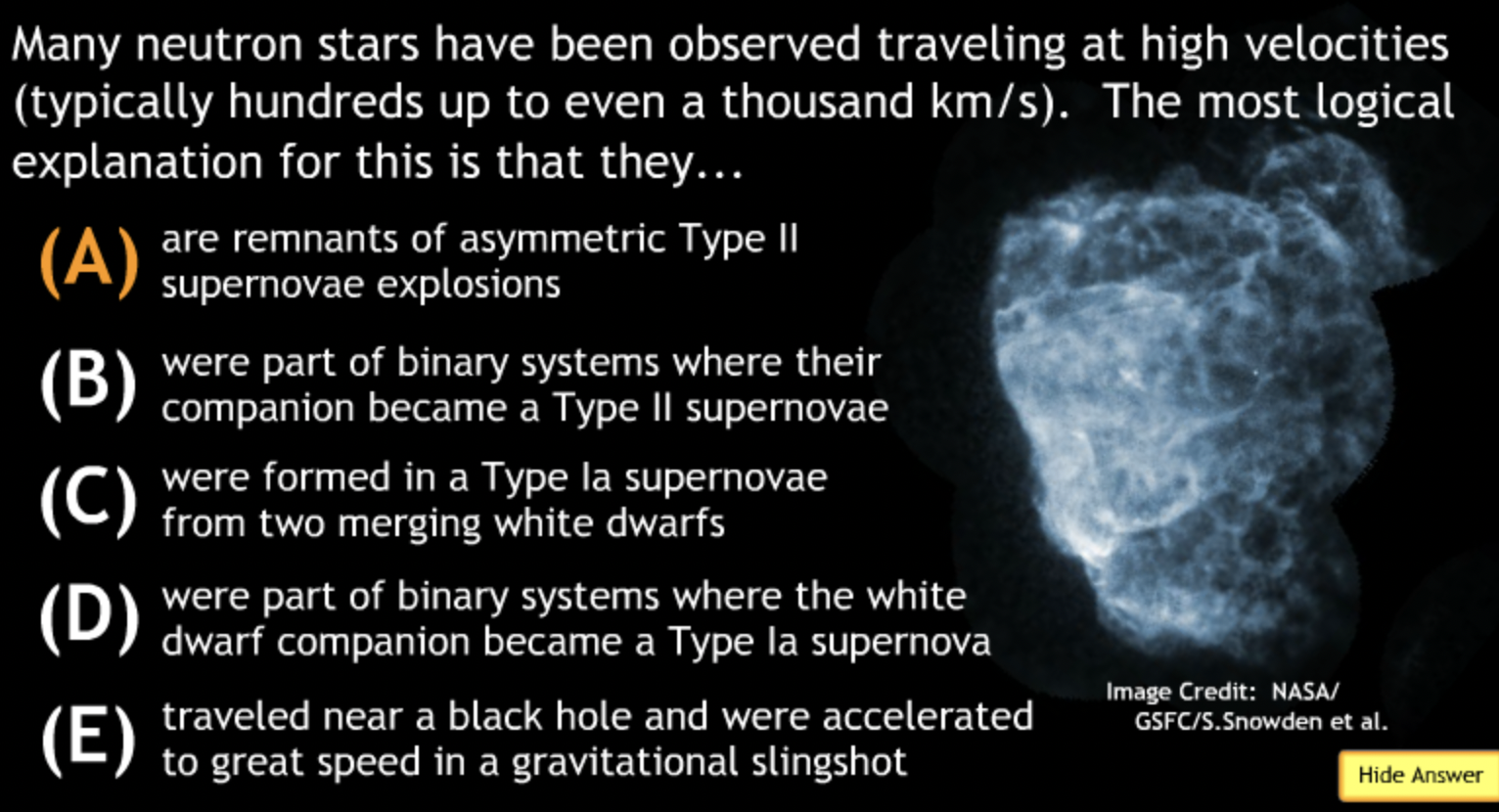
Imagine a close binary system consisting a 1.3 M star and a 1.0 M star, Which of the following scenarios is not possible for the ultimate outcome of the system? → a neutron star and white dwarf