Comprehensive Study Notes on Acid-Base Reactions, Titrations, Redox Processes, and Chemical Equilibrium

Fundamental Concepts of Acid-Base Reactions

  • An acid is a substance that produces hydrogen ions (H+H^+) when dissolved in water (H2OH_2O).

  • A base is a substance that produces hydroxide ions (OH−OH^-) when dissolved in water (H2OH_2O).

  • An acid-base reaction is also referred to as a neutralization reaction.

  • General acid dissociation in water:      HX(aq)→H2OH+(aq)+X−(aq)HX\left(aq\right)\xrightarrow{H_2O}H^{+}(aq)+X^{-}(aq)

  • General base dissociation in water:      MOH(aq)→H2OM+(aq)+OH−(aq)MOH(aq)\xrightarrow{H_2O}M^{+}(aq)+OH^{-}(aq)

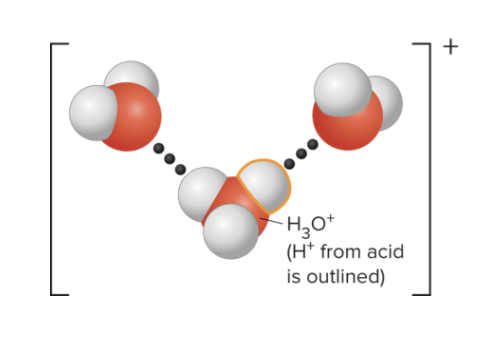
  • The H+H^+ Ion in Aqueous Solution:

    • A free H+H^+ ion is a bare proton and interacts strongly with water molecules.

    • In aqueous solutions, H+H^+ exists as a solvated hydronium ion (H3O+H_3O^+).

Classification of Acids, Bases, and Electrolytes

  • Strong Acids and Bases:

    • Dissociate completely into ions in aqueous solution.

    • Act as strong electrolytes and conduct electricity extremely well.

  • Weak Acids and Bases:

    • Dissociate very little into ions in aqueous solution.

    • Act as weak electrolytes and conduct electricity poorly.

  • List of Strong and Weak Acids:

    • Strong Acids:

    • Hydrochloric acid (HClHCl)

    • Hydrobromic acid (HBrHBr)

    • Hydriodic acid (HIHI)

    • Nitric acid (HNO3HNO_3)

    • Sulfuric acid (H2SO4H_2SO_4)

    • Perchloric acid (HClO4HClO_4)

    • Weak Acids (Examples):

    • Hydrofluoric acid (HFHF)

    • Phosphoric acid (H3PO4H_3PO_4)

    • Acetic acid (HC2H3O2HC_2H_3O_2 or CH3COOHCH_3COOH)

  • List of Strong and Weak Bases:

    • Strong Bases:

    • Group 1 Hydroxides: Lithium hydroxide (LiOHLiOH), Sodium hydroxide (NaOHNaOH), Potassium hydroxide (KOHKOH), Rubidium hydroxide (RbOHRbOH), Cesium hydroxide (CsOHCsOH)

    • Heavy Group 2 Hydroxides: Calcium hydroxide (Ca(OH)2Ca(OH)_2), Strontium hydroxide (Sr(OH)2Sr(OH)_2), Barium hydroxide (Ba(OH)2Ba(OH)_2)

    • Weak Bases (Example):

    • Ammonia (NH3NH_3)

  • Classification Summary of Soluble Compounds:

    • Strong Electrolytes: Ionic compounds, Strong acids, Strong bases

    • Weak Electrolytes: Weak acids, Weak bases

    • Nonelectrolytes: Covalent (molecular) compounds

Acid-Base Calculations and Ion Stoichiometry

  • Determining the number of H+H^+ (or OH−OH^-) ions in solution:

    • Problem: Calculate the number of H+(aq)H^+(aq) ions present in 25.3 mL25.3\,mL of 1.4 M1.4\,M nitric acid (HNO3HNO_3).

    • Plan:

    1. Convert volume from mLmL to LL using 103 mL=1 L10^3\,mL = 1\,L.

    2. Multiply volume (LL) by molarity (MM) to find moles of HNO3HNO_3.

    3. Use the stoichiometric ratio (1 mol H+/1 mol HNO31\,mol\,H^+ / 1\,mol\,HNO_3) to determine moles of H+H^+ ions.

    4. Multiply moles of H+H^+ by Avogadro's number (6.022×10²³ ions/mol6.022 \times 10^{23}\,ions/mol) to obtain total ions.

    • Chemical Equation:          HNO3(aq)→H2OH+(aq)+NO3−(aq)HNO_3(aq) \xrightarrow{H_2O} H^+(aq) + NO_3^-(aq)

    • Step 1: Calculate moles of acid:          25.3 mL soln×1 L103 mL×1.4 mol HNO31 L soln=0.035 mol HNO325.3\,mL\text{ soln} \times \frac{1\,L}{10^3\,mL} \times \frac{1.4\,mol\,HNO_3}{1\,L\text{ soln}} = 0.035\,mol\,HNO_3

    • Step 2: Calculate number of H+H^+ ions:          0.035 mol HNO3×1 mol H+1 mol HNO3×6.022×1023 ions1 mol=2.1×10²² H+ ions0.035\,mol\,HNO_3 \times \frac{1\,mol\,H^+}{1\,mol\,HNO_3} \times \frac{6.022 \times 10^{23}\,ions}{1\,mol} = 2.1 \times 10^{22}\,H^+\text{ ions}

Chemical Equations for Acid-Base Reactions

  • Reaction Between Strong Acids and Strong Bases:

    • Molecular Equation:          HX(aq)+MOH(aq)→MX(aq)+H2O(l)HX(aq) + MOH(aq) \rightarrow MX(aq) + H_2O(l)

    • Total Ionic Equation (using H3O+H_3O^+):          H3O+(aq)+X−(aq)+M+(aq)+OH−(aq)→H2O(l)+X−(aq)+M+(aq)+H2O(l)H_3O^+(aq) + X^-(aq) + M^+(aq) + OH^-(aq) \rightarrow H_2O(l) + X^-(aq) + M^+(aq) + H_2O(l)

    • Net Ionic Equation:          H+(aq)+OH−(aq)→H2O(l)H^+(aq) + OH^-(aq) \rightarrow H_2O(l)          or          H3O+(aq)+OH−(aq)→2 H2O(l)H_3O^+(aq) + OH^-(aq) \rightarrow 2\,H_2O(l)

  • Reaction Between Weak Acids and Strong Bases:

    • A weak acid is written as an undissociated intact molecule (HXHX).

    • Molecular Equation:          HX(aq)+MOH(aq)→MX(aq)+H2O(l)HX(aq) + MOH(aq) \rightarrow MX(aq) + H_2O(l)

    • Total Ionic Equation:          HX(aq)+M+(aq)+OH−(aq)→X−(aq)+M+(aq)+H2O(l)HX(aq) + M^+(aq) + OH^-(aq) \rightarrow X^-(aq) + M^+(aq) + H_2O(l)

    • Net Ionic Equation:          HX(aq)+OH−(aq)→X−(aq)+H2O(l)HX(aq) + OH^-(aq) \rightarrow X^-(aq) + H_2O(l)

  • Comparison Table of Reactions:

    • Strong Acid + Strong Base (HCl+NaOHHCl + NaOH):

    • Molecular Equation: HCl(aq)+NaOH(aq)→NaCl(aq)+H2O(l)HCl(aq) + NaOH(aq) \rightarrow NaCl(aq) + H_2O(l)

    • Total Ionic Equation: H3O+(aq)+Cl−(aq)+Na+(aq)+OH−(aq)→H2O(l)+Na+(aq)+Cl−(aq)+H2O(l)H_3O^+(aq) + Cl^-(aq) + Na^+(aq) + OH^-(aq) \rightarrow H_2O(l) + Na^+(aq) + Cl^-(aq) + H_2O(l)

    • Net Ionic Equation: H+(aq)+OH−(aq)→H2O(l)H^+(aq) + OH^-(aq) \rightarrow H_2O(l)

    • Weak Acid + Strong Base (CH3COOH+NaOHCH_3COOH + NaOH):

    • Molecular Equation: CH3COOH(aq)+NaOH(aq)→CH3COONa(aq)+H2O(l)CH_3COOH(aq) + NaOH(aq) \rightarrow CH_3COONa(aq) + H_2O(l)

    • Total Ionic Equation: CH3COOH(aq)+Na+(aq)+OH−(aq)→CH3COO−(aq)+Na+(aq)+H2O(l)CH_3COOH(aq) + Na^+(aq) + OH^-(aq) \rightarrow CH_3COO^-(aq) + Na^+(aq) + H_2O(l)

    • Net Ionic Equation: CH3COOH(aq)+OH−(aq)→CH3COO−(aq)+H2O(l)CH_3COOH(aq) + OH^-(aq) \rightarrow CH_3COO^-(aq) + H_2O(l)

  • Gas-Forming Reactions with Weak Acids:

    • Reaction of sodium bicarbonate with acetic acid produces carbon dioxide gas:

    • Molecular Equation: NaHCO3(aq)+HC2H3O2(aq)→NaC2H3O2(aq)+CO2(g)+H2O(l)NaHCO_3(aq) + HC_2H_3O_2(aq) \rightarrow NaC_2H_3O_2(aq) + CO_2(g) + H_2O(l)

    • Total Ionic Equation: Na+(aq)+HCO3−(aq)+HC2H3O2(aq)→C2H3O2−(aq)+Na+(aq)+CO2(g)+H2O(l)Na^+(aq) + HCO_3^-(aq) + HC_2H_3O_2(aq) \rightarrow C_2H_3O_2^-(aq) + Na^+(aq) + CO_2(g) + H_2O(l)

    • Net Ionic Equation: HCO3−(aq)+HC2H3O2(aq)→C2H3O2−(aq)+CO2(g)+H2O(l)HCO_3^-(aq) + HC_2H_3O_2(aq) \rightarrow C_2H_3O_2^-(aq) + CO_2(g) + H_2O(l)

Gas-forming reaction
  • Sample Problem: Writing Ionic and Net Ionic Equations:

    • System (a): Hydroiodic acid (HIHI) + Calcium hydroxide (Ca(OH)2Ca(OH)_2)

    • Molecular Equation: 2 HI(aq)+Ca(OH)2(aq)→CaI2(aq)+2 H2O(l)2\,HI(aq) + Ca(OH)_2(aq) \rightarrow CaI_2(aq) + 2\,H_2O(l)

    • Total Ionic Equation (H+H^+ representation): 2 H+(aq)+2 I−(aq)+Ca2+(aq)+2 OH−(aq)→2 I−(aq)+Ca2+(aq)+2 H2O(l)2\,H^+(aq) + 2\,I^-(aq) + Ca^{2+}(aq) + 2\,OH^-(aq) \rightarrow 2\,I^-(aq) + Ca^{2+}(aq) + 2\,H_2O(l)

    • Net Ionic Equation (H+H^+ representation): H+(aq)+OH−(aq)→H2O(l)H^+(aq) + OH^-(aq) \rightarrow H_2O(l)

    • Total Ionic Equation (H3O+H_3O^+ representation): 2 H3O+(aq)+2 I−(aq)+Ca2+(aq)+2 OH−(aq)→2 I−(aq)+Ca2+(aq)+4 H2O(l)2\,H_3O^+(aq) + 2\,I^-(aq) + Ca^{2+}(aq) + 2\,OH^-(aq) \rightarrow 2\,I^-(aq) + Ca^{2+}(aq) + 4\,H_2O(l)

    • Net Ionic Equation (H3O+H_3O^+ representation): H3O+(aq)+OH−(aq)→2 H2O(l)H_3O^+(aq) + OH^-(aq) \rightarrow 2\,H_2O(l)

    • Spectator Ions: Ca2+(aq)Ca^{2+}(aq) and I−(aq)I^-(aq); Salt formed: Calcium iodide (CaI2CaI_2)

    • System (b): Potassium hydroxide (KOHKOH) + Propanoic acid (CH3CH2COOHCH_3CH_2COOH)

    • Molecular Equation: KOH(aq)+CH3CH2COOH(aq)→CH3CH2COOK(aq)+H2O(l)KOH(aq) + CH_3CH_2COOH(aq) \rightarrow CH_3CH_2COOK(aq) + H_2O(l)

    • Total Ionic Equation: K+(aq)+OH−(aq)+CH3CH2COOH(aq)→K+(aq)+H2O(l)+CH3CH2COO−(aq)K^+(aq) + OH^-(aq) + CH_3CH_2COOH(aq) \rightarrow K^+(aq) + H_2O(l) + CH_3CH_2COO^-(aq)

    • Net Ionic Equation: CH3CH2COOH(aq)+OH−(aq)→CH3CH2COO−(aq)+H2O(l)CH_3CH_2COOH(aq) + OH^-(aq) \rightarrow CH_3CH_2COO^-(aq) + H_2O(l)

    • Spectator Ion: K+(aq)K^+(aq); Salt formed: Potassium propanoate (CH3CH2COOKCH_3CH_2COOK)

    • System (c): Nitric acid (HNO3HNO_3) + Potassium sulfite (K2SO3K_2SO_3)

    • Molecular Equation: 2 HNO3(aq)+K2SO3(aq)→2 KNO3(aq)+H2O(l)+SO2(g)2\,HNO_3(aq) + K_2SO_3(aq) \rightarrow 2\,KNO_3(aq) + H_2O(l) + SO_2(g)

    • Total Ionic Equation: 2 H+(aq)+2 NO3−(aq)+2 K+(aq)+SO32−(aq)→2 K+(aq)+2 NO3−(aq)+H2O(l)+SO2(g)2\,H^+(aq) + 2\,NO_3^-(aq) + 2\,K^+(aq) + SO_3^{2-}(aq) \rightarrow 2\,K^+(aq) + 2\,NO_3^-(aq) + H_2O(l) + SO_2(g)

    • Net Ionic Equation: 2 H+(aq)+SO32−(aq)→H2O(l)+SO2(g)2\,H^+(aq) + SO_3^{2-}(aq) \rightarrow H_2O(l) + SO_2(g)

    • Spectator Ions: K+(aq)K^+(aq) and NO3−(aq)NO_3^-(aq); Salt formed: Potassium nitrate (KNO3KNO_3)

Acid-Base Titrations

  • Core Principles of Titration:

    • A titration uses the concentration of a standard solution to find the unknown concentration of another solution.

    • A standard solution of base is incrementally added to an acid solution of unknown molarity.

    • An acid-base indicator displays different colors in acidic and basic solutions to track reaction progress.

    • Equivalence Point: The exact stage where moles of H+H^+ from acid equal moles of OH−OH^- from base.

    • End Point: The stage where a permanent color change occurs due to a slight excess of base (OH−OH^-).

Acid-Base Titration Stages
  • Sample Problem: Stoichiometry of Stomach Acid Neutralization:

    • Problem: Calculate the volume (in liters) of 0.10 M HCl0.10\,M\,HCl stomach acid required to react completely with an antacid tablet containing 0.10 g0.10\,g of magnesium hydroxide [Mg(OH)2Mg(OH)_2].

    • Chemical Equation:          Mg(OH)2(s)+2 HCl(aq)→MgCl2(aq)+2 H2O(l)Mg(OH)_2(s) + 2\,HCl(aq) \rightarrow MgCl_2(aq) + 2\,H_2O(l)

    • Step 1: Moles of Mg(OH)2Mg(OH)_2 (Molar mass = 58.32 g/mol58.32\,g/mol):          0.10 g Mg(OH)2×1 mol Mg(OH)258.32 g Mg(OH)2=1.7×10⁻³ mol Mg(OH)20.10\,g\,Mg(OH)_2 \times \frac{1\,mol\,Mg(OH)_2}{58.32\,g\,Mg(OH)_2} = 1.7 \times 10^{-3}\,mol\,Mg(OH)_2

    • Step 2: Moles of HClHCl needed:          1.7×10⁻³ mol Mg(OH)2×2 mol HCl1 mol Mg(OH)2=3.4×10⁻³ mol HCl1.7 \times 10^{-3}\,mol\,Mg(OH)_2 \times \frac{2\,mol\,HCl}{1\,mol\,Mg(OH)_2} = 3.4 \times 10^{-3}\,mol\,HCl

    • Step 3: Volume of HClHCl solution:          3.4×10⁻³ mol HCl×1 L soln0.10 mol HCl=3.4×10⁻² L HCl3.4 \times 10^{-3}\,mol\,HCl \times \frac{1\,L\text{ soln}}{0.10\,mol\,HCl} = 3.4 \times 10^{-2}\,L\,HCl

  • Sample Problem: Concentration of Acid from Titration Data:

    • Problem: A 50.00 mL50.00\,mL sample of H2SO4H_2SO_4 is titrated with 0.1524 M NaOH0.1524\,M\,NaOH. The buret reading is 0.55 mL0.55\,mL initially and 33.87 mL33.87\,mL at the end point. Calculate the molarity of H2SO4H_2SO_4

    • Chemical Equation:          H2SO4(aq)+2 NaOH(aq)→Na2SO4(aq)+2 H2O(l)H_2SO_4(aq) + 2\,NaOH(aq) \rightarrow Na_2SO_4(aq) + 2\,H_2O(l)

    • Step 1: Calculate volume of NaOHNaOH added:          Volume of NaOH=33.87 mL−0.55 mL=33.32 mL\text{Volume of } NaOH = 33.87\,mL - 0.55\,mL = 33.32\,mL

    • Step 2: Calculate moles of NaOHNaOH used:          33.32 mL soln×1 L103 mL×0.1524 mol NaOH1 L soln=5.078×10⁻³ mol NaOH33.32\,mL\text{ soln} \times \frac{1\,L}{10^3\,mL} \times \frac{0.1524\,mol\,NaOH}{1\,L\text{ soln}} = 5.078 \times 10^{-3}\,mol\,NaOH

    • Step 3: Calculate moles of H2SO4H_2SO_4 reacted:          5.078×10⁻³ mol NaOH×1 mol H2SO42 mol NaOH=2.539×10⁻³ mol H2SO45.078 \times 10^{-3}\,mol\,NaOH \times \frac{1\,mol\,H_2SO_4}{2\,mol\,NaOH} = 2.539 \times 10^{-3}\,mol\,H_2SO_4

    • Step 4: Calculate molarity of H2SO4H_2SO_4 solution:          2.539×10⁻³ mol H2SO450.00 mL soln×103 mL1 L=0.05078 M H2SO4\frac{2.539 \times 10^{-3}\,mol\,H_2SO_4}{50.00\,mL\text{ soln}} \times \frac{10^3\,mL}{1\,L} = 0.05078\,M\,H_2SO_4

Oxidation-Reduction (Redox) Reactions

  • Definitions:

    • Oxidation: The loss of electrons. Oxidation number increases.

    • Reduction: The gain of electrons. Oxidation number decreases.

    • Oxidizing Agent: The species that gains electrons and becomes reduced.

    • Reducing Agent: The species that loses electrons and becomes oxidized.

    • Oxidation and reduction always take place simultaneously.

  • Redox Process in Compound Formation:

    • Ionic Compounds: Direct transfer of electrons (e.g., Mg(s)+O2(g)→MgO(s)Mg(s) + O_2(g) \rightarrow MgO(s)).

    • Covalent Compounds: Shift in electron density due to polar covalent bonding (e.g., H2(g)+Cl2(g)→2 HCl(g)H_2(g) + Cl_2(g) \rightarrow 2\,HCl(g)).

  • Rules for Assigning Oxidation Numbers (O.N.):

    1. Elemental form: O.N. = 00 for any atom in its pure element (NaNa, CC, O2O_2, Cl2Cl_2, P4P_4).

    2. Monatomic ion: O.N. = ion charge (with sign written before numeral).

    3. Sum of O.N.s:

    • Equals 00 for a neutral molecule or formula unit.

    • Equals the ion's charge for a polyatomic ion.

    1. Rules for Specific Groups/Elements:

    • Group 1: O.N. = +1+1 in all compounds.

    • Group 2: O.N. = +2+2 in all compounds.

    • Hydrogen: O.N. = +1+1 with nonmetals; O.N. = −1-1 with metals and boron (NaHNaH).

    • Fluorine: O.N. = −1-1 in all compounds.

    • Oxygen: O.N. = −1-1 in peroxides (H2O2H_2O_2); O.N. = −2-2 in all other compounds (except combined with F).

    • Group 17: O.N. = −1-1 in combination with metals, nonmetals (except O), and lower halogens.

  • Sample Problem: Assigning Oxidation Numbers:

    • (a) ZnCl2ZnCl_2: Each Cl=−1Cl = -1 (total −2-2); therefore Zn=+2Zn = +2.

    • (b) SO3SO_3: Each O=−2O = -2 (total −6-6); therefore S=+6S = +6.

    • (c) HNO3HNO_3: H=+1H = +1, each O=−2O = -2 (total −6-6); therefore N=+5N = +5.

    • (d) Cr2O72−Cr_2O_7^{2-}: Each O=−2O = -2 (total −14-14); overall charge is −2-2, so two CrCr atoms total +12+12; each Cr=+6Cr = +6

  • Sample Problem: Identifying Redox Reactions and Agents:

    • Reaction (a): 2 Al(s)+3 H2SO4(aq)→Al2(SO4)3(aq)+3 H2(g)2\,Al(s) + 3\,H_2SO_4(aq) \rightarrow Al_2(SO_4)_3(aq) + 3\,H_2(g)

    • O.N. changes: AlAl changes from 0→+30 \rightarrow +3 (oxidized); HH changes from +1→0+1 \rightarrow 0 (reduced).

    • Classification: Redox reaction. AlAl is the reducing agent; H2SO4H_2SO_4 is the oxidizing agent.

    • Reaction (b): H2SO4(aq)+2 NaOH(aq)→Na2SO4(aq)+2 H2O(l)H_2SO_4(aq) + 2\,NaOH(aq) \rightarrow Na_2SO_4(aq) + 2\,H_2O(l)

    • O.N. changes: No atom changes O.N. (H=+1H = +1, S=+6S = +6, O=−2O = -2, Na=+1Na = +1).

    • Classification: Not a redox reaction.

    • Reaction (c): PbO(s)+CO(g)→Pb(s)+CO2(g)PbO(s) + CO(g) \rightarrow Pb(s) + CO_2(g)

    • O.N. changes: CC changes from +2→+4+2 \rightarrow +4 (oxidized); PbPb changes from +2→0+2 \rightarrow 0 (reduced).

    • Classification: Redox reaction. COCO is the reducing agent; PbOPbO is the oxidizing agent.

Redox Titrations

  • Principles of Redox Titrations:

    • Similar to acid-base titrations, but based on an electron-transfer reaction.

    • Potassium permanganate (KMnO4KMnO_4) acts as its own indicator: MnO4−MnO_4^- (purple) is reduced to Mn2+Mn^{2+} (faint pink/colorless).

Redox Titration Visualization
  • Sample Problem: Blood Calcium Determination by Redox Titration:

    • Problem: Calcium ions in 1.00 mL1.00\,mL of blood are precipitated as CaC2O4CaC_2O_4, redissolved in H2SO4H_2SO_4, and titrated with 2.05 mL2.05\,mL of 4.88×10⁻⁴ M KMnO44.88 \times 10^{-4}\,M\,KMnO_4. Calculate the moles of Ca2+Ca^{2+} in the blood sample.

    • Balanced Reaction Equation:          2 KMnO4(aq)+5 CaC2O4(s)+8 H2SO4(aq)→2 MnSO4(aq)+K2SO4(aq)+5 CaSO4(s)+10 CO2(g)+8 H2O(l)2\,KMnO_4(aq) + 5\,CaC_2O_4(s) + 8\,H_2SO_4(aq) \rightarrow 2\,MnSO_4(aq) + K_2SO_4(aq) + 5\,CaSO_4(s) + 10\,CO_2(g) + 8\,H_2O(l)

    • Step 1: Calculate moles of KMnO4KMnO_4:          2.05 mL soln×1 L103 mL×4.88×10−4 mol KMnO41 L soln=1.00×10⁻⁶ mol KMnO42.05\,mL\text{ soln} \times \frac{1\,L}{10^3\,mL} \times \frac{4.88 \times 10^{-4}\,mol\,KMnO_4}{1\,L\text{ soln}} = 1.00 \times 10^{-6}\,mol\,KMnO_4

    • Step 2: Calculate moles of CaC2O4CaC_2O_4:          1.00×10⁻⁶ mol KMnO4×5 mol CaC2O42 mol KMnO4=2.50×10⁻⁶ mol CaC2O41.00 \times 10^{-6}\,mol\,KMnO_4 \times \frac{5\,mol\,CaC_2O_4}{2\,mol\,KMnO_4} = 2.50 \times 10^{-6}\,mol\,CaC_2O_4

    • Step 3: Calculate moles of Ca2+Ca^{2+}:          2.50×10⁻⁶ mol CaC2O4×1 mol Ca2+1 mol CaC2O4=2.50×10⁻⁶ mol Ca2+2.50 \times 10^{-6}\,mol\,CaC_2O_4 \times \frac{1\,mol\,Ca^{2+}}{1\,mol\,CaC_2O_4} = 2.50 \times 10^{-6}\,mol\,Ca^{2+}

Types of Redox Reactions and Activity Series

  • Classification of Redox Reactions:

    • Combination Reactions: Two or more reactants combine to form a single product (X+Y→ZX + Y \rightarrow Z).

    • Example: 2 K(s)+Cl2(g)→2 KCl(s)2\,K(s) + Cl_2(g) \rightarrow 2\,KCl(s)

    • Decomposition Reactions: A single compound breaks down into two or more products (Z→X+YZ \rightarrow X + Y).

    • Example: 2 HgO(s)→Δ2 Hg(l)+O2(g)2\,HgO(s) \xrightarrow{\Delta} 2\,Hg(l) + O_2(g)

    • Displacement Reactions:

    • Single Displacement: An active element displaces another from a compound (X+YZ→XZ+YX + YZ \rightarrow XZ + Y).

      • Hydrogen displacement from water: 2 Li(s)+2 H2O(l)→2 LiOH(aq)+H2(g)2\,Li(s) + 2\,H_2O(l) \rightarrow 2\,LiOH(aq) + H_2(g)

      • Hydrogen displacement from acid: Ni(s)+2 H+(aq)→Ni2+(aq)+H2(g)Ni(s) + 2\,H^+(aq) \rightarrow Ni^{2+}(aq) + H_2(g)

      • Metal displacement: Cu(s)+2 AgNO3(aq)→Cu(NO3)2(aq)+2 Ag(s)Cu(s) + 2\,AgNO_3(aq) \rightarrow Cu(NO_3)_2(aq) + 2\,Ag(s)

    • Double Displacement: Exchange of ions between two compounds (AB+CD→AD+CBAB + CD \rightarrow AD + CB) (non-redox in precipitation/acid-base).

    • Combustion Reactions: Process of combining a substance with oxygen gas (O2O_2).

  • The Activity Series of Metals:

    • Ranks metals by their strength as reducing agents (ability to lose electrons).

    • Can displace H2H_2 from liquid water: LiLi, KK, BaBa, CaCa, NaNa

    • Can displace H2H_2 from steam: MgMg, AlAl, MnMn, ZnZn, CrCr, FeFe, CdCd

    • Can displace H2H_2 from acids: CoCo, NiNi, SnSn, PbPb

    • Cannot displace H2H_2 from any source: CuCu, HgHg, AgAg, AuAu

Metal Activity Series
  • The Activity Series of Halogens:

    • Reactivity decreases down Group 17 (F2>Cl2>Br2>I2F_2 > Cl_2 > Br_2 > I_2).

    • Halogens higher in the group can displace (oxidize) halide ions below them:

    • F2F_2 oxidizes Cl−Cl^-, Br^-$, and I^-.\n - Cl_2oxidizesoxidizesBr^-andandI^-.\n - Br_2oxidizesonlyoxidizes onlyI^-.\n - I_2 cannot oxidize any halide ion above it.\n\n![Halogen Activity Series](https://assets.knowt.com/pdf-flow-prod/54f6ff24-9bbb-4271-ba27-8c69f9103baf-figures/23.jpg)\n\n- Sample Problem: Classifying Redox Reactions:\n - **Reaction (a)**: 3\,Mg(s) + N_2(g) \rightarrow Mg_3N_2(s)\n - Type: **Combination Reaction**.\n - Reducing Agent: Mg;OxidizingAgent:; Oxidizing Agent:N_2\n - **Reaction (b)**: 2\,H_2O_2(l) \rightarrow 2\,H_2O(l) + O_2(g)\n - Type: **Decomposition Reaction**.\n - Reducing Agent and Oxidizing Agent: H_2O_2\n - **Reaction (c)**: 2\,Al(s) + 3\,Pb(NO_3)_2(aq) \rightarrow 2\,Al(NO_3)_3(aq) + 3\,Pb(s)\n - Type: **Displacement Reaction**.\n - Total Ionic Equation: 2\,Al(s) + 3\,Pb^{2+}(aq) + 6\,NO_3^-(aq) \rightarrow 2\,Al^{3+}(aq) + 6\,NO_3^-(aq) + 3\,Pb(s)\n - Net Ionic Equation: 2\,Al(s) + 3\,Pb^{2+}(aq) \rightarrow 2\,Al^{3+}(aq) + 3\,Pb(s)\n - Reducing Agent: Al;OxidizingAgent:; Oxidizing Agent:Pb(NO_3)_2\n\n\n# Dynamic Reversibility and Chemical Equilibrium\n\n- Nonequilibrium Systems vs. Equilibrium Systems:\n - **Nonequilibrium System**: Reactions that proceed to completion because products escape or leave the system.\n - Example: Heating calcium carbonate (CaCO_3)inanopencontainerallows) in an open container allowsCO_2 gas to escape:\n      \n      CaCO_3(s) \xrightarrow{\Delta} CaO(s) + CO_2(g)\n\n - **Equilibrium System**: Reactions in a closed system reach a state of dynamic chemical equilibrium where forward and reverse reaction rates are equal.\n - Example: Heating CaCO_3inaclosedcontainertrapsin a closed container trapsCO_2, establishing equilibrium:\n      \n      CaCO_3(s) \rightleftharpoons CaO(s) + CO_2(g)$$

Equilibrium vs Nonequilibrium Systems