1.4 Biological Bases of Behaviour
Genetic Predisposition
Increased chances of developing a certain specific trait or condition due to genetic code.
Researchers try to determine how much of nature/nurture contributes to human traits
Every human cell has 46 chromosomes in 23 pairs.
They are made up of Deoxyribonucleic Acid (DNA)
Certain parts of DNA control production of specific proteins that control some human traits → “genes”
Can be dominant or recessive
Two recessive genes for a trait are expressed
In any other combination of genes, the dominant one’s trait is expressed
Identical twins, aka monozygotic twins
Share identical genetic material
Thomas Bouchard → 100+ identical twins
Correlation coefficient of IQ → 0.69 raised apart, 0.88 raised together
Environment has some effect, but still highly correlated, so genes have effect on IQ as well
Similar physical appearance → treated the same? → same psychological environment → attributed to genetic influence?
Chromosomal Abnormalities
Our sex is determined by our 23rd pair of chromosomes
Males → XY, females → XX
Sometimes chromosomes will combine/fail to combine
Turner’s syndrome → single X chromosome where there’s supposed to be XX/XY
Short stature, webbed necks, different physical sexual development
Klinefelter’s syndrome → extra X chromosome → XXY
Minimal sexual development and extreme introversion
Symptoms vary greatly
Down syndrome → extra chromosome on 21st pair
Rounded face, shorter fingers/toes, intellectual disabilities
Neurons
Dendrites are root/treelike parts of the cell that stretch from the cell body and receives signals
They grow to make synaptic connections with other neurons
Takes in info from other neurons
Cell body (soma) contains nucleus, and helps maintain the cell
Axon travels from the soma to axon terminals
Myelin sheath is a fatty covering that surrounds the axon of some neurons that speed up neuron impulses
Multiple Sclerosis (MS) occurs when the myelin sheath gets damaged or destroyed, which interferes with neural transmission and can result in poor coordination and numbness.
Terminal buttons are the branched end of the axon that contain neurotransmitters
Neurotransmitters are the chemicals contained in terminal buttons that enable neurons to communicate, they act as a chemical signal when binded
Synapses are the gaps between the terminal buttons of one neuron and the dendrites of the next neuron.
When a neuron is at rest/in its resting stage, it’s called a resting potential.
Overall slightly negative charge (-70 mV (megavolts)) because mostly anions are in the cell and mostly cations surround it.
The cell membrane is selectively permeable and works to maintain an approximately -70 mV charge.
A reaction begins when terminal buttons of neuron A are stimulated and release neurotransmitters into the synapse.
These neurotransmitters fit into receptor sites on the dendrites of neuron B. If enough neurotransmitters are received (threshold), then the cell membrane of neuron B becomes permeable. Positive ions rush int o the cell, which brings the charge within the ion to approximately +40 mV.
This change in charge speeds down the length of neuron B. This electric message is called an action potential, which is approximately 120 m/s.
Neurons either fire, or don’t. This is called the all-or-none principle.
A neuron’s impulse is the same everytime.
Depolarization: the cell’s original charge becomes “depolarized” when positive ions rush into the cell.
Changes overall charge from negative (-70 mV) to positive (+40 mV).
Neurotransmitters
Some neurotransmitters are excitatory (excite the next cell into firing) and some are inhibitory (inhibit the next cell into firing).
Dopamine
Motor movement, attention, alertness, emotion, learning
Deficit → Parkinson’s disease
Excess → Schizophrenia
Serotonin
Mood control, hunger, sleep, arousal
Deficit → Clinical depression
Excess → Hallucinations
Norepinephrine
Alertness, arousal
Deficit → Depression
Excess → Anxiety
Glutamate
Excitatory neurotransmitter, memory, learning
Excess → Migraines, seizures
GABA (Gamma-amino butyric acid)
Major inhibitory neurotransmitter
Deficit → Anxiety, epilepsy
Excess → Sleep disorders
Endorphins
Natural painkillers
Involved in addictions
Substance P
Pain perception
Intense or lack of pain perception
Acetylcholine (ACh)
Motor movement, muscle action
Deficit → Alzheimer’s, myasthenia gravis
Nervous Systemxt
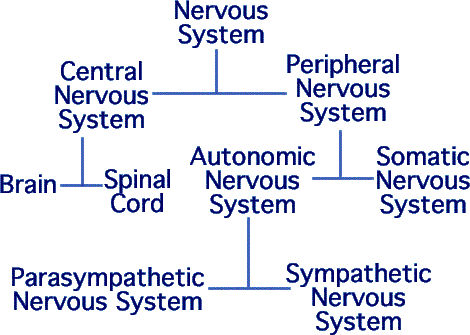
Sensory neurons (afferent neurons) take information from the senses to the brain
Motor neurons (efferent neurons) take information from the brain to the rest of the body
Interneurons (association neurons) take the information that reaches the brain/spinal cord and sends them elsewhere in the brain/on to efferent neurons
Central Nervous System
Contains the brain and the spinal cord
Getting snack
Stubs toe
Sensory neurons in toe are activated
Message sent up from a neuron to base of spine (afferent neurons)
Spinal cord
Brain’s sensory cortex
Motor cortex sends signal down your spinal cord
Muscles controlling leg and food (efferent neurons)
“Ouch!”
Most sensory information and muscle movements are controlled by the above statement/process
Certain reactions occur the moment sensory impulses reach your spinal cord (reflexes)
Heat, cold, knee reflexes
Has adaptive value, helps us survive
Peripheral Nervous System
All the nerves in your body that aren’t part of the CNS
All nerves not encased in bone
Somatic nervous system controls voluntary muscle movements
Motor cortex of brain sends impulses to SNS, controls muscles
Playing sports, writing, anything you wnat to do
Autonomic nervous system controls the automatic functions of our body
Heart, lungs, internal organs, glands, stress
Sympathetic Nervous System (flight/fight) mobilizes our body to respond to stress
Accelerates some functions such as heart rate, blood pressure, respiration, and slows down some such as digestion
Parasympathetic Nervous System (rest and digest) slows us down, returns body to homeostasis after a stress response
The “break pedal”
Slows down heart rate and breathing, pupils constrict, blood flows to intenstine
Endocrine System
A system of glands that secrete hormones
Adrenaline (epinephrine) → activated during fight/flight, speeds up bodily processes
Leptin → involved in weight regulation, surpresses hunger
Ghrelin → motivates eating, increases hunger
Melatonin → triggers sleep/wakefulness responses
Oxytocin → “love hormone,” promotes trust, bonding, love, etc.
How Do Researchers Study the Brain?
Accidents (ex. Phineas Gage)
Lesions → the removal/destruction of part of the brain
We can examine and closely monitor the patient’s behaviour after
Ex. frontal lobotomy
Electroencphalogram (EEG) → electrodes on the scalp
Detects brain waves (alpha, beta, theta, delta); usually a series of lines with distinct patterns
Used to investigate sleep disorders, dreaming, seizures, epilepsy
Computerized Axial Tomography (CAT/CT Scan) → a sophisticated xray
Xray cameras that rotate around the brain
3D picture of the brain’s structure, no function or activity
Exposed to carcinogenic radiation
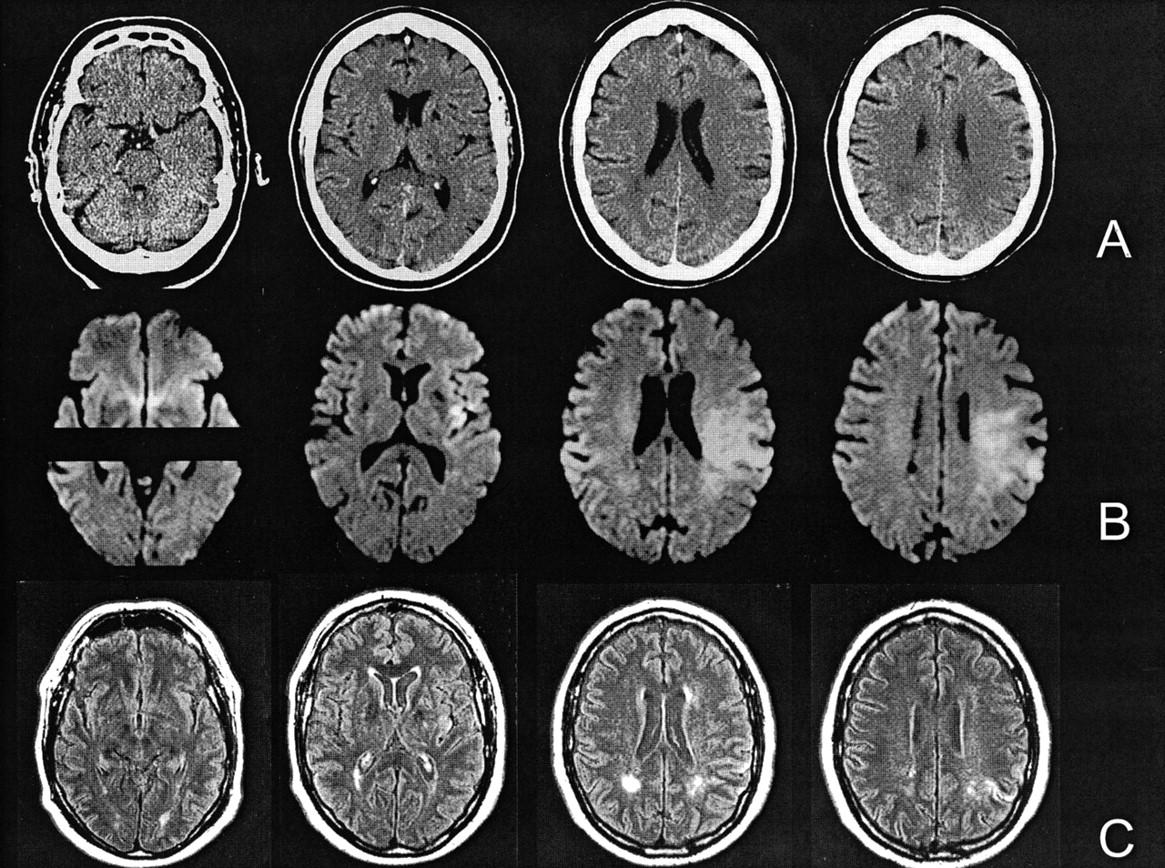
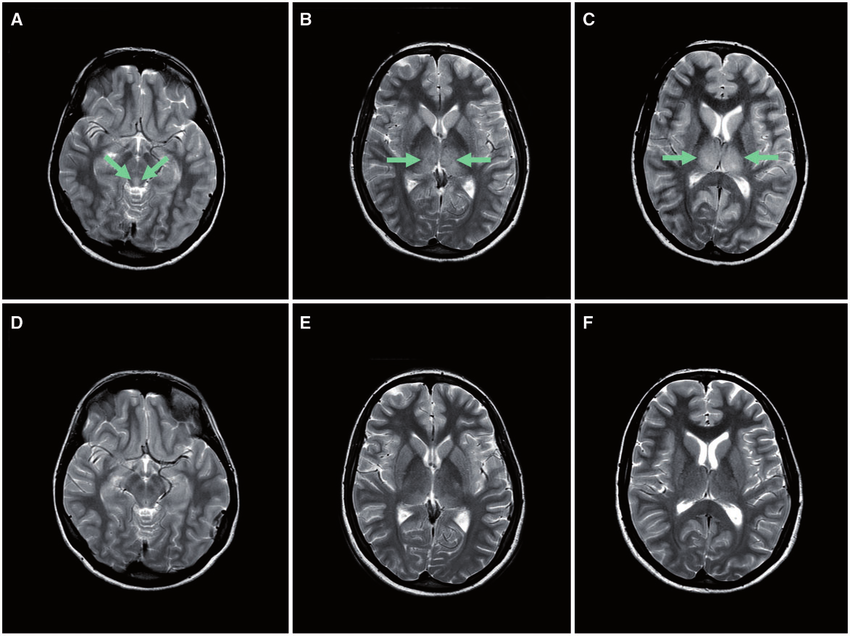
Magnetic Resonance Imaging (MRI) → uses magnetic fields/radio waves to measure density and location of brain material
More detailed
Positron Emission Tomography (PET) → sees which parts of the brain are most active during certain tasks

Functional MRI (fMRI) combines MRI and PET scans, and can show details of brain structure and blood flow information