Sleep, Dreams, and Sleep Disorders
Sleep Disorders and Sleep Problems
Insomnia: Trouble sleeping or staying asleep. Happens in stage 1 or 2.
Narcolepsy: Sudden onset of feeling tired or actually going through fast periods of REM sleep: REM stage. (Caused by a chemical imbalance in the hypothalamus)
Sleep Apnea: Breathing is stopped during sleep. The major causes are obesity and smoking or lung issues. Happens more in REM sleep.
Somnambulism: Sleep-walking: Happens in stage ¾.
Night Terrors: These are not nightmares. You do not remember night terrors. You appear awake but your brain is asleep. Happens more in stage 4.
Bruxism: Teeth grinding. Stages 1-2
Enuresis: Bedwetting. Stages ¾
Myoclonus: Sudden jerk of a body part. Stage 2.
Hypnagogic Sensations: Falling or feeling of being pinned down.
Seasonal Affective Disorder:L When the time changes and it gets darker earlier. This occurs in areas of the world where it is dark for long periods.
Sleep, Dreams, and Body Rhythms
Consciousness: Awareness of yourself and your environment
Body Rhythms
Biological Rhythms
Circadian Rhythms
Once every 24 hours (Sleep)
Hypothalamus
Sleep control center in the brain
Monitors changes in light or dark in the environment
Changes levels of hormones in the body
Melatonin
Hormone that helps regulate daily biological rhythms
Linked to the sleep-wake cycle
Melatonin level increase during the night and decrease with exposure to morning light
Reasons for Sleep
Preservation: It keeps us protected from the dangers of the night
Restoration: Recuperate from the wear and tear of the day. Restore the immune system. Repair brain tissue.
Restore and rebuild our fading memories:
Moves information into long-term memory
Creative thinking: Better problem solving
Sleeping stimulates the pituitary gland to release growth hormone
Improved athletic ability
Muscle memory occurs during REM sleep
Optimal exercise time is late afternoon
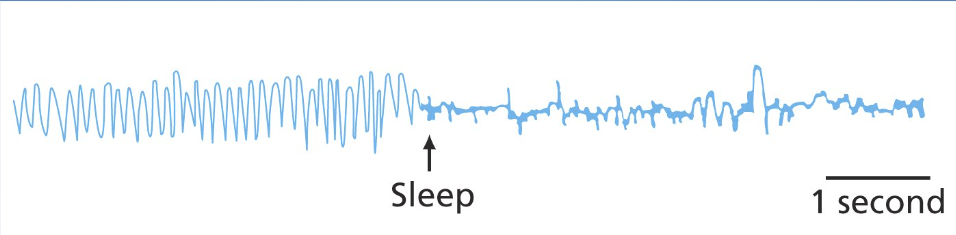
Stage 1 Sleep
Breathing is slowed
Brain waves become irregular
It is easy to wake the person, who will insist they are not asleep
Rarely lasts longer than 5 minutes
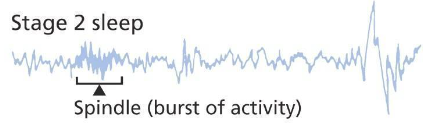
 Stage 2 Sleep
The brain wave cycle slows
Sleep spindles (Burst of rapid brain activity)
First time through stage 2 lasts around 20 minutes
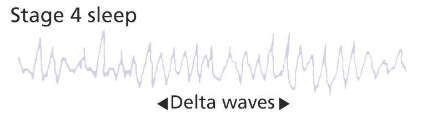
 Stages 3 and 4
Slow wave sleep
Delta waves
First time through stage 4 is about 30 minutes and is where one gets rejuvenated
Stage 3
 Stage 4
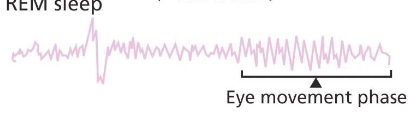
 Rem Sleep
Rapid eye movement (REM sleep) as eeyes move quickly back and forth
Vivid dreaming occurs in REM sleep
Called “paradoxical sleep”
The brain is fully awake but the body is relaxed
 Sleep Deprivation
Decrease efficiency of immune system functioning
Safety and accident issues: Higher rates of missed days of work
Increased healthcare cost
Increased risk of other medical conditions (Obesity, diabetes, heart disease, cancer)
Contributes to impaired concentration, irritability, etc
Increases in depression and/or anxiety if REM sleep is interrupted frequently (emotional experiences are processed during REM)
What we dream
Recurring: This usually alerts us to an unresolved issue in our life. Can be trauma-based
Precognitive Dreams: Foretell something ahead of time
Nightmares: Bad dreams; easily remembered; usually occur last time in REM (early morning)
Lucid Dreams: Aware that you are dreaming; some ability to control the actions in the dream.
Daydreams: Fantasies/things coming up/things that just happened
Dreams: The ones we remember tend to be very vivid; emotional; bizarre; and usually negative
Common Themes: Failing, being attacked, bad luck, being late, some event from that day
Anything that happens in the five minutes before you fall asleep is not remembered.
Freud
We dream because it gives us an outlet for behaviors and thoughts that aren’t acceptable in society.
Aggressive
Erotic fantasies
Unacceptable urges get filled
Unconscious drives and wishes can be fulfilled
Information-Processing Theory
Dreams help memory
Research suggests REM sleep helps transfer our memories into long-term storage
Physiological Function Theory
Neural activity during REM sleep is important to the growing brain
Dreams give the sleeping brain stimulation
Activation-Synthesis Theory
Dreams are the mind’s attempt to make sense of random neural firings in the brain as one sleeps
Cognitive Development Theory
Dreams are part of the brain's growing and maturing
Dreams reflect our knowledge
Our dreams get more involved and intense with details as we age
Nightmare Theories: Why do we have them?
Help with emotional processing: Situational stress, anxiety, and grief that needs to be processed
Connect us to our shadow: what is hiding in our unconscious mind? What did we go through, that we thought we solved, but maybe we didn’t? What have we repressed?
An extension of trauma that we keep reliving (PTSD)
Is there a physical cause?
Medication side effects, especially antidepressants
Sleep Patterns: Insomnia
Alcohol abuse and or alcohol withdrawal
Other sleep conditions like sleep apnea
Hypnosis
An altered state of consciousness
A highly suggestible state. A hypnotist makes suggestions about thoughts, perceptions, behaviors, and feelings and you follow them.
Divided Consciousness Theory
During hypnosis, our consciousness splits.
Hypnotic Suggestions
Suggestions made during hypnosis to influence behavior, thoughts or emotions.
Good for trying to break bad habits like smoking or biting nails or overeating.
Posthypnotic Suggestion
Suggestion that will be carried out after the hypnosis has ended.
Hypnosis and Pain
One way to avoid taking pain pills
Hypnosis “Tricks” The brain into not sending out pain messages
Does not always work
Can’t provie it works or doesn’t work
Some people have the Placebo Effect: They want it to work, they think it is working, therefore it works