Earth and Earth Systems
Earth System
An arbitrary isolated portion of the universe, subject to analysis and study on how its components interrelate. The Earth System constitute a small part of a larger solar system, but it is very important to us because we live in it
• The Earth System is all of the matter, energy and processes withing Earth’s boundary.
• Earth is a complex system made of living and nonliving things, and matter and energy continuously cycle through the smaller systems.
Lithosphere
→ The solid, outer part of the Earth. It includes the brittle upper portion of the mantle and the crust.
→ Outermost layers of the Earth’s structure.
→ Where soil, rocks and magma are found.
Atmosphere
→ A mixture of mostly invisible gases that surround Earth. Earth’s atmosphere is composed of about 78% Nitrogen, 21% oxygen and one percent other gases.
→ It extends outward about 500 to 600 km from Earth’s surface, but most of the gases lie within 8to 50 km of Earth’s surface
→ Some gases of the atmosphere absorb and reflect harmful ultraviolet rays from the sun protecting Earth and it’s living things. It also causes space debris to burn up before reaching Earth’s surface and causing harm.
Hydrosphere
→ the total amount of water on a planet. Includes water that is on the surface of the planet, underground, and in the air. A planet’s hydrosphere can be liquid, vapor or ice. Oceans, lakes, rivers, marshes, groundwater, rain and water droplets in clouds are part of the hydrosphere.
→ Earth’s hydrosphere is 97.5% saltwater and 2.5% freshwater. Only 0.3% of freshwater can be easily accessible by humans.
→ Water on earth is constantly moving, it even moves into and out of living things.
Geosphere
→ All the rocks that make up Earth, from the partially melted rocks under the crust to ancient, towering mountains, to grains of sands on a beach.
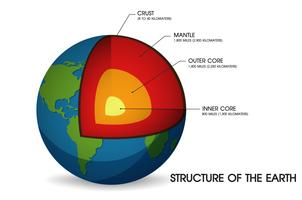
→ Earth’s geosphere is divided into three chemical sections: The crust, composed of light elements. The mantle, which is 68% of Earth’s mass. The core, innermost layer; composed of very dense elements.
Biosphere
→ Made up of the parts of Earth where life exists. It extends from the deepest root systems of trees to the dark environment of ocean trenches, to lush rain forests and high mountaintops.
→ Made up of living things and the areas of earth where they are found. Organisms usually need oxygen or carbon dioxide to carry out life processes.
Characteristics of Earth necessary to support life
The Biosphere is the earth system that includes places on earth that can support life. The interaction between lithosphere, the atmosphere and the hydrosphere makes it possible for life to exist on earth. Both living and nonliving factors are important for life sustenance.
The nonliving factors which are needed to sustain life are:
- Light
- Water
- Air (photosynthesis and respiration)
- Soil
- Temperature
- pH
Flow of matter (nutrient cycle)
The law of conservation of mass and energy states that matter on earth is never lost nor gained. it is used again and again.
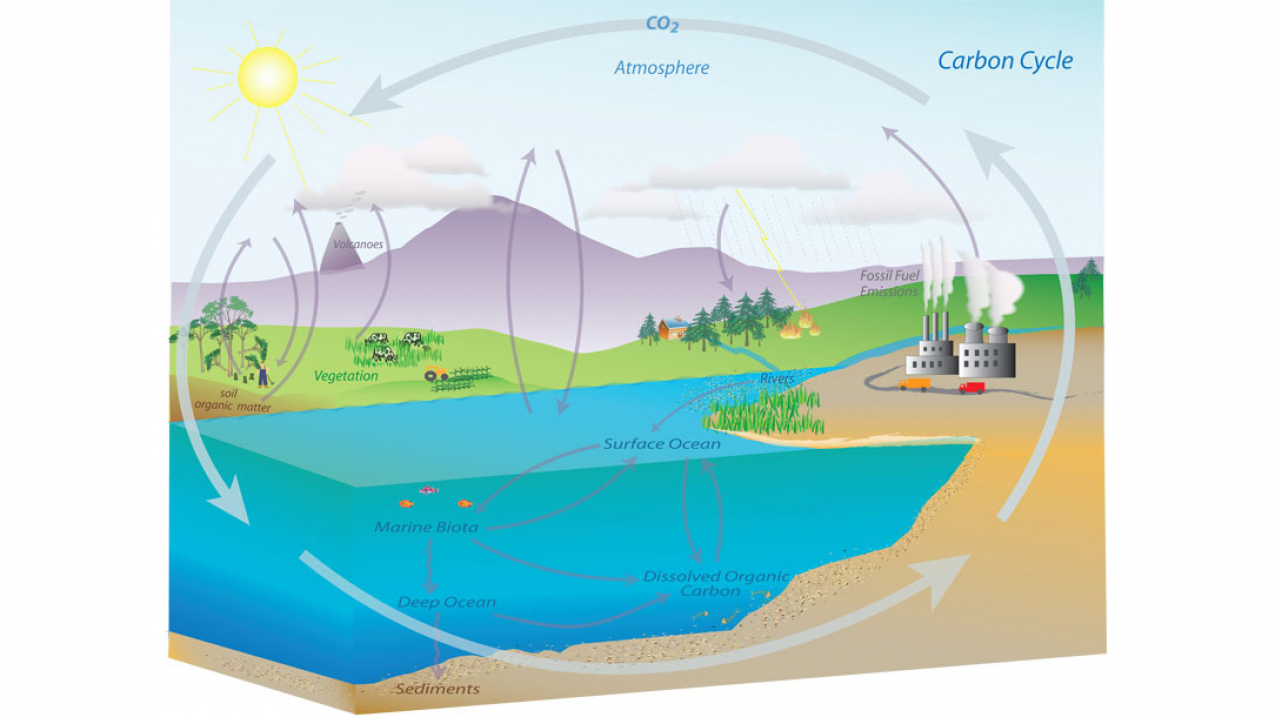
- Carbon cycle - Nature’s way of reusing carbon atoms, which travel the atmosphere into organisms in the Earth and then back into the atmosphere over and over again.
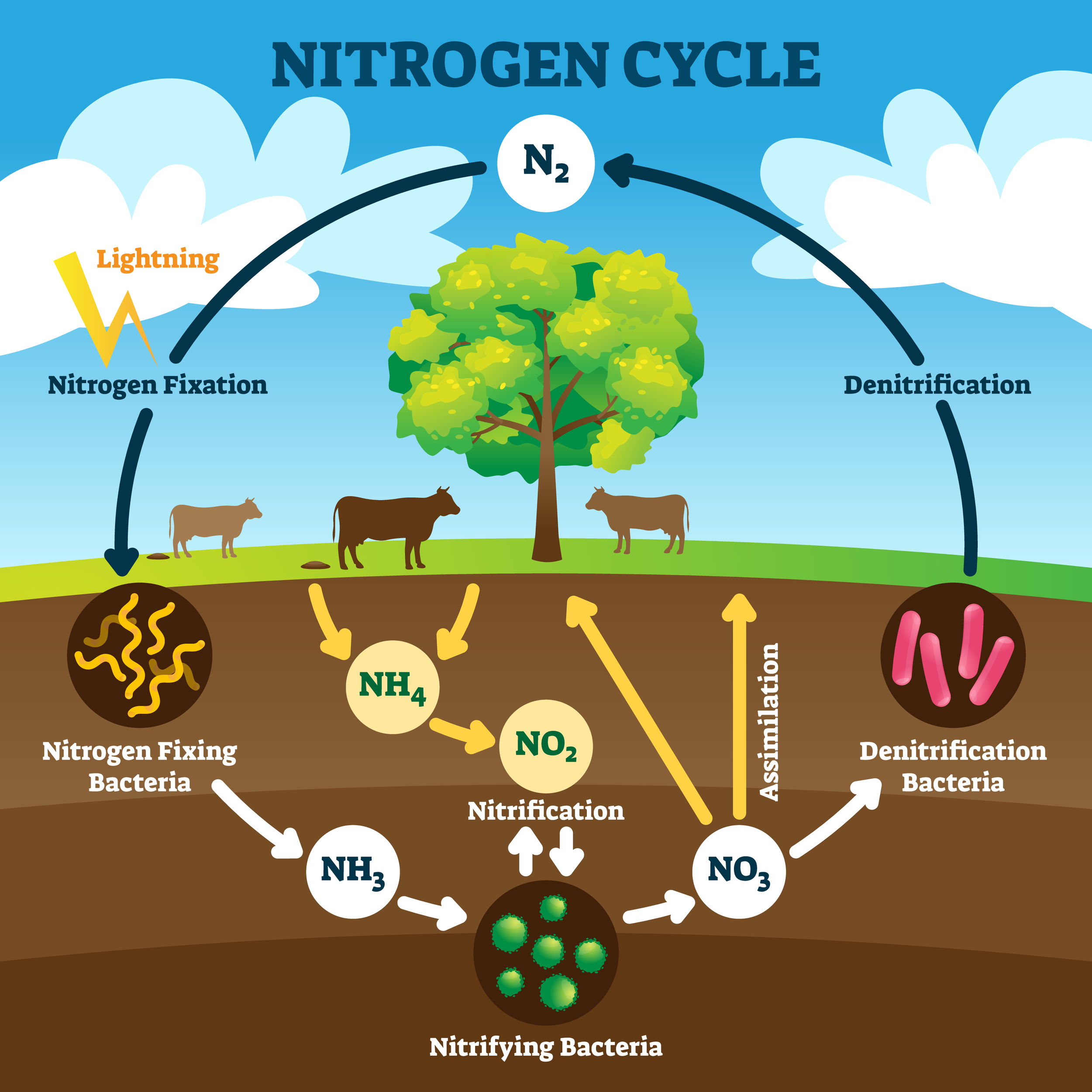
- Nitrogen Cycle - A repeating cycle of processes during which nitrogen moves through both living and nonliving things: the atmosphere, soil, water, planets, animals and bacteria.
Earth’s Interior
Surface process and the Earth’s External Engine
Tectonic forces, Isostatic Adjustment and Erosion
→ A combination of tectonic forces and Isostatic Adjustment can raise low-lying crust along convergent boundary, raising the upper part above sea level. Erosion is the process which takes place over a long period of time.
Layers of Earth
The study of seismic waves has enabled scientist to identify 3 main zones in Earth’s Interior.
- Crust - Earth's thin outer shell of rock
- Oceanic Crust - The outermost layer of Earth’s lithosphere that is found under the oceans and formed at the spreading centers on oceanic ridges, which occur a divergent plate boundaries.
- Continental Crust - Relatively thick part of the Earth’s crust that forms the large landmasses. Composed of different types of granites.
Theories about Earth and its movement
- Plate tectonic
- A theory that explains how major landforms are created as a result of Earth’s subterranean movements. Movement of the oceanic crust and continental crust.
- Continental Drift
- Large-scale horizontal movements of continents relative to one another and to the ocean basins during one or more episodes of geologic time. Earth’s continents have moved over geologic time relative to each other, thus appearing to have “drifted” across the ocean bed.
- Sea Floor Spreading.
- Happens at mid-oceanic ridge where a divergent boundary is causing two plates to move away from one another resulting in spreading of the sea floor.
- Pangea
- A super continent that incorporated almost all the landmasses on earth.
Principle of Interconnectedness
→ the intangible bond between the phenomena of the Earth subsystem.