Infection Control
%%Infection Control%%
- Infection control
- Prevent spread of infectious diseases
- Pathogens
- Disease-causing microorganisms (germs)
- Infectious disease
- Caused by growth of pathogens
- Epidemic
- Widespread occurrence of infectious disease
- Pandemic
- Disease spread over a wide area, even worldwide
%%Types of Infections%%
- Generalized or systemic
- Affecting whole body
- May include headache, fever, vomiting, fatigue
- Localized
- Affecting one area of body
- Red, swollen, warm, and painful
%%Scope of the Problem%%
- Health care facilities have high concentrations of germs
- Nosocomial infection (HAI or health care- associated infection)
- Occurs while patient is receiving health care
- 36% increase over past 25 years
- Industrial illness
- Sharps injuries
- Continuing cause of illness and death
Needlestick injuries
- High number of injuries
- Safety devices being developed
%%Regulatory Agencies%%
- Centers for Disease Control and Prevention (CDC)
- Federal agency
- Studies causes and distribution of diseases
- Occupational Safety and health Administration (OSHA)
- Establish workplace health and safety standards
- Enforce the standards
%%Microorganisms%%
- Very small, usually one-celled living plants and animals
- Not all are harmful
- Normal flora
- Some necessary for body function
- Immune response
- Body’s defense against infection
- Antibodies
- Proteins that fight pathogens
- Opportunistic infection
- Infection due to body’s weakened condition
- Aerobic
- Need oxygen to live
- Anaerobic
- Don’t require oxygen to live
- Environment
- Human body provides moisture, darkness, and food supply
- Food supply
- Hosts
- Living organisms that supply food
- Neutralism: microorganism does not cause harm
- Parasitic: microorganism causes damage to host
%%Microbes%%
- Pathogenic microorganisms
- Cause diseases
- Five types
- Bacteria
- Viruses
- Fungi
- Rickettsia
- Protozoa
%%Bacteria%%
- Can be pathogenic or nonpathogenic
- One-celled organisms
- Many produce toxins
%%Bacterial Infections%%
- Most can be treated with antibiotics
- Destroy bacteria or inhibit growth
- Drugs attack specific types of bacteria
- Identifying the type
- Gram staining
- Cultures
%%Spores%%
- Protective coating on bacteria cells
- Bacteria can be dormant for years
- Killed by very high temperatures
%%Viruses%%
- Smallest type of microbes
- Incomplete cells
- Depend on living cells for nutrients and reproduction
- Cause common cold, influenza, hepatitis B, AIDS, many others
- Multiply quickly
- Difficult to treat
- Resistant to disinfectants
- No drugs available that destroy them
- 3 FDA approved drugs inhibit their growth
%%Fungi%%
- Neither plant nor animal
- Unique organisms
- Two types
- Yeasts: one-celled
- Molds: multi-celled
- Some are nonpathogenic
- penicillin
- Some cause chronic, recurrent infections
- Ringworm, athlete’s foot
- Systemic infections
- Very difficult to treat
%%Rickettsia%%
- Smaller than bacteria
- Parasitic
- Must live inside another organism
- Cause typhus and Rocky Mountain spotted fever
%%Protozoa%%
- Classified as animals
- Consist of one cell
- More than 50,000 types identified
- Found in decayed materials, contaminated water, sewage waste
- Cause dysentery, trichomoniasis, malaria
%%Body’s Defense Mechanisms%%
- Cilia in respiratory tract
- Cough and sneeze
- Tears
- Hydrochloric acid in stomach
- Mucous membranes
- Rise in body temperature
- Increase in leukocytes (white blood cells)
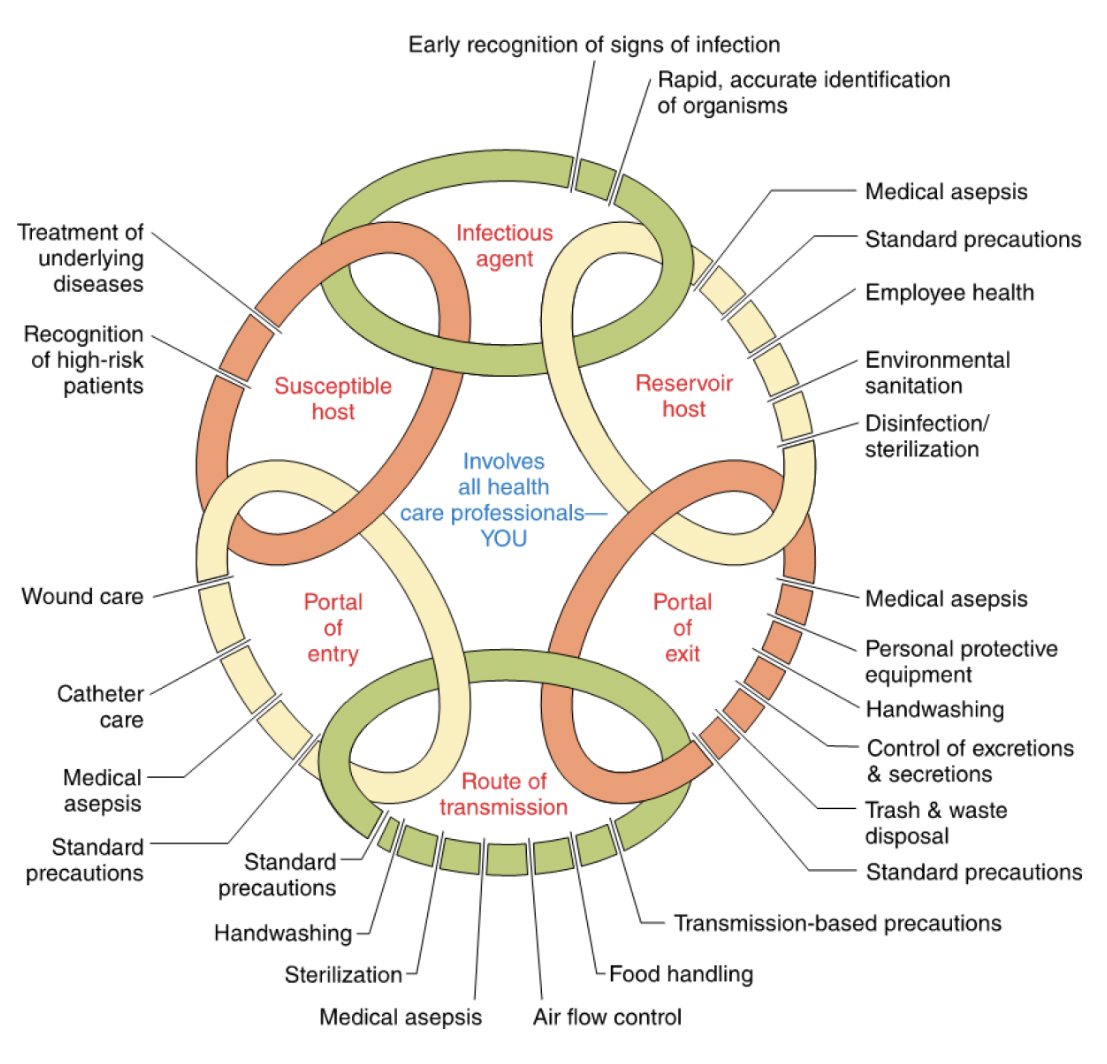
%%Chain of Infection%%
- Links in the chain
- Infectious agent
- Reservoir host
- Portal of exit
- Route of transmission
- Portal of entry
- Susceptible host
- Breaking any link prevents infection
%%Infection Control%%
- Decrease source of microorganisms
- Wash hands
- Practice aseptic techniques
- Avoid contact when contagious
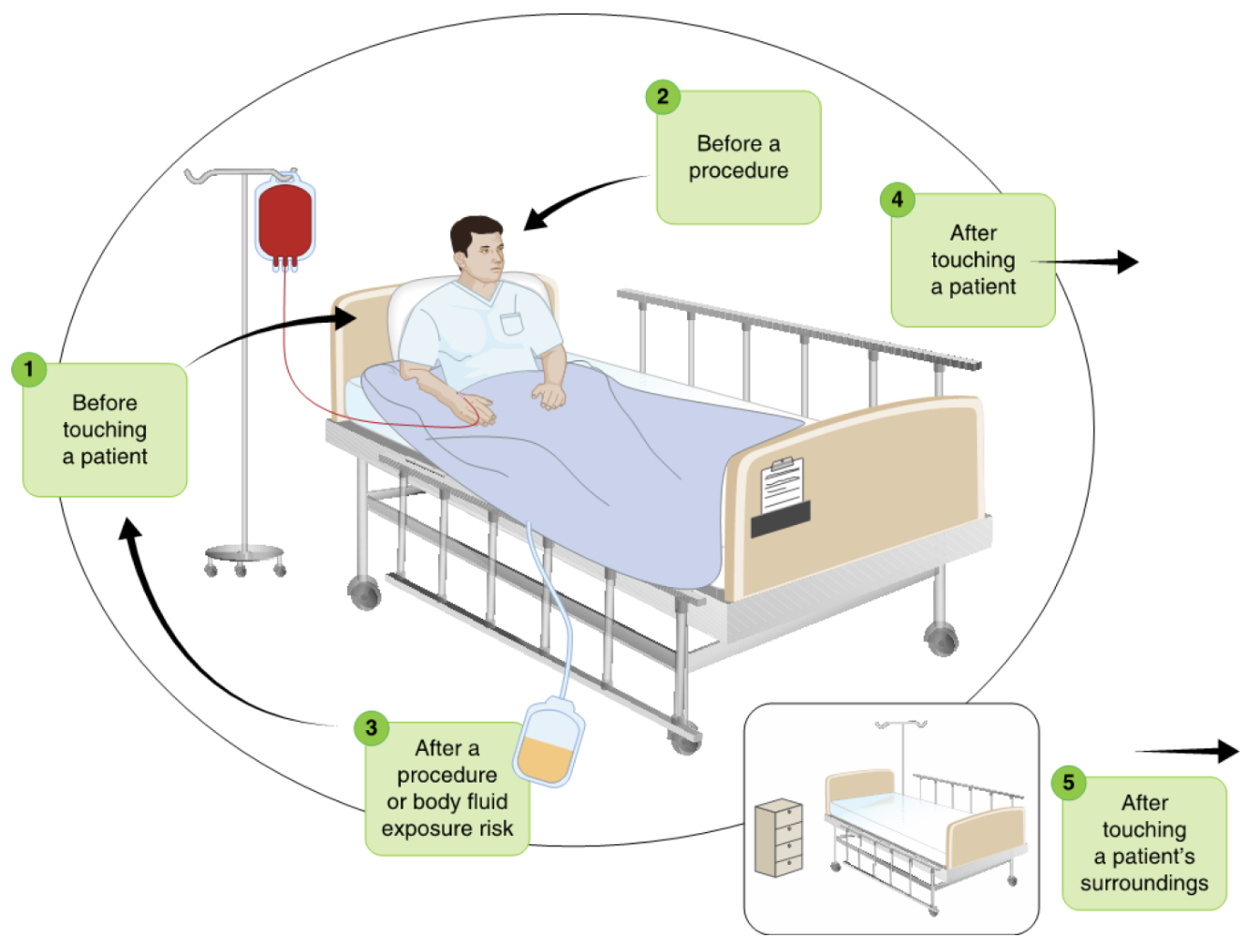
%%Handwashing%%
- “Single most important procedure for preventing health-care acquired \n infections” (CDC)
- Use proper technique
- Any time you might transfer microbes
- Examples: when coming on duty, between patients, after touching contaminated \n object
%%Aseptic Techniques%%
- Methods for making environment as pathogen free as possible
- Bacteriostatic
- Inhibits growth of microorganisms
- Bacteriocidal
- Kills microorganisms
- As microbes mutate, harder to kill them
%%Medical Asepsis%%
- Decrease number of pathogens
- Handwashing, clean rooms, use gloves
%%Surgical Asepsis%%
- Completely eliminate pathogens
- Sterile technique
- Wear sterile caps, gowns, gloves
- Sterilize instruments
- Maintain sterile field
%%Sterile Field%%
- Area designated as free of microorganisms
- Procedures
- Sterile object cannot touch nonsterile one
- Cannot be wet
- Constantly observe
- Do not reach over
- Keep hands above waist
- Do not talk or cough over sterile field
%%Preventing Infections Chemical and Physical Methods%%
- Antiseptics
- Chemical agents that inhibit growth of pathogens
- Can be used on skin
- Example: 70% isopropyl alcohol
- Disinfectants
- Chemical agents that destroy most bacteria and viruses
- Nonpenetrating instruments and environment
- Example: 10% bleach solution
- Boiling water to clean instruments (rarely used today)
- Sterilization
- Agents or methods that completely destroy microorganisms
- Examples: steam, gas, radiation
- Autoclave, steam from pressure, commonly used
%%Preventing Infections Standard Precautions%%
- Procedures to prevent spread of infection
- Potentially infectious fluids
- All body fluids, including blood
- Nonintact skin
- Mucous membranes
- Use with every patient
%%Standard Precautions Environmental Control%%
- Clean and disinfect surfaces, furniture, objects
- Handle and clean linens properly
- Dispose of infectious waste properly
- Place patients with contagious infections in private rooms, if possible
%%Standard Precautions Blood-Borne Pathogens%%
- Spread through contact with blood
- Common means of infection is from injury using needles and sharp \n instruments
- Do not recap needles
- Use puncture-proof containers for disposal
- Use protection when performing resuscitation
%%Preventing Transmission of Microorganisms%%
- Wear personal protective equipment (PPE)
- Follow transmission precautions
%%Preventing Transmission of Pathogens Personal Protective Equipment%%
- Gloves, masks, eyewear, gowns, caps
- OSHA requires use when infection possible
- Must be put on and removed correctly to be effective
- Available in sterile and nonsterile forms
%%Preventing Transmission of Pathogens Transmission Precautions%%
- Types of infection transmission
- Airborne
- Droplet
- Contact
- Patient placed in private room
- Contact with others limited
- Each type of transmission requires special handling
- Consequences to patient, staff, and visitors
- Impact on facility
- Neutropenic precautions
- Used to protect patients highly susceptible to infections
- includes isolation
%%Preventing Infection Maximize Resistance%%
- Provide good hygiene
- Ensure proper nutrition and fluid intake
- Decrease stressors that weaken immune response