5: Organisms and their environment (Part 2)
Terrestrial Environments
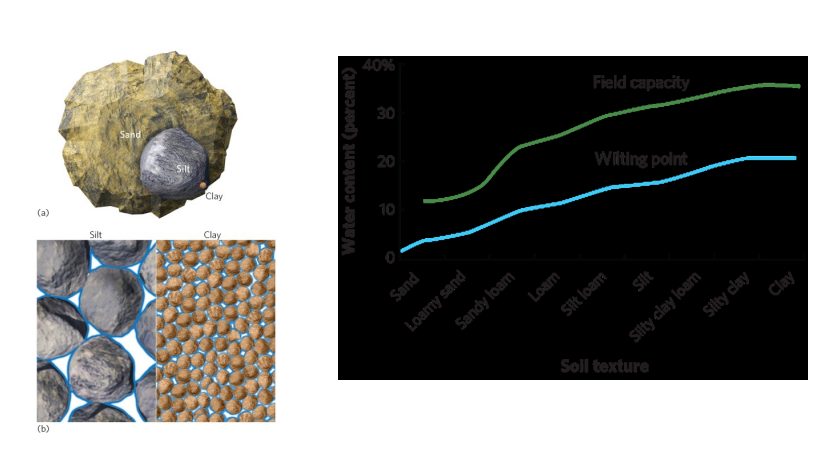
Water and soil properties
Water is key for life
Soil structure
Soil particle size
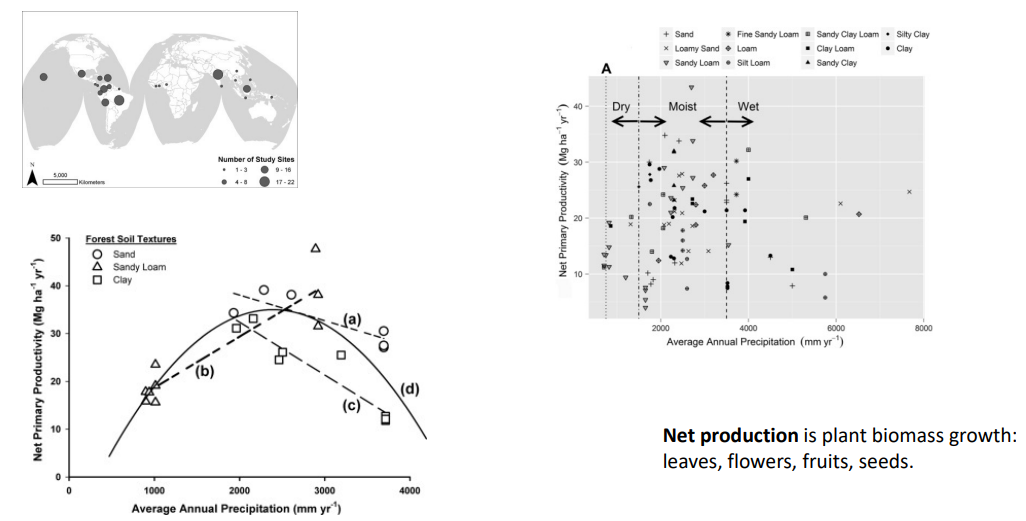
Example:
Vogt et al. (2016). Vulnerability of tropical forest ecosystems and forest dependent communities to droughts. Environmental Research 144: 27-38.
Net production is plant biomass growth: leaves, flowers, fruits, and seeds.
Plant Adaptations
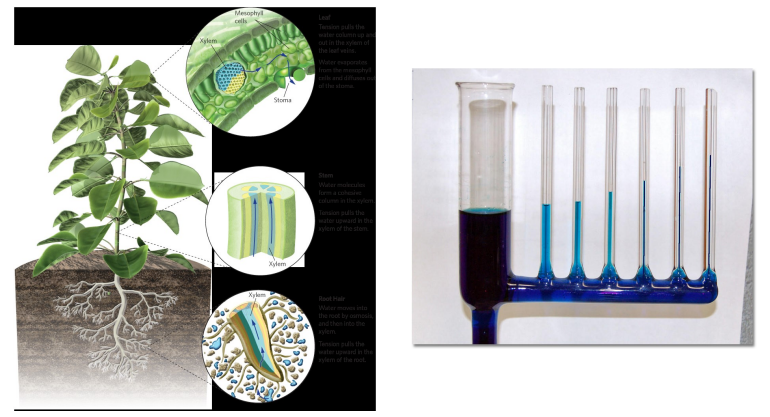
Transpiration
Transpiration: moving water from the soil to the leaves
they must release water in order to move water from the roots (lose to gain)
Cohesion-tension theory
Example
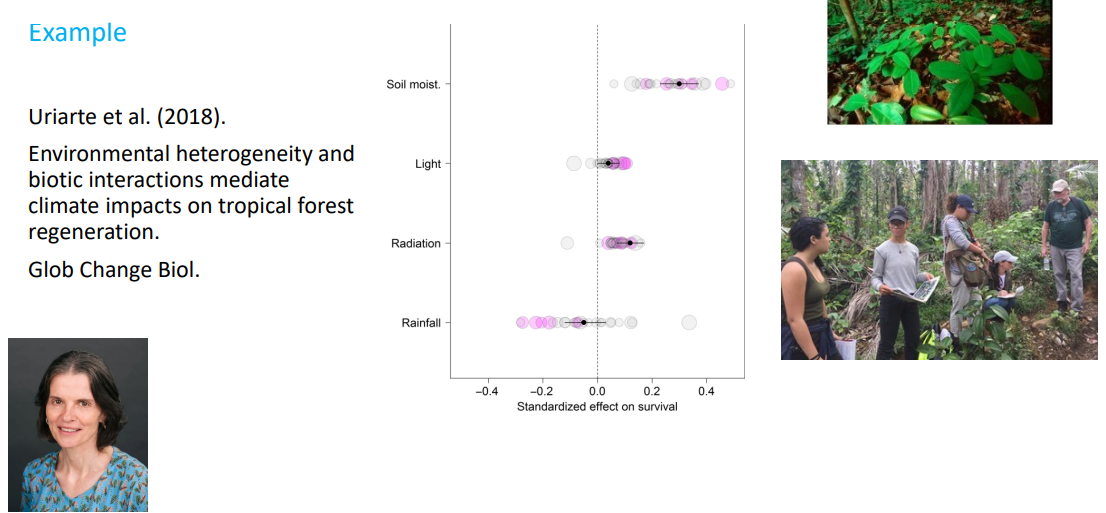
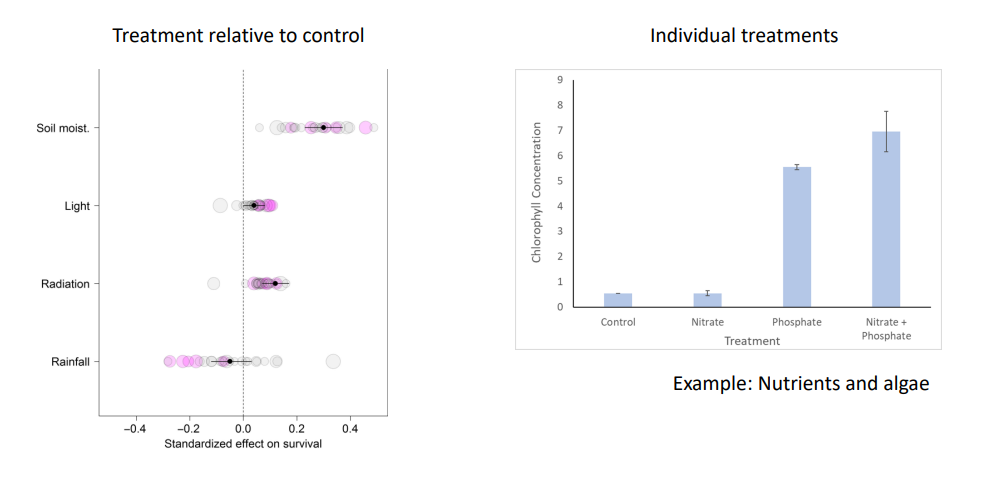
A note on data presentation:
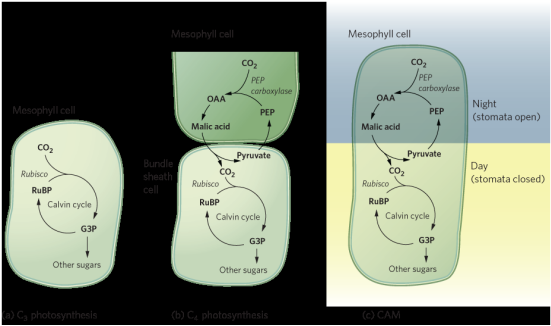
Photosynthetic Pathways
Adaptation to different environments
C3
least specialized
stomata open during the day
wet environments
C4
important for water-limited environments, in between dry and wet (more dry)
CAM plants
most specialized
example: desert plants, like cacti
open stomata at night when they lose less water
Crassulacean acid metabolism
Structural adaptations
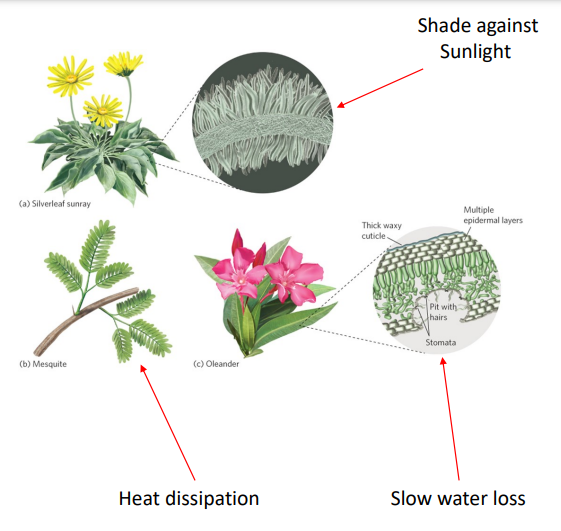
smaller leaves dissipate heat
stomata being protected to prevent water loss
these adaptations deal with heat and water
Animal adaptations
Water, salt, nitrogen balance
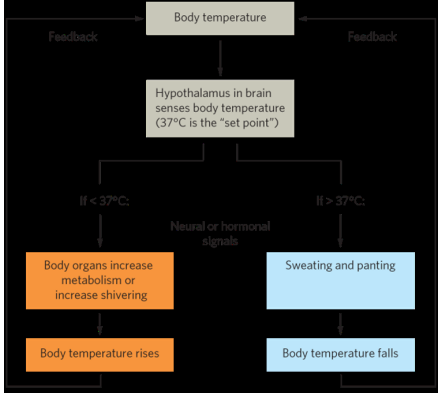
Homeostasis
Negative feedbacks
Nitrogen
Ammonia
Urea: useful in limited water environments
Uric acid: useful if you have enough water
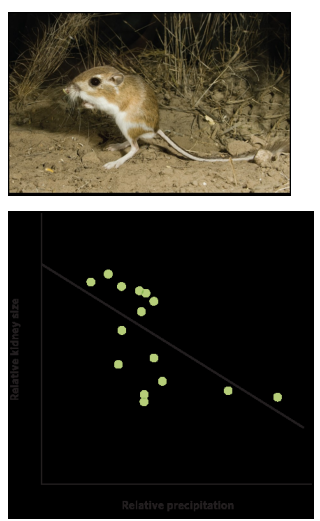
Temperature
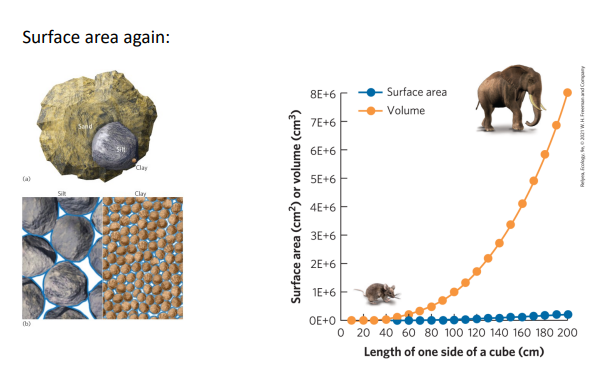
Body size and thermal inertia
Small body-size animals are more vulnerable to losing or gaining heat
Large animals have problems losing heat
Thermoregulation
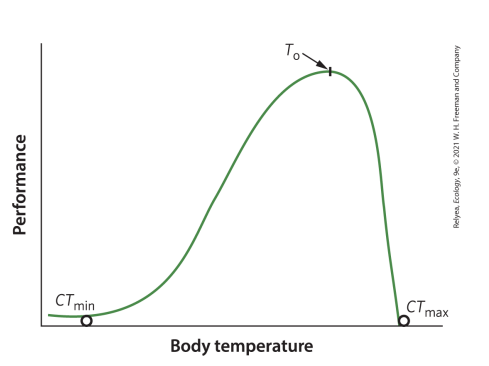
Thermal optima
the range of temperatures within which organisms perform best
Thermoregulation
Ectotherms
Endotherms
Replication and data variability
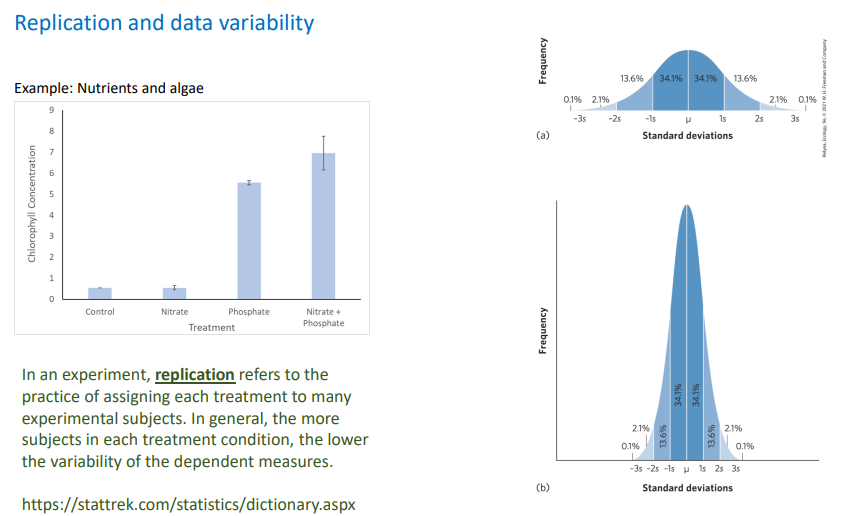
Replication: the practice of assigning each treatment to many experimental subjects (the more subjects in each treatment condition, the lower the variability of the dependent measures)
Adaptations to the Environment
Summary
Adaptations to the terrestrial environments
Importance
Variability in time and space