Program Design: Plyometrics 1
Introduction to Anaerobic Training
Discussion around effective anaerobic training related to resistance training, focusing on short bursts of high-intensity activity that rely heavily on energy sources stored in muscles, rather than using oxygen.
Seven Steps to Effective Anaerobic Training
Review of basic principles of traditional resistance training principles that include progressive overload, specificity, and recovery. Understanding these principles is foundational for developing effective anaerobic training protocols.
Focus on strength as a prerequisite for high rates of force development, highlighting the relationship between maximal strength training and neuromuscular adaptations that improve power output and performance in competitive settings.
Strength vs Power
While strength allows for potential power, it does not guarantee it; differentiating between the two is crucial for athletic development. Strength is defined as the ability to exert force while power is the rate at which work is done.
Example discussed: The distinct differences in force output between power lifters and Olympic lifters, especially in regards to vertical jump performances. Power lifters may excel in heavy lifts but may lack explosiveness compared to Olympic lifters who train for speed.
Key Point: Strength does not always translate into power; focus on rate of force development (RFD) is essential, as athletes trained to enhance RFD will perform better in explosive athletic tasks despite potentially lower maximal strength.
Force-Velocity Curve
Explanation of the relationship between one-rep max (1RM) and the ability to produce power at high velocities. The force-velocity curve illustrates how power output varies with different velocities of movement.
Example: An athlete with a 1RM squat of 500 lbs may yield only 50% of max force in a vertical jump if trained solely at low velocities. Conversely, an athlete trained at higher velocities may yield up to 80% of max force, indicating the critical importance of incorporating velocity-based training into a regimen.
Training at high velocities not only prepares the muscles and nervous system for explosive movements but also enhances coordination and muscle firing patterns significantly.
Rate of Force Development (RFD)
Importance of training for higher rates of force development in sports; RFD reflects how quickly force can be developed during an explosive movement, which is crucial for many athletic actions such as sprinting and jumping.
Comparison of two hypothetical athletes:
Green athlete: 500 lbs squat, 50% RFD, indicating a strong maximum strength but poor reactive power.
Red athlete: 400 lbs squat, 80% RFD, showcasing how they can produce force quickly despite a lower weightlifting capability.
Green athlete may not be as powerful as the red athlete, emphasizing that raw strength alone does not guarantee explosive performance.
Power Production Contribution from Strength
Higher absolute strength does not automatically lead to superior power output; training exercises should prioritize both force development and velocity to yield optimal athletic performance.
Discuss how strength contributes to power through relative force output, considering body weight. Athletes with lighter body weights can be prejudiced where relative strength enhances power-to-weight ratio, critical for performance such as jump height and sprint speed.
The Role of Agility and Speed in Training
Speed and agility are crucial for explosive movements and changing direction in various sports, serving as foundational components of athletic capabilities.
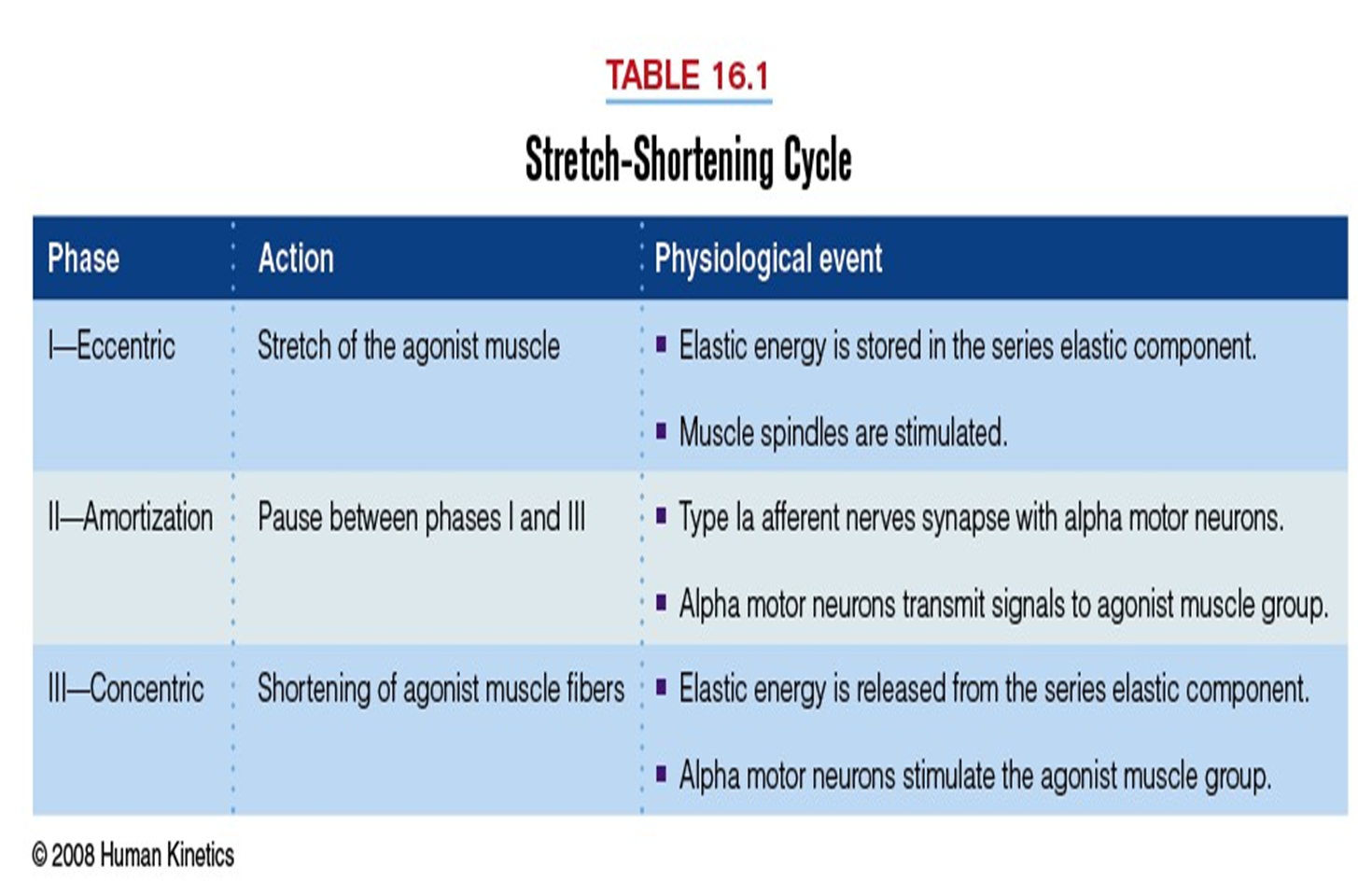
Discussed importance of the stretch-shortening cycle (SSC) in power development, which involves muscle stretching immediately followed by a contraction, thus enhancing power output.
Stretch reflex: the body’s involuntary response to an external stimulus that stretches the muscles. Composed of muscle spindle activity cause a quick and powerful concentric contraction.
Potentiation: change in the force-velocity characteristics of the muscle’s contractile components caused by stretch of the concentric muscle action by use of the stretch reflex.
Techniques to enhance SSC:
Quick countermovement to stimulate a stretch response can significantly increase power outputs in lower body movements, making exercises such as jump squats and depth jumps vital components of training.
Multi-Directional Movement and Training Patterns
Many sports require rapid multi-directional movements, and training programs should reflect the specific demands of the sport, ensuring all muscle groups are utilized efficiently.
Emphasizes training specificity: understanding which muscle groups and movements are necessary for optimal athletic performance, such as lateral shuffles and cutting drills.
Explanation of dynamic warm-up drills as preparatory for high power outputs. These drills improve activating necessary muscle fibers and enhance neuromuscular readiness prior to competition or high-intensity sessions.
Importance of Ground Reaction Forces in Training
Ground reaction forces impact injury risk and training effectiveness. Understanding how the body responds to forces is critical in developing training regimens that promote safety.
Different surfaces affect the intensity of training and overall stress on the body (e.g., training on grass vs concrete); surface selection should reflect the athlete’s goals and minimize injury risks. Proper footwear is also an influential factor in managing reaction forces during training.
Assessing training environments is crucial for ensuring safety and preventing overuse injuries in athletes.
Neuromuscular Considerations in Training
Higher training intensity leads to increased demands on the neuromuscular system, requiring consideration in the program.
The significance of using lighter weights in plyometric and explosive training to achieve optimal rates of force development is vital as heavy loads may compromise technique and limit effective training adaptations.
Discuss potential downsides of heavy loads in upper body plyometrics, which could inhibit effective movement patterns and lead to compensatory movement strategies that may elevate injury risks.
Tendon and Ligament Strengthening
Strategies for improving tendon strength include heavy eccentrics and isometrics, serving to increase resilience and stability during dynamic movement.
Importance of tailored rehabilitation and strength training to prevent injuries, with an emphasis on the integration of mobility work and sport-specific strength training in a holistic approach.
Need to differentiate training focus between weight room conditioning and on-field performance outcomes, as this distinction drives the practical application of strength training in sports.
Conclusion
The intricacies of training for performance in athletics are complex and require a thorough understanding of strength, speed, power, and neuromuscular responses.
It’s critical to continually assess and adapt training protocols for desired outcomes while minimizing injury risks. Using a multifaceted approach that incorporates strength, speed, agility, and sport-specific dynamic movements can enhance overall athletic performance.